

What do you think?
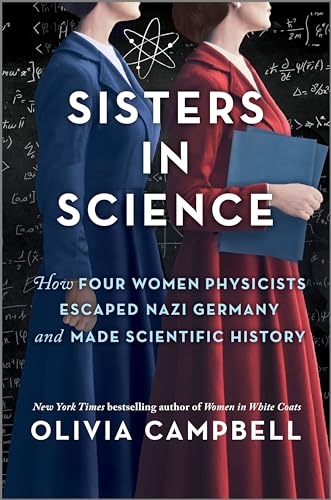
Sisters in Science
Goodreads Choice Award
Nominee for Readers' Favorite History & Biography (2025)The extraordinary true story of four women pioneers in physics during World War II and their daring escape out of Nazi Germany
In the 1930s, Germany was a hotbed of scientific thought. But after the Nazis took power, Jewish and female citizens were forced out of their academic positions. Hedwig Kohn, Lise Meitner, Hertha Sponer, and Hildegard Stücklen were eminent in their fields, but they had no choice but to flee due to their Jewish ancestry or anti-Nazi sentiments.
Their harrowing journey out of Germany became a life-and-death situation that required Herculean efforts of friends and other prominent scientists. Lise fled to Sweden, where she made a groundbreaking discovery in nuclear physics, and the others fled to the United States, where they brought advanced physics to American universities. No matter their destination, each woman revolutionized the field of physics when all odds were stacked against them, galvanizing young women to do the same.
Well-researched and written with cinematic prose, Sisters in Science brings these trailblazing women to life and shows us how sisterhood and scientific curiosity can transcend borders and persist—flourish, even—in the face of seemingly insurmountable odds.
In the 1930s, Germany was a hotbed of scientific thought. But after the Nazis took power, Jewish and female citizens were forced out of their academic positions. Hedwig Kohn, Lise Meitner, Hertha Sponer, and Hildegard Stücklen were eminent in their fields, but they had no choice but to flee due to their Jewish ancestry or anti-Nazi sentiments.
Their harrowing journey out of Germany became a life-and-death situation that required Herculean efforts of friends and other prominent scientists. Lise fled to Sweden, where she made a groundbreaking discovery in nuclear physics, and the others fled to the United States, where they brought advanced physics to American universities. No matter their destination, each woman revolutionized the field of physics when all odds were stacked against them, galvanizing young women to do the same.
Well-researched and written with cinematic prose, Sisters in Science brings these trailblazing women to life and shows us how sisterhood and scientific curiosity can transcend borders and persist—flourish, even—in the face of seemingly insurmountable odds.
384 pages, Hardcover
First published December 31, 2024
About the author
Olivia Campbell
6 books249 followersOlivia Campbell is the New York Times bestselling author of WOMEN IN WHITE COATS and SISTERS IN SCIENCE. A regular contributor to National Geographic, her essays and journalism have also appeared in The Atlantic, The Guardian, Washington Post, New York Magazine, Smithsonian Magazine, Scientific American, and History.com, among others. She lives outside Philadelphia with her husband, three sons, and two cats.
Ratings & Reviews
Friends & Following
Create a free account to discover what your friends think of this book!
Community Reviews
Displaying 1 - 30 of 706 reviews

March 22, 2026
3.5/5
This book uncovers the real-life saga of four pioneering women physicists who confronted Nazi persecution head-on in ways that almost gave me a thousand heart attacks. They faced expulsion from their labs and homeland during World War II, and yet managed to make orchestrated daring escapes with help from allies across borders, landing in Sweden and the U.S. (and trust me, even more places) to try to restart or continue their groundbreaking work.
The author’s research blends vivid storytelling with just enough technical detail to highlight their intellect without being too overwhelming. Of course, your heart cannot help but hurt a little at every single thing that is being described. Because at the end of the day, that’s what history consists on. It’s our past, it’s what made us, and we can’t run from it, but we can learn from it, even if it hurts. These women didn’t just survive, they advanced nuclear physics and inspired future generations amid anti-Semitism and misogyny. And oh boy, was I in shock at a few things.
This nonfiction account reveals how determination and collaboration managed to outlast tyranny, so I’d recommend this to anyone tracking overlooked figures in science history! You can learn something new every day.
This book uncovers the real-life saga of four pioneering women physicists who confronted Nazi persecution head-on in ways that almost gave me a thousand heart attacks. They faced expulsion from their labs and homeland during World War II, and yet managed to make orchestrated daring escapes with help from allies across borders, landing in Sweden and the U.S. (and trust me, even more places) to try to restart or continue their groundbreaking work.
The author’s research blends vivid storytelling with just enough technical detail to highlight their intellect without being too overwhelming. Of course, your heart cannot help but hurt a little at every single thing that is being described. Because at the end of the day, that’s what history consists on. It’s our past, it’s what made us, and we can’t run from it, but we can learn from it, even if it hurts. These women didn’t just survive, they advanced nuclear physics and inspired future generations amid anti-Semitism and misogyny. And oh boy, was I in shock at a few things.
This nonfiction account reveals how determination and collaboration managed to outlast tyranny, so I’d recommend this to anyone tracking overlooked figures in science history! You can learn something new every day.

December 10, 2024
A Disjointed Dive into Four Female Scientists Who Fled Nazi Germany
While delving into an extraordinary topic and uncovering the stories of four women who were almost lost in Nazi Germany, Sisters in Science fell flat for me. Unfortunately, Campbell’s writing didn’t just dabble, but fully embraced, a couple of transgressions of historical writing. First, there was a significant amount of projection that happened throughout the book. Too often, Campbell described how the women must have felt and thought. The only places I see this working is in an author’s note or epilogue. When the sources and evidence aren't there to back it up, leave it alone or to the purview of historical fiction. Secondly, there were several instances of unnecessary commentary from the author. Her addition of rhetorical questions were simplistic and sought to lead the reader to a particular line of thinking. My last major criticism is the use of first names. Almost exclusively the author referred to women by their first name and men by their last. There needs to be one choice that is followed consistently for both. As a historian, I appreciated the context chapters, but had a difficult time following the organization of the book. It wasn’t chronological and it didn’t just follow the story of one woman and move on to the other. It just felt disjointed and haphazard throughout.
I am grateful to NetGalley and Park Row for providing me with an advanced reader copy of Olivia Campbell’s Sisters in Science.
While delving into an extraordinary topic and uncovering the stories of four women who were almost lost in Nazi Germany, Sisters in Science fell flat for me. Unfortunately, Campbell’s writing didn’t just dabble, but fully embraced, a couple of transgressions of historical writing. First, there was a significant amount of projection that happened throughout the book. Too often, Campbell described how the women must have felt and thought. The only places I see this working is in an author’s note or epilogue. When the sources and evidence aren't there to back it up, leave it alone or to the purview of historical fiction. Secondly, there were several instances of unnecessary commentary from the author. Her addition of rhetorical questions were simplistic and sought to lead the reader to a particular line of thinking. My last major criticism is the use of first names. Almost exclusively the author referred to women by their first name and men by their last. There needs to be one choice that is followed consistently for both. As a historian, I appreciated the context chapters, but had a difficult time following the organization of the book. It wasn’t chronological and it didn’t just follow the story of one woman and move on to the other. It just felt disjointed and haphazard throughout.
I am grateful to NetGalley and Park Row for providing me with an advanced reader copy of Olivia Campbell’s Sisters in Science.

November 3, 2024
Hedwig Kohn, Lise Meitner, Hertha Sponer and Hildegard Stücklen were pioneers in physics and the first three women were granted habilitation in Germany which means they were able to teach at university level and Hildegard Stücklen worked at the University of Zurich with a chemist and a physician.
All four women lost their academic positions, because they were female and Jewish and it wasn’t safe for them to stay in Germany. With the help of friends and fellow scientists they tried to obtain visas and this wasn’t easy and at one stage over 140,000 people were in the queue.
Hedwig Kohn, Hertha Sponer and Hildegard Stücklen fled to the United States and taught in colleges and universities and Lise went to Sweden, where she made a breakthrough in nuclear physics.
All the women struggled with having to leave Germany and family and friends behind, discrimination for being female and their male counterparts got first opportunity for vacant positions and were paid more, the cultural differences, language barrier and people didn’t understand how they felt, they were safe and others weren't.
I received a copy Sisters in Science from Edelweiss Plus and HarperCollins in exchange for an honest review. Author Olivia Campbell has thoroughly researched these four remarkable scientists, not only were they brilliant physicists but they all persevered and never gave up hope of getting out of Germany and it saved their lives.
I did struggle at times reading this book, despite being an interesting topic and subject and for some reason it dragged on for me and maybe it should’ve been shorter. However I do acknowledge female scientists today owe so much to these four academically brilliant and brave ladies and three stars from me. Please read this book for yourself and makeup your own mind and maybe it was wasted on me!
All four women lost their academic positions, because they were female and Jewish and it wasn’t safe for them to stay in Germany. With the help of friends and fellow scientists they tried to obtain visas and this wasn’t easy and at one stage over 140,000 people were in the queue.
Hedwig Kohn, Hertha Sponer and Hildegard Stücklen fled to the United States and taught in colleges and universities and Lise went to Sweden, where she made a breakthrough in nuclear physics.
All the women struggled with having to leave Germany and family and friends behind, discrimination for being female and their male counterparts got first opportunity for vacant positions and were paid more, the cultural differences, language barrier and people didn’t understand how they felt, they were safe and others weren't.
I received a copy Sisters in Science from Edelweiss Plus and HarperCollins in exchange for an honest review. Author Olivia Campbell has thoroughly researched these four remarkable scientists, not only were they brilliant physicists but they all persevered and never gave up hope of getting out of Germany and it saved their lives.
I did struggle at times reading this book, despite being an interesting topic and subject and for some reason it dragged on for me and maybe it should’ve been shorter. However I do acknowledge female scientists today owe so much to these four academically brilliant and brave ladies and three stars from me. Please read this book for yourself and makeup your own mind and maybe it was wasted on me!

January 25, 2025
The subject of this book, women scientists who escaped Nazi Germany, intrigued me. However, this was simply not the book for me. I was hoping for more emphasis on their escape and unfortunately, I instead got a ton of physics information (none of which I understood, somehow having managed to avoid ever taking a physics class). Given that I was listening to the audiobook version, skimming those sections was not really an option. This is no knock on the narrator, but more of an issue for this listener.
Sadly, I decided to DNF Sisters in Science. It just wasn’t the right audiobook for me. I’m sure it will find an appreciative audience, however.
Thank you to Harlequin Audio and NetGalley for the opportunity to listen to a review copy of this audiobook. All opinions are my own.
Edit: Got the ebook from my library and managed to finish it
Sadly, I decided to DNF Sisters in Science. It just wasn’t the right audiobook for me. I’m sure it will find an appreciative audience, however.
Thank you to Harlequin Audio and NetGalley for the opportunity to listen to a review copy of this audiobook. All opinions are my own.
Edit: Got the ebook from my library and managed to finish it

February 26, 2026
I read it for a book club, or it would have been a DNF.
The sisters were important women science specialists who fought against misogyny and being Jewish. Their achievements were very admirable.
However, for me, the book provided so many details that it overwhelmed their achievements.
I will not attend the book club discussion.
The sisters were important women science specialists who fought against misogyny and being Jewish. Their achievements were very admirable.
However, for me, the book provided so many details that it overwhelmed their achievements.
I will not attend the book club discussion.

February 4, 2025
Olivia Campbell is a writer who previously published Women in White Coats: How the First Women Doctors Changed the World of Medicine in 2021. In her follow-up, 2024's Sisters in Science, Campbell continues her pattern of researching historical females in historically male-dominated professions who lived through challenging times. This book focuses on four German scientists whose lives and careers were interrupted by World War II:
Hedwig Kohn (1887-1964), a Jewish physicist
Lise Meitner (1878-1968), an Austrian nuclear physicist who was of Jewish heritage but converted to Catholicism (though she was still regarded as Jewish per the Nazi regime)
Hertha Sponer (1895-1968) and Hildegard Stücklen (1891-1963), two German physicists who were not Jewish, but whose careers were undermined by Nazi's attitudes toward academic women
Luckily, all four managed to survive the war (though some had immediate family members who did not) and continue their careers in some capacity afterwards, though several were dissatisfied of where and how they landed.
Similar to Campbell's prior book, I found Women in Science to lean too heavily into:
1) applying today's moral standards on historical figures (my #1 nonfiction pet peeve)
2) overly sympathizing with the four heroines, without considering that we all have flaws and make mistakes and taking the broader sociocultural perspectives into account (see the prior point)
3) conjecturing
Further reading: World War II stories from a female lens
The Counterfeit Countess: The Jewish Woman Who Rescued Thousands of Poles During the Holocaust by Elizabeth White
GI Brides: The Wartime Girls Who Crossed the Atlantic for Love by Duncan Barrett and Nuala Calvi
The Choice: Embrace the Possible by Edith Eger
The Dragon from Chicago: The Untold Story of an American Reporter in Nazi Germany by Pamela Toler
Fierce Ambition: The Life and Legend of War Correspondent Maggie Higgins by Jennet Conant
Code Girls: The Untold Story of the American Women Code Breakers Who Helped Win World War II by Liza Mundy
The Women with Silver Wings: The Inspiring True Story of the Women Airforce Service Pilots of World War II by Katherine Sharp Landdeck
Dutch Girl: Audrey Hepburn and World War II by Robert Matzen
The Diary of Anne Frank by Anne Frank
Madame Fourcade's Secret War: The Daring Young Woman Who Led France's Largest Spy Network Against Hitler by Lynne Olson
My statistics:
Book 41 f0r 2025
Book 1967 cumulatively
Hedwig Kohn (1887-1964), a Jewish physicist
Lise Meitner (1878-1968), an Austrian nuclear physicist who was of Jewish heritage but converted to Catholicism (though she was still regarded as Jewish per the Nazi regime)
Hertha Sponer (1895-1968) and Hildegard Stücklen (1891-1963), two German physicists who were not Jewish, but whose careers were undermined by Nazi's attitudes toward academic women
Luckily, all four managed to survive the war (though some had immediate family members who did not) and continue their careers in some capacity afterwards, though several were dissatisfied of where and how they landed.
Similar to Campbell's prior book, I found Women in Science to lean too heavily into:
1) applying today's moral standards on historical figures (my #1 nonfiction pet peeve)
2) overly sympathizing with the four heroines, without considering that we all have flaws and make mistakes and taking the broader sociocultural perspectives into account (see the prior point)
3) conjecturing
Further reading: World War II stories from a female lens
The Counterfeit Countess: The Jewish Woman Who Rescued Thousands of Poles During the Holocaust by Elizabeth White
GI Brides: The Wartime Girls Who Crossed the Atlantic for Love by Duncan Barrett and Nuala Calvi
The Choice: Embrace the Possible by Edith Eger
The Dragon from Chicago: The Untold Story of an American Reporter in Nazi Germany by Pamela Toler
Fierce Ambition: The Life and Legend of War Correspondent Maggie Higgins by Jennet Conant
Code Girls: The Untold Story of the American Women Code Breakers Who Helped Win World War II by Liza Mundy
The Women with Silver Wings: The Inspiring True Story of the Women Airforce Service Pilots of World War II by Katherine Sharp Landdeck
Dutch Girl: Audrey Hepburn and World War II by Robert Matzen
The Diary of Anne Frank by Anne Frank
Madame Fourcade's Secret War: The Daring Young Woman Who Led France's Largest Spy Network Against Hitler by Lynne Olson
My statistics:
Book 41 f0r 2025
Book 1967 cumulatively
September 25, 2024
How four women physicists escaped Nazi Germany and made scientific history. A fabulous read.

January 13, 2026
‘Sisters in Science’ by Olivia Campbell is the kind of biography you want to like better than you do because of the subject of getting out of Germany during World War II was no doubt scary but interesting. But the book doesn’t make it easy for the general reader to become engaged since the people the author is profiling left Germany in a manner which primarily involves the descriptions of the Kafkaesque process (omg, these real-life processes were/are a gobsmacking time-wasting paperwork silliness of obfuscation and deterrence) of requesting to leave Germany and of writing letters to institutions in other countries requesting employment, and the responses. She also includes the official Nazi government notices eliminating the rights of Jewish citizens year by year (and yes, the Trump organization is indeed doing something similar - fact).
None of the scientists the author writes about were involved in a ‘Mission Impossible’ secret agent escape adventure. However, it was a life and death situation as readers know. But the author buries any possible strong reader reactions of sympathy because of her ‘Linked In’ -style descriptions of academic and government correspondences, job accomplishments and performances, and science discoveries. The author is all about emphasizing the academic stature and accomplishments of the women scientists, mostly by telling of who they knew, who they worked with, and how they fought hard for positions in academia.
In my opinion, the author did not really emphasize the dangers for Jewish scientists and their friends from the Nazis if they couldn’t find a way to leave Germany. The book is very dry as a result. Perhaps it is the fault of the quoted scientists’ and responding institutions’ correspondence. Or the author preferred to emphasize how institutions, run by men, sent letters after letters of cool refusal, in effect throwing German/Austrian women scientists under the bus simply because they were females despite their long long long list of credentials and awesome science discoveries.
The author makes the point many of the discoveries by the women scientists were published under male pseudonyms or male colleagues’ names. The women also were refused or suffered delayed academic promotions and certifications or access to classes, seminars and laboratories because men simply couldn’t abide having women working with them (this was written of frankly in some correspondence or conversations). This meant that their applications for employment outside Germany was often refused from a perception of a lack of academic publications and awards, along with openly expressed gender prejudice.
In other words (my words, not the author’s): “it doesn’t look like you do much in the lab despite your Ph.D. And it appears it is a male scientist who is propping up your career. Are you sleeping with your boss? We don’t need feminine trilling and vamping and drama in the lab. Besides if we take in a woman, a man will be left out of a job which is much worse than a woman without a job no matter if she has won the Nobel prize and is three times as smart and has made discoveries which will change everything in science.” These men with these views felt no shame whatsoever in having these views, either, gentler reader. After all, it is how the majority of men felt.
The research Campbell conducted to write this book is stellar. These four women scientists Campbell profiles, Hedwig Kohn, Lise Meitner, Hertha Sponer and Hildegard Stücklen, worked at Big Name universities and were asked to lecture at other Big Name universities, knew and worked with Big (male) Names in science, and wrote important world-changing papers which were published in important science journals. They also were serious minded and did not believe their government would go so far as creating extermination camps. Leaving Germany was painful to think about for them. It meant abandoning their researches, perhaps never again to continue their work, as well as leaving behind family members who faced extermination. What they feared, even if permitted into another country, was not getting a job that fit their qualifications or being paid a lot less money. Of course, this is exactly what happened.
I have copied the book blurb:
”The extraordinary true story of four women pioneers in physics during World War II and their daring escape out of Nazi Germany.
In the 1930s, Germany was a hotbed of scientific thought. But after the Nazis took power, Jewish and female citizens were forced out of their academic positions. Hedwig Kohn, Lise Meitner, Hertha Sponer, and Hildegard Stücklen were eminent in their fields, but they had no choice but to flee due to their Jewish ancestry or anti-Nazi sentiments.
Their harrowing journey out of Germany became a life-and-death situation that required Herculean efforts of friends and other prominent scientists. Lise fled to Sweden, where she made a groundbreaking discovery in nuclear physics, and the others fled to the United States, where they brought advanced physics to American universities. No matter their destination, each woman revolutionized the field of physics when all odds were stacked against them, galvanizing young women to do the same.
Well-researched and written with cinematic prose, Sisters in Science brings these trailblazing women to life and shows us how sisterhood and scientific curiosity can transcend borders and persist—flourish, even—in the face of seemingly insurmountable odds.”
I do not feel the book was written in “cinematic prose” as stated in the book blurb, or that the women “were brought to life”. Alas! I wish it was so! It does look like they mourned the loss of their academic status and lifestyle, which was natural, but not much else is revealed by the author. When Campbell writes of their losses of family it is only in brief mentions. She barely writes of their political feelings at all, none in most cases, or how they lived until they couldn’t, under the increasing burden of the Nazis’ legal requirements for Jews lives’ making it impossible for them to be alive at all.
She includes a chapter about those women scientists who did not make it out and what happened to them. Because of the meticulous record keeping by the Nazis, Campbell knew which camps they were sent to and their day of deaths.
Many many private or non-profit organizations raised money to support refugees because most governments required proofs of financial support before allowing refugees, especially women, including world-class German women scientists, to immigrate. Often of the 10,000’s of applicants under certain categories of race, gender and profession a year, only 100 annually were approved by governments. Universities gave priority to, of course, male academics.
Quote:
”Roughly 340,000 Jewish people escaped Germany and Austria between 1933 and 1945. France accepted 100,000, Portugal 80,000 (though many of these sailed to the US and elsewhere from the Lisbon port), Italy 68,000, the UK 65,000, Palestine over 60,000, Yugoslavia 55,000, the Netherlands 35,000, and Argentina, Belgium, and Spain approximately 30,000 each, while Brazil, Chile and Bolivia took in a combined 41,000, and China 20,000. Switzerland took in around 30,000 but turned away another 30,000. A long list of other nations took in a few thousand Jewish refugees.
Between December 1938 and the outbreak of the war, the Kindertransport program saw roughly 10,000 Jewish children rescued from Nazi-controlled territories and placed in foster families in the United Kingdom as well as the Netherlands, Belgium, France, Sweden and Switzerland. And while these children survived because of the program, most were permanently separated from their families.”
“When it came to issuing visas, the US State Department officials’ strategy was purportedly “postpone and postpone and postpone.”The war meant the department began investigating the political backgrounds of potential immigrants, using any potentially problematic views and activities as a reason to turn them away.”
In 1939 and 1940, the full quota of US visas was granted, but that still left nearly 302,000 Germans and Austrians languishing on the years-long visa waiting list. All told, between 1933 and 1941, roughly 110,000 Jewish refugees were allowed to immigrate to America from Nazi-occupied countries.
As for America’s much-coveted, little-utilized non-quota visas, a grand total of 944 professors and clergy, 451 wives and 348 children were granted them until immigration was largely halted because of the war. Only sixty-seven of these scholars were from Germany.”
The reading of so many titles of the various involved schools, science labs, government offices, famous people, published articles in named prestigious science journals and textbooks, lecture titles, visited cities and countries, businesses and degrees are a slog, even if necessary. It is a bit like reading Bibliography or Endnotes sections, only with some biographical and historical information thrown in to maintain a paragraph with some prose. Every sentence has a lot of capitalized nouns, in other words.
I wish Campbell had described the actual journeys of the escaping scientists in as much depth as she described all of the institutions and governments who refused to admit the women, and others, facing extermination camps. However, these subjects the author profiled were busy academic women. The actual life of academics generally, even today, is not as pictured in American movies. Scientists are on the move, constantly busy traveling about in academic circles, with often strong (imho, narcissistic and self-protecting the higher in the pecking order) personalities (I worked as a secretary for a university), even without a war or a right-wing government forcing people to know only what the government says they can think, learn, and hear, and what is permitted to say out loud without being put in front of a firing squad for the “unpatriotic act” of having independence of mind or a preference for facts.
The book includes extensive Archives Accessed, Endnotes and Index sections. There are a few pictures, but definitely not enough! The research is five-star, but the writing was somewhat dry.
It is ironic that before the Nazis took over Germany, women scientists were experiencing sort of a cultural scientific renaissance in the hiring practices and support in German universities. Thousands of women received Ph.D’s in Germany in the decade before the Nazis rose to power. But the Nazis fired ALL women, not just Jewish women, from academia and in most other jobs, with the exceptions of nursing for wartime. They publically stated over and over in all German media (and in raids on businesses) that women are to be mothers only in the New Order, no outside jobs whatsoever.
None of the scientists the author writes about were involved in a ‘Mission Impossible’ secret agent escape adventure. However, it was a life and death situation as readers know. But the author buries any possible strong reader reactions of sympathy because of her ‘Linked In’ -style descriptions of academic and government correspondences, job accomplishments and performances, and science discoveries. The author is all about emphasizing the academic stature and accomplishments of the women scientists, mostly by telling of who they knew, who they worked with, and how they fought hard for positions in academia.
In my opinion, the author did not really emphasize the dangers for Jewish scientists and their friends from the Nazis if they couldn’t find a way to leave Germany. The book is very dry as a result. Perhaps it is the fault of the quoted scientists’ and responding institutions’ correspondence. Or the author preferred to emphasize how institutions, run by men, sent letters after letters of cool refusal, in effect throwing German/Austrian women scientists under the bus simply because they were females despite their long long long list of credentials and awesome science discoveries.
The author makes the point many of the discoveries by the women scientists were published under male pseudonyms or male colleagues’ names. The women also were refused or suffered delayed academic promotions and certifications or access to classes, seminars and laboratories because men simply couldn’t abide having women working with them (this was written of frankly in some correspondence or conversations). This meant that their applications for employment outside Germany was often refused from a perception of a lack of academic publications and awards, along with openly expressed gender prejudice.
In other words (my words, not the author’s): “it doesn’t look like you do much in the lab despite your Ph.D. And it appears it is a male scientist who is propping up your career. Are you sleeping with your boss? We don’t need feminine trilling and vamping and drama in the lab. Besides if we take in a woman, a man will be left out of a job which is much worse than a woman without a job no matter if she has won the Nobel prize and is three times as smart and has made discoveries which will change everything in science.” These men with these views felt no shame whatsoever in having these views, either, gentler reader. After all, it is how the majority of men felt.
The research Campbell conducted to write this book is stellar. These four women scientists Campbell profiles, Hedwig Kohn, Lise Meitner, Hertha Sponer and Hildegard Stücklen, worked at Big Name universities and were asked to lecture at other Big Name universities, knew and worked with Big (male) Names in science, and wrote important world-changing papers which were published in important science journals. They also were serious minded and did not believe their government would go so far as creating extermination camps. Leaving Germany was painful to think about for them. It meant abandoning their researches, perhaps never again to continue their work, as well as leaving behind family members who faced extermination. What they feared, even if permitted into another country, was not getting a job that fit their qualifications or being paid a lot less money. Of course, this is exactly what happened.
I have copied the book blurb:
”The extraordinary true story of four women pioneers in physics during World War II and their daring escape out of Nazi Germany.
In the 1930s, Germany was a hotbed of scientific thought. But after the Nazis took power, Jewish and female citizens were forced out of their academic positions. Hedwig Kohn, Lise Meitner, Hertha Sponer, and Hildegard Stücklen were eminent in their fields, but they had no choice but to flee due to their Jewish ancestry or anti-Nazi sentiments.
Their harrowing journey out of Germany became a life-and-death situation that required Herculean efforts of friends and other prominent scientists. Lise fled to Sweden, where she made a groundbreaking discovery in nuclear physics, and the others fled to the United States, where they brought advanced physics to American universities. No matter their destination, each woman revolutionized the field of physics when all odds were stacked against them, galvanizing young women to do the same.
Well-researched and written with cinematic prose, Sisters in Science brings these trailblazing women to life and shows us how sisterhood and scientific curiosity can transcend borders and persist—flourish, even—in the face of seemingly insurmountable odds.”
I do not feel the book was written in “cinematic prose” as stated in the book blurb, or that the women “were brought to life”. Alas! I wish it was so! It does look like they mourned the loss of their academic status and lifestyle, which was natural, but not much else is revealed by the author. When Campbell writes of their losses of family it is only in brief mentions. She barely writes of their political feelings at all, none in most cases, or how they lived until they couldn’t, under the increasing burden of the Nazis’ legal requirements for Jews lives’ making it impossible for them to be alive at all.
She includes a chapter about those women scientists who did not make it out and what happened to them. Because of the meticulous record keeping by the Nazis, Campbell knew which camps they were sent to and their day of deaths.
Many many private or non-profit organizations raised money to support refugees because most governments required proofs of financial support before allowing refugees, especially women, including world-class German women scientists, to immigrate. Often of the 10,000’s of applicants under certain categories of race, gender and profession a year, only 100 annually were approved by governments. Universities gave priority to, of course, male academics.
Quote:
”Roughly 340,000 Jewish people escaped Germany and Austria between 1933 and 1945. France accepted 100,000, Portugal 80,000 (though many of these sailed to the US and elsewhere from the Lisbon port), Italy 68,000, the UK 65,000, Palestine over 60,000, Yugoslavia 55,000, the Netherlands 35,000, and Argentina, Belgium, and Spain approximately 30,000 each, while Brazil, Chile and Bolivia took in a combined 41,000, and China 20,000. Switzerland took in around 30,000 but turned away another 30,000. A long list of other nations took in a few thousand Jewish refugees.
Between December 1938 and the outbreak of the war, the Kindertransport program saw roughly 10,000 Jewish children rescued from Nazi-controlled territories and placed in foster families in the United Kingdom as well as the Netherlands, Belgium, France, Sweden and Switzerland. And while these children survived because of the program, most were permanently separated from their families.”
“When it came to issuing visas, the US State Department officials’ strategy was purportedly “postpone and postpone and postpone.”The war meant the department began investigating the political backgrounds of potential immigrants, using any potentially problematic views and activities as a reason to turn them away.”
In 1939 and 1940, the full quota of US visas was granted, but that still left nearly 302,000 Germans and Austrians languishing on the years-long visa waiting list. All told, between 1933 and 1941, roughly 110,000 Jewish refugees were allowed to immigrate to America from Nazi-occupied countries.
As for America’s much-coveted, little-utilized non-quota visas, a grand total of 944 professors and clergy, 451 wives and 348 children were granted them until immigration was largely halted because of the war. Only sixty-seven of these scholars were from Germany.”
The reading of so many titles of the various involved schools, science labs, government offices, famous people, published articles in named prestigious science journals and textbooks, lecture titles, visited cities and countries, businesses and degrees are a slog, even if necessary. It is a bit like reading Bibliography or Endnotes sections, only with some biographical and historical information thrown in to maintain a paragraph with some prose. Every sentence has a lot of capitalized nouns, in other words.
I wish Campbell had described the actual journeys of the escaping scientists in as much depth as she described all of the institutions and governments who refused to admit the women, and others, facing extermination camps. However, these subjects the author profiled were busy academic women. The actual life of academics generally, even today, is not as pictured in American movies. Scientists are on the move, constantly busy traveling about in academic circles, with often strong (imho, narcissistic and self-protecting the higher in the pecking order) personalities (I worked as a secretary for a university), even without a war or a right-wing government forcing people to know only what the government says they can think, learn, and hear, and what is permitted to say out loud without being put in front of a firing squad for the “unpatriotic act” of having independence of mind or a preference for facts.
The book includes extensive Archives Accessed, Endnotes and Index sections. There are a few pictures, but definitely not enough! The research is five-star, but the writing was somewhat dry.
It is ironic that before the Nazis took over Germany, women scientists were experiencing sort of a cultural scientific renaissance in the hiring practices and support in German universities. Thousands of women received Ph.D’s in Germany in the decade before the Nazis rose to power. But the Nazis fired ALL women, not just Jewish women, from academia and in most other jobs, with the exceptions of nursing for wartime. They publically stated over and over in all German media (and in raids on businesses) that women are to be mothers only in the New Order, no outside jobs whatsoever.
April 25, 2025
I really wanted to like this book but I had to DNF. Those of you who know me know I HATE to DNF a book and can count on one hand the number of books that I have. I was drawn to this book as a science teacher that likes to point out the under representation of female scientists in history. However, I couldn’t make it through. I think the premise of this book is very powerful, it really just needed a better editor.
This book follows four female scientists that fled Nazi Germany. It goes very in depth with upper collegiate level physics descriptions that are a slog. The layout of the book was also confusing- it didn’t follow one woman at a time, and it also wasn’t chronological, just confusing. I didn’t like some of the things the author assumed that the individuals are feeling either. While I love that this details the work of four trailblazing women in science, it really was difficult and I tried to stick with it, I really did. It was well researched, but a bit overdone in what should’ve been scaled back.
Thank you NetGalley, Harlequin Audio, and the author for my ARC copy in exchange for my review. Also shoutout to Libby for the audiobook since I didn’t download it in time.
This book follows four female scientists that fled Nazi Germany. It goes very in depth with upper collegiate level physics descriptions that are a slog. The layout of the book was also confusing- it didn’t follow one woman at a time, and it also wasn’t chronological, just confusing. I didn’t like some of the things the author assumed that the individuals are feeling either. While I love that this details the work of four trailblazing women in science, it really was difficult and I tried to stick with it, I really did. It was well researched, but a bit overdone in what should’ve been scaled back.
Thank you NetGalley, Harlequin Audio, and the author for my ARC copy in exchange for my review. Also shoutout to Libby for the audiobook since I didn’t download it in time.

January 20, 2025
Questo libro mi ha ricordato perché amo essere una STEM girl ma mi ha anche ricordato perché non dobbiamo smettere di combattere per i nostri diritti tutt’oggi.
Mi ha ricordato quanto alla crudeltà umana abbia distrutto un intero popolo ❤️🩹
Ma soprattutto, mi ha ricordato che forza della natura siamo noi donne.
Bellissimo il lavoro bibliografico di questo libro.
Mi ha ricordato quanto alla crudeltà umana abbia distrutto un intero popolo ❤️🩹
Ma soprattutto, mi ha ricordato che forza della natura siamo noi donne.
Bellissimo il lavoro bibliografico di questo libro.
November 8, 2024
I think this book may be even better than my last one 🤩

March 28, 2026
2⭐️
As a woman in STEM, I’m exactly the target audience for books like this one - I eat up stories about overlooked women shaping scientific history. So it’s especially disappointing to say this one just didn’t land.
The storytelling is drier than a stale tea biscuit left out for a week. What should have been a vivid, inspiring narrative instead reads like a lifeless timeline. The writing is incredibly flat and while the book promises insight into the science these women contributed to… most of it barely scratches the surface. Complex ideas are glossed over rather than explored, which makes it feel more like a summary than a deep dive.
Instead, a huge portion of the book leans heavily into general historical context - particularly World War I and II - to the point where it starts to overshadow the very women the book is supposed to center. I came for science and personal stories; I got a history lesson with occasional cameos. 🥴
There’s also very little emotional depth. The scientists themselves never fully come alive on the page, which makes it hard to feel invested in their journeys or achievements. It’s frustrating, because the subject matter has so much potential.
*female rage noises*
Overall, it feels like a missed opportunity - important stories told in the most forgettable way possible. 😴
As a woman in STEM, I’m exactly the target audience for books like this one - I eat up stories about overlooked women shaping scientific history. So it’s especially disappointing to say this one just didn’t land.
The storytelling is drier than a stale tea biscuit left out for a week. What should have been a vivid, inspiring narrative instead reads like a lifeless timeline. The writing is incredibly flat and while the book promises insight into the science these women contributed to… most of it barely scratches the surface. Complex ideas are glossed over rather than explored, which makes it feel more like a summary than a deep dive.
Instead, a huge portion of the book leans heavily into general historical context - particularly World War I and II - to the point where it starts to overshadow the very women the book is supposed to center. I came for science and personal stories; I got a history lesson with occasional cameos. 🥴
There’s also very little emotional depth. The scientists themselves never fully come alive on the page, which makes it hard to feel invested in their journeys or achievements. It’s frustrating, because the subject matter has so much potential.
*female rage noises*
Overall, it feels like a missed opportunity - important stories told in the most forgettable way possible. 😴
January 29, 2025
This came up on my spotify recommended audiobooks and I decided to listen to it because I was hating research and my life at that moment. It ended up being such a great listen and I really enjoyed it! I learned so much about the women in STEM who were working with people like Bohr Einstein Oppenheimer but they are of course never mentioned because the men get the credit. Lise Meitner discovering nuclear fission but her male co-scientist getting the credit and winning the noble prize was infuriating!!! Made me appreciate the work I do more especially hearing about everything they had to do in order to get their PhD and have a career. Working UNPAID for years and years just to get out of Nazi Germany and receiving no credit was so sad. It’s a pretty heavy science book so I would only recommend it if you find that interesting. Definitely can tell the author did immense research since it was so detailed. Overall really liked this book and i’m glad I took the time to read it!! Love learning about the unsung heroes of the field I work in
March 30, 2025
I really wanted to get through this, especially since it was on my TBR and my book club. But it was very Science-heavy, to the point that you almost felt like reading a textbook, while also very preachy. The highlight of this story is obviously the way that history glossed over these women's accomplishments and continued to do so in modern times, but the way it was written was an aggressive reminder that everyone hates women and their accomplishments. It made me wonder, why is a feminist book written so the reader feels bad? I'm already aware of the issues or I wouldn't be interested in this book in the first place. Couldn't finish.

February 25, 2025
Questo libro è un saggio un po’ biografico e un po’ storico e sociale che racconta la storia, irta di ingiustizie e difficoltà, di quattro brillanti fisiche tedesche, che videro improvvisamente venir meno il loro diritti (come donne, studiose, lavoratrici e scienziate) durante l’inizio del regime nazista in Germania e la seconda guerra mondiale.
Un libro interessantissimo, che offre scorsi storici precisi e dettagliati ed è caratterizzato da una narrazione scorrevole alla portata di tutti. L’autrice per scriverlo si è affidata a tantissime fonti ufficiali e ha fatto ricerche per anni. Oltre a far riflettere su un'epoca non distante dalla nostra, rende finalmente giustizia a queste donne che con le loro scoperte contribuirono a fondamentali progressi nella fisica, ma i cui meriti non vennero riconosciuti abbastanza.
Un libro interessantissimo, che offre scorsi storici precisi e dettagliati ed è caratterizzato da una narrazione scorrevole alla portata di tutti. L’autrice per scriverlo si è affidata a tantissime fonti ufficiali e ha fatto ricerche per anni. Oltre a far riflettere su un'epoca non distante dalla nostra, rende finalmente giustizia a queste donne che con le loro scoperte contribuirono a fondamentali progressi nella fisica, ma i cui meriti non vennero riconosciuti abbastanza.

April 1, 2026
Rounded up from 4.75
I love how Olivia Campbell tells a story. Women in White Coats was my favorite for the year when it came out. This is no different except I’m exceedingly less knowledgeable about physics and science versus medicine. It also gave so much more depth for the era and the battles women fought to get just the chance to study let alone graduate and be paid for the subjects they mastered/taught/experimented in (at times better than their male counterparts). I would watch a docu-drama of either of her books with all the excitement and fervor I go into with a favorite move franchise or cold case profile show. Definitely worth a read.
I love how Olivia Campbell tells a story. Women in White Coats was my favorite for the year when it came out. This is no different except I’m exceedingly less knowledgeable about physics and science versus medicine. It also gave so much more depth for the era and the battles women fought to get just the chance to study let alone graduate and be paid for the subjects they mastered/taught/experimented in (at times better than their male counterparts). I would watch a docu-drama of either of her books with all the excitement and fervor I go into with a favorite move franchise or cold case profile show. Definitely worth a read.

April 13, 2025
My thanks to NetGalley and Harlequin Audio for an ALC of this book to listen to and review.
I like to learn about history around the WWII era, I like to read about strong, intelligent women and I like stories that end with hope, so I thought this book would be right up my alley.
The narrator was good, no complaints with her. I liked to learn about the four MC women scientists and everything that they did, but the writing didn't quite work for me. The book was very science heavy and while I am sure there are many readers out there smarter than me who would be able to follow it all, I was not interested in it.
Also, the structure of the book felt disjointed, as if the timeline was a little skewed. Since I was listening to this, I wasn't able to page back and forth to confirm if this was the case or not, so it could just be I wasn't listening very well.
This is a book I would recommend in real, tree book form as opposed to audio or ebook. I would have liked to have been able to skim the science bits that got too much for me and to be able to see the timeline of it better. It's not a bad book, but I think the format in which I experienced it affected my enjoyment of the book. As it is, 2.5 stars, but rounded down. This is an important topic, but it didn't move me the way I was hoping for.
2, not bad but I expected more, stars.
I like to learn about history around the WWII era, I like to read about strong, intelligent women and I like stories that end with hope, so I thought this book would be right up my alley.
The narrator was good, no complaints with her. I liked to learn about the four MC women scientists and everything that they did, but the writing didn't quite work for me. The book was very science heavy and while I am sure there are many readers out there smarter than me who would be able to follow it all, I was not interested in it.
Also, the structure of the book felt disjointed, as if the timeline was a little skewed. Since I was listening to this, I wasn't able to page back and forth to confirm if this was the case or not, so it could just be I wasn't listening very well.
This is a book I would recommend in real, tree book form as opposed to audio or ebook. I would have liked to have been able to skim the science bits that got too much for me and to be able to see the timeline of it better. It's not a bad book, but I think the format in which I experienced it affected my enjoyment of the book. As it is, 2.5 stars, but rounded down. This is an important topic, but it didn't move me the way I was hoping for.
2, not bad but I expected more, stars.
This entire review has been hidden because of spoilers.

December 13, 2024
This is an incredible part of history that you never hear about! This true story of courage, determination, dedication and perseverance is definitely a story that anyone that loves history or science should read. If you happen to love history and science both? Well, this will be your dream books!
I definitely developed a true appreciation for these women along with the other scientists who had to try to flee Germany to stay ahead of the Nazis as well as all of the other sacrifices and trials that they lived through. This is not a part of WWII history that I have heard much about other than general references to Einstein and I found it very intriguing to learn more about. For me personally, the book got a little too into the science at times which took away from the story. I realize that it would be virtually impossible to tell the story of a group of groundbreaking scientists without spending a fair amount of time discussing the actual science, but at times I felt like I was reading a science textbook. Other than that I feel like it is an excellent addition to my collection and I want to thank the author, publisher and anyone else involved with the giveaway on Goodreads where I won my free copy. Thank you all!
I definitely developed a true appreciation for these women along with the other scientists who had to try to flee Germany to stay ahead of the Nazis as well as all of the other sacrifices and trials that they lived through. This is not a part of WWII history that I have heard much about other than general references to Einstein and I found it very intriguing to learn more about. For me personally, the book got a little too into the science at times which took away from the story. I realize that it would be virtually impossible to tell the story of a group of groundbreaking scientists without spending a fair amount of time discussing the actual science, but at times I felt like I was reading a science textbook. Other than that I feel like it is an excellent addition to my collection and I want to thank the author, publisher and anyone else involved with the giveaway on Goodreads where I won my free copy. Thank you all!

August 12, 2025
Brilliant!
I very much enjoyed this book. Although it had a wee bit of science, it did not interrupt the flow of the story.
Above all, it is a story of women at the beginning of the 20th century and the incredible prejudices they encountered. Sad!
I highly recommend!
I very much enjoyed this book. Although it had a wee bit of science, it did not interrupt the flow of the story.
Above all, it is a story of women at the beginning of the 20th century and the incredible prejudices they encountered. Sad!
I highly recommend!
March 27, 2026
This was a great book to realize just how often women are written out of history, especially during this timeframe. I loved the knowledge of each scientist’s expertise and their story of escaping Germany, but at times it is hard to keep each scientist separated from another. I do wish the book was a little bit more in timeframe order as I felt I was often getting lost on who they were talking about or the year/dates they were touching on.

August 18, 2025
so fascinating. and frustrating bc why nazi germany remind me of america rn LOL. some parts of the book i was just like Huh but overall it was good
April 2, 2025
This was an inspiring story about four female physicists who escaped from Nazi Germany and went on to live fulfilling lives in other countries making groundbreaking discoveries in their respective fields of study.
My only problem with this book was that its strong feminist overtones. It was a hard time for women in academia. However, we as humans do not believe in replacing evils with equal and opposite evils, and that is what feminism does. It replaces misogynism with the belief that all men are evil simply because they are men.
That said, Ms. Campbell does have a point. She points out that “Einstein, Bohr, Planck, Schrodinger – these men’s names are used as shorthand for scientific genius and physics progress.” Before this, I had no idea that Lise Meitner had theoretically discovered nuclear fission. I assumed it was just another male achievement.
The key takeaway for me from this book is the recognition that women should have equal opportunities in science – and that the women who excel in these fields are absolutely brilliant.
My only problem with this book was that its strong feminist overtones. It was a hard time for women in academia. However, we as humans do not believe in replacing evils with equal and opposite evils, and that is what feminism does. It replaces misogynism with the belief that all men are evil simply because they are men.
That said, Ms. Campbell does have a point. She points out that “Einstein, Bohr, Planck, Schrodinger – these men’s names are used as shorthand for scientific genius and physics progress.” Before this, I had no idea that Lise Meitner had theoretically discovered nuclear fission. I assumed it was just another male achievement.
The key takeaway for me from this book is the recognition that women should have equal opportunities in science – and that the women who excel in these fields are absolutely brilliant.

March 29, 2025
As a woman in science myself, I am disappointed that I did not like this book more. While I absolutely agree that women in science are often forgotten, especially in the 1900s, this read like a history textbook. I just did not enjoy the reading experience. It was a lot of numbers and facts and such that I just never felt like wanting to understand. I wanted this book to be more about these women's lives, and it really just felt like a textbook description of their lives instead. And it was so disjointed. The stories jumped around and were kind of sequential but also not? Did not enjoy. While I appreciated all of the little things I learned about how these women contributed to scientific discoveries that I am aware of today, I just did not enjoy this reading experience.
June 28, 2026
It was a little difficult to follow the physics descriptions. It was interesting to read about historical immigration policies in the USA and elsewhere.
The author makes it clear how the Nazis gradually and insidiously increased their violence and grip on power.
It's also striking how many of the Nazi's arguments are still used by far-right and incel groups today - maintaining a "pure" population / women aren't having enough kids / disabled people aren't valuable and human / women are taking away men's jobs. You can compare this to DEI fear mongering.
A very well-researched book, but difficult to keep my attention on it at times as there was some parts that felt repetitive (long outlines of the difficulties that each woman had applying for jobs, multiple instances of each one getting fired, detailed accounts of letters etc.)
The author makes it clear how the Nazis gradually and insidiously increased their violence and grip on power.
It's also striking how many of the Nazi's arguments are still used by far-right and incel groups today - maintaining a "pure" population / women aren't having enough kids / disabled people aren't valuable and human / women are taking away men's jobs. You can compare this to DEI fear mongering.
A very well-researched book, but difficult to keep my attention on it at times as there was some parts that felt repetitive (long outlines of the difficulties that each woman had applying for jobs, multiple instances of each one getting fired, detailed accounts of letters etc.)
December 30, 2024
When I saw this book, I was immediately interested in reading it. I love reading untold stories of women throughout history and especially in STEM. This book goes back into the 1930s and we meet four women scientists. We follow them as they struggle to even be allowed at universities, and eventually must flee Germany and go to Sweden and the US.
“Silly girl. Didn’t she know that universities were for men? That math was for boys?”
These four women were brilliant scientists and their stories deserve to be told. They were strong and brave and their journey was so difficult.
I thought this book was really well researched and very detailed and the author doesn’t shy away from the horrors these women experienced. Some parts are hard to read, but I believe understanding our history (even the ugliest parts) is important.
If you enjoy reading about history and science, I would check this book out. This book does dive into the actual science behind their work, so you’ll probably learn a little something too!
“Silly girl. Didn’t she know that universities were for men? That math was for boys?”
These four women were brilliant scientists and their stories deserve to be told. They were strong and brave and their journey was so difficult.
I thought this book was really well researched and very detailed and the author doesn’t shy away from the horrors these women experienced. Some parts are hard to read, but I believe understanding our history (even the ugliest parts) is important.
If you enjoy reading about history and science, I would check this book out. This book does dive into the actual science behind their work, so you’ll probably learn a little something too!

December 29, 2024
Thank you NetGalley and Park Row Books for sending this book for review consideration. All opinions are my own.
“This book is dedicated to all the women academics murdered by the Nazis. Their absence haunts this book; the rippling impact of their loss affects us all. May their memories be a blessing and remind us of the importance of fighting fascism and unfettered hatred in all its forms.”
Though I’m not an expert, I thought I knew a lot about Nazi Germany, WWII, and the Holocaust, but I learned so many things from this book! As my one and only nonfiction read/review of the year, this was a great pick.
It had lots of primary sources and was clearly very well-researched. It’s incredibly informative and paints a very detailed picture of what women academics were facing in the 1930s-40s, worldwide but particularly in Germany. These extraordinary women already faced so much discrimination and challenges merely due to misogyny and sexism, but of course everything became that much worse once the Nazis took power. The book specifically follows the stories of Hedwig Kohn, Lise Meitner, Hertha Sponer, and Hildegard Stücklen, who all had to eventually flee Nazi Germany and eventually settle in the United States due to being Jewish (or having Jewish ancestry), simply being women in academia, or being anti-Nazi. They lost their personal and professional connections, at least to a certain degree, and all experienced setbacks in their careers due to this forced exile.
I would love to read more about these women’s lives and accomplishments, because while this book did make me interested to know more, it wasn’t always the easiest to follow. While trying to do justice to all four biographies, it jumps around a bit, repeats things already discussed (which makes some sense because it’s now providing context for another person’s story, but still), and pads the four main women’s stories by jumping almost randomly to other people briefly and then jumping back. Especially with three of the four biographies following women whose names start with H, it was hard to keep things straight.
I also think I went in with unclear expectations. With a subtitle of “How Four Women Physicists Escaped Nazi Germany and Made Scientific History,” I expected a bit more…excitement, I guess. Olivia Campbell starts by providing backstory on the women and the historical climate, which is necessary I’m sure, but that means we don’t actually get to the real rise of the Nazis until a quarter of the way through the book. While it was fascinating and heartbreaking to read all the great hardships these women suffered and all the many hoops they had to jump through to enter academia, build their careers, and then ensure their own survival, we don’t get to the real nail-biter I was expecting from a book about “escaping Nazi Germany” until almost halfway through.
Then there’s the scientific parts. I guess I didn’t realize going into this how much actual science would be discussed, which is probably silly on my part since it is about women making *scientific* history. Truly, it makes sense that Olivia Campbell would need to explain the science behind their discoveries and accomplishments to truly demonstrate just how brilliant and groundbreaking the four women’s work was. But…it was really dry. I like science. I was pre-med for two years of university (long story, don’t ask). But I found myself only barely skimming a lot of those parts to get back to the more biographical sections.
So while this book wasn’t a perfect fit for me, I do think someone who enjoys scientific talk and the history of science, as well as is interested in WWII history and feminism, but who can taper their expectations regarding the “escape” parts of the book, I do think others would really enjoy it. And if nothing else, at least I now have lots more facts to whip out when I’m feeling a bit of feminine and/or antifascist rage coming on, like why I’m mad about the Nobel prize they gave Otto Hahn for nuclear fission and why I’ll never buy a Ford.
Read if you’re interested in:
History nonfiction
History of science
Physics
Nazi Germany & WWII
Feminism
Women in academia
“This book is dedicated to all the women academics murdered by the Nazis. Their absence haunts this book; the rippling impact of their loss affects us all. May their memories be a blessing and remind us of the importance of fighting fascism and unfettered hatred in all its forms.”
Though I’m not an expert, I thought I knew a lot about Nazi Germany, WWII, and the Holocaust, but I learned so many things from this book! As my one and only nonfiction read/review of the year, this was a great pick.
It had lots of primary sources and was clearly very well-researched. It’s incredibly informative and paints a very detailed picture of what women academics were facing in the 1930s-40s, worldwide but particularly in Germany. These extraordinary women already faced so much discrimination and challenges merely due to misogyny and sexism, but of course everything became that much worse once the Nazis took power. The book specifically follows the stories of Hedwig Kohn, Lise Meitner, Hertha Sponer, and Hildegard Stücklen, who all had to eventually flee Nazi Germany and eventually settle in the United States due to being Jewish (or having Jewish ancestry), simply being women in academia, or being anti-Nazi. They lost their personal and professional connections, at least to a certain degree, and all experienced setbacks in their careers due to this forced exile.
I would love to read more about these women’s lives and accomplishments, because while this book did make me interested to know more, it wasn’t always the easiest to follow. While trying to do justice to all four biographies, it jumps around a bit, repeats things already discussed (which makes some sense because it’s now providing context for another person’s story, but still), and pads the four main women’s stories by jumping almost randomly to other people briefly and then jumping back. Especially with three of the four biographies following women whose names start with H, it was hard to keep things straight.
I also think I went in with unclear expectations. With a subtitle of “How Four Women Physicists Escaped Nazi Germany and Made Scientific History,” I expected a bit more…excitement, I guess. Olivia Campbell starts by providing backstory on the women and the historical climate, which is necessary I’m sure, but that means we don’t actually get to the real rise of the Nazis until a quarter of the way through the book. While it was fascinating and heartbreaking to read all the great hardships these women suffered and all the many hoops they had to jump through to enter academia, build their careers, and then ensure their own survival, we don’t get to the real nail-biter I was expecting from a book about “escaping Nazi Germany” until almost halfway through.
Then there’s the scientific parts. I guess I didn’t realize going into this how much actual science would be discussed, which is probably silly on my part since it is about women making *scientific* history. Truly, it makes sense that Olivia Campbell would need to explain the science behind their discoveries and accomplishments to truly demonstrate just how brilliant and groundbreaking the four women’s work was. But…it was really dry. I like science. I was pre-med for two years of university (long story, don’t ask). But I found myself only barely skimming a lot of those parts to get back to the more biographical sections.
So while this book wasn’t a perfect fit for me, I do think someone who enjoys scientific talk and the history of science, as well as is interested in WWII history and feminism, but who can taper their expectations regarding the “escape” parts of the book, I do think others would really enjoy it. And if nothing else, at least I now have lots more facts to whip out when I’m feeling a bit of feminine and/or antifascist rage coming on, like why I’m mad about the Nobel prize they gave Otto Hahn for nuclear fission and why I’ll never buy a Ford.
Read if you’re interested in:
History nonfiction
History of science
Physics
Nazi Germany & WWII
Feminism
Women in academia
June 20, 2025
Questo libro affronta temi incredibilmente importanti, ho apprezzato poter scoprire dell'esistenza di una serie di donne che hanno fatto la differenza in campo scientifico.
Mi ha fatto riflettere su quanti passi siano stati fatti per l'emancipazione femminile, ma anche quanti ancora ne manchino per raggiungere una completa uguaglianza.
Nonostante ciò ho scelto di dare solo tre stelle in virtù dei vari errori di traduzione di questa edizione e per i continui salti temporali che mi hanno impedito di capire pienamente l'ordine degli eventi.
Mi ha fatto riflettere su quanti passi siano stati fatti per l'emancipazione femminile, ma anche quanti ancora ne manchino per raggiungere una completa uguaglianza.
Nonostante ciò ho scelto di dare solo tre stelle in virtù dei vari errori di traduzione di questa edizione e per i continui salti temporali che mi hanno impedito di capire pienamente l'ordine degli eventi.
March 23, 2026
I really enjoyed this book. Not only learning about the difficulties for female physicists in Germany in the early 1900's, but then to have the added layer of them being Jewish and/or female academics during the rise of Hitler in 1933. I have never read a book about what the German people thought and did during this time period, especially those that suddenly lost their livelihoods and later realized they were in danger of losing their lives, and it was as facinating as it was harrowing. Highly recommend!

April 5, 2026
3.5 stats
With this book multiple important stories have been told and my rating is based on execution rather than content. But I felt like the story would’ve made even more impact on me if it was told per woman instead of as a whole. And also, it sometimes really went into detail with regard to the science, which for me wasn’t really interesting.
With this book multiple important stories have been told and my rating is based on execution rather than content. But I felt like the story would’ve made even more impact on me if it was told per woman instead of as a whole. And also, it sometimes really went into detail with regard to the science, which for me wasn’t really interesting.
April 7, 2026
I honestly probably started this at 3 stars, and I felt like there was a lot of speculation. However, towards the last third of this book I really fell in love with the scientists their resilience. It is truly awful to see how so shortly after all these atrocities have occurred, we start to see them happen again.
Displaying 1 - 30 of 706 reviews