As World War II sweeps over Europe, nine-year-old Danielle (“Dani”) Loesseps escapes from Latvia under the protection of the Dutch consul. Her Jewish mother, the consul’s secretary, is tragically left behind at the end of a momentous year which sees a heroic scheme to save refugees from the Nazis, the blossoming of a secret love, and an unhappy woman’s revenge.The consul’s young daughter Berta Vandercam also grows up in the shadow of the war and strives to understand why her father never speaks about their time in Riga.Memories of the Riga consulate and questions about what happened there haunt the survivors as they remake their lives in the postwar world.
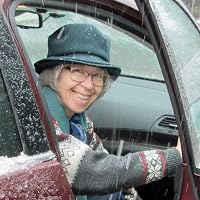
Marian Exall is an award-winning author of mysteries and historical fiction. She grew up in England, and lived in France and Belgium before moving to the United States. After raising a family while pursuing a career as a lawyer, Exall now lives and writes in the Pacific Northwest.
Through the intertwined stories of indelible characters, Marian Exall creates a window into a relatively unknown part of the tragic history of Europe through the years of WWII and its aftermath. The Daughters of Riga masterfully re-creates the Latvia and the Holland of that era as lived by characters you will care about. Even readers familiar with events in France and Britain will find new, deeper understanding of life on the ground in smaller countries swept into the disaster.
Without giving away too much, this is a story of Jews and their Christian neighbors as they search for safety. I was riveted by the quiet heroism, clever work-arounds, human frailty, and resilience—portrayed with restraint and always with breathtaking realism. Exall then brings the story forward, through the youngest characters, to a surprising and emotionally satisfying conclusion.
I highly recommend Daughters of Riga. This terrific historical fiction book comes out February 28 this year.
—Jean Waight, author of The River Beyond the Dam: Shooting the Rapids of Progressive Christianity
Marian Exall, has captured readers for years with her clever, addictive Sarah McKinney mystery series. In Daughters of Riga, Exall tackles WWII and the complex efforts made by Christian and Jewish citizens to save Jews from Hitler and Natzi efforts to eliminate them. Weaving present and past into a compelling story of survival, love, and humanity, the reader comes to understand that things are not always as they seem, and heroism comes from many places. I read an advanced copy of this book (All opinions are my own), and found the characters "living" in my thoughts, as I read. Similar in ways to Schindler's List, Daughters of Riga is a reminder that even in the darkest times, there are those who provide light.
I received this book through voracious readers only in exchange for an honest review. As historical fiction it was a compelling and gratifying read. The characters were sympathetic. As events unfolded over decades post war, the impact of decisions made during the war became apparent. Thanks to the author for providing a perspective on the political and social events unfolding in Latvia during the time up to and following when it fell to the Russians.
This is an interesting book for anyone who has been to Latvia or is interested in the effects of war on non-military. It is an easy read with characters from multiple generations and points of view. It spans a long time period. I enjoyed it and learned from it.
As a follower of books related to the Holocaust, I started reading this intriguing story, immersed in my own recollections of Riga, Latvia from travels there in 2000, exploring the remnant of a Jewish community and a visit to the last remaining Jewish hospital in Eastern Europe. Having read previous books by Marian Exall, I knew this would be a captivating and different kind of story. But strictly speaking, the book is not really "about" the Holocaust. Rather, it's an exploration into the lives of a group of characters caught in the Second World War and the Holocaust, who are forced to make dangerous and desperate decisions as their lives are interrupted. We follow the travails and travels of Dani and her childhood friend Berta, as the traverse Riga and various destinations in the Netherlands, England, and France-and how they change during their journeys. Exall also brings to vivid life the constrictions of wartime life in Riga and the warning signs for the Jews,as antisemitism takes hold by 1939. And the extraordinary courage shown by characters like Dutch Consul Vandercam, who makes the choice to help Jewish refugees escape. Each of the "daughters" - Dani, her mother Nellie, her grandmother Ekaterina, her sister Sarah; Berta and her mother Margriet-takes us on a unique and fascinating storyline before the war and during it. Marian Exall memorably brings them alive, giving us a deepened understanding of the lives and hardships of ordinary folks during this time.
Full disclosure: I am not normally particularly interested in works of fiction set around the events of the Holocaust. However, Exall's book is very different. It draws on the intertwining lives of a highly engaging cast of characters, visiting them different decades of the 20th century, and creating a memorable, absorbing tapestry. Each character is well-drawn and relatable, while also living through sharply detailed, specific (and intriguing!) locales and eras of history. The book is also driven by a clever and unique mystery (unsurprising given Exall's pedigree as a mystery writer) which keeps you turning the pages. But mostly, you will find yourself pulled into the hearts and souls of these people, and utterly absorbed in finding out what happens to them next.
Having read Marian’s other novels, I knew I could expect cogent writing and succinct descriptions of people and events. I was particularly interested to read Daughters of Riga because I know virtually nothing about that part of Europe in WWII. My reading of that era focuses on England and France, of course, but I was ignorant about Latvia and sadly even Holland. This novel offers fine examples of life in a variety of locations and over a period of years before, during and after the war, and how a select few deal with the changes facing them. References to folklore and bits of history intrigue me to want to know more than the tantalizing glimpses provided. A unique story from first to last and held my attention throughout.
Although this book is about sadness, it is very well written. I received a copy of this novel via voracious readers in lieu of an honest review. It told the stories of two little girls who spent one summer together, but then their lives split and each went on their own journey. Both girls lost their mothers, but in very different ways. Both women grew up to be strong in their own ways. One had a life full of family though she always missed her mother, and the other chose to remain in solitude due to losing her mother. This book showed two different perspectives on the aftermath of World War II.
I loved this book. Exall's writing beautifully engages us in the tale of two very young girls and their families caught up in the events leading to World War II and the Holocaust. The stories and circumstances that bring these two girls together, separate them, and yet bind them transcend the horrors of the time and focus on the personal courage, despair, and resilience surrounding them. Exall made each character deeply human to me. The choices they made, right or wrong, flawed or heroic, were the best they could do, even when their best was not good enough. This book will stay with me a long time.
Daughters of Riga is a unique historical fiction that weaves together the lives of Berta and Nellie during WWII. They were both children when the atrocities of the war hit their lives, and the adults were the ones making a myriad of no-win decisions that would impact the girls for a lifetime. Marian Exall drew me in with the characters and the interwoven narrative. This is a touching, human story about an atrocious time. It's a look at the smaller places that suffered during the war, and it brought me to my map several times. I enjoyed the book.
There are a number of positive things to say about this book, and also some things that bothered me. I would have liked to give it 3.5 stars, but it just isn't a four-star book for me. That's only my opinion.
The things I liked were the details about how things worked in that time period, such as what a consul versus and ambassador is, how much behind-the-scenes diplomacy must have been going on. The many WWII historical novels I've read have almost always been set in France, Brittain, Germany or Russia, so it was very interesting to learn about how the Baltic states fared.
I believe the book is based on a true story, which makes it more interesting to me. I was especially interested in how the consul in Riga was able to make connections with Sweden in order to help Jews escape the country.
The problems I had with the book were with knowing and understanding the characters. The way the chapters shifted from one time period to another left me a bit muddled at times about which "daughter" I was reading about and which time period I was in. But that may just be my scattered brain.
While I found the story compelling, the writing style was a little blah for me.
I thoroughly loved this book. In reading, I'm always very aware of the form and structure utilized. This was unique and resonated with me. Character development was immediately engaging. I found myself chuckling at times, teary eyed at times, and always eager to see what would happen next. Having read much historical fiction, I still felt I learned something new this time. Thanks you, Marian, for your work!
Excellent historical fiction. I've read a fair bit, both novels and non-fiction, about WWII, but this novel focused on compelling circumstances during that era with which I was unfamiliar: the jockeying between Soviet Russia and Nazi Germany that shaped eastern Europe, including Latvia, and a brave Dutch consul in Riga who helped provide safe passage to Jewish refugees. Against this backdrop, the author's thorough research and wonderful character development shone.
This is another WW2 survival story. What makes it unique is it is based on a real life hero who never knew the survivors of his dedication to humanity. Life is seen through these troubled times seen through the eyes of a survivor looking back. The author writes with a well developed narrative giving us a plot that evolves from different perspectives, easily followed as it moves between present and past. It was gripping keeping me looking forward to an event and the outcome .
This entire review has been hidden because of spoilers.
The story was enjoyable and interesting but I found the jumping backwards and forwards in time confusing at times. Would have preferred to have the story in time order, I am not sure what the author was trying to accomplish by time hopping backwards and forwards. Despite this however the story was compelling.