Listening with compassion can solve our most pressing issues—across global politics and interpersonal relationships and within our own hearts and minds.
In How to Listen, Zen Master Thich Nhat Hanh demonstrates how deep listening is a fundamental building block of good communication. But perhaps more fundamentally, listening is central to our practice, a basic ingredient to strengthen our capacity for mindfulness, concentration, insight, and compassion. Learning how to listen with equanimity to life itself, we generate insight into the true nature of our deep connection to all things. And from this place of understanding—when we know that we aren’t separate—our capacity to listen deepens even further.
With clear and gentle guidance from Thich Nhat Hanh, we learn how truly listening—to ourselves, to each other, to Mother Earth, and to the many “bells of mindfulness” that are available to us in each moment—is the foundation of our practice, an expression of love, and a solution to our deepest and most urgent large-scale conflicts.
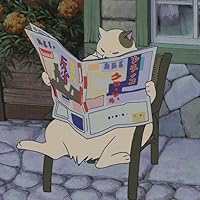
All Mindfulness Essentials books are illustrated with playful sumi-ink drawings by California artist Jason DeAntonis.
Thích Nhất Hạnh was a Vietnamese Buddhist monk, teacher, author, poet and peace activist who then lived in southwest France where he was in exile for many years. Born Nguyễn Xuân Bảo, Thích Nhất Hạnh joined a Zen (Vietnamese: Thiền) monastery at the age of 16, and studied Buddhism as a novitiate. Upon his ordination as a monk in 1949, he assumed the Dharma name Thích Nhất Hạnh. Thích is an honorary family name used by all Vietnamese monks and nuns, meaning that they are part of the Shakya (Shakyamuni Buddha) clan. He was often considered the most influential living figure in the lineage of Lâm Tế (Vietnamese Rinzai) Thiền, and perhaps also in Zen Buddhism as a whole.
In my opinion, this book is really about how to listen to yourself on a deeper level. It’s a guide on better understanding yourself, environment and surrounding (which leads to truly understanding others as well). I enjoyed how it was written in many little one or two page sections on varying prompts. A great, thought-provoking read, and I love that it’s pocket sized!
This book is not simply about how to be a “better listener,” it is a book about how to listen well to others (colleagues, friends, children) and to listen fully to ourselves. Much information is shared in less than 120 pages, including practices for listening. I love this book for myself and also for material to include in my guided forest baths!
Picked this up a while ago as recommended by a professor/mentor of mine (and now to keep in my therapy office). Easy flip-through to gain some mindfulness/grounding tips, learn aspects of the Buddhist mindset, and direct more attention to what seeds you’re watering in your life. I was left with a deeper understanding of how self compassion makes space for insight and equanimity, which then, through listening, translates into connection and inter-being. (woo woo shit 😄🌏🫰)
A really simple yet insightful and meaningful book, full of pithy advice and rumination on mindfulness, empathy, and the activity of listening. With the sections so short and even whimsical, it’s hard to believe that much of the advice in this book stuck. But maybe that’s ok. This is the kind of book I can see myself rereading one day.
Great, simple lessons by Thich Nhat Hanh himself. Nothing more important than to listen, to truly listen. I try to be better at it and started by listening to this.
Every book from him is worth every page. This one in particular helps you with your relationship. It includes a lot of wisdom and examples that are from our times too. My favorite exercise is to just sit with your friend, partner etc. and breathe together and listen to each other breathing. With whomever you had a fight or tens situation, this experience brings you very close and remembers how we are all the same ❤️
The Publisher Says: In a time of great division and discord, our capacity to listen deeply and with compassion is paramount to solving pressing issues—across the realms of global politics, interpersonal relationships, and our own hearts and minds.
In How to Listen, Zen Master Thich Nhat Hanh demonstrates how deep listening is a fundamental building block of good communication. But perhaps more fundamentally, listening is central to our practice, a basic ingredient to strengthen our capacity for mindfulness, concentration, insight, and compassion. Learning how to listen with equanimity to life itself, we generate insight into the true nature of our deep connection to all things. And from this place of understanding—when we know that we aren’t separate—our capacity to listen deepens even further.
With clear and gentle guidance from Thich Nhat Hanh, we learn how truly listening—to ourselves, to each other, to Mother Earth, and to the many “bells of mindfulness” that are available to us in each moment—is the foundation of our practice, an expression of love, and a solution to our deepest and most urgent large-scale conflicts.
I RECEIVED A DRC FROM THE PUBLISHER VIA EDELWEISS+. THANK YOU.
My Review: "Everyone thinks of changing the world, but no one thinks of changing himself," said Tolstoy, and that truth has never faded or lost relevance.
When confronted by disagreement, wisdom says to listen first, then react. As a goal, that is very admirable, but largely unattainable, I hear everyone saying. I said it, too. Truth is it's hard, it's challenging, and you will fail in practicing it.
Zen practices are the butt of many jokes in the Western overculture, unsurprisingly. Google "zen koan" and imagine being presented with it sans context or preparation for the simple existence of a context where this is not intended to be humorous. Mindfulness is not natural to homo sapiens occidentalis. We're fed a constant media diet of covetousness, triumphalism, and valorized ignorance. These are the antithesis of mindfulness, its very opposite both in worldview and in the practices promoted therein.
The author was a vocal peace and mindfulness advocate most of his near-century of life. This book, charmingly illustrated by Jason DeAntonis, offers up practical steps towards a practice of mindful listening. In reading the ideas I was forcefully struck by the way they could be read: I've been at the mindfulness game for quite a while now, and began my own journey from a more or less Buddhist perspective. (My sexual preference has always been "more," so Buddhism, with its emphasis on renunciation, and I were destined to part.) These pages are full of advice for practices that can be read and applied by the novice through to the student of Buddhism. No one is left out of the benefits because there is no presumption of an expert audience.
So I hope, like the departed author, that you'll start a journey to becoming a real listener by reading and heeding his words. From the 1975 publication of The Miracle of Mindfulness through to this posthumous publication (he died in 2022), he's been making steady inroads into US and Western culture with his interlocking message of listening as a practice, and mindful existence in the modern world, in place of mere passivity and disengagement.
There is no better way to transform one's experience of the world than to be fully present in it. Starting here is not a bad idea at all.
This is my very first Goodreads review, and it's quite a good one! I'm putting this at 4 Goodreads stars and a personal 9/10 score (I hate how Goodreads doesn't let you do half stars) which superficially reflects a good but not great reading experience. That does not accurately reflect the joy I felt reading this book.
It falls short of 5 stars simply because it's very short and part of a long series and I really want to use my 5 star power judiciously, but this was a profoundly cathartic and beautiful read. Like many young people in the developed world, I have a deeply confused relationship with religion. I had a secular upbringing and by the age of 10 I was hit with the realization that there was no god, but I've grown to disgust my old teenage affiliation with New Atheism. Not merely because the logic of New Atheism has been used to justify atrocities all over the world (see, Palestine), but because I find that I can no longer square my atheism with anti-theism or any sort of hostility towards religion. I don't involve myself in the practices of Western religion because I don't feel a belief in it, and that's that, but there's no underlying hostility towards belief anymore. As I've gotten older I've come to see the value of gigantesque, the unknowable, the creativity that comes with trying to explain layers of reality that we haven't yet found the words to describe, and this book gave me that.
It was beautiful to see some of the most formative realizations I ever had in my depressive teenage years so eloquently and professionally articulated and expanded upon into something greater my such a reversed spiritual teacher. The concept of suffering as something that's inside you that needs to be released, the importance of self acceptance, introspection, looking after yourself as a form of growth. The bell as a call to one's attention, the act of stopping and noticing what's inside you, the beauty of appreciating all that exists. This is just me talking off the cuff and not wanting the first review to be unwieldy in length. It was a deeply kind and universal book that gave me more confidence in meditation and a much greater interest in how my personal values could intersect with actual Buddhism. It's above all else, a treatise to listening and all the good that concept can do for you and humanity.
As a critic of political meliorism I'm skeptical of the idea that listening can be used to solve political problems, but you know, I can cleave the really good parts out of the message. And of course, there's far more good in this message than bad.
I gave this book 4 stars. It’s not the kind of book you rush through or analyze deeply, it’s the kind you keep on your nightstand and return to every now and then.
The book talks about something that sounds simple but is surprisingly difficult: truly listening to another person. The book is very short, almost meditative, but it carries a gentle message about compassion, patience, and being present with others.
What I liked most is that it doesn’t feel preachy. Instead, it reads like small reflections you can sit with. It reminds you that sometimes the most powerful thing you can give someone is not advice or solutions, just your attention.
This is definitely one of those books you leave next to your bed, the kind you pick up for a few pages when you want to slow down and breathe for a moment.
The first practice is to stop running, come home to our bodies, and recognize our feelings of suffering. Suffering is one energy, Mindfulness is another energy that we can call on to embrace the suffering. The function of mindfulness is first to recognize the suffering and then to embrace it. The practice is not to fight or suppress the feeling, but rather to cradle it with tenderness.
In order to truly be, we must be free. Free from what? Free from thinking, free from anxiety, fear, and longing. When the noise within us disappears, there is the emptiness of sound. This kind of silence is extremely eloquent, extremely powerful; we call it "thundering silence." Against the background of this kind of silence, you hear very clearly. You begin to hear the deepest kind of calling from within.
Knowing how to listen means that we give the person a chance; we allow what we hear to sink in. But when we let go of our opinions and views - when we create space - then what others say can truly penetrate, So please empty ourself when you lsiten - that's the art of deep listening.
Another great work from the words of Thich Nhat Hanh. I continue to learn and be inspired more and more every time I read a work of Hanh's.
This piece, broken up in to mostly short paragraphs to help one to listen, is what I needed to read. Many people today don't listen, and I am guilty of that. They talk over you or completely ignore what you are saying and so it is no wonder we see so much anger and craziness in the world. Listening is an art form that goes beyond just letting someone unload on you. This work can help you in a positive way when someone is needing your ear and you are willing to give it.
A 2024 Staff Nonfiction Favorite for Vijaya! For readers of I'm Right and You're an Idiot: The Toxic State of Public Discourse and How to Clean It Up by James Hoggan with Grania Litwin and The Ancient Art of Thinking for Yourself by Robin Reames.
Actual Rating = 3.5 My 3rd book from him. Found this one randomly on the New Books shelf at the library. Enjoyable read but a lot of overlap from his other book The Art of Communication. It was still a good refresher. I liked the passport size book format with lots of line spacing and tons of little chapters. It was inviting and relaxing to read.
Loved this handy little book! Every 1-2 pages focuses on a different aspect of listening. It’s based in Buddhist teachings but would be helpful for every human in my opinion. Very easy read, the kind of book you can re-read many times and keep coming back to.
Super wholesome, quick read. Full of deep and meaningful messages on being present and opening your mind and awareness to the present moment. The art of learning to focus on others and fully receive them. Something we need much more of in our world ❤️ Great book!
This is the fourth book I have read in this series. And while each one has been helpful this particular book was the most practical and organized of the group.
Este es el numero once, realmente han sido libros de ayuda. Thich Nhat Hanh es una isla de paz, confianza, solidez, amor y libertad. Son tan prácticos. Ansió leer el siguiente.