Although his career is much richer and more varied than a single series of tales for children, Clive Staples (C. S.) Lewis is perhaps best-known for his beloved fantasy series The Chronicles of Narnia. Born in Belfast near the end of the 19th century, Lewis had a difficult childhood and lived through the devastation of two world wars. Yet, his work most often celebrates joy, optimism, and spiritual meaning, rather than dwelling on the darkness he had experienced.
In C. S. Lewis: Writer, Scholar, Seeker, Dr. Sørina Higgins will take you on a fascinating expedition through the life and work of this influential author, examining the crucial events and relationships that shaped his personal, literary, and spiritual journeys. As you’ll see, while Lewis holds a special place in the canon of modern fantasy literature—along with his friend and colleague J. R. R. Tolkien—the fantastic was not his only interest. His wide-ranging imagination and constant curiosity led him to write everything from religious essays to science fiction while also pursuing his career as an Oxford fellow and tutor and literary scholar. As you trace Lewis’ life from his unhappy days at boarding school to his final years, Dr. Higgins will spotlight the connections between his lived experience and the creation of his work, illuminating the ways his literary efforts reflected his personal pursuit of meaning and connection.
The story of Lewis’ life and literary achievements is one of both historical specificity and timeless, eternal themes. Though Lewis was certainly a man of his times and subject to many of the biases and restrictions of his era, as Dr. Higgins highlights, he never stopped growing and embracing new ways of thinking. And today, more than half a century after his death, his work lives on, entertaining and enlightening new generations of readers all over the world.
To be honest, I've been listening to this book every night before going to sleep so I can't say there was a lot of information retention. Nonetheless, I've found out some new interesting facts about C.S.Lewis. I've only known him as the author of The Chronicles of Narnia, which I've read as a child. Narrator has a lovely, clean and relaxing voice, I've enjoyed listening to her.
One of the things that was hot-iron branded into my brain in the worst class of my life (College Expository Writing 101) was show, don't tell. Well, this was a lot of tell and no show. There is a ten minute tyrannical tirade about the definition of allegorical that at the end left me more confused but almost no description of his works. She spouts out words that I would guess most people don't know the definition of much less a description of (Golden Dawn something, hermeticism, Rosicrucianism etc.). I found myself pausing the audiobook to look things up. I do not feel like I know him any better than when I started. Perhaps, the PTSD I still have from College Expository Writing 101 marred my view? Perhaps. The one thing I do appreciate? I will be looking into CS Lewis much more.
Interesting. I learned many things about Lewis. It was honestly one person’s opinion on some things. Found that refreshing that it was stated as such. Too short and board to be one’s only source for study.
This was less of an informational book about Lewis and more of a discussion/analysis of his literature and what shaped his writings. I did learn a few things though about his life which were interesting.
Someone who despises Christian morality and can't hold themselves back from calling Lewis sexist and misogynistic has absolutely no business writing a biography on him. It's an okay biography otherwise, but the author is snotty.
After a warm beginning, raising the memories of reading the chronicles of Narnia, the author proceeds to go on onward to attack just about everything Lewis did, including his friends before summing up in the last chapter, “and that’s why Louise had such a wide appeal.“
The author uses modernism, applying modern culture to interpret how people thought and acted 80 years ago, and deconstructionism to tear down any stance that CS Lewis made that upset her.
This is woke rot. I struggled to finish, but wish I had just stopped.
I gained nothing from reading this, except that a young girl who once had fond memories of The Lion, the Witch, and the Wardrobe, had deconstructed the author to the point that the words, “troubling, bothersome, appalling,” and other such adjectives were used, either directly, or in spirit.
Not only did she attack CS Lewis, but also his friends , in an attempt to taint all the good that they did the world.
The author uses two tools. Modernism, applying current, cultural norms to a-past era, and deconstructionism, to undo the author’s stances on issues. This book was constructed under the guise of praising CS Lewis while it was clearly intended to pull one away from him and his works
I listened to this after hearing the author on podcasts and reading her Charles Williams “The Oddest Inkling” blog. Sørina Higgins takes much which naturally will be quite familiar to anyone who’s studied a longer bio such as Alister McGrath’s masterful effort—incorporating the tranches of then-recently released archival correspondence) roughly a decade ago (also reviewed). Certainly she’s widely experienced in today’s academic mainstream, having judged both of her apologists-fabulists-interpreters of Anglican doctrine for mid-20 c British audiences as flawed as to their views on women, race, sexual morality, and hidebound sociopolitical views common to educated classes back then. Her likely orientation is in literary criticism far as I can tell, not as an Anglican, Catholic, or evangelical proselytizer (however, her doctorate is from the Baptist Baylor U)
My own predilections don’t put me in the camp of the committed true believer but as a medievalist by training (if alas not much practice in this job market), and a diligent seeker of intelligent defenders and objectors to faith-claims, I aver her approach aligns with current sensibilities keeping CSL called to task.
So keeping that mindset in perspective, Dr Higgins picks the well-known highlights of CSL’s life and career, before a survey of his major works. It’s compressed into a handful of half hour segments to fit the Great Courses format, thus a sample of the prolific author rather than deeper analysis. Her singsong delivery wasn’t as mellifluous as I’d prefer, but as a lecturer it’s a slight if persistent drawback as one doesn’t expect acting chops from a professor. I’m a Californian so I’m used to a “Western” cadence.
I don’t know if having first been exposed to her research if this brisk program revealed any fresh insights but as these productions aim at the elusive “generally educated audience” they serve as a quick overview. I recommend those curious seek out Prof McGrath’s and Pints with Jack broadcasts if you’re considering a bracing dive into CSL et al’s milieu.
Clive Staples Lewis [1898-1963], who went by the name "Jack" to his family and "C. S." professionally, was a prolific writer who wrote in multiple genres (children's books, sci-fi, theological reflections, and scholarly works), but he is best-known for his 7-volume "Chronicles of Narnia" series. Interestingly, Lewis did not have children of his own and he began writing his children's series relatively late in life.
for Chronicles, he originally had only one story in mind, "The Lion, the Witch and the Wardrobe." Ideas for additional volumes came to him in dreams. He wrote the seven volumes chronologically out of order. After his death, publishers chose to number the volumes in chronological order, with the prequel "The Magician's Nephew" issued as Volume 1, but C. S. Lewis's fans prefer his original production order.
Lewis lost his mother early on and was sent to a boarding school by his detached father. He later married an older woman, who had children his age. In a way, he took as his lover a woman who filled the gap left by the loss of his mother. Lewis, who was an atheist through his 20s, befriended several of his contemporary writers, including J. R. R. Tolkien, and became a religious man in part owing to their influence.
The six lectures in this wonderful course cover various aspects of Lewis's life and written work.
Lecture 1. Little Boy Jack: Childhood and Narnia
Lecture 2. A Life of Loss and Joy (bio and life philosophy)
Lecture 3. Hearing and Telling the Greatest Story (his religious conversion)
Lecture 4. Theological Fiction
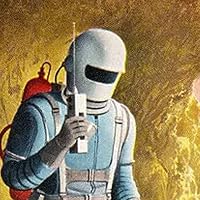
Lecture 5. The Ransom Cycle (his sci-fi/space trilogy)
Sorina Higgins is a great fan of the writings of C.S.Lewis and she shows her enthusiasm in her 6 lectures in the Great Courses series.She does outline the highlights of his life and looks at his achievements in child fantasy literature, science fiction , Christian advocacy and academe.She also mentions criticism of Lewis so the lectures are not totally one-sided but she is quick to defend her hero from all detractors. She does not dwell on some interesting aspects of the Lewis story such as his waning friendship with J.R.Tolkien after the two authors had been best of friends for decades.This book is a quick survey of some of the best known works of Lewis but those seeking deeper insights should go elsewhere.
As a short introductory course on the writings and thought of Lewis, this is a good, efficient primer. For those of us who have read much by and about Lewis, she still provides some surprises and nuggets that made it worth listening to, but I recommend one of the biographies for a more complete introduction. The two I recommend are THE NARNIAN by Alan Jacobs and JACK by George Sayers.
Collection of essays/lectures on C. S Lewis. Some interesting points and theories.
1: The little boy Jack, Childhood and Narnia. 2: A life of loss and joy. 3: Hearing and telling the greatest story. 4: Theological fiction. 5: The ransom cycle. 6: Literary criticism.
Don't know why goodreads lists this as 3 pages. It's a 2.5 hour long audio book.
A lot of insights into the minds of a legendary author. I enjoyed the part about his wife and his long correspondence with just people who would write to him the most. It removes the mystic about famous people for me. I have since began to write to authors that I read and enjoy
Interesting. Higgins unfortunately conceives of anything that is not feminist as misogynistic and narrow-minded, falling prey to the very chronological snobbery that she lectures on in Lewis' writings. Fortunately, she does not focus on this idea too much.
This lecture gave quite the short but informative insight into an author that was incredibly close with Tolkin. The Narnian series was what first introduced me the C.S. Lewis and I like how Sorina taught the short narration of his life and what influenced some of his infamous works.
This was delightful! But i gotta warn the casual listener, charles williams books are not as good as lewis's. Actually they really stink. But i am delighted to hear about the two mens friendship! You go, guys!
Interesting how Lewis is known in different countries for different works. Screwtape was so successful in the UK it might have cost him a promotion at work. America loves his more Christian works.
Interesting read. This is a group of academic lectures on Lewis' major works. The author steps in and states her opinion on Lewis' works at times, and you may or may not agree. Irregardless, she does present the literature fairly in my opinion.
Choosing to educate myself - but I did not care for this book. It was a collection of lectures about the life and work of CS Lewis. I think a narrative format would have been more enjoyable.