

What do you think?
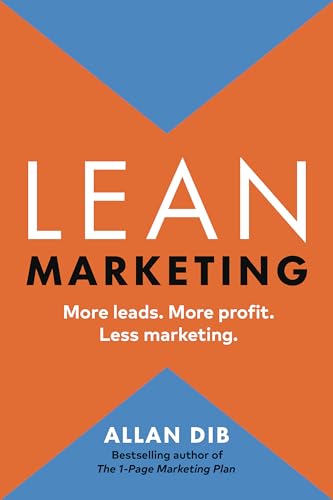
Lean Marketing: More Leads. More Profit. Less Marketing.
Bigger Results with Less Marketing
You keep being told to do more marketing―more complex, more aggressive, and more expensive marketing. Chasing the latest bright, shiny object is exhausting. Increased efforts keep leading to disappointment. The overwhelm for entrepreneurs, marketers, and business leaders is real. There’s a better way.
The lean movement has transformed manufacturing and is now revolutionizing marketing. Small, medium, and large businesses are getting bigger and better results with less marketing.
In this book, you’ll discover:
● Why many existing marketing techniques have stopped working and what to do instead.
● The exact tools and tactics you need to build a devastatingly effective marketing system.
● How to win with a simple, structured, and systemized approach rather than failing with random acts of marketing.
● How to pivot from bloated, ineffective, and wasteful marketing activities to ones that compel prospects to take action.
● How to create a strong product-market fit so that your target market intensely desires what you have to offer.
● How to do marketing you’ll be proud of that works without hype, scams, or pressure.
● How to build a strong brand that creates goodwill and attracts ideal customers.
Lean Marketing is a follow-up to the international bestselling phenomenon, The 1-Page Marketing Plan.
Stop trying to outshout the other guy. Stop blunt-force conventional marketing tactics that annoy, interrupt, and repel. Stop wasting time with theoretical claptrap that doesn’t work in the real world. Get immediate traction by implementing lean marketing.
You keep being told to do more marketing―more complex, more aggressive, and more expensive marketing. Chasing the latest bright, shiny object is exhausting. Increased efforts keep leading to disappointment. The overwhelm for entrepreneurs, marketers, and business leaders is real. There’s a better way.
The lean movement has transformed manufacturing and is now revolutionizing marketing. Small, medium, and large businesses are getting bigger and better results with less marketing.
In this book, you’ll discover:
● Why many existing marketing techniques have stopped working and what to do instead.
● The exact tools and tactics you need to build a devastatingly effective marketing system.
● How to win with a simple, structured, and systemized approach rather than failing with random acts of marketing.
● How to pivot from bloated, ineffective, and wasteful marketing activities to ones that compel prospects to take action.
● How to create a strong product-market fit so that your target market intensely desires what you have to offer.
● How to do marketing you’ll be proud of that works without hype, scams, or pressure.
● How to build a strong brand that creates goodwill and attracts ideal customers.
Lean Marketing is a follow-up to the international bestselling phenomenon, The 1-Page Marketing Plan.
Stop trying to outshout the other guy. Stop blunt-force conventional marketing tactics that annoy, interrupt, and repel. Stop wasting time with theoretical claptrap that doesn’t work in the real world. Get immediate traction by implementing lean marketing.
314 pages, Kindle Edition
Published May 7, 2024
Ratings & Reviews
Friends & Following
Create a free account to discover what your friends think of this book!
Community Reviews
Displaying 1 - 30 of 50 reviews

January 21, 2025
If you want someone to mansplain marketing to you, this is your book.
Where do I even begin - the title suggests that it will tell you how to approach Marketing with Lean Thinking, and while it explains the Lean method within the first part of the book, it rarely touches on how you can apply that thinking to Marketing. Instead, he half-assedly ties it in once in a while, but if you know anything about lean, you'll realize it's only surface level and doesn't encapsulate truly marketing in a lean way.
If you're a beginning business owner who hasn't taken Marketing 101, sure this book is for you. If you've ever taken a marketing class or are a marketing professional, this book is full of "well, yeah, duh".
The worst part? I wouldn't even want to recommend this book to a beginner. While it is a good bird's eye view of marketing, it's not the best one out there. I would recommend Marketing Made Simple over this innuendo-ridden attempt at a marketing book. (Yes, the author mentions "sex sells" and then proceeds to pepper it into his book, I imagine with a sly smirk on his face.)
Where do I even begin - the title suggests that it will tell you how to approach Marketing with Lean Thinking, and while it explains the Lean method within the first part of the book, it rarely touches on how you can apply that thinking to Marketing. Instead, he half-assedly ties it in once in a while, but if you know anything about lean, you'll realize it's only surface level and doesn't encapsulate truly marketing in a lean way.
If you're a beginning business owner who hasn't taken Marketing 101, sure this book is for you. If you've ever taken a marketing class or are a marketing professional, this book is full of "well, yeah, duh".
The worst part? I wouldn't even want to recommend this book to a beginner. While it is a good bird's eye view of marketing, it's not the best one out there. I would recommend Marketing Made Simple over this innuendo-ridden attempt at a marketing book. (Yes, the author mentions "sex sells" and then proceeds to pepper it into his book, I imagine with a sly smirk on his face.)

March 5, 2025
It was a good book. While the first half felt like it was more for an entrepreneur than a marketing professional, I feel like the second half was more helpful.

September 18, 2026
As a marketer, I really enjoyed reading Lean Marketing. What I liked most about the book is that it doesn’t treat marketing as just running campaigns, creating content, or looking at numbers after everything is done. It constantly brings you back to the most important question — are we actually solving a customer problem?
A lot of the ideas felt very familiar from my day-to-day work, especially the importance of testing, learning quickly, listening to customers, and not blindly investing time and money into an idea just because it looks good on paper.
I also liked how the book challenges the “plan everything perfectly and then execute” mindset. In marketing, things rarely go exactly as planned. Sometimes a campaign you are confident about doesn’t work, while something you almost ignored performs surprisingly well. The ability to experiment, learn from the data, and adapt is what really matters.
For me, the biggest takeaway was simple: don’t fall in love with the idea; fall in love with the learning.
It’s a practical read for marketers, founders, and anyone who is involved in building or selling something. I came away with quite a few things I want to apply in my own work.
A lot of the ideas felt very familiar from my day-to-day work, especially the importance of testing, learning quickly, listening to customers, and not blindly investing time and money into an idea just because it looks good on paper.
I also liked how the book challenges the “plan everything perfectly and then execute” mindset. In marketing, things rarely go exactly as planned. Sometimes a campaign you are confident about doesn’t work, while something you almost ignored performs surprisingly well. The ability to experiment, learn from the data, and adapt is what really matters.
For me, the biggest takeaway was simple: don’t fall in love with the idea; fall in love with the learning.
It’s a practical read for marketers, founders, and anyone who is involved in building or selling something. I came away with quite a few things I want to apply in my own work.

December 26, 2025
Insightful, strategic marketing advice. "Lean marketing" refers to a marketing approach that's about doing less and being more intentional and focused to make a greater impact. The book is much broader than marketing strategies and tactics; it also covers branding, naming businesses/products/services, hiring, productivity, customer satisfaction, and more. Each chapter ends with action items.
The book's resources are available by completing a free form.
Dib says his previous book The 1-Page Marketing Plan is strategic, and this book is tactical.
Notes
Leaning Into Marketing
Most small and midsize businesses don't have resources for mass marketing, so they need lean marketing.
Who Are Your People?
"Specificity sells, generality repels." Ensure your products/services target a specific pain point so your audience says, "That's for me."
You don't need to be the best; you can differentiate by "talent stacking": being at the unique intersection of multiple talents that enhance each other.
7 ways to niche
• Location
• Demography
• Shared values
• Industry
• Desire (people who want to do/have something)
• Trend
• It's often most powerful to niche by multiple dimensions.
"You are most powerfully positioned to serve the person you once were." You'll have an advantage with a target market with which you have firsthand experience with their struggles.
Where to learn about target market
• Digital communities (Facebook groups, X, Reddit, LinkedIn, Discord, forums, message boards)
• Podcasts, books, YouTube channels
• In-person conferences, trade shows, industry association events
What Are You (Really) Selling?
7 things people really buy or sell
• Money, wealth
• Time, convenience
• Sex, mating, love
• Status, fame, approval
• Safety, peace of mind, basic needs
• Leisure, entertainment, play
• Freedom
Find the market that perceives your product/service as painkiller, not vitamin. Pain motivates more than pleasure.
Decreasing time, effort, risk, side effects increases value prop. Increasing them decreases value prop.
Programming Moist Robots
"People don't have short attention spans, they have short boredom spans. … If you keep your audience engaged, they will pay attention."
Think of your content as infotainment; it must entertain as well as inform, motivate, etc. It doesn't have to be funny, but it must be compelling.
When creating content, start with emotion you want audience to feel. Tap into one or more of 7 things people really buy or sell (see above).
Your Brand (Start with Buy)
"Financial success fuels passion far more often than the reverse."
Your Flagship Asset
Flagship asset is often content, experience, or tool.
Flagship asset demonstrates you can help your ideal prospect, highlights your uniqueness, causes prospects to identify themselves, builds trust.
For service-based business, flagship content is often DIY version of what you do, or tool that helps target market move toward solution to problem. Genuine prospects will almost always prefer to pay you to do it for or with them.
Flagship content ideas: non-fiction book, how-to guide, awards or leaderboards, white papers, case studies, research reports, structured data reports
Flagship experience ideas: trial or sample, sporting events, keynotes, parade, fashion show
Flagship tool ideas: self-assessments, scorecards, standalone tools that are part of larger tools
Base flagship asset on something that will make target market pay attention and think, "I want that."
"Content upgrades" offer content that complements your webpages in exchange for email opt-ins. Ideas: checklists, worksheets or templates, additional tips or strategies, exclusive interviews or case studies, video or audio version of content, discounts or coupon codes
Your Website
Hero section of homepage
• "Here's what I have" (headline)
• "Here's how it makes your life better" (1 to 2 sentences)
• "Here's what to do next" (specific step)
• Use imagery of people achieving your prospect's dream outcome.
• Avoid auto-playing video, animations, carousels/sliders because they're distracting and outdated.
On homepage, include social proof (awards, press, prestigious clients, reviews, testimonials).
About page
• Start with most compelling thing you have for ideal prospect (big problem they need to be aware of, impressive claim you can make).
• Focus on transformation you offer. Explain how your qualifications and experience solve their problems.
• Include proof of legitimacy, authority, or competence, related to prospect and their problem.
On product/service pages, give clear next steps. If pricing is custom, give a range.
Sales pages should include headline, problem, solution, social proof, CTA.
Many people who will hesitate to call or email prefer live chat.
Your Intellectual Property
Look for ways to turn your knowledge, tools, IP into products. This can increase revenue as well as goodwill, referrals, demand for other products/services.
Business Is a Team Sport
Email Marketing
Send marketing emails from an individual's name and company email address. Don't use generic addresses such as info@ or marketing@, and don't use noreply@.
Have each email focus on only one topic/theme.
Have each email include only one CTA.
Send marketing emails between weekly and twice daily, depending on industry, pace of industry news, relationship with audience. Less than weekly can lead to people forgetting about you or losing interest and unsubscribing or reporting as spam.
At the end of value-building nurturing emails, include a P.S. that you read and answer all replies, followed by non-salesy, polite offers (e.g., "When you're ready, here are three ways I can help you grow your business.").
Content Marketing
Content creator archetypes
• Expert. Must go beyond giving info; include opinion, insight, personality.
• Curator
• Interviewer. Ensure some of spotlight shines back on you.
• Amateur on a journey
• Enigma. Give behind-the-scenes looks at your original, interesting, unusual life (e.g., celebrities).
There are niches at intersection of two or more archetypes.
Instead of overtly selling in your content, use your product/service as a prop that's incidental to content. Create valuable, useful, entertaining content to attract people with common interests around your product/service. You'll build a community of people who will eventually buy from you.
To make content creation easier, document what you're already doing day-to-day.
Keeping, Delighting, and Multiplying Your Customers
Social proof
• Reviews, ratings
• Testimonials
• Quotes from authorities, experts
• Prestigious or well-known customers
• Awards
• Celebrity endorsements
• Impressive metrics
With reviews, testimonials, endorsements, aim for volume, quality, specificity.
Customers who are wary of giving a testimonial may be willing if you just ask for "feedback." Give them the choice of writing this or joining you on a video call which you record. After they give feedback, ask if they'd mind if you used it in your marketing material.
Gifts
• Don't give gifts on major holidays when they'll blend in; give at unexpected times.
• Give something with meaning to recipient.
• Customize or personalize gift so recipient feels special. If you put a name on it, put theirs, not yours.
• Give item that's best-in-class for your budget.
• Give repeatedly, not only once, to strengthen relationship.
Customers who are desperate and see you as their final chance tend to be bad customers; avoid them.
Send customers frequent status updates, even if they just say "No news yet."
Create a visual roadmap of major milestones so customer always knows where they are in process.
The book's resources are available by completing a free form.
Dib says his previous book The 1-Page Marketing Plan is strategic, and this book is tactical.
Notes
Leaning Into Marketing
Most small and midsize businesses don't have resources for mass marketing, so they need lean marketing.
Who Are Your People?
"Specificity sells, generality repels." Ensure your products/services target a specific pain point so your audience says, "That's for me."
You don't need to be the best; you can differentiate by "talent stacking": being at the unique intersection of multiple talents that enhance each other.
7 ways to niche
• Location
• Demography
• Shared values
• Industry
• Desire (people who want to do/have something)
• Trend
• It's often most powerful to niche by multiple dimensions.
"You are most powerfully positioned to serve the person you once were." You'll have an advantage with a target market with which you have firsthand experience with their struggles.
Where to learn about target market
• Digital communities (Facebook groups, X, Reddit, LinkedIn, Discord, forums, message boards)
• Podcasts, books, YouTube channels
• In-person conferences, trade shows, industry association events
What Are You (Really) Selling?
7 things people really buy or sell
• Money, wealth
• Time, convenience
• Sex, mating, love
• Status, fame, approval
• Safety, peace of mind, basic needs
• Leisure, entertainment, play
• Freedom
Find the market that perceives your product/service as painkiller, not vitamin. Pain motivates more than pleasure.
Decreasing time, effort, risk, side effects increases value prop. Increasing them decreases value prop.
Programming Moist Robots
"People don't have short attention spans, they have short boredom spans. … If you keep your audience engaged, they will pay attention."
Think of your content as infotainment; it must entertain as well as inform, motivate, etc. It doesn't have to be funny, but it must be compelling.
When creating content, start with emotion you want audience to feel. Tap into one or more of 7 things people really buy or sell (see above).
Your Brand (Start with Buy)
"Financial success fuels passion far more often than the reverse."
You don't find your passion. It finds you. As you try new things, follow your curiosity, and discover your aptitude, you create a larger surface area for passion to develop.When you put time into something, you tend to get better at it, giving you the chance to become great at it. Once you're great at something, you're likely to develop passion for it.
Your Flagship Asset
Flagship asset is often content, experience, or tool.
Flagship asset demonstrates you can help your ideal prospect, highlights your uniqueness, causes prospects to identify themselves, builds trust.
For service-based business, flagship content is often DIY version of what you do, or tool that helps target market move toward solution to problem. Genuine prospects will almost always prefer to pay you to do it for or with them.
Flagship content ideas: non-fiction book, how-to guide, awards or leaderboards, white papers, case studies, research reports, structured data reports
Flagship experience ideas: trial or sample, sporting events, keynotes, parade, fashion show
Flagship tool ideas: self-assessments, scorecards, standalone tools that are part of larger tools
Base flagship asset on something that will make target market pay attention and think, "I want that."
"Content upgrades" offer content that complements your webpages in exchange for email opt-ins. Ideas: checklists, worksheets or templates, additional tips or strategies, exclusive interviews or case studies, video or audio version of content, discounts or coupon codes
Your Website
Hero section of homepage
• "Here's what I have" (headline)
• "Here's how it makes your life better" (1 to 2 sentences)
• "Here's what to do next" (specific step)
• Use imagery of people achieving your prospect's dream outcome.
• Avoid auto-playing video, animations, carousels/sliders because they're distracting and outdated.
On homepage, include social proof (awards, press, prestigious clients, reviews, testimonials).
About page
• Start with most compelling thing you have for ideal prospect (big problem they need to be aware of, impressive claim you can make).
• Focus on transformation you offer. Explain how your qualifications and experience solve their problems.
• Include proof of legitimacy, authority, or competence, related to prospect and their problem.
On product/service pages, give clear next steps. If pricing is custom, give a range.
Sales pages should include headline, problem, solution, social proof, CTA.
Many people who will hesitate to call or email prefer live chat.
Your Intellectual Property
Look for ways to turn your knowledge, tools, IP into products. This can increase revenue as well as goodwill, referrals, demand for other products/services.
Business Is a Team Sport
A-players are a great deal. You pay them more, but they produce much more than they cost you. … The money you save on hiring B- and C-players, you'll spend many times over on supervising, micromanaging, and motivating them.
Email Marketing
Send marketing emails from an individual's name and company email address. Don't use generic addresses such as info@ or marketing@, and don't use noreply@.
Have each email focus on only one topic/theme.
Have each email include only one CTA.
Send marketing emails between weekly and twice daily, depending on industry, pace of industry news, relationship with audience. Less than weekly can lead to people forgetting about you or losing interest and unsubscribing or reporting as spam.
At the end of value-building nurturing emails, include a P.S. that you read and answer all replies, followed by non-salesy, polite offers (e.g., "When you're ready, here are three ways I can help you grow your business.").
Content Marketing
Content creator archetypes
• Expert. Must go beyond giving info; include opinion, insight, personality.
• Curator
• Interviewer. Ensure some of spotlight shines back on you.
• Amateur on a journey
• Enigma. Give behind-the-scenes looks at your original, interesting, unusual life (e.g., celebrities).
There are niches at intersection of two or more archetypes.
Instead of overtly selling in your content, use your product/service as a prop that's incidental to content. Create valuable, useful, entertaining content to attract people with common interests around your product/service. You'll build a community of people who will eventually buy from you.
To make content creation easier, document what you're already doing day-to-day.
Keeping, Delighting, and Multiplying Your Customers
Social proof
• Reviews, ratings
• Testimonials
• Quotes from authorities, experts
• Prestigious or well-known customers
• Awards
• Celebrity endorsements
• Impressive metrics
With reviews, testimonials, endorsements, aim for volume, quality, specificity.
Customers who are wary of giving a testimonial may be willing if you just ask for "feedback." Give them the choice of writing this or joining you on a video call which you record. After they give feedback, ask if they'd mind if you used it in your marketing material.
Gifts
• Don't give gifts on major holidays when they'll blend in; give at unexpected times.
• Give something with meaning to recipient.
• Customize or personalize gift so recipient feels special. If you put a name on it, put theirs, not yours.
• Give item that's best-in-class for your budget.
• Give repeatedly, not only once, to strengthen relationship.
Customers who are desperate and see you as their final chance tend to be bad customers; avoid them.
Send customers frequent status updates, even if they just say "No news yet."
Create a visual roadmap of major milestones so customer always knows where they are in process.

Read
September 15, 2025Allan Dib’s "Lean Marketing: More Leads. More Profit. Less Marketing." is a call to rethink how businesses approach marketing in a world flooded with noise, ads, and endless distractions. Dib argues that most marketing efforts are wasteful, relying on guesswork and flashy campaigns that burn cash but deliver disappointing results. The book reframes marketing as a disciplined, systematic practice - one that operates like a precision instrument rather than a scattershot approach. By combining authentic connection with scientific testing and measurement, Dib shows how marketing can stop being a money pit and start functioning as the most reliable driver of profit for a business.
Dib opens with a truth that frustrates many entrepreneurs: the best product rarely wins on its own. Success belongs to those who know how to get noticed, build trust, and convert interest into action. He describes the painful example of a founder who spent thousands on Google Ads only to get a handful of signups, while a competitor with a similar product was fully booked for months. The difference wasn’t the product - it was the marketing strategy. Simply spending more on ads or redesigning a website rarely solves the problem because most business owners lack clarity about what they want their marketing to achieve. Without a strategy, even large budgets disappear into campaigns that look impressive but fail to deliver results.
To solve this problem, Dib encourages readers to merge two powerful schools of marketing thought. The first, inspired by Seth Godin, is about finding your tribe - building a unique identity and connecting deeply with a loyal audience. Brands like Patagonia and Harley-Davidson excel at this, turning customers into members of a movement. The second school, influenced by direct-response expert Dan Kennedy, is about relentless measurement - tracking every click, ad, and conversion to make data-driven decisions. Dib argues that the most effective marketers blend these approaches, using both emotional resonance and cold, hard numbers to create strategies that inspire action and reliably produce revenue.
To explain how to make marketing more disciplined, Dib borrows from lean thinking, the management philosophy that revolutionized Japanese manufacturing after World War II. He tells the story of Toyota, which transformed the auto industry by eliminating waste and building exactly what customers wanted, when they wanted it. Instead of producing cars in bulk and hoping they would sell, Toyota empowered workers to catch defects early, streamlined production steps, and focused obsessively on customer-defined value. The result was a system that produced high-quality cars efficiently and profitably. Dib argues that marketing can be approached the same way: identify what customers truly value, eliminate everything that doesn’t contribute to delivering that value, and build systems that continuously improve.
Applied to marketing, lean thinking means rejecting the old 'spray and pray' model where companies blast ads everywhere hoping someone notices. Instead, Dib recommends creating marketing that feels useful rather than intrusive. For example, Buffer offers a free Instagram hashtag generator that solves a real problem for its target audience while quietly introducing its paid product. Patagonia famously told customers 'Don’t Buy This Jacket' to spark a conversation about sustainability, ironically driving more sales by reinforcing its authenticity. These campaigns work because they create value first, turning marketing from a nuisance into a service.
Dib stresses that building an effective lean marketing machine requires mapping the entire customer journey and finding points of friction. He gives examples of companies losing huge numbers of leads because their sign-up forms were unnecessarily long or their messaging was inconsistent across departments. This kind of misalignment is like a factory where each team optimizes its own step without thinking about the whole process. The goal is to create a smooth, coordinated flow from first touch to long-term retention, where marketing, sales, and delivery all work toward the same outcome: maximizing customer value.
A crucial part of this process is shifting from 'product-first' to 'market-first' thinking. Entrepreneurs often fall in love with their solution and then go hunting for customers, only to find that the market isn’t interested. Dib advises falling in love with the problem instead - start by deeply understanding your customers’ pain points and then craft solutions that address them directly. Just as importantly, he warns against trying to serve everyone. Focusing on a niche allows you to craft targeted messaging and build a reputation faster. Facebook, for example, started by serving only college students before expanding to a global audience. Narrow focus allows for precision marketing and increases the chances of achieving product-market fit.
Once you’ve identified your niche, Dib suggests tailoring your message to different levels of customer awareness. Someone who doesn’t even know they have a problem requires very different communication than someone ready to buy. Using marketing frameworks like Eugene Schwartz’s five stages of awareness - unaware, problem aware, solution aware, product aware, and most aware - helps you craft content and offers that meet customers where they are in their decision-making process. When you get this alignment right, your product starts to sell itself, and customers become advocates who spread the word for you.
Dib then moves into the numbers that matter most. He argues that many business owners get distracted by vanity metrics such as social media likes or website traffic, which don’t necessarily translate into revenue. Instead, he recommends tracking a small set of key indicators: Customer Acquisition Cost (CAC), Customer Lifetime Value (CLV), conversion rates, and churn. These metrics tell you whether your marketing is actually profitable. He illustrates this with the story of Sarah, an online fitness coach who learned that her CLV was more than three times her CAC, meaning every dollar she spent acquiring customers brought back three dollars in profit. This insight allowed her to confidently scale her ad spend, knowing it would generate a positive return.
Another lesson Dib emphasizes is that growth doesn’t just come from acquiring new customers; it also comes from increasing the value of existing ones. Sarah improved her profitability not by spending more on ads but by offering premium add-ons and experimenting with price increases, boosting revenue per customer. Dib also highlights the importance of tracking leading indicators - metrics that predict future results - so you can act before problems hurt your bottom line. Monitoring weekly email signups, for example, can reveal a drop in demand early, giving you time to adjust campaigns before revenue declines.
Ultimately, Dib wants readers to build a simple, focused dashboard of five or so key numbers that represent the health of the business. When you know these numbers and understand the levers that influence them, marketing becomes less about guessing and more about engineering predictable growth. Lean marketing is not about doing less marketing; it’s about doing the right marketing and cutting out everything that doesn’t move the needle.
In conclusion, "Lean Marketing: More Leads. More Profit. Less Marketing." challenges business owners to stop treating marketing as a gamble and start approaching it as a system that can be tested, refined, and scaled. Dib’s message is that success doesn’t require the biggest budget or the flashiest campaign but a commitment to understanding your customers, aligning your organization, and relentlessly improving your process. By focusing on the right niche, the right message, and the right metrics, businesses can transform marketing from a cost center into a profit engine. Lean marketing, done well, delivers more leads, more profit, and yes - less wasted marketing.
Dib opens with a truth that frustrates many entrepreneurs: the best product rarely wins on its own. Success belongs to those who know how to get noticed, build trust, and convert interest into action. He describes the painful example of a founder who spent thousands on Google Ads only to get a handful of signups, while a competitor with a similar product was fully booked for months. The difference wasn’t the product - it was the marketing strategy. Simply spending more on ads or redesigning a website rarely solves the problem because most business owners lack clarity about what they want their marketing to achieve. Without a strategy, even large budgets disappear into campaigns that look impressive but fail to deliver results.
To solve this problem, Dib encourages readers to merge two powerful schools of marketing thought. The first, inspired by Seth Godin, is about finding your tribe - building a unique identity and connecting deeply with a loyal audience. Brands like Patagonia and Harley-Davidson excel at this, turning customers into members of a movement. The second school, influenced by direct-response expert Dan Kennedy, is about relentless measurement - tracking every click, ad, and conversion to make data-driven decisions. Dib argues that the most effective marketers blend these approaches, using both emotional resonance and cold, hard numbers to create strategies that inspire action and reliably produce revenue.
To explain how to make marketing more disciplined, Dib borrows from lean thinking, the management philosophy that revolutionized Japanese manufacturing after World War II. He tells the story of Toyota, which transformed the auto industry by eliminating waste and building exactly what customers wanted, when they wanted it. Instead of producing cars in bulk and hoping they would sell, Toyota empowered workers to catch defects early, streamlined production steps, and focused obsessively on customer-defined value. The result was a system that produced high-quality cars efficiently and profitably. Dib argues that marketing can be approached the same way: identify what customers truly value, eliminate everything that doesn’t contribute to delivering that value, and build systems that continuously improve.
Applied to marketing, lean thinking means rejecting the old 'spray and pray' model where companies blast ads everywhere hoping someone notices. Instead, Dib recommends creating marketing that feels useful rather than intrusive. For example, Buffer offers a free Instagram hashtag generator that solves a real problem for its target audience while quietly introducing its paid product. Patagonia famously told customers 'Don’t Buy This Jacket' to spark a conversation about sustainability, ironically driving more sales by reinforcing its authenticity. These campaigns work because they create value first, turning marketing from a nuisance into a service.
Dib stresses that building an effective lean marketing machine requires mapping the entire customer journey and finding points of friction. He gives examples of companies losing huge numbers of leads because their sign-up forms were unnecessarily long or their messaging was inconsistent across departments. This kind of misalignment is like a factory where each team optimizes its own step without thinking about the whole process. The goal is to create a smooth, coordinated flow from first touch to long-term retention, where marketing, sales, and delivery all work toward the same outcome: maximizing customer value.
A crucial part of this process is shifting from 'product-first' to 'market-first' thinking. Entrepreneurs often fall in love with their solution and then go hunting for customers, only to find that the market isn’t interested. Dib advises falling in love with the problem instead - start by deeply understanding your customers’ pain points and then craft solutions that address them directly. Just as importantly, he warns against trying to serve everyone. Focusing on a niche allows you to craft targeted messaging and build a reputation faster. Facebook, for example, started by serving only college students before expanding to a global audience. Narrow focus allows for precision marketing and increases the chances of achieving product-market fit.
Once you’ve identified your niche, Dib suggests tailoring your message to different levels of customer awareness. Someone who doesn’t even know they have a problem requires very different communication than someone ready to buy. Using marketing frameworks like Eugene Schwartz’s five stages of awareness - unaware, problem aware, solution aware, product aware, and most aware - helps you craft content and offers that meet customers where they are in their decision-making process. When you get this alignment right, your product starts to sell itself, and customers become advocates who spread the word for you.
Dib then moves into the numbers that matter most. He argues that many business owners get distracted by vanity metrics such as social media likes or website traffic, which don’t necessarily translate into revenue. Instead, he recommends tracking a small set of key indicators: Customer Acquisition Cost (CAC), Customer Lifetime Value (CLV), conversion rates, and churn. These metrics tell you whether your marketing is actually profitable. He illustrates this with the story of Sarah, an online fitness coach who learned that her CLV was more than three times her CAC, meaning every dollar she spent acquiring customers brought back three dollars in profit. This insight allowed her to confidently scale her ad spend, knowing it would generate a positive return.
Another lesson Dib emphasizes is that growth doesn’t just come from acquiring new customers; it also comes from increasing the value of existing ones. Sarah improved her profitability not by spending more on ads but by offering premium add-ons and experimenting with price increases, boosting revenue per customer. Dib also highlights the importance of tracking leading indicators - metrics that predict future results - so you can act before problems hurt your bottom line. Monitoring weekly email signups, for example, can reveal a drop in demand early, giving you time to adjust campaigns before revenue declines.
Ultimately, Dib wants readers to build a simple, focused dashboard of five or so key numbers that represent the health of the business. When you know these numbers and understand the levers that influence them, marketing becomes less about guessing and more about engineering predictable growth. Lean marketing is not about doing less marketing; it’s about doing the right marketing and cutting out everything that doesn’t move the needle.
In conclusion, "Lean Marketing: More Leads. More Profit. Less Marketing." challenges business owners to stop treating marketing as a gamble and start approaching it as a system that can be tested, refined, and scaled. Dib’s message is that success doesn’t require the biggest budget or the flashiest campaign but a commitment to understanding your customers, aligning your organization, and relentlessly improving your process. By focusing on the right niche, the right message, and the right metrics, businesses can transform marketing from a cost center into a profit engine. Lean marketing, done well, delivers more leads, more profit, and yes - less wasted marketing.

March 29, 2025
التسويق الرشيق هو دليل يطبق مبادئ "الستارت أب الرشيق" على استراتيجيات التسويق، مع التركيز على الكفاءة، والسرعة، وتقليل الفاقد في جهود التسويق. يركز الكتاب على أهمية إنشاء وتنفيذ حملات تسويقية تستند إلى البيانات، وتكون موجهة نحو العملاء، وقابلة للتطوير. إليك بعض النقاط الرئيسية من الكتاب:
النهج الموجه نحو العميل: فهم العملاء بعمق وجعلهم محور استراتيجيتك التسويقية. استخدم ملاحظات العملاء لتشكيل العروض والجهود التسويقية.
التجربة والاختبار: بدلاً من الافتراضات، يشجع التسويق الرشيق على إجراء تجارب سريعة. قم بتشغيل اختبارات صغيرة لقياس ردود فعل العملاء وضبط تكتيكات التسويق بناءً على النتائج.
تقليل الفاقد: التركيز على ما يضيف قيمة. تجنب إضاعة الوقت أو المال في تكتيكات تسويقية لا تحقق نتائج. قم بتبسيط العمليات وإزالة الفاقد.
المرونة والتكيف: الأسواق تتغير دائمًا. يشجع التسويق الرشيق على نهج مرن حيث يمكن تعديل الحملات والاستراتيجيات بسرعة بناءً على البيانات أو التغيرات في السوق.
التحسين المستمر: مثل منهجية الستارت أب الرشيق، التسويق الرشيق يدور حول التحسين المستمر. قم بتنقيح الحملات في دورات صغيرة وقم بقياس فعاليتها.
القرارات المعتمدة على البيانات: الاعتماد على البيانات لاتخاذ قرارات مدروسة. جمع ملاحظات العملاء، وتحليل مقاييس التسويق، وضبط الاستراتيجيات لتعزيز الأداء.
النهج الموجه نحو العميل: فهم العملاء بعمق وجعلهم محور استراتيجيتك التسويقية. استخدم ملاحظات العملاء لتشكيل العروض والجهود التسويقية.
التجربة والاختبار: بدلاً من الافتراضات، يشجع التسويق الرشيق على إجراء تجارب سريعة. قم بتشغيل اختبارات صغيرة لقياس ردود فعل العملاء وضبط تكتيكات التسويق بناءً على النتائج.
تقليل الفاقد: التركيز على ما يضيف قيمة. تجنب إضاعة الوقت أو المال في تكتيكات تسويقية لا تحقق نتائج. قم بتبسيط العمليات وإزالة الفاقد.
المرونة والتكيف: الأسواق تتغير دائمًا. يشجع التسويق الرشيق على نهج مرن حيث يمكن تعديل الحملات والاستراتيجيات بسرعة بناءً على البيانات أو التغيرات في السوق.
التحسين المستمر: مثل منهجية الستارت أب الرشيق، التسويق الرشيق يدور حول التحسين المستمر. قم بتنقيح الحملات في دورات صغيرة وقم بقياس فعاليتها.
القرارات المعتمدة على البيانات: الاعتماد على البيانات لاتخاذ قرارات مدروسة. جمع ملاحظات العملاء، وتحليل مقاييس التسويق، وضبط الاستراتيجيات لتعزيز الأداء.

October 3, 2024
Lean Marketing by Allan Dib offers a refreshing approach to marketing by focusing on simplicity and efficiency rather than the usual overcomplicated strategies. It’s based on the lean movement, which has already revolutionized manufacturing, and now it's transforming marketing as well.
One of the key ideas in the book is that many traditional marketing techniques are no longer effective. Allan guides you through building a structured, systemized marketing approach that eliminates wasteful, random efforts. The book explains how to create a marketing plan that speaks directly to your target audience, without resorting to pressure tactics or gimmicks.
What makes Lean Marketing stand out is its practicality. Allan provides clear, actionable steps that can be applied immediately, making it easy for entrepreneurs, business owners, and marketers to see real results. The concepts are simple but powerful, focusing on doing less but achieving more by optimizing your product-market fit and building a brand that truly resonates with customers.
If you’re feeling overwhelmed by marketing and looking for a better way to get results, Lean Marketing is the guide you need. It's an invaluable tool for cutting through the noise and creating a marketing system that works without the need for excessive effort or hype.
One of the key ideas in the book is that many traditional marketing techniques are no longer effective. Allan guides you through building a structured, systemized marketing approach that eliminates wasteful, random efforts. The book explains how to create a marketing plan that speaks directly to your target audience, without resorting to pressure tactics or gimmicks.
What makes Lean Marketing stand out is its practicality. Allan provides clear, actionable steps that can be applied immediately, making it easy for entrepreneurs, business owners, and marketers to see real results. The concepts are simple but powerful, focusing on doing less but achieving more by optimizing your product-market fit and building a brand that truly resonates with customers.
If you’re feeling overwhelmed by marketing and looking for a better way to get results, Lean Marketing is the guide you need. It's an invaluable tool for cutting through the noise and creating a marketing system that works without the need for excessive effort or hype.
October 30, 2024
This book is no replacement to the educational journey of The 1-Page Marketing Plan. I would also say this book doesn’t contain a single journey for the reader. This book is most similar to a series of essays related to 15 topics broadly categorized under a concecpt of “Lean Marketing.”
Dib attempted to reference the lean movement, specifically calling out the Toyota Production System early in the book, but failed to decide whether he was creating marketing applications for the lean principles, or if he was just drawing comparisons to several concepts within the book. Coming from a supply chain background and having studied books like The Toyota Way, I followed what Dib was talking about, but I can imagine his brief dips into the world of LEAN go right over many readers’ heads.
With those points raised, I feel comfortable admitting this is another valuable resource to add to my library. I read it in 5 days and would have read faster if I weren’t taking notes and cross-referencing his amazing resources online.
Dib attempted to reference the lean movement, specifically calling out the Toyota Production System early in the book, but failed to decide whether he was creating marketing applications for the lean principles, or if he was just drawing comparisons to several concepts within the book. Coming from a supply chain background and having studied books like The Toyota Way, I followed what Dib was talking about, but I can imagine his brief dips into the world of LEAN go right over many readers’ heads.
With those points raised, I feel comfortable admitting this is another valuable resource to add to my library. I read it in 5 days and would have read faster if I weren’t taking notes and cross-referencing his amazing resources online.
September 11, 2026
Świetna książka pokazująca, że Lean nie kończy się na produkcji czy IT, ale może być z powodzeniem stosowany również w marketingu. Autor przekonuje, że skuteczny marketing zaczyna się od zrozumienia rynku i potrzeb klientów, a nie od tworzenia produktu i szukania dla niego odbiorców.
Najbardziej wartościowe są praktyczne wskazówki dotyczące wyboru grupy docelowej, budowania niszy oraz koncentracji na działaniach, które rzeczywiście tworzą wartość. To lektura pełna konkretnych przykładów i inspiracji dla przedsiębiorców, marketerów oraz wszystkich, którzy chcą lepiej rozumieć swoich klientów.
Polecam szczególnie osobom zainteresowanym Lean, Agile i customer-centricity. Po przeczytaniu tej książki trudno patrzeć na marketing w ten sam sposób.
Najbardziej wartościowe są praktyczne wskazówki dotyczące wyboru grupy docelowej, budowania niszy oraz koncentracji na działaniach, które rzeczywiście tworzą wartość. To lektura pełna konkretnych przykładów i inspiracji dla przedsiębiorców, marketerów oraz wszystkich, którzy chcą lepiej rozumieć swoich klientów.
Polecam szczególnie osobom zainteresowanym Lean, Agile i customer-centricity. Po przeczytaniu tej książki trudno patrzeć na marketing w ten sam sposób.
May 31, 2024
A must-read guide to efficient modern marketing
Lean Marketing is an exceptional guide book for the fundamentals of modern marketing. This book is packed with practical information without being overwhelming. Most importantly, the concepts are clear, relevant and include steps so they can be applied immediately. Allan’s ability to take complex concepts and make them easy to understand and enjoyable to read makes this book a must read for marketing teams, business owners and marketing agencies alike. Similar to The One Page Marketing Plan, I’ll be keeping Lean Marketing close at hand to apply in my business and with my clients! Outstanding work Allan.
Lean Marketing is an exceptional guide book for the fundamentals of modern marketing. This book is packed with practical information without being overwhelming. Most importantly, the concepts are clear, relevant and include steps so they can be applied immediately. Allan’s ability to take complex concepts and make them easy to understand and enjoyable to read makes this book a must read for marketing teams, business owners and marketing agencies alike. Similar to The One Page Marketing Plan, I’ll be keeping Lean Marketing close at hand to apply in my business and with my clients! Outstanding work Allan.
July 18, 2024
Good overall compliment to the 1 page marketing plan
While you won't unique insights, it will be very helpful for people who are intentionally diving into marketing and want to extend their knowledge a little bit from the one page marketing plan book.
This was also remind you of the things that you need to do that you're probably not doing.
These will not be a how-to book one more of a strategy of the things that you need to pay attention to.
I also recommend to check out ship 30 for 30. I have no affiliation with them but I have taken most of their courses. They will show you practical and how to advise that thanks to reading this book it will make a lot more sense
While you won't unique insights, it will be very helpful for people who are intentionally diving into marketing and want to extend their knowledge a little bit from the one page marketing plan book.
This was also remind you of the things that you need to do that you're probably not doing.
These will not be a how-to book one more of a strategy of the things that you need to pay attention to.
I also recommend to check out ship 30 for 30. I have no affiliation with them but I have taken most of their courses. They will show you practical and how to advise that thanks to reading this book it will make a lot more sense

June 28, 2024
Not for Marketing Professional. Or not for me anyway.
While this book covers some essential marketing mindset and tips, it doesn’t good as deep as I had hoped. And having already been practicing Marketing in the past few years, this book didn’t grab me by providing anything new, so I assume that I’d be more helpful for beginners or business owners.
As the name suggested, I was hoping that it would go deeper into research and case studies on how we can do marketing more efficiently and effectively (lean) but it didn’t, to my expectations.
While this book covers some essential marketing mindset and tips, it doesn’t good as deep as I had hoped. And having already been practicing Marketing in the past few years, this book didn’t grab me by providing anything new, so I assume that I’d be more helpful for beginners or business owners.
As the name suggested, I was hoping that it would go deeper into research and case studies on how we can do marketing more efficiently and effectively (lean) but it didn’t, to my expectations.

February 17, 2025
I'm sure I'm not alone in thinking that most marketing tools, strategies, and tactics out there are pure gold, The problem is most the time you can't just play see what works, especially due to a negative ROI.
Also, it's not wise to learn marketing on the job and call it a day. By being strategically focused we don't only recover our vision of what we can achieve, but we recover our sanity and raison d'être.
The book is a sort of curated paths through a labyrinth. It's a must read for every marketing and advertiser out there.
Also, it's not wise to learn marketing on the job and call it a day. By being strategically focused we don't only recover our vision of what we can achieve, but we recover our sanity and raison d'être.
The book is a sort of curated paths through a labyrinth. It's a must read for every marketing and advertiser out there.

September 9, 2024
Worth Every Cent – A Must-Read for Marketers
I read Lean Marketing in digital format via Kindle, and it was worth every cent. The strategies and insights provided in this book make perfect sense and helped me take my marketing approach to the next level. I picked this up right after reading One Page Marketing, which I really enjoyed, and Lean Marketing did not disappoint. Both books are a must-read for anyone looking to enhance their marketing skills. Highly recommended!
I read Lean Marketing in digital format via Kindle, and it was worth every cent. The strategies and insights provided in this book make perfect sense and helped me take my marketing approach to the next level. I picked this up right after reading One Page Marketing, which I really enjoyed, and Lean Marketing did not disappoint. Both books are a must-read for anyone looking to enhance their marketing skills. Highly recommended!
December 16, 2024
An Absolute Requirement for Every Entrepreneur
The information in this book goes beyond insightful. This is critical for business growth and scalability. I am already implementing several concepts and feel completely confident in accomplishing every objective. The book is easy to read, easy to understand, and easy to follow.
- I you want to understand what to do as an entrepreneur, then implement these strategies and tactics.
The information in this book goes beyond insightful. This is critical for business growth and scalability. I am already implementing several concepts and feel completely confident in accomplishing every objective. The book is easy to read, easy to understand, and easy to follow.
- I you want to understand what to do as an entrepreneur, then implement these strategies and tactics.

February 9, 2025
This book and 1-Page Marketing Plan are books I will read often as an indie author.
The information in these books is too invaluable and the steps too easy to not become tattooed to my brain. I've already printed and filled out the marketing plan and started implementing the steps there. This book goes even further to help nail down your marketing goals focus. I'm excited and wish I'd had these books years ago.
The information in these books is too invaluable and the steps too easy to not become tattooed to my brain. I've already printed and filled out the marketing plan and started implementing the steps there. This book goes even further to help nail down your marketing goals focus. I'm excited and wish I'd had these books years ago.

June 2, 2025
Normalmente no comento los libros que leo, pero creo que este caso lo amerita, Lean Marketing creo que es valioso para personas que van comenzando, si alguien ya tiene un poco de recorrido vale lo mismo que un post-it pegado en tu oficina que diga "enfócate en los básicos". Le quita un poco de nivel que en cierto punto se vuelve más un catálogo de gustos del autor que una verdadera metodología para ejecutar marketing como tal.
July 5, 2024
A thought provoking read
This book is a great read. The principals are well structured and to be honest most is just plain common sense. But there is a world of difference between knowing something and taking action. This book will help you take action. It has certainly done that for me.
This book is a great read. The principals are well structured and to be honest most is just plain common sense. But there is a world of difference between knowing something and taking action. This book will help you take action. It has certainly done that for me.

September 19, 2025
Super useful and packed with ideas
Allan Dib has a sharp writing style with no fat. Ideas are explained in a simple way but never oversimplified. His aim is to be useful in a practical way, not to show off or present a new buzzword. His philosophy can be summarized as:
1) Do the right things, without getting distracted by the latest buzzword
2) In marketing, less is more
Allan Dib has a sharp writing style with no fat. Ideas are explained in a simple way but never oversimplified. His aim is to be useful in a practical way, not to show off or present a new buzzword. His philosophy can be summarized as:
1) Do the right things, without getting distracted by the latest buzzword
2) In marketing, less is more

January 29, 2026
This is a summary of other books on marketing. There was nothing in this that was new--not even the wording. He literally just quoted other authors. So, if you're looking for an executive summary of other people's ideas, it's a good starting point. But I'd recommend you just read the other books and get the full idea directly.

July 8, 2024
A simple, good book collecting many of the marketing Tactics that we may miss in our daily operation. Although it doesn't go deeper into strategy or specific types of businesses, I recommended for beginners or new founders.

September 7, 2024
Es un libro bastante completo acerca del marketing. El marketing es importante porque no obtenemos lo que merecemos, obtenemos lo que negociamos, el valor de nuestro producto o servicio va de la mano con su visibilidad.
April 22, 2025
Great starter book
I really liked the book thst Allan breaks down complex concepts into simple words. Lots of creative kuices started flowing in my mind after I finished reading this simple yet actionable book!
I really liked the book thst Allan breaks down complex concepts into simple words. Lots of creative kuices started flowing in my mind after I finished reading this simple yet actionable book!
May 26, 2025
MUST READ for everyone in sales and marketing
Allen tells you exactly how and what do to be successful
His methods are straightforward and to the point
This book is about being successful and how to do it
Allen tells you exactly how and what do to be successful
His methods are straightforward and to the point
This book is about being successful and how to do it

September 1, 2025
Got me thinking about a few new ideas, but this is very typical of a lot of these types of books. A lot of surface level things, but it’s well worth a listen. The author rubs me the wrong way with his inflated sense of self importance, but I can’t fault him for this kind of professionalism.
January 4, 2026
save yourself the headache of trying to find the best practices
And go here! Hugely important and well organized this book gave me a clear road map. It also cut out so many bad ideas and old trends that would not bring any value.
And go here! Hugely important and well organized this book gave me a clear road map. It also cut out so many bad ideas and old trends that would not bring any value.

June 5, 2024
Essentially, start small, and focus on your customers. Create and reuse marketing assets. Set up systems and use them daily.

June 14, 2024
Well written. Entertaining and extremely informative at the same time. This is an excellent read for marketers and business owners alike.
July 15, 2024
okay so tell me why this actually ate
Read
October 13, 2024A must read for small biz owners wanting a reality check on marketing and creating a robust sales pipeline
Displaying 1 - 30 of 50 reviews