What do you think?
Rate this book


240 pages
First published September 13, 2011


We’ll say this all began just outside of Chicago, in late summer on a residential street dead-ending in a wall. It was the kind of wall meant to hide freeways from view, and for miles in each direction parallel streets ended at the same concrete meridian. No trees on the lawn, no birds on the wires, Northern shrikes gone, little gray-bellied wrens gone. Evening grosbeaks and elm trees and most of the oaks and all the silver brooms of tall grass and bunch flowers and sweetfern and phlox gone. Heartsease gone. About the tops of upturned trash bins, black flies scripted the air.”I was hooked from word one. Nadzam’s gift for description litters the rest of the tale, a presence. In one passage, she uses landscape to ironic effect.
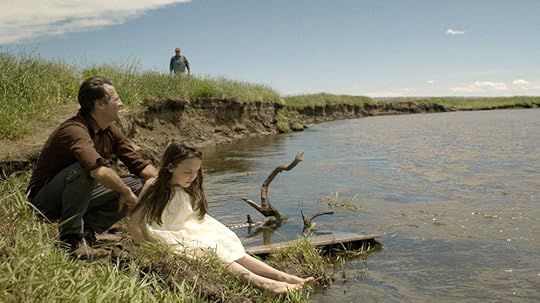
While the girl was in the bathroom at a Chevron in a travel stop off I-80, Lamb bought two postcards and walked outside to the edge of the broken asphalt where trash and weeds grew in a ragged line and broken glass glittered in the daylight. It was hot, and everything looked new, lighter, open.In another she captures Dave’s sense that he is missing out on life:
he scanned the horizon and the ground beneath his feet for something green, for a place where he could press his cheek against warm dirt, for anything like a loophole, a chink, a way out. Nothing before him but the filthy streets and bright signs announcing the limits of his world: Transmission Masters and Drive Time financing and Drive-Thru Liquors and Courtesy Loans and Office Depot and a Freeway Inn and a Luxury Inn and a Holiday Inn. If there was something beneath, something behind, it was hidden from him.But Dave has a vision of a purer place and time, a place in the Rockies, with “a line of broken-toothed mountains…a swimming hole. A river. Trees and clear skies.” Later, “The kid couldn’t know what she was missing, the depths to which she was being duped by a world she had no hand in making.” He really does want something better for her.
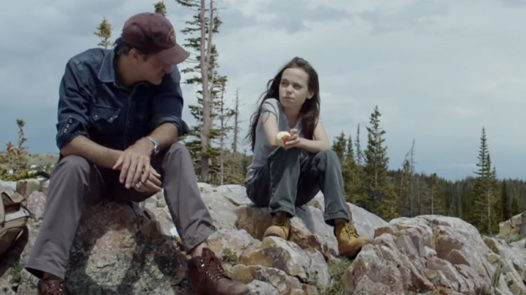
“Look at me. I might be a lot of things, but I’m not a liar, okay?”saith the liar.
“Okay.”
“There’s precious little truth in this world, and I am one of its most enthusiastic spokespeople. Okay?
A heart-stoppingly beautiful young woman. An expensive and well-educated system of reactions and responses, and he knew them all. Had known them, frankly, since years before she was born.”Yet, his affection for Tommie seems genuine. Is it? Or has he created a virginal ideal he can use to gain some feeling of power by conquering? His narcissism causes him to believe his own BS. He sells Tommie a fantasy, but even that pitch is off, beginning with natural beauty in a high, sage-filled valley, but mixing in oddities like a cooler full of Mexican beer and a braided rug on a concrete floor.
“That wasn’t kidnapping. It had been a favor, right? A lesson. He hadn’t kidnapped anyone. She was back in her apartment, having dinner with her parents, her girlfriends perhaps chastened of whoring each other out for laughs in parking lots. It wasn’t kidnapping when the kid ended up safely delivered home in better shape than she left in the morning. It was like he found a loose bolt out there in the world and had carefully turned it back into place. It was fine.”Dave’s whims, his impulses rule and his gift of professional level bullshit lets him get away with the most ridiculous actions. One could certainly think that the author asks us to accept too much acceptance on the part of the people Dave cons. But those of us who have known people of a narcissistic bent can attest to their uncanny powers of persuasion. That is a characteristic that Nadzam has portrayed to perfection here. Dave told Tommie that his name was Gary.
“Gary”Dave has a lawyer’s ability to take your words and make them seem to mean the exact opposite of what you intended. He could be a camp guard telling the inmates that everything was ok, and would they please hurry along to get their delousing showers.
“Yes, dear.”
“I think I maybe want to call my mom.”
“Okay.”
“Okay?”
“In the morning?”
“Sure.”
“What do you want to tell her?”
“Just that everything is okay, and I’m okay, and don’t worry.”
“Do you think she’ll probably worry anyway?”
“Yeah”
“Do you think a phone call might make her worry more?”
“I don’t know.”
“Maybe we should think about that.”
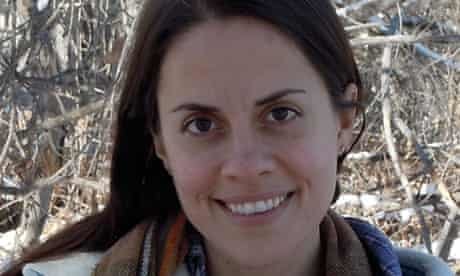
Don Quixote, he writes, “is a kind of treatise about how meaning gets into things and lives. It is a book about enchantment, the inappropriateness of enchantment in a disenchanted world.” (http://harpers.org/archive/2011/08/hb... )The author also was expressing in this book regret at the pain she has caused:
Lamb vows to show her what’s left of the imagined America he’s been describing. He plays with the child not because he is a predator, but because he is himself a child; his fantasies of life as a cowboy, of entitlement and adventure, have eclipsed what should be responsible adulthood, only to hurt all those he claims to love. It was that kind of hurt — and the despair of realizing I’ve caused as much as I’ve received — that most influenced the shape of my bookWhile this book could have used at least one more edit, it does succeed in making a character come to life, in painting a portrait of a contemporary America that has passed its sell-by date when it comes to fulfilling idyllic dreams, and in sustaining a very engaging level of tension. It is a good book that could have been better, but is not half bad, and a very impressive first novel.