

What do you think?

Hannibal and Scipio: Parallel Lives
The Second Punic War between Carthage and Rome began in 218 BCE and ended in 202 with the dramatic defeat at the Battle of Zama of Carthage's commander Hannibal by his adversary, the Roman Scipio. The two men were born about a decade apart but died in the same year, 183, following brilliant but ultimately unhappy careers. In this absorbing joint biography, celebrated historian Simon Hornblower reveals how the trajectory of each general illuminates his counterpart. Their individual journeys help us comprehend the momentous historical period which they shared, and which in distinct but interconnected ways they helped to shape. Hornblower interweaves his central military and political narrative with lively treatments of high politics, religious motivations and manipulations, overseas commands, hellenisation, and his subjects' ancient and modern reception. This gripping portrait of a momentous rivalry will delight readers of biography and military history and scholars and students of antiquity alike.
528 pages, Hardcover
Published January 9, 2025
About the author
Simon Hornblower
39 books25 followersSimon Hornblower is Professor of Classics and Grote Professor of Ancient History at University College London.
Born in 1949, he was educated at Jesus College, Cambridge, and Balliol College, Oxford, where he took a DPhil in 1978.
In 1971 he was elected to a Prize Fellowship of All Souls College, which he held until 1977. From 1978 until 1997, he was University Lecturer in Ancient History at the University of Oxford and Fellow and Tutor in Classics at Oriel College, Oxford, including one year, 1994/95, in which he was a member of the Institute for Advanced Study in Princeton, New Jersey. He moved to University College London in September 1997, where he was Senior Lecturer before being appointed Professor of Classics, then Professor of Ancient History in 2006.
He was elected a Fellow of the British Academy in 2004.
His current focus is classical Greek historiography (especially Herodotus and Thucydides) and the relation between historical texts as literature and as history. He has published two volumes of a historical and literary commentary on Thucydides (Oxford University Press, 1991 and 1996) and the third and final volume will be published in late 2008. His latest book is Thucydides and Pindar: Historical Narrative and the World of Epinikian Poetry (2004). He is also co-editor, with Professor Cathy Morgan of King's College London, Pindar's Poetry, Patrons, and Festivals: From Archaic Greece to the Roman Empire (Oxford University Press, 2007).
Since 1979 he has been involved with the ongoing project Lexicon of Greek Personal Names and in 2000 co-edited a book called Greek Personal Names: their Value as Evidence (Oxford University Press for the British Academy).
He co-edited the new (3rd edn, 1996) Oxford Classical Dictionary.
Born in 1949, he was educated at Jesus College, Cambridge, and Balliol College, Oxford, where he took a DPhil in 1978.
In 1971 he was elected to a Prize Fellowship of All Souls College, which he held until 1977. From 1978 until 1997, he was University Lecturer in Ancient History at the University of Oxford and Fellow and Tutor in Classics at Oriel College, Oxford, including one year, 1994/95, in which he was a member of the Institute for Advanced Study in Princeton, New Jersey. He moved to University College London in September 1997, where he was Senior Lecturer before being appointed Professor of Classics, then Professor of Ancient History in 2006.
He was elected a Fellow of the British Academy in 2004.
His current focus is classical Greek historiography (especially Herodotus and Thucydides) and the relation between historical texts as literature and as history. He has published two volumes of a historical and literary commentary on Thucydides (Oxford University Press, 1991 and 1996) and the third and final volume will be published in late 2008. His latest book is Thucydides and Pindar: Historical Narrative and the World of Epinikian Poetry (2004). He is also co-editor, with Professor Cathy Morgan of King's College London, Pindar's Poetry, Patrons, and Festivals: From Archaic Greece to the Roman Empire (Oxford University Press, 2007).
Since 1979 he has been involved with the ongoing project Lexicon of Greek Personal Names and in 2000 co-edited a book called Greek Personal Names: their Value as Evidence (Oxford University Press for the British Academy).
He co-edited the new (3rd edn, 1996) Oxford Classical Dictionary.
Ratings & Reviews
Friends & Following
Create a free account to discover what your friends think of this book!
Community Reviews
Displaying 1 - 6 of 6 reviews

September 3, 2026
Fascinating read detailing the lives of two of the most well known names in the Republican period.
This book's main purpose is to convey broadly what is known with certainty, what may be claimed with some probability, and what is said in myth regarding the eponymous men. Hence the tone is scholarly and this is not what I consider a narrative history.
Simon Hornblowers command of the subject matter is impressive and his intuition masterfully fills in the many cracks in the available historiography to present an accurate but fuller picture of the lives of these two men.
I gave 4 stars in place of 5 because the read was fairly dry in places due to my misunderstanding of what this book was.
This book's main purpose is to convey broadly what is known with certainty, what may be claimed with some probability, and what is said in myth regarding the eponymous men. Hence the tone is scholarly and this is not what I consider a narrative history.
Simon Hornblowers command of the subject matter is impressive and his intuition masterfully fills in the many cracks in the available historiography to present an accurate but fuller picture of the lives of these two men.
I gave 4 stars in place of 5 because the read was fairly dry in places due to my misunderstanding of what this book was.

Did Not Finish
March 30, 2026I am devastated to announce that due to a big fat overdue library charge I am postponing my life-changing read of Parallel Lives. Will get a hard copy at some point and finish the job but for now this is my Cannae😔😔😔

March 23, 2026
The lives of ancient leaders can seem lost to time: scant sources, the lack of portraits and physical descriptions, and a few stray references in works designed for praise more than balance keep figures like Hannibal and Scipio tantalizingly near and distant. We can imagine Hannibal crossing the Alps by elephant or Scipio trotting triumphantly through Rome, but the faces are obscured, the men lost deep in their marble monuments.
Simon Hornblower does as much as any modern historian to resurrect these men, place them within their own times, and smartly evaluate the source material to offer what we know, and what may be true, about these two extraordinary men. Hannibal and Scipio are ideal for a parallela biography, two figures linked together by the greatest military exploits of their age, and known for all time for their military feats and legendary movements around the Ancient Mediterranean. Hannibal possesses the mystique of the dashing captain of war, akin almost to a Robert E. Lee or Henry V who won heroic battles against great odds, but ultimately lost the war. The winner of that war is the more mysterious Scipio, an electric personality no doubt who saved Rome and moved the Republic into an era of hegemony in the Western World. Scipio's post-Zama life is particularly interesting, experiencing a fall from grace as un-heroic as Douglas MacArthur or other generals who have incurred the wrath of democratic machinations in the postwar homefront.
Hornblower's book carefully charts the chronology of each of these lives, while interspersing fascinating takes on their worlds and legacies. Hornblower masterfully interrogates the fragments and biases of Polybius, Livy, Ennius, and others, filling in the gaps with smart speculation and reserving enough imagination for modern readers to arrive at their own conclusions.
Simon Hornblower does as much as any modern historian to resurrect these men, place them within their own times, and smartly evaluate the source material to offer what we know, and what may be true, about these two extraordinary men. Hannibal and Scipio are ideal for a parallela biography, two figures linked together by the greatest military exploits of their age, and known for all time for their military feats and legendary movements around the Ancient Mediterranean. Hannibal possesses the mystique of the dashing captain of war, akin almost to a Robert E. Lee or Henry V who won heroic battles against great odds, but ultimately lost the war. The winner of that war is the more mysterious Scipio, an electric personality no doubt who saved Rome and moved the Republic into an era of hegemony in the Western World. Scipio's post-Zama life is particularly interesting, experiencing a fall from grace as un-heroic as Douglas MacArthur or other generals who have incurred the wrath of democratic machinations in the postwar homefront.
Hornblower's book carefully charts the chronology of each of these lives, while interspersing fascinating takes on their worlds and legacies. Hornblower masterfully interrogates the fragments and biases of Polybius, Livy, Ennius, and others, filling in the gaps with smart speculation and reserving enough imagination for modern readers to arrive at their own conclusions.
November 21, 2025
too scholarly for me
I’m not interested in reading hundred of footnotes which destroy the narrative for me. I want a historical story. It seemed that almost every sentence or paragraph had a footnote. My mistake. I should have been more careful before buying.
I’m not interested in reading hundred of footnotes which destroy the narrative for me. I want a historical story. It seemed that almost every sentence or paragraph had a footnote. My mistake. I should have been more careful before buying.

June 9, 2026
It’s a very scholarly book by a respected academic, but it’s readable. Those two things don’t always go together in my experience. Prof. Hornblower does get sidetracked from time to time, and I’m sure not everyone will love the copious footnotes. Nevertheless, if you love Hannibal (guilty as charged), and you find his relationship with Scipio compelling (I do), this is a well-organized, thoroughly researched, and engagingly written book. Recommended.
March 2, 2026
Plutarch’s Revenge (in the best possible way)
Simon Hornblower’s Hannibal and Scipio: Parallel Lives is an academic monster — not an easy page-turner by any means — but absolutely worth the effort. I’ve read many books about both men and about the 118-year rivalry between Rome and Carthage. Of course, Hannibal and Scipio weren’t around for the whole sweep of that conflict, but their lives and legacies were forged inside it — shaped by its pressure, its politics, and its consequences.
In this reader’s eyes, Hornblower has composed a masterwork. The best way I can describe it is this: think of it as Plutarch’s revenge. Hornblower borrows the Parallel Lives idea — inspired by Plutarch and, to a lesser extent, Livy — not as a blueprint, but as a high-level homage. The result isn’t just a sequence of battles. It’s a deeply informed, carefully argued comparison of two towering figures — and the worlds that made them.
And what a pair.
Hannibal remains one of history’s clearest examples of military genius. His tactics and methods are studied to this day, and Hornblower helps you see why — not as legend, but as a real mind making ruthless decisions inside brutal constraints.
Scipio, meanwhile, is the ultimate student. He learns at the feet of Hannibal — sometimes directly, sometimes through hard experience — and then adapts. He grows into the commander who can bring Rome to its ultimate victory. Scipio isn’t just “Rome’s answer.” He becomes a strategist with his own signature and nerve.
What I appreciated most is that Hornblower refuses easy hero-worship. This is a book about greatness and its cost — how states praise their champions, fear them, use them, and sometimes discard them. It’s also about memory: how later generations turn Hannibal and Scipio into symbols… and how much gets lost when we reduce them to slogans.
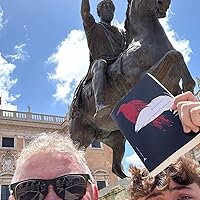
On a personal note: I spent much of January in Italy and have immersed myself in ancient Rome for the last few years, so this book landed at exactly the right time. It felt like the kind of reading that doesn’t just add facts — it rearranges your mental map. After closing the cover, I’m ready to explore other areas of history for a while — the Civil War and the Founding are calling — but the imprint of these two lives will stick with me.
Because yes… the Alps. The elephants. The improvisation and nerve. Rome’s resilience — and Rome’s final success. The long shadow both men cast on everything that followed.
Best for readers who already love Rome/Carthage and want a serious, Plutarch-style comparison rather than a battlefield romp.
Simon Hornblower’s Hannibal and Scipio: Parallel Lives is an academic monster — not an easy page-turner by any means — but absolutely worth the effort. I’ve read many books about both men and about the 118-year rivalry between Rome and Carthage. Of course, Hannibal and Scipio weren’t around for the whole sweep of that conflict, but their lives and legacies were forged inside it — shaped by its pressure, its politics, and its consequences.
In this reader’s eyes, Hornblower has composed a masterwork. The best way I can describe it is this: think of it as Plutarch’s revenge. Hornblower borrows the Parallel Lives idea — inspired by Plutarch and, to a lesser extent, Livy — not as a blueprint, but as a high-level homage. The result isn’t just a sequence of battles. It’s a deeply informed, carefully argued comparison of two towering figures — and the worlds that made them.
And what a pair.
Hannibal remains one of history’s clearest examples of military genius. His tactics and methods are studied to this day, and Hornblower helps you see why — not as legend, but as a real mind making ruthless decisions inside brutal constraints.
Scipio, meanwhile, is the ultimate student. He learns at the feet of Hannibal — sometimes directly, sometimes through hard experience — and then adapts. He grows into the commander who can bring Rome to its ultimate victory. Scipio isn’t just “Rome’s answer.” He becomes a strategist with his own signature and nerve.
What I appreciated most is that Hornblower refuses easy hero-worship. This is a book about greatness and its cost — how states praise their champions, fear them, use them, and sometimes discard them. It’s also about memory: how later generations turn Hannibal and Scipio into symbols… and how much gets lost when we reduce them to slogans.
On a personal note: I spent much of January in Italy and have immersed myself in ancient Rome for the last few years, so this book landed at exactly the right time. It felt like the kind of reading that doesn’t just add facts — it rearranges your mental map. After closing the cover, I’m ready to explore other areas of history for a while — the Civil War and the Founding are calling — but the imprint of these two lives will stick with me.
Because yes… the Alps. The elephants. The improvisation and nerve. Rome’s resilience — and Rome’s final success. The long shadow both men cast on everything that followed.
Best for readers who already love Rome/Carthage and want a serious, Plutarch-style comparison rather than a battlefield romp.
Displaying 1 - 6 of 6 reviews