Jump to ratings and reviews
Rate this book

Reami degli Elfi. Storie dell'Altro Mondo

Rate this book
I Reami degli elfi sono tanto numerosi come lo erano quelli europei nel XIX secolo, e altrettanto diversi. Ognuno con infinite storie da raccontare... alcune di queste le ha raccolte per noi in un magico libro Sylvia Townsend Warner, una delle scrittrici piu' originali del Novecento che con il Piccolo Popolo ebbe, secondo la leggenda, non occasionali contatti.

250 pages, Paperback

First published January 1, 1977

49 people are currently reading
3071 people want to read

About the author

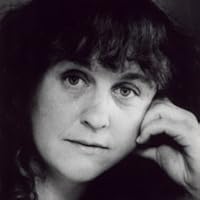
Sylvia Townsend Warner

94 books439 followers
Sylvia Townsend Warner was born at Harrow on the Hill, the only child of George Townsend Warner and his wife Eleanora (Nora) Hudleston. Her father was a house-master at Harrow School and was, for many years, associated with the prestigious Harrow History Prize which was renamed the Townsend Warner History Prize in his honor, after his death in 1916. As a child, Sylvia seemingly enjoyed an idyllic childhood in rural Devonshire, but was strongly affected by her father's death.

She moved to London and worked in a munitions factory at the outbreak of World War I. She was friendly with a number of the "Bright Young Things" of the 1920s. Her first major success was the novel Lolly Willowes. In 1923 Warner met T. F. Powys whose writing influenced her own and whose work she in turn encouraged. It was at T.F. Powys' house in 1930 that Warner first met Valentine Ackland, a young poet. The two women fell in love and settled at Frome Vauchurch in Dorset. Alarmed by the growing threat of fascism, they were active in the Communist Party of Great Britain, and visited Spain on behalf of the Red Cross during the Civil War. They lived together from 1930 until Ackland's death in 1969. Warner's political engagement continued for the rest of her life, even after her disillusionment with communism. She died on 1 May 1978.

Ratings & Reviews

What do you think?
Rate this book

Friends & Following

Create a free account to discover what your friends think of this book!

Community Reviews

5 stars
152 (33%)
4 stars
169 (37%)
3 stars
94 (20%)
2 stars
23 (5%)
1 star
12 (2%)
Displaying 1 - 30 of 96 reviews
Profile Image for Dylan.
18 reviews9 followers
August 16, 2012
This is a reread of a favorite book. Good lord, Warner's stylistic control is perfect, I am at her feet. Unfortunately the book is so much its own strange creature that there's very little it can offer to modern genre fiction -- its blood is a compound of dew, soot, and aconite, and it does not easily breed.
Profile Image for Anna.
2,115 reviews1,019 followers
January 17, 2019
Sylvia Townsend Warner has to be one of my favourite writers. I haven’t come across fiction that I viscerally loved as much as ‘Kingdoms of Elfin’ for quite a while. I read most of it last night, after getting home from work to find the internet not working. TalkTalk had decided to cut me off from Brexit coverage and I was grateful for it. In fact, it’s the happiest I’ve ever been about an outage. I listened to the prog rock musical of War of the Worlds on the record player and delighted in these elegant, acidic short stories. The obvious comparison is Jonathan Strange & Mr Norrell, which has a similar subject and wit. The writing style, however, is very different. While Susanne Clarke crafts an amusing pastiche of fussy early Victorian narration, Warner has cool acuity that recalls Saki. The stories are linked by recurring characters, but disdain the bourgeois superstition of linear time just as their subjects do.

Warner’s fairies aren’t as actively nefarious as Clarke’s, although they exhibit a sometimes shocking callousness towards humans, animals, and each other. The humans aren’t much better, however, and some of the worst fairy behaviour in the book comes of them imitating humans. The two introductions to the edition I read weren’t hugely enlightening overall, but did comment that Warner’s approach is rather ethnographic. This is certainly the case in The Corner That Held Them, a similarly detached narrative about a 14th century convent. Throughout both books, the characters rotate in and out while incident succeeds incident. It's a very decentralised approach to storytelling, one that emphasises atmosphere and institutions over individuals. That Warner creates such fascinating fiction while defying the conventions of plotting and characterisation really emphasises what a great writer she is. Her deft treatment of heavy themes, religion in particular, her deadpan humour, and her artful way with words set her apart. Each of her novels has a very different setting, but I gather they all share this striking sensibility. Those that I’ve read so far have been enchanting.

Before I start quoting my favourite phrases, it’s worth noting that I did not experience ‘Kingdoms of Elfin’ as a book of short stories. As the atmosphere and milieu are so recognisably consistent throughout, I read them as a single novel told in nonlinear fashion. I liked this more than standard short story collections, which I rarely find satisfying unless written by Borges. I couldn’t tell you which story was my favourite, as that would be akin to picking a favourite chapter in a novel. Considering them separately seems inappropriate, as they all fit together so well. Onto some quotes that caught my eye:

For his part, Master Blackbone was delighted with an assistant who was so quick to learn, so free from prejudice, and, above all, a fairy. To employ a fairy was a step up in the world. In London practice every reputable necromancer kept a spiritual appurtenance - fairy, familiar, talking toad, airy consultant. When he had accumulated the money, he would set up in London, where there is always room for another marvel.

[...]

One day in early Spring the Queen was bitten by a mouse.
The result was totally unforeseen. Exhausted by the cares of sovereignty, Balsamine decided to go for a rest cure to Bad Nixenbach, the fashionable Elfin health resort. The greater part of the court went with her, for she did not wish to travel like a nobody. Those she discarded remained at Wirre Gedanken, with a small staff and on the equivalent of board wages.
The discards were named Ludo, Moor, Tinkel, Nimmerlein, and Banian. Ludo was her Consort. Moor, Tinkel, and Nimmerlein had been at various times royal Favourites. All had proved disappointments and were now middle-aged. Banian was young and slender, and had been chosen to make one of her party till at the last moment he became a disappointment by coming out in an anxiety rash.

[...]

Apart from the element of piety, court life at Brocéliande was much the same as in other Kingdoms. There were fashions of the moment - collecting butterflies, determining the pitch of birdsongs, table-turning, cat races, purifying the language, building card castles. There were expeditions to the coast to watch shipwrecks, summer picnics in the forest, deer hunts with the Royal Pack of Werewolves.

[...]

It was of a crawfish soufflé that Count Luxus committed his only metaphor. “It is like eating a cloud,” he said. His cousin Count Brock, who had a more searching mind, replied, “But, unlike a cloud, it nourishes.”
The only person at Dreiviertelstein unmoved by Ludla’s cooking was Queen Aigle. For her, meals recurred like sunrise and sunset. If a sauce had been curdled, a dumpling petrified, she would have acknowledged its cometlike apparition without feeling personally involved.

[...]

The reflection of her earrings flitted about the room like butterflies as she nodded in satisfaction. Rats are wise animals, they know when to move out; they are not immune to mortal diseases as fairies are. If the pestilence came to the very gates of Bourrasque, if the dying, frantic with pain, leaped over the palace wall, if the dead had to be raked into heaps under their noses, no fairy would be a penny the worse. Her court was glad to think this was so but wished there could be a change of subject.

[...]

“My vow forbids me to fly.”
“Your vow?”
“My vow of poverty, chastity, and gravity.”
“Gravity? But you laugh, you tell funny stories.”
“Gravitational gravity. I do not leave the ground.”


And of course that perfect phrase which I couldn’t help mentioning in an update: ‘...the sea, looking like ships wouldn’t melt in its mouth’. Flicking through the book to choose quotes proved challenging, given that practically every paragraph merits acknowledgement of its insight, amusement, strangeness, or beauty. 'Kingdoms of Elfin' is quite simply brilliantly written throughout. In a few deceptively incidental tales, the reader sees the shape of a parallel European history of fairies. The telling of these tales is evocative and clever, full of snide commentary on politics, class, romance, cookery, and much else besides.
Profile Image for Teresa Edgerton.
Author 23 books85 followers
December 17, 2011
KINGDOMS OF ELFIN, by Sylvia Townsend Warner

Let us establish this at the very beginning: these are not Tolkien’s elves, neither the noble and aloof elves of The Lord of the Rings, not the passionate and reckless elves of the Silmarillion. Where they are passionate, it is of another type altogether. They are sophisticated, fashionable creatures, egotistical, and selfish, and even though capable of intense attachments, they are generally fickle: essentially a cold-hearted species. The stories in this collection are full of whimsy and humor, but often of an uncomfortable kind.

Warner’s style is elegant, simple yet very detailed. As much of the story is in these details — beguiling if you love that sort of thing, tedious if you don’t — as it is in the actual events. If you don’t like her style you will not like these stories, and vice versa. There is no author behind the scenes winking at the audience as if to say, “do not take these stories seriously.” Very little is played for laughs. There is no need; the irony and the absurdity speak for themselves. If you are a fan of broad humor, it is likely that you will not enjoy these stories.

In the course of this collection, we visit a number of different realms, located in our own world but invisible to human eyes. Each of these realms is distinctive, both like and unlike the mortal realms in which they are located.

Into their own world they may occasionally admit mortals, but almost always in infancy as changelings, who live among the fairies only so long as they remain young enough to be comely. Then they are discarded during a sort of fairy house-cleaning, and sent back into a world they neither know nor understand. Of the fairy children who are exchanged for them — robbed of their immortality, knowing nothing of their true origins — there is only one story describing the fate of a single individual. Yet if Warner’s fairies are cruel, it is a heedless cruelty, rarely calculated; they simply don’t think beyond what they want. “Elfhame strikes cold,” says a fairy nursemaid, and that is no exaggeration at all.

Though all these stories have a decided charm of their own, there is (as you may have gathered by now) frequently a darkness behind the humor and the glittering façade, for Warner’s fairies seem to know nothing of morality, and only the rules of courtly behavior. For the most part, the elfin nobles are caught up in the idle pastimes and seasonal fads of the various courts, but they are also prone to sudden enthusiasms, sometimes for quite mundane hobbies like fishing or embroidery. This is but one of their many contradictions. Slightly smaller than humans, they are winged but do not fly. This is reserved for servant fairies, who must be agile and swift indeed to satisfy the whims of their betters. Flying, you see, is considered vulgar for the upper classes — though the temptation to take flight is sometimes over-mastering, and practiced in secret by those who can’t resist.

The title is a deceptive, for these realms of Faerie are ruled exclusively ruled by females. As a race, they are are often infertile, and succession to the crown is not hereditary, so infidelity is hardly an issue though they do marry. Queens take lovers, but their attention soon wanders elsewhere, and really, they are so autocratic and exacting, it seems to me that it must come as a relief to her husband or her lover when a queen decides to lavish her affection on another. Yet the title of Favorite, when it is bestowed, is envied by all. As in so much else, pride seems to take precedence over practicality.


If you are still reading, yet have never known the delights of these sophisticated little tales, if you have never experienced the transitory pleasures of a mortal in Elfin realms, then you would do well to seek them out, but the book is not easy to find, and the individual stories are scattered through numerous collections and anthologies.
Profile Image for Terence.
1,313 reviews469 followers
January 2, 2020
I enjoyed Kingdoms of Elfin, a quirky, unusual collection of short stories recounting life among the various kingdoms (queendoms, actually) of Faerie.

Of the sixteen stories, my favorites were:

"The Revolt at Broceliande," which recounts the precarious position of mortal changelings in a fey court.

"The Search for an Ancestress," where a European fairy, Joost, learns how dangerous it can be to return to one's homeland.

"The Occupation," another tale of the dangers of mortal infatuation with Faerie, which can only lead to tragedy - in this case, a trip to Bedlam.

"Foxcastle," another example of man's fundamental incapacity to understand elf, and vice versa.

The elves of these stories are not the un-Fallen Men of Tolkien's Middle Earth nor the "humans with funny ears" who populate far too many fantasy novels. Rather, they're the amoral, soul-less bogies that inhabit the woods and wastes of Medieval Europe. In my experience, the author who most closely captures the otherworldliness & alienness that Warner obtains is Tad Williams in his Memory, Sorrow & Thorn; Shadowmarch; and The War of the Flowers novels.
Profile Image for Leah.
635 reviews74 followers
August 10, 2015
A glorious collection of stories, reminiscent of Susanna Clarke's The Ladies of Grace Adieu and Other Stories, and of Mervyn Peake (my only experience with his writing being Gormenghast), and to some extent The King of Elfland's Daughter and Lud-in-the-Mist

Warner wrote matter-of-factly about fantastic things; her long-lived fairy courtiers are fickle, unpleasant, often stupid creatures, and yet she imbues them with a plain, tricky charm.

The collection is loosely linked, story by story. Kingdoms from one story are alluded to in the following ones, certain characters crop up by mention on a couple of occasions, but each of these could be read alone. They are strange, picaresque, by turns jolly and grim, adventurous and dangerous, flighty and rather dark.

There is nothing I'd recommend quicker to someone who loved The Ladies of Grace Adieu (as I did); it's the closest thing I've found to Clarke's confident, otherworldly style. I am consistently fascinated by Warner's writing, and this one has paid off all my fascination, with interest.
Profile Image for Jay Kay.
90 reviews20 followers
January 19, 2024
Wow what did I just read? Strange and curiously disturbing, a fever dream of mischief, madness and delirium. The stories in this collection feel as peculiar as the fantastical events therein.

Finishing the collection was like waking up from a strange dream; a skein of images, half held glimpses, some vivid others at the edge of memory, fleeting and more difficult to grasp the harder one tries. Sylvia Townsend Warners anthology of pernicious Fairy courts is as beguiling and wondrous as can be conceived of any exploration of the Fey.

Written by a master hand and expertly deployed, Warners prose is perfect! These stories need to be savoured, slowly and re-read to truly be appreciated. Beautifully written lyrical explorations of all the wiles and mysteries of the Other lands, Warner takes us as far as the Ancient Peris of Persia(Peris possibly being a Farsi cognate for fairy's).

None of the stories are straight forward, all of them lyrical, melodic and idiosyncratic they read like wild dreams; twisting, flowing and reverberating towards their conclusions we are swept a long in madness and excitement clinging to the real world lest we become lost in faerie.

The numerous fairy courts are matriarchal, ran by capricious Queens, look out for an original take on Titania and her mortal lover Thomas the Rhymer. The collection is brimming with folklore and mythology; Changelings, Sidhes, a Fairy Court that hunts with Werewolves, Kelpies, Brownies and other fae creatures.

Although all Fairy's have wings, flying we are told is an embarrassing exploit of the lower classes. Fairy's cannot be seen by mortals lest they choose to become visible. Pity the mortals taken into Fairy courts as comely and beautiful youngsters only to be discarded in old age.

The fae will always be a fascinating exploration in literature. And I love all things folkloric and mythological, I plan to read and reread these stories again and again.
Author 6 books253 followers
September 14, 2021
This wondrous, dark, and often hilarious work of "fantasy" is a kind of anthropological study of various fairies and fairy kingdoms. Fairies, though, aren't what you would assume from all your years of fae indoctrination: Warner's fairies are 4/5 human size, winged, and psychopaths. They kidnap human children and do weird experiments on them, live largely lethargic and stupidly empty lives, murder each other with courtly aplomb, and have severe social strictures in place among their castes and castles. The stories collected here, some of Warner's last works, are only loosely connected, focusing as they do on various fairy courts ranging from the fabulously violent to the conservative. Mortals are often toyed with, dissidents are executed and flights taken (usually an uncouth habit relegated to the lower classes) that inevitably lead to strange disasters. The faeries of Elfin are a collective of textbook sociopathy, a final totem to the great works of Warner's career spent exploring the fantastic and the psychological and where we somehow fit in between.
Profile Image for Emmeline.
440 reviews
August 22, 2021
4.5 stars

Sylvia Townsend Warner’s 1926 novel Lolly Willowes was a major find for me last year, and I’ve been looking forward to reading more from her. With a career spanning from the 1920s to the 1970s and a host of books no one has heard of, she’s one of the unfairly forgotten 20th century female writers that publishers love to discover and reissue these days. Most of her books are fairly realist, but the two I’ve read are the earliest and last, which apply a blasé realist technique to the fantastical, or maybe a fantastical approach to the real.

This is a collection of short stories about various fairy kingdoms, mostly in Europe, throughout different moments of their history. Most of them were first published in the New Yorker, which makes me think the magazine have been a rather different beast in the 1970s.

Whether fairy kingdoms interest you or not, what really sets these stories apart is Warner’s unique approach. The introduction highlights that these can be seen as early examples of post-human literature, and that she was at pains to eliminate “any breath of human kindness.” And the result is startlingly-written, and very alien. We are introduced to details of fairy life in an almost ethnographic style, although usually without a human middleman; the fairies are the only characters in most of the tales, but there is no particular identification. The fairies are not us, we are not them, in story after story it becomes clear that our minds and values work differently.

Some of their laws are strangely incidental: high class fairies never fly; flying is seen as something working fairies do. At other times they are casually cruel – no sooner is one old queen dead than her hated changelings have been strangled and left on the moors as food for the crows. In one story, a fairy flies to Persia to try and discover an ancestress for his boring tribe; his resulting culture shock is both relatable and very other. Most stories concern the minutiae of court life, where the departure of a cook is of more importance than an outbreak of plague in the human world. A ghost is an embarrassing phenomenon, because fairies know they have no souls, so what is a ghost doing there? Humans, where they do appear, misunderstand, occasionally recognize the forces they have come into contact with, but take their limited knowledge and apply it backwards. The fairies attend a gypsy funeral, where “visibility is worn as a sign of respect.”

In the final story a man is taken by fairies and spends much of his life under ground observing their culture:

They were fickle in their loves and hates, fickle and passionate in their pursuits. Some devoted themselves to astronomy. Others practiced French horn. Others educated squirrels. Some, he presumed, made measurements. Only one thing was certain: they never quarrelled. Even in their fickle hates, they hated without malice. Whisking from one pursuit to the next, they never collided. The best comparison he could draw from the outer world was the swarm of mayflies, indivisibly borne aloft, lowering, shifting, veering, like a shaken impermeable gauze veil over the face of a stream. [The Queen] was devoted to knitting and never tired of it. When he was told that if she had no more wool at hand she unravelled her work and knitted it up again, he exclaimed ‘Penelope!’ But of course they had never heard of Penelope.

It’s a curious book. It reads less like short stories and more like chapters of a plotless, anthropological novel. It reads nothing like fantasy except in its topic. It reads like a 19th century book, and simultaneously like a 21st century one. I’m looking forward to the next Warner I have lined up, where she takes as her subject life in a 14th century monastery…
Profile Image for Rosamund Taylor.
Author 2 books200 followers
April 1, 2023
These stories were written towards the end of Warner's life, following the death of her partner. They are largely melancholy, and tend to have an air of ironic detachment from their subject matter. They are a departure from Warner's other work, because while supernatural elements do enter her novels, most notably Lolly Willowes, these are strictly fantasy stories. They are concerned with the different Kingdoms of Elfin, which exist alongside the human world, in Scotland, Brittany, Austria, Turkey, and almost any country imaginable. The elfin, who have wings and sometimes green skin, but are around the same size as humans, take little interest in humans, except to take human children and use them as companions or servants. They are concerned with the rituals of courtly life, and live long, unchanging lives, and have no immortal souls or sense of an afterlife. The stories are reminiscent of Susanna Clarke's work, particularly the short story collection, The Ladies of Grace Adieu, although Warner is more concerned with the internal workings of the elfin kingdoms, than with their interactions with the human world. At times, this is almost an academic history of imaginary kingdoms -- Warner said she wanted to include footnotes, and I wish she had done, as they would have added to the reader's sense of an immersive history. This collection is very enjoyable in the way Borges's stories, or the history of faerie parts of Clarke's work, are enjoyable. They are clever, chilling, and imaginative. It's definitely an esoteric work, and would not have broad appeal -- but I found it to be a lot of fun!
Profile Image for Michael.
650 reviews134 followers
June 5, 2022
A collection of wickedly witty stories about an imagined world of Elfin kingdoms (though they are all ruled by rather fickle queens, and their kings tend to be in rather precarious positions).

Although mainly about the Elfin aristocracy, there is also a rag-tag collection of common elfins, changelings, werewolves and humans to add a little breadth and depth. The locales are mainly northern Europe, with the occasional excursion to eastern Europe and the Near East. The time is vaguely 13th to 17th century - it doesn't really matter to the elfins as they live for hundreds, possibly thousands, of years.

These aren't jolly gnomes and fairies, nor noble elves battling evil goblins: the elfins are selfish, untrustworthy, cruel and unpredictable, all beneath a veneer of courtly manners and tradition.

The stories read like folktales, and like such they often end suddenly leaving you wanting more. The endings are rarely good ones for the protagonists, few coming away unscathed, though you can never be quite sure. I like this, as nothing is guaranteed and you usually can't predict (at least I couldn't) which way the stories will run.

Fantasy and folklore, murder and the macabre, wonder and wit: brilliant!

On a second reading: I loved this as much as when I read it 10 years ago, but perhaps appreciated it rather more than then, so upgraded from 4 to 5 stars.
Profile Image for Richard.
Author 117 books69 followers
July 11, 2010
Deeply strange and often amazing but rarely enchanting: if there can be such a thing as a clear-headed, unsentimental study of a phenomenon that doesn't exist, then this 20th century English author and formidable fantasist (Lolly Willowes, Mr Fortune's Maggot) has accomplished exactly that.

Kingdoms of Elfin consists of sixteen stories most of which appeared in the New Yorker in the early to mid 1970's Warner's last work it was published posthumously in 1977.

The stories are loosely linked - an occasional character will appear in more than one story, a couple of courts are the settings for multiple stories. With the exception of one set partly in Persia, they take place in various Elvin Kingdoms located in Western Europe from the late middle ages to just before the end of the 19th century.

These small separate realms remind me of the jigsaw puzzle of tiny states that made up so much of Central Europe before the late 19th century. Each has its own customs and traditions. For instance the kingdom that considers itself the most sophisticated and has the most elaborate etiquette is famous for its hunting pack of werewolves.

The fairies are not immortal; they live for centuries and have no souls. They have wings but using them is distinctly déclassé. Only servants are supposed to fly. Fairy magic is rudimentary and they are feckless, easily distracted, casually cruel to the humans they encounter (and occasionally abduct).

An adventurous fairy in the 17th century travels from the mortal land of Holland to Persia the place where his race originated. There he encounters and barely escapes astounding magic and savage cruelty. The inhabitants of the Elvin Kingdoms, perhaps by interaction with humans, are more like mortals than they are like their ancestors.


Profile Image for Tania.
1,041 reviews125 followers
December 27, 2020
2.5

I started to find the stories rather rambling, I think I may well have enjoyed them more at another time, or if I'd been able to space them out a bit more. (It was a library book, so they were read in fairly quick succession).
Profile Image for Beth.
227 reviews
May 28, 2022
Kingdoms of Elfin is a collection of 17 stories by the English writer Sylvia Townsend Warner, most of which appeared in The New Yorker in the 1970s. This was her last book. I don’t know why "Elfin" seems to be a noun in the title instead of an adjective; I’ve never seen anyone else use it that way.

I discovered this book a long time ago through Kate Nepveu’s reread of Jonathan Strange & Mr Norrell at Tor.com, but I didn't read it then. link: https://www.tor.com/2014/11/21/jonath...

Nepveu writes:
"Here’s a good place to mention Sylvia Townsend Warner’s collection Kingdoms of Elfin, which was recommended to me when I was preparing for this project as possibly influential on JS&MN’s depiction of elves. I, uh, haven’t finished it yet, but from the first two-thirds or so, it strikes me as an interesting comparison in two ways.

First, the elves’ behavior there has something of the same juxtaposition of sometimes acting similarly to humans but thinking in completely alien ways. Second, Kingdoms of Elfin also imagines Elfland as being made up of multiple kingdoms that overlay, or coexist with, Europe—as opposed to, for instance, Elfland being a single kingdom with a physical border between it and our world (Lud-in-the-Mist) or a single kingdom in an entirely separate dimension (Discworld). Kingdoms of Elfin is very out-of-print, but it’s worth checking your library, because it’s quite interesting (though much chillier than JS&MN)."


Warner’s elves are long-lived but not quite immortal. In "The Five Black Swans," five black swans appear as an omen of death. This story has some of the most memorable passages in the collection. Warner writes:
"They are born, and eventually die; but their longevity and their habit of remaining good-looking, slender and unimpaired till the hour of death has led to the Kingdom of Elfin being called the land of the Ever-Young. Again, it is an error to say ‘the Kingdom of Elfin’: the kingdoms of elfin are as numerous and kingdoms were the Europe of the nineteenth century, and as diverse."

And a little later:

"Dying is not an aristocratic activity, like fencing, yachting, patronizing the arts: it is enforced -- a willy-nilly affair. Though no one at Elfhame was so superstitious as to suppose Tiphaine would live forever, they were too well-mannered to admit openly that she would come to her end by dying. In the same way, though everyone knew that she had wings, it would have been lèse-majesté to think she might use them. Flying was a servile activity: cooks, grooms, laundresses flew about their work, and to be strong on the wing was a merit in a footman. But however speedily he flew to the banqueting room with a soup tureen, at the threshold he folded his wings and entered at a walk."
Profile Image for J.
180 reviews
November 24, 2023

Dying was a new experience. It was part of it that he should be sorting feathers, feathers from long-dead birds, and heavy because of that. A wind along the floor blew him away from the feathers. It was part of dying that a dragon came in and curled up on his feet. It seemed kindly intentioned, but being coldblooded it could not drive away the chill of death. It was also part of dying that Gobelet was rocking him in his arms. Once, he found Gobelet dribbling milk between his jaws. The milk was warm and sent him to sleep. When he woke he could stretch himself and open his eyes. There was Gobelet's hand, tickling his nose with a raisin. So they were both dead.


*
Profile Image for Victoria.
63 reviews1 follower
Read
April 10, 2024
Akin to having tea with the cruel prince’s snarky and sophisticated grandmother.
Profile Image for Nadine in California.
1,188 reviews133 followers
March 20, 2022
Ethnographies of the various Elfin Kingdoms of Eastern and Western Europe, narrated in a kind of academic Mary Poppins voice. Charming bedtime reading, although the Elfin are not a kindly, gentle bunch, though punctilious when it comes to social graces. Many of the stories were originally published in The New Yorker in the 1970's, which is a little hard to imagine today. Here's a taste of the voice:
Hamlet was faultlessly well-bred, wealthy, intelligent, handsome, an orphan. In his youth, despite these advantages, he was looked at askance by the staider Elfins of Pomace, who, enjoying a sheltered climate and a traditional calm, did not like excesses. Ordinary libertinism they would not have objected to: Hamlet was a mental libertine. He founded the Pomacean Society for Unregulated Speculation, which, meeting at irregular intervals - in itself subversive - discussed such subjects as Sleeping Out-of-Doors, Compulsory Gymnastics for All Ages, the Badness of Good Taste."
41 reviews1 follower
December 28, 2015
This one took a long, long time for me to finish, and I have a feeling I'll be pondering it for quite some time to come. It wasn't the quality of the writing at fault for my slowness in reading, oh no...each of these stories is full of splendid, glittering prose.

Most of them managed to disturb me in some way. Not in an overtly horrifying way, like Poe's short stories. It's just that the fairies of Sylvia Townsend Warner's "Kingdoms of Elfin" (which should really be "Queendoms of Elfin", but our benighted language has no such word) are so...*cold*. Cold, if beautiful, creatures. Ice-cold. Snow-cold. Diamond-cold. Not cruel, necessarily. Just...careless. Oblivious. Oblivious to each other's or to mortal feelings, and to the sufferings they cause the mortals that they abduct or otherwise tamper with on their journeys. For some reason, Fitzgerald's description of Tom and Daisy Buchanan in "The Great Gatsby" kept springing to mind:

"They were careless people, Tom and Daisy--they smashed up things and creatures and then retreated back to their money or their vast carelessness, or whatever it was that kept them together, and let other people clean up the mess they had made..."

So with the royalty of the Fairy Courts. Most of these Fairy tales are grimly, grotesquely comic little tragedies. None of them has what you might call a "happy ending" - I found myself breathing a sigh of relief when, Hey! Nobody died! In some hideous or just really careless way! In *this* one, anyway! Makes the Fairies of other tales seem positively shining with benevolence by comparison.

If you are an aficianado of the modern fairy story and you *haven't* read this collection, stop what you're doing and order it. It's worth reading for the sheer quality of the writing. That's what I end up coming back to, what kept me going. Sylvia Townsend Warner manages to take the tone of an omniscient, polite, slightly jaded Court historian, or perhaps court stenographer, and make it shine. Just don't make the mistake of looking for her Broceliande, or any of her other Queen/Kingdoms - like the hapless scholar of the last story, your encounter with Fair Folk may not turn out like you hoped...just because you're a fan of *theirs*, doesn't make them a fan of *yours*. You've been warned.

Profile Image for Red Saint.
19 reviews26 followers
March 6, 2021
4.5 stars. Absolutely wonderful and just plain magical. It’s a shame it isn’t read more often. My only complaint is that some of these little stories are so wonderful I would have liked them to have novels all their own. That being said, this does a fantastic job of weaving the Elfin world into our own, making it seem more real than not, and will have you wondering if you misplaced that thing or if it was spirited away by a Fairy.
Profile Image for Maximilian Nightingale.
158 reviews32 followers
Read
December 3, 2025
Unlike any sort of contemporary fantasy. Townsend Warner invents a true parallel culture in her depiction of faeries. Sometimes a bit horrifying.
Profile Image for Alex Sarll.
7,055 reviews365 followers
Read
December 11, 2015
In 2006, while I was reading The Ladies of Grace Adieu, I happened to meet Susanna Clarke's husband through a mutual friend. And I said to him how, for all the fantasy I'd read, I'd never encountered anything quite like hers - was he aware of much that had influenced her, or came anywhere near it? And he recommended this book, which of course I then sought out. But the time-frame here might clue you in that I didn't devour it like I did Clarke's too-few books. I can certainly see a glancing resemblance in this rather chill vision of the good folk, who at times suggest 18th century courtiers taken to their illogical conclusion - creatures at once fickle and fixated, beset by baffling social restrictions (only the low-born amongst them fly), callous gossips among whom possessing a soul seems the grossest trespass. And Warner has a waspish wit and a black humour which keep these curious tales - like fables without morals - ticking along nicely. But from great Broceliande to the parochial kingdom of Catmere, there's too much 1:1 substitution of the appurtenances of mortal aristocracy; not a one of these elfin lands has the grand strangeness and dark power of Clarke's Lost-Hope.
926 reviews23 followers
May 17, 2021
This collection of clever, well-wrought stories about the kingdoms of Elves/Fairies/Elfins that exist in Europe and in the near Mid-East (Persia/Iran, to be precise) forces a shift in narrative expectations. The usual satisfaction one gets from a story is predicated on the simple crisis-climax-resolution schema, which often includes the null-resolution that is some sort of momentary (possibly life-changing) epiphany. The stories in Kingdoms of Elfin don’t give joy in that standard fashion, so satisfaction lies in simply accepting a perspective that quashes or sidesteps dramatic expectations for the smaller pleasures of glimpses into a realm (of creatures and behavior) which is similar but uncannily different. The subversion of simple (human) dramatic formulae presents itself as an unexpected, disconcerting metaphor for the Elfin world itself. Warner’s stories are a motley assortment of keyhole perspectives on a world we readers will never understand, full of wonders, picturesque settings, queer doings, all under sway/suasion to a truly other-worldly sensibility (further exemplified by an austere, erudite, slightly archaic diction that permits/uncovers small, often comic ironies). And, as with any scene glimpsed from a keyhole, there is no accounting for its completeness: does it tell a story or merely hint at something larger?

If I haven’t already been explicit about it, Warner is not serving up twee fairies and twee stories that warm the heart in Romantic, Pre-Raphaelite, or Disney fashion. The Fairies/Elfins in these intricate stories—where digressions and small details mean as much as observing some principal fulfill an action—are curiously self-contained and only glancingly participate in the normal spectra of human emotion. When a Queen dispatches a servant (by having another servant slit its throat and dispose of the body in the nearby lake), it’s merely to make room for a new one; also, in the same story (The Search for an Ancestress), when the Queen tires of losing at chess (or her guest has merely overstayed his/her welcome), it’s time to remove the offender without any unnecessary awkwardness. In the collection’s final story—Foxcastle, which I recommend being read first—a middle-aged mortal man, a teacher of rhetoric at Aberdeen, has long harbored a sympathetic fascination for Fairies, and his Romantic conception of the creatures is thoroughly shattered when he is taken by them, held bound in spider web bonds for several weeks, probed and examined, then allowed to mingle with the Fairies in their underground warren of a castle. The chief thing he learns is that the Fairies have no obligations: they are free of conscience and concern for others. That is, if a Fairy takes an interest in someone/something, it’s solely for selfish reasons. When the Fairies finally tire of the mortal, they have him tossed from the warren, and he appears tattered, bruised and bleeding, stammering in front of a host of humans who think him mad.

The same sorts of idiosyncratic and selfish thinking pervade all the Elfins in these stories, and it’s in following the peculiar flow of the stories that one observes the queer, non-linear way that Fairies operate/think. There is not a single story in this collection that observes the niceties of Aristotelian unity of place or time or theme. Warner has made of her Elfins fey sociopaths whose lives are regulated by ritual and custom, but whose satisfactions are bound up in simply pleasing themselves. In the collection’s first story, The One and the Other, we observe what happens when an Elfin baby is swapped out for a mortal baby, with curiously rococo thumbnail biographies of each bringing them into a grotesque convergence at the story’s end. The mortal comes to love his life with the fairies, but is dismissed when he begins to show signs of age (always repugnant to the long-lived Elfins), whilst the Elfin becomes a traveler and seeker of the arcane, particularly the elixir of Elfin longevity. The Elfin has lived as a mortal, but he is still driven by Elfin desire (and a lack of conscience), so that his interest in a cat permits him to dissect it without qualms or queasiness and to drain from his dying mortal counterpart his blood for analysis, an operation that goes wrong and kills the mortal.

Not all of the stories are grim, and many have whimsical elements that contribute color but little substance, elements that are lumpen in their prominence, but without standard narrative significance. The entire first part of Visitors to a Castle, for instance, describes the origin of the practice of a group of Elfins in Wales who regularly make the Mynnyd Prescelly mountains disappear for days at a time (when it’s gone, it’s a raincloud in Ireland), but this fact of disappearing and reappearing mountains only has significance because the reappearance of the mountain causes a mortal to fall from her bicycle… In the story Mortal Milk, there is discussion of the debilitating effects of supplying Elfins with mortal milk when they are young, and somehow this shifts into the story of an Elfin whose principal pleasure is tending the kingdom’s werewolves, but then finds himself banished to a remote kingdom in northern Sweden where he is tricked into becoming that queen’s consort.

Warner’s purpose in writing these stories appears to have been a very Elfin one, ie, she did it for her own pleasure. And the epigram that introduces the volume—a snippet from Thomas Love Peacock, where he has a character, Mr. Falconer, explain, “I like the immaterial world. I like to live among thoughts and images of the past and the possible, and even of the impossible, now and then.”—confirms Warner’s intent to primarily amuse herself. These stories are peculiar, artistic miniatures that aspire to nothing more than the delightful refinements of an author at play. One can imagine Warner (born 1893) composing these stories in her late 70s with little consideration whether they’d be published, puckishly pleased at the turn of phrase and the darting non-sequitur, not afraid to tweak us mortals in order to do as she wished.
Profile Image for Felicity.
299 reviews5 followers
December 1, 2022
As a general rule I avoid fantasy fiction, especially anything elvish or fey, an aversion that long predates my academic furlough in medieval faeryland; my tolerance of Tolkien's fairy rings did not survive the first volume of his tedious trilogy. But if any English writer could overcome my profound dislike of this postmedieval genre, it would most likely be the admirably versatile Townsend Warner. As a devotee of SWT, I thus needed no inducement to pursue her late-life excursions into alien territory. Her disarming declaration of disaffection with the human heart, quoted in the introduction to this edition, 'I'm tired of the human heart. I'm tired of the human race. I want to write about something different' (xv) suggested the promise of my late-life conversion. There is indeed only a little whimsy and twirling of wings here to provoke my earlier allergic reaction, her elfins are unashamedly amoral, her kingdoms dispassionate, but I still cannot assume either an academic disinterest or extraterrestrial interest in the ethnography of the species or the caprices of the fairy queens, charmers and changelings in this collection. The writing is as witty and wonderful as ever, but for me the wonders of elfindom have reached their limit.
Profile Image for Em.
82 reviews
April 13, 2024
absolutely devoured this book mainly because I have to write an essay about it on monday but warner KNOWS how to write fucked up little fairy stories that are queer coded and challenge spiritualism in all its formats. a delightful bedtime reading experience.
Profile Image for Richard.
Author 117 books69 followers
March 30, 2012
If there can be such a thing as a clear-headed, unsentimental study of a phenomenon that doesn't exist, then this 20th century English author and formidable fantasist (Lolly Willowes, Mr Fortune's Maggot) has accomplished exactly that.

Kingdoms of Elfin consists of sixteen stories most of which appeared in the New Yorker in the early to mid 1970's. Warner's last work, it was published posthumously in 1977.

The stories are loosely linked - an occasional character will appear in more than one story, a couple of Elvin courts are the settings for multiple stories. With the exception of one set partly in Persia, they take place in various Elvin Kingdoms located in Western Europe from the late middle ages to just before the end of the 19th century.

These small separate realms remind me of the jigsaw puzzle of tiny states that made up so much of Central Europe before the late 19th century. Each has its own customs and traditions. For instance the kingdom that considers itself the most sophisticated and has the most elaborate etiquette is famous for its hunting pack of werewolves.

The fairies are not immortal; they live for centuries and have no souls. They have wings but using them is distinctly déclassé. Only servants are supposed to fly. Fairy magic is rudimentary and they are feckless, easily distracted, casually cruel to the humans they encounter (and occasionally abduct).

An adventurous fairy in the 17th century travels from the mortal land of Holland to Persia the place where their race originated. There he encounters and barely escapes astounding magic and savage cruelty. The inhabitants of the Elvin Kingdoms by contrast are more like mortals than they are like their ancestors.
Profile Image for Libby Greene.
39 reviews2 followers
June 28, 2019
This is a book of fictions about the fae, who are basically: amoral, courtly, dispassionate, near ageless, and temperamentally aristocratic. For those not in the knows, they're also basically elves. The stories in Kingdoms of Elfin are well-turned, for sure-- devastating endings, wry humor, delightfully Victorian diction-- but I think STW's major accomplishment is how completely her stories embody her subject. Their narrators treat brutal events-- the death of an elemental spirit, for instance, or the theft of a child-- with utmost impartiality. Everything sounds more or less like a garden party. The effect is wonderfully eerie, and just like the fae.

My only disappointment with Kingdoms of Elfin is its literariness. I've become more interested in genre fiction recently, and I was hoping for stories that relied more heavily on classic fantasy tropes than on more "high brow" charms. Those charms are, however, more than sufficient. Just mixed-up expectations!
Profile Image for Kyle.
190 reviews24 followers
May 23, 2007
Amazing book about faeries. Her writing is beautiful, quirky and intelligent. These faery communities are the most charming and strange I have ever read about. They abduct humans, play pranks, turn invisible at will, fly, keep cats and werewolves. They even knit. She has a great sense of humour and timing. Um, I really loved it, Read it.
Profile Image for Brad.
210 reviews27 followers
June 25, 2007
Masterfully written literary fairy legends for adults in the best sense. Townsend Warner creates a compelling international world studded with mostly hidden and always mercurial, amoral fairy communities inhabited by beings who play with each others and with humans as cats play with rodents.
Displaying 1 - 30 of 96 reviews

Can't find what you're looking for?

Get help and learn more about the design.