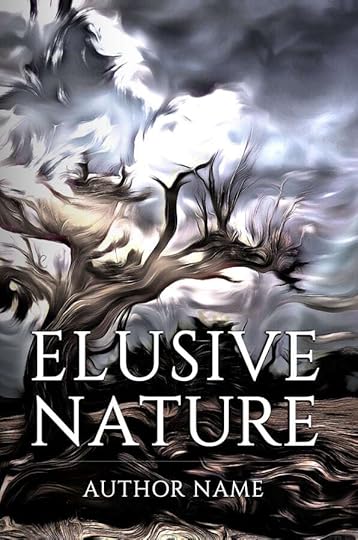
Englantilainen kirjailija ja mystikko Algernon Blackwood (1869–1951) on valitettavan unholaan jäänyt kauhukirjallisuuden uranuurtaja. Kummitustarinoista, idän henkisyydestä, länsimaisesta esoteriasta ja mm. neljännen ulottuvuuden teorioista ammentaneen kirjailijan novelleissa henkilöhahmot kamppailevat usein tuntemattomien ja mystisten luonnon voimien kanssa.
Antologia ”Panin puutarha” sisältää ensisuomennokset Blackwoodin luontoaiheisista kauhunovelleista "Mies jota puut rakastivat" (The Man Whom the Trees Loved, 1912) ja "Kultainen kärpänen" (The Golden Fly, 1912), sekä pävitetyn suomennoksen klassikosta "Pajut" (The Willows, 1907), joka oli myös yksi H. P. Lovecraftin suurimpia innoittajia.
"Panin puutarha" toimii omanlaisena sisarteoksenaan viime syksynä julkaistetulle Blackwoodin kollegan Arthur Machenin antologialle "Suuri Jumala Pan". Teoksen on suomentanut Ronja Erkko, ja sen esipuheen on laatinut Blackwoodin, Machenin ja Kenneth Grantin tuotantoihin perehtynyt väitöskirjatutkija Antti Litmanen. Litmasen esipuhe "Äärettömän tulkki" ruotii Blackwoodin esoteerisia kytköksiä, sekä hänen ajattelunsa merkittävimpiä taustavaikuttajia.
Algernon Henry Blackwood (1869–1951) was an English broadcasting narrator, journalist, novelist and short story writer, and among the most prolific ghost story writers in the history of the genre. The literary critic S. T. Joshi stated, "His work is more consistently meritorious than any weird writer's except Dunsany's" and that his short story collection Incredible Adventures (1914) "may be the premier weird collection of this or any other century".
Blackwood was born in Shooter's Hill (today part of south-east London, but then part of northwest Kent) and educated at Wellington College. His father was a Post Office administrator who, according to Peter Penzoldt, "though not devoid of genuine good-heartedness, had appallingly narrow religious ideas." Blackwood had a varied career, farming in Canada, operating a hotel, as a newspaper reporter in New York City, and, throughout his adult life, an occasional essayist for various periodicals. In his late thirties, he moved back to England and started to write stories of the supernatural. He was very successful, writing at least ten original collections of short stories and eventually appearing on both radio and television to tell them. He also wrote fourteen novels, several children's books, and a number of plays, most of which were produced but not published. He was an avid lover of nature and the outdoors, and many of his stories reflect this.
H.P. Lovecraft wrote of Blackwood: "He is the one absolute and unquestioned master of weird atmosphere." His powerful story "The Willows," which effectively describes another dimension impinging upon our own, was reckoned by Lovecraft to be not only "foremost of all" Blackwood's tales but the best "weird tale" of all time.
Among his thirty-odd books, Blackwood wrote a series of stories and short novels published as John Silence, Physician Extraordinary (1908), which featured a "psychic detective" who combined the skills of a Sherlock Holmes and a psychic medium. Blackwood also wrote light fantasy and juvenile books.
Blackwood's most distinctive contribution to the weird tale is his ability to evoke the unique spirit of a particular natural setting or phenomenon, whether it be a willow-choked river island, a tract of Canadian wilderness, or a wind blowing from the south. Pan's Garden--as its name implies--is composed almost exclusively of such stories, and is therefore essential reading for anyone with a serious interest in Blackwood.
Some of Blackwood's best nature stories are not here: "The Wendigo" and "The Willows," for example, must be found in earlier collections. Yet there are many other fine stories, including the well-anthologized "Sand" and "The Glamour of the Snow," and the lesser known but worthy "The Sea Fit" and "The Destruction of Smith." The jewel of the collection, however, is the haunting "The Man Whom the Trees Loved," Blackwood's greatest achievement in his later, meditative style. Even for Blackwood, "Trees" is very long, and almost devoid of action, and yet its cumulative effect is both subtle and terrifying.
Unfortunately, the collection also includes "The Temptation of the Clay," a tale in the later meditative style that falls victim to its own extreme length (even longer than "Trees") and slender plot. However, it does have an interesting premise: the land never seeks to harm its professional despoilers (mine-owners, frackers, or--in this case--the diggers of superb white pottery clay), but instead wreaks vengeance on those who inherit it, love it, and then sell it for profit. But this idea--though interesting--isn't enough by itself to save the reader from boredom.
Still, taken all in all, this is a fine collection. I even enjoyed reading "Clay": it is always instructive to observe how a favorite author can fail, especially when he fails admirably, erring--as Blackwood does here--through ambition and enthusiasm in the pursuit of his characteristic themes.
By the time the renowned British writer Algernon Blackwood released his first collection of short stories, "The Empty House," in 1906, he was already 37 years old and had led a life as full of adventure and incident as anyone you might possibly name. He had already worked as a dairy farmer and hotel operator in Canada, gone prospecting for gold in Alaska, been a bartender, and worked as a NYC reporter for "The Evening Sun," among other things; occupations that would go to make good material for his 1923 autobiography "Episodes Before Thirty." As the new century got under way, Blackwood, long interested in Buddhism, philosophy and the supernatural, joined several occult societies, including The Hermetic Order of the Golden Dawn. His love of nature compelled him to spend much time in the lonely places of Europe, canoeing down the Danube (the inspiration for his most famous short story, "The Willows") and hiking around the Swiss Alps. For Blackwood, nature was something truly sublime, practically a living, sentient entity (I refer here not to the fauna to be found in it, but rather to the forests, mountains, rivers, streams and winds themselves) that could be communed with, if only one were able to break through somehow. As he once revealed in an interview:
"My fundamental interest, I suppose, is signs and proofs of other powers that lie hidden in us all; the extension, in other words, of human faculty. So many of my stories, therefore, deal with extension of consciousness; speculative and imaginative treatment of possibilities outside our normal range of consciousness...I believe it possible for our consciousness to change and grow, and that with this change we may become aware of a new universe...."
Well, anyone who desires to explore just what Blackwood meant by that statement would be well advised to pick up the truly remarkable collection of his that I have just experienced, entitled "Pan's Garden."
"Pan's Garden" was initially released in 1912 by the British publisher Macmillan & Co., which firm would go on to release three more printings of the book; my copy is the fourth-edition hardcover from 1924, and featuring charming illustrations for each of its 15 stories by one W. Graham Robertson. This reader was already a fan of three other collections from this great author: "John Silence, Physician Extraordinary" (1908); "Incredible Adventures" (1914), which consisted of three novellas and two short stories, and which has been called, by the respected occult fiction authority S. T. Joshi, "perhaps the greatest weird collection of all time"; and the misleadingly titled "Best Ghost Stories," a 1973 anthology from Dover. But "Pan's Garden" may just top them all in terms of both size and quality. A big, 530-page affair, it offers up three novellas and 12 short stories, all dealing with one of Blackwood's favorite themes; indeed, the book's subtitle is "A Volume of Nature Stories." The collection was the author's fifth, and he had also come out with four novels since getting going in 1906. And this, of course, was just the beginning for the more-than-prolific writer, who, before his passing in 1951, at the age of 82, would release 14 novels, seven plays, and over 180 short stories and novellas...in addition to being an English intelligence officer based in Switzerland during WW1, and, later, a beloved radio personality, on which medium the so-called "Ghost Man" would read his shuddery tales to an appreciative audience. The 15 stories gathered in "Pan's Garden" all feature protagonists who are vouchsafed a look behind the curtain, as it were, and discern some inner truths about the natural world around us. For some of these characters, the knowledge comes as a wondrous, even lifesaving miracle; for others, a dangerous and hostile precursor that comes close to bringing about their destruction. But all 15 tales are just wonderful, and told employing Blackwood's lush, lyrical style; almost like prose poetry at times. Personally, I just loved this collection to bits!
As for the stories themselves, the collection kicks off in a very big way with the novella-length "The Man Whom the Trees Loved." In this remarkable story, we encounter an elderly couple, David Bittacy, a retired employee of the Woods and Forests Service, and his religious wife, Sophia. As her husband becomes more and more enamored of the trees in the local New Forest, in southern Hampshire where they reside, and more and more under their sway, Sophia becomes increasingly distraught. In one lovely section, the tree-loving David speaks of how his arboreal friends "drank the fading sunshine, dreamed in the moonlight, thrilled to the kiss of stars...." You may never look at a woods in the same way again, reader!
Up next is one of the collection's shortest offerings, "The South Wind," in which our narrator, possibly Blackwood himself, tells us of the revivifying effects that the first breath of spring has on a small, Swiss Alpine village. More of a mood piece than anything else, this short sketch remains a joy to read by dint of the author's evocative prose. As in the previous tale, in which the forest trees had been shown to be both sentient and aware, here, the mountain valley and the competing winds of spring and winter are suggested to be mindful, as well.
In "The Sea Fit," five men sit in a cabin on the shore of south Dorset and listen to the improbable tales being told by their host, an ex-sailor by the name of Capt. Erricson. Erricson, it seems, is a big believer in the ancient gods of the sea, and in the possibility of these gods being conjured into existence by the use of certain rites. While his guests debate this notion and generally come to the conclusion that their host is some kind of a crackpot, Blackwood expertly ratchets up the tension in this claustrophobic setting, culminating in one tragic conclusion, indeed. Or...is that ending so very tragic, after all?
"The Attic" is another tale set in the mountains of Switzerland that Blackwood loved so well. More of a straightforward ghost story than anything else, this one finds our narrator, a man named Pan (!), visiting his sister in her creepy old abode, in which a usurer had hung himself, in that titular attic, a century earlier. Pan's sister had lost her own son shortly before, and now, on the anniversary of that young lad's passing, the ghost of the hanged man in the attic begins to clamor for attention. This is a chilling little story, to be sure, and one that actually grows quite lovely by its end.
In "The Heath Fire," a heat wave has seemingly resulted in an outbreak of conflagrations in Surrey. But an artist named O'Hara believes that something else might be to blame, and goes to investigate. And as it turns out, O'Hara is partially correct in his surmise. The living fires of the subterranean Earth, it seems, are being drawn to their parent sun as if by instinct. As O'Hara later thinks of the burned heathland, "The sun had loved it. The fires below had risen up and answered...." So yes, it's not just trees, winds, mountains and the seas that are animate beings for Blackwood, but elemental fires, as well!
"The Messenger," still another short mood piece, tells of a man (our narrator, probably Blackwood himself again) who awakens one morning with the feeling that something is amiss; that something momentous is about to occur. He hurriedly leaves his room and climbs up the forest-covered slopes above his Alpine village to see just what is afoot.... Into this short tale Blackwood gives the reader as charming a look at the transformative powers of Nature--and specifically, the dawn--as might be imagined.
My favorite short story in this lengthy collection, "The Glamour of the Snow," gives us the strange experience of a young man named Hibbert, on holiday in the Swiss Alps. While ice-skating by himself one night, Hibbert chances to meet a mysterious beauty dressed all in gray, and ice cold to the touch. At their next meeting, sometime later, this strange woman compels Hibbert to ascend the mountain peaks surrounding the valley, in the dead of freezing night. In this tale, we learn that the deadly snow and ice are also very much sentient and aware; treacherous though beautiful to behold. So, does Hibbert manage to survive his nighttime climb with this icy maiden? I would never dream of telling!
Just as a man learns to appreciate the beauty of Nature by gazing at the dawn in "The Messenger," in "The Return," a man who's insensitive to all kinds of beauty finally has his eyes opened while peering out at the London night. This man, whose name we never learn, had been feeling jittery and tense all evening, as if--again--something of importance were about to happen. Ultimately, we learn that our leading character's newfound appreciation for the natural world is tied in with a deceased friend of his...an artist and lover of all forms of beauty. A charming tale, this, conflating the ghost story with Blackwood's main preoccupation: the transformative power of Nature, for those with the ability to see.
In the absolutely astounding, novella-length "Sand," the reader encounters Felix Henriot, an artist and adventurer who has come to Helwan, outside Cairo, both for a holiday and to delve into the mystery of ancient Egypt. Henriot soon meets a strange pair, Lady Statham and her nephew, Richard Vance, who are trying to raise the "Group-Soul" ka spirit of ancient Egypt using occult rites and incantations. Felix is persuaded to attend this mystical rite and to draw any manifestations he might observe, in this wonderfully atmospheric outing...and one that is capped by a great twist ending. Blackwood had paid a visit to Egypt in 1911, and his descriptions of the desert area are most convincing in this splendid tale that almost serves as a companion piece to the novella "A Descent Into Egypt" from "Incredible Adventures." An absolute masterwork, this one, marred only by Blackwood's referring to the famous Egyptology reference work "Book of the Master" as "House of the Master."
"The Transfer" is the outlier selection in this volume, giving us as it does a female narrator for a change. Here, Miss Gould, the governess at the home of a wealthy family, observes a most unusual struggle. As 7-year-old Jamie tells her, the barren patch of lawn in the mansion's gardens is dying for want of food. But when Jamie's millionaire uncle, Frene--a businessman apt to suck the life energies out of everyone he comes in contact with; a sort of psychic vampire--gets too close to the accursed plot of ground, a battle of energies ensues. So it's the hungry patch of lawn, with all of Nature behind it, versus old Uncle Frene...anyone care to make a wager as to who the winner is here?
"Clairvoyance," as it turns out, is a fairly straightforward ghost story...or is it? Here, an elderly man with a "well-known interest in psychical things" is given the haunted bedroom by his hostess...a young and childless newlywed married to a much older man. During his memorable night spent in the room, our protagonist seems to see the hands of hundreds of unborn babies reaching out to him, and hears their beseeching voices. As it turns out, the old guest is also childless, and gifted with second sight, thus enabling him to have a transformative experience for his own betterment in the haunted room.
In "The Golden Fly," a suicidal man enters the New Forest with the express intention of putting a bullet through his head, but is given a new lease on life after witnessing the beauty of the natural setting around him. He comes to realize how small and insignificant his problems are when compared to the grand scope of the universe, and is even made aware of the gravity of his crime of killing the tiny insect of the title. This is a beautifully written story that will surely pick up anyone who is feeling depressed or having a lousy day; a life-affirming tale that once more demonstrates the transformative power of Nature.
"Special Delivery" gives us the macabre story of Meiklejohn the curate, a hiker who stops one evening at a lonely hotel in a desolate Swiss valley. During the night, weird knockings are heard on the curate's door, and a strangely beckoning figure seems to try to lure him outdoors. Messages of warning begin to drum into his mind, and a formless, spinning entity suddenly appears in his chamber. This is still another solid winner of a story, one that would have made for a perfect "Twilight Zone" episode, telling as it does how the good curate just barely managed to escape a calamitous disaster.
In "The Destruction of Smith," the only story in this collection set in the United States--the Arizona desert, to be specific--a group of hunters, that includes our narrator, is startled one night when the millionaire oilman Ezekiel B. Smith barges into their camp. Smith is distraught about visions that he has been having concerning Smithville, which lies hundreds of miles distant and yet which its founder believes to now be in flaming ruins. This is another genuinely eerie story that demonstrates the accuracy of Smith’s words: "Nature is all made of a piece like, [and] places too have this dooplicate appearance of theirselves that gits loose when they go under...."
"Pan's Garden" concludes with one of its finest entries, the novella-length offering entitled "Temptation of the Clay." This tale brilliantly encapsulates, once again, the author's belief in the sentience of all trees and wooded areas. It introduces the reader to another adventurer and outdoorsman, Dick Eliot, who settles down on several hundred acres of inherited land, in southern England, with his new American Indian wife. Twelve years later, Eliot is a widower, and has promised his late wife to care for the land that both of them had loved. Some years further on, Dick is compelled to adopt his 14-year-old niece, Manya, an even bigger worshipper of Nature than he himself. All goes well, until Dick decides to develop his 200 pristine acres so as to provide for Manya's future well-being, causing the land itself to revolt! In one of the book's most chilling sequences, the very spirit of Nature possesses the young girl, in order to deliver a stern warning to Eliot. By turns lovely, endearing, spooky and cosmic, the novella really is a splendid way to bring this stunning collection to a close.
For modern readers, "Pan's Garden" is, happily, easily obtainable today. Indeed, Stark House Press has an edition right now that pairs it with "Incredible Adventures" in a single volume, to make for one terrific bargain. But caveat emptor: The Stark House stand-alone edition of "Incredible Adventures" was the most typo-plagued book that I have ever read, so I would advise alternate sources. But I cannot recommend "Pan's Garden" to you strongly enough; it truly is a magical affair. As for me, having experienced four of Blackwood's collections, I think I'm finally ready now to tackle one of his novels. Fortunately, his 1910 novel "The Human Chord" has been waiting patiently on my bookshelf for some years now, and that is where this reader will be heading next. Stay tuned....
(By the way, this review originally appeared on the FanLit website at http://www.fantasyliterature.com/ ... a most ideal destination for all fans of Algernon Blackwood....)
I feel I owe Algernon Blackwood an apology. I imagine (or project) that my experience of him is the same as many modern readers: you hear or read his striking name (had any author of weird fiction such an evocative name?), and invariably you run into his "classic" tales ("The Willows," "The Wendigo," some John Silence pieces) and either your sensibilities are ready for him or they are not - so you are either struck by these seminal pieces or... find them too ripe in language. And then (one assumes, your critical skills having grown) you advance into his other works (so prolific) and find there a vast array of material, some of it often quite good and some of it... verbose and heavy and not what you are seeking. And here, many leave the man, hoping as they start any previously unread work that it proves "one of the good ones" and not one of the "written long" ones. In specific, I can remember running up against "The Man Whom The Trees Loved" and feeling torn between the obvious strength of the pastoral/pagan imagery and intention (a man's essence almost literally dissolving into the vastness of nature) and the... slog of its endlessness. But, filed away in the back of my mind is always the self-critical note: "Maybe it's YOU. Maybe, coming from the generation that had digested Ernest Hemingway and Raymond Carver, the generation of TV and cell-phones and instant gratification, maybe its YOU and not HIM - and YOU have to pay more attention and keep aware of intention and rhythm, as you learned with Henry James and Thomas Pynchon and..." because, yes, sometimes things are a challenge and with challenges come rewards...
So I owe Blackwood an apology. Because contained in this book is his novella "The Temptation Of The Clay" and, honestly, if I had read this at 45 years of age, or 30, or 20, it would have done nothing but frustrate me and I would have chalked it up as another "written long" piece (which is a critical shorthand for "doesn't work to its best efforts," to be honest). And, as an aside, I don't mean the following as some kind of absolution of my fears of Blackwood (and others) writing long - I still feel it's a valid criticism at times - there was/is a point where writers (oddly, specifically British writers) seemed to have become so intoxicated with language that they ended up burying their points under heaps of prose, look at ME, look at my loquaciousness...
But what "The Temptation Of The Clay" taught me is that often this is a deliberate tactic of a writer. Because, it struck me very early while reading this, that Blackwood was not piling words on words on words merely to show off - he was doing it (in this case, at least) because what he is trying to convey are very subtle, delicate points about human natures and minds and how they react to ideas and places and Nature and other people. Ideas and feelings which could not be expressed through dialogue or plot.
The plot of "Clay" can be stated very easily: A man, Dick Eliot - perfectly balanced in temperament between rational/active ambitiousness and imaginative/poetic/meditative qualities - finds himself (after a youth of roaming the world, making his way, after being rejected by his family and cut off from his inheritance) unexpectedly inheriting a few hundred acres of woodland estate in rural England. And he finds, on taking possession (not much money, just the land), that he is entranced by the natural beauty and quiet power of the place (as all surrounding it has been built-up for economic profit, made ugly and "productive") and vows to keep it as it is. And into his life, through the early death of his sister, comes a young niece named Manya - who is even more attuned to nature and the wild, "fey" in her thinking and ways, who adjusts immediately to life on the estate, and despite his initial worries, he feels great affection for this girl and they form a happy family. And then, after this is settled and Manya exults in her new home, into his life comes an old compatriot of his early years, who has now found great wealth and is endlessly finding new ways to make money and exploit his surroundings. And on a visit to the property, he notices the fine, highly refined clay that the land holds, and suggests to Eliot that he can assure financial security for himself and Manya if he mines and exports this resource...
Blackwood tells us, early on, that we are going to be reading a tale of how a Place came to accept, and then reject, a man, and so we realize that this is, in a sense, going to be an examination of the idea of the "genius loci" and man's interaction with same - as Blackwood's pagan viewpoint of nature (that it is vast and can be loving, but unknowable and inscrutable and dangerous) will be illustrated. And it is. And - honestly - I absolutely loved reading it. It's a beautiful story. Not a horror story, but a "weird" story that showcases a particular strength of Blackwood's - the ability to make "atmosphere" or "tone," often just a detail in the background of a tale, into the whole point - by the climax (assuming you are not fighting the story, waiting impatiently for the plot), you almost feel as if someone has "turned up" the "background settings" until they reach near Psychedelic levels of imagery and suggestion (truly, Blackwood was a precursor to Nigel Kneale in this area), as time, space and perceptions warp and bend and Something Vast peeks into our world for a few words...
Simply, a sad, beautiful story. I would love to see a BBC TV adaptation of this.
A collection of fifteen stories based on the same theme: the confrontation of man with blind, automatic Nature. Each story is concerned with another natural element: trees, the wind, the sea, the heath, the snow, sand, clay etc. What they have in common, is that nature is represented as a strong, terrible and revengeful force. The protagonists, who often have strong pagan instincts, are powerless and are defeated in the long run.
Even though some stories are top notch (Man whom the trees loved, Sand, The temptation of the clay), the variation on the same theme is a bit wearisome and Blackwood’s style is too overloaded with sensory details. His stories should be read sparingly and not in one go.
This collection of Blackwood’s, alongside the “The Incredible Adventures“, must be seen as as the most definite and personal among his short story collections, as containing the most perfect fictional crystalizations of his pantheist vision. Here, he does something ever so generous: he lets us see the world trough his eyes. And what vision it is that we are granted: Nature that is Full Of God, Nature that is all alive, all numinous, all awe inspiring. Divinity is equally present on star-lit, snow-encrusted mountaintop or in the forest depths as it is in the sublime vastness of Egyptian desert or in black desolation left after wildfire. His is not a one-sided vision; this is Nature in the fullness of its aspects: beautiful and generous, but equally cruel and jealous.
I‘ll quote from one of (criminally underrated and underread) Walter Friedrich Otto‘s books, for his words are immeasurably finer and are a far better fit for that face of hers that is seen in much of this collection than anything I could write:
“The mirror of this divine femininity is nature - not the great holy mother who gives birth to all life, sustains it, and in the end receives it back into her bosom, but nature of a quite different sort, which we might call virginal, free nature with its brilliance and wildness, with its guiltless purity and its uncanniness. This nature is maternal indeed, and shows tender solicitude, but it is of the true nature of a maiden, and as such disdainful, hard, and cruel.”
“Here is a teeming concourse of elements, flora and fauna, life unnumbered which sprouts, blooms, spreads its scent, bubbles, hops, leaps, flutters, soars, and sings; an infinity of sympathy and discord, pairing and struggle, rest and feverish movement, and yet all is related, interwoven, and borne by a single life-spirit, and the quiet visitor senses the higher presence with the awe of the indescribable.”
“The solitudes of nature possess geniuses of diverse form, from the fearful and wild to the shy spirit of sweet maidenhood. But loftiest of all is an encounter with the sublime. It dwells in the clear ether of the mountain peak, in the golden iridescence of mountain meadows, in the lightning glint of ice-crystals and snowy slopes, in the silent astonishment of field and forest when the moonlight bathes them in its glow and drips glittering from the leaves. Here everything is transparent and weightless. Earth itself has lost its heaviness and the blood is no longer conscious of its dark passions. A dance of white feet seems to hover over the ground, a chase to pass through the air. This is the divine spirit of sublime nature, the lofty shimmering mistress, the pure one, who compels delight and yet cannot love, the dancer and huntress who fondles cubs in her bosom and races the deer, who brings death when she draws her golden bow, reserved and unapproachable and yet wholly enchantment and fresh excitement and lightning beauty.”
To this Nature, in its various forms, worship will be paid within these novellas, novelettes, stories and fragments. Trough her, initiations and transfigurations shall be enacted. 31st and 28th path shall be traversed; Hermes and the playful Anemoi will be encountered; final worship will be paid to Proteus and Sylvanus; divinity of Ancient Egypt shall be made manifest trough theurgy.
Three lengthy novellas, „The Man Whom The Trees Loved“, „Sand“ and „The Temptation of Clay“ make the core of this collection, occupying its begging, middle and end points, respectively.
Opening novella is as much a study of a man‘s love of Nature that leads him to increasingly lose himself in that he loves, as it is of his wife. Now, whilst some might find Blackwood’s treatment of her character condescending (and I suspect that it will be additionally offensive to some from their current year POV), I think this a great study of how religion, if too rigid and taken too literally, can be as much of an obstruction to the experience of the Divine as the dogged fundamentalist materialism. Blackwood still treats her with respect and warmth not extended to the latter group, as she is still a honest and non-hypocritical believer. It is through her character that the tragic element of this tale is facilitated.
„Sand“ is a gorgeous, dream-like occult fantasy, an ode to Ancient Egypt as seen not trough the lens of profane Egyptology but trough that of magicians, hermetists and symbolist scholars. This too is a tragic tale, in its own way. Attempt is made to bring about the great spiritual awakening but, as with the Golden Calf at the foot of Mount Sinai, human petty failing – even more disgusting in its sheer pettines when contrasted with the Divine – marks its failure.
In „The Temptation of the Clay“, a middle-aged widower and his young niece live in a patch of near untouched fairy nature, surrounded all around by „over-lived-upon“ and increasingly industrialised country, from which their domain the sole respite. Onto this landscape man projects his memories of his departed wife, while his niece is strangely attuned to it, ever speaking of baffling things that are to her, in her utter innocence, perfectly natural, ever walking with „invisible companions.“ Upon their solitude intrudes man‘s utterly materialistic old friend - “‘Religion! Hell! I only discuss facts.’ And his definition of a ‘fact’ would no doubt have been a dollar bill, a mining ‘proposition,’ or a food problem” - assuming the role of Lucifer in this paradise of theirs, bringing with him temptation and awakening man‘s long dormant worldly ambitions.
Out of these, „Sand“ is the finest (indeed, this milieu draws the best out of Blackwood – when he returns to it in „The Incredible Adventures,“ he will produce one of his finest, most underrated stories), whilst the closing one is the weakest. It is by no means bad, mind you, and there is much to appreciate in Blackwood‘s treatment of this particular motif.
Blackwood‘s prose here, especially in these three novellas, is gorgeous and intoxicating. He isn't hurrying anywhere, he employs this meditative style that paints inner state of his characters in equal depth and detail as it does their surroundings. Beautiful descriptions of visions inner and outer are mixed with dialogues and rumination, the sense of Numinous slowly growing. Shudders shall be produced, among other things, but not in the sense and the way that is expected by those coming to Blackwood in search of modern “weird horror.“ Horror is present, but it is not the most intense emotion evoked by these stories in the sense in which it was in „The Willows“ or „Wendigo“. As one goes trough Blackwood‘s major collections, in order, it is as if he tried to evoke that evolution of man’s experience of the Numinous, akin to what was outlined by another Otto, Rudolf Otto in his “The Idea of the Holy“. Here, Awe takes the place of primeval horror and dread. This Awe, in these stories, is often mixed with exaltation and, just as often, melancholy.
Approach these stories as something that bears the torch of Romantic fantasies that preceded it, not as something that is aligned with the increasingly narrow modern conception of weird fiction.
I found this book because of the movie Pan's Labyrinth. The director listed this book as part of his inspiriation for the movie. While I enjoyed the stories, it was tough going for me, as I find most books written so long ago. The language is heavy, and Blackwood's style is particularly heavy and descriptive. Once I finally made it into the meat of the story and the denoument, each story got better and was easier to read, but it was rough going to get into them. I was reminded of Lovecraft and vaguely of Poe, but that's probably due more to the horror aspect than any qualities of writing. Check it out of you're into supernatural stories.
Algernon Blackwood applies Romantic impulses to his mystic visions of animism: these stories are menacing and awe-inspiring in the Burkean tradition, their affects too complicated to be categorized as "horror" in any conventional sense.
Pan's Garden rips away the wallpaper of mechanistic knowledge to venture into that unchartable land we now call weird fiction. It is a singular collection, every bit as difficult to describe as the numinous forces shimmering at the edges of Blackwood's dense and swooping prose.
The Man Whom the Trees Loved 4.5⭐ The South Wind 3⭐ The Sea Fit 4⭐ The Attic 3⭐ The Heath Fire 3.5⭐ The Messenger 2.5⭐ The Glamour of the Snow 5⭐ The Return 4⭐ Sand 3.5⭐ The Transfer 3⭐ Clairvoyance 3.25⭐ The Golden Fly 3.25⭐ Special Delivery 4.25⭐ The Destruction of Smith 3.5⭐ The Temptation of the Clay 3⭐
Upea kirja, ja erityiset propsit elegantista käännöksestä.
Tämä jää pitkäksi ajaksi mieleen pyörimään, kirja tavoittaa mielestäni kiehtovia, syvän tiedostamattoman virtoja ja kaikessa outoudessaan jotain...todellista.
"Koko elämäni", hän sanoi, "olen ollut oudon, eläväisen tietoinen toisesta paikasta - joka tietyssä mielessä ei ole kovinkaan kaukana meidän omastamme, ja kuitenkin täysin toisenlainen - missä suurenmoiset tapahtumat alati etgenevät, missä mahtavat ja kammottavat yksilöt rientävät ohi syventyneinä rajattomiin päämääriin, joihin verrattuna maalliset asiat, kansakuntien synty ja tuho, valtakunnille varattu osa, armeijoiden ja maanosien kohtalo, ovat vähäpätöisiä kuin pölyhiukkaset; rajattomilla päämäärillä tarkoitan asioita, jotka käsittele suoraan sielua eivätkä välillisesti vain sielun ilmentymiä -".
This is a reread for me as I had picked up a 1st edition. What can i say that has not already been said about Algernon Blackwood apart from the fact that he is a master of the subtle macabre, supernatural, cosmic and nature horror. For me Pan,s Garden is one of the best. And Sand ,Trees and Clay are 3 of the best. The prose and gradual pacing of unease makes this collection ESSENTIAL.
There were a couple good ones. The Destruction of Smith, though completely predictable, was great.
I was right in between 2 and 3 stars, but the final story really killed it in the worst way. A potentially interesting story was ruined by Blackwood invoking his favorite setup yet again. An uncle (again) who moved to England from the US (again) who was the guardian (again) of his niece (again) whom he had misconceptions about before meeting (again) only to be blow away by her magical child nature (again) and some amazing deep connection with spiritual things (again) that she had and shared with him to his amazement (again) and going on and on about this special relationship (again) while making sure to show an enormous disdain for science at every opportunity (again). I've read this story so many time in so many other stories by Blackwood, it's not even worth more than a skim.
Blackwood has such great talent for writing, and was able to conceive of some truly incredible stories, but he disregarded all of that in favor of rewriting the same (terrible) story again and again, as this volume also houses.