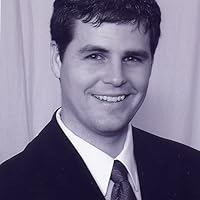
Martin Fletcher doesn’t claim to be a hero. Yet he didn’t flinch, either. During three decades covering wars, revolutions, and natural disasters, Fletcher worked his way from news agency cameraman to top network correspondent, facing down his own fears while facing up to mass killers, warlords, and murderers. With humor and elegance, Fletcher describes his growth from clueless adventurer to grizzled veteran of the world’s battlefields. His working philosophy of “Get in, get close, get out, get a drink,” put him repeatedly in harm’s way, but he never lost sight of why he did it. In a world obsessed with celebrities, leaders, and wealth, Fletcher took a different he focused on those left behind, those paying the price. He answers the Why should we care? These extraordinary, real-life adventure stories each examine different dilemmas facing a foreign correspondent. Can you eat the food of a warlord, who stole it from the starving? Do you listen politely to a terrorist threatening to blow up your children? Do you ask the tough questions of a Khmer Rouge killer, knowing he is your only ticket out of the Cambodian jungle? And above all, how do you stay sane faced with so much pain?
BREAKING NEWS is war correspondent Martin Fletcher’s exciting and soul-searching memoir covering three decades reporting wars, revolutions, and natural disasters. It’s an amazing look at history through the eyes of a man who was in many of the world’s hot spots, while also offering an insider’s take on the ethics, politics, and logistics of journalism.
The genocide in Rwanda, apartheid in South Africa and Rhodesia, the Turkish invasion of Cyprus, the Berlin Wall coming down, the Intifada, the Six-Day War, the Ethiopian famine, Kosovo, and more–Fletcher was there, working his way up from cameraman to NBC bureau chief. The memoir provides a sweeping inside look at some of these major events while offering a journalist’s perspective. A man just lost his daughter to famine, should we showcase his grief in closeup? Somebody has been shot and is lying in the street, should I help or keep the film rolling? A woman is about to die from famine. Should I capture her suffering and death, maybe hoping by showing it to the world, the world will act?
Fletcher writes with passion and deep insight, providing a memoir that at times reads like compelling war fiction. BREAKING NEWS begins with an ambitious cameraman who wanted to go abroad, build a career, and bed everything in sight. It then charts his rise to an NBC bureau chief torn by the dilemmas, exploring his heritage and the Holocaust, and finding it is far more satisfying as a journalist to cover people instead of events. Capture their experience with sympathy and understanding.
BREAKING NEWS is my favorite kind of nonfiction, informative while constantly engaging. I found it a terrific and thought-provoking read.
I hate that I can't go any higher than two stars here, because there's a lot that's very enjoyable and exactly what I'm looking for when I pick up a book like this. The first half of the book is straightfoward memoir, with all the information you'd hope for. It's detailed, it's entertaining, it's easy to read, it's got a good balance of serious and humour, and it focuses on interesting events and experiences both professional and personal. If the whole book had continued along this line, it would have been a solid four stars.
Unfortunately this book trips against one of my hard moral lines in the sand, and once a writer -- especially a journalist, and especially a war journalist -- crosses it, I can no longer entirely trust them. It's that important to me. Fletcher unfortunately subscribes to the idea that trauma is comparable and that there is a hierarchy, and that one person or group's trauma can be worse than another's. This is something I find quite frankly abhorrent. It's bad enough when it's said casually, as one of those things many of us grow up hearing from society at large and never examine. It's unforgivable when, as Fletcher does, it's deliberate and dismissive and self-centred.
Fletcher is descended from European Jews who fled Europe as Hitler came into power and started terrorising the Jews ahead of his "final solution." His family was all but obliterated by the Holocaust, with his parents being the near sole survivors of each of their families. Dozens of his relatives were wiped out, the family's property was stolen, and his parents became refugees for the rest of their lives. Their pain and loneliness is dreadful, and rendered with wonderful empathy and sincerity in this book. It's an absolutely heatbreaking story and of course it has a place in Fletcher's memoir; it was the shadow he grew up under, and he carries remnants of that pain in his own mind. The inclusion of this is 100% not a problem -- but his inability to empathise with anyone unless it reminds him of his own family's trauma is, as is his blatant hypocrisy and cruelty towards the Palestinians specifically.
Fletcher's tone changes after he moves to Israel. I don't know what exactly went on with him, but to be quite blunt it reads like his time in Israel radicalised him and he became completely hateful. He very often comes so, so close to getting it -- he's capable of understanding the plight of both sides, and of seeing how terrible and hopeless the situation is. He comes so close to having empathy and insight... and then he says things like "My family lost more, much more, than any Palestinian ever did." How he can say this, after outlining why the plight of the Palestinians today and the European Jews of the 1930s are so similar, is beyond me. Or what about "Many millions of people for centuries all over the world have lost their homes and rebuilt their lives elsewhere. Why not you? I would think, as they [the Palestinians] cried to the camera. My mother did." How he can say this when he says nothing of the sort of any of the other refugees whose stories he covers, and while Israel literally prevents Palestinians from leaving (even going so far as to bomb refugee convoys) so they can't build a life elsewhere even if they wanted to... it's disgusting. Or what about his clear hatred of the mothers of Palestinian martyrs, when he openly talks of how his own sons will one day serve in the Israeli army? Does he expect me to believe that if, God forbid, one of his own children is killed in the war, he wouldn't hang their picture on the wall and talk of them with love and pride? That he wouldn't try to make sense of their death in any way he could? He criticises Palestinian parents for raising their kids for the slaughter and then voluntarily had three children in a country that is perpetually at war and has compulsary conscription. Make it make sense.
Related to this, he also has plenty of remorse and guilt over benefiting from apartheid in South Africa and Zimbabwe (then Rhodesia), but has nothing to say about the fact he benefits from apartheid in Israel. Is it because he doesn't have Palestinians where he can see them, cleaning his pool and cooking his food? Out of sight, out of mind? I have no idea, but his hypocrisy and blatant racism is off-putting and while the neutral content of this book was good, I was constantly thrown by this attitude. I cannot stand hypocrisy and I cannot stand the comparison of trauma on any level, whether it's what type of abuse is "worse" or who has the worst genocide. I try not to rate books based on personal feelings towards the author, but when it's so blatantly in so much of the book, and the author is meant to be an impartial journalist... how can I trust anything Fletcher says when I know in his mind he's looking at all victims and keeping a mental scorecard on how traumatised they're allowed to be? And if he's not, how can I trust him knowing this is an honour he reserves strictly for Palestinians?
I gave him the benefit of the doubt, considering this book was published in 2008, before Israel's genocide of Palestinians ramped up to the sickening examples we've been seeing for the past year and a bit. I wondered if maybe his attitude had changed any, but instead I find him spewing even more hateful nonsense in various Israeli papers. This book is a good insight into journalism, but even more it's an unintentional but incredibly poignant look on how unrealised trauma can be exploited by extremists and used to radicalise and stoke hatred in anyone, even those who should be most aware of it. What a dreadful shame.
Wow. This gets pretty intense, especially the stories on Rwanda, Kosovo, Somalia and the final chapter back in Israel. A great read - though not an easy one. At times fascinating and just as heartbreaking. I love Martin Fletcher’s books and I recommend them.
Martin Fletcher, known best as a TV reporter for NBC, has recent several books, including Breaking News about his work as a foreign correspondent. He started as a cameraman for NBC News in 1977 and 32 years later has retired. “He has won almost every award in TV journalism, including the du Pont, known as the TV Pulitzer, five Overseas Press Club awards, the Edward R. Murrow award…including five Emmies”. (1)
With an outstanding career in the field as a war correspondent, he wrote Breaking News to examine the different situations he found himself in order to answer the question of how does a journalist keep himself above the moral line and yet provide an accurate portrayal of war. (1)
His purpose for writing can be adequately summed up in a sentence, “I want to write interesting and suspenseful stories, gripping and stylish, with an edge of humor, but the subject must be real, it should be a way of understanding the real world, not be an escape from it. I want to take the journalistic questions of who, what, where, when, why and how, one step further: Yes, but what was it like to be there? To be that person?” (1)
With the book, Breaking News, Fletcher comes close to doing just that, providing the perspective of those in the middle of their most tragic human experience and making it ‘real’ for others. I think he walked a close line between writing sensationalistic depiction of tragedy and relaying an accurate portrayal of reality. Such a fine line to walk and how easy one could lose their humanity amidst the upmost sadness.
There is no substitute for eyewitness accounts in history. Before Anderson Cooper gained popularity for "seeing the event for yourself," Martin Fletcher set the industry standard in the 1970s and 1980s for all field journalists, especially war correspondents. The encounters which Fletcher recounts in this memoir are astonishing, shocking, and captivating. In Fletcher, one learns as much about the culture of media as the political and military conflicts of the 20th century. In the midst of seeing these conflicts around the globe, one encounters again and again the conflicted journalist that is Martin Fletcher. How can he simply film and report atrocities of starvation, war, and genocide without intervening? These are disturbing questions, but there is some dignity in Fletcher's admission that his vocation has interfered with his humanity. Such is the predicament of modern media. For all of its difficult passages, this book deserves a good reading, simply on the merit that history must be known by eyewitness accounts; otherwise we are left to our own interpretations which inevitably are tempted to evade total truth.
'Breaking News...' is a very compelling recollection of the life of a journalist who has covered some of the most important and brutal conflicts of the last quarter century. While it features many stories of how such a newsman actually does his job, the most interesting theme throughout the book is how the author began, over the years, to struggle with the moral impact of the things he would see, and the contradictions inherent in often finding himself covering both sides of a conflict. Excellent read!
What I like best about Breaking News is Martin Fletcher's honesty. He scarcely tries to assume the role of a hero that set off to save the world, au contraire, he describes his motivations, selfishness, biases, and even opportunism; non of which reduces the fact that he was extremely lucky being the right place at the right time and extremely brave doing what he needed to do to get the story. Because Fletcher wasn't trying to appear like a hero, his story came out much more honest and hence entertaining and informative.
"If the picture is bad, you are not close enough." When I read that the first time it meant nothing to me, until I started a job similar to the author's and when I took my first pictures "in the field" and was unsatisfied with it, I remembered that sentence and stepped closer - not just in the literal sense but also closer to the story, the person, the emotions and their every day's life. It made me better in my job. It is fascinating to see what life and morals of war reporters looked like in the 70s, 80s and 90s. It is so different to today and then again so similar. One quote I 100% disagree with, but which in some sense sadly still rings true in what news at home value as news is: "100.000 Bangladeshis killed in a flood, equals 10.000 Africans killed by famine, equals 500 Egyptians eaten by crocodiles on the Nile, equals 5 British soldiers killed in Northern Ireland, equals 2 of the queen's Corgi dogs run over by a bus". This is how news worthiness is measured. According to the quote, if only 9000 Africans die in a famine, it won't be news and might be mentioned in a sidenote, if at all. And that is just horrible, but to some extent is the reality even today. To expand on that, to put even more news worthiness into a scoop is to have one's own nationals involved. 100.000 Bangladeshis and 2 Germans killed in flood... Everytime I hear this on the news and how much they emphasize on these nationals makes me sick every time. No it's 100.002 humans who died in a flood...
Some parts of this book made me think a lot on my own job as reporting in crisis areas for a humanitarian aid organisation. Questions I still have no real answer to. "How close can you place your camera to a dying person's face? The closer the camera, the better the picture, the more profoundly the victim's plight is conveyed, the more the audience may want to help save other victims. But there is also human dignity to consider. Would you want a camera in your face as you leave this life?" When do you step away, and leave the camera turned off? But not reporting on it, won't change the fact that it is happening. It is just happening quietly, without anyone knowing... Where is the line? I know that one example the author gave from a BBC correspondent in Biafra in 1970 that definitely did cross that line. He was filming an execution and the sound didn't work, so he told the executioner to "hold it, we haven't got sound', and the quivering mam about to be killed had to suffer that much longer while the soundman sorted out his gear."
One star minus because the writing was somewhat repetitive, also too many times he gave an outlook of what drama was to unfold in the next pages.
What was the most interesting part of this book is how it revisits horrific events in history that barely made my radar most times. Yet, he was there on the ground, with the victims, the enemy and the survivors. He tells his story on a personal level, bringing in his own family history and his current situation in an honest and direct way. How someone can spend 30 years of his life under the conditions he often worked in is beyond me. His courage and humanity come through in every story. He is someone I would love to sit down with and know on a personal level. Never before had I considered what goes into those who provide the headlines and the up close and personal news I grew up watching. This is a book about truly amazing individuals.
It seemed to me like what could have been a honest, unpretentious book got ruined by Fletcher's editor pushing him to 'tell the greater story". At every turn Fletcher connects the events he is narrating with the endless moral dilemmas of being a journalist and his family's holocaust history, over and over and over again. So unnecessary - the events he is telling would have been interesting enough. Also, there are a few awkward moments in the book where he makes ignorant and even offensive comments about some of the countries he is covering.
This was an interesting read from one of broadcast journalism's veteran reporters. His insight into the life of a international war correspondent, jetting around the world to cover the latest conflict is part adventure story, part soul searching and part justification for why he does the things he does. It's not always about the story.
Fletcher is an excellent writer, and he shares many of his interesting experiences in this book. He tackles some complex moral issues for reporters. For example, how appropriate is it to film someone dying of starvation? His stories set in Israel during the Intifidas were especially compelling for me, based on my recent trip to Israel.
yet another journalist's memoir. but fletcher's tales of life as a young journalist in southern africa in the early 70s and his experiences in cyprus even out an account that is otherwise bogged down with reportage from more familiar - and overly chronicled - fronts.
Memoir of NBC senior correspondent in Tel Aviv. His career as a war correspondent spans from Rhodesia and South Africa in the 70’s, to Israel, Somalia, Kosovo, and back Israel. He tries to understand the morality of his job, and why he does it.
As a journalist I found Fletcher's story immensely compelling and fascinating. Reading it was easy and generally non confrontational like many war correspondents memoirs tend to be. I really enjoyed this book.