Three novellas from one of the best poets of our time. I liked the first, skipped the second, loved Legends of the Fall, and was a bit perturbed by the simplistic portrayals of women (which were not, I think, intentional or self-conscious on Harrison's part).
"Revenge" reads like an early Hemingway. Starkly drawn, not quite nihilistic story about a man who falls in love with a cartel head's wife, is beat to within an inch of his life, then launches a dual mission of revenge/recovery of his lover. If you've read any of Harrison's poetry, you know that he has the awesome talent of being able to describe something in a way you've never heard before in your life, but which makes immediate visceral sense. I enjoyed this novella for that talent, even though the storyline is something I've read before. Granted, the ending was unique, very human, and well worth the read.
"The Man Who Gave Up His Name" I skipped this one after 30 pages. Because white men have historically dominated literature, the specific experience of an upper-middle class white man in midlife crisis is a story I can no longer read, simply because I've read too many. It's a valid, illuminating human experience, but this novella was short on plot and long on rumination.
"Legends of the Fall" My favorite. Epic, epic story about three brothers, their family ranch in Montana, their experience together at war and in love, and the fallout forever after. Tristan the middle brother cuts a tragic figure, and it is his interior (his wildness, guilt, lack of ability to function in a so-called civilized society) that the book plumbs most deeply. Harrison can read and explain a soul as if it were a street sign--his poignance amazes me, and for a poet who wrote prose as a secondary venture, the plot was brilliant. Two complaints/warnings: I read Harrison saying that a poet should write prose essentially for exercise. In other words, poetry was Harrison's main project. At the end of this novella, it shows. Written entirely in stilted past tense, then-this-then-this-then-this sentences, it seemed to me that Harrison was forcing himself to finish telling the story. He'd lost interest in writing as a novelist, so the ending chapters are mostly laundry lists of events.
Last complaint: Harrison seemed to have a profound lack of understanding of women. I've seen this in both his poetry and his prose, in which women are foils or devices but rarely humans. His female characters tend toward one of three types: 1) the ubiquitous whore, the tart--she is mentioned in passing as the writer's tool that she is. 2) the impotence-inducing educated woman--venal, sharp-tongued, usually went to Wellesley or Radcliffe, a cold fish, often cuckolds her husband. This character, always a wife, appears in two of three novellas and throughout poems. 3) the sex goddess--perfect, worship-worthy, reticent, and mysterious. Also appears in two of three novellas. Although this character is interesting and unique, you never see her interior.
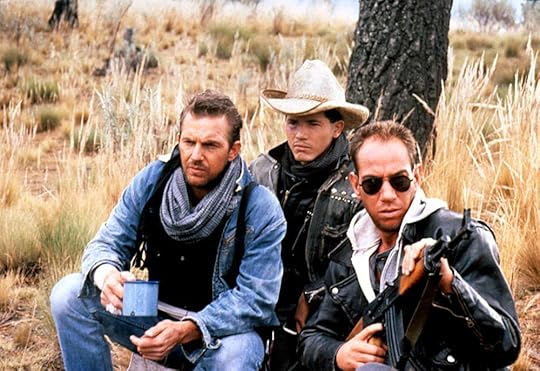
In the film Legends of the Fall, the filmmakers recognized a tragic figure in Susannah, whose lot as a barren, jilted, manic depressive woman, was just as sympathetic as Tristan's. You can see Harrison's pity of Susannah in the novella, but that pity comes from a faraway alien place. Harrison's men are often mildly confused by and unconcerned with women as people with their own struggles and feelings. That's fine for particular characters, but imho it weakens Writing, whose project is a portrayal of the human condition. I don't care what kind of character you employ, great writing has no room for vaguely conceived characters--even secondary characters should come alive. If a writer kind of forgets that women are people, he's at a huge disadvantage.