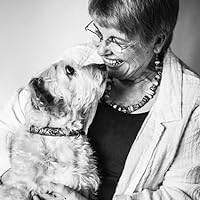
Little Shirley Hershey, named for a movie star, grew up with her nose pressed to the window of the glittering world. Three locations shaped her-a family farm, a country school, and Lititz Mennonite Church. She later became a college president and then a foundation executive, but the rosy-cheeked, barefoot farm girl never quite disappeared. As Willa Cather said, "Most of the basic material a writer works with is acquired before the age of fifteen." This childhood memoir tells the story of a girl who might have left the church but found another way.
Shirley Hershey Showalter grew up on a family dairy farm in Lancaster County, Pennsylvania, and went on to become the president of Goshen College and a foundation executive at The Fetzer Institute.
The word “pioneer” best describes Shirley Hershey Showalter’s career. She was the first person on either side of her family to attend college. She was the first woman president of Goshen College, she helped the Fetzer Institute pioneer a unique mission fostering awareness of the power of love and forgiveness in the foundation world. Now she has written two books. The most recent is co-authored with Marilyn McEntyre: THE MINDFUL GRANDPARENT; THE ART OF LOVING OUR CHILDREN'S CHILDREN (May, 2022) and BLUSH: A MENNONITE GIRL MEETS THE GLITTERING WORLD (September 2013) http://www.goodreads.com/book/show/17...
Shirley has always loved teaching and learning. After graduating from Eastern Mennonite University in 1970 and teaching high school English for two years at Harrisonburg (Virginia) High School, she entered graduate school at the University of Texas at Austin, from which she received the Ph.D. in American Civilization in 1980.
She joined the Goshen College faculty in 1976, becoming professor of English in 1989. She published numerous articles and personal essays, not only in her field of early 20th century American literature but also in spirituality, higher education, and leadership. She also won the Sears Roebuck Teaching Excellence and Community Leadership Award.
In April of 1996, Showalter was named the 14th president of Goshen College and served there until November 1, 2004. During those years, she was awarded the John S. and James L. Knight Presidential Leadership Award and other honors. The endowment grew from $46 million to $90 million; a $24 million music center was erected and many improvements were made to the campus. After intensive community dialogues, the college established core values and a strategic plan for the next decade.
On November 1, 2004, Showalter joined the Fetzer Institute as Vice President-Programs. She helped the Institute organize its staff and program around three areas: individual and community transformation, science and spirituality, and communication and outreach.
She is now a writer, blogger, and speaker living in Lititz, PA. She is the mother of two adult children and grandmother of three. She and her husband Stuart spent the 2011-2012 academic year taking care of grandson Owen while living in Brooklyn, NY. Most of her memoir BLUSH was written in Brooklyn.
When her third grandchild was born in Pittsburgh, Shirley and Stuart again did a "grannynanny" stint for ten months, helping to take care of baby Lydia and exploring Pittsburgh.
Shirley can be reached through her website: http://www.shirleyshowalter.com, where other materials for groups interested in her books can be found.
This memoir transports the reader into the world of a girl growing up in a Mennonite family on a farm in Lancaster County, PA in the 1950s. For many it may appear to be a quaint childhood environment far different than their own. But for me it was a reminder of the many ways that my own childhood experiences were similar to those of the author. There are obviously plenty of differences between us, but hardly a chapter went by in this book that I didn’t think of similar experiences from my own life.
Perhaps my introspective reaction to the book has been influenced by the author Shirley Showalter’s many blog posts encouraging and coaching others to write their own memoirs. I’ve been following Shirley’s on-line comments since 2009 when she had a blog titled “One Hundred and One Memoirs: Because One Hundred Isn’t Enough.” We’ve been Goodreads.com friends from that same era as well. Even though we’ve not met in person I feel our acquaintance has reached an advanced stage of cyberhood friendship. Thus, for the reasons noted above and others, my response to this book is probably more emotional than it would be for most other readers.
Her chapter titled "Standing Up To The Bishop" reminded me of religious experiences from my younger years that I now view with less than positive enthusiasm. Would survivors of those experiences be the same people today if they had been spared the experience? When I noticed that Shirley had included a Glossary at the end of the book I immediately checked to see if she include one of the most important words of my youth, "worldly." Yes, it was there under "The World." If you think that the word "world" is a synonym for "planet earth," you don't understand the theological significance of the word. If you want to know the real meaning of the word you'll have to buy the book and see for yourself.
Under Acknowledgments I noticed that Shirley included thanks to "... critics of my faith... . You have been my teachers and mentors, too." It was thoughtful of her to say that. She even included some recipes at the end of the book for those who wish to experience the taste of cooking from the Pennsylvania Dutch branch of the Mennonite Church. (Not all Mennonites come from that ancestry.)
I might also mention that Shirley has been the master of building social media buzz in anticipation of this memoir. She's been running a virtual workshop on how to write a memoir. She's been sending frequent writing prompts that encouraged subscribers to write about their memories. Another example was a "New Beginnings Challenge" in which she asked participants of share hopes, dreams, adventures and challenges over the 100 days prior to the date of publication for the book. The winner of the "Challenge" received (if I remember correctly) an overnight stay at the Forgotten Seasons Bed & Breakfast which is the Home Place in Shirley's story.
Thus when she gave away twenty copies of the book through the Goodreads.com giveaway program, over nine hundred people entered their names. Presumably there were more like myself who didn’t enter because we had already purchased the book. It made my initial concern upon hearing that she was giving away twenty books seem foolish because my first thought was that maybe fewer than twenty people would enter.
While reading this engaging book, I couldn’t help but draw similarities between the Mennonite culture and the bonsai practice that focuses on long-term cultivation and shaping of small trees grown in a container. The Mennonite society is tight-knit and contained, and of utmost importance — much like bonsai — they honor their roots.
Throughout this captivating — and oftentimes hilarious — recount of the author's adventures and her desire to live large, I thought of Shirley as a giant redwood. While committed to her roots, she balked at confinement and stretched head and shoulders above the rest, reaching for a sky-high view of the world and what it offers.
This memoir honors both tradition and following one’s own heart, even if it means stepping out of the container to grow into the very best version of oneself. Even if it means being a redwood among bonsai.
From beginning to end, Blush: A Mennonite Girl Meets a Glittering World is a love letter to being Mennonite. Shirley Hershey Showalter writes on the last page of her memoir, “I realized by writing this book that one of my first names for love was Mennonite.”
And so it is that we journey with her into a way of life few of us will ever experience. I read the book with the interest of one who grew up near Lancaster County, Pennsylvania. I was familiar with Mennonite women wearing prayer caps; women who shopped in nearby grocery stores or brought produce to farmer’s markets in communities where I lived. Mennonite men, a father and son, had worked on my home, installing new windows and doors. Wearing plain black clothes and straw hats, they worked with tireless perfection and expert craftsmanship. Still, I wondered: Who are these people? I imagined their lives as passionless and constrained, their community a place where lack of individuality was not just glorified but demanded. Yet as Showalter writes, her youth was filled with the same ambition and desires that most of us experience. By embracing our universality early on in the story, she takes us into her world and the “arch cellar of memory.”
She describes the joy of experiencing the beauty of the Pennsylvania countryside in all its rural splendor, the baked sugar cookies and other culinary delights in her mother’s kitchen. She admits she wanted to please both her mother and father, almost as a son would and that being male held more opportunity than being born female. Her innate curiosity and intelligence helped her sort through many questions and dilemmas that appeared along the way as a girl who harbors big dreams and a longing to experience the “glittering world” outside the boundaries of the Lititz Mennonite community.
Showalter’s mother, Barbara, loved the arts, “especially music, acting and dancing.” She was also a writer and poet at heart. A bit of a rebel and a woman longing for glamour, Barbara ends up getting a “concession” from the bishop at her wedding - flowers, which were “frowned upon” and wearing white pumps, only if she agreed never to wear white shoes again. “Sixty-four years later, Mother has kept her promise,” Showalter writes. “Close inspection of her closet might reveal some very light beige shoes though.”
Despite the humor, there is a certain bitter sweetness to all of this, yet Showalter writes in clear prose, almost as a journalist might, the daily routine of farm life, of being a churchgoing member of a community rooted in family, home and the virtues of steadfastness.
If there is any fault to this memoir, it is that there is little indication of a darker side to this life or true doubts on the part of Showalter. One glimpse of her distress is when a new bishop begins railing about sin and shames girls showing stray hair under prayer caps. Eventually, young Shirley decides to “pull out the Olympia typewriter my parents had given me for Christmas. The gift was a concession to the idea that I would go to college. . ."
She writes a letter to the Lancaster Bishops Conference Board “expressing her concerns,” yet never points a finger at the “insensitivity” of the offending bishop. Rather, she quotes the mercy and love of Jesus in John’s Gospel. Eventually, the bishop leaves the Lancaster Conference to join others seeking a “purer church.” Although Showalter admits the letter may not have made a difference in the end, the experience gives her a sense of the power of the written word and her own desire to write.
Meanwhile the glittering world continues to entice. Showalter asks her father to stop the car so she can look at the faces of the actors at drive-in movies; he agrees only to slow down. She approaches her mother to help her understand “courting and mating rituals.” Her mother gives her a book about “dating, marriage and sex with a spiritual context.” Once again, it is to the family and the community where young Shirley finds her answers and peace.
"Blush" ends as Showalter heads away from Lititz to do what few Mennonite girls did – attend college and pursue her dream of teaching and lifelong learning. Showalter concludes with a chapter on why she is still Mennonite, although after we finish this book the explanation is hardly necessary. We have entered her multi-faceted world and are transported along with her. Her love for her church and community is a gift she generously offers us, her readers, through this heartfelt memoir.
I feel a lot of warm cooperation and community surrounding this book: in the way Ms Showalter herself, through her blog, involved us in the making of the book, in the way her publisher really makes the book shine, in the way several of Ms Showalters' communities embrace the book's coming out.
I loved this book so much I purchased 3 copies, 2 to share and my own to read aloud to my husband.
I blush to admit that I also felt (feel) some envy...partly because Ms Showalter does have a lot of 'community' involved, including much from the wider Mennonite world.
However, we Mennonites are used to 'waves,' after all, back in the 15- and 1600s, our ancestors were the third wave of the Protestant reformation. I dwell mostly in the third wave of gratitude and appreciation for this book, and I feel encouraged to press on with my own book about my childhood Mennonite church.
If there are three words that define what Shirley Showalter does not want to be in her life, they are: plain, dull and boring.
From the start, we get the feeling that standing out from the community, yet still belonging, is what Shirley wants more than anything.
Shirley grew up in a very loving family and has admiration for her mother from a young age. This desire for a mother and her daughter to not be plain starts when Shirley is given the same name as actress Shirley Temple. Her mother even permed Shirley’s hair when she first attended school so she’d stand out from the other “plain” girls.
Shirley transports us into her childhood with all her senses, remembering that tastes of the sweet and sour foods which she then uses in a clever manner to organize her life memories.
She has the ability to pull us into her strong family unit and share her emotions, so we feel like we’re sitting at her dinner table sharing meals with her family.
Shirley has a deep admiration for her mother being different from the other Mennonite women. “She used the time other women spent on those activities (cleaning and sewing) for reading and writing.”
She states that grade school stimulated her creativity and taught her to listen to her own feelings, and to search her environment for opportunities and to go out and meet those opportunities.
We sense her struggles during school and the feeling that she wanted to excel, but had to “hold back.” The incident where her teacher, Mrs. Rothenberger, placed duct tape on Shirley’s mouth because she was so proud of herself for blurting out the correct response. This caused her to feel she had to “control” herself, and to not try too hard.
The word plain keeps coming up, as a “bad” thing that hinders growth and development. For example, “I noticed that very few of the girls from plain families were in.” Shirley says she had difficulty understanding her own desires in sixth grade to be both popular and smart, just like her mother had wanted to be. But strangely, he mother who had originally wanted her to become a Mennonite Shirley Temple, changed her expectations and Shirley started looking more like other Mennonite girls. In 5th grade, Shirley says, “I was being prepared to become plain.”
You feel Shirley’s constant conflict throughout the years and how her mother asked her, in her soft voice, if Shirley was ready to give her heart to God. Shirley explains how she had resisted the pressure to join the church mostly because she didn’t want to become “plain like Mother and stick out like a sore thumb at school.”
When Kennedy was voted president, you see the hope in Shirley’s eyes, and how she loved Jack and Jackie’s glittering style. Finally, when Shirley changed schools, she discovered that it was OK to be intelligent, and to shine. “A new Shirley emerged.”
We see the rebellious side of Shirley as she goes through puberty, where she would pretend to smoke a cigarette. She was envious of men’s ability to walk in the world. Shirley talks about cars, and notes how the outside world could see the incongruities and paradoxes of Mennonites. She felt she could see how the “Mennonites were indeed saints and sinners combined.” They didn’t have TVs, but bought convertibles for their sons, a way to keep them motivated to work on the farms.
Shirley mentions the conflicts in her religion between being a non-conformist, yet “being herded into my behavior felt like conformity instead of nonconformity.” Shirley liked the ideas of nonconformity.
Shirley was the only Mennonite girl out of a class of 144 who planned to attend college and says that without Mennonite role models, she wasn’t sure how to combine academic ambition with the church’s teachings. But her teacher, Mr. Price, inspired her, and was able to show her that intellectual life and spiritual life might actually go together.
Shirley discovered that college gave her a new way to combine a glittering world away from the farm with a new understanding of what it meant to be a Mennonite.
I was charmed and delighted with Shirley Hershey Showalter's, "Blush, A Mennonite Girl Meets A Glittering World," her memories of growing up in a conservative, Mennonite farm community in Pennsylvania. Her wish "to be big," not in the sense of being tall, "but big as in important, successful, influential," went against all that her church and family represented. To be Mennonite was to be plain and simple: in dress, speech and in all behaviors. And to be female and wear a prayer covering on one's head was to stick out like a sore thumb ... part of a religious subculture that a good part of the rest of the world doesn't notice or choose to understand. In large societies like our own, we're all too quick to point fingers at and make sometimes cruel jokes about those who are different from the rest of us. Whether it's our skin color, religion, political affiliation, or sexual orientation, there is always something to gossip and make nasty judgments about.
Reading through Shirley's memories of her first eighteen years of life, I was struck by how "BIG" she was even when she was small. She seems to have had an intuitive side that brought her through difficult moments in a family and church that she went along with and believed in, despite having her own dreams and aspirations for something more. And though following the rules, she never became the expected Mennonite wife, wearing a prayer covering, raising a handful of kids, and helping her husband by doing whatever is necessary to run a sometimes not so profitable farm. Shirley seemed to know, if only on an unconscious level, that she would be more, while still respecting and hanging on to the structural ideals of her church and family. She has done more than succeed as a past president of Goshen College and work with the Fetzer Institute.
From the beginning, Shirley, named by her mother after the famous child star, Shirley Temple, loved to be with her dad, riding along with him on the tractor and helping out in the other innumerable daily farm chores. Later when her brother and sisters came along, she loved being their teacher, showing them the ways of the natural world, the church, their family and even perhaps the glittering world beyond her parent's farm. She "blushed" her way through awkward moments when she could barely contain her urges to go beyond what was expected of her. Her parents seemed to understand her concerns and differences with the Bishops of the Mennonite community, allowing her to think for herself while guiding her with gentle kindness.
Of the many heart-warming stories in this memoir, one of my favorites is when her younger brother, Henry, getting a "new" second-hand bicycle. Envious of her brother's good fortune and frustrated by her own old and worn bike, Shirley, tries to paint hers in an effort to make it look better with the odd cans of paint that are stashed in the barn. She never asked permission to do it and makes a huge mess that most parents would have a huge fit about. When Shirley tells her dad, about her misadventure, adding that "I think you must love Henry more than me," he rushes out, purchases the proper paints, takes her bike apart, and repaints it to make it look almost like new. Though her mother reminds her about envy, her father doesn't lecture her on what she has done wrong. This special love and Mennonite kindness, prevails throughout the entire book, making me wish at times that I had grown up as a member of her family.
Filled with tidbits about history of the Mennonite church, family stories, along with recipes, footnotes and a glossary of terms I had little to no clue about, Shirley's book took me on a journey through her early life and who and what has influenced her to become the woman she is today. She says it all best in the final pages of her book in, "Why I Am (Still!) a Mennonite."
In this complicated world we live in, reading "Blush," was a happy and refreshing visit into a simpler, less thorny way of life.
this is the book I won from goodreads.com and Is a first reads book this is a good book to read it is about the author Shirley Hershey Showalter. she grew up in a plain Mennonite home. this memoir tells the story of a Mennonite girl who might have left the church but found another way
Shirley Hershey Showalter’s Blush: A Mennonite Girl Meets a Glittering World sings the song of her early life as a Mennonite girl in 250 pitch-perfect pages. Born into a family of Lancaster County Swiss Mennonite parents, the author recounts the story of the first 18 years of her girlhood on an 100-acre dairy farm in the 1950s and early ‘60s. The book delivers in its promise to play out her memories of school, church, and home, “the three legs of my childhood stool,” as she puts it. “Each carried both sweet and sour memories” of ways this plain girl fit in and ways she stood out as different.
Her melody line bravely hits the sharps and flats of her experiences. She grabs her reader by the hand to walk into their farm meadow as she and her brother Henry play amid the Holstein cows and fragrant bluebells by the creek on a cloudless, spring day. We learn secrets of good Pennsylvania Dutch cookery in her mother’s kitchen and are privy to recipes of delicious dishes in an appendix to the book. She lets us hear the congregation joyously singing hymns of the faith a cappella in 4-part harmony though in a sex-segregated sanctuary. But her song turns to a minor key as she vividly describes the sudden death of her infant sister, her by turns affectionate and adversarial relationship with her conflicted father, and later in a brush with a rigid Mennonite bishop.
This memoir abounds in artful motifs. In the preface the author is sitting on the sandstone steps on the way down to the arch cellar of The Home Place, now known as Forgotten Seasons Bed & Breakfast. She describes the arch in this cellar as the entrance to a storehouse of provision for her parents and grandparents against the want of the Great Depression and a bunker of bounty during the Cold War. Indeed, the book succeeds as documentation of major political currents and cultural icons of the era: Eisenhower and later Kennedy, the Studebaker Lark, the Phillies, Elvis. Other visuals include a map of the Lititz environs, her family tree, along with beloved family portraits and snapshots.
For me as a reader, the most endearing arch in her story is the rainbow in her mother’s invented story of “The Magic Elevator,” which she, a diarist and aspiring writer herself, wrote at age fifteen and has adapted for her children and grand-children through the years. Her mother, Shirley’s first mentor, challenged the norm in a story she recounts early in the book: Although the Rules and Discipline of the Lancaster County Mennonite Conference condemned worldly weddings, including carrying a bridal bouquet, Shirley’s mother Barbara Ann craftily transformed the family’s plain living room into a fancy bower of flowers and palms for the ceremony. After all, at church we sing fervently of beauty in “This is My Father’s World," she must have reasoned. Evidently, Shirley was not the first Mennonite in her family with moxie.
Shirley’s story sings because it rings true. And, yes, Shirley, you did go home again. The Oh! at the center of her story leads readers to a fresh discovery of home, where one’s heart is nourished and where, as T. S. Eliot puts it, we can all “arrive where we started / And know the place for the very first time.”
"There are many ways to arrive at a place, many of them unimaginable at the beginning of the journey." BLUSH posted by Marian Longenecker Beaman on http://marianbeaman.com
Shirley Hershey Showalter gives the reader a view into the life of a Mennonite farm girl in the 1960s, an intimate look. I have visited Pennsylvania, specifically the Lancaster County area, and I have seen Mennonite and Amish farms, those farm families on the streets of various small towns, and the shopkeepers from whom I purchased items to bring home. But seeing is not the same as living as an Amish or Mennonite and then sharing it on the written page. Thank you, Shirley, for giving me a marvelous trip into Mennonite farm life.
The author and I are about the same age so I related on a very personal level with her growing up years and the things happening in the world at that time. What I found most amazing is that, although I grew up a Methodist and the author a Mennonite, our lives were startlingly similar, almost mirror images. The Methodist Church had at that time, based on family values, some rigid ground rules, as the author experienced in the Mennonite church, family and community.
On another level, the author and I had similar dreams -- writing, college, moving on, experiencing the world. We both fought similar battles to carry out our dreams. Today, except for a difference in where our professional lives took us, we connect in a parallel world called the Internet in memoir and writing communities.
For me, this book took me on a journey of reminiscences of my life, including dreams, frustrations, disappointments and more. Another reviewer, who grew up on a farm, felt similarly in that she could relate so closely with the author's life as a farmer's daughter.
I share these words with you not to detract from the review of the book but to show you just how effectively Showalter has written her stories down. They are real, and you can feel the rhythm of each day as she follows her father around the family farm. And Blush is built on a theme of universality, and Showalter accomplishes this beautifully.
Showalter's desires to move into the more "glittering world" as a college student and writer were also the dreams of her mother as a girl. The reader senses the author's mother encouraging her with unspoken words. Once again, palpable stories full of description and the members of the author's family.
A message of faith runs through Showalter's stories as an undercurrent to the stream of her life with its dreams and yes, its rules. And in the epilogue, it is clear why she chose to stay with the Mennonite Church in the end.
My Recommendation:
For a memoir that will keep you reading and perhaps, like me and other reviewers, thinking back over your own life's experiences, Blush is that memoir. Showalter's writing style is fluid, colorful, and honest. Her stories speak to us of life as it really happened, life on the farm but with an insistent pull to the "glittering world."
I received a copy of Blush from the author via her publisher in exchange for a fair and honest review.
Shirley Hershey Showalter’s honest and engaging account of her first 18 years in a Mennonite farm community is so compelling, I read it in three sessions not wanting to put it down. Not only was I transported into her world of fields and meadows, Sunday dinners on the farm and the strict rules of the church regarding dress and deportment, I was invited inside her thoughts and feelings about her place in her family, her church and her world. As she introduces us to her ancestors, with a detailed portrait of her parents, she lays the foundation for her own coming-of–age story. Her mother, Barbara Hess dreams of being an actress, writer, independent woman but becomes “plain” upon her marriage to H. Richard Hershey. Her father is the first son of seven children who had a conflicted relationship with his own father. Both her parents act out their pasts in Shirley’s childhood. Barbara, while maintaining the Mennonite ways seems to nurture Shirley’s independence. Her “magic elevator “story cherished in childhood becomes an ongoing source of inspiration and hope as she grows and faces challenges in her life. Her father remains more rigid about the Mennonite teachings and eventually gets lost in his own world. “Daddy is back”, Shirley proclaims in her teen years when she witnesses the return of her father’s engagement in her life. We see how as a young child, he responds to Shirley’s confession that he must love Henry (her younger brother) more because his bike is nicer than hers. He immediately takes her to the store to buy paint to restore her bike to look as nice as Henry’s. Through it all, we get a sense of clarity about where Shirley came from. She is loved and valued for who she is. Shirley weaves in political events and church teachings in a well-researched, detailed way which gives context to her own responses. Her reflections on the “sweet and sour” events in her life—sudden death of a baby sister, school achievements, impact of JFK’s assassination , her sometimes conflicted relationship with her father-- engage us with their honesty and believability. At the end she adds a glossary of terms and Mennonite recipes which bring us closer to her story. Although Shirley educates us on the Mennonite way of life, her message is universal—finding your unique voice in the world while still remaining faithful to the people and values that have shaped you. By the end, I felt like she had taken me by the hand to show me how she negotiated her way to her own glittering world, on her terms. A beautifully written memoir that educates, engages and entertains its readers, it is a succulent feast.
Reading, at least for me, is at its finest when the author spirits me off to new places and introduces me to new ideas, but in a way that elicits a “shiver of recognition.” I save the highest praise for authors that evoke empathy for the challenges the characters face in an otherwise unfamiliar environment. This is as true for memoir as for fiction.
From this perspective, Blush was very fine read for a city girl (me) who knew little about the inner workings of a Mennonite farming community. I so enjoyed Shirley Hersey Showalter’s portrait of farm life as well as her portrayal of the colorful and often idiosyncratic people who dominated her home, school and church. She is a fine writer, and Blush often has the visual acuity of the cinema.
What made it it an especially good read was following Showalter's recurrent attempts to challenge the traditions and values with which she was raised, to explore “the glittering world” that beckoned from outside her rural community. For anyone who has undergone a crisis of faith, her rebellious gestures may seem tame, but in her world, any and all questions required considerable personal courage. I was rooting for her every step of the way!
For sheer enjoyment, Blush deserves five stars. However, I give it four because the book left me unsatisfied on one important point. Shirley tells us on the first page that she wants to be “influential” and we know that she ended up in roles in which she was very influential. However, her exquisitely detailed documentary about the Mennonite world did not help me to understand how a sheltered young girl from a conservative and traditional background actually made those dreams come true.
I found the most satisfying part of the book to be the Epilogue, which offered a few—but not enough—clues to how that girl came to be a force in the world of education.
If and when there is a sequel, I will be one of its very first readers.
Shirley Hershey Showalter takes the reader into her traditional Mennonite family, as she tell of growing up a small community that revolved around her church. I've long been intrigued by their simpler lifestyle and big, close families, and this book gives an intimate glimpse into what it means to grow up Mennonite.
Shirley (a distant relative of the Chocolate conglomerate founder) tells charming stories of milking cows and roaming the woods and farms near her home. She also tells of attending public school, and struggling with being "plain" in a time that we now look back on nostalgically as being simple and conservative - the 1950s. In her world, dancing and movies were forbidden, girls weren't expected to want education past high school, and clothing and hair had to be modest and traditional. Shirley struggled with obedience, while at the same time she took comfort from the tradition and support of her church.
Much of the book addresses Shirley's struggles with growing up with her family's expectations of her marrying young and following in her mother's footsteps as a farm wife, when she longed to go to college and to see the world. The last chapter pulled the whole story together, as she explained how being Mennonite is a place in her heart, not about the length of her hair or pleasing church elders.
I totally enjoyed this book, and recommend it to anyone who is curious about Mennonite life, or for any young person struggling to balance faith and family traditions with the "glittering" world out there.
I received a copy of Blush directly from the publisher, in exchange for writing an honest review.
I was not raised in a Mennonite community, but I was raised in the same time period as Shirley Showalter, and many of the questions that plagued her in her youth also plagued me in my staunch Episcopalian upbringing. I, too, puzzled over the different approaches to worshipping God since our household also included my very Baptist grandmother. Why was one hymn acceptable in my church, but not another? Shirley's visit to a Presbyterian service resonated with me as I recalled the religious contrasts in my conflicted home. The natural desire to compete, to make one's own decisions, and managing to emerge from a restrictive world into the wider one should pretty much resonate with anyone who grew up in that postwar era. But, being told from the perspective of a Mennonite girl sharply delineates the differences between disciplined Christianity and the secular world as well as the differences between a rural upbringing and that of a more cosmopolitan one. I firmly believe that the core values taught to Shirley Showalter shaped her later life and spread, like ripples in a pond, to her students as well as to those of us lucky enough to share her life through books such as this one. Showalter's story is told in a straightforward narrative that is engaging and easy to read. I would place this book in any reading curriculum that includes The Diary of Anne Frank as a very different but very relevant coming of age story. Stories like this tell the uncertain young person that his or her uncertainty is quite normal and a part of natural human growth.
This is the author's story about what it was like to grow up as a sheltered Mennonite girl with big dreams in Lancaster County, Pennsylvania, as her family and church dealt with all of the cultural changes of the 50's and 60's. The author writes with gentle humor and affection about her years of growing up, and finally, being the first of her family to go to college.
She also tells the story of her parents when they grew up; her mother had her own unfulfilled dreams of being an actress and a writer, and was a bit of a rebel herself as a young adult; for example, going against the bishop's rules on her wedding day and wearing white (and opened toed!) shoes on her wedding day.
I really enjoyed this book, and learning something about Mennonite culture that was different than what I had read in fictional stories. As the author points out, Mennonites are not just "Amish with cars and electricity", and each Mennonite community has their differences from each other, as per their rules and how strict they are, just as Amish communities differ from one another.
I really enjoyed this memoir, and I found it fascinating and hard to put down once I started reading it. I appreciated also that the author included several photographs throughout the book of her and her family, and at the end of the book, a few family recipes.
Shirley Hershey Showalter's memoir on growing up Mennonite is much more than simple story-telling. Although I grew up in Pennsylvania and had some interaction with Mennonite families, I found that I had a lot of misconceptions as to how they lived, what they believed, and how they thought about non-Mennonites. Showalter does an excellent job educating the reader on Mennonite life, seamlessly intertwining the lessons in cultural understanding (for us) with her own life experiences and life lessons.
This book is truly beautiful and well-crafted. Showalter does not romanticize Mennonite life, yet articulates with grace and confidence her struggle to find a place between two worlds. Her words left me at times laughing, other times smiling, and still other times fighting tears. I also greatly appreciated the photographs interspersed in every chapter, helping enhance her memories and re-telling.
For anyone who is curious about Mennonite living in the 50s and 60s, or simply wishes to be enveloped in one woman's journey to understanding her place in the universe, this book is for you.
Book received free through Goodreads First Reads. I was not and will not be reimbursed for this or any other review.
Journey with Shirley Hershey Showalter as she remembers her life as a young Mennonite farmgirl outside Lancaster, Pennsylvania. Mrs. Showalter's writing is lyrical and fluid, and draws you into her story; begging you to feel each moment right along with her. Her love for her Church and her family come across beautifully in every page, sharing with the reader the joy and peace she's found in her life with each well-loved memory. Share in her struggle to stay faithful to the ordinances of her Church, while still holding fast to her individuality and artistic spirit. Mrs. Showalter's deep respect and love for God and family lend a sweet humility to her memoir that sings to the skies of her joy in her faith and her life.
A wonderfully written, moving story that will leave the reader with a renewed appreciation for the simple things in life, which are also the most important. Faith, love, hard work, and family.
So go ahead, sit a spell. Live the joy and happiness with Mrs. Showalter as she tells you her story. It's a story I'll be reading again and again.
Out of a tradition created and controlled by HIStory, Shirley Showalter tells us HERstory—a personal and spiritual memoir of growing up Mennonite in a rural area outside Lancaster, Pennsylvania. It’s an authentic story of Showalter’s formative years and personal journey to discover the value of education, the beauty of language, the unifying strength in song, and the power of love. A gifted storyteller, Showalter carefully selects the unique events in her life that most resonate with universal coming-of-age experiences, balancing the joys and sorrows with wisdom and humor.
Showalter was one of my favorite professors at Goshen College before she went on to become the first (and so far only) woman president of Goshen College. After finishing Blush this morning, I had the great fortune of hearing Showalter deliver an inspiring address in a packed auditorium at my alma mater this afternoon (and getting my copy of the book signed). Hearing her read from the book made me wish that Herald Press would release an audiobook of Blush, read by the author.
Shirley Showalter has written a wonderful memoir that I enjoyed very much. I am a couple of years younger than Shirley so I could relate to all that she wrote about in this time frame. I won this book from Good Reads and was so excited as I love to read stories about the Amish, Mennonite, and Quakers. When it came I was surprised that it was a signed copy by Shirley ~ that makes it so very special! Reading this I felt like we could have been friends as children. I was so happy when she won a very special award graduating from high school. The book was easy to read and understand, also wanting me to read more about her life as an adult. It's a wonderful book and I thank her for writing it and also Good Reads for giving it to me. I will definitely share this book with my family and friends.
This is a sweet memoir of the author's years, after World War II, growing up on a farm in a Mennonite community in Lancaster county, Pennsylvania. The nice thing about this memoir is that it is told with great affection for her family and community, and with respect for her faith. She went on to become a college professor and then president of a Mennonite college in Indiana. I thought it was interesting to read how her father's personality chnaged after he had bought the family farm from his father and then lived with the stress of paying a mortgage and making ends meet with the economic insecurities of farming. He seemed to have been happier as a sharecropper in a rented house. Now that is something to ponder. Still, the family was very close and the text is laced with wonderful photos of the author and her family from those years.
Shirley Hershey Showalter took me to another world that I didn't want to leave! I want to read this book again and again and again.
The author is a successful, accomplished woman who comes from a tradition that had caused me to wonder whether that would be possible. I love the story of her upbringing, where she came from, where she is going.
I was able to learn a lot about the Mennonite world, of which I must admit, I knew just shy of nothing.
The only bad thing I can say about this book is that it left me wanting more!!
I received this book for free through the Goodreads First Reads program.
Holy cow, what a beautiful memoir that is written with such grace!
I recommend this memoir to absolutely everyone for within is a message to all of us. I found myself completely riveted with Shirley's prose and the underlying current of empathy for mankind. I’ve been in and around religions my entire life and have never witnessed such kindness and compassion for mankind as a whole. I'm left with a desire to reconnect with others again for there is truly goodness in the world.
Thank you Shirley for uplifting my soul in ways I had given up.
I was delighted to read "BLUSH" by Shirley Hershey Showalter. I found the book insightful and funny at times. I knew nothing about Mennonite life, but after reading I found I can relate to some of Shirley's feelings about wanting more than what's offered. I loved the personal pictures in the book. It makes it easier to put a face to some of the wonderful stories within the book. I would recommend this book to my friends. It's an interesting book to read.
This book was especially interesting to read after learning about memoir in a class Shirley taught over this past semester. In every chapter-essay of the book, I read examples of Shirley practicing what she preached to me in class (and in the margins of my essays), which was refreshing. And although I don't think we agree on every component of what makes a memoir great, her book makes a fantastic argument for what she believes.
I really enjoyed this book. Having grown up in PA, the Amish and Mennonite cultures were always something that fascinated me. I thought all Amish were Mennonite and all Mennonite were Amish. Certainly, not the case! I enjoyed the author's ability to make her life story interesting, touching, and understandable. I certainly feel I understand more about the Mennonite culture now. Liked it a lot!!
I read an advanced copy of this memoir for a Mennonite World Review book review I'm writing. Loved it. It's clear Shirley Showalter is a student of memoir, and knows how to tell a good story. The best Mennonite memoir I've read.
Shirley Hershey Showalter was my favorite college professor. I enjoyed working for her when I was a young writer and she was college president. And I was excited that she had written a memoir. So why did it take 10 years for me to read the book on my shelf? I think I was afraid I would be disappointed.
Silly me.
Blush is thoughtful, caring, tender and blunt, finding ways to honor the “plain” lifestyle in which the author was raised while making clear the reasons she diverged from that conservative Mennonite community as an adult. The book can serve as an homage to memory as well as a window into a particular way of thinking about the world and how we live in it.
I always love reading a non-fiction book with characters in it who I used to know or interact with. I did not know the author but I knew a few of the other people mentioned in this title. Showalter writes about the early years of her life growing up in Lancaster County, Pennsylvania, where she attended public schools and experienced the tensions that used to exist between plain dressing Mennonites, usually a minority in public schools, and those who were not Mennonites. I experienced much the same when I attended Conestoga Valley Junior High School, probably no more than ten miles from where Showalter was going to school at the same time. Unlike Showalter however, I switched to Lancaster Mennonite High School in 10th grade where Mennonites were in an overwhelming majority, while the author of this fine biography went to a Warwick public high school in Lititz.
I especially liked the information the author shared about the relationships and tensions in her family, especially between her father and grandfather. She was apparently a sensitive and perceptive child. Often those imperfect relationships in Mennonite families during that era were treated as something to be ignored or denied. At the very least you would not talk about it to others because that would damage the image you want to present to the public. Such denial made the problems worst and caused more pain and hardship as well as sometimes even driving people away, who no longer feel welcome at home.
Also fascinating to me was her experiences with the Mennonite church hierarchy, especially in that particular congregation. Her bishop's belief that he, on the judgment day, would have to answer for the souls of each person in his congregation reminds us of some of the burden these men, (and they always were men), undertook. The extra restrictions placed on women and girls, questioned by many even when it was happening, is clearly, from today's perspective, one of the grave injustices of that place and time. Although not all Mennonite congregations were alike, and the strictness of the leadership varied with changes in pastors and bishops, many Mennonites growing up in the 50s and 60s in Lancaster County had experiences similar to those of Showalter.
Several times while reading this I thought of novelist Harry Crews' great biography, "A Childhood: The Biography of a Place," not because there are a lot similarities between the experiences of Crews and Showalter. Showalter's book sticks to the facts of her history whereas Crews blurs the boundary between memory and imagination. But both books focus on childhood or youth: Crews ends before he reaches junior high age while Showalter includes the early teen years and high school. Both books provide a lot of detail about life in their respective environments. Both families have to work hard to survive. Crews faced more hardship than Showalter. In both families there are key individuals who seem to be the anchor of the family. Often that person is a mother. The geographic location was of great importance in the lives of both writers and in their biographies.
This is more than just the story of one girl who grew up to be a college president, but also a look at a time in history that is largely gone, even at that location. Times have changed and so have the beliefs and worship of Mennonites in Lancaster County. Although I have not lived there for over 40 years I still feel a strong connection to the people and Mennonite traditions and beliefs of that geographic location. I may be biased but I think this is a great read.
It took me a long time to discover that God made me a feisty, curious, plain Mennonite farm girl for a reason. ~ Shirley Hershey Showalter
If you substituted the word 'Amish' for 'Mennonite', I could have written this statement. It was written by a kindred spirit, Shirley Hershey Showalter, whose first memoir, Blush: A Mennonite Girls Meets a Glittering World, was launched in September. Rich in sensory details, this is a memoir of a happy childhood, with two responsible parents who were farmers in the tradition of their Anabaptist ancestors before them.
Even though hers was a happy childhood, Showalter had aspirations early on of living life beyond the world she knew: she dreamed of becoming a teacher and an academic. I will not go into many details of the book, because you will want to experience Showalter's life story for yourself, from her earliest childhood memories until she left home at eighteen years old.
I believe this is an important book for several reasons.
Showalter's story is authentic. You know all those books called "Amish romance novels" on the market today -- the ones that show a young Amish woman in a pastoral Amish setting on the book covers? These are "happy" stories too, but they often lack authenticity. (Unless you read the books written by the only Amish-born author of this genre, Linda Byler.) Furthermore, the hundreds of books in this genre miss something very important in their pages -- what it's really like when a feisty, curious girl is born into a Plain culture. There is only one way to know what the tension between the community and the self is like and that is to have experienced it.
Showalter lived this struggle. When the young people in her congregation were asked to "rededicate their lives to Christ" several years after she had been saved and became a member of the church, most of the young people complied and did so. Showalter did not follow the other young people who had been asked to come forward. I found myself sitting right beside her on that bench, feeling alone and different, and yet knowing she was doing the right thing. To resist going with the group takes tremendous courage, and I know that lonely place well.
I keep thinking this: After all the Amish romance novels, after all the reality television shows about Amish and Mennonite teenagers going off to big cities, after all the trumped-up stories about what it's like to be lured into the world, aren't people the least bit curious about what life in Plain communities is actually like, and what it really feels like to be torn between two worlds? Blush is just such a story. After reading Blush, I found myself hoping that Showalter will write a sequel. I have a feeling that the tires spinning on the gravel as she leaves home to attend college was a new beginning in Showalter's life. I want to discover that new life with her, as she invited me to do with her childhood in "Blush."
Disclosure: I received this book for free through a First Reads giveaway.
When I first started reading this memoir, I mistakenly assumed the author was writing about how she eventually left the Mennonite faith. However, I was mistaken. Yes, she did rebel in her own way while growing up, especially with the help of her mother. Yes, she did leave her home community, rather than marry and settle in the area as expected, to pursue an education at a college. However, it wasn't as much of a departure as I expected.
I think what I expected was a more in depth look into a religious lifestyle I am pretty unfamiliar with, beyond seeing Mennonite families at the store and the like. I was hoping for more information into the history of their specific religious practices, and also more information about what it's like to leave the community. Information is provided in this memoir about the author's own Mennonite community, so it was eye-opening to a certain extent, but the author does not provide many critical observations. Of course, if you were to ask me to write a memoir about my own cultural background, I am sure my account would be quite biased as well.
I guess my biggest complaint about this memoir is that it seems to lack real depth. It is a memoir full of sweet reminisces of a woman who grew up in a more conservative sect of the Mennonite community, who leaves her home church in order to attend a Mennonite college, and then marries within the faith in a traditional manner. I am impressed with how much she has accomplished in her life, especially when it comes to her many roles in academia. I, personally, however, do not understand what would cause anyone to stay within a strict religious community, especially one that places any strictures on women. Of course, I grew up in a completely different manner, so a large part of this lack of understanding is due to a lack of a common background.
This entire review has been hidden because of spoilers.