An anthropological study of the planet of Seggri, consisting of a number of accounts of both Ekumen and natives, as well as a piece of Seggrian literature. Traditionally, Seggri has had extreme gender segregation. Women heavily outnumber men, who until recently had little access to education, but were not expected to work. Recent developments have won new freedoms for men, but it's unclear how useful or desirable these freedoms are.
First published in Crank! magazine, then later in "The Birthday of the World" and "The Unreal and the Real" (Volume 2).
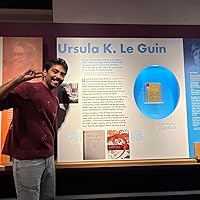
Ursula K. Le Guin published twenty-two novels, eleven volumes of short stories, four collections of essays, twelve books for children, six volumes of poetry and four of translation, and has received many awards: Hugo, Nebula, National Book Award, PEN-Malamud, etc. Her recent publications include the novel Lavinia, an essay collection, Cheek by Jowl, and The Wild Girls. She lived in Portland, Oregon.
She was known for her treatment of gender (The Left Hand of Darkness, The Matter of Seggri), political systems (The Telling, The Dispossessed) and difference/otherness in any other form. Her interest in non-Western philosophies was reflected in works such as "Solitude" and The Telling but even more interesting are her imagined societies, often mixing traits extracted from her profound knowledge of anthropology acquired from growing up with her father, the famous anthropologist, Alfred Kroeber. The Hainish Cycle reflects the anthropologist's experience of immersing themselves in new strange cultures since most of their main characters and narrators (Le Guin favoured the first-person narration) are envoys from a humanitarian organization, the Ekumen, sent to investigate or ally themselves with the people of a different world and learn their ways.
I don't know how to describe the genius of this book other than to tell you that I chose to do my MA thesis on it. Absolutely amazing. The Matter of Seggri is one of the most genius and experiential books I have ever gotten my hands on. A masterpiece.
A brilliant novelette about gender roles, slightly reminiscent of Arnason's The Lovers. It's my favourite kind of sci-fi, full of interesting questions about culture and gender and the way our biases reflect in science (the recommendation came during a conversation about that), and I particularly loved the structure. I'm a sucker for authors playing different unreliable narrators against each other to highlight the differences in what they see as truth, and it did not disappoint. But then, Le Guin rarely does.
jeg var endnu engang blæst bag over af Ursula le Guins forfatterskab.. Modstand og åndelige fællesskaber står klart som et lysende tema! Man fristes til at tænke at "11 procent" er inspireret af dette værk.
In Ursula K. Le Guin's novella The Matter of Seggri, we’re introduced to a fascinating sci-fi world where men are cloistered in castles, vastly outnumbered by women. These men, sheltered and revered, spend their days playing games, socializing exclusively with one another, and serving as trophies to be 'protected' from the burdens of real work by the women who both pity and idolize them. As boys, they live with their mothers and sisters, but at the age of 11, they are sent to live in cloisters. From then on, their interactions with women are limited to procreative encounters in the aptly named 'fuckeries.' This clever inversion of traditional nunneries/sisters of the cloth is both amusing and thought-provoking, especially as one young man yearns to break free and explore the world beyond his prescribed role. It’s a delightful science fiction anthropological exploration.
What an absolute masterpiece, one of the best things I’ve read in a really long time. So skilfully done - the simplicity, the worldbuilding, the timeless feel, the razorsharp commentary that still feels so light and playful. Does in 100 pages what anyone but le guin would need 600 pages to do.
Mistress storyteller Le Guin at her finest. Brilliant in the ways she can get a reader to feel so much in simple prose that are direct and yet deeply poetic. Gender bendy essential. Highly recommend.
WOW! Favorite novella in this collection. Favorite novella EVER. Going on my favorites shelf right now. This was a fucking insane IMAGINATIVE BEAUTIFUL BOOK. Such a smart book.
This was an incredibly interesting story with layers upon layers of themes to consider. Le Guin plays with some of the questions I myself have been pondering concerning gender, never answering them but just broadening my questioning by proposing new perspectives, new possibilities. What truly differentiates a man from a woman, and how do those differences drive society? In what ways are our gender-based oppressions of one another are inherent to our gendered inclinations, and in what ways are they universal human reactions to simply having a taste of power? This story was so fucking interesting, and the structure served it well by giving multiple viewpoints of this fictional planet Seggri. I could not put it down.
This story is so much more complex than simply turning gender norms on their heads--it wasn't a clean 180 where the women are not in power in the exact same way men are in power in our society. That wouldn't make sense, women aren't men and the way they would oppress would be inherently different than men, and Le Guin recognized and seemed to think deeply about this. What was most interesting was seeing the parallels between the oppressions--men, on Seggri, were treated as cattle, paid to have sex with women on the women's terms and impregnate them on command. And men are reduced to simple terms, seen only as loud, glory-driven, sex-crazed imbeciles whose only talents are beating up other men and beating their chests. While not a direct parallel to the sexualization, dehumanization, and degradation of women on Earth, I deeply pondered the plausibility of this situation. Will the gender in power always find a way to dehumanize the other, both in way of over-sexualization and intellectual simplification? To reduce them to their bodies and think of them as incapable of appreciating the finer things in life or making rational decisions?
What struck me was how the sentiments that women peddled about men to rationalize their oppression are the same sentiments I hear today occasionally. That men are totally controlled by thier lusts, that they prize sex above all else and are brutes in any situation concerning it. This is an unsupported logical leap from the opinion that men are perhaps more lustful creatures, while women place more emphasis on emotional connection in carnal relations. While not entirely true in all cases and not without nuance, I myself believe this statement to some degree. Not a bad thing, of course, just one area in which men are different. But this statement was used to justify the relegation of men to 'fuckeries' as their only means of sexual release. Men falling in love or being married is unheard of, for who could even consider men capable of tender human emotion given their sexual inclinations? I saw this as such a beautiful exemplification of a phenomenon in our own society. For example, the idea that women are more emotional--which I, myself, believe to be true, again, not without nuance or exceptions, but just a broad generalization--is used as a weapon to keep women out of powerful positions, as this view is broadened into the argument that women are overall incapable of rational thought without being blinded by their out-of-control, raging emotions. So modern feminism often seeks to push the agenda that men and women are exactly the same, that the emotional different between them doesn't exist at all. Which is then, in turn, used by sexists to invalidate the entire feminist movement and push the idea that leftists are trying to erase gender entirely....it becomes a huge mess. The issue isn't in the differences between the genders, but in the way these differences are perceived, overblown, weaponized, and used to generalize every single man or every single woman.
The result of this on Seggri is men in their testosterone-filled castles, pining for love and arts and comfort but being deprived of such things out of belief that they wouldn't appreciate them. This happens even on Earth, these beliefs seep into the minds of young men and the people raising young men and, in turn, keeps them from perhaps exploring a more tender part of themself that exists despite all they have been told. And on Earth, the result is women being relegated to more 'emotional' roles and not being taken seriously in the workplace, among other things.
I also loved the depiction of self-oppression. That while the oppression obviously isn't entirely the fault of the oppressed, this novella depicted how the benefits of sticking to the status quo coupled with the stockholm syndrome-esque response to their oppressors contributed to the men themselves resisting any change.
The men enjoy games and luxury every day of their lives, never lifting a finger to work or learn or do anything besides having sex and fighting for glory. And while the women do toil to keep the world turning, they enjoy such freedom. I wrestled with the concepts of freedom, privilege, power, happiness, wondering if any of these things are synonymous or how they even overlapped. Is any one party every in full 'power', does one party ever enjoy full 'privilege'? What are these things? Which matter more? Is it possible for one group to ever ‘have it all’?
The women clothing and feeding the men, creating a dynamic in which even the male leaders of the revolution saw themselves indebted to the women, their oppressors, thought it was the women mainly upholding the society in which the men needed the women for these basic necessities. I don't need to explain the significance of this portrayal.. Even writing this out I am becoming uncomfortable calling them oppressors. But does that mean I need to rethink my idea of our current society? My head hurts.
Then the concept of shame in a society in which men and women don't intermingle, except to have sex. This was a concept Le Guin toyed with, and one I was less convinced by, as I don't believe all notions of shame stem from consciousness of perceptions from the opposite sex. But I was intrigued by the more broad idea of behavioral changes among isolated groups of men and women. Men were, of course, hyper masculine and aggressive, but was this because of their continual presentation in front of the women during the games/championships? I don't know.
There is much more about this book worth speaking about, but I have written enough for a review that no one will read....I will be thinking of this short story for a long time.
This entire review has been hidden because of spoilers.
I understand why The Matter of Seggri was considered ground breaking in the science fiction world dominated by male perspective. Structurally, it is ambitious: a sequence of five interlinked stories spanning first contact report (93/242), oral histories (Merriment's story in 93/1333, Ush and Ittu's story in 93/1569), embedded fiction (Azak and Zedr's story in 93/1586), and retrospective testimony (Ardar Dez's story in 93/ 1641). Conceptually, it gestures toward anthropology, gender studies, and even revolutionary politics. But as a thought experiment, it is ultimately shallow and frequently collapses into revenge fantasy than serious social analysis.
The early sections (“First Contact” and “Merriment’s Story”) focus primarily on world-building: Seggri is a society with an extreme biological gender imbalance, where the birth ratio between men and women is roughly 1:16. These parts establish the premise competently, though they remain mostly descriptive.
The strongest section for me is “Ush and Ittu’s Story”, which follows a sister and brother raised together within radically skewed gender norms. This story actually explores how gender roles are internalized, negotiated, and lived, without resorting to spectacle or moralizing. It is the only part that feels genuinely anthropological.
In “Azak and Zedr’s Story”, the author turns reproduction into a site of sexualized punishment and humiliation. This is where the narrative slides revenge porn: power inversion expressed through graphic sexual language rather than institutional or social analysis.
“Ardar Dez’s Story” describes slow, painful reform around the time of “open door law” that allowed men more freedom. This part borrows heavily from the language of class conflict and slavery, only to drift back into gendered symbolism when Ardar says his dream is to be a “wife”. The metaphors are not integrated; they are stacked and then abandoned.
My core issue with Seggri is that it never seriously explores the consequences of its own premise. If the biological ratio between men and women is 1:16, then reproduction is a logistical bottleneck anthropologically. Any society organized around such scarcity would have complex institutions governing reproduction, kinship, inheritance, access etc. Instead, Seggri treats reproduction as both a precious resource and something casually consumed for pleasure, using crude sexual language (“fuckery,” explicit penetration) without examining the tension this creates. I am not saying such a chasm between reproductive control and sexual practice could never exist. I am arguing that, in a story framed as anthropological speculation, an author has an obligation to interrogate extraordinary and internally conflicting premises, rather than simply asserting them.
Another complaint is by doing a brute gender inversion, when the author wrote four out of five story from seggri women's perspective, in actuality she was writing from the men's perspective. The only "female perspective" is Ardar's story. This story borrows heavily from historical movement surrounding class conflict and slavery and lack nuance and depth. The question this story asks is how would women act if she can dominate men. And the answer is they would act exactly like man in thousands of years of patriarchy, which is why it constantly slide into revenge porn/fantasy
The result is a work that borrows the posture of anthropological science fiction while refusing to do the hard work that anthropology requires. It gestures toward gender critique, class struggle, and historical reform, but never commits to analyzing any of them in depth. In the end, Seggri feels less like a rigorous exploration of biological scarcity and social structure, and more like a moral inversion designed to provoke discomfort rather than understanding.
The novelette is set in the far future of the Hainish universe, lke most of Le Guin's SF.
Spoiler Alert
The story includes vignettes about the very unusual lives on a planet where men and women live utterly apart, (with men in castles and women in villages), except for sex.
A VERY powerful story.
My rating system: Since Goodreads only allows 1 to 5 stars (no half-stars), you have no option but to be ruthless. I reserve one star for a book that is a BOMB - or poor (equivalent to a letter grade of F, E, or at most D). Progressing upwards, 2 stars is equivalent to C (C -, C or C+), 3 stars (equals to B - or B), 4 stars (equals B+ or A -), and 5 stars (equals A or A+). As a result, I maximize my rating space for good books, and don't waste half or more of that rating space on books that are of marginal quality.
I may be missing something because I read this as a stand alone, but I found the story hard to get into due to the lack of history and world building of Seggri. I thought the story was an interesting topic and that the issue and characters were well thought out, but I felt like the world was underdeveloped as the mentions of location and reasons behind Seggris' issues weren't as developed which is hard to do in a novelette.
Soul-enriching. A solid one-sitting bite of Le Guin's compassion and social imagination.
Includes one of my favorite descriptions of a character: "His authority was in fact immense; but he never stood on it. He sat down on it, comfortably, and invited you to sit down with him."
A really interesting read about the role of gender in society. I like sci-fi books that leave you with lots of questions, don’t give obvious answers, and make you reflect. I totally recommend it to everyone.
I read this as part of “The Found and the Lost”. It’s a well-written and thought provoking novella which, via multiple narrators over several generations, follows a society in which women hugely outnumber men, and gender roles are largely opposite compared to the real world.
This novella is basically an anthropological study of a society where male births are rare which has led to a culture with different gender dynamics. We see reports and stories from various time periods, so we get to see how things change over time.
This is in the Hainish universe in the time of the Ekumen.
I really enjoyed how she builds this world through excerpts across history. As always her exploration of gender roles and human nature makes you reflect on your own experience
Such a mind bender. I realized much of my learned prejudice, as I scoffed at this story and how unbelievable it seemed, with men being impugned and ignored.