

What do you think?

Vertigo: The Rise and Fall of Weimar Germany
The dramatic and consequential history of Germany's short-lived experiment with democracy between the world wars.
Out of the ashes of the First World War, Germany launched an unprecedented political project: its first democratic government. The Weimar Republic, named for the city where it was established, endured for only fifteen years before it was toppled by the insurgent Nazi Party in 1933. In Vertigo, prizewinning historian Harald Jähner tells the Republic's full story, capturing a nation caught in a whirlwind of uncertainty and struggling toward a better future.
In the aftermath of World War I, Germany was buffeted by political partisanship, economic upheaval, and the constant threat of revolutionary violence. At the same time, many Germans embraced newly liberated lifestyles. They flouted gender norms, flooded racetracks and dance halls, and fostered a vibrant avant-garde that encompassed groundbreaking artists like filmmaker Fritz Lang, painter Wassily Kandinsky, and architect Walter Gropius. But this new Germany sparked a reactionary backlash that led to the Republic's fall to the Nazis and, ultimately, the conflagration of World War II.
Blending deeply researched political history with the firsthand experiences of everyday people, Vertigo is a vital, kaleidoscopic portrait of a pivotal moment in German history.
Out of the ashes of the First World War, Germany launched an unprecedented political project: its first democratic government. The Weimar Republic, named for the city where it was established, endured for only fifteen years before it was toppled by the insurgent Nazi Party in 1933. In Vertigo, prizewinning historian Harald Jähner tells the Republic's full story, capturing a nation caught in a whirlwind of uncertainty and struggling toward a better future.
In the aftermath of World War I, Germany was buffeted by political partisanship, economic upheaval, and the constant threat of revolutionary violence. At the same time, many Germans embraced newly liberated lifestyles. They flouted gender norms, flooded racetracks and dance halls, and fostered a vibrant avant-garde that encompassed groundbreaking artists like filmmaker Fritz Lang, painter Wassily Kandinsky, and architect Walter Gropius. But this new Germany sparked a reactionary backlash that led to the Republic's fall to the Nazis and, ultimately, the conflagration of World War II.
Blending deeply researched political history with the firsthand experiences of everyday people, Vertigo is a vital, kaleidoscopic portrait of a pivotal moment in German history.
480 pages, Hardcover
First published August 16, 2022
About the author
Harald Jähner
11 books91 followersHarald Jähner is a German journalist and author. Since 2011 he has been an honorary professor of cultural journalism at the Berlin University of the Arts.
Ratings & Reviews
Friends & Following
Create a free account to discover what your friends think of this book!
Community Reviews
Displaying 1 - 30 of 179 reviews

April 25, 2024
If you are a culture buff, VERTIGO: THE RISE AND FALL OF WEIMAR GERMANY by Harald Jähner is the perfect pick. The author uses historical events only as a necessary frame for cultural changes that appeared in the short period between WWI and Adolf Hitler's rise to power. His interests include music, architecture, gender equality, journalism, etc. In general, it seems no stone has been left untouched by the author, and future researchers have nothing to add to such a comprehensive work.
My only recommendation would be to read about German history and geography before choosing VERTIGO. The amount of information, squeezed under one book cover, may astonish the reader, unfamiliar with places and names associated with the period.
I received an advanced copy through Netgalley, and I am leaving this review voluntarily.
My only recommendation would be to read about German history and geography before choosing VERTIGO. The amount of information, squeezed under one book cover, may astonish the reader, unfamiliar with places and names associated with the period.
I received an advanced copy through Netgalley, and I am leaving this review voluntarily.

February 13, 2026
Cultural history of the 14-year-long German Weimar Republic.
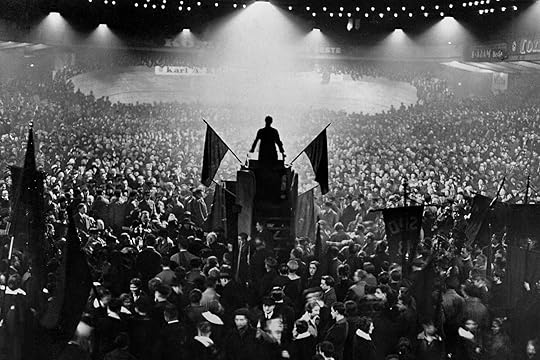
Assembly of the Reich's Banner, a paramilitary organization.
My audiobook copy was about 14 and a quarter hours in duration. A dead tree copy would be 480 pages. It had a US 2024 copyright.
Harald Jähner is a German journalist and author. He is the author of five books on Deutsche Kultur pre- and post-war. This is the first book I’ve read by the author.
Sam Peter Jackson was the narrator. He is an experienced British voice actor and narrator. His sonorous BBC-like delivery gave the story a vaguely Euro-feel. His German pronunciation was good, although I didn’t recognize his German accent.
This book was an intermediate-level cultural history of Germany between 1918 - 1933. Having some previous knowledge of the period is strongly recommended.
I picked up this book, because I have a strong interest in Berlin between the Wars. That was a time when Berlin was a center of dramatic cultural, political, and social change in Germany, foreshadowing modern times. The narrative mostly concerns the capital Berlin, although other German, European, and American locations are mentioned. Berlin, like Paris and London, was at the time the capital, financial, and cultural center of the nation.
The book chronicles the politics and culture of the Weimar Republic during its 14-year existence. It begins at the end of the Kaiserreich with the abdication of Kaiser Wilhelm II in 1918 after “the 1914 War”. After the conservative Kaiserreich, the liberal Weimar Republic was a work in progress. Democratic traditions in Germany were not deeply rooted. It ends with Adolf Hitler becoming Chancellor in 1933, the beginning of Nazi rule. It’s a fast-moving history of the politics (women’s rights, street violence, hyper-inflation, food riots), technology (the automobile, architecture, aircraft, telephones, the typewriter), and rapidly evolving culture (fashion, music, physical culture, non-normative sexuality, and art). It's the tragic story of a fragile democracy that collapsed beneath the weight of too many competing demands.
Jähner makes a credible stab at "The Rise of Women" in the book I had not read before. He describes the spread of the telephone and, later, the typewriter, drawing young women into the city for work, off the farm, and out of the villages. There, they had independence and disposable personal income for the first time, along with a completely different set of problems. In the city, they had a large effect on consumerism and contributed to a "youth culture". However, the patriarchy was wide, deep, and well established. The "Rise of Women" was one of the unresolved tensions of the Weimar Republic.
This is very much a narrative of Germany from the inside. Jähner is writing about people and events that most Americans and British people lack context with. The politicians of the Republic, against the advice of economists, made several unwise economic decisions that weakened the Republic with its whipsawing economy. His description of the German economy’s ups and downs was a bit naïve, though it comes from a cultural journo. However, folks may recognize a story of voting adults becoming terrified by an economic and perceived societal decline. That fear radicalized the upper and middle classes, leading them to support and vote for the ultra-conservative right, with its charismatic Führer (Leader) who promised prosperity and a bygone social order, which ultimately captured a third of the electorate. Then, through intimidation and (il)legal legerdemain, the right suspended the Constitution and seized the government.
German rearmament and the end of the Great Depression stabilized the economy for the National Socialists. Under them, German society was culturally rolled back 20 years to that of the Kaiserreich. Many Weimar cultural innovations were actively discouraged, banned, or made outright criminal. Some initial supporters of National Socialism eventually fell victim to it, not believing it would reach its final, seemingly too radical, form.
The translation of this book from its original German to English was very good. Parts and words left in German were likewise well handled by the bilingual narrator.
Jähner’s story was a journo’s narrative history. The book describes a lot about the developing Deutsche Kultur of the 1920s and 1930s. It was a hot-house environment in Berlin that a 21st Century hipster wouldn't find strange, but perceived very differently in conservative Thuringia and even urban, Catholic Munich. In addition, this was a very bourgeois bohemian (Bobo) history. (The nepo baby Erika Mann , daughter of author Thomas Mann, would not be atypical in the 21st century.) I recommend reading Berlin Alexanderplatz to remember there was a hoi polloi in Germany at the time. He covers a lot of ground in a somewhat balanced manner. He drops a lot of names. This book is about politics, economics, technology, and art, and the cultural trends that rapidly spun out of them.
I liked this book, but I was also prepared for it. I already knew who Gustav Stresemann , Leni Riefenstahl , Bertolt Brecht and Alfred Döblin were. Although not in the detail to which Jähner went. However, I made a fatal error by ear reading it. When the territory became unfamiliar, for example, the development of German Flapper Culture , I couldn’t easily back up, slow it down, or stop to think about what I'd heard. I also didn't have the version of the book with the included pictures, particularly of the paintings and art photography, which he lavished with a lot of description. The full context of the narrative was unfortunately lost to me. (This became another example for not Ear-reading non-fiction.)
Recommended for Germanophile eye readers with an interest in Germany between the the wars only.
Assembly of the Reich's Banner, a paramilitary organization.
My audiobook copy was about 14 and a quarter hours in duration. A dead tree copy would be 480 pages. It had a US 2024 copyright.
Harald Jähner is a German journalist and author. He is the author of five books on Deutsche Kultur pre- and post-war. This is the first book I’ve read by the author.
Sam Peter Jackson was the narrator. He is an experienced British voice actor and narrator. His sonorous BBC-like delivery gave the story a vaguely Euro-feel. His German pronunciation was good, although I didn’t recognize his German accent.
This book was an intermediate-level cultural history of Germany between 1918 - 1933. Having some previous knowledge of the period is strongly recommended.
I picked up this book, because I have a strong interest in Berlin between the Wars. That was a time when Berlin was a center of dramatic cultural, political, and social change in Germany, foreshadowing modern times. The narrative mostly concerns the capital Berlin, although other German, European, and American locations are mentioned. Berlin, like Paris and London, was at the time the capital, financial, and cultural center of the nation.
The book chronicles the politics and culture of the Weimar Republic during its 14-year existence. It begins at the end of the Kaiserreich with the abdication of Kaiser Wilhelm II in 1918 after “the 1914 War”. After the conservative Kaiserreich, the liberal Weimar Republic was a work in progress. Democratic traditions in Germany were not deeply rooted. It ends with Adolf Hitler becoming Chancellor in 1933, the beginning of Nazi rule. It’s a fast-moving history of the politics (women’s rights, street violence, hyper-inflation, food riots), technology (the automobile, architecture, aircraft, telephones, the typewriter), and rapidly evolving culture (fashion, music, physical culture, non-normative sexuality, and art). It's the tragic story of a fragile democracy that collapsed beneath the weight of too many competing demands.
Jähner makes a credible stab at "The Rise of Women" in the book I had not read before. He describes the spread of the telephone and, later, the typewriter, drawing young women into the city for work, off the farm, and out of the villages. There, they had independence and disposable personal income for the first time, along with a completely different set of problems. In the city, they had a large effect on consumerism and contributed to a "youth culture". However, the patriarchy was wide, deep, and well established. The "Rise of Women" was one of the unresolved tensions of the Weimar Republic.
This is very much a narrative of Germany from the inside. Jähner is writing about people and events that most Americans and British people lack context with. The politicians of the Republic, against the advice of economists, made several unwise economic decisions that weakened the Republic with its whipsawing economy. His description of the German economy’s ups and downs was a bit naïve, though it comes from a cultural journo. However, folks may recognize a story of voting adults becoming terrified by an economic and perceived societal decline. That fear radicalized the upper and middle classes, leading them to support and vote for the ultra-conservative right, with its charismatic Führer (Leader) who promised prosperity and a bygone social order, which ultimately captured a third of the electorate. Then, through intimidation and (il)legal legerdemain, the right suspended the Constitution and seized the government.
German rearmament and the end of the Great Depression stabilized the economy for the National Socialists. Under them, German society was culturally rolled back 20 years to that of the Kaiserreich. Many Weimar cultural innovations were actively discouraged, banned, or made outright criminal. Some initial supporters of National Socialism eventually fell victim to it, not believing it would reach its final, seemingly too radical, form.
The translation of this book from its original German to English was very good. Parts and words left in German were likewise well handled by the bilingual narrator.
Jähner’s story was a journo’s narrative history. The book describes a lot about the developing Deutsche Kultur of the 1920s and 1930s. It was a hot-house environment in Berlin that a 21st Century hipster wouldn't find strange, but perceived very differently in conservative Thuringia and even urban, Catholic Munich. In addition, this was a very bourgeois bohemian (Bobo) history. (The nepo baby Erika Mann , daughter of author Thomas Mann, would not be atypical in the 21st century.) I recommend reading Berlin Alexanderplatz to remember there was a hoi polloi in Germany at the time. He covers a lot of ground in a somewhat balanced manner. He drops a lot of names. This book is about politics, economics, technology, and art, and the cultural trends that rapidly spun out of them.
I liked this book, but I was also prepared for it. I already knew who Gustav Stresemann , Leni Riefenstahl , Bertolt Brecht and Alfred Döblin were. Although not in the detail to which Jähner went. However, I made a fatal error by ear reading it. When the territory became unfamiliar, for example, the development of German Flapper Culture , I couldn’t easily back up, slow it down, or stop to think about what I'd heard. I also didn't have the version of the book with the included pictures, particularly of the paintings and art photography, which he lavished with a lot of description. The full context of the narrative was unfortunately lost to me. (This became another example for not Ear-reading non-fiction.)
Recommended for Germanophile eye readers with an interest in Germany between the the wars only.

October 9, 2022
"Höhenrausch" beschreibt die Zeit zwischen den Weltkriegen. Es geht um die Frage, wie man sich in der Weimarer Republik fühlte.
Dazu werden unterschiedliche Themen behandelt: Politik, Wirtschaft, Architektur, Wohnen, Mode, Literatur, Fotografie, Film, Sport, Wissenschaft, ...
Jedes dieser Gebiete könnte in eigenen Büchern dargestellt werden. Hier wird die Gesamtgemengelage im Überblick beschrieben, um der Atmosphäre der Zeit auf die Spur zu kommen.
Das Ganze ist ausgesprochen gut komponiert. Bei einem weniger guten Autoren wäre es vermutlich in einzelne Bruchstücke zerfallen. Das ist hier nicht der Fall.
Harald Jähner schreibt feuilletonistisch. Es ist keine streng wissenschaftliche Sprache. Das kommt mir sehr entgegen.
Ergänzt wird der Text durch viele, sehr gut gewählte Fotografien aus der Zeit.
Das Buch ist lehrreich und unterhaltsam, eine fast unschlagbare Kombination.
Dazu werden unterschiedliche Themen behandelt: Politik, Wirtschaft, Architektur, Wohnen, Mode, Literatur, Fotografie, Film, Sport, Wissenschaft, ...
Jedes dieser Gebiete könnte in eigenen Büchern dargestellt werden. Hier wird die Gesamtgemengelage im Überblick beschrieben, um der Atmosphäre der Zeit auf die Spur zu kommen.
Das Ganze ist ausgesprochen gut komponiert. Bei einem weniger guten Autoren wäre es vermutlich in einzelne Bruchstücke zerfallen. Das ist hier nicht der Fall.
Harald Jähner schreibt feuilletonistisch. Es ist keine streng wissenschaftliche Sprache. Das kommt mir sehr entgegen.
Ergänzt wird der Text durch viele, sehr gut gewählte Fotografien aus der Zeit.
Das Buch ist lehrreich und unterhaltsam, eine fast unschlagbare Kombination.

February 18, 2025
“… In 1930, … Marlene Dietrich recorded one of the most beautiful songs composed by Friedrich Hollaender, the great Jewish revue and film composer of the 1920’s: ‘Wenn ich mir was wunschen durfte’ — ‘If I Were Granted a Wish’. It is about the joy of ambivalence — a melancholy, deeply anti-Utopian, very brief song. In a thoughtful voice, almost a whisper, … she … sings about the opposite of high-altitude euphoria, the idea of ‘Just being a bit happy.’ In retrospect, what luxury!”
Here is the text of the poem:
“Wenn ich mir was wunschen durfte,
Kam ich in Verlegenheit,
Was ich mir den wunschen solte,
Eine schlimme oder gute Zeit.
Wenn ich mir was wunschen durfte,
Mochte ich etwas glucklich sein,
Denn wenn ich gar zu glucklich war’,
Hatt ich Heimweh nach dem Traurigsein.”
As Shaun Whiteside translates it:
“If I were granted a wish,
I would be at a loss,
About whether I should wish
For good times or bad.
If I were granted a wish,
I would like to be a bit happy,
Because if I were too happy
I would be homesick for sadness.”
Resquat in pacem, WEIMAR REPUBLIC (1919-1933)
 Marlene Dietrich
Friedrich Hollaender (no photo)
Here is the text of the poem:
“Wenn ich mir was wunschen durfte,
Kam ich in Verlegenheit,
Was ich mir den wunschen solte,
Eine schlimme oder gute Zeit.
Wenn ich mir was wunschen durfte,
Mochte ich etwas glucklich sein,
Denn wenn ich gar zu glucklich war’,
Hatt ich Heimweh nach dem Traurigsein.”
As Shaun Whiteside translates it:
“If I were granted a wish,
I would be at a loss,
About whether I should wish
For good times or bad.
If I were granted a wish,
I would like to be a bit happy,
Because if I were too happy
I would be homesick for sadness.”
Resquat in pacem, WEIMAR REPUBLIC (1919-1933)
Marlene DietrichFriedrich Hollaender (no photo)
April 14, 2025
It is always worth revisiting the real Weimar if only because it has become, thanks to literature and film, a cliched short hand for decadence (see 'Voluptuous Panic' by Mel Gordon) and thus explanation for the rise of Nazism. For many today it is seen as the precursor to our culture wars and blueprint, or at least the runes which foretell our own potential future.
But Weimar didn't come into existence to epater les bourgeoisie or to provide an easy shorthand for glib editorialising by political prognosticators. It emerged out of the defeat of the German empire in WWI and disappeared because of the great depression. That it was always so unloved, even by those it set out to help, is one of the sadder stories Harald Jahner's marvellous book has to tell.
The importance of Weimar lies in its historical context. That it lasted only fifteen years has less to do with shallow roots than the political chicanery of the 'elite' gravediggers around Hindenburg. Weimar's very brevity should give us all pause before making glib comparisons between then and now.
Weimar is wonderful because for a brief moment it did give an opportunity to glace into the future for good or ill (before reading this book you would do well to read 'Dreamers: When the Writers Took Power, Germany 1918' by Volker Weidermann and '1913: The Year Before the Storm' by Florian Illies which provide context on the roots of so much of the 'cultural' context of Weimar). That for so long it looked so modern (whether that is still the case for younger people today I do not know) but until the fall of the Berlin Wall and the implosion of the old Soviet Union it did haunt Europe as a beacon shinning on something better but lost though still treasured.
History is always worth reading, not because it tells us about today but because it doesn't. It can be a warning but not a blueprint. That our problems today have been faced before is salutary because becoming lost in the immediate doesn't show single minded concentration only blindness.
Mr. Jahner's book is a fine and important history but it is not for the novice. The concentration of information is formidable but unless you have some reference points already you may get lost in this richly detailed and fascinating history.
But Weimar didn't come into existence to epater les bourgeoisie or to provide an easy shorthand for glib editorialising by political prognosticators. It emerged out of the defeat of the German empire in WWI and disappeared because of the great depression. That it was always so unloved, even by those it set out to help, is one of the sadder stories Harald Jahner's marvellous book has to tell.
The importance of Weimar lies in its historical context. That it lasted only fifteen years has less to do with shallow roots than the political chicanery of the 'elite' gravediggers around Hindenburg. Weimar's very brevity should give us all pause before making glib comparisons between then and now.
Weimar is wonderful because for a brief moment it did give an opportunity to glace into the future for good or ill (before reading this book you would do well to read 'Dreamers: When the Writers Took Power, Germany 1918' by Volker Weidermann and '1913: The Year Before the Storm' by Florian Illies which provide context on the roots of so much of the 'cultural' context of Weimar). That for so long it looked so modern (whether that is still the case for younger people today I do not know) but until the fall of the Berlin Wall and the implosion of the old Soviet Union it did haunt Europe as a beacon shinning on something better but lost though still treasured.
History is always worth reading, not because it tells us about today but because it doesn't. It can be a warning but not a blueprint. That our problems today have been faced before is salutary because becoming lost in the immediate doesn't show single minded concentration only blindness.
Mr. Jahner's book is a fine and important history but it is not for the novice. The concentration of information is formidable but unless you have some reference points already you may get lost in this richly detailed and fascinating history.

May 15, 2024
Engrossing, knowledgeable research about that short part of German history (Weimar Republic) that was full of contradictions. Brocken, invalid IWW veterans vs. mania of a healthy body. Old-fashioned values vs modernism like from the XXI century. Big cities vs countryside. Starving poor vs ostentatious wealth. And many others. Those years brought ideas and art that were often appreciated later, much after IIWW. Sadly, those years also created nazism and the IIWW.
I was reading this book constantly taking breaks to check out the mentioned buildings, paintings, etc. I got a brilliant lesson in German history. I think, that nowadays, the Weimar Republic and those Germans aren't known. Most people see Germany in the first part of the XX century only as a country that was responsible for IWW and IIWW. And, although it is true, there are also many truths that we forget because of anger and a sense of injustice.
People who still think that all Germans were responsible for nazism (and what it did) should read this book.
Just listen to three of the most popular songs of that time: "Wenn ich mir was wünschen dürfte" (If I could wish for something), "Irgendwo auf der Welt" (Somewhere in the World), "Das gibt's nur einmal das kommt nicht wieder" (This only happens once and won't happen again) - to understand how far the true is from popcultural image of Germans of the 20. XX.
Because you box and jazz and dance the foxtrot on a powder keg. (...)
A fuse smolders underground. There's a crash in the middle of the foxtrot and night falls.
I was reading this book constantly taking breaks to check out the mentioned buildings, paintings, etc. I got a brilliant lesson in German history. I think, that nowadays, the Weimar Republic and those Germans aren't known. Most people see Germany in the first part of the XX century only as a country that was responsible for IWW and IIWW. And, although it is true, there are also many truths that we forget because of anger and a sense of injustice.
People who still think that all Germans were responsible for nazism (and what it did) should read this book.
Just listen to three of the most popular songs of that time: "Wenn ich mir was wünschen dürfte" (If I could wish for something), "Irgendwo auf der Welt" (Somewhere in the World), "Das gibt's nur einmal das kommt nicht wieder" (This only happens once and won't happen again) - to understand how far the true is from popcultural image of Germans of the 20. XX.

August 19, 2022
A splendid book, very well written and well researched, covering all aspects of German society and the different groups, institutions and political tendencies between the wars - and how they evolved.
Harald Jähner - Wolfszeit/Aftermath - gives a well constructed and very detailed insight in the different political, cultural, moral developments and how the different parts of society each reacted to them.
Occasional comparisons to today's society makes one reflect about how little we changed...
Much more than a mere sociological study, Mr. Jähner adds numerous individuals, each with their specific influence and/or reaction to the changes, often describing very funny details - f.e. the stiff bellied monocle wearing gentlemen and their (non) reaction to youths/especially young women's sexual behavior. If they would have pulled a face they would have lost their monocles...
Politics, the many different parties, the military incl. WW1 veterans, society groups and social classes, the arts/artists, architecture/city development, everything is covered in detail using many quotes from the famous and the less so.
A true joy to read - I'm sure a translation is already in the works.
There are quite a few b/w photographs but since Mr. Jähner describes so many different people from all parts of society, buildings, artworks and and and, I decided to check the web from time to time to look at the specific personalities and/or art instead of "just" reading the descriptions. Maybe the publisher will one day publish a special edition with more pictures.
A must read for anybody interested in the time between the wars.
Harald Jähner - Wolfszeit/Aftermath - gives a well constructed and very detailed insight in the different political, cultural, moral developments and how the different parts of society each reacted to them.
Occasional comparisons to today's society makes one reflect about how little we changed...
Much more than a mere sociological study, Mr. Jähner adds numerous individuals, each with their specific influence and/or reaction to the changes, often describing very funny details - f.e. the stiff bellied monocle wearing gentlemen and their (non) reaction to youths/especially young women's sexual behavior. If they would have pulled a face they would have lost their monocles...
Politics, the many different parties, the military incl. WW1 veterans, society groups and social classes, the arts/artists, architecture/city development, everything is covered in detail using many quotes from the famous and the less so.
A true joy to read - I'm sure a translation is already in the works.
There are quite a few b/w photographs but since Mr. Jähner describes so many different people from all parts of society, buildings, artworks and and and, I decided to check the web from time to time to look at the specific personalities and/or art instead of "just" reading the descriptions. Maybe the publisher will one day publish a special edition with more pictures.
A must read for anybody interested in the time between the wars.

November 5, 2024
This is a cultural history of the Weimar Republic. It is not a strictly linear story but is organized in chapters that proceed in roughly linear fashion. There are chapters on the initiation of the republic and the November revolution, the great inflation of 1922-1923, and the design movement with an emphasis on Bauhaus. There is a fascinating chapter on the rise of office work and the increasing importance of women as typists and more. This goes with a later chapter on gender developments and issues during the republic. There is also an amazing chapter on the role of the motorcar and of traffic more generally in Weimar Germany. The second half of the book begins with chapters on music, dancing, and the development of a self-development culture. The core of the second half of the story combines the shift in leadership from the death of Ebert to the rise of Hindenburg. This combines with the onset of the Great Depression to produce the political chaos and authoritarian rule by decree that led to Hitlet’s rise.
This story has been exhaustively research and written about, so there are relatively few surprises that Harold Jahner adds in his account. The cultural chapters, however, are outstanding, and the book is well written and easy to follow - with illustrations too. I have read a lot on Weimar and that is a wonderful book that I highly recommend.
This story has been exhaustively research and written about, so there are relatively few surprises that Harold Jahner adds in his account. The cultural chapters, however, are outstanding, and the book is well written and easy to follow - with illustrations too. I have read a lot on Weimar and that is a wonderful book that I highly recommend.

April 6, 2025
Harald Jähner’s 'Vertigo' is a remarkable and illuminating account of the Weimar Republic - one that deepens our understanding of how such fertile ground was laid for the Nazi rise to power. With a matter-of-fact, largely non-judgemental tone, Jähner paints a vivid picture of the post–World War I years in Germany: a society staggering under the weight of the punitive Treaty of Versailles, beset by mass unemployment and disillusionment, yet also bursting with cultural energy and social experimentation.
What makes this book so compelling is its portrayal of the paradox at the heart of Weimar Germany. On one hand, there was a widespread sense of loss and humiliation, especially among those who remembered the imperial past. On the other, a vibrant new culture was emerging, marked by jazz, artistic innovation, women’s liberation, and increasing visibility of LGBT communities. For many, this rapid transformation felt exhilarating; for others, deeply destabilising. Jähner deftly shows how this cultural whiplash created both hope and fear, modernity and backlash.
The latter half of the book explores how Hitler and his allies exploited this volatile environment, employing opportunistic and often cynical strategies to climb the political ladder. Jähner resists easy moralising and instead demonstrates how a combination of naivety, desperation, and wilful ignorance among the populace allowed extremist ideas to gain traction. Many supporters assumed Hitler's rhetoric was just that - rhetoric - or felt that after years of chaos, any kind of order would be preferable.
What makes Vertigo especially resonant is how uncomfortably familiar some of its themes feel today: the clash between progressive change and reactionary nostalgia, growing inequality, institutional mistrust, and a collective sense of uncertainty about the future. Jähner doesn’t offer simple lessons, but the book invites serious reflection about the fragility of democratic societies in times of upheaval.
This is essential reading - not just for students of history, but for anyone seeking to understand the dynamics of polarisation, populism, and the seductive pull of authoritarianism. I hope more people read it and grapple with the questions it raises.
What makes this book so compelling is its portrayal of the paradox at the heart of Weimar Germany. On one hand, there was a widespread sense of loss and humiliation, especially among those who remembered the imperial past. On the other, a vibrant new culture was emerging, marked by jazz, artistic innovation, women’s liberation, and increasing visibility of LGBT communities. For many, this rapid transformation felt exhilarating; for others, deeply destabilising. Jähner deftly shows how this cultural whiplash created both hope and fear, modernity and backlash.
The latter half of the book explores how Hitler and his allies exploited this volatile environment, employing opportunistic and often cynical strategies to climb the political ladder. Jähner resists easy moralising and instead demonstrates how a combination of naivety, desperation, and wilful ignorance among the populace allowed extremist ideas to gain traction. Many supporters assumed Hitler's rhetoric was just that - rhetoric - or felt that after years of chaos, any kind of order would be preferable.
What makes Vertigo especially resonant is how uncomfortably familiar some of its themes feel today: the clash between progressive change and reactionary nostalgia, growing inequality, institutional mistrust, and a collective sense of uncertainty about the future. Jähner doesn’t offer simple lessons, but the book invites serious reflection about the fragility of democratic societies in times of upheaval.
This is essential reading - not just for students of history, but for anyone seeking to understand the dynamics of polarisation, populism, and the seductive pull of authoritarianism. I hope more people read it and grapple with the questions it raises.

June 30, 2024
I have read quite a bit on the Weimar Republic, but this is the first book that helped me make sense of it. The reason, I think, is that there is much less here than is usual in the Weimar Republic literature on the elections, the political violence, and the alphabet soup of the parties; the existence of the Weimar Republic is not viewed merely as a way station to fascism.
In fact, surprisingly little space here is dedicated to the NSDAP or Hitler. Rather, most of the book is a careful, detail-rich reconstruction of what it was like to live in the Weimar Republic, down to an almost social-media level of immersion in the prevailing fashions, trends, styles and cultural signposts. There is so much here on what, and who, was quintessentially cool and vital—cars, hair styles, clothing, music, dance, the club scene; the film and music stars; the celebrities and socialites. So, this is largely a social and cultural history of the Weimar Republic, rather than a truly all-embracing history. But then even a more narrowly focused history has to account for the fall of the political order it describes, and the book does it well, if not perhaps with the same level of ardor that it lavishes on the “rise.” All in all, an excellent addition for anyone interested in the period.
-- many thanks to Basic Books for an ARC via NetGalley
In fact, surprisingly little space here is dedicated to the NSDAP or Hitler. Rather, most of the book is a careful, detail-rich reconstruction of what it was like to live in the Weimar Republic, down to an almost social-media level of immersion in the prevailing fashions, trends, styles and cultural signposts. There is so much here on what, and who, was quintessentially cool and vital—cars, hair styles, clothing, music, dance, the club scene; the film and music stars; the celebrities and socialites. So, this is largely a social and cultural history of the Weimar Republic, rather than a truly all-embracing history. But then even a more narrowly focused history has to account for the fall of the political order it describes, and the book does it well, if not perhaps with the same level of ardor that it lavishes on the “rise.” All in all, an excellent addition for anyone interested in the period.
-- many thanks to Basic Books for an ARC via NetGalley

January 20, 2025
A familiar and terrible story told well. The politics of the post-war uprisings and the rise of Hitler frame a mostly cultural account of Germany between 1918 and 1933. The author follows several lives of prominent figures and common citizens to show the effects of government financial policies and shifting ideologies on the citizens of the Republic. A tragedy stumbling toward genocide and a whole curriculum of lessons the world should never forget.

November 4, 2025
Dit is één van de beste boeken die ik las dit jaar!
De jaren '20 in de Weimarrepubliek. Berlijn, de impressionante architectuur, de prachtige mode, het dansen, de vrijheid, Bauhaus en de Nieuwe Zakelijkheid! Wat een opwindende tijd! Natuurlijk waren er tegenstanders, verbitterde Duitsers die op de spijker van de volkaard sloegen en in al die vernieuwingen de duivelse invloed van de andere zagen, zeg maar van de joden of de Amerikanen.
Het straatgeweld, de gevechten tussen links en rechts met honderden doden tot gevolg was echter ook een feit. De armoede en de ellende in de inflatieperiode kort na de oorlog en de miserie en werkloosheid na de crach van '29 ook.
Het is verbijsterend te zien hoe die bruisende energie in enkele jaren tijd vergaat in het duistere, gewelddadige van het nationaal-socialisme. Hoe sluipend het gif was. Hoe steil de opgang van Hitler begin de jaren '30 en hoe snel de neergang van de rationaliteit.
En ondanks de spiegel uit het verleden, loopt ook nu "het volk" achter luid schreeuwende, lelijke mannen aan. Het maakt me bang.
De jaren '20 in de Weimarrepubliek. Berlijn, de impressionante architectuur, de prachtige mode, het dansen, de vrijheid, Bauhaus en de Nieuwe Zakelijkheid! Wat een opwindende tijd! Natuurlijk waren er tegenstanders, verbitterde Duitsers die op de spijker van de volkaard sloegen en in al die vernieuwingen de duivelse invloed van de andere zagen, zeg maar van de joden of de Amerikanen.
Het straatgeweld, de gevechten tussen links en rechts met honderden doden tot gevolg was echter ook een feit. De armoede en de ellende in de inflatieperiode kort na de oorlog en de miserie en werkloosheid na de crach van '29 ook.
Het is verbijsterend te zien hoe die bruisende energie in enkele jaren tijd vergaat in het duistere, gewelddadige van het nationaal-socialisme. Hoe sluipend het gif was. Hoe steil de opgang van Hitler begin de jaren '30 en hoe snel de neergang van de rationaliteit.
En ondanks de spiegel uit het verleden, loopt ook nu "het volk" achter luid schreeuwende, lelijke mannen aan. Het maakt me bang.

September 11, 2024
A history constructed of tableaux - or "scenes" as it's rendered here - intended to convey "what it felt like" to live through the Weimar Republic without knowing, as we do, what it would lead to. Jähner unapologetically sees Weimar as " a blueprint for our own" day. This includes, I suspect, the intimation that it could lead to something far, far worse. Jähner is a journalist, and this comes through in his style and strategy. Still, for those who expected a little more culture, a little less politics, in Frank McDonough's recent book covering the same period, this might serve as a useful cultural side dish.

September 23, 2023
Dit boek is een mooie aanvulling op de litteratuur die er al is over de republiek van Weimar. Jähner legt de nadruk op de mentaliteitsgeschiedenis van Duitsland tussen beide Wereldoorlogen. Het morele effect van een verloren oorlog, die in Duitsland nauwelijks als verloren werd ervaren, maakte dat vanaf 1918 allerlei rechts tuig kon blijven geloven in de dolkstootlegende en andere fabeltjes. Het sektarische geweld van rechts en links was daarmee eigenlijk van 1918 tot aan de machtsovername van de NSDAP gegarandeerd. Daarna nam het Hitler-crapuul gedurende twaalf jaren de horreurs waar.

October 6, 2025
Na lezing heb ik de indruk gekregen dat de Weimarrepubliek begon en bloeide in Berlijn en dat het einde bespoedigd werd door het platteland. En wellicht is dat ook zo. En zo niet, dan heeft Jähner me in elk geval me heel veel geleerd over de sfeer en de dynamiek van dit stukje Duitse geschiedenis. Het is verleidelijk parallellen met de moderne geschiedenis te trekken. Maar zoiets doe je al gauw als iets ten onder aan het gaan is.

February 22, 2024
Een steengoed boek dat het leven van de Duitsers in de periode 1918-1940 in al zijn facetten schetst: van politieke en economische ontwikkelingen (zoals de stichting van de Weimarrepubliek en hyperinflatie) tot sociaal-economische en culturele trends en verschuivingen (zoals de opkomst van een nieuwe klasse - het kantoorpersoneel - en uitgaansleven en autoverkeer).
Ieder hoofdstuk zoomt in op een specifiek thema, bijvoorbeeld autoverkeer of lichaamscultuur, binnen een overkoepelend chronologisch raamwerk. Enkele zaken die er (voor mij) uitsprongen:
1. De opkomst van een nieuwe, zelfbewuste sociaaleconomische klasse door de opkomst van administratief werk op kantoren. Met name vrouwen profiteerden hiervan en wisten zich op een bepaalde manier te emanciperen. Deze nieuwe sociale klasse zag zichzelf niet als arbeider (men was bijvoorbeeld nauwelijks lid van een vakbond en stemde geen SPD) en imiteerde de hogere klasse in termen van cultuur, lifestyle en hobby's (men spendeerde veel geld aan eten buiten de deur en gebruikte kleding, dans en autobezit als onderscheidende kenmerken).
2. De grote ontworteling die het gevolg was van de snelle modernisering van de economie: de grote trek naar de steden, de atomisering van vrije individuen en de veranderende mores m.b.t. seksualiteit en zelfbeschikking - én het grote ressentiment onder plattelandsbewoners.
3. De vrij radicale breuk van het Wilhelminische Keizerreik en het 'Nieuwe Leven' waarin het individu vrijer werd en de economie steeds centraler kwam te staan en daarmee hiërarchie, traditie en cultuur terugdrong.
4. De grond van de conservatieve revolutie - en de uiteindelijke machtsgreep van de NSDAP - in de burgerij. Het waren noch de arbeiders noch de intellectuelen, maar de middenklasse die haar heil zag in de Nazi's. Men was bang om een sociaaleconomische val te maken en slikte de retorische praatjes van Adolf Hitler als zoete koek. Velen waren actief ondersteuner, velen keken weg - "zolang het mij niet raakt, vind ik het best." Hitler en zijn terreur waren onmogelijk zonder goedkeuring van de Duitse middenklasse, de Katholieken en de grootindustriëlen.
Jähner laat prachtig zien hoe mensen leefden en hoe zij omgingen met alle kansen en uitdagingen die de tijden boden. Hij citeert veelvuldig allerlei tijdgenoten van een zeer rijk pluimage - van hoofdredacteuren van tijdschriften tot dagboekaantekeningen van onbekenden - en schetst hiermee een periode die gekenmerkt wordt door radicale transformatie van een natiestaat. Plots leefden mensen in een nieuwe wereld die anders functioneerde, eruitzag en nieuwe groepen emancipeerde. Een 'nieuwe mens' ontstond die enerzijds veel gejuich opleverde maar anderzijds veel weerzin, walging en woede opwekte bij grote groepen mensen. Deze dynamiek van vernieuwing en van conservatisme is een rode lijn doorheen de jaren die het boek beschrijft.
Jähner is een zeer kundige auteur, zowel qua vorm als qua inhoud levert hij een puik staaltje werk af. Hoogteroes is een prachtig historisch werk dat op een toegankelijke en inlevende manier de lezer terugplaatst in het Duitsland van de jaren twintig en dertig van de vorige eeuw. Een zeer groot minpunt is dat Hoogteroes lijdt aan een fenomeen dat in de meeste geschiedenisboeken aanwezig: een vertelling vanuit de intellectuele bronnen, waardoor het gewone leven van de gewone man en vrouw er nogal karig van af komst. Jähner behandelt zijn materiaal vanuit het perspectief van kunstenaars, schrijvers, journalisten, politici, etc. Dit leidt ertoe dat de stad Berlijn en de culturele elite een hoofdrol spelen, waardoor de rest van Duitsland en haar inwoners er soms erg karig van af komen.
Desondanks is het een zeer vermakelijk boek dat goed wegleest, je een stortvloed aan feitjes en weetjes aanreikt en je een verbeelding van de tijd geeft. Leestip!
Ieder hoofdstuk zoomt in op een specifiek thema, bijvoorbeeld autoverkeer of lichaamscultuur, binnen een overkoepelend chronologisch raamwerk. Enkele zaken die er (voor mij) uitsprongen:
1. De opkomst van een nieuwe, zelfbewuste sociaaleconomische klasse door de opkomst van administratief werk op kantoren. Met name vrouwen profiteerden hiervan en wisten zich op een bepaalde manier te emanciperen. Deze nieuwe sociale klasse zag zichzelf niet als arbeider (men was bijvoorbeeld nauwelijks lid van een vakbond en stemde geen SPD) en imiteerde de hogere klasse in termen van cultuur, lifestyle en hobby's (men spendeerde veel geld aan eten buiten de deur en gebruikte kleding, dans en autobezit als onderscheidende kenmerken).
2. De grote ontworteling die het gevolg was van de snelle modernisering van de economie: de grote trek naar de steden, de atomisering van vrije individuen en de veranderende mores m.b.t. seksualiteit en zelfbeschikking - én het grote ressentiment onder plattelandsbewoners.
3. De vrij radicale breuk van het Wilhelminische Keizerreik en het 'Nieuwe Leven' waarin het individu vrijer werd en de economie steeds centraler kwam te staan en daarmee hiërarchie, traditie en cultuur terugdrong.
4. De grond van de conservatieve revolutie - en de uiteindelijke machtsgreep van de NSDAP - in de burgerij. Het waren noch de arbeiders noch de intellectuelen, maar de middenklasse die haar heil zag in de Nazi's. Men was bang om een sociaaleconomische val te maken en slikte de retorische praatjes van Adolf Hitler als zoete koek. Velen waren actief ondersteuner, velen keken weg - "zolang het mij niet raakt, vind ik het best." Hitler en zijn terreur waren onmogelijk zonder goedkeuring van de Duitse middenklasse, de Katholieken en de grootindustriëlen.
Jähner laat prachtig zien hoe mensen leefden en hoe zij omgingen met alle kansen en uitdagingen die de tijden boden. Hij citeert veelvuldig allerlei tijdgenoten van een zeer rijk pluimage - van hoofdredacteuren van tijdschriften tot dagboekaantekeningen van onbekenden - en schetst hiermee een periode die gekenmerkt wordt door radicale transformatie van een natiestaat. Plots leefden mensen in een nieuwe wereld die anders functioneerde, eruitzag en nieuwe groepen emancipeerde. Een 'nieuwe mens' ontstond die enerzijds veel gejuich opleverde maar anderzijds veel weerzin, walging en woede opwekte bij grote groepen mensen. Deze dynamiek van vernieuwing en van conservatisme is een rode lijn doorheen de jaren die het boek beschrijft.
Jähner is een zeer kundige auteur, zowel qua vorm als qua inhoud levert hij een puik staaltje werk af. Hoogteroes is een prachtig historisch werk dat op een toegankelijke en inlevende manier de lezer terugplaatst in het Duitsland van de jaren twintig en dertig van de vorige eeuw. Een zeer groot minpunt is dat Hoogteroes lijdt aan een fenomeen dat in de meeste geschiedenisboeken aanwezig: een vertelling vanuit de intellectuele bronnen, waardoor het gewone leven van de gewone man en vrouw er nogal karig van af komst. Jähner behandelt zijn materiaal vanuit het perspectief van kunstenaars, schrijvers, journalisten, politici, etc. Dit leidt ertoe dat de stad Berlijn en de culturele elite een hoofdrol spelen, waardoor de rest van Duitsland en haar inwoners er soms erg karig van af komen.
Desondanks is het een zeer vermakelijk boek dat goed wegleest, je een stortvloed aan feitjes en weetjes aanreikt en je een verbeelding van de tijd geeft. Leestip!
March 25, 2026
what was intended to be a quick primer for Fassbinder’s Berlin Alexanderplatz turned into a month-and-a-half-long slog through the groundbreaking discovery that the 1920s were also roaring in Germany!! the "shocks" of the era (women cutting their hair, the rise of nightlife, and the subsequent moral panic from men) are treated with a level of wide-eyed novelty that feels redundant for anyone with a passing interest in 20th century history.
the book finally finds its footing in the last ~75 pages when it shifts its focus to the hyperinflation crisis and systemic rot that allowed for the rise of the nazis, but the analysis here feels thin. Jähner is a journalist, not a historian, and you can certainly tell here when shit starts to get real.
it’s certainly startling to learn about this period in history and see it repeating itself today in the united states, i just think i could’ve learned all of this in a fraction of the time. oh well.
the book finally finds its footing in the last ~75 pages when it shifts its focus to the hyperinflation crisis and systemic rot that allowed for the rise of the nazis, but the analysis here feels thin. Jähner is a journalist, not a historian, and you can certainly tell here when shit starts to get real.
it’s certainly startling to learn about this period in history and see it repeating itself today in the united states, i just think i could’ve learned all of this in a fraction of the time. oh well.
August 29, 2024
Audible. Excellent study of Germany between the wars. A time of extraordinary change, technology, arts, social mores, fashion which always was teetering on the edge of catastrophe which eventually overtook Germany and then Europe as a whole. Continually interesting and a very good production covering music, popular culture, politics and the roller coaster of the economy. While it can be too easy to draw parallels with the present you do sometimes wonder who might be taking lessons from this fascinating period.

December 21, 2024
Pretty good. Gives a glimpse at the culture of Weimar Germany. Doesn’t delve much into the rise of Hitler, which is nice. He wanted to show the backdrop, the people of Germany and how their struggles and passions eventually lead to the perfect seeding ground for the Nazi movement.
After the novemberist revolution and the close of the war, Germany suffered a depression and massive inflation brought on by massive war debts and heavy sanctions from the West. After coming out of this, the people surged into a massively progressive movement bringing in free love and androgynous sex ideals. This continued for several years until the Great Depression and the people became somewhat jaded and sombre. The progressives stalled and the conservatives seized the chance to bring back in a traditional government and traditional cultural norms. The lead to a populace being more open to the nationalistic ideals presented by the Nazi party.
Jahner seems to imply the rise of the conservatives as being the cause of the Nazi party, but I don’t think they would’ve been so accepting of it if they hadn’t felt so disenfranchised by the rapid pace of the progressives. They didn’t recognize their one beloved country and wanted it back. Progressives and conservatives worked in tandem to bring in this holocaust and it ought to sober both sides.
After the novemberist revolution and the close of the war, Germany suffered a depression and massive inflation brought on by massive war debts and heavy sanctions from the West. After coming out of this, the people surged into a massively progressive movement bringing in free love and androgynous sex ideals. This continued for several years until the Great Depression and the people became somewhat jaded and sombre. The progressives stalled and the conservatives seized the chance to bring back in a traditional government and traditional cultural norms. The lead to a populace being more open to the nationalistic ideals presented by the Nazi party.
Jahner seems to imply the rise of the conservatives as being the cause of the Nazi party, but I don’t think they would’ve been so accepting of it if they hadn’t felt so disenfranchised by the rapid pace of the progressives. They didn’t recognize their one beloved country and wanted it back. Progressives and conservatives worked in tandem to bring in this holocaust and it ought to sober both sides.

May 25, 2025
While the author was seemingly filled with a passion for the subject matter and the book extremely well researched, I did not enjoy the writing style or structure of this book at all. The book seemed disjointed and difficult to process. There was no overarching theme or timeline, bouncing around the years 1918-1933 with specific chapters about--of all things--traffic, interspersed with chapters that just felt long lists of artists and their works. There were not nearly enough photos for a text that spoke so much about art, architecture, painting, etc. I spent an incredibly taxing amount of time googling people and objects d'arte that it seemed I was supposed to already know. In fact, it seemed like I was supposed to know A LOT about Germany, about the first world war, about the numerous German political parties which all use acronyms and often have the same letters just in a different order. I often felt like I was just reading words and had no idea why or what the point was. There were also numerous typos, which I forgive in self-published times but something from a legitimate publisher having that many mistakes was thoroughly disappointing. Overall, I would not recommend this book to anyone except someone well-versed in the subject matter at hand who may be interested in more details or a different perspective than they already have accessed.

January 8, 2024
Heel boeiend. De parallellen met de huidige tijd zijn echter uitermate griezelig.

September 21, 2024
A thorough survey of the cultural trends and innovations of Weimar Germany, it falls somewhat short in its analysis of the political system which enabled the advent of the Third Reich. Granted, that sort of thing has been detailed in many other works and was not the main focus of this one, yet one wishes that Jähner had spent a bit more time exploring the role of the Reichswehr as well as that of the captains of industry whose influences were truly decisive in the latter stages of the Weimar Republic.

September 25, 2022
Wieder ein großartiges, umfangreiches Zeitgemälde, das lehrreich und unterhaltsam erzählt ist.
January 15, 2025
Just terrifying how history is literally repeating itself

March 6, 2026
A very well written, very compelling, and very important book to read especially during the second Trump administration. I had some understanding that the Weimar Republic was a more democratic time between WWI and WWII, or more specifically between the abdication of the Kaiser, the November Revolution, and the proclamation of the republic; and the rise of the NSDAP in the Reichstag, the appointment of Hitler as Chancellor, and the Enabling Act. I had been fascinated because of the more open society with more room for women's liberation and queer liberation as well as a blossoming of liberal democratic values. I had a faint idea until one day I saw the flashback scene in Season 2, Episode 1 of Transparent. I knew immediately what I was looking at.
This book takes a large, overarching view of the rise and fall of the Weimar Republic. The author looks at changes in political culture, fashion, music, literature, theater, film, sexual and social mores, women's liberation, focusing on different figures who flourished during this time, with examples of countless films, songs, plays, books, and artworks (which I will explore further myself). Sometimes the narration takes a more purely political historical approach, other times it is much more social and on the ground.
This is the only non fiction book I have ever actually read that took a large, overarching, and very complete immersion into the Weimar Republic. I actually felt like I was there experiencing it. Other Weimar Republic books I recommend are "The Weimar Republic: Through the Lens of the Press," which is a book with history essays and filled with photos from newspapers at the time, "Berlin" by Jason Lutes, which is an epic fiction graphic novel that follows many figures over the course of the end of the Weimar Republic and into the Enabling Act era. I have also really loved a few romances set during the Weimar Republic, including "The Most Dazzling Girl in Berlin," by Kip Wilson and "Nothing Sung and Nothing Spoken," by Nita Tyndall, which is actually set in 1938 but involves queer underground elements. Obviously the film and movie "Cabaret" and the second season of "Transparent" were also very important for me.
It is so depressing, seeing a society built on ideals of openness and blooming culture, with a tumultuous, but ultimately democratic government intent on making things better, be so swiftly replaced with the NSDAP, who was legally elected to the Reichstag, speak so dumbly, so cruelly, so savagely, and completely eradicate everything that had been growing. This is especially resonant as rights are being taken away from immigrants and trans people right now. TBH it also makes me think of the fall of late antiquity into the dark ages, knowing that recently there had been a time of intellectual inquiry, fall to closedmindedness.
I plan on reading more recent starred review books that focus on elements of Weimar culture, as well as fiction written at the time. This book will not leave you and some day I plan to read it again.
This book takes a large, overarching view of the rise and fall of the Weimar Republic. The author looks at changes in political culture, fashion, music, literature, theater, film, sexual and social mores, women's liberation, focusing on different figures who flourished during this time, with examples of countless films, songs, plays, books, and artworks (which I will explore further myself). Sometimes the narration takes a more purely political historical approach, other times it is much more social and on the ground.
This is the only non fiction book I have ever actually read that took a large, overarching, and very complete immersion into the Weimar Republic. I actually felt like I was there experiencing it. Other Weimar Republic books I recommend are "The Weimar Republic: Through the Lens of the Press," which is a book with history essays and filled with photos from newspapers at the time, "Berlin" by Jason Lutes, which is an epic fiction graphic novel that follows many figures over the course of the end of the Weimar Republic and into the Enabling Act era. I have also really loved a few romances set during the Weimar Republic, including "The Most Dazzling Girl in Berlin," by Kip Wilson and "Nothing Sung and Nothing Spoken," by Nita Tyndall, which is actually set in 1938 but involves queer underground elements. Obviously the film and movie "Cabaret" and the second season of "Transparent" were also very important for me.
It is so depressing, seeing a society built on ideals of openness and blooming culture, with a tumultuous, but ultimately democratic government intent on making things better, be so swiftly replaced with the NSDAP, who was legally elected to the Reichstag, speak so dumbly, so cruelly, so savagely, and completely eradicate everything that had been growing. This is especially resonant as rights are being taken away from immigrants and trans people right now. TBH it also makes me think of the fall of late antiquity into the dark ages, knowing that recently there had been a time of intellectual inquiry, fall to closedmindedness.
I plan on reading more recent starred review books that focus on elements of Weimar culture, as well as fiction written at the time. This book will not leave you and some day I plan to read it again.

December 24, 2024
Vertigo is a thorough view of Germany's Weimar Republic that bears some resemblance, as the subtitle suggests, to William Shirer's Rise and Fall of the Third Reich. Noting that about the year 1930, democracy simply seemed to lose confidence in itself, the author, Harald Jahner, makes the case that the time of the Weimar Republic resembles our own time.
I actually think Jahner overplays that hand a little bit, the similarities are too obvious to miss. This is a very broad based book that covers a myriad of topics in Germany between the wars, including, but not limited to, culture, art, hyperinflation, film, politics and even traffic. Typically, a topic gets a chapter, and the next chapter moves to a new topic. Honestly, the book's narrative does not flow easily.
I am reminded of the viewpoint of Ward Just, the Washington DC based novelist who worked for Newsweek in his salad days. He remembered that as a young reporter, he was always a bit awed by the senior writers assigned to write "state of the nation" pieces for the magazine, wondering how they could encapsulate all the week's news in an article. But with time, his turn came at the plum assignments, and lo and behold, reporting with a broad view was actually pretty easy. You could say anything about a big country in changing times and be at least partially right. However, this a long book, not a short magazine article and the approach is was hard to follow here.
I thought Jahner's writing was sometimes a bit melodramatic, although if I am being honest, I think future historians will have the same challenge in covering our times.
Recommended. It is a very well researched, deep dive on the topic of the Weimar Republic.
I actually think Jahner overplays that hand a little bit, the similarities are too obvious to miss. This is a very broad based book that covers a myriad of topics in Germany between the wars, including, but not limited to, culture, art, hyperinflation, film, politics and even traffic. Typically, a topic gets a chapter, and the next chapter moves to a new topic. Honestly, the book's narrative does not flow easily.
I am reminded of the viewpoint of Ward Just, the Washington DC based novelist who worked for Newsweek in his salad days. He remembered that as a young reporter, he was always a bit awed by the senior writers assigned to write "state of the nation" pieces for the magazine, wondering how they could encapsulate all the week's news in an article. But with time, his turn came at the plum assignments, and lo and behold, reporting with a broad view was actually pretty easy. You could say anything about a big country in changing times and be at least partially right. However, this a long book, not a short magazine article and the approach is was hard to follow here.
I thought Jahner's writing was sometimes a bit melodramatic, although if I am being honest, I think future historians will have the same challenge in covering our times.
Recommended. It is a very well researched, deep dive on the topic of the Weimar Republic.

February 15, 2026
Höhenrausch ist ein ebenso faszinierendes Buch wie bereits Wolfszeit und liest sich erneut stellenweise fast wie ein Roman. Harald Jähner gelingt es einmal mehr, historische Analyse mit erzählerischer Zugänglichkeit zu verbinden.
Das Buch behandelt die Zeit zwischen den beiden Weltkriegen und beleuchtet – ähnlich wie Wolfszeit – verschiedenste Aspekte der Gesellschaft. Von Politik über Kultur und gesellschaftliche Stimmung bis hin zu Subkulturen wird die Entwicklung der Weimarer Republik breit aufgefächert dargestellt. Für Leser, die sich ein fundiertes Verständnis dieser Epoche aneignen möchten, ist das Werk hervorragend geeignet.
Die Darstellung ist thematisch organisiert. Dadurch begegnet man einzelnen Ereignissen gelegentlich mehrfach, jedoch jeweils in einem neuen Kontext und aus einer anderen Perspektive. Das unterstreicht den analytischen Ansatz des Autors. Insgesamt wirkt das Buch ausserordentlich gut recherchiert, was auch durch den umfangreichen Quellenapparat belegt wird, der am Ende fast 100 Seiten umfasst (mehr als 15 % des Gesamtumfangs).
Zu den grössten Stärken zählen der hohe Detailgrad und der flüssige Erzählstil. Besonders positiv fällt auf, dass Jähner immer wieder zeitgenössische Literatur einbindet und damit die Epoche aus ihrer eigenen Perspektive heraus verständlich macht. Während viele Werke zur Weimarer Republik stark auf politische Abläufe fokussieren, berücksichtigt Höhenrausch auch die „weicheren“ gesellschaftlichen Faktoren, die den Entwicklungen den Boden bereiteten. Genau hier liegt für mich die besondere Qualität des Buches.
Etwas kritisch sehe ich allerdings die starke Gewichtung von Siegfried Kracauer. Seine Arbeiten werden wiederholt – gerade bei zentralen Themen – herangezogen, sodass zeitweise der Eindruck entsteht, er sei die dominierende Referenzquelle. Eine breitere Streuung hätte dem Werk an einigen Stellen gutgetan.
Wer einen tiefen Einblick in die gesellschaftliche Stimmung Deutschlands zwischen den Weltkriegen gewinnen möchte, dem kann ich dieses Buch sehr empfehlen. Besonders eindrücklich ist, wie viele damalige Entwicklungen und Denkmuster auch heute noch nachhallen.
Das Buch behandelt die Zeit zwischen den beiden Weltkriegen und beleuchtet – ähnlich wie Wolfszeit – verschiedenste Aspekte der Gesellschaft. Von Politik über Kultur und gesellschaftliche Stimmung bis hin zu Subkulturen wird die Entwicklung der Weimarer Republik breit aufgefächert dargestellt. Für Leser, die sich ein fundiertes Verständnis dieser Epoche aneignen möchten, ist das Werk hervorragend geeignet.
Die Darstellung ist thematisch organisiert. Dadurch begegnet man einzelnen Ereignissen gelegentlich mehrfach, jedoch jeweils in einem neuen Kontext und aus einer anderen Perspektive. Das unterstreicht den analytischen Ansatz des Autors. Insgesamt wirkt das Buch ausserordentlich gut recherchiert, was auch durch den umfangreichen Quellenapparat belegt wird, der am Ende fast 100 Seiten umfasst (mehr als 15 % des Gesamtumfangs).
Zu den grössten Stärken zählen der hohe Detailgrad und der flüssige Erzählstil. Besonders positiv fällt auf, dass Jähner immer wieder zeitgenössische Literatur einbindet und damit die Epoche aus ihrer eigenen Perspektive heraus verständlich macht. Während viele Werke zur Weimarer Republik stark auf politische Abläufe fokussieren, berücksichtigt Höhenrausch auch die „weicheren“ gesellschaftlichen Faktoren, die den Entwicklungen den Boden bereiteten. Genau hier liegt für mich die besondere Qualität des Buches.
Etwas kritisch sehe ich allerdings die starke Gewichtung von Siegfried Kracauer. Seine Arbeiten werden wiederholt – gerade bei zentralen Themen – herangezogen, sodass zeitweise der Eindruck entsteht, er sei die dominierende Referenzquelle. Eine breitere Streuung hätte dem Werk an einigen Stellen gutgetan.
Wer einen tiefen Einblick in die gesellschaftliche Stimmung Deutschlands zwischen den Weltkriegen gewinnen möchte, dem kann ich dieses Buch sehr empfehlen. Besonders eindrücklich ist, wie viele damalige Entwicklungen und Denkmuster auch heute noch nachhallen.

April 8, 2026
An excellent book that delves deeper into the psychology, culture and politics of the Weimar Republic. It gives a true historical insight and perspective into how the German people experienced a post-ww1 Germany, the grave economic uncertainties and the eventual collapse of democracy and the rise of Nazism.
This book excels at delivering the various perspectives together (from women’s rights to the day to day life of consumers and contemporary art) and gives a wonderful view in its evolution throughout the 1920s and 1930s. The personal accounts of the various writers and statesmen at the time give it an extra ‘feel’.
Most importantly, it tells a warning tale to the politics and society of today: that once you give in to extremism, no matter how small, that detoriation and collapse soon follow. A book that is truly manifest and crucial in today’s day and age, with many parallels being drawn to the media usage and populistic war that the extreme right is waging across the world.
Lest we forget; our rights and freedoms can be lost. Let us ensure they are not lost this time around.
This book excels at delivering the various perspectives together (from women’s rights to the day to day life of consumers and contemporary art) and gives a wonderful view in its evolution throughout the 1920s and 1930s. The personal accounts of the various writers and statesmen at the time give it an extra ‘feel’.
Most importantly, it tells a warning tale to the politics and society of today: that once you give in to extremism, no matter how small, that detoriation and collapse soon follow. A book that is truly manifest and crucial in today’s day and age, with many parallels being drawn to the media usage and populistic war that the extreme right is waging across the world.
Lest we forget; our rights and freedoms can be lost. Let us ensure they are not lost this time around.

March 19, 2024
The book describes Germany between the two world wars. After WW1 the country recovered well but remained very unstable with many militant groups of communists and ex soldiers organised in force groups. Political unstable too with fast changing governments and many elections. Yet the culture, science and social development was amazing. The high inflation had a big impact, saving money was bad since it was worhless quickly. So quick spending was important and the old rich people became poor. This implied that an emphasis on quick spending and living by the day was important combined with the old rich upper class being not wealthy anymore. This lead to a free development of the country with arts and architecture (Charleston, Bauhaus e.g.). More or less a new society had to be developped totally different from the old empire with clear social classes. The society bacame broad thinking allowing all kind of liberties for all kinds of people (including f.i. LHBTQ). It gave me the idea of more or less ‘dancing on the volcano’. People felt there was something terribly wrong and lived live while it still was possible to the fullest not caring of what would happen next.
This has some parallels with our current time. Defintely there are big problems in our time. What do we do: face them (f.i. threat from Russia and climate isues) and solve them or wait till they disappear which will probably never happen. Let’s learn not to let things go wrong with dramatic results..
This has some parallels with our current time. Defintely there are big problems in our time. What do we do: face them (f.i. threat from Russia and climate isues) and solve them or wait till they disappear which will probably never happen. Let’s learn not to let things go wrong with dramatic results..

September 13, 2025
Ein sehr spannender Überblick über die verschiedensten Lebensbereiche und Umstände in der Weimarer Republik ohne einseitigen Fokus oder die übliche Verklärung der 'Goldenen Zwanziger'. Harald Jähner berichtet über das Privat- und Arbeitsleben ebenso wie über Kunst und Kultur oder die Veränderung der Rollenverhältnisse zwischen Männern und Frauen. Dass die gesellschaftlichen Veränderungen zwischen 1918 und 1933 nicht linear verlaufen und es vor allem große Unterschiede zwischen Stadt und Land gibt wird im Buch deutlich. Leider dreht sich der Großteil des Buches um Politiker, Großindustrielle und Kulturschaffende, weshalb die Lebensrealität der Durchschnittsbevölkerung teilweise auf der Strecke bleibt.
Sehr gelungen fand ich allerdings die zeitgemäße Einordnung der teils immer noch rassistischen und sexistischen Verhältnisse der angeblich so aufgeklärten Weimerer Republik.
Insgesamt ein tolles Buch, in schönem Stil geschrieben, dass dazu anregt, sich mehr mit der Thematik auseinamderzusetzen.
Sehr gelungen fand ich allerdings die zeitgemäße Einordnung der teils immer noch rassistischen und sexistischen Verhältnisse der angeblich so aufgeklärten Weimerer Republik.
Insgesamt ein tolles Buch, in schönem Stil geschrieben, dass dazu anregt, sich mehr mit der Thematik auseinamderzusetzen.
Displaying 1 - 30 of 179 reviews