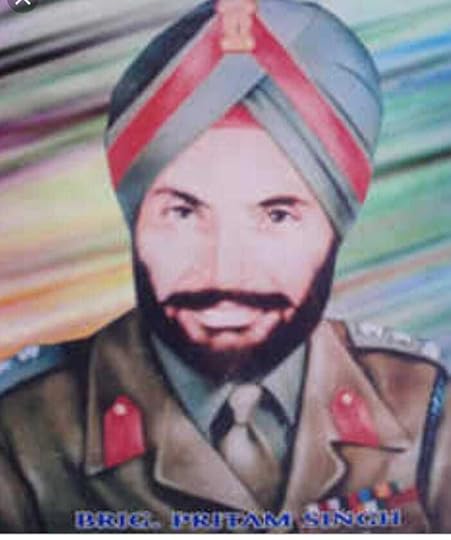
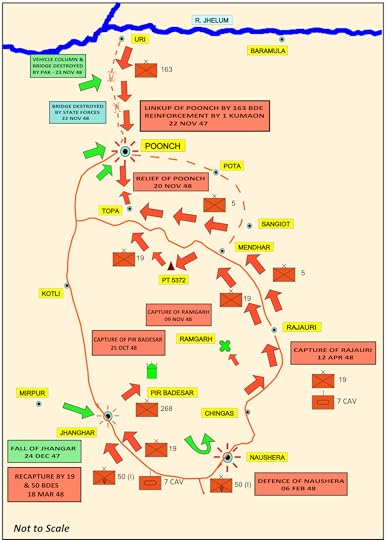
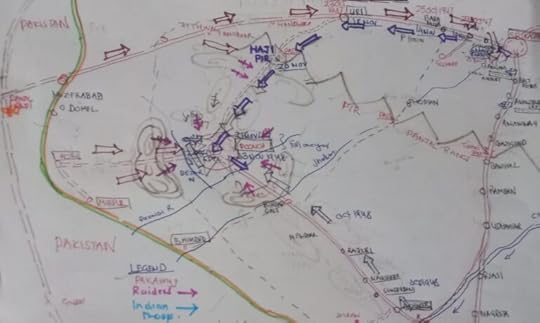
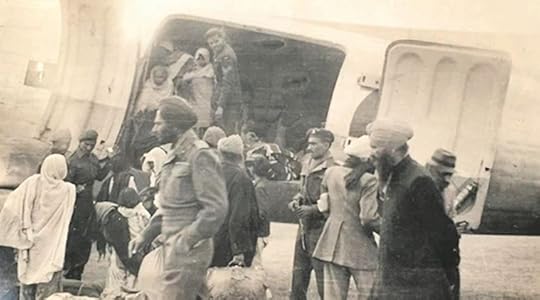
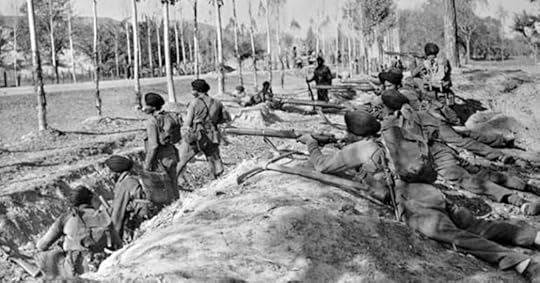
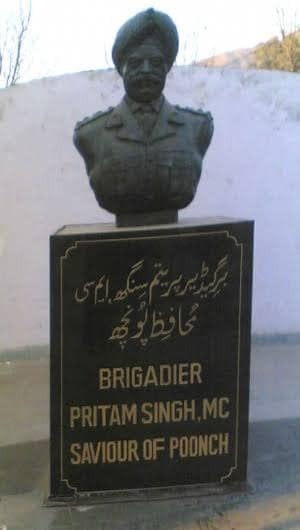
One man stood like a rock between Pakistani Lashkars and Poonch in Nov 1947. Forty thousand refugees depended on him for a year for food, shelter and protection from the raiders. Braving all odds, he built an airstrip and daring pilots like Baba Mehar Singh flew in supplies and ammunition till the siege broke. This man was a hero. He led his forces to victory in the Battle of Shalateng saving Srinagar before Poonch. This man had an iron will. Held as a POW by the Japanese in Singapore, he escaped with two fellow officers, travelling through enemy-held Malaya, Thailand and Burma for six months before reaching India. The British awarded him the Military Cross (MC). This man served India like no other. But his Generals punished him, denied him justice, court-martialled and dismissed him. They stripped him of his medals, but could not take away his MC. He died forlorn and unsung. This man was Brigadier Pritam Singh, MC. The people of Poonch call him Sher Bachha and worship him. Even today. This soldier-patriot deserves to have his honour restored. This is his story.
⭐️⭐️⭐️⭐️½ (4.5/5.0) – A Powerful and Detailed Tribute to an Unsung Hero
This is a meticulously researched, emotionally stirring and historically significant account of one of India’s most overlooked war heroes. The book not only narrates military events but also captures the human courage, sacrifice and injustice faced by Brigadier Pritam Singh. No once knows much about what happened on his account but there is bit of information available from few of his own colleagues out of whom the son of one of such Army Personnel wrote this apprehensive anecdote.
Rare & Untold History: This book brings forward the lesser-known story of the heroic defense of Poonch during the 1947–48 Kashmir conflict, shedding light on crucial events that rarely found space in mainstream narratives written so far.
Extraordinary Leadership: Brig Pritam Singh’s tactical brilliance, unshakable resolve, and fearless leadership under extreme conditions are described in a highly engaging and inspiring manner. He saved more than 40000 refugees against Pakistan sponsored tribesman invading terrorism and help evacuate most of them from Poonch to Jammu.
POW Experience & Daring Escape: His earlier ordeal as a prisoner of war and his dramatic escape add a thrilling dimension, showcasing his mental toughness and indomitable spirit.
Human Angle & Emotional Depth: The authors beautifully portray the struggles of soldiers, civilians and families trapped in the siege, making the narrative emotionally powerful and deeply humane.
Injustice & Neglect: The book strongly highlights the unfair treatment and lack of recognition faced by Brig Pritam Singh MC, making readers reflect on how true heroes are often forgotten. I was really in shock reading about FM Cariappa, that he was playing politics even when he was already on Top most position of Indian Army, just to satisfy his ego and settle his old accounts with General Kulwant Singh. Too bad of an era for Indian Army under such political hand of a General who ought to behave as a leader. "A FAIR LEADER!!" Man who saved Part of India (Poonch) from Pakistan's invasion lead by their tribesmen and held them out for as long as a whole year without proper communication and help from Delhi and additionally saved the refugees who resided in the city by leaving Pakistan for their true Nation, India, was side-lined just because of internal military politics between his seniors and their typical animosity against him just because he had better skills than them at handling given situations at that time.
Unveiling Nepotism: This book also unveils the fair record of biased and stupidious decisions of JL Nehru. BM (Bijjee) Kaul, a cousin of Nehru was appointed as CGS without any required war skills and handed over the task of the war of 1962, which gave India a hell lot of loss and endurance thereafter. The War we almost lost and henceforth the VETO power to China because of nepotism culture by Gandhi-Nehru Dynasty.
Research & Authenticity: Backed by extensive research, firsthand accounts and military records, the book maintains high credibility and historical accuracy. But Question still persist that if President finds these records enough to lift-off the Court-martial's account of verdicts patched over the image of an Unsung Hero. However, without much documents and witnesses available, I doubt for any hopeful results because Judge, whoever it may be, will seek for credible sources always and this or any such book is not suffice for that matter.
Writing Style/Pattern: While the narration is detailed and informative, certain sections feel dense and heavy with military specifics, which slightly affects the pace for general readers. But for an account relevant to the true events, it was necessary so it is not a complaint. What I dislike a bit is the Quote in starting of each Chapter were all taken from Foreign hand. Quotes are good but I hope it was also good if those were all or some from few of Indian War leaders. Relevance should have been taken from great sayings of Kings or legends like Sir SHFJ Manekshaw, etc... At a point I found bit of discrepancy or rather it could have been coincidently reversed figures, where Pt. 6005 and Pt. 5006 used to refer same incidents.
To Summarize: This book stands as an important contribution to Indian military literature and is a heartfelt tribute to a true patriot. It educates, inspires and moves the reader, making it a must-read for defense enthusiasts, history lovers (like me) and anyone interested in stories of real-life heroism. His Stone Bust still instill in Poonch, memorizing his worth for the Locals of Poonch and whole India as a true Hero, withholding the place under his control and not let it slip in the hands of Pakistanis.
First and foremost, the publishers have rendered it impossible to quote from the book, unless one types it in; one is therefore tempted to simply read through and do a one word review, good or otherwise.
One expects to say, good. So one wishes one could say more.
In short, its history of 1948, of India defending Kashmir against Pakistan attack, and the role played by Brigadier Pritam Singh, who's locally remembered as Lion.
Author repeatedly mentions names of Mirpur and Kotli, before it sinks in, that the horrors perpetrated in those places by the so called raiders - sponsored, of course, by Pakistan - were so horrendous as to produce a dread through the neighborhood, and hence the then local and refugees support for the Indian military, and leaders thereof who were the people's only defence against the loot, massacres and rapes by the said 'raiders'. ***
Even before one has gone as far as 9% in the book, there's much worth quoting, astounding as it is, about lives of three WWII POW escapees who walked and otherwise traveled up from the then Malaya through Burma into India, before the main character in this tale of valour - Pritam Singh - joined Indian military defending in Poonch, managing against the siege for a year.
It's almost sad when the book is finished. And not just because of the injustice of how this hero was treated, but because the story has become part of one, as if one lived it! ***
Fortunately one can quote one small excerpt, because of its source, quoted by the author.
""Each time a man stands up for an ideal, or acts to improve the lot of others, or strikes out against injustice, he sends forth a tiny ripple of hope, and crossing each other from a million different centers of energy and daring those ripples build a current which can sweep down the mightiest walls of oppression and resistance."
"Robert F. Kennedy "
Tale of Pritam Singh is in the two parts mentioned, the escape from a POW camp and walk up to India through Malaya and Burma, and later, defense of Poonch. ***
"The personality of the general is indispensable; he is the head, he is the all, of an army. The Gauls were not conquered by the Roman Legion, but by Caesar. It was not before the Carthagenian soldiers that Rome was made to tremble, but before Hannibal. It was not the Macedonian phalanx which penetrated into India, but Alexander.
"- Napoleon" ***
" ... There was a concerted effort to tarnish the image of the patriot and hero who had been solely responsible for many spectacular victories."
There were false reports, and a move to send Pritam to Kashmir valley, still in need of defence.
" ... Thimayya was getting an excellent soldier, and warmly welcomed ... But Thimayya warned the armycommander that if after Pritam's move a disaster befell poonch, then he wouldnot like to be associated with it. Thereafter, nothing more was ever heard regarding the proposal about moving Pritam out of Poonch." ***
Author now recounts at brief length an account of a court of inquiry set up against pritam after General Cariappa had assured him to the contrary, and the various impropriety carried out during conduct of this court, legally and procedurally; he almost directly points at BM Kaul, close to the then PM Nehru, as responsible for most of those improprieties, and reminds the readers that the same BM Kaul was responsible for disaster at NEFA in 1962 " ... by proving to be thoroughly incompetent."
" ... There was ample reason to believe that a forged document and false evidence had been surreptitiously introduced by motivated members of the Court to provide false evidence against Pritam ... " ***
Author delineates flaws and falsehoods in the charges against Pritam Singh, in brief but complete detail, leaving no doubts as to there bring some personal ill will against him involved in the matter.
But at some point, one must ask, was this really all about immediate colleagues? It would seem not so, because as per details provided by author, orders csme from way above, close to and above level of the then PM of India, Nehru.
Was this about British in general - and the British personnel involved in the then government of India in particular - bring keen to have Pakistan capture and occupy Kashmir at all costs, and doing various, underhand as well as obvious, machinations in the process?
We know, from at least one source involving biography of Sardar Patel, that the corresponding British chiefs of the two armies - India and Pakistan - were not only in touch via telephone, but the former had been caught informing the paki counterpart of decisions and movements of Indian military, and had done so in French, not expecting to be understood by Indians. He was taken aback when caught, denied, gone white when presented with a recording, and pleaded to be not dragged further as he deserved to be.
What's more, Mountbatten had manipulated Nehru by going to Gandhi to pressure Nehru through the latter, when his own persuasions failed.
So - author having given details about Nehru on one side and Mountbatten on opposite, regarding poonch - was Pritam Singh blackened by British displeased at poonch being defended, and this was supposed to be not only punishment but a caution and warning to other military officers who might have taken initiative to do do elsewhere in Kashmir?
Was BM Kaul involved, just so Nehru couldn't oppose the court of inquiry procedure, since he'd opined for defense of Poonch? If Kaul had been pressured by his British bosses, perhaps he lacked spine enough to stand by India? Because he did go against Cariappa, which would be strange - at the very least. ***
Author recounts Swaran Singh, later minister in government of India, had testified and reasoned in vourt against those accusing Pritam Singh.
That alone should tell any reader familiar with general personae involved, that the accusations and case against Pritam Singh were far from kosher, and that in fact they were completely fraudulent. ***
Meanwhile Pritam Singh was dealing with the continuing siege. He had to provide food and other essentials for people of poonch, and battle the Pakistani sponsored raiders surrounding the town and hills. He raised two battalions from locals to add to the Indian army and J&K State Forces to fight back in defense. ***
"Sardar Swaran Singh could not recall all the details after a lapse of nearly forty-three years but remembered Pritam as an honourable and courageous man. He maintained there was no case against Pritam. His conviction was political vendetta, where Sheikh Abdullah and others had used their clout at Delhi to obtain a verdict of guilty."
"Major General Virendra Singh, another contemporary of Pritam, said "It was Bijjee Kaul (BM Kaul) who was working overtime, along with others in Delhi, to hunt down Pritam. ""
Author quotes several other sources pointing out that the whole thing was absurd at best and conspiracy to blacken a hero in reality. ***
" ... The detractors not only maligned and sullied Pritam's reputation but also buried the great story of the year-long heroic siege of Poonch. It was a complete sacrilege, as the year-long siege had been unique in itself and worthy to rank among the great sieges in the history of warfare. If it had not been burned, it would have become a subject of study in military institutions all over the world. " ***
Author quotes from memoirs of General DK Palit.
One can only hope to find the quotes elsewhere. Here, one can read, but not quote easily. And this part is more than worthy in its totality of being quoted. ***
"I suspected that the anti-Indian propaganda spread by the departing British officers was the root cause of the low morale of the men. ... "
Pritam agreed when another colleague advised Palit to go with the men in action instead of carrying on exercises. ***
Author quotes extensively from the memoirs of Palit here, the part focused on Pritam Singh, giving reference "Pages 255-280", "Pritam Singh and the defence of Poonch, 1947-48".
And as for Palit on Pritam Singh, he's clearly laudatory.
Again, one wishes one could quote all of that. ***
Author quotes from Palit.
"" ... The British CO ... and one or two other British officers did everything they could to undermine the standing of incoming Indian officers. ... ""
That wasn't merely racism, but a specific anti-Indian, anti-Hindu policy set up by Macaulay and applied in general by British in dealing with India.
Perhaps that, alone, is enough to explain the persecution of Pritam Singh, in that, obviously he had to be so thoroughly blackballed after being a hero saving Poonch from muslim raiders from Pakistan, because Mountbatten and British government wanted pakistan to have Kashmir, and were doing everything possible from pressuring Nehru to informing Pakistan of Indian military movements, inn that effort.
Naturally they were furious at Pritam Singh and wanted him destroyed, but at hands seemingly of his own compatriots. As Author points out earlier, this had an effect of discouraging such leadership when it was needed desperately, in 1962, however bravely the men fought; and whatever the truth of that, certainly such an effect would be only natural, if author were correct in this conclusion. ***
Quite an eye-opener, reading through the words of Palit. ***
Author points out the unfairness and injustice of the treatment received by the saviour of Poonch, and appeals for rectification thereof. ................................................................................................
Author gives excerpts from 'Operation Poonching' by Shiv Kunal Verma.
Most thrilling accounts of how Poonching began and went on, in face of enemy fire. ................................................................................................
Author gives detailed conversation from an incredible interview with someone who'd fought at Poonch under Pritam Singh, apart from WWII in both east and west theatres against Japan and Germany respectively.
The interview consists of personal memories and relevant details of the battles fought under Pritam Singh’s command, beginning with Shalateng. ................................................................................................
It's almost sad when the book is finished. And not just because of the injustice of how this hero was treated, but because the story has become part of one, as if one lived it! ................................................................................................ ................................................................................................
This tale of a forgotten hero is a 3.5 read for me. Got to know so much about military history but at the same time, saddened by the disgraceful treatment meted out to the war hero.
What an intriguing book to read!!! The untold -most crucial part of the Indian military history which has saved Kashmir of more brutality during its initial formative phase. A hero of the nation has been denied of his respect. Brig Pritam Singh and his story of grit and determination as PoW, his escape from Japanese in WWII and his leadership in the holding Poonch garrison against the tribal raiders for 1 yr is extremely motivating.
Forgotten War Hero. A vivid account of a soldier at heart. His struggles & exploits must have been part of our illustrious history.. May justice prevail!