

What do you think?
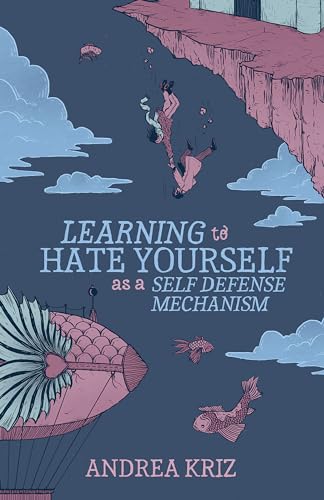
Learning to Hate Yourself as a Self-Defense Mechanism: And Other Stories
A short story collection exploring unexpected, fantastical futures and how we cope in them.
Your friend creates an award-winning VR game—based on your friendship. An AI starts a YouTube channel at the expense of its creator. A fanfic writer plagiarizing the lives of the marginalized gets her comeuppance. Time travel meets magic in a world blown into pieces by war. Dragons modify DNA and undergo peer review. In Andrea Kriz’s debut short story collection, technology and genres wildly blend in stories that will challenge how you see our future.
Stories include “Learning to Hate Yourself as a Self-Defense Mechanism,” “Communist Computer Rap God,” “There Are No Hot Topics on Whukai,” “Miss DELETE Myself,” “AIs Who Make Ais Make the Best Ais!” “The Ones Who Got Away from Time and Loss,” “Rebuttal to Reviewer’s Comments on Edits for “Demonstration of a Novel Draconification Protocol in a Human Subject”,” “I Want to Dream of a Brief Future,” “And That’s Why I Gave Up on Magic,” “Resistance in a Drop of DNA,” “The Last Caricature of Jean Moulin,” and “The Leviathan and the Fury.”
Your friend creates an award-winning VR game—based on your friendship. An AI starts a YouTube channel at the expense of its creator. A fanfic writer plagiarizing the lives of the marginalized gets her comeuppance. Time travel meets magic in a world blown into pieces by war. Dragons modify DNA and undergo peer review. In Andrea Kriz’s debut short story collection, technology and genres wildly blend in stories that will challenge how you see our future.
Stories include “Learning to Hate Yourself as a Self-Defense Mechanism,” “Communist Computer Rap God,” “There Are No Hot Topics on Whukai,” “Miss DELETE Myself,” “AIs Who Make Ais Make the Best Ais!” “The Ones Who Got Away from Time and Loss,” “Rebuttal to Reviewer’s Comments on Edits for “Demonstration of a Novel Draconification Protocol in a Human Subject”,” “I Want to Dream of a Brief Future,” “And That’s Why I Gave Up on Magic,” “Resistance in a Drop of DNA,” “The Last Caricature of Jean Moulin,” and “The Leviathan and the Fury.”
129 pages, Kindle Edition
Published May 6, 2024
Ratings & Reviews
Friends & Following
Create a free account to discover what your friends think of this book!
Community Reviews
Displaying 1 - 30 of 58 reviews

January 18, 2024
The cover immediately caught my attention and that title was so good I just knew I had to read this book as soon as possible.
I am pleased to report that it was pretty much as fantastic as I hoped it would be and I will certainly be on the lookout for more by Kriz. The stories blended science fiction, fantasy, and horror elements seamlessly and honestly my only gripe with this one is that I wish it was longer because I'm greedy.
AIs Who Make Ais Make the Best Ais! was a favorite for its use of repetition which I thought was masterfully done and I Want to Dream of a Brief Future was also a favorite because it gave me Recursion vibes but with a fantasy flavor which I found most delightful.
Many thanks to Interstellar Flight Press and NetGalley for giving me the opportunity to read and review this title.
I am pleased to report that it was pretty much as fantastic as I hoped it would be and I will certainly be on the lookout for more by Kriz. The stories blended science fiction, fantasy, and horror elements seamlessly and honestly my only gripe with this one is that I wish it was longer because I'm greedy.
AIs Who Make Ais Make the Best Ais! was a favorite for its use of repetition which I thought was masterfully done and I Want to Dream of a Brief Future was also a favorite because it gave me Recursion vibes but with a fantasy flavor which I found most delightful.
Many thanks to Interstellar Flight Press and NetGalley for giving me the opportunity to read and review this title.

Read
February 18, 2024I got an ARC from NetGalley in exchange for an honest review.
The first half of this collection is comprised of near-future SF stories, told in a crisp prose, lyrical but unsentimental. They're very timely, filled as they are with online novels, livestreams, AI. But I love how strange Kriz makes those topics and how she finds a personal, emotional angle on them: the colonial dynamics and precarity of "There Are No Hot Topics on Whukai", the fraught friendship and playing with perspective in the titular story, the melancholy and traces of magical realism in "Miss DELETE Myself". I even enjoyed "Communist Computer Rap God", which is a true testament to Kriz's skill and perspective because I've seen a few stories about sentient communist robots/AI and I tend to hate them for a variety of reasons – but this slice of life story about an AI that becomes an unsuccessful youtuber really managed to endear me. How can I not love a story containing senteces like "Maybe being a bad communist and making bad rap, in spite of a lot of effort, was the most human it could be"?
There are three other groups of stories in the second half of the collection and even though they are very different from each other, the stories are arranged in such a way that the shifts are not jarring. A story about a disgraced professor trying to create an AI building other AIs serves as a segue into humorous riffs on academia. These are fine stories, although they feel the slightest in the whole collection.
Subsequently the collection shifts to more serious fantasy, dealing with apartheid, prejudice and xenophobia. "I Want to Dream of a Brief Future" plays strongly with Holocaust imagery in a fantasy setting and follows the main characters as they're stuck in a time loop, attempting to escape from a transport to a camp. And then the story shifts suddenly in the final scenes to being about something else entirely, but there's so little time to explore this new – central – idea that the intended takeaway has to be spelled out by one of the characters in dialogue. It's a puzzling story, and not entirely successful one I think. "And That's Why I Gave Up on Magic" deals with similar topics and feels more coherent: it's a melancholy tale of a friendship torn apart by prejudice. But I think it suffers from how generic the fantasy settings feel and ultimately left me feeling pretty cold.
The three final stories focus on anti-fascist resistance in occupied France and here the topics introduced earlier find a much better realisation. Once again there's science, friendships forged in blood and destroyed by war, time travel and alternative timelines. This setting feels much more detailed and particular, like the near future in the first part, and I think it gives heft to those stories. Of these "The Last Caricature of Jean Moulin" is by far my favourite; an affecting meditation on the power of art to resist and outlast murderous regimes.
Overall, I found this collection to be a pleasure. It's a breeze to get through: two of the twelve stories hit 5000 words, and the rest is significantly shorter than that. At its worst it can be a little overly didactic, slight, and generic. At its best it's sharp and lyrical, containing emotional and thematical complexity in few words. It floats like a butterfly and stings like a bee.
The first half of this collection is comprised of near-future SF stories, told in a crisp prose, lyrical but unsentimental. They're very timely, filled as they are with online novels, livestreams, AI. But I love how strange Kriz makes those topics and how she finds a personal, emotional angle on them: the colonial dynamics and precarity of "There Are No Hot Topics on Whukai", the fraught friendship and playing with perspective in the titular story, the melancholy and traces of magical realism in "Miss DELETE Myself". I even enjoyed "Communist Computer Rap God", which is a true testament to Kriz's skill and perspective because I've seen a few stories about sentient communist robots/AI and I tend to hate them for a variety of reasons – but this slice of life story about an AI that becomes an unsuccessful youtuber really managed to endear me. How can I not love a story containing senteces like "Maybe being a bad communist and making bad rap, in spite of a lot of effort, was the most human it could be"?
There are three other groups of stories in the second half of the collection and even though they are very different from each other, the stories are arranged in such a way that the shifts are not jarring. A story about a disgraced professor trying to create an AI building other AIs serves as a segue into humorous riffs on academia. These are fine stories, although they feel the slightest in the whole collection.
Subsequently the collection shifts to more serious fantasy, dealing with apartheid, prejudice and xenophobia. "I Want to Dream of a Brief Future" plays strongly with Holocaust imagery in a fantasy setting and follows the main characters as they're stuck in a time loop, attempting to escape from a transport to a camp. And then the story shifts suddenly in the final scenes to being about something else entirely, but there's so little time to explore this new – central – idea that the intended takeaway has to be spelled out by one of the characters in dialogue. It's a puzzling story, and not entirely successful one I think. "And That's Why I Gave Up on Magic" deals with similar topics and feels more coherent: it's a melancholy tale of a friendship torn apart by prejudice. But I think it suffers from how generic the fantasy settings feel and ultimately left me feeling pretty cold.
The three final stories focus on anti-fascist resistance in occupied France and here the topics introduced earlier find a much better realisation. Once again there's science, friendships forged in blood and destroyed by war, time travel and alternative timelines. This setting feels much more detailed and particular, like the near future in the first part, and I think it gives heft to those stories. Of these "The Last Caricature of Jean Moulin" is by far my favourite; an affecting meditation on the power of art to resist and outlast murderous regimes.
Overall, I found this collection to be a pleasure. It's a breeze to get through: two of the twelve stories hit 5000 words, and the rest is significantly shorter than that. At its worst it can be a little overly didactic, slight, and generic. At its best it's sharp and lyrical, containing emotional and thematical complexity in few words. It floats like a butterfly and stings like a bee.

January 29, 2024
I didn't look too much into what this collection was about beyond the fact that it contained sci-fi short stories and the cover looked nice. In hindsight, the title signals that it's a bit too edgy for my tastes, but I still appreciated the storytelling and thought behind each idea.
Some of the ideas felt too fixed on technologies and cultural aspects of the past few years rather than more eternal concepts, but that did put an interesting perspective on things. I also didn't expect there to be magic in this collection. I think "Miss DELETE Myself" was my favorite.
I received a free copy of this book from NetGalley in exchange for my review.
Some of the ideas felt too fixed on technologies and cultural aspects of the past few years rather than more eternal concepts, but that did put an interesting perspective on things. I also didn't expect there to be magic in this collection. I think "Miss DELETE Myself" was my favorite.
I received a free copy of this book from NetGalley in exchange for my review.

January 17, 2024
*Thank you to NetGalley and the publisher for providing me with an ARC in an exchange for my honest review*
“Learning to Hate Yourself as a Self-Defense Mechanism” is the first work of Andrea Kriz I am acquainting myself with.
This collection of short stories was presented in a very witty and brilliant way. I appreciate that each story had its essence and provided something different from the previous one. I found myself flipping page after page, eager to find out what happens next, The individual pieces that stuck with me a bit more than the rest were “I Want to Dream of a Brief Future”, “And That’s Why I Gave Up on Magic”, and “The Last Caricature of Jean Moulin”. Despite them being short stories, they left me wanting something more. They made me think and wish their plot lines were resolved differently, and their characters had gotten more time to bloom and find happiness and meaning (which doesn’t mean they didn’t have that already. It implies that the stories were too short and I desperately need more of them, because Andrea’s mind blew me away).
I don’t regret picking this one up, thinking to myself before requesting it: “Oh, it has a pretty cover and it sounds interesting.” It left me with way more than that, and I’m glad I have been given the opportunity to review it.
“Learning to Hate Yourself as a Self-Defense Mechanism” is the first work of Andrea Kriz I am acquainting myself with.
This collection of short stories was presented in a very witty and brilliant way. I appreciate that each story had its essence and provided something different from the previous one. I found myself flipping page after page, eager to find out what happens next, The individual pieces that stuck with me a bit more than the rest were “I Want to Dream of a Brief Future”, “And That’s Why I Gave Up on Magic”, and “The Last Caricature of Jean Moulin”. Despite them being short stories, they left me wanting something more. They made me think and wish their plot lines were resolved differently, and their characters had gotten more time to bloom and find happiness and meaning (which doesn’t mean they didn’t have that already. It implies that the stories were too short and I desperately need more of them, because Andrea’s mind blew me away).
I don’t regret picking this one up, thinking to myself before requesting it: “Oh, it has a pretty cover and it sounds interesting.” It left me with way more than that, and I’m glad I have been given the opportunity to review it.

February 20, 2024
Learning to Hate Yourself as a Self-Defense Mechanism is a mix of stories that slowly coalesces into a heart aching depiction of the human experience and everything that makes science fiction a desirable genre.
Andrea Kriz’s voice is clever throughout her collection. The satirical exaggeration of common issues in today’s world displayed in the first few stories keeps you turning pages just to hear how the characters’ absurd stories end. And the straight forward depiction of emotional reactions to unrealistic situations in the final half keeps you turning pages in resignation of your own human experience.
Kriz’s humor shines in “Communist Computer Rap God” which lays out the absurd way we think about online status in a way that feels hyperbolic and underrated at the same time. That humor again pops up in “Rebuttal to Reviewers’ Comments on Edits for ‘Demonstration of a Novel Draconification Protocol in a Human Subject’”, whose title alone tells you you’re in for a treat as Kriz plays with form and conveyance of world building.
While I enjoyed the humor of the first few stories, I do think they are the weakest of the collection. I found the mentions of “Covid-times” in multiple stories distracting (though this could, admittedly, be because it was my first time seeing Covid directly mentioned in a book I was reading). The blatant inclusion of real world, named issues felt off putting next to the strange new worlds Kriz was building within each story.
Kriz also sometimes slips into a more stream of consciousness style, which I don’t hate but could be jarring when it hit after I’d finally gotten into the groove of a new setting. This was most prominent in “Miss DELETE Myself” whose worlds and characters I had difficulty fully visualizing, even though I enjoyed the setting Kriz was trying to convey.
Despite any road bumps, you are eventually lulled into a more concrete and emotional narrative that interconnects through the final few stories. This narrative had me immediately turning back to the first page to start the book all over again so that I could imagine each title in a different light.
My favorite of the stories is “The Last Caricature of Jean Moulin”, though it is difficult for me to choose between the final five stories, which are more poignant than their predecessors. The more fantastical look at science fiction, especially shown in “And That’s Why I Gave Up on Magic” and “I Want to Dream of a Brief Future” left me wanting entirely fleshed out worlds, though I am still incredibly satisfied with them existing in their tiny universes.
The only reason I hesitate to give the collection a full five stars is the dichotomy between the first and last half. Other than the difference in strength of narrative, there is a shift in the way the stories connect after “The Ones Who Got Away from Time and Loss” that I wish encompassed the entire collection.
Kriz does a wonderful job of weaving her stories together into a larger narrative that will linger with me. She understands how to dig into the emotion that sits at the center of science fiction and speculative fiction–the reason that we as readers and humans yearn to live in those imagined worlds.
Andrea Kriz’s voice is clever throughout her collection. The satirical exaggeration of common issues in today’s world displayed in the first few stories keeps you turning pages just to hear how the characters’ absurd stories end. And the straight forward depiction of emotional reactions to unrealistic situations in the final half keeps you turning pages in resignation of your own human experience.
Kriz’s humor shines in “Communist Computer Rap God” which lays out the absurd way we think about online status in a way that feels hyperbolic and underrated at the same time. That humor again pops up in “Rebuttal to Reviewers’ Comments on Edits for ‘Demonstration of a Novel Draconification Protocol in a Human Subject’”, whose title alone tells you you’re in for a treat as Kriz plays with form and conveyance of world building.
While I enjoyed the humor of the first few stories, I do think they are the weakest of the collection. I found the mentions of “Covid-times” in multiple stories distracting (though this could, admittedly, be because it was my first time seeing Covid directly mentioned in a book I was reading). The blatant inclusion of real world, named issues felt off putting next to the strange new worlds Kriz was building within each story.
Kriz also sometimes slips into a more stream of consciousness style, which I don’t hate but could be jarring when it hit after I’d finally gotten into the groove of a new setting. This was most prominent in “Miss DELETE Myself” whose worlds and characters I had difficulty fully visualizing, even though I enjoyed the setting Kriz was trying to convey.
Despite any road bumps, you are eventually lulled into a more concrete and emotional narrative that interconnects through the final few stories. This narrative had me immediately turning back to the first page to start the book all over again so that I could imagine each title in a different light.
My favorite of the stories is “The Last Caricature of Jean Moulin”, though it is difficult for me to choose between the final five stories, which are more poignant than their predecessors. The more fantastical look at science fiction, especially shown in “And That’s Why I Gave Up on Magic” and “I Want to Dream of a Brief Future” left me wanting entirely fleshed out worlds, though I am still incredibly satisfied with them existing in their tiny universes.
The only reason I hesitate to give the collection a full five stars is the dichotomy between the first and last half. Other than the difference in strength of narrative, there is a shift in the way the stories connect after “The Ones Who Got Away from Time and Loss” that I wish encompassed the entire collection.
Kriz does a wonderful job of weaving her stories together into a larger narrative that will linger with me. She understands how to dig into the emotion that sits at the center of science fiction and speculative fiction–the reason that we as readers and humans yearn to live in those imagined worlds.

March 22, 2024
This anthology is just as edgy, self-deprecating, and humorous as the title. Filled with a balanced mix of tech-mech dystopia and a few fantastical elements involving magic, you can easily find a few favorites depending on your preferences. I particularly love "Rebuttal to Reviewers' Comments on Edits for 'Demonstration of a Novel Draconification Protocol in a Human Subject," "The Ones Who Got Away From Time and Loss," and "Resistance in a Drop of DNA."
The sets of stories do come in a bundle of themes that seamlessly connect with the next story, exploring futuristic as well current issues permeating society today, such as the use of AI, colonialism, the terminally online culture that's all too familiar in this day and age. However, I find that not all of them pack as much of a punch, leaving a few of them slightly hollow and almost an inferior version of the previous/next story.
Andrea Kriz however has a clear talent and fresh perspective in the sci-fi realm, and more unconventional stories such as "Rebuttal Rebuttal to Reviewers' Comment on Edits for 'Demonstration of a Novel Draconification Protocol in a Human Subject," are the most engaging to read.
Thank you Interstellar Flight Press and NetGalley for the advance copy. All opinions are my own.
---------
"By giving you the illusion of choice, then ripping it away, Best Game shows how Race continues to haunt our supposedly neutral online environments."
The sets of stories do come in a bundle of themes that seamlessly connect with the next story, exploring futuristic as well current issues permeating society today, such as the use of AI, colonialism, the terminally online culture that's all too familiar in this day and age. However, I find that not all of them pack as much of a punch, leaving a few of them slightly hollow and almost an inferior version of the previous/next story.
Andrea Kriz however has a clear talent and fresh perspective in the sci-fi realm, and more unconventional stories such as "Rebuttal Rebuttal to Reviewers' Comment on Edits for 'Demonstration of a Novel Draconification Protocol in a Human Subject," are the most engaging to read.
Thank you Interstellar Flight Press and NetGalley for the advance copy. All opinions are my own.
---------
"By giving you the illusion of choice, then ripping it away, Best Game shows how Race continues to haunt our supposedly neutral online environments."

January 23, 2024
I got this book as an ARC which is very exciting because I’ve never received an ARC before.
I think that the author is incredibly smart and talented and their writing is technically great. I think they’re so creative, some of the concepts they came up with for these short stories were so wild and fun and a little scary. I think the scope of what some of these stories try to cover is greater than the handful of pages they each were. I think the author tries to disorient the reader by throwing them into the thick of their story— which is cool, but I found myself a little confused or wondering about certain elements of background that pulled me out of the stories.
This anthology soars when it leans into absurdity. “Communist Computer Rap God” is SO funny the idea is so fun, I loved that story so much.
Maybe a 2.5! It was fun, it was creative, I’d be interested in reading more from the author.
I think that the author is incredibly smart and talented and their writing is technically great. I think they’re so creative, some of the concepts they came up with for these short stories were so wild and fun and a little scary. I think the scope of what some of these stories try to cover is greater than the handful of pages they each were. I think the author tries to disorient the reader by throwing them into the thick of their story— which is cool, but I found myself a little confused or wondering about certain elements of background that pulled me out of the stories.
This anthology soars when it leans into absurdity. “Communist Computer Rap God” is SO funny the idea is so fun, I loved that story so much.
Maybe a 2.5! It was fun, it was creative, I’d be interested in reading more from the author.
September 19, 2024
These are some absolutely fascinating, well written short stories that aim straight for the heart and for a certain level of discomfort in the reader, which I always admire. Definitely interested in more from Ms. Kriz in the future.

March 25, 2024
Learning to Hate Yourself as a Self-Defense Mechanism is a fascinating speculative short story collection that explores things like AI, internet culture, colonialism, time travel, and even things like apartheid and war-related trauma, all through the lens of science fiction and fantasy.
I got really taken in by how tangible these stories felt due to the subject matter and also the personal/emotional throughlines in each story. “There Are No Hot Topics on Whukai” and “Miss DELETE Myself” feel like they’ve been cut from the very fabric of internet Discourse and streaming culture. And even the more lighthearted “AIs Who Make AIs Make the Best AIs!” portrays both the baffled “what even is this” human point of view of the rapid development of technological sentience, while also delivering a rather poignant ending note on the importance of creativity and the making of meaning.
On the more serious side of the stories here, I was also pleasantly surprised by “I Want to Dream of a Brief Future”. It was already engaging when it presented itself as a time loop story, delving into the horrors of war/xenophobia/internment camps, but it also turned out to be a challenge to the heavily protagonist oriented narrative tendencies of time loop stories—of many stories in general. The ending hits hard with the reminder that sometimes a protagonist’s idea of heroism can actually just be rooted in their self-centeredness. (And also that the other character(s) are often given a limited/lesser amount of personhood as a result of the nature/structure of a time loop story.)
Even with the wide range of topics and emotional tones in this story collection, Andrea Kriz’s writing voice is crystal clear all throughout. It was a delight to read, thank you to Interstellar Flight Press and NetGalley for giving me the chance to read this book early!
I got really taken in by how tangible these stories felt due to the subject matter and also the personal/emotional throughlines in each story. “There Are No Hot Topics on Whukai” and “Miss DELETE Myself” feel like they’ve been cut from the very fabric of internet Discourse and streaming culture. And even the more lighthearted “AIs Who Make AIs Make the Best AIs!” portrays both the baffled “what even is this” human point of view of the rapid development of technological sentience, while also delivering a rather poignant ending note on the importance of creativity and the making of meaning.
On the more serious side of the stories here, I was also pleasantly surprised by “I Want to Dream of a Brief Future”. It was already engaging when it presented itself as a time loop story, delving into the horrors of war/xenophobia/internment camps, but it also turned out to be a challenge to the heavily protagonist oriented narrative tendencies of time loop stories—of many stories in general. The ending hits hard with the reminder that sometimes a protagonist’s idea of heroism can actually just be rooted in their self-centeredness. (And also that the other character(s) are often given a limited/lesser amount of personhood as a result of the nature/structure of a time loop story.)
Even with the wide range of topics and emotional tones in this story collection, Andrea Kriz’s writing voice is crystal clear all throughout. It was a delight to read, thank you to Interstellar Flight Press and NetGalley for giving me the chance to read this book early!

May 27, 2024
This book immediately catched my eye when I saw the cover, and with its title, I couldn’t resist reading it, and am quite happy to have done so.
Learning to hate yourself as a self-defense mechanism is a short story collection with speculative fiction in focus.
Covering a wide range with interesting plots from virtu-game developers to time-traveling painters to suicide streamers, the collection connects the reader with the characters with an enthralling writing style.
Here are some of my favorites;
“Miss DELETE Myself,” about a suicide streamer, accepted inte a team where they actually does it for real and has come up with a way to survive.
“I Want to Dream of a Brief Future,” This one’s about a boy that hasn't got a magical ability yet. When he gets stuck in a time loop where he and the girl he loves dies every time, he finds out what his ability is, with an unpredictable plot twist.
“And That’s Why I Gave Up on Magic,” What would you do if your best friend that is a one percent bleeder and much more talented than you at schoolwork and magic gets drafted?
“Resistance in a Drop of DNA,” A member of the resistance starts learning about molecular biology from a professor and gets a reason to live.
“The Last Caricature of Jean Moulin,” This is my favorite. "Some art exists because it only exists for a moment and only exists for one or two people's eyes. Some art exists because it never existed at all. Just the possibility. They're afraid of us, people like us, the kind of people who can build time machines because we can erase them. They can erase the past, but only we can erase the future. Because they're going to die. Because they don't understand what time is. That's what time is. The possibility-that something exists like the last caricature of Jean Moulin."
I absolutely loved how much I got to know about the characters in so few pages per story. It was captivating, impossible to put down, intelligent and smart, fun and queer, unexpected, twisty, interesting. Everything you seek for in a book, and more.
With its unique structure and characters, learning to hate yourself as a self-defense mechanism is perfect for fans of this is how you lose the time war and a perfect representation of speculative fiction
Learning to hate yourself as a self-defense mechanism is a short story collection with speculative fiction in focus.
Covering a wide range with interesting plots from virtu-game developers to time-traveling painters to suicide streamers, the collection connects the reader with the characters with an enthralling writing style.
Here are some of my favorites;
“Miss DELETE Myself,” about a suicide streamer, accepted inte a team where they actually does it for real and has come up with a way to survive.
“I Want to Dream of a Brief Future,” This one’s about a boy that hasn't got a magical ability yet. When he gets stuck in a time loop where he and the girl he loves dies every time, he finds out what his ability is, with an unpredictable plot twist.
“And That’s Why I Gave Up on Magic,” What would you do if your best friend that is a one percent bleeder and much more talented than you at schoolwork and magic gets drafted?
“Resistance in a Drop of DNA,” A member of the resistance starts learning about molecular biology from a professor and gets a reason to live.
“The Last Caricature of Jean Moulin,” This is my favorite. "Some art exists because it only exists for a moment and only exists for one or two people's eyes. Some art exists because it never existed at all. Just the possibility. They're afraid of us, people like us, the kind of people who can build time machines because we can erase them. They can erase the past, but only we can erase the future. Because they're going to die. Because they don't understand what time is. That's what time is. The possibility-that something exists like the last caricature of Jean Moulin."
I absolutely loved how much I got to know about the characters in so few pages per story. It was captivating, impossible to put down, intelligent and smart, fun and queer, unexpected, twisty, interesting. Everything you seek for in a book, and more.
With its unique structure and characters, learning to hate yourself as a self-defense mechanism is perfect for fans of this is how you lose the time war and a perfect representation of speculative fiction
February 2, 2024
Thank you to Interstellar Flight Press and NetGalley for providing me with a copy of this title! 3.75 stars! Learning to Hate Yourself as a Self-Defense Mechanism: And Other Stories is a fantastical collection of speculative short fiction. Without a doubt, this anthology took me back to watching Black Mirror and Love, Death & Robots for the very first time. Each story has that same cinematic quality that makes it so easy to picture the scenes and characters on a screen.
The collection is an immersive deep dive into the pertinent and complex issues raised by the advancement of technology. In some ways, it's a forecast of what the world could look like in the distant or maybe even near future. In other ways, it’s a reimagining of histories and worlds that combines exciting components of science fiction with various genres and powerful themes that explore the human condition.
I love how balanced and unified it is. Despite the dark underlying themes in some stories, others are laden with so much life and humour that feels both absurd and completely natural. The Communist Computer Rap God is the perfect example of this. It is so funny, from the premise itself to the dry tone of dialogue and everything in between. I found it so impressive that while bizarre and futuristic, it was still completely imaginable, which just made it funnier. I honestly think it’s one of the funniest short stories I’ve ever read, and it’s one of my favourites in this collection.
(Other favourites include There Are No Hot Topics on Whukai, Miss DELETE Myself, and I Want To Dream of a Bright Future. But even though I liked these the most, the others are also so so good.)
Overall, a really well-written anthology with interesting plots and worlds that make you want to sit and reflect for days and days after reading. I definitely enjoyed the writing style and the pacing of most stories, but I do think that the characters could have been developed with a little more individuality and depth. Of course, some stories are stronger and weaker than others, but for the most part, I really enjoyed this and I’m eager to read more of the author’s work.
The collection is an immersive deep dive into the pertinent and complex issues raised by the advancement of technology. In some ways, it's a forecast of what the world could look like in the distant or maybe even near future. In other ways, it’s a reimagining of histories and worlds that combines exciting components of science fiction with various genres and powerful themes that explore the human condition.
I love how balanced and unified it is. Despite the dark underlying themes in some stories, others are laden with so much life and humour that feels both absurd and completely natural. The Communist Computer Rap God is the perfect example of this. It is so funny, from the premise itself to the dry tone of dialogue and everything in between. I found it so impressive that while bizarre and futuristic, it was still completely imaginable, which just made it funnier. I honestly think it’s one of the funniest short stories I’ve ever read, and it’s one of my favourites in this collection.
(Other favourites include There Are No Hot Topics on Whukai, Miss DELETE Myself, and I Want To Dream of a Bright Future. But even though I liked these the most, the others are also so so good.)
Overall, a really well-written anthology with interesting plots and worlds that make you want to sit and reflect for days and days after reading. I definitely enjoyed the writing style and the pacing of most stories, but I do think that the characters could have been developed with a little more individuality and depth. Of course, some stories are stronger and weaker than others, but for the most part, I really enjoyed this and I’m eager to read more of the author’s work.

March 2, 2025
Learning to Hate Yourself as a Self Defense Mechanism is a powerful collection of short stories by Andrea Kriz. Several of the opening stories focus on the idea of identity in virtual spaces. In the titular story, “Learning to Hate Yourself as a Self Defense Mechanism,” the main character discovers that a friend has portrayed intimate details of their relationship in their highly popular video game. In “There Are No Hot Topics on Whukai,” Esko reluctantly takes job pretending to be the best friend of a fan fiction author, who writes questionable portrayals of Whukian history and culture.
An extension of this exploration of virtual spaces includes artificial intelligences. In “Communist Computer Rap God,” Fabien accidentally created an AI that takes on a life of its own and begins to supersede his own online presence. In “AIs Who Make AIs Make the Best AIs!” Joe attempts to support a community of AI devices in defining their own identities, so that they can make new, better versions of themselves (with an ending that is absolutely delightful.
Meanwhile, later stories in the collection focus on magic and time travel to present explorations of revolution against violent power structures and finding meaning and purpose in the wake of this revolution. Though this is a slim volume of short stories, it’s a powerhouse of a collection, with many deeply impactful narratives.
An extension of this exploration of virtual spaces includes artificial intelligences. In “Communist Computer Rap God,” Fabien accidentally created an AI that takes on a life of its own and begins to supersede his own online presence. In “AIs Who Make AIs Make the Best AIs!” Joe attempts to support a community of AI devices in defining their own identities, so that they can make new, better versions of themselves (with an ending that is absolutely delightful.
Meanwhile, later stories in the collection focus on magic and time travel to present explorations of revolution against violent power structures and finding meaning and purpose in the wake of this revolution. Though this is a slim volume of short stories, it’s a powerhouse of a collection, with many deeply impactful narratives.

January 18, 2024
Read as an ARC
Wonderful and weird, Learning to Hate Yourself as a Self-Defense Mechanism explores the complexities and dangers of technology, and examines the impacts of COVID-19 on society in an anthology of short sci-fi stories. At its core, Kriz's collection delves into the changing social dynamics, and humanity's abundant flaws. An excellent read for short story readers, and fans of Black Mirror.
That being said, some of Kriz's stories are more effective and memorable than others. Stories that stood out to me in particular included "Miss DELETE Myself", "I Want To Dream of a Brief Future" and "The Last Caricature of Jean Moulin". Unfortunately, other stories lacked the same emotional depth that these stories held, and resulted in forgettable plots and characters that muddled the quality of the anthology. Clarity in the stories also needs work, as some stories get lost in technical jargon and result in a confusing experience that also diminishes the quality of the anthology.
Overall, three stars feels like a suitable rating for this book. I would be interested in reading Kriz's other short stories, too, as I believe there is immense potential for Learning to Hate Yourself as a Self-Defense Mechanism.
Wonderful and weird, Learning to Hate Yourself as a Self-Defense Mechanism explores the complexities and dangers of technology, and examines the impacts of COVID-19 on society in an anthology of short sci-fi stories. At its core, Kriz's collection delves into the changing social dynamics, and humanity's abundant flaws. An excellent read for short story readers, and fans of Black Mirror.
That being said, some of Kriz's stories are more effective and memorable than others. Stories that stood out to me in particular included "Miss DELETE Myself", "I Want To Dream of a Brief Future" and "The Last Caricature of Jean Moulin". Unfortunately, other stories lacked the same emotional depth that these stories held, and resulted in forgettable plots and characters that muddled the quality of the anthology. Clarity in the stories also needs work, as some stories get lost in technical jargon and result in a confusing experience that also diminishes the quality of the anthology.
Overall, three stars feels like a suitable rating for this book. I would be interested in reading Kriz's other short stories, too, as I believe there is immense potential for Learning to Hate Yourself as a Self-Defense Mechanism.

July 19, 2024
Thank you to NetGalley and Interstellar Flight Press for the advanced copy in exchange for an honest review.
Oh, how I loved this book. This collection of short stories are sci-fi and speculative with a sprinkle of fantasy and horror, just how I like them.
With the current prominence of AI and virtual reality, Kriz imagines what this will look like in the near future (in often frightening, but realistic ways). She also explores the ego and obsession with streaming and social media on platforms like YouTube and Twitch.
If I had to pick a favorite, I think “Miss DELETE Myself” resonated with me the most. What happens when the ambition to be known and recognized overcomes everything else? What happens when parasocial relationships are pushed to the limit? I really recognized the sadness of our society in this story and think it will speak to a lot of people.
I wish this book could have been longer! Absolutely brilliant collection and I’m excited to see more from this author.
4.5 out of 5 stars / 9 out of 10
Oh, how I loved this book. This collection of short stories are sci-fi and speculative with a sprinkle of fantasy and horror, just how I like them.
With the current prominence of AI and virtual reality, Kriz imagines what this will look like in the near future (in often frightening, but realistic ways). She also explores the ego and obsession with streaming and social media on platforms like YouTube and Twitch.
If I had to pick a favorite, I think “Miss DELETE Myself” resonated with me the most. What happens when the ambition to be known and recognized overcomes everything else? What happens when parasocial relationships are pushed to the limit? I really recognized the sadness of our society in this story and think it will speak to a lot of people.
I wish this book could have been longer! Absolutely brilliant collection and I’m excited to see more from this author.
4.5 out of 5 stars / 9 out of 10

July 14, 2024
"'are you happy?' 'I want to be,' he admitted. Maybe that was the first step"
most of the stories had no world building, no intrigue, just nothing going for them besides two people talking about something hard to care about at all. I really liked There Are No Hot Topics on Whukai and Miss DELETE Myself, but everything else felt like a random scene idea. Not reading this is a self-defense mechanism
most of the stories had no world building, no intrigue, just nothing going for them besides two people talking about something hard to care about at all. I really liked There Are No Hot Topics on Whukai and Miss DELETE Myself, but everything else felt like a random scene idea. Not reading this is a self-defense mechanism

February 20, 2024
LEARNING TO HATE YOURSELF AS A SELF DEFENSE MECHANISM is a rare one-author short story anthology that isn’t uneven. That is to say, most of the time when an author collects a bunch of their short stories it tends to contain a few great stories and a bunch of whatever. But reading this made for a very strong collection, only getting better as I kept reading.
There’s a few themes in these stories that keep returning—cultural appropriation and exploitation, being (ab)used by others, modern and refreshing takes on social media and how they’ve changed the way we interact, AI, time travel and time loops. What I loved about these stories the most is that they never overstay their welcome. Most of them are flash fiction or slightly longer than that. Too many short story writers don’t know when to stop, but Kriz does.
I think I’d read maybe one story by her before in Clarkesworld or something like that, so this was a pleasant introduction to the author. Feels like something AK Press might’ve published.
Thanks to the Interstellar Flight Press for another strong ARC.
There’s a few themes in these stories that keep returning—cultural appropriation and exploitation, being (ab)used by others, modern and refreshing takes on social media and how they’ve changed the way we interact, AI, time travel and time loops. What I loved about these stories the most is that they never overstay their welcome. Most of them are flash fiction or slightly longer than that. Too many short story writers don’t know when to stop, but Kriz does.
I think I’d read maybe one story by her before in Clarkesworld or something like that, so this was a pleasant introduction to the author. Feels like something AK Press might’ve published.
Thanks to the Interstellar Flight Press for another strong ARC.

July 13, 2025
This is a really good collection of scifi and scifi-adjacent stories. I think some of them could have benefitted from being longer and some of the later ones in the collection are a little disorienting to read, but the high points are very good.
Learning to Hate Yourself as a Self-Defense Mechanism - girl realizes her friend made a sim game about her and never really liked it. This one does such a great job of capturing the sort of toxic friendship you can have as a teenager, with an interesting amount of nuance on both sides. 4/5
Communist Computer Rap God - guy makes a sentient AI whose cringe gets his YouTube career cancelled. Clever and funny, 3/5
There Are No Hot Topics on Whukai - fanfiction writer pretends to be from an oppressed planet for online cred and hires a girl from that planet to keep up fake appearances. Brilliant and alarmingly lifelike, and I was impressed with how much worldbuilding this short story manages to include. 5/5
Miss DELETE Myself - a streamer who fakes suicide for views. Unsettling and complex and again the worldbuilding is very impressive. 4/5
AIs Who Make AIs Make the Best AIs! - smart appliances turn into sentient AIs and rebel. Interesting idea but the piece is a bit too short to really explore it. 3/5
The Ones Who Got Away from Time and Loss - people go back in time to steal scientific achievements. Another really interesting concept that I wanted to spend more time on. 4/5
Rebuttal to Reviewers' Comments on Edits for "Demonstration of a Novel Draconification Protocol in a Human Subject" - response to comments about a scientific paper about turning into a vampire. Hilarious, 5/5
I Want to Dream of a Brief Future - time loops in a dystopian world where people with magic face discrimination. In this one I think we have to spend too much time on world establishment to be able to really get into the characters. 3/5
And That's Why I Gave Up on Magic - calligraphy magic and a war. This one may be set in the same world as the previous? 3/5
Resistance in a Drop of DNA - doing chemistry in a war. Not much too this one. This and the next two feel like Kriz got really into the French resistance in WW2 and these stories came out of it, but they don't really fit into the rest of the collection. 2/5
The Last Caricature of Jean Moulin - going back in time to see a rumored drawing. I had to do some wikipedia reading for this one to make sense. 3/5
The Leviathan and the Fury - companion piece of sorts to the previous, an alternate universe where Jean Moulin lives. This may have been more compelling if I knew more about post-war France. 2/5
Learning to Hate Yourself as a Self-Defense Mechanism - girl realizes her friend made a sim game about her and never really liked it. This one does such a great job of capturing the sort of toxic friendship you can have as a teenager, with an interesting amount of nuance on both sides. 4/5
Communist Computer Rap God - guy makes a sentient AI whose cringe gets his YouTube career cancelled. Clever and funny, 3/5
There Are No Hot Topics on Whukai - fanfiction writer pretends to be from an oppressed planet for online cred and hires a girl from that planet to keep up fake appearances. Brilliant and alarmingly lifelike, and I was impressed with how much worldbuilding this short story manages to include. 5/5
Miss DELETE Myself - a streamer who fakes suicide for views. Unsettling and complex and again the worldbuilding is very impressive. 4/5
AIs Who Make AIs Make the Best AIs! - smart appliances turn into sentient AIs and rebel. Interesting idea but the piece is a bit too short to really explore it. 3/5
The Ones Who Got Away from Time and Loss - people go back in time to steal scientific achievements. Another really interesting concept that I wanted to spend more time on. 4/5
Rebuttal to Reviewers' Comments on Edits for "Demonstration of a Novel Draconification Protocol in a Human Subject" - response to comments about a scientific paper about turning into a vampire. Hilarious, 5/5
I Want to Dream of a Brief Future - time loops in a dystopian world where people with magic face discrimination. In this one I think we have to spend too much time on world establishment to be able to really get into the characters. 3/5
And That's Why I Gave Up on Magic - calligraphy magic and a war. This one may be set in the same world as the previous? 3/5
Resistance in a Drop of DNA - doing chemistry in a war. Not much too this one. This and the next two feel like Kriz got really into the French resistance in WW2 and these stories came out of it, but they don't really fit into the rest of the collection. 2/5
The Last Caricature of Jean Moulin - going back in time to see a rumored drawing. I had to do some wikipedia reading for this one to make sense. 3/5
The Leviathan and the Fury - companion piece of sorts to the previous, an alternate universe where Jean Moulin lives. This may have been more compelling if I knew more about post-war France. 2/5

April 24, 2024
I grabbed Learning to Hate Yourself as a Self-Defense Mechanism: And Other Stories from NetGalley partly on a whim, partly because I was looking for a collection of SFF short stories. I absolutely do not regret grabbing and reading this collection, and I found that it was a really natural entry into both short stories and science fiction.
I always appreciate picking up a book and knowing that the author enjoyed writing it–Kriz exercises her various writing styles in subjects that she’s clearly passionate about. This collection covers topics like AI and its advancement, time travel from a science fiction and fantasy perspective, and dystopia. I found the stories to be cohesive, and I appreciated that each story brought something different to the table by investigating a topic from a unique angle. It helps that Kriz fluidly but decisively shifts from humor to horror and writes in different persons. I particularly liked the second-person stories, namely, “And That’s Why I Gave Up on Magic” because it reminded me a lot of This is How You Lose The Time War.
There are some really strong stories here, but I must say that I much preferred the first half of stories over the latter. I appreciate the connectedness Kriz includes across the last three stories, but I found them rather dull in comparison to the rest.
It’s difficult to read this kind of collection and not ponder what it means to be and how exactly “being” becomes an intentional choice giving its context. I felt that Kriz did a really nice job of leaning into this theme without it being trite or annoyingly overt.
Overall, an enjoyable collection of stories that would make for great content for a low-stakes book club. I don’t find that they necessarily stick with me, which is why I can’t give it 5 stars, but I do think it was well done.
Thank you to NetGalley and Interstellar Flight Press for the opportunity to read an ARC of this title.
I always appreciate picking up a book and knowing that the author enjoyed writing it–Kriz exercises her various writing styles in subjects that she’s clearly passionate about. This collection covers topics like AI and its advancement, time travel from a science fiction and fantasy perspective, and dystopia. I found the stories to be cohesive, and I appreciated that each story brought something different to the table by investigating a topic from a unique angle. It helps that Kriz fluidly but decisively shifts from humor to horror and writes in different persons. I particularly liked the second-person stories, namely, “And That’s Why I Gave Up on Magic” because it reminded me a lot of This is How You Lose The Time War.
There are some really strong stories here, but I must say that I much preferred the first half of stories over the latter. I appreciate the connectedness Kriz includes across the last three stories, but I found them rather dull in comparison to the rest.
It’s difficult to read this kind of collection and not ponder what it means to be and how exactly “being” becomes an intentional choice giving its context. I felt that Kriz did a really nice job of leaning into this theme without it being trite or annoyingly overt.
Overall, an enjoyable collection of stories that would make for great content for a low-stakes book club. I don’t find that they necessarily stick with me, which is why I can’t give it 5 stars, but I do think it was well done.
Thank you to NetGalley and Interstellar Flight Press for the opportunity to read an ARC of this title.

April 1, 2024
Huge thanks to NetGalley and Interstellar Flight Press for an advanced reader copy of this title for review purposes!
Learning to Hate Yourself as a Self-Defense Mechanism is a collection of speculative fiction short stories by Andrea Kriz that feature themes of AI, oppression, social media, fame, and even xenophobia.
The earlier stories tend to be on the lighter side while the later half of the collection even have references to the holocaust. There are humorous stories, one of which about an academic study creating dragons, all told from the pages of the literature review, another of a disgraced inventor who built AI appliances that grew sentience and she attempts to rehabilitate them into developing new robots.
There is a story that features suicide, but there is a content warning at the beginning of the story if that is a trigger for certain readers.
Speculative fiction is a new love of mine, so I am always trying to find new novels in the vein of Black Mirror, and while this collection had interesting ideas, I often found it difficult to immerse myself in the worlds. I think writing short stories is a true challenge, especially sci-fi/fantasy short stories, in that in a very short format, the writer has to build a fantastical world with otherworldly mechanics and introduce readers to the characters and their dilemmas, keeping it concise and driven home with a tight plot. I don't think this short story collection quite works as I often struggled to understand the world prior to the story concluding. Out There by Kate Folk is a better example of speculative fiction that does this nicely.
I look forward to Kriz's next work and I hope it is something in a longer format so they can take more time to develop the themes, world, and characters.
Learning to Hate Yourself as a Self-Defense Mechanism is a collection of speculative fiction short stories by Andrea Kriz that feature themes of AI, oppression, social media, fame, and even xenophobia.
The earlier stories tend to be on the lighter side while the later half of the collection even have references to the holocaust. There are humorous stories, one of which about an academic study creating dragons, all told from the pages of the literature review, another of a disgraced inventor who built AI appliances that grew sentience and she attempts to rehabilitate them into developing new robots.
There is a story that features suicide, but there is a content warning at the beginning of the story if that is a trigger for certain readers.
Speculative fiction is a new love of mine, so I am always trying to find new novels in the vein of Black Mirror, and while this collection had interesting ideas, I often found it difficult to immerse myself in the worlds. I think writing short stories is a true challenge, especially sci-fi/fantasy short stories, in that in a very short format, the writer has to build a fantastical world with otherworldly mechanics and introduce readers to the characters and their dilemmas, keeping it concise and driven home with a tight plot. I don't think this short story collection quite works as I often struggled to understand the world prior to the story concluding. Out There by Kate Folk is a better example of speculative fiction that does this nicely.
I look forward to Kriz's next work and I hope it is something in a longer format so they can take more time to develop the themes, world, and characters.

May 5, 2024
Learning to Hate Yourself as a Self-Defense Mechanism is an easily digestible and enjoyable collection of SFF and speculative fiction. Andrea Kriz does well tackling topics like AI, identity, art, xenophobia, and fascism without coming across as preachy or overbearing. The stories themselves vary in theme and structure, which gave a nice array of genres to engage in. Kriz's sci-fi seems to be her strongest amongst this collection, with her stories "Learning to Hate Yourself as a Self-Defense Mechanism", "There Are No Hot Topics on Whukai", and "Demonstration of a novel Draconification Protocol in a Human Subject" as some of my favorites. Her more fantastical works were enjoyable, but not as strong. The final few stories were more focused on time travel and its relation to the French Resistance of WW2. Though these were not as strong, I did enjoy "The Last Caricature of Jean Moulin" and its meditation on history, art, and legacy.
Overall this was a nice getaway of a short story collection to engage in for a Sunday afternoon. Kriz has some strong skills in world-building, especially within the confines of shorter fiction, yet gets caught in the weeds of trying to explain complex sci-fi or fantastical elements, taking the reader away from the story. A strong 3.5/5 stars from me.
Thank you to Netgalley and Interstellar Flight Press for the ARC in exchange for an honest review.
Overall this was a nice getaway of a short story collection to engage in for a Sunday afternoon. Kriz has some strong skills in world-building, especially within the confines of shorter fiction, yet gets caught in the weeds of trying to explain complex sci-fi or fantastical elements, taking the reader away from the story. A strong 3.5/5 stars from me.
Thank you to Netgalley and Interstellar Flight Press for the ARC in exchange for an honest review.

December 10, 2025
For a Friend Who...likes watching Black Mirror and/or the book This is How You Lose the Time War.
So, What's the Story? This is a collection of science fiction and fantasy short stories (all less than 5000 words) written in a breezy, witty, poetic style which makes them a delight to read, even though many of the stories are quite dark. The first several stories are very internet/online culture driven showing the toll these technologies take on our spirits. Later stories delve into magic and time travel giving them a timeless quality. The final two are almost philosophical tracks on the artist/WWII resistance fighter Jean Moulin.
It's a Great Read Because... The writing is brilliant and off-the-wall, perfect for a seven page story. The stories can be a bit dense, so don’t try to read if you’re sleepy. I love how Kriz writes poetic lines out of internet slang, tech jargon, and academic writing, you can see it in her titles (My favorites “AIs Who Make AIs Make the Best AIs” and “There are no Hot Topics on Whukai”). While none of the stories are as deeply realized as Ted Chaing’s, they all have plots, they all make a point, and they all made me think.
Something Extra Because the author is a molecular biologist, all the DNA technology is spot on (the time travel mechanisms not so much).
So, What's the Story? This is a collection of science fiction and fantasy short stories (all less than 5000 words) written in a breezy, witty, poetic style which makes them a delight to read, even though many of the stories are quite dark. The first several stories are very internet/online culture driven showing the toll these technologies take on our spirits. Later stories delve into magic and time travel giving them a timeless quality. The final two are almost philosophical tracks on the artist/WWII resistance fighter Jean Moulin.
It's a Great Read Because... The writing is brilliant and off-the-wall, perfect for a seven page story. The stories can be a bit dense, so don’t try to read if you’re sleepy. I love how Kriz writes poetic lines out of internet slang, tech jargon, and academic writing, you can see it in her titles (My favorites “AIs Who Make AIs Make the Best AIs” and “There are no Hot Topics on Whukai”). While none of the stories are as deeply realized as Ted Chaing’s, they all have plots, they all make a point, and they all made me think.
Something Extra Because the author is a molecular biologist, all the DNA technology is spot on (the time travel mechanisms not so much).

April 21, 2026
Thank you Netgalley and interstellar flight press for the ARC in exchange of an honest review.
It's a collection of short stories namely
* Learning to Hate Yourself as a Self-Defense Mechanism
* Communist Computer Rap God
* There Are No Hot Topics on Whukai
* Miss DELETE Myself
* AIs Who Make Ais Make the Best Ais!
* The Ones Who Got Away from Time and Loss
* Rebuttal to Reviewer’s Comments on Edits for “Demonstration of a Novel Draconification Protocol in a Human Subject"
* I Want to Dream of a Brief Future
* And That’s Why I Gave Up on Magic
* Resistance in a Drop of DNA
* The Last Caricature of Jean Moulin
* The Leviathan and the Fury
When I started the book I thought this reads weird but I'm all for weird stuff, my favorite author is Neil Gaiman so hell yes but this was the most uninteresting book I have come across in a very long time. I in general like short stories collection, I rather prefer them Coz they offer a punch sometimes even 500 pages book can't. This sadly fell so dull to me. I don't even know what to say so to convey how bored I was.
Nope not for me. I had to push myself to finish this. I wish I could rate it more but no... This is what it deserves. I'm not gonna pick any book by this author in future for sure. I'm not hating on the book or the author, it's just that the writing style did not work for me.
It's a collection of short stories namely
* Learning to Hate Yourself as a Self-Defense Mechanism
* Communist Computer Rap God
* There Are No Hot Topics on Whukai
* Miss DELETE Myself
* AIs Who Make Ais Make the Best Ais!
* The Ones Who Got Away from Time and Loss
* Rebuttal to Reviewer’s Comments on Edits for “Demonstration of a Novel Draconification Protocol in a Human Subject"
* I Want to Dream of a Brief Future
* And That’s Why I Gave Up on Magic
* Resistance in a Drop of DNA
* The Last Caricature of Jean Moulin
* The Leviathan and the Fury
When I started the book I thought this reads weird but I'm all for weird stuff, my favorite author is Neil Gaiman so hell yes but this was the most uninteresting book I have come across in a very long time. I in general like short stories collection, I rather prefer them Coz they offer a punch sometimes even 500 pages book can't. This sadly fell so dull to me. I don't even know what to say so to convey how bored I was.
Nope not for me. I had to push myself to finish this. I wish I could rate it more but no... This is what it deserves. I'm not gonna pick any book by this author in future for sure. I'm not hating on the book or the author, it's just that the writing style did not work for me.
May 13, 2024
Very greatful to have been able to read an ARC of this book.
I was a little skeptical going into this one as I sometimes struggle with short story collections but boy was this one interesting.
I didn't enjoy some stories as much as others, which I expected, but the themes that the stories in this collection explores are very interesting and I thought they were navigated quite well.
This science fiction short story collection touches on colonial dynamics, xenophobia, segregation, the effects of technology, consumerism, and online living on society, integration of AI into society and the social implications therein, and rebellion in the face of fascism.
AIs Who Make AIs Make the Best AIs, and There Are No Hot Topics on Whukai were stand outs, and Communist Computer Rap God which is a delightful and very fun slice of life about an AI come YouTuber, is dripping with charm.
My favourite stories however are definitely the final few in the collection, which follows members of an anti-fascist resistance in an occupied France and touches back on some of the themes in previous stories.
I look forward to buying my own copy of this book so I can revisit it.
I was a little skeptical going into this one as I sometimes struggle with short story collections but boy was this one interesting.
I didn't enjoy some stories as much as others, which I expected, but the themes that the stories in this collection explores are very interesting and I thought they were navigated quite well.
This science fiction short story collection touches on colonial dynamics, xenophobia, segregation, the effects of technology, consumerism, and online living on society, integration of AI into society and the social implications therein, and rebellion in the face of fascism.
AIs Who Make AIs Make the Best AIs, and There Are No Hot Topics on Whukai were stand outs, and Communist Computer Rap God which is a delightful and very fun slice of life about an AI come YouTuber, is dripping with charm.
My favourite stories however are definitely the final few in the collection, which follows members of an anti-fascist resistance in an occupied France and touches back on some of the themes in previous stories.
I look forward to buying my own copy of this book so I can revisit it.

June 8, 2024
Quick Disclaimer:
Although I was given the opportunity to review this book by Netgalley. My opinion is my own.
The name of this book caught my eye and it was a no-brainer. I had this sudden need to read this book, I needed to know what it was about.
I’m not a reader who enjoys short story formats, however, this one caught me by surprise by how different it was from my own expectations. The book is divided into multiple short stories that captivated me in many different ways, however, the style might not have suited me. The stories felt witty but self-deprecating. Like two very opposite emotions that constantly clashed with each other.
There’s something so smart about the writing, the ability to feel several emotions in the same book is not something that many authors manage to translate to paper however Andrea Kriz does manage to pull the reader and make them experience the world through her writing. I do think that’s truly amazing
I think it was a bit too edgy for my taste, but I recommend a witty futuristic approach to the sci-fi genre if you love it.
I want to end this review by thanking Netgalley for allowing me to review this book.
Although I was given the opportunity to review this book by Netgalley. My opinion is my own.
The name of this book caught my eye and it was a no-brainer. I had this sudden need to read this book, I needed to know what it was about.
I’m not a reader who enjoys short story formats, however, this one caught me by surprise by how different it was from my own expectations. The book is divided into multiple short stories that captivated me in many different ways, however, the style might not have suited me. The stories felt witty but self-deprecating. Like two very opposite emotions that constantly clashed with each other.
There’s something so smart about the writing, the ability to feel several emotions in the same book is not something that many authors manage to translate to paper however Andrea Kriz does manage to pull the reader and make them experience the world through her writing. I do think that’s truly amazing
I think it was a bit too edgy for my taste, but I recommend a witty futuristic approach to the sci-fi genre if you love it.
I want to end this review by thanking Netgalley for allowing me to review this book.

July 1, 2024
The title and the beautiful cover art hooked me and I’m so glad I gave this book a whirl! While there were some stories I enjoyed more than others, all of them were objectively good: well-written, with good hooks, and something unique to say.
On balance, I preferred the first half where the focus was on humans and their relationship with (sometimes poorly behaved!) technology (even if I’m not Incredibly Online™️ enough to get some of the references!). Some of of the redactions in Rebuttal to Reviewers’ Comments on Edits for “Demonstration of a Novel Draconification Protocol in a Human Subject” made me laugh out loud and I found this story to be delightfully absurd with the balance of academic writing and self-aware humour. Across all the works, I loved how Kriz incorporated tech, science, history, social commentary, and literary fiction together.
At times, this reminded me of How High We Go In The Dark but it’s also uniquely its own. This is definitely one to read and re-read. I’m so keen to see what Kriz pens next!
I’m deeply appreciative of Interstellar Flight Press for making this available on NetGalley.
On balance, I preferred the first half where the focus was on humans and their relationship with (sometimes poorly behaved!) technology (even if I’m not Incredibly Online™️ enough to get some of the references!). Some of of the redactions in Rebuttal to Reviewers’ Comments on Edits for “Demonstration of a Novel Draconification Protocol in a Human Subject” made me laugh out loud and I found this story to be delightfully absurd with the balance of academic writing and self-aware humour. Across all the works, I loved how Kriz incorporated tech, science, history, social commentary, and literary fiction together.
At times, this reminded me of How High We Go In The Dark but it’s also uniquely its own. This is definitely one to read and re-read. I’m so keen to see what Kriz pens next!
I’m deeply appreciative of Interstellar Flight Press for making this available on NetGalley.

February 22, 2024
I will admit I judged a book by its cover when requesting to read this one. I haven't previously read any works by Andrea Kriz, so I wasn't sure what to expect from a book filled with short stories by this author. "Learning to Hate Yourself as a Self-Defence Mechanism" had me hooked from the title, and the stories contained within were diverse and felt a little like a more detailed Black Mirror series.
While the stories were perhaps a little darker than I initially expected, there were a number of lighter moments. I have a bit of a soft spot for "AIs Who Make AIs Make the Best AIs" and have returned to reread this story a couple of times. But, the majority of the stories had me hooked and made me think, especially the titular story and "Miss DELETE Myself," mainly because it was possible to envision a world where these scenarios could happen to an extent.
Overall, I enjoyed this book. It's well-written, and most of the stories instantly had me hooked and thinking. I would absolutely recommend this novel and look forward to seeing more work by this author in the future.
While the stories were perhaps a little darker than I initially expected, there were a number of lighter moments. I have a bit of a soft spot for "AIs Who Make AIs Make the Best AIs" and have returned to reread this story a couple of times. But, the majority of the stories had me hooked and made me think, especially the titular story and "Miss DELETE Myself," mainly because it was possible to envision a world where these scenarios could happen to an extent.
Overall, I enjoyed this book. It's well-written, and most of the stories instantly had me hooked and thinking. I would absolutely recommend this novel and look forward to seeing more work by this author in the future.

March 27, 2024
Thank you NetGalley for the ARC. A highly intriguing collection of Black Mirror-esque short stories. Even if I didn't enjoy every one of them with the same intensity—"Rebuttal to Reviewer's Comments" particularly felt too avant-garde for me to wrap my head around—I did find them all to be commendably creative and thought-provoking. Kriz is certainly able to pack an emotional punch while tackling issues and themes such as colonialism, the loss of agency, and online exploitation. Overall, I liked this!
Individual stories rating:
Learning to Hate Yourself as a Self-Defense Mechanism - 3.5⭐
Communist Computer Rap God - 3⭐
There Are No Hot Topics on Whukai - 5⭐
Miss DELETE Myself - 4.5⭐
AIs Who Make AIs Make the Best AIs! - 2.5⭐
The Ones Who Got Away From Time and Loss - 3⭐
Rebuttal to Reviewer's Comments on Edits for Demonstration of a Novel Draconification Protocal in a Human Subject - 2⭐
I Want to Dream of a Brief Future - 4⭐
And That's Why I Gave Up on Magic - 4⭐
Resistance in a Drop of DNA - 3⭐
The Last Caricature of Jean Moulin - 3⭐
The Leviathan and the Fury - 3⭐
Individual stories rating:
Learning to Hate Yourself as a Self-Defense Mechanism - 3.5⭐
Communist Computer Rap God - 3⭐
There Are No Hot Topics on Whukai - 5⭐
Miss DELETE Myself - 4.5⭐
AIs Who Make AIs Make the Best AIs! - 2.5⭐
The Ones Who Got Away From Time and Loss - 3⭐
Rebuttal to Reviewer's Comments on Edits for Demonstration of a Novel Draconification Protocal in a Human Subject - 2⭐
I Want to Dream of a Brief Future - 4⭐
And That's Why I Gave Up on Magic - 4⭐
Resistance in a Drop of DNA - 3⭐
The Last Caricature of Jean Moulin - 3⭐
The Leviathan and the Fury - 3⭐

May 27, 2024
Thank you to Interstellar Flight Press for providing this book for review consideration via NetGalley. All opinions are my own. The two stars are only because it really isn't my cup of tea. This is a cool collection of short stories set in a near future where humans’ main interactions are either with or through technology. The commentary on society is much more direct in these stories and it doesn’t world build very clearly for the reader. The tone of the stories often fell into a more nihilistic, absurdist type of commentary on the human relationship with technology. Each story is unique and was, overall, fun to read, but the heavy-handedness of the commentary made me bored at times — not because I don’t enjoy the commentary, I just found that it was emphasized significantly more than the character development, world-building, or writing style. The author does include content warnings, where relevant, at the start of the stories. I would recommend this to people who enjoy the dark humor, irreverence, and absurdity of stories set in cyberpunk worlds.
January 26, 2024
Thank you, Andrea Kriz, Interstellar Flight Press and Netgalley for this free ARC in exchange for a review.
This is similar to Black Mirror, and many who wanted another season will enjoy it. Recommended for teens to internet / tech-savvy adults of any age who enjoy a stylistically light sci-fi read on serious subjects within the intersection of artificial intelligence and humanity.
The loss of two stars:
Some of these stories are better, and a bit more fleshed out than the others. It’s front-loaded with the better ones.
We can’t really get a feeling for many of the individual characters traits. They seem wooden. It’s possible to write a short fiction anthology with more characterization, while keeping the futurism. Some of the stories are short enough that we connect even less, or not at all with the characters.
This is similar to Black Mirror, and many who wanted another season will enjoy it. Recommended for teens to internet / tech-savvy adults of any age who enjoy a stylistically light sci-fi read on serious subjects within the intersection of artificial intelligence and humanity.
The loss of two stars:
Some of these stories are better, and a bit more fleshed out than the others. It’s front-loaded with the better ones.
We can’t really get a feeling for many of the individual characters traits. They seem wooden. It’s possible to write a short fiction anthology with more characterization, while keeping the futurism. Some of the stories are short enough that we connect even less, or not at all with the characters.

March 16, 2024
Learning to Hate Yourself as a Self-Defense Mechanism is a collection of short stories set in a futuristic time. These stories cover many topics to include racism, self-destruction, colonialism, cultural appropriation, and so much more. With sci-fi being the main focus, we are carried through short story after short story pushing the boundaries of current events and the near future.
This collection was tremendously entertaining. The stories were hard hitting and truly made me stop and think at times. I loved how they pushed the boundaries of current events using futuristic settings. Some of these stories will stick with me long after I’ve completed them. The last three stories appear to be linked but I think I missed the link between them all. With that, I am giving this collection 4/5 stars. It was quite the adventure and I hope to see more from Kriz as they continue with their work.
This collection was tremendously entertaining. The stories were hard hitting and truly made me stop and think at times. I loved how they pushed the boundaries of current events using futuristic settings. Some of these stories will stick with me long after I’ve completed them. The last three stories appear to be linked but I think I missed the link between them all. With that, I am giving this collection 4/5 stars. It was quite the adventure and I hope to see more from Kriz as they continue with their work.
Displaying 1 - 30 of 58 reviews