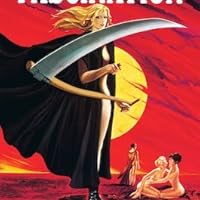
" Là, sur la terrasse, dans la clarté lunaire maintenant plus intense, se tenait une femme vêtue d'un linceul trempé qui ruisselait sur le marbre, faisant une flaque qui s'écoulait lentement sur les marches mouillées. Son attitude et sa mise, les circonstances de notre rencontre, me donnèrent aussitôt à penser, même si elle se mouvait et parlait, qu'elle était morte. Elle était jeune et très belle, mais pâle, de la pâleur éteinte et grise des cadavres. " Extrait du journal de Rupert Sent Leger, cette scène - dans la pure tradition du genre - donne bien le ton de cet admirable roman gothique où s'entrelacent lettres, billets, fragments de journal intime et notes pour raconter les aventures étranges et inquiétantes d'un jeune homme sans le sou devenu du jour au lendemain châtelain dans les Balkans...
Irish-born Abraham Stoker, known as Bram, of Britain wrote the gothic horror novel Dracula (1897).
The feminist Charlotte Mathilda Blake Thornely Stoker at 15 Marino crescent, then as now called "the crescent," in Fairview, a coastal suburb of Dublin, Ireland, bore this third of seven children. The parents, members of church of Ireland, attended the parish church of Saint John the Baptist, located on Seafield road west in Clontarf with their baptized children.
Stoker, an invalid, started school at the age of seven years in 1854, when he made a complete and astounding recovery. Of this time, Stoker wrote, "I was naturally thoughtful, and the leisure of long illness gave opportunity for many thoughts which were fruitful according to their kind in later years."
After his recovery, he, a normal young man, even excelled as a university athlete at Trinity college, Dublin form 1864 to 1870 and graduated with honors in mathematics. He served as auditor of the college historical society and as president of the university philosophical society with his first paper on "Sensationalism in Fiction and Society."
In 1876, while employed as a civil servant in Dublin, Stoker wrote a non-fiction book (The Duties of Clerks of Petty Sessions in Ireland, published 1879) and theatre reviews for The Dublin Mail, a newspaper partly owned by fellow horror writer J. Sheridan Le Fanu. His interest in theatre led to a lifelong friendship with the English actor Henry Irving. He also wrote stories, and in 1872 "The Crystal Cup" was published by the London Society, followed by "The Chain of Destiny" in four parts in The Shamrock.
In 1878 Stoker married Florence Balcombe, a celebrated beauty whose former suitor was Oscar Wilde. The couple moved to London, where Stoker became business manager (at first as acting-manager) of Irving's Lyceum Theatre, a post he held for 27 years. The collaboration with Irving was very important for Stoker and through him he became involved in London's high society, where he met, among other notables, James McNeil Whistler, and Sir Arthur Conan Doyle. In the course of Irving's tours, Stoker got the chance to travel around the world.
The Stokers had one son, Irving Noel, who was born on December 31, 1879.
People cremated the body of Bram Stoker and placed his ashes placed in a display urn at Golders green crematorium. After death of Irving Noel Stoker in 1961, people added his ashes to that urn. Despite the original plan to keep ashes of his parents together, after death, people scattered ashes of Florence Stoker at the gardens of rest.
This is another book I started reading, as a kid, at somebody else's house and didn't get a chance to finish (long story!). It's taken well over 50 years for me to get around to tying off this "loose end" in my reading experience, but I've finally done so. As my rating indicates, though, the result was underwhelming.
Bram Stoker, of course, owes his world-wide fame to his authorship of Dracula (1898). Given that reputation, the title of this novella (published 11 years later, in 1909), plus its setting in a fictional Balkan country and the actual references to possible vampirism in roughly the second fourth of the book, combine to create the reader expectation that this is another work of vampire fiction. It's no spoiler to say that it's not (and might protect some readers from "false advertising!"), since my shelving decisions telegraph that fact. Part of the relatively low esteem it gets on Goodreads (it has an average rating of 3.07 --and a lot of Goodreaders confuse its scale with Amazon's, where three stars would only mean the book is "okay") may be due to those dashed genre expectations. But that's far from the only cause for low esteem. This is simply nowhere near as accomplished, compelling, and entertaining a read as Dracula is.
Like Dracula, this is structured as an "epistolary" novel; that is, it's made up of letters, journal entries, memoranda, newspaper reports, and legal or other official documents supposedly written by various characters. In contemporary fiction, this is no longer as popular a novel structure as it once was; but even so, it can work well, and did in the author's earlier novel. (The supposed way that all this material was cobbled together as a book is "explained" late in the novella.) Our main setting is the Land of the Blue Mountains, a fictional small country (adult male pop., about 100,000) on the Adriatic coast of the Balkan Pennisula. We begin with a short report, dated in January 1907, in the (fictional) Journal of Occultism, from one of their seasoned correspondents, who with two officers of an Italian ship, running close to the Blue Mountains coast on a moonlit night, briefly saw a mysterious woman clad in a shroud drifting in a coffin-shaped vessel in a coastal bay.
Then, however, we move back to a long section set in England, beginning in about 1892, where we're introduced in detail to the well-to-do Melton family, and particularly to their not so well-to-do distaff cousin, Rupert Saint Leger (b. ca. 1878). He was the son of Patience Melton (d. 1891), who was a couple of decades younger than her two surviving brothers, by her only marriage, to a decorated army officer who died while Rupert was very young. This account is mainly filtered through the jaundiced eyes of Ernest Roger Halbard Melton, grandson of the older of the two brothers, who detests Rupert. (But since he unconsciously reveals himself to be a money-obsessed, mean-spirited snob, we're inclined to think in the opposite way to his!) Rupert ran away to sea at fifteen. We meet him again only in late 1906, when he's summoned back to England for the reading of the will of Patience's other brother Roger, who's just died, and whose fortune was known to be substantial. (As we eventually learn, it was over a million pounds; and he was a behind-the-scenes world political power player, as a lender to several European and Asian governments.) Not many details of Rupert's intervening years are given. But we do learn that he's been an adventurer and soldier of fortune in many exotic parts of the world (with paranormal experiences and encounters with ancient occultism under his belt as well), and has grown into a handsome, seven-foot-tall young man of considerable athletic and military prowess, and sterling character.
Long story short, Uncle Roger, who was quite fond of Patience, interested himself in her son. He never actually met Rupert (they did correspond briefly, since Roger was a trustee of Patience's will); but he kept up with the young man's adventures, and has left him the lion's share of his fortune, provided that Rupert agrees to reside for a year in Castle Vissarion in the Land of the Blue Mountains, the former seat of the country's Voivode. Roger's purchase of this great estate has some mystery elements, and is tied into secretly funding the small country's purchase of arms to resist encroachments by the Ottoman Sultan. (This book was written in the time of the real-life intrigues leading up to the Balkan Wars of 1912-13, and of course World War I --which started in the Balkans-- soon after that, a backdrop that provides a degree of realism.) Rupert agrees. Soon after he moves in, he gets a visit from a beautiful but pale, strange young woman, clad only in a wet shroud and seeking warmth, who has to be invited through the French windows of his bedroom, and who hastens away at cock-crow. (Hmmm.... :-) )
Although the premise here has the possibilities for a quality tale, they're largely unrealized. The author tries to write in a variety of modes; the first half is a Gothic romance of sorts, the second fourth tries to be action-adventure, and the last fourth could be described as political fiction, though not of a very plausible kind. There are also traces of sci-fi, with a submersible naval craft of unexplained lethal combat abilities, bullet-proof garments, and airplanes with silent "radium engines" and a design that doesn't seem to resemble real-life Edwardian aircraft. But none of these are developed in enough detail to really satisfy readers seeking that sort of thing. That the book is plot-driven rather than character-driven isn't a flaw as such; but the characters are largely one-dimensional and shallow. Rupert often comes across as a "Gary Stu" figure (that is, the male equivalent of a "Mary Sue," a character so super-humanly competent and multi-talented as to be unbelievable). Even by pre-modern standards, the insta-love factor is so unrealistic that it undermines the credibility of the romance. Stoker's pacing here is poor (the lead-up is much too long, there are a lot of draggy parts, and the storyline way overstays its welcome), and his prose is often overwrought or overly descriptive. (And that criticism is coming from a reader who likes Poe's and Lovecraft's prose!) Although he's writing in the Romantic tradition, the emotional impact of the situations described tends to be squandered. Hidden identity, a common trope in older fiction (especially in this school) appears here, but again it's not used as effectively as it could have been. Reproducing the dry and tedious formal content of legal and government documents often comes across as... well, dry and tedious. :-) The Turks here are treated as cartoon villains, while the Blue Mountaineers (who are supposed to be clannish, xenophobic and suspicious) take to Rupert with improbable ease. And don't even get me started on the unlikely character of the political and other developments near the end! (I will say that, for the record, the Eastern Orthodox church would never agree to let one of its communicants marry a non-Orthodox person.)
On the (scanty) plus side, this tale has its moments of interest or amusement in places. Ernest's character could be a writing textbook example of how to handle the self-revelation of a totally unlikable and worthless character, who has zero clue that he's unlikable and worthless (think, Screwtape in The Screwtape Letters). :-) Overall, it succeeds as well as it does because of the title character. Though she's not sharply-developed, and though like Britomartis in The Faerie Queen, she delivers an eye-rollingly anti-feminist statement in one place, her character and actions (also like Britomartis) tend to subvert male chauvinist stereotypes. She's gutsy, strong-willed, competent and capable of great self-sacrifice for others. And while I didn't shelve this as an action-heroine read (it's more like one that, as a Goodreads friend of mine would say, "may contain traces of action heroine" :-) ), she does effect a rescue that takes nerve and some athletic ability. (Interestingly, Stoker tells us that Blue Mountaineer women are trained to arms the same as the men are, and can acquit themselves just as well in combat!) So I did give this an "okay" two stars rather than actually disliking it. But I wouldn't encourage any reader to rush out and grab it as a must-read! (Despite the only 196-page length of this edition, I'd also warn readers that these are big pages, because it's a tall book --about a foot high-- and due to that factor and the often turgid prose, it's not really a very quick read.)
Really, really, REALLY bad. The story goes on and on and on and ON until you run out of ons, well past the point where one would rationally resolve it (i.e., where the mystery of The Lady is concluded). Most of the going on relates to Stoker gushing in embarrassing and tedious detail about the perfections of the hero of the story. He's so tall and manly, perfect in his form, which will be described for you over and over! He's so brave! Let me tell you how brave! He has never even known fear! And so smart! And noble! The only parts of the book that are tolerable are those written from the perspective of the hero's pompous cousin, who does not share the otherwise universal love for him. The "mystery" is of the sort that could have been solved in approximately 3 seconds if anyone had thought to ask a simple question or two. And once the drawn-out mystery is resolved, there is chapter upon chapter of unrelated imperialistic fantasy nonsense, and more (oh, so much more) talking about how awesome the hero is. I find that Stoker drags on a bit at the best of times, and this is definitely not Stoker at his best.
This book is only 234 pages long... and that's about a 100 pages too long. Though some parts are interesting and have Stoker's gift for describing the exotic and the eerie, far too much of the novel focuses on the military and political life of Rupert, the hero, who is as flat a piece of tall, dark and English as you can get. The titular lady is more interesting but gets much less stage time, and while there are amusing bits about Rupert's obnoxious cousin, the thirty pages spent on a coronation are only slightly less dull than the thirty pages spent on reading the world's most complicated will. Honestly, as a gothic novel the book kind of fails, but it fails harder at being an adventure-romance, making you realize just how much better DRACULA, which I consider a masterpiece, really is. Only read this book if you're a completist, or like me, derive a kind of modest pleasure from the portrait of early 20th century British imperialism that this book probably renders better than any of its other elements.
A truly dreadful book in so many ways - theatrical, sentimental, nonsensical, militaristic, imperialist, patronising (to women and to the peoples of the Balkans) and often leaden.
Beyond being one for Bram Stoker completists - and the early promise of creepy thrills is nothing but a fraud designed to inveigle the reader of the 1900s into a conservative political tract - why bother?
Two reasons make this worth the read (though only for the dedicated): the psychological insight into the fantasy world of an aging Edwardian male; and an insight into the attitudes behind Edwardian imperialism.
Neither make particularly pleasant reading although the former is harmless enough, simply not engaging us sufficiently to justify publication rather than a private notebook.
But the latter is quite startling and disturbing and makes one realise how much of what is good and true can differ over a hundred years - and how much may change again in another century.
What this book is really about is a conservative Anglo-Irishman's opinion about the Balkan Question and presumably indirectly the Irish Question.
Less developed peasant countries just need a wealthy Anglo-Celt Briton as King, one who can invest in industrialisation and air power and create a reliable ally to check the Germans for the British Empire.
These 'free' nations are to be federated (depressingly like the current European Union) and buttressed by the Church, an obsequious Germanic democracy and strong women who serve their men.
For students of British Imperial culture, there is a lot of great material here on snobbery, white superiority, class, nobility, the role of women and the industrialised arms race of the period.
But the weirdest aspect of the plot is the determinedly creepy (and not in the best sense) plot line that switches us from failed Gothic novel to dull novel (or rather assertion) of politics.
Imagine someone creating a pastiche of Sheridan Le Fanu in order to segue into one of the duller works of the late polemic and bombastic political HG Wells and you are on the right track.
To tell more of what the Lady of the Shroud represents would be a spoiler but do not buy or read this book expecting a sequel to the great 'Dracula' - it is nothing of the kind.
When Stoker is minded to and is not dragged into conventional theatrics, idiotic character development and political tract, he can actually write and the moments when he does, keeps one going.
But it is depressing to think that his imaginative abilities had reached this low by 1909. A book only for social, cultural and literary historians and students of middle aged male frustration.
Este libro de algo más de quinientas páginas es, como su forma indica, un ladrillo. Un buen ladrillo, es verdad, de los macizos sin agujeros que se empleaban a finales del XIX-principios del XX, pero se mire como se mire, un ladrillo es un ladrillo. La historia no está mal, y ésta se puede dividir en dos géneros: la primera mitad netamente gótica, sin aportar mucha novedad pero con algunos pasajes realmente buenos, y la segunda... ¿un quiero y no puedo? ¿Un híbrido infértil entre Indiana Jones y Lawrence de Arabia? No se, quien lo lea que juzgue. Sin duda, lo peor del libro es el ritmo soporífero de la narración, que se hace laaaarrrgaaaaaa como una semana encerrado en una checa. Además, a pesar de estar el libro compuesto por textos de supuestas distintas personas, a base mostrar diarios privados y algunos informes o noticias, parecen todas escritas por la misma persona de insufrible pluma, sin ningún atisbo de individualidad. Quizá lo más curioso sea la visión que muestra Stokes sobre lo que podía suponer una paz general gracias a posibles políticas en los Balcanes, sobre todo al ser publicada en 1909 y pensar en las cositas ocurridas a partir de 1914. En fin, es un libro que bueno, pues es lento pero tampoco está de más leer, aunque hay cosas mucho más seductoras en cualquier librería.
It actually very well, but only up until the mystery of the lady of the shroud was revealed. What followed was a litany of how perfect Rupert is, how beautiful the queen is, and so on. And from then on, it's one tedious read.
I had a lot of trouble rating this one. There's a great story here, but it's sandwiched between legal jargon over a will to get the plot started, and a bunch of state craft fluff at the end to wrap things up. But the middle was really cool. But the rest was so slow lol. The love story kind of made me think of Ruth and Boaz, so that was a plus.
J’ai lu Dracula il y a des années, dans ma prime jeunesse, et j’étais tombée raide du personnage, de l’ambiance du roman. Voici mon premier Stoker depuis mes premiers émois vampiriques. Quelle redécouverte ! Sans avoir l’ampleur ni l’étoffe de Dracula, La dame au linceul est un excellent (mais trop court) moment de lecture. Sur le principe du journal intime et de lettres, Bram Stoker nous raconte l’histoire d’un jeune homme de très bonne famille, qui très tôt a dû apprendre à s’en sortir par lui-même. Aventurier et explorateur sans le sou, il hérite d’une immense fortune léguée par son oncle, sous certaines conditions, peu contraignantes, puisqu’elles correspondent à ses aspirations, à son état d’esprit. L’intrigue ne résidera pas donc dans la manière de conserver ou non l’héritage, on comprend très vite que ce legs n’est qu’un prétexte et ne sert qu’à introduire la suite.
Dès le départ l’auteur nous plonge dans une ambiance de mystères, d’inconnu, d’inexplicable. La tante du héros, férue d’occultisme, un paysage envoûtant par son côté sauvage et son exotisme (nous sommes loin de l’Angleterre !), un jeune héros fringant, Rupert, qui est amené à occuper un étrange château dans les Balkans. Son esprit aventureux et noble (rappelons que notre jeune héros est anglais !) va le faire accepter les conditions posées par son oncle afin de jouir définitivement de la totalité de son héritage, et ainsi tisser des liens avec les peuples autochtones. Rupert fera tout pour se rapprocher de la population et prendre sa défense contre l’ennemi turc. C’est dans ce contexte et parallèlement à ses occupations diplomatiques, que Rupert va être confronté à une rencontre décisive. Une dame étrangement belle, vêtue d’un linceul et totalement désespérée, va trouver refuge auprès de Rupert. Il n’en faudra pas plus à ce dernier pour tomber amoureux de cette inquiétante inconnue, surgie de nulle part au beau milieu de la nuit. Entre fascination et superstitions, le jeune héritier vouera vite un amour aveugle à sa belle inconnue, dont il ne sait absolument rien.
The first three quarters of the book was quite gothic, a phantom lady dressed in a shroud, castles, underground crypts, everything that makes for a decent gothic novels. Then it turns into a fairly decent adventure story. Then books7 and 8 occur which only an true fan of Stoker would plow onward.I subtracted a star for this as I'm not sure why it was needed. Look at me slamming a novel that is still in print for more than a hundred years. While reading I couldn't help thinking of Anthony Hope's novels of his mystical kingdom, a fact also noticed by a reviewer in 1910. When the hero was preparing for battle a lot of Edgar Rice Burroughs's Carson of Venus, and the John Carter came to mind.
Less Gothic horror, more Gothic romance, with a dusting of Ruritanian adventure sprinkled on top. Personally, I would have preferred more of Stoker' take on Anthony Hope's Prisoner of Zenda scenario but this was a good story nonetheless.
The romance is atmospheric, creepy and intimate, if at times somewhat overwrought. The adventure is set in the milieu of pre-First World War Balkan politics and I would have enjoyed more of this and a little less of the "Bloofer Lady" wandering about the midnight garden.
Told in the epistolary style that Stoker used for Dracula.
When my friend gave me this book, we expected it to be fairly bad. After all, everyone has heard of 'Dracula', but who has heard of 'The Lady in the Shroud'? I'm glad I decided to give it a shot. It's an unconventional romance novel, set against a Gothic backdrop.
La historia """""""""intrigante""""""""" va (+-) de la página 20 a la 50, el resto es morraña de la de pegarse cabezazos contra la pared preguntándote: ¿por qué he perdido el tiempo en leer eso?
A gothic tale of mystery and adventure, horror and romance, sci-fi and politics.
Unexpectedly coming into a huge inheritance, Rupert Sent Leger finally decides to settle from his life of adventure, moving to an expansive property nestled in the Land of the Blue Mountains, an independent country in the heart of the Balkans.
During the night, Rupert is visited by a mysterious and beautiful lady, one whom he comes to believe is undead. As these nighttime encounters continue, Rupert finds himself enamoured with her, and can think of little else.
As tensions escalate throughout the land and Rupert comes closer to solving the mystery that entrances his heart, we witness the birth of a new power in the political landscape of Europe.
'The Lady of the Shroud' is a gothic novel by Bram Stoker, who returns somewhat to the theme of vampirism following his masterpiece, 'Dracula'. Written in the style of journals, letters, articles and legal documents, we follow the fate and fortunes of central character Rupert. The opening chapter concerns a last will and testament and the expectations of inheritance and attitudes within a British upper class family, forming what is truly an extensive prologue to the main events.
The core narrative kicks in with Rupert's emigration to the Land of the Blue Mountains. Stoker captures the beauty of this fictional land, a civilisation hidden within a wilderness, the isolation of its natives, and the architecture of Rupert's new home. The novel's strengths are undoubtedly the scenes of supernatural suspense and the blossoming romance between Rupert and the mysterious lady who visits his bedroom in the depths of the night, dressed in only her shroud, a beauty who appears to have risen from the dead. The gothic imagery of these scenes is sublime, Rupert becoming enraptured by this strange and almost ethereal woman, the connotations of unease and seduction bubbling beneath the surface.
The novel was written against the backdrop of European Imperialism, when the great powers of Europe sought territories and colonies in the expansion of their empires. The fictional Land of the Blue Mountains is independent and a much sought after region. We witness them defend against the prelude to an invasion by Turkey, which was then part of the Ottoman Empire. Whether Stoker's portrayal of the invaders as the villains was a criticism of imperialism in general is open to interpretation. While, at the time, people held much pride in their empires, over a century later and following two world wars, our modern perspective differs; we can empathise all too well with the perils faced by this small and independent nation having to defend itself against those in pursuit of power.
It is worth noting that the novel was written and published several years before the Balkan Wars and subsequently the First World War took place. What is perhaps less apparent on reading during the 21st century is that the novel also includes elements that may have been deemed science-fiction on its publication in 1909. At this time, there were no air forces, though several countries were on the cusp of recognising the potential of military aircraft. Rupert's foresight to build a 'navy of the air' may have appeared fantastical to many readers. The First World War (1914-18) saw the first uses of such aircraft in warfare. In Great Britain, there were air arms to both the Army and Navy during this period, with the separate Air Force formed towards the end of the war - the first independent air force on the planet.
Despite its place in history and being ahead of its time with certain concepts, the latter half of the novel is pretty dry and loses its gothic atmosphere. With the mystery, adventure and suspense resolved, it reads more like an extended epilogue. Perhaps Stoker was interpreting tensions across Europe while writing this novel and, thus, it became a different story. Much of this was excised from many subsequent publications of the novel, perhaps in an effort to retain its promise as a story of gothic horror and romance.
It is unfortunate too, and perhaps somewhat unfair, that we struggle to judge 'The Lady of the Shroud' solely on its own merits, as it will forever be compared to Stoker's masterpiece, perhaps more so than any of this other work due to its re-visitation to the vampire theme. It isn't in the same league as the gothic beauty of 'Dracula' (yet no doubt Stoker had no intentions of this being another 'Dracula', instead with a female villain). With the horror and romance becoming somewhat overshadowed by the politics, there are moments when its feels as if you have been reading two different books. Had the novel consisted of chapters two through to five, it would have instead been a vastly superior novella of gothic horror and romance, all the more enjoyable for that alone.
Dopo un prologo emozionante e denso di mistero in cui appare sin da subito questa strana figura che dà il titolo al romanzo, la scena si sposta in Inghilterra, dove siamo alle prese con una serie di lettere, diari e testamenti di una nobile famiglia. Ebbene sì, come il suo famoso Dracula, Stoker torna a utilizzare di nuovo questa scelta: lettere, frammenti, diari, testamenti, stralci di giornali, tanti piccoli puzzle che vanno pian piano a combaciare donando vita a una storia intrisa di misteri, amore, avventura e politica.
Alla morte del nobile Roger Melton figli e nipoti aspettano con trepidazione di scoprire quali somme e lasciti spettino loro di diritto. Con sorpresa e anche invidia da parte di un ramo della famiglia – che denota sin da subito tutto lo snobismo e la presunzione di una certa parte dell’aristocrazia inglese – la somma più grande viene donata in eredità al giovane Rupert St. Leger, figlio dell’amata sorella di suo zio. Per entrarne in possesso, però, dovrà vivere per un anno nel castello di Vissarion, nella Terra delle Montagne Azzurre sulla costa della Dalmazia.
È qui in queste terre apparentemente lontane dalla civiltà, in un castello simile a una fortezza, che aleggia anche una misteriosa leggenda: una dama vestita solo con un sudario bianco, pallida come la luna, e con due occhi scuri e profondi ma in cui sembrano brillare delle stelle, si aggira inquieta. E lei giunge fino al castello, bussa alla finestra della terrazza di Rupert, cercando aiuto, calore. Una dama bellissima ma simile a una di quelle creature della notte di cui tanto parlano le leggende. Ma chi è costei? E perché Rupert ne prova subito una tale attrazione?
A metà della storia, infatti, il mistero che avvolge queste pagine e che mi aveva fino a quel momento sedotto svanisce e si scopre la verità su questa Dama del sudario, così come inizia a chiamarla il protagonista, e qualcosa si perde. Da romanzo gotico si sposta più verso una sorta di libro d’amore e d’avventura, con qualche sfumatura politica.
Questo non significa che sia una lettura non piacevole, anzi, lo stile di Stoker rimane sempre molto affascinante, denso di descrizioni, e con personaggi sapientemente caratterizzati, eppure mi aspettavo qualcosa di totalmente diverso, e forse è anche questa aspettativa che mi ha portata a non riuscire ad amarlo del tutto.
Tuttavia ci sono diversi aspetti che ho molto apprezzato.
Sicuramente ho amato le atmosfere perfettamente gotiche della prima parte – superati i capitoli del testamento – nel quale viene descritto il Castello, quella terra così lontana dall’Inghilterra e così diversa, aspra e dura. Un luogo abitato da montanari chiusi e costantemente armati, pronti a difendere tutto ciò in cui credono e il loro territorio così radicato nella loro essenza, nelle loro anime. Un mondo apparentemente barbaro che si contrappone a quello inglese considerato più civilizzato, ma che in verità quasi ti ritrovi a disprezzare visti certi atteggiamenti di supponenza e presuntuosità.
Queste descrizioni oscure, ammalianti, tetre, avvolgono anche tutto ciò che concerne la misteriosa figura della Dama. Ammantata con un semplice sudario bianco – successivamente un simbolo ed elemento fondamentale in diverse scene del romanzo – che la fa quasi brillare come una luce nella notte; addormentata nella sua bara o in cerca di un riparo. Una fanciulla forte ma allo stesso tempo spaventata. Una dama che non sai se definire soprannaturale o umana. I capitoli su di lei sono i più belli, e qui ho ritrovato la stessa bellezza che avevo percepito e tanto amato in Dracula.
Nella seconda parte del romanzo, come ho detto, si passa a un mix di amore, avventura e politica. Sebbene io l’abbia apprezzata di meno, ci sono anche qui alcuni elementi che mi hanno convinta: come, ad esempio, la bellezza di quel popolo che è disposto a morire pur di salvare la propria terra dagli invasori Turchi. Uomini e donne che lottano anche fino alla morte per quello in cui credono. Sono rimasta affascinata dalla descrizione della cultura del luogo, delle credenze e dei rituali o gesti adottati, ma anche dall’idea che quando gli uomini sono impegnati altrove, siano le donne a continuare a lottare nei confini, per non permettere al nemico di avanzare, di spezzare la loro indipendenza. Le figure femminili, quindi, sono importanti.
È un libro che consiglio, quindi? Sì, ma vi invito a non pensare di ritrovare le stesse atmosfere di Dracula. Non vi aspettate di trovare un romanzo gotico dall’inizio alla fine. C’è molto amore, c’è molta avventura, ma anche una sorta di sfumature politiche. Il mistero che aleggia sulla figura del titolo si svela forse troppo presto, e di prettamente gotico, secondo me, rimane ben poco. È comunque adatto a chi ha voglia di trovare tra queste pagine un amore molto forte, ma anche avventure e conflitti, e scoprire una sorta di cultura diversa in contrapposizione a quella inglese degli inizi del ‘900. Un romanzo piacevole da cui mi aspettavo di più, ma che comunque merita di essere letto, soprattutto per chi vuole conoscere altri lavori di Bram Stoker.
L'écriture est sublime...d'une poésie folle...Bram Stoker signe une histoire d'amour magnifique, certes brève mais suspendue comme un rêve, un instant d'éternité...j'aime sa manière d'écrire, ses mots...
j’ai beaucoup aimé l’aspect mystique du début, mais comme on peut s’y attendre, il y a une explication rationnelle à la fin donc ça enlève un peu son charme, sinon à part ça j’ai adoré!!
This was bad. Really bad. I gave up about half way through as I couldn’t deal with the endless military descriptions and uninteresting plot/characters. Stoker clearly couldn’t decide what the intention of this novel was and it’s clear why it isn’t better known.
Even the eponymous Lady of the title wasn’t enough to interest me to read further. AVOID. Read Dracula instead and don’t bother with this.
Only gave it two stars cause there was way to much extra and useless descriptions, the story got interesting and then seemed to change directions which made me no longer interested. A scary story this was not. It’s rather boring and misleading to be honest. I have one more Bram Stoker book to go in my to read shelf and I really hope this is good. So far the best book of his is Dracula.
Pour le mois d’octobre, j’avais envie de lire un roman "gothique" et je suis tombé sur ce texte de Bram Stoker qui a piqué ma curiosité. Stoker n’est à peu près connu que pour le monument qu’est "Dracula" et le reste de son œuvre est relativement obscure, surtout dans le monde francophone où elle n’est que partiellement traduite. En toute honnêteté, "La Dame au linceul" n’arrive pas à la cheville de "Dracula", mais il est évident que ce n’était pas le but, même si les deux romans présentent des histoires de vampires. Celui-ci est beaucoup plus court et de portée plus intime. La plume de Stoker est agréable et ses talents de conteur ne sont pas négligeables. Ceci étant dit, même si la lecture est somme toute plaisante, ce n’est rien de spécialement original et ça m’a laissé l’impression d’une œuvre un peu mineure. Pas mauvais du tout, mais pas incontournable. Je serais quand même curieux de lire autre chose de cet auteur pour voir s’il n’est réellement que l’homme d’un seul roman (mais quel roman!).
An interesting enough novel and one that winks at the expectations of the reader familiar with Dracula. Stoker once again develops the entire novel solely through letters, journal entries and other official documents, which means that at certain points it forces the reader to wade through the 18th century legalese of British inheritance law. Fortunately, the action moves soon enough into a more amenable style and, after much development, does manage to get to fairly exciting climax. One that is unfortunately wasted on much too prolonged denouement that, while of some interest to the Balkan situation at the time of publishing (1909) – and historically-minded modern readers – adds very little to the novel itself.
La nascita del supereroe: giovane, bello, coraggioso e… inglese, of course!
Prima di iniziare a commentare La Dama del Sudario mi corre l’obbligo di avvisare il lettore di queste note che l’edizione da me letta, pubblicata nel 1996 dagli Editori Riuniti e oggi reperibile sul mercato dell’usato, non è una versione integrale dell’originale. Scorrendo quest’ultima, infatti, mi sono reso conto di come, particolarmente nel primo libro, che narra gli antefatti alla vicenda, ma anche nei seguenti, interi documenti di cui - come si vedrà – è composto il testo siano stati eliminati e alcuni periodi soppressi. La cosa grave a mio avviso sta soprattutto nel fatto che l’editore non abbia ritenuto necessario avvisare l’incauto acquirente della arbitraria riduzione del romanzo. A mio avviso ciò da un lato costituisce una imperdonabile scorrettezza editoriale, dall’altro testimonia come il romanzo sia stato trattato, da un editore non di secondo piano e un tempo portatore di una gloriosa tradizione, alla stregua di un prodotto di consumo da dare in pasto ad un pubblico considerato minore, in cerca solo dell’azione. Consiglio quindi caldamente chi volesse arricchire con questo titolo la sua libreria di acquistare una delle edizioni integrali del romanzo, fortunatamente ancora reperibili. Detto questo, la lettura de La Dama del Sudario arricchisce il mio personale percorso di avvicinamento a Dracula, il cui approdo si preannuncia peraltro lontano nel tempo, di una nuova tappa, che, ancorché monca, mi ha confermato una volta di più come Bram Stoker possa essere sostanzialmente considerato autore di un solo romanzo, il cui successo è andato forse per vari motivi al di là degli specifici meriti letterari. Del resto ciò emerge chiaramente anche ricercando i libri dell’autore irlandese in un qualsiasi negozio on-line: degli oltre sessanta volumi che si possono trovare in vendita, più di cinquanta sono le edizioni di Dracula, che compare nel catalogo di tutte le principali case editrici italiane. Ciò che resta è dedicato a pochi degli altri romanzi di Stoker, e si nota come tra questi La Dama del Sudario abbia avuto una sua relativa fortuna, con almeno tre diverse edizioni nel corso degli ultimi decenni. Forse il motivo dell’interesse editoriale per questo romanzo sta nel fatto che, come si vedrà, richiama, o meglio vorrebbe richiamare – sia nella struttura sia nelle atmosfere – il fratello maggiore. Una delle caratteristiche peculiari di Stoker è che lo si può considerare una sorta di dilettante della scrittura: a partire dal 1876 e per quasi trent’anni, infatti, sua occupazione principale fu essere segretario ed agente teatrale del grande attore Henry Irving; si dedicò a tempo pieno alla letteratura solo negli ultimi anni di vita, dopo la morte di Irving avvenuta nel 1905. La Dama del Sudario appartiene a quest’ultima fase della vita di Stoker, essendo stata pubblicata nel 1909, dodici anni dopo Dracula; avendo letto due dei tre romanzi da lui editi in questo periodo, credo di poter dire che si tratti di una fase di stanca ripetizione di alcuni dei clichés narrativi che tanto successo gli avevano procurato, con un rifugio nel genere - origine tra l’altro di palesi ingenuità narrative – che toglie certamente respiro a queste sue opere, le quali pure non mancano di interesse soprattutto in quanto permettono di delineare chiaramente l’ideologia che le sottende. Pur trattandosi di un’opera volta a creare suspense nel lettore, ritengo di non infrangere alcun tabù accennando brevemente ad alcuni elementi della trama de La Dama del Sudario, in quanto nessun lettore penso possa dubitare, sin dalle prime pagine, dell’inevitabile lieto fine della storia narrata. Come detto Stoker mutua da Dracula la struttura del romanzo, composto da vari documenti: articoli, resoconti, diari e lettere redatti da svariati personaggi. L’intento è manifestamente quello di richiamare l’oggettività dei fatti andando alle loro fonti, in una sorta di estremismo naturalistico nel quale l’autore non interviene, limitando apparentemente il suo ruolo all’assemblaggio di documenti che rendono il racconto polifonico, e pertanto più credibile, soprattutto in relazione all’esotismo e all’alone di mistero che circonda le storie narrate. Purtuttavia qui tale effetto è notevolmente attenuato, in quanto la parte nettamente preponderante delle vicende è narrata avvalendosi del diario del protagonista, Rupert St. Leger, che diviene quindi per gran parte del romanzo l’unico occhio che vede ed interpreta la realtà. Le altre voci intervengono quasi unicamente all’inizio ed alla fine del romanzo, al fine di inquadrare la vicenda con i suoi protagonisti e di concluderla. Il primo dei sei libri in cui è suddiviso il romanzo narra, con una buona dose di pedanteria, peraltro ampiamente stigmatizzata dalle recensioni in rete di lettori smaniosi di entrare nel cuore dell’avventura – e che avrebbe verosimilmente spinto la maggior parte di loro all’abbandono se riportata integralmente - dell’apertura, in uno studio notarile di Londra, del testamento di un ricchissimo mercante morto scapolo, Roger Melton, nonché l’articolazione della sua parentela. Il tutto è riportato in via principale in un resoconto di colui che si ritiene certo di essere l’erede universale della fortuna, lo spocchioso studente Herbert Roger Halbard Melton, nipote di un fratello del defunto. Contro ogni sua aspettativa gli viene destinata solo una piccola somma, mentre il grosso dell’immenso patrimonio di immobili e denaro è lasciato dal mercante all’unico figlio di sua sorella, di molto più giovane di lui ed ormai morta da tempo: il giovane ed aitante Rupert St. Leger. Costui dopo la morte della madre ha iniziato a esplorare il mondo, lanciandosi in temerarie avventure nelle lande più remote e presso i popoli più selvaggi del globo, acquisendo perciò una notevole fama, puntualmente registrata da articoli su riviste specializzate, ed essendo seguito con trepidazione ed ammirazione dallo zio mercante. Il pieno possesso dell’enorme fortuna è però condizionato da una serie di complicate clausole testamentarie, il cui nucleo è costituito dall’obbligo per Rupert di risiedere per almeno un anno presso il castello di Vissarion, proprietà molto amata dallo zio, situata su di un promontorio della costa adriatica, nello stato balcanico delle Montagne Azzurre. Una lunga lettera a lui indirizzata dallo zio spiega le motivazioni di tale bizzarra clausola: lo stato delle Montagne Azzurre, abitato da forti e orgogliosi montanari ed indipendente da oltre un millennio, è minacciato dalla Turchia, ed uno dei signori locali, il Voivoda Vissarion, si è rivolto al ricchissimo mercante inglese per ottenere un prestito, necessario ad armare l’esercito, dando in pegno le sue proprietà, tra cui il castello. Lo zio, nel testamento, desidera che l’indomito nipote aiuti il piccolo stato, anche grazie alle immense risorse di cui potrà disporre, a resistere alla minaccia turca. Naturalmente Rupert accetta e si trasferisce subito nell’enorme e imprendibile castello, facendo venire presso di sé una vecchia zia cui è molto legato. Mentre è impegnato nei primi contatti con il popolo e le autorità locali, al fine di guadagnare la fiducia degli orgogliosi e diffidenti montanari, in una notte piovosa sente bussare alla veranda della sua camera, che dà su un immenso e meraviglioso giardino, e si trova davanti una donna bellissima e pallidissima, vestita solamente di un orribile sudario fradicio di pioggia, che gli chiede di potersi scaldare al fuoco del camino e al primo albeggiare se ne va, misteriosamente come era venuta. Rupert è affascinato dalla bellezza della dama e dal mistero della sua visita, ma sospetta possa trattarsi di un vampiro, vista la mise da morta, il pallore mortale, l’arrivo col buio e la partenza prima dell’alba. La dama torna altre volte, sempre di notte e sempre avvolta nel sudario, ed il romanzo prosegue intrecciando la vicenda privata di Rupert che diviene in breve - nonostante il fitto mistero su chi la dama sia - una storia d’amore tra i due, e la vicenda politica, che vede la consacrazione di Rupert a capo di un improvvisato esercito in grado di respingere i tentativi turchi di destabilizzare il piccolo paese; il lettore scoprirà a poco a poco i fili che uniscono le due vicende e il loro scioglimento (peraltro come detto piuttosto prevedibile). Siamo in pieno genere, quindi, che attinge stancamente anche alle pregresse fortune editoriali dell’autore. Oltre a ciò, come detto, non sono poche le ingenuità, gli stereotipi e le imprecisioni che costellano il romanzo, cui si aggiungono peraltro alcuni errori dell’edizione italiana. Solo per citarne alcuni tra i più evidenti: alcune pagine del diario di Rupert, che dovrebbero a rigori riferire avvenimenti già accaduti, si trasformano in descrizioni in media res; quando Rupert esce di notte, il che accade spesso, c’è immancabilmente la luna, che gli permette di orientarsi nell’oscurità; impara quasi subito a cavarsela bene con il linguaggio dei nativi, ma un centinaio di pagine dopo non è in grado di comprendere alcune loro frasi perché non conosce la lingua; ama appassionatamente la sua Dama ma non chiede mai il suo nome; per armare al meglio il piccolo stato acquista in America Latina nientedimeno che un velocissimo incrociatore, che naturalmente il suo fidato secondo è in grado di trasportare in Adriatico; riesce ad atterrare con un aereo sul coronamento di una torre. Al netto di questi elementi, ovviamente secondari, il macrostereotipo che, visto con gli occhi del lettore contemporaneo, caratterizza il romanzo è la figura stessa del protagonista. Rupert St. Leger è bello, alto e dotato di una forza erculea, ha vissuto in ogni parte selvaggia del mondo, andando incontro a incredibili avventure ed acquisendo una vasta esperienza in ogni campo dello scibile; è leale, coraggioso, sensibile, saggio, dotato di un carisma innato. Forse però va dato atto a Bram Stoker di aver creato con lui l’archetipo, o uno degli archetipi, di quel genere di personaggi che nel corso del XX secolo si sarebbero evoluti nel supereroe: di lì a pochi anni sarebbero nati Tarzan e Zorro, quindi Doc Savage e molti altri, sino ad arrivare ai supereroi dei fumetti. Certo Rupert St. Leger non è protagonista di una serie e non possiede superpoteri, ma i tratti fondamentali sono comuni, come pure la funzione ideologica che molti di questi personaggi hanno svolto nella storia della cultura di massa. Rupert infatti è inglese, e a questa identità non può rinunciare neppure se lo volesse, essendogli espressamente vietato dallo zio nel testamento. La Gran Bretagna è, nel mondo de La Dama del Sudario, faro della civiltà ed esportatrice di libertà: ecco come la descrive un dignitario delle Montagne Azzurre presentando Rupert agli scettici montanari: ”il nostro nuovo fratello viene dalla grande nazione che, unica fra tutte, ci ha prestato aiuto nei momenti più disperati: la potente Inghilterra.” L’inglese Rupert porta ai nativi tutto ciò di cui necessitano per combattere efficacemente: i più moderni fucili, cannoni, l’incrociatore, organizzazione militare, moderni sistemi di comunicazione; è lui che li guida alla vittoria, perché la sua paternalistica ammirazione per il loro coraggio ed orgoglio non è evidentemente sufficiente per battere il perfido turco. Non diviene uno di loro, quindi, ma in qualche modo li fa diventare come lui. Il romanzo può quindi essere considerato una delle prime narrazioni letterarie di nation building da parte non direttamente di una potenza straniera, ma di uno dei suoi figli più nobili: viene spontaneo commentare che ciò che oltre cento anni fa era uno dei compiti della nascente letteratura popolare - costruire lo schermo ideologico dietro cui nascondere le reali motivazioni del colonialismo e delle guerre – oggi è affidato direttamente ad un giornalismo sempre più asservito al potere che lo stipendia. La presenza, in un romanzo ambientato nel 1907, di prodotti tecnologici quali un modernissimo incrociatore a turbina e un aereo ne fa anche un rappresentante del romanzo scientifico, lungo un percorso letterario di matrice schiettamente positivista che affonda ovviamente le sue radici in scrittori come Jules Verne. Molto interessante e rivelatore è a mio avviso anche il ruolo che Stoker assegna nel romanzo ai personaggi femminili, che essenzialmente sono due: l’anziana zia di Rupert, Janet, e ovviamente la coprotagonista. Zia Janet non è una donna qualunque: è infatti una grande esperta di occultismo ed è dotata della seconda vista, che le permette di presagire gli avvenimenti. Percepisce quindi i misteri e i pericoli cui sta andando incontro Rupert, ma le sue uniche azioni concrete sono, da vera zia, sgridare il nipote per il disordine e rassettargli la camera. Più complessa ed articolata è la figura di Teuta, la Dama del Sudario. Pur non scevra di particolari stereotipati rimarcati ad ogni sua apparizione, quali gli occhi che riflettono le stelle e il candore latteo della pelle, è tuttavia una donna decisa e coraggiosa, che si sottopone a terribili (e improbabili) sofferenze per il bene della nazione, gestendo di fatto comme il faut il suo rapporto con Rupert, sino a quello che – pur al riparo del castigatissimo linguaggio di uno scrittore vittoriano - sembra essere la piena condivisione di un rapporto prematrimoniale. Suona quindi parecchio dissonante, quasi fosse il tentativo di Stoker di rimettere le cose al loro posto rispetto al ruolo che la donna deve ricoprire in società, che il novello sposo si lasci andare, subito dopo la cerimonia nuziale (non temano i miei pochi lettori, il matrimonio tra i due non è l’atto finale del romanzo), ad una affermazione di questo tenore: ”mentre avanzavamo insieme lungo il sentiero che attraversava il bosco adeguò il suo passo al mio, proprio come una moglie deve fare”. Leggendo i romanzi di Bram Stoker, ormai ne sono certo, non c’è da aspettarsi capolavori letterari: attendendo di essere eventualmente smentito dalla sua lettura mi sono convinto che anche Dracula abbia assunto il ruolo che ha nell’immaginario collettivo per elementi e fattori che sono andati molto al di là delle capacità e delle esplicite intenzioni dell’autore, che nel resto della sua opera si è rivelato per quello che è: un dilettante della letteratura, con un occhio attento al genere commercialmente più redditizio in un periodo di grande espansione dell’editoria. Tuttavia, come sempre la letteratura è specchio di un’epoca, e grattando anche leggermente la superficie di questo romanzo di genere che oggi ci appare a tratti di una disarmante ingenuità vi si ritrovano un metodo ed una ideologia che avrebbero fatto scuola nella cultura popolare destinata ad instillare nelle masse buoni sentimenti, amor patrio e la certezza di essere sempre dalla parte giusta della storia. Pur risentendo dell’impellenza di ripetere il successo di Dracula, non si tratta del romanzo peggiore di Stoker, essendo sicuramente di qualità nettamente superiore alla tristezza assoluta de La tana del verme bianco che sarebbe seguito di lì a poco. A chi volesse affrontarlo consiglio comunque ancora di procurarsi una edizione diversa da questa, malamente amputata all’insaputa del lettore.
Tas kas knygos anotacijoje parašė: "klasikinė šiurpą kelianti istorija apie vampyrės ir mirtingoje meilė", neskaitė šios knygos. Istorija nei šiurpą kelianti, nei turinti ką bendra su vampyrais. Beje pirmi 80 puslapių nepaprastai nuobodus, o ir pati knyga labiau pasakoja ne meilės istoriją, o naujos valstybės politinius uźkulsius.
Did not actually finish. Possibly the dullest book I’ve ever read. I stopped about 2/3 in, which is when the mystery of the titular Lady gets resolved. No point in continuing.
The last of the actually completed Stoker novels. (I do not count Lair of the White Worm, though this survey of BS's novels has led me to re-evaluate it in a more positive light.)
The story is a combination romance, gothic horror, sci-fi and foreign intrigue story.
There were some odd phrasings in this book, things like "department of redundancy department" that made me wonder about Bram's brain, and as far as I can tell this book was written after the death of Henry Irving (aka "Dracula") when Stoker's tenure at the Lyceum ended (the beginning of his money problems?), and after his first stroke.
I mention this up front because, like LotWW, Stoker's meticulous research is rather...spotty...in this book. The first two-thirds of the book is solid Stoker, with our GIANT (seven feet tall!) hero inheriting a mysterious estate in the (fictional) Blue Mountains region of the Balkans. The mystery is one of foreign intrigue as the nefarious Turks have sent a crew to capture the king and princess (the "voivode" and "voivodin") and Our Hero is being haunted by the mysterious Lady of the Shroud who is totally hot but also may be a vampire.
A daring rescue is achieved via an "aero" which is where the sci-fi comes in. This is where the lack of rigorous research presents a problem to this humble reader as I don't think it's meant to be science-fiction, and "aero" ends up meaning "a flying machine that can do whatever I say it can"—frankly, very un-Stoker-like. At first I thought he had to be talking about a mini-blimp, because it seems to need no space to land, and it can apparently float. (The rescue requires it!) Later its wings are described and its motions of soaring and swooping seem definitely more airplane like.
A minor thing, I suppose, once you get over it.
The major issue, however, is that the story properly ends 2/3rds of the way through and the entire last third of the book is taken up with Stoker's idea of "Balka", a sort of "United States of the Balkans", as our hero nearly singlehandedly creates this nation and turns it into the 1908 equivalent of a burgeoning superpower.
What I parse this all as is "I can see The Great War coming and I really feel this would be a good deterrent to that as well as a way to protect the Balkans from its numerous predatory neighbors." Good on 'em, I say, but there's literally nothing that interferes with any of this. The threat of future conflict, in no way supported by the last third of the book, is not enough to create any suspense.
There's a reason stories end with "And they all lived happily ever after," and that reason is: we don't really care about the details.
An interesting novelty here I will note: The opening text is from the perspective of the worst sort of English fancy pants, from a family of snooty conservatives (and I have literally ZERO idea what "conservative" meant to 1907 "liberal" Bram Stoker) who changed their name from "Milton" to "Melton" so as not be confused with the radical poet.
After ten books, I knew this character couldn't be the hero (unless he underwent a sea change, which doesn't really happen in any of Stoker's novels) but it took me a while to realize he was going to be the (weak, ineffectual, typical of Stoker) foil.
Wow. The story started off with a creepy promise... then gave us a really lengthy genealogy (which really has nothing to do with the book), then moved into one super-long, torturous legal treatise regarding the reading of a will, with some asses involved, thinking to inherit but they didn't. The family adventurer inherited the castle with some conditions, and then we are treated for page after page of more torturous legal documentation, and then (finally) the creepy returns to the story with a vampire woman in a shroud coming to visit the adventurer. All of this was great - but then Bram Stoker pulled a "Mark of the Vampire" on me. Suddenly the story became a whole lot less interesting. The woman and man marry, the woman gets captured, turns out to basically be a princess, they rescue her and her father, and the man so impresses the father that he gives the kingdom to the man. So the wealthy Brit becomes king, who then invests in industrialization and military power to create a British ally against the Germans for the upcoming war (this was published in 1909). Basically this was just a long-winded statement that what the Balkans and other less-industrialized nations need are British kings to set them straight and make them powerful.
Stoker spent page upon endless page with more description than anyone would ever need for everything, and often states and restates points because he insists on writing his stories in an outdated (even at his time) and quaint epistolary style. The best part of the story deals with the Lady of the Shroud. Everything after the marriage and the "Mark of the Vampire" reveal is dull and repetitive and obvious - all said with WAY too much description and long-winded sentences. The shift from horror novel to adventure novel to statement on the wisdom of British imperialism was just too much; it seemed Stoker couldn't decide what kind of novel he wanted to write. But he also made sure we understood that British nobility were a bunch of wankers - he wanted British adventurers to be the heroes of the world.
I love Dracula. I think that was a work of genius. However, that spark existed for Stoker for that one novel. Almost everything else he wrote was inferior drivel. The Jewel of Seven Stars was overly descriptive, but still good until the boring and unclimactic end. OMG. The reading of the will at the beginning. I don't know how I even got past that. It was tedious and convoluted to the extreme. The misogyny of having strong-willed, independent women grovel before their men was hard to take. Several parts toward the end of the novel was just written affirmations of British superiority and appropriate roles for British men and women and the value of British imperialism to bring about world peace.
On the plus side, Stoker did foresee WWI and he foresaw the importance of air superiority - something not a given in 1909, when aeroplanes were still new.
Despite gaining literary immortality as the author of Dracula, Bram Stoker was not a very good writer. Like his famous creation, he sucked.
He opened this genuinely terrible novel by detailing a dry and difficult genealogy, most of which bore no significance to what followed. Not content with that, he followed it up with the reading of a lengthy will, quoted in full with all its tortuous legalise.
Any reader would be forgiven for bailing out right there and then. I certainly should have.
Rupert St. Leger is the beneficiary of his uncle's largesse, acquiring an ancient feudal castle located on the coastal precipice of a fictional Balkan state which Stoker named the Land of the Blue Mountains. Why? Our intrepid hero enlightened us on his first letter back home:
'I can well understand how the country came to be called the “Land of the Blue Mountains,” for it is all mountains, and they are all blue!'
This turned out to be the only sensible thing the big lunk said throughout.
And he really was a big lunk. Early on one of the epistolary contributors casually observed that Rupert was something of 'a big man,' although no-one else seemed to notice. Then about a hundred pages later the man himself just as casually informed us that he stood seven foot tall in his stockinged feet!
Anyway, the castle is haunted by the vision of a lady in white shroud, who may be a ghost, a vampire, 'a living human being or as one with some strange existence in another world, and having only a chance foothold in our own.'
Stoker was able to spin this mystery out beyond the point of endurance because brainless beanpole St. Leger, despite two meetings, didn't even think to ask her what she was, or even bother to ask who she was, although that may have been just as well considering her name, when finally revealed, was Voivodin Teuta of Vissarion, an ugly mouthful of ever there was one.
When finally revealed, the answer to the mystery was every bit as stupifying as I expected. The remainder of the plot, some imperialist claptrap which involved St. Leger taking a hand in local politics and thwarting an invasion by the Turks, was even duller than the romance.
All in all The Lady of the Shroud was by turns sappy, nonsensical, stupid, tedious, and interminable. It was also unfunny, despite Stoker's leaden-footed attempts to extract a few laughs out of a pompous cousin near the end.
And yet it was still slightly better than the same author's The Jewel of Seven Stars.
È un libro che sembra essere stato scritto da due autori differenti pur mantenendo la struttura molto cara a Stoker di epistolario o narrazione in forma di diario, lettere e corrispondenze varie. Nella prima parte c’è davvero tanto mistero è il fascino inquietante che in maniera totalmente amplificata si può trovare in Dracula. Rupert è un giovane ragazzo inglese che riceve una ricchissima eredità da parte di uno stravagante zio giramondo. Questa ricca eredità comprende anche un territorio situato in Dalmazia, chiamato la Terra delle montagne azzurre. In questa piccola nazione Rupert andrà a vivere assieme ad una amata zia, Janet, in un palazzo che si chiama Vissarion. Gli abitanti del luogo sono arcigni, orgogliosi e dal sangue caldo. Sempre in conflitto con gli ottomani da cui si sentono minacciati. In questo luogo però ci sono anche strane apparizioni notturne: una misteriosa dama velata di bianco che appare in mezzo al mare su di una bara che galleggia al largo. Appare e scompare nella bruma spaventando e affascinando chiunque la scorga. Anche Rupert avrà a che fare con questa dama e scoprirà cose molto inquietanti e sorprendenti sul suo conto. Dal momento in cui il lettore capisce chi sia questa donna e quale sia la sua storia, il libro prende una piega del tutto diversa. Tutto assume un contorno più politico. La terra delle montagne azzurre continua ad essere minacciata da ingerenze straniere dunque c’è bisogno di costituire uno stato forte in grado di difendersi ed attaccare se necessario. Rupert assumerà il comando e si farà carico della situazione. A questo punto ci si aspetta che succeda qualcosa ma così non è. Non ci sono più le atmosfere gotiche e tetre della prima parte, non ci sono più rivelazioni interessanti. Si assiste solo alla nascita di una nazione forte ed orgogliosa, seppure molto piccola e che grazie all’ingegno e al carattere dei suoi uomini, può dare del filo da torcere a chiunque tenti di aggredirla. Nel complesso un buon libro che testimonia l’abilità narrativa di Stoker. Se si vuole però leggere qualcosa che ricordi Dracula certamente questa non è la lettura più adatta. In questo senso consiglio sicuramente la raccolta di racconti La vergine di Norimberga. Molto in stile Edgar Allan Poe ma per quanto mi riguarda anche più inquietanti e impressionanti. L’ospite di Dracula e La casa del giudice sono davvero notevoli, soprattutto quest’ultimo
Awhile ago I read the Lair of the white wyrm by stoker and the sexism was SOOO bad it put me off reading anything else by him for ages. But I thought I'd give him one more try as I already had a copy of this book and I really liked the Jewel of the seven stars. The only explanation for this book I can think of is that he got paid by the word. It was so bizarre. It started with a nice haunting little tale of a ghost seen at sea. Then came an incredibly boring section with lawyers as someone's will was discussed and there was all this boring background to a family written by a pretentious idiot. Then the young hero, 7 ft tall, a veteran of all sorts of wild adventures in foreign parts, inherits a billion pounds and becomes virtually royalty in the Balkan country of Blue Mountains. There are some wonderful and lovely scenes when he gets there and is haunted by the Lady in the shroud. Her visits are amazing and the ritual in the old church in the night is lovely and creepy. Then with about 150 pages left her "secret" is revealed and there is nothing interesting or supernatural going on. The rest of the book is an odd mixture of adventure story and boring exposition. They end up making the hero their king after he marries the girl. There is an AWFUL speech she gives when he wants to make her joint queen about how a woman's place is just in the home with her family and how women really aren't the equal of men at all and shouldn't try to be. There are also lots of bizarre scenes with areoplanes which show that Stoker really didn't understand how they worked at all, having them act more like hot air ballons or hellicopters! (hoovering in place).
It's a shame as it would have been a really nice short story if it had just stuck with the spooky parts, but as it was I really didn't enjoy it that much. Don't think I'll bother with any more books by Mr. Stoker!