

What do you think?

صراع الرؤى: نزاع الهويات في السودان
The civil war that has intermittently raged in the Sudan since independence in 1956 is, according to Francis Deng, a conflict of contrasting and seemingly incompatible identities in the Northern and Southern parts of the country. Identity is seen as a function of how people identify themselves and are identified in racial, ethnic, cultural, linguistic, and religious terms. The identity question related to how such concepts determine or influence participation and distribution in the political, economic, social, and cultural life of the country. War of Visions aims at shedding light on the anomalies of the identity conflict. The competing models in the Sudan are the Arab-Islamic mold of the North, representing two-thirds of the country in territory and population, and the remaining Southern third, which is indigenously African in race, ethnicity, culture, and religion, with an educated Christianized elite. But although the North is popularly defined as racially Arab, the people are a hybrid of Arab and African elements, with the African physical characteristics predominating in most tribal groups. This configuration is the result of a historical process that stratified races, cultures, and religions, and fostered a " passing" into the Arab-Islamic mold that discriminated against the African race and cultures. The outcome of this process is a polarization that is based more on myth than on the realities of the situation. The identity crisis has been further complicated by the fact that Northerners want to fashion the country on the basis of their Arab- Islamic identity, while the South is decidedly resistant. Francis Deng presents three alternative approaches to the identitycrisis. First, he argues that by bringing to the surface the realities of the African elements of identity in the North-- thereby revealing characteristics shared by all Sudanese--a new basis for the creation of a common identity could be established that fosters equitable participation and distribution. Second, if the issues that divide prove insurmountable, Deng argues for a framework of diversified coexistence within a loose federal or confederate arrangement. Third, he concludes that partitioning the country along justified borders may be the only remaining option to end the devastating conflict.
524 pages, Paperback
First published August 28, 1995
About the author
Francis Mading Deng
61 books53 followersDr. Francis Mading Deng, J.S.D. (Yale University; LL.M., Yale; B.L., Khartoum University), is a politician and diplomat from South Sudan who served as the newly independent country's first ambassador to the United Nations. From 1992 until 2004 he served as the United Nations' first Special Rapporteur on the Human Rights of Internally Displaced Persons.
He has authored and edited 40 books in the fields of law, conflict resolution, internal displacement, human rights, anthropology, folklore, history and politics and has also written two novels on the theme of the crisis of national identity in the Sudan .
He has authored and edited 40 books in the fields of law, conflict resolution, internal displacement, human rights, anthropology, folklore, history and politics and has also written two novels on the theme of the crisis of national identity in the Sudan .
Ratings & Reviews
Friends & Following
Create a free account to discover what your friends think of this book!
Community Reviews
Displaying 1 - 8 of 8 reviews

June 15, 2024
جاني فضول اعرف الوضع في السودان دام الكل يتكلم عن اسرائيل
الكتاب يقدم دراسة مفصلة جدا لكن شوية بعيد عن العنوان او المنهجية المستخدمة في الكتاب هي المنهج التاريخي تمنيت لو كان المنهج النفسي
او الاجتماعي لكن يعطي صورة عن الموضوع لكن صعب تغيطة تاريخ هل الدولة بسهولة بسبب حجمه الكبير و التنوع الثقافي
لكن نخرج بقضية ان سبب الدمار هو التعصب للهوية اسلامية العربية الدينية و هي اشكالية توجد بكل الدول العربية
تم احتلاله من الاسلام تصبح تتصراع في صراع الهويات للابد
الكتاب يقدم دراسة مفصلة جدا لكن شوية بعيد عن العنوان او المنهجية المستخدمة في الكتاب هي المنهج التاريخي تمنيت لو كان المنهج النفسي
او الاجتماعي لكن يعطي صورة عن الموضوع لكن صعب تغيطة تاريخ هل الدولة بسهولة بسبب حجمه الكبير و التنوع الثقافي
لكن نخرج بقضية ان سبب الدمار هو التعصب للهوية اسلامية العربية الدينية و هي اشكالية توجد بكل الدول العربية
تم احتلاله من الاسلام تصبح تتصراع في صراع الهويات للابد

February 7, 2010
http://nwhyte.livejournal.com/1389269.html
In this 1995 book Deng pulls in evidence from anthropology, cultural studies, and political science in support of his thesis that the Sudan conflict should be understood as a struggle between identities, not all of them Sudanese. I was impressed by his lucidity in explaining the various perspectives; I am more used to the discourse of nationalisms around Europe, and there are rather different nuances in both the Arab world and Africa (which of course intersect in Sudan). Deng, like Alier, was writing long before the 2005 peace agreement but, also like Alier, he expresses doubt that Sudan can be held together.
The most useful section for me was on the district of Abyei, the 'crossroads of the conflict' as Deng puts it, where local dynamics between the Dinka and Arabs (to simplify the identities rather drastically) escalated over the 1970s and 1980s to the point where it became a significant factor in the destabilisation of the whole country. Alier says nothing at all about Abyei, but it is of course subject to a whole separate set of provisions in the 2005 Agreement.
The big mystery remaining for me is why Nimeiri, the Sudanese leader from 1969 to 1985, first allowed the Addis Ababa agreement to happen in 1972 and then reneged on his commitments in 1983. Alier and Deng have very different views on this. Alier sees Nimeiri as guided by popular dissatisfaction with the long war and taking his (Alier's) advice on how to end it; and then later undergoing a personal religious re-commitment to Islamism from which it followed that the powers of the non-Muslim south must be removed. Deng believes that the Addis Ababa agreement was never more than a tactical ploy by Nimeiri, who shared the general northern prejudice against southerners but spotted a way of using the south as a supportive factor in northern politics. On this interpretation, when Nimeiri found that he could cut a deal with the northern Islamists, the southern settlement, to which he was never really committed, became dispensable. Both writers knew Nimeiri well and worked with him at the time; Deng also cites private conversations with him after his overthrow. No doubt the truth lies somewhere in between; Alier of course naturally believes in the importance of his own earlier work, but Deng could perhaps have been more sceptical of Nimeiri's retrospective imagining of his earlier actions.
In this 1995 book Deng pulls in evidence from anthropology, cultural studies, and political science in support of his thesis that the Sudan conflict should be understood as a struggle between identities, not all of them Sudanese. I was impressed by his lucidity in explaining the various perspectives; I am more used to the discourse of nationalisms around Europe, and there are rather different nuances in both the Arab world and Africa (which of course intersect in Sudan). Deng, like Alier, was writing long before the 2005 peace agreement but, also like Alier, he expresses doubt that Sudan can be held together.
The most useful section for me was on the district of Abyei, the 'crossroads of the conflict' as Deng puts it, where local dynamics between the Dinka and Arabs (to simplify the identities rather drastically) escalated over the 1970s and 1980s to the point where it became a significant factor in the destabilisation of the whole country. Alier says nothing at all about Abyei, but it is of course subject to a whole separate set of provisions in the 2005 Agreement.
The big mystery remaining for me is why Nimeiri, the Sudanese leader from 1969 to 1985, first allowed the Addis Ababa agreement to happen in 1972 and then reneged on his commitments in 1983. Alier and Deng have very different views on this. Alier sees Nimeiri as guided by popular dissatisfaction with the long war and taking his (Alier's) advice on how to end it; and then later undergoing a personal religious re-commitment to Islamism from which it followed that the powers of the non-Muslim south must be removed. Deng believes that the Addis Ababa agreement was never more than a tactical ploy by Nimeiri, who shared the general northern prejudice against southerners but spotted a way of using the south as a supportive factor in northern politics. On this interpretation, when Nimeiri found that he could cut a deal with the northern Islamists, the southern settlement, to which he was never really committed, became dispensable. Both writers knew Nimeiri well and worked with him at the time; Deng also cites private conversations with him after his overthrow. No doubt the truth lies somewhere in between; Alier of course naturally believes in the importance of his own earlier work, but Deng could perhaps have been more sceptical of Nimeiri's retrospective imagining of his earlier actions.

June 26, 2024
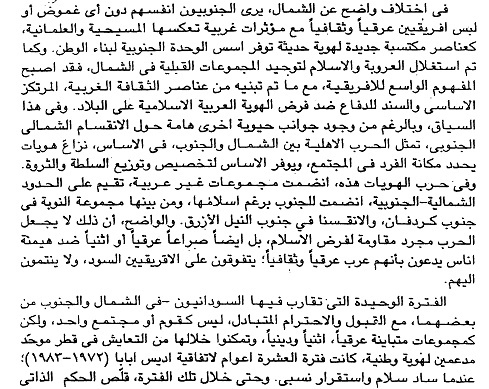
هذه السردية-كما فى الصورة- التى يجادل عنها المؤلف الجنوب سوداني و المسؤول الحكومي السابق والمسؤول الأممي حاليا..
الكتاب ضخم في كمه وكيفه، معلومات وتفاصيل و تحليلات وحتى استطلاعات للرأي، كنت أقول "انا ايه اللي جابني هنا" 😁، كنت أبحث عن جذور مشكلة الحرب الحالية وجدت نفسي في جنوب السودان ومشكلاتها العويصة مع الشمال.
نستطيع بكل أريحية أن نلقى باللائمة على الاحتلال و المؤامرات... إلخ الذى تسبب في حدوث الانفصال.
لكن الحقيقة أعمق من هذا هناك مظالم تاريخية تسببت فيها حكومات ما بعد الاستقلال، نعم الاحتلال بذر البذرة للانفصال لكن أكثر من ساهم في نمائها طريقة التعامل المؤسفة معهم.(١)
لماذا نجح المسلمون الأوائل في دمج الأمم والعرقيات المختلفة في ظل الدولة الإسلامية، فمنهم من بقى على دينه وثقافته، ومنهم من دخل طوعا في الإسلام..
بينما حكومات تتمسح بالإسلام تفشل مع أناس قريبين من عرقيتهم أو يكاد تكون منهم تهيأت الظروف لهم، على الأقل للحفاظ عليهم ضمن دولتهم، وبقاء موارد أراضيهم يستفيد منها الجميع.
كل هذا لا ينفي تعصب المؤلف ضد العرب والمسلمين والإسلام بل تجاوز هذا لتبني موقفا صهيونيا من قضية فلسطين.
الرجل كذلك تجاوز كل ما يتعلق بالاحتلال البريطاني والتنصير(٢) وكل التدخلات الخارجية وعلاقتها بالمشكلة الجنوبية، بل نسب كل فضيلة لبريطانيا والتنصير الذين شكلا بما قدمته هوية حداثية مسيحية /علمانية للجنوب لتواجه الهوية العربية الإسلامية التى يُراد أن تُفرض عليه من الشمال.
بل تطور خطاب المؤلف ليشكك في عروبة الشمال، وبعتبرهم أقصى ما يكون أنهم مستعربين(٣)، والأولى لبقاء السودان متحدة تبني الهوية السودانية /الأفريقية التى ينتمي لها الشمال والجنوب بعيدا عن الهوية العربية الإسلامية التى تفرق.
-----------
(١)في خاتمة الكتاب تراجع ناسبا للاحتلال دعم سياسة انفصال الجنوب ومحاربة العروبة والإسلام فيه!
(٢)مع ميل الكاتب الواضح للانفصال لكن لم يكن يراه حتميا، وكان يجادل عن الوحدة أحيانا لكن في إطار علماني حداثي. هذا كان عام ١٩٩٥ وقت نشر الكتاب لأول بالانجليزية.
(٣)يذكر الكاتب أن مثقفي الشمال يهربون من اختلاف الشكل بين السوداني والعربي في شكله المشهور بكون أن الانتماء العروبة انتماء ثقافي وليس عرقيا، وكما يروى في الحديث "ليست العربية بأحدكم من أب ولا أم، فإنما هي اللسان، فمن تكلم بالعربية فهو عربي"

May 7, 2011
An excellent analysis of identity and the raison d'être of conflict since the departure of English colonial power. He lays a heavy hand on the scale, attributing much of the blame to the Arabist identity rather than the Islamic one.

September 23, 2011
Unilateral point of view for the conflict that ended by the separation of South Sudan. The author focused on the hypothesis of imposition of Islamic and Arabic culture on the people of South by Northerners, Which is not true.
July 6, 2015
كتاب رائع يحتاج أن تقرأه بتأني ، وصراحة لعب الكتاب دور بارز في بلورة الفكر والإحساس الجنوبي لدي
March 27, 2020
والله كتاب فريد من نوعه
This entire review has been hidden because of spoilers.
July 21, 2020
Thank you so much for them
Displaying 1 - 8 of 8 reviews