

What do you think?

Нулевой пациент
Правда ли, что Христофор Колумб завез новую разновидность сифилиса в Европу? Что общего у ребенка супругов Льюисов и одиннадцатого президента США? Связаны ли туберкулез и вампиры? Книга Лидии Канг и Нэйта Педерсена – увлекательная иллюстрированная история эпидемий инфекционных заболеваний: как они появляются, как распространяются, что позволяет их диагностировать, и как мы спешим уничтожить их, прежде чем они уничтожат нас. Чума, оспа, проказа, тиф, бешенство, корь, сибирская язва, гепатит, лихорадка Эбола, ВИЧ, коронавирус – насколько успешно человечество справляется с этими болезнями и есть ли шансы победить их раз и навсегда?
752 pages, Kindle Edition
First published November 9, 2021
About the author
Lydia Kang
31 books2,407 followersI love salt more than chocolate. I'm somewhat small, yet deceptively strong. Sort of like an ant.
I'm a part time doc, full time family member, and if you offer me snacks, I'll be a friend for life.
My adult fiction centers around historical mysteries in New York City, with splashes of forensics, anatomy, apothecary medicine, and chemistry! A BEAUTIFUL POISON takes place in 1918 at the height of the influenza epidemic; THE IMPOSSIBLE GIRL centers around the illegal grave robbing world; and forthcoming in July 2020 is OPIUM AND ABSINTHE, with--you guessed it--opium and absinthe. And possibly vampires!
I have three nonfiction adult titles written with Nate Pederson: QUACKERY: A Short History of the Worst Ways to Cure Everything, 2017; PATIENT ZERO: A Curious History of the World's Worst Diseases; and PSEUDOSCIENCE: An Amusing History of Crackpot Ideas and Why We Love Them.
My most recent YA novel is releasing in October 2025, entitled K-Jane (Quill Tree Books) about a Korean American girl who doesn't feel Korean enough and decides to educate herself on all things K-Pop, K-food, K-drama, and things get pretty out of hand! I am also the author of TOXIC, a space opera about a created, teen girl who's abandoned on a biological spaceship, and the mercenary boy doomed to die on it. I've also written THE NOVEMBER GIRL, set on a remote island on Lake Superior. A girl with violence running through her veins meets a boy running away from an abusive home life.
I'm also the author of the Star Wars novel CATACLYSM, which is part of The High Republic series of books that take place several hundred years before the movies begin.
And as always, there are more books to come!
I'm a part time doc, full time family member, and if you offer me snacks, I'll be a friend for life.
My adult fiction centers around historical mysteries in New York City, with splashes of forensics, anatomy, apothecary medicine, and chemistry! A BEAUTIFUL POISON takes place in 1918 at the height of the influenza epidemic; THE IMPOSSIBLE GIRL centers around the illegal grave robbing world; and forthcoming in July 2020 is OPIUM AND ABSINTHE, with--you guessed it--opium and absinthe. And possibly vampires!
I have three nonfiction adult titles written with Nate Pederson: QUACKERY: A Short History of the Worst Ways to Cure Everything, 2017; PATIENT ZERO: A Curious History of the World's Worst Diseases; and PSEUDOSCIENCE: An Amusing History of Crackpot Ideas and Why We Love Them.
My most recent YA novel is releasing in October 2025, entitled K-Jane (Quill Tree Books) about a Korean American girl who doesn't feel Korean enough and decides to educate herself on all things K-Pop, K-food, K-drama, and things get pretty out of hand! I am also the author of TOXIC, a space opera about a created, teen girl who's abandoned on a biological spaceship, and the mercenary boy doomed to die on it. I've also written THE NOVEMBER GIRL, set on a remote island on Lake Superior. A girl with violence running through her veins meets a boy running away from an abusive home life.
I'm also the author of the Star Wars novel CATACLYSM, which is part of The High Republic series of books that take place several hundred years before the movies begin.
And as always, there are more books to come!
Ratings & Reviews
Friends & Following
Create a free account to discover what your friends think of this book!
Community Reviews
Displaying 1 - 30 of 458 reviews

August 11, 2024
Reading this book reminded me how thankful we should be for vaccines and medical care, and why I get so annoyed when people just shrug off getting vaccines that can protect them and others because they start taking health for granted. I mean, the world is out to get us. We live in the “everyone kills humans” world, and until the last century we were pretty much screwed.
Ergotism, Ebola, the plague, mad cow disease, yellow fever, diphtheria, Covid-19, HIV, typhus, measles, Hansen’s disease (leprosy), syphilis, typhoid fever, 1918 influenza, polio, hepatitis C, cholera, rabies, tuberculosis, smallpox, Legionnaires disease. Zoonoses prove to us that we are a tasty item on the menu for many. For some outbreaks of these diseases we know patient zero, for some we do not, and in the case of smallpox it’s the last victim that is known.
Many things go into epidemics and pandemics. Social and cultural factors, economy and politics interplay; science of vaccine searches and medical advances, germ theory, autopsies, contact tracing, a fair share of quackery - the book gives us interesting bits and pieces on all that. And if after reading this book you still decide to skip the vaccine for any of these potentially lethal conditions — well, it’s not the best decision, lemme tell ya.
The bubonic plague outbreak in 1900 in San Francisco and the horror of yellow fever were very new to me, and I really had no idea how absolutely pants-crappingly terrifying rabies used to be. And a prion disease that kills you by giving you deadly insomnia. And that every European artistic mind seemed to have syphilis.
And yet don’t get me wrong — maybe the world indeed has been trying to kill us ever since we started walking upright feeling all uppity about that, but the mood of the book is far from grim and somber. Kang and Petersen set the mood that is light-hearted and fun and yet not flippant or mocking, which is quite a feat to pull off.
Yet again, just like Quackery: A Brief History of the Worst Ways to Cure Everything by the same authors, the hardcover of this book is pure pleasure. Glossy sexy pages, fun tidbits in sidebars, lovely illustrations — it’s a pleasure to read visually just as much as it is intellectually.
5 stars. I hope Kang and Pedersen team up again for another medicine book as so far they are two for two with this one and Quackery: A Brief History of the Worst Ways to Cure Everything.
——————
Also posted on my blog.
Ergotism, Ebola, the plague, mad cow disease, yellow fever, diphtheria, Covid-19, HIV, typhus, measles, Hansen’s disease (leprosy), syphilis, typhoid fever, 1918 influenza, polio, hepatitis C, cholera, rabies, tuberculosis, smallpox, Legionnaires disease. Zoonoses prove to us that we are a tasty item on the menu for many. For some outbreaks of these diseases we know patient zero, for some we do not, and in the case of smallpox it’s the last victim that is known.
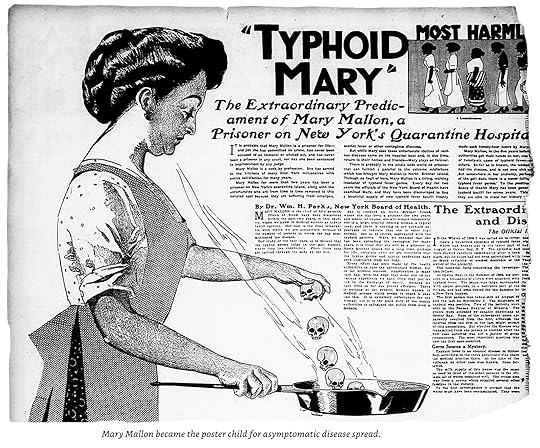
“There is no question that the concept of a patient zero can devolve into a blame-based narrative around who seeded a given epidemic or pandemic, reducing a complex infectious disease chain and ecological evolutionary process to a single person. But that is not remotely the point of this book. We subscribe to the idea of a patient zero in efforts to understand how a single person or people play their part in a complicated dance of host and victim that rarely, though devastatingly, can lead to hundreds of thousands, if not millions, of lives lost. For this book, the idea of a patient zero is not to point a definitive historical finger, but to present the stories of diseases and their origins as examples of the ways in which outbreaks and pandemics are infinitely more complex, unexpected, and often more unexplainable than we realize.”
Many things go into epidemics and pandemics. Social and cultural factors, economy and politics interplay; science of vaccine searches and medical advances, germ theory, autopsies, contact tracing, a fair share of quackery - the book gives us interesting bits and pieces on all that. And if after reading this book you still decide to skip the vaccine for any of these potentially lethal conditions — well, it’s not the best decision, lemme tell ya.
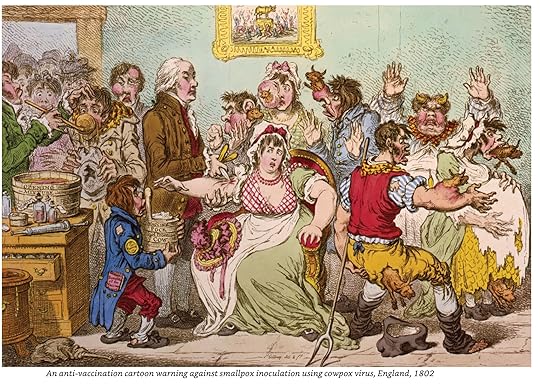
Oh, and as a side note — patient “zero” is a misread of patient “O”. It comes from a misindentified person to whom the blame for the start of HIV epidemic in the US was assigned, since we love pointing fingers — and in this case incorrectly.
The bubonic plague outbreak in 1900 in San Francisco and the horror of yellow fever were very new to me, and I really had no idea how absolutely pants-crappingly terrifying rabies used to be. And a prion disease that kills you by giving you deadly insomnia. And that every European artistic mind seemed to have syphilis.
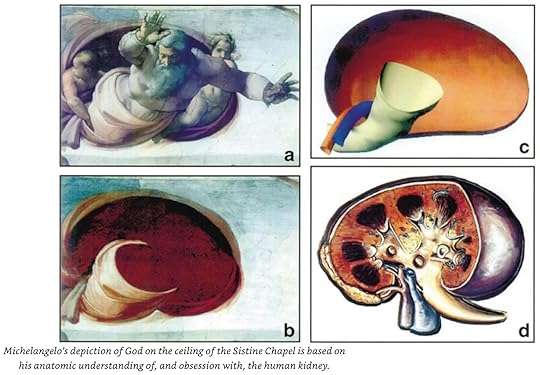
And yet don’t get me wrong — maybe the world indeed has been trying to kill us ever since we started walking upright feeling all uppity about that, but the mood of the book is far from grim and somber. Kang and Petersen set the mood that is light-hearted and fun and yet not flippant or mocking, which is quite a feat to pull off.
Yet again, just like Quackery: A Brief History of the Worst Ways to Cure Everything by the same authors, the hardcover of this book is pure pleasure. Glossy sexy pages, fun tidbits in sidebars, lovely illustrations — it’s a pleasure to read visually just as much as it is intellectually.

5 stars. I hope Kang and Pedersen team up again for another medicine book as so far they are two for two with this one and Quackery: A Brief History of the Worst Ways to Cure Everything.
——————
Also posted on my blog.

January 8, 2024
It may seem odd to describe a book about deadly infectious diseases as ‘bright and cheery,’ but that’s what authors Kang and Pedersen have brought to the project. You can almost envision them smiling behind their laptops as they disclose another fun fact (“The largest bioterrorism attack in US history didn’t occur as part of an international military conflict, but in an attempt by a cult to win a local election.”) I’m sure they enjoyed picking out some of the gruesome pictures sprinkled throughout the pages (including people sneezing, which – gross) and had some giggles with their word choices. I already knew a lot of this stuff, but sometimes it’s fun, rather than challenging yourself with new facts, to just let a well-written summary wash over you while you consume pages as mindlessly as devouring potato chips.
About 70% of the book consists of essays of about a dozen pages each, describing diseases that you can acquire from your fellow commuter, your favorite restaurant, your philandering spouse or your beloved pet. Sprinkled throughout are little sidebars and one-pagers describing all sorts of interesting historical tidbits. (What’s even worse than mad cow disease? A specific variant of it that literally prevents you from falling asleep, until you die from insomnia after up to a year of no sleep. Pass the cyanide pills, please…)
I read all but the section on Covid-19, as the reminders of our “leaders” were so infuriating I gave it a miss. Let’s instead talk about Hansen’s disease, more commonly known as leprosy. You may recall that there’s an island in Hawaii called Molokai, and that for decades this was designated as a ‘leper colony’. The visceral dread of leprosy that led to such harsh measures to its sufferers is puzzling, in retrospect. 95% of humanity has a natural immunity to it, and of the 5% who are susceptible, it’s still very difficult to catch, and (nowadays) easy to cure once it’s diagnosed. I learned in this book that Hansen’s sufferers, upon being adjudicated to Molokai, were declared legally dead before boarding the ship for which there would be no return journey.
This book could put a significant dent in Goodreads’ reputation as a teeming morass of casual-sex hookups. The section on syphilis reminds us that, in addition to the chancres, the pustules, the stench, the blindness and insanity, it also incites jingoism, having been known (depending who you ask) as “French Sickness,” “Neopolitan Sickness,” “Spanish Pox,” “Russian Disease” or, in Turkey, “Christian Disease.” In fact, it apparently spread from the Americas to Europe during Columbus’s maiden (sic) voyage. The historical record indicates that, just as in modern times, musicians and artists spent as much time in the sack as in the studio: Beethoven, Schubert, Schumann, Baudelaire, Dostoevsky, Flaubert, Maupassant, van Gogh, Manet, Goya, Gauguin and Wilde (each trailing a comet of infected rent boys and mistresses, presumably) were all afflicted with this disease. (As were the blameless victims of the Tuskeegee Study, which was harshly and deservedly scathed on p. 200.)
A couple things bugged me. At one point, for example, the authors write of infection rates of “0.35% per 100,000 people,” leading me to wonder whether they meant 0.35 people of 100,000, or 0.35% of people – the statement as written is ambiguous. Also, while I generally cheer their liberal interpretations of history, the statement that Henrietta Lacks “was responsible for saving millions of lives” gets my hackles up. No disrespect to Lacks, who was apparently a good mother before tragically dying of cancer at age 31, but it seems disrespectful to the thousands of researchers who put in millions of hours of hard work to actually make ill-begotten HeLa cells useful to people. Not to mention the many black Americans who suffered far worse breaches of medical ethics, like the afore-mentioned Tuskeegee community. How many of them can you name?
But back to the bioterrorism attack mentioned supra: in 1984, in remote Wasco County of eastern Oregon, a cult of 7000 worshipers of a man named Bahgwan Shree Rajneesh were denied some building permits (perhaps due to their habit of patrolling their grounds with machine-gun mounted jeeps.) So the Rajneeshees decided to get themselves elected to the County Commission so they could legally overturn the decision. But as election day approached, they apparently realized they didn’t have enough votes. Plan B: they brewed up some salmonella and visited the town’s restaurants a few days before the election, dumping the seething mess into the salad dressing of various salad bars, hoping to sicken people to the point where they would not go out and vote. While 750 people did indeed get sick, 45 of whom required hospitalization, they failed to win a single seat on the commission and ultimately traded in their red robes for orange prison jumpsuits. People are weird. This book is fun.
About 70% of the book consists of essays of about a dozen pages each, describing diseases that you can acquire from your fellow commuter, your favorite restaurant, your philandering spouse or your beloved pet. Sprinkled throughout are little sidebars and one-pagers describing all sorts of interesting historical tidbits. (What’s even worse than mad cow disease? A specific variant of it that literally prevents you from falling asleep, until you die from insomnia after up to a year of no sleep. Pass the cyanide pills, please…)
I read all but the section on Covid-19, as the reminders of our “leaders” were so infuriating I gave it a miss. Let’s instead talk about Hansen’s disease, more commonly known as leprosy. You may recall that there’s an island in Hawaii called Molokai, and that for decades this was designated as a ‘leper colony’. The visceral dread of leprosy that led to such harsh measures to its sufferers is puzzling, in retrospect. 95% of humanity has a natural immunity to it, and of the 5% who are susceptible, it’s still very difficult to catch, and (nowadays) easy to cure once it’s diagnosed. I learned in this book that Hansen’s sufferers, upon being adjudicated to Molokai, were declared legally dead before boarding the ship for which there would be no return journey.
This book could put a significant dent in Goodreads’ reputation as a teeming morass of casual-sex hookups. The section on syphilis reminds us that, in addition to the chancres, the pustules, the stench, the blindness and insanity, it also incites jingoism, having been known (depending who you ask) as “French Sickness,” “Neopolitan Sickness,” “Spanish Pox,” “Russian Disease” or, in Turkey, “Christian Disease.” In fact, it apparently spread from the Americas to Europe during Columbus’s maiden (sic) voyage. The historical record indicates that, just as in modern times, musicians and artists spent as much time in the sack as in the studio: Beethoven, Schubert, Schumann, Baudelaire, Dostoevsky, Flaubert, Maupassant, van Gogh, Manet, Goya, Gauguin and Wilde (each trailing a comet of infected rent boys and mistresses, presumably) were all afflicted with this disease. (As were the blameless victims of the Tuskeegee Study, which was harshly and deservedly scathed on p. 200.)
A couple things bugged me. At one point, for example, the authors write of infection rates of “0.35% per 100,000 people,” leading me to wonder whether they meant 0.35 people of 100,000, or 0.35% of people – the statement as written is ambiguous. Also, while I generally cheer their liberal interpretations of history, the statement that Henrietta Lacks “was responsible for saving millions of lives” gets my hackles up. No disrespect to Lacks, who was apparently a good mother before tragically dying of cancer at age 31, but it seems disrespectful to the thousands of researchers who put in millions of hours of hard work to actually make ill-begotten HeLa cells useful to people. Not to mention the many black Americans who suffered far worse breaches of medical ethics, like the afore-mentioned Tuskeegee community. How many of them can you name?
But back to the bioterrorism attack mentioned supra: in 1984, in remote Wasco County of eastern Oregon, a cult of 7000 worshipers of a man named Bahgwan Shree Rajneesh were denied some building permits (perhaps due to their habit of patrolling their grounds with machine-gun mounted jeeps.) So the Rajneeshees decided to get themselves elected to the County Commission so they could legally overturn the decision. But as election day approached, they apparently realized they didn’t have enough votes. Plan B: they brewed up some salmonella and visited the town’s restaurants a few days before the election, dumping the seething mess into the salad dressing of various salad bars, hoping to sicken people to the point where they would not go out and vote. While 750 people did indeed get sick, 45 of whom required hospitalization, they failed to win a single seat on the commission and ultimately traded in their red robes for orange prison jumpsuits. People are weird. This book is fun.

January 2, 2022
I found this book to be extremely fascinating. Tons of interesting information regarding disease, the advancements in medicine, and how mankind has maneuvered pandemics and epidemics throughout history.
Lots of cool things in here. My favorite was how they recreated the specific strain of the flu that caused the 1918 influenza pandemic to understand why it was so deadly.
Lots of cool things in here. My favorite was how they recreated the specific strain of the flu that caused the 1918 influenza pandemic to understand why it was so deadly.

January 24, 2023
Patient zero is actully a misreading of Patient O, as in from "outside of" some place I've now forgotten. Of course, in many, if not most cases, patient zero is unknown. The author is a little glib, I thought, and I nearly stopped listening to the audio after just a few minutes. However, it was okay enough to continue to listen as she explores horrible diseases: cholera, plague, diphtheria, typhoid fever, HIV, rabies, ebola - to name a few. Eventually you think you have at least one, if not several, of them. Though apparently not, because I am clearly alive a few days after finishing.
Side note: as a child growing up in the tropics, I was deathly afraid of rabies. I remember being nipped by the neighbor's dog during play and waiting for symptoms. I didn't want to say anything because the only way to determine if a dog has rabies is to kill it. I already had one dog on my conscience, but that one had bit me unprovoked and with such ferocity that the suspicion of rabies was very real. The answer came quickly enough (negative), so I didn't need the weeks of vaccinations.
Side note: as a child growing up in the tropics, I was deathly afraid of rabies. I remember being nipped by the neighbor's dog during play and waiting for symptoms. I didn't want to say anything because the only way to determine if a dog has rabies is to kill it. I already had one dog on my conscience, but that one had bit me unprovoked and with such ferocity that the suspicion of rabies was very real. The answer came quickly enough (negative), so I didn't need the weeks of vaccinations.

May 30, 2022
In Patient Zero, physician Lydia Kang and historian Nate Pedersen tell the stories of the world's worst diseases. Kang and Pedersen share the symptoms of the diseases as well as stories about the first patients who were diagnosed with the diseases. They provide information about the human battles to fight the diseases. Diseases discussed include Ebola, Covid-19, Bubonic plague, smallpox, polio, HIV, measles, and many more.
I recommend this book highly to others.
I recommend this book highly to others.

March 30, 2023
3/29/23: The way this was so juvenile. It was very repetitive, which is especially noticeable when I went in thinking I would learn something new but anyone who’s taken any undergrad Intro Epi course would already be familiar with literally all of this. Also the chapters were so disjointed so it made the repetition of words and entire phrases extra annoying. And the end of it???? The last four minutes (I listened via audiobook) were literally going through the stethoscope and acetaminophen just telling you what they are and then it ends. So abruptly, like out of nowhere. This book was boring to me with my Masters but I’m sure it’s very well received because a lot of people reading it aren’t as familiar with infectious diseases
ETA 9/14/26: I see the other low reviews are from pro Trump people so I want to make it abundantly clear that I have not, do not, and will never support him and am pro-immunizations/science/healthcare/etc. Apparently I just felt spicy about this book, but truly I remember none of its content so it goes to show that this book was forgettable.
ETA 9/14/26: I see the other low reviews are from pro Trump people so I want to make it abundantly clear that I have not, do not, and will never support him and am pro-immunizations/science/healthcare/etc. Apparently I just felt spicy about this book, but truly I remember none of its content so it goes to show that this book was forgettable.

March 12, 2022
Very interesting to read about the history of so many diseases! The chapters were a good length with just enough detail to understand the illness and social context surrounding it. I enjoyed the little 'aside' pages within each chapter. I think it might have worked better to organize the illnesses chronologically but it didn't take away from my enjoyment of the book.

June 11, 2024
In Patient Zero, Dr. Lydia Kang (an internist) and cowriter Nate Pedersen team up again (after previously publishing Quackery: A Brief History of the Worst Ways to Cure Everything together in 2017) to take a broad survey into various global and historical infectious diseases, some of which can be traced back to a "patient zero" (the first recognized case) and many which cannot. The scope of this book is wide, covering well-known maladies from COVID-19 (this book was published in 2021, in the early years of the pandemic), influenza, smallpox, rabies, and polio to lesser-known conditions (from a modern US-centric perspective) like ergot poisoning, yellow fever, typhoid, syphilis and bubonic plague. Brief chapters are also devoted to "quackery" (a recap of their earlier book) and medical innovations like vaccination, antibiotics and randomized control trials that have ushered in the modern era of medicine. I think this book would best be used as reference material to receive a general overview of various diseases of interest, rather than read/listened through from start to finish as I did, which can get a bit repetitive. However, the writing is engaging, medically accurate, and doesn't ever veer into one of my major history-of-medicine faux pas, where authors negatively judge historical figures by today's morals and standards.
Further reading - plagues, pandemics, epidemiology, and the history of medicine, expounded upon, in roughly chronological order:
The Ghost Map: The Story of London's Most Terrifying Epidemic—and How It Changed Science, Cities, and the Modern World by Steven Johnson (1854 London cholera outbreak)
The American Plague: The Untold Story of Yellow Fever, the Epidemic that Shaped Our History by Molly Caldwell Crosby (1878 Memphis yellow fever outbreak)
Black Death at the Golden Gate: The Race to Save America from the Bubonic Plague by David Randall (1900-1904 San Francisco bubonic plague outbreak)
Terrible Typhoid Mary: A True Story of the Deadliest Cook in America by Susan Campbell Bartoletti (early 1900s New York typhoid outbreaks)
The Great Influenza: The Story of the Deadliest Pandemic in History by John Barry (1918-1919 global influenza pandemic)
The Demon Under the Microscope: From Battlefield Hospitals to Nazi Labs, One Doctor's Heroic Search for the World's First Miracle Drug by Thomas Hager (1930s Germany, Gerhard Domagk and the invention of sulfa drugs)
Beating Back the Devil: On the Front Lines with the Disease Detectives of the Epidemic Intelligence Service by Maryn McKenna (epidemiology)
Rabid: A Cultural History of the World's Most Diabolical Virus by Bill Wasik and Monica Murphy (rabies, generally)
The Phantom Plague: How Tuberculosis Shaped History by Vidya Krishnan (tuberculosis, generally)
The Sick Rose: Disease and the Art of Medical Illustration by Richard Barnett (a fascinating book of historical illustrations of disease, including many infectious diseases)
My stats:
Book 119 for 2024
Book 1722 cumulatively
Further reading - plagues, pandemics, epidemiology, and the history of medicine, expounded upon, in roughly chronological order:
The Ghost Map: The Story of London's Most Terrifying Epidemic—and How It Changed Science, Cities, and the Modern World by Steven Johnson (1854 London cholera outbreak)
The American Plague: The Untold Story of Yellow Fever, the Epidemic that Shaped Our History by Molly Caldwell Crosby (1878 Memphis yellow fever outbreak)
Black Death at the Golden Gate: The Race to Save America from the Bubonic Plague by David Randall (1900-1904 San Francisco bubonic plague outbreak)
Terrible Typhoid Mary: A True Story of the Deadliest Cook in America by Susan Campbell Bartoletti (early 1900s New York typhoid outbreaks)
The Great Influenza: The Story of the Deadliest Pandemic in History by John Barry (1918-1919 global influenza pandemic)
The Demon Under the Microscope: From Battlefield Hospitals to Nazi Labs, One Doctor's Heroic Search for the World's First Miracle Drug by Thomas Hager (1930s Germany, Gerhard Domagk and the invention of sulfa drugs)
Beating Back the Devil: On the Front Lines with the Disease Detectives of the Epidemic Intelligence Service by Maryn McKenna (epidemiology)
Rabid: A Cultural History of the World's Most Diabolical Virus by Bill Wasik and Monica Murphy (rabies, generally)
The Phantom Plague: How Tuberculosis Shaped History by Vidya Krishnan (tuberculosis, generally)
The Sick Rose: Disease and the Art of Medical Illustration by Richard Barnett (a fascinating book of historical illustrations of disease, including many infectious diseases)
My stats:
Book 119 for 2024
Book 1722 cumulatively

December 29, 2021
Interesting, but went off the rails with its political angle on COVID.

July 7, 2024
What’s both fascinating and frightening is how, in the last seventy years, the vast majority of new infectious diseases are zoonotic. Meaning these pathogens were living in other creatures and somehow found a new, happy home in us, wreaking havoc on our way of life along the way. Though it’s hardly done with malicious intent. After all, pathogens are programmed to find the very best way to survive.
The book covers a lot of fascinating topics! So fascinating that every time a chapter ended, I was thinking "do I have this condition or not" or "will I die because of this?!". You will get a chance to read about: Leprosy, Bubonic Plague, Cholera, AIDS, Rabies, Ebola, COVID-19, Polio and so much more. Some chapters have a lot of information and facts that you never had heard before but then there were chapters (like the one for AIDS, in my opinion) that felt rushed. The authors decided to put them in the book but didn't follow the same attention to research and details that they did for other topics.
A lot of extra points because the digital book had a lot of pictures and graphics that helped the reader understand each chapter. I feel most of the time for science topics, you need the visuals to make it easier for the reader.
If there's something good that I learned from this book is that if you ever get any of these diseases and you survived. You are forever immune to it.
These are some of the extra readings that I'm going to consider later from the Sources section:
● Disease: The extraordinary stories of history's deadliest killers by Mary Dobson
● Viruses, Plagues, and History by Michael B.A. Oldstone
● Get Well Soon: History's Worst Plagues and the Heroes Who Fought Them by Jennifer Wright
● The Black Death by Rosemary Horrox
● Medicine in the Crusades: Warfare, Wounds and the Medieval Surgeon by Piers D. Mitchell
● AIDS and Accusation: Haiti and the Geography of Blame by Paul Farmer
● The disease of the soul: Leprosy in medieval literature by Saul Nathaniel Brody
● The Ghost Map: The Story of London's Most Terrifying Epidemic—and How It Changed Science, Cities, and the Modern World by Steven Johnson
● A Short History of Biological Warfare: From Pre-History to the 21st Century by W. Seth Carus
The book covers a lot of fascinating topics! So fascinating that every time a chapter ended, I was thinking "do I have this condition or not" or "will I die because of this?!". You will get a chance to read about: Leprosy, Bubonic Plague, Cholera, AIDS, Rabies, Ebola, COVID-19, Polio and so much more. Some chapters have a lot of information and facts that you never had heard before but then there were chapters (like the one for AIDS, in my opinion) that felt rushed. The authors decided to put them in the book but didn't follow the same attention to research and details that they did for other topics.
A lot of extra points because the digital book had a lot of pictures and graphics that helped the reader understand each chapter. I feel most of the time for science topics, you need the visuals to make it easier for the reader.
If there's something good that I learned from this book is that if you ever get any of these diseases and you survived. You are forever immune to it.
These are some of the extra readings that I'm going to consider later from the Sources section:
● Disease: The extraordinary stories of history's deadliest killers by Mary Dobson
● Viruses, Plagues, and History by Michael B.A. Oldstone
● Get Well Soon: History's Worst Plagues and the Heroes Who Fought Them by Jennifer Wright
● The Black Death by Rosemary Horrox
● Medicine in the Crusades: Warfare, Wounds and the Medieval Surgeon by Piers D. Mitchell
● AIDS and Accusation: Haiti and the Geography of Blame by Paul Farmer
● The disease of the soul: Leprosy in medieval literature by Saul Nathaniel Brody
● The Ghost Map: The Story of London's Most Terrifying Epidemic—and How It Changed Science, Cities, and the Modern World by Steven Johnson
● A Short History of Biological Warfare: From Pre-History to the 21st Century by W. Seth Carus

December 9, 2024
Not at all impressed with the superficiality with which this book was written. Anecdotes about disease patients sometimes fluttered away, never to be mentioned again, or when mentioned again, have tenuous connection to the chapter headings.
Author goes out of her way to disparage President at the outbreak of Covid-19, Donald Trump, for downplaying the severity of the event—-yet fails to mention how “Operation Warp-Speed” created by the same guy produced a novel vaccine for a novel virus within 10 months of the disease appearing in the country—a vaccine we still routinely get and that has returned us to a sense of post-pandemic normalcy after months of being locked down.
Book has seemingly no rhyme or reason to it, with sections about bacterial diseases sandwiched between sections on viruses. Repetitive beyond necessary. Prose, humor & narrative more appropriate for high school-level readers. ( read the kindle version, so organization might appear more cohesive in a physical edition.) I was expecting more analytics, but all I got were some electron microscope pics of various pathogens in action, and some light captioning about the people labeled as “Patient Zero” in this survey of infectious disease. Definitely an “intro course” book
Author goes out of her way to disparage President at the outbreak of Covid-19, Donald Trump, for downplaying the severity of the event—-yet fails to mention how “Operation Warp-Speed” created by the same guy produced a novel vaccine for a novel virus within 10 months of the disease appearing in the country—a vaccine we still routinely get and that has returned us to a sense of post-pandemic normalcy after months of being locked down.
Book has seemingly no rhyme or reason to it, with sections about bacterial diseases sandwiched between sections on viruses. Repetitive beyond necessary. Prose, humor & narrative more appropriate for high school-level readers. ( read the kindle version, so organization might appear more cohesive in a physical edition.) I was expecting more analytics, but all I got were some electron microscope pics of various pathogens in action, and some light captioning about the people labeled as “Patient Zero” in this survey of infectious disease. Definitely an “intro course” book

August 7, 2023
This is an EXCELLENT science book! It’s very balanced interdisciplinary with detailed but not boring history, interesting in depth science, modern info and future directions. Half of the book is some major diseases and the other half are advancements in science relating to disease. Lots of new info for me in the history section! And the info I already knew was a good refresher.
I recommend this book to both scientists and those who do not know science much. It was very fun to read and I never got bored.
I recommend this book to both scientists and those who do not know science much. It was very fun to read and I never got bored.

December 17, 2021
4 stars
A thoroughly enjoyable, visually appealing, & approachable tour through the history of several major infectious diseases affecting humans. I learned new things & found this book very interesting & easy to read.
[What I liked:]
•The pictures, graphics, and informative sidebars help break up the text into digestible chunks & provide appealing visual aids. The layout makes the book easy to read.
•Reading about the 1900 Bubonic Plague outbreak in San Francisco reminded me so much of Covid-19: public health officials’ attempts to prevent the spread being hampered by politicians who denied the existence of a problem because of economic concerns, rampant racism, & intentional spread of disinformation. This book does a great job of addressing environmental, cultural, social, economic, & political factors that influence how infectious diseases are spread & managed.
•This book covers a representative range of infectious diseases, including prions, viruses, parasites, & fungal & bacterial infections. There were ones I’ve read about in detail before like Yersinia Pestis & Ebola, & ones I wasn’t as familiar with like Legionnaires diseases, along with new (to me) information about the 1918 flu pandemic & rabies. I enjoyed the story-telling structure that shows how researchers & health officials go about identifying new pathogens & developing public health policy & treatments.
•In addition to case studies of certain diseases, there are sections covering related topics like germ theory, autopsy, zoonoses, & vaccines. These are woven into the narrative to provide more insight as the topics come up.
[What I didn’t like as much:]
•I actually have no major complaints or critiques of this book!
CW: discussions of racism, sexism, & classism; moderately graphic descriptions of diseases
[I received an ARC ebook copy from NetGalley in exchange for my honest review. Thank you for the book!]
A thoroughly enjoyable, visually appealing, & approachable tour through the history of several major infectious diseases affecting humans. I learned new things & found this book very interesting & easy to read.
[What I liked:]
•The pictures, graphics, and informative sidebars help break up the text into digestible chunks & provide appealing visual aids. The layout makes the book easy to read.
•Reading about the 1900 Bubonic Plague outbreak in San Francisco reminded me so much of Covid-19: public health officials’ attempts to prevent the spread being hampered by politicians who denied the existence of a problem because of economic concerns, rampant racism, & intentional spread of disinformation. This book does a great job of addressing environmental, cultural, social, economic, & political factors that influence how infectious diseases are spread & managed.
•This book covers a representative range of infectious diseases, including prions, viruses, parasites, & fungal & bacterial infections. There were ones I’ve read about in detail before like Yersinia Pestis & Ebola, & ones I wasn’t as familiar with like Legionnaires diseases, along with new (to me) information about the 1918 flu pandemic & rabies. I enjoyed the story-telling structure that shows how researchers & health officials go about identifying new pathogens & developing public health policy & treatments.
•In addition to case studies of certain diseases, there are sections covering related topics like germ theory, autopsy, zoonoses, & vaccines. These are woven into the narrative to provide more insight as the topics come up.
[What I didn’t like as much:]
•I actually have no major complaints or critiques of this book!
CW: discussions of racism, sexism, & classism; moderately graphic descriptions of diseases
[I received an ARC ebook copy from NetGalley in exchange for my honest review. Thank you for the book!]

November 23, 2021
This was quite an interesting read!
How a lot of diseases start, what caused them to spread.
Especially how this book details COVID-19 coming from China, I thought that this was a fascinating read of world history and public health.
Would recommend!
4.1/5
How a lot of diseases start, what caused them to spread.
Especially how this book details COVID-19 coming from China, I thought that this was a fascinating read of world history and public health.
Would recommend!
4.1/5

February 25, 2026
This was interesting, but quite gross. If you ever wondered about the origins and gross facts about illnesses and diseases, this book is for you.
There's a lot of overlap with Get Well Soon: History's Worst Plagues and the Heroes Who Fought Them and I recommend both, but Get Well Soon is more entertaining and less hard science terminology - so may be a better starting point than this one. Still, definitely a worthwhile read... unless you're eating. Don't read this while you're eating.
URK.
There's a lot of overlap with Get Well Soon: History's Worst Plagues and the Heroes Who Fought Them and I recommend both, but Get Well Soon is more entertaining and less hard science terminology - so may be a better starting point than this one. Still, definitely a worthwhile read... unless you're eating. Don't read this while you're eating.
URK.

March 1, 2022
Excellent premise and very interesting subject matter, though the story lacked cohesion - the same topics were circled back to multiple times, there was a random tiny chapter at the very end about acetaminophen and stethoscopes after a chapter that actually tied everything up nicely, and it went a bit long. I also didn't care for the narrator. I did enjoy learning about all the various diseases throughout history and Kang made the information accessible and digestible.
It was also slightly comforting in an albeit morbid way to see that mankind has successfully navigated plagues and pandemics before. As COVID stretches into its 3rd year, this was a good reminder that science (usually) ultimately prevails. I found the chapters on smallpox particularly interesting as I didn't know much about that disease. The discussion about whether or not countries should destroy their smallpox vials used for research was also very interesting and thought-provoking.
It was also slightly comforting in an albeit morbid way to see that mankind has successfully navigated plagues and pandemics before. As COVID stretches into its 3rd year, this was a good reminder that science (usually) ultimately prevails. I found the chapters on smallpox particularly interesting as I didn't know much about that disease. The discussion about whether or not countries should destroy their smallpox vials used for research was also very interesting and thought-provoking.

April 28, 2023
Ich liebe Bücher, die nicht nur Buchstaben auf eine Seite papier bringen. Dieses Buch lebt und mit den Abbildungen, den Hintergrundgeschichten zu den bekanntesten Krankheiten der Welt, bildet man sich nicht nur oberflächig weiter. Die Inhalte ordnen es auch in den derzeitigen Kontext ein. Von Tetanus, Sars-Cov-2 bis HIV sind alle Krankheiten dieser Welt dabei.
Sie ergänzt die Inhalte auch um Errungenschaften wie Antibiotika und Impfungen, Hygienevoraussetzungen.
Dieses Buch sollte jeder zuhause besitzen.
Sie ergänzt die Inhalte auch um Errungenschaften wie Antibiotika und Impfungen, Hygienevoraussetzungen.
Dieses Buch sollte jeder zuhause besitzen.
February 5, 2022
I thought this would be a scientific dive into different diseases and how they originated; I was not interested in the frequent veering into their political, non-scientific opinions.

July 10, 2022
This book was so interesting. I admit there was so much information that I will likely never remember it all. It was neat to learn about different diseases. Where they started & how they were handled. Researchers and scientists are the most patient people. The book is long but fascinating in my opinion. It’s interesting to see how humans navigate pandemics. The mistakes they make, the accomplishments, the political mess ups and how we learn from history and unfortunately sometimes do not.

March 18, 2023
I was really enjoying the facts in this book and would have rated it much higher. However, a two star rating is as high as I could go as the author started preaching her own belief in politics. That really turned me off the whole book. There was more than one instance and with each new one it made the book worse for me. I wanted this book for entertainment purpose and I feel should not have this content in it. I have to say that I will not be reading anything else by this author just for that reason.
April 19, 2022
Misleading title. Chapters are disjointed and not cohesive; there is no sense to the order they are in. And what the heck was the last chapter?? I would have preferred if they had chosen just a few topics to really go in depth.

January 16, 2022
Well written, comprehensive book. Easy to read but does not gloss over important information. Could be appreciated by interested high-schoolers and other non-scientific readers.

December 18, 2025
I'm into public health ethics and infectious disease, so this book was an interesting and fun read for me. It's like an historical who's who of the pathogen world with a lot of interesting information about the diseases themselves, main players in their rise and fall, and the social factors that played a role.
I enjoyed it. Highly recommend for anybody interested in these things. I listened to the audiobook and thought it was well done.
My only minor gripe is that the section on COVID-19 speculated on the political shenanigans going on at the time without even mentioning the International Health Regulations (IHR), the international legal instrument that governs such things. I would have liked some of the statements made to be put in the context of countries' obligations, WHO'S role, and public health emergency of international concern (PHEIC) declaration as stipulated under the IHR (2005).
Also, with an acknowledgement that the treaty itself reflected the desire of countries signatory to it (all 196 of them) to minimise disruptions to international trade, not just to stop the spread of disease, and that this was based on experiences from past outbreaks. That is, in the past when countries did the right thing by the international community and promptly reported news about shared infectious disease threats, the travel restrictions whopped on them were crippling to their economies (which also has huge implications for the welfare of their people) and often impeded response to the very public health threat they were facing. It's a bit of a disincentive to prompt reporting. The IHR recognised this and was intended to address it. This is important contextual information when it comes to global health diplomacy (or lack thereof).
This is not to say I don't think the IHR had and continues to have problems. My key point is that any discussion about international politics in relation to global public health emergency response that does not even mention the IHR is missing a rather large piece of the puzzle. For me, this comes across as either disingenuous or somewhat ill-informed, which is absolutely the opposite of what I would say about the rest of the book!!!
I enjoyed it. Highly recommend for anybody interested in these things. I listened to the audiobook and thought it was well done.
My only minor gripe is that the section on COVID-19 speculated on the political shenanigans going on at the time without even mentioning the International Health Regulations (IHR), the international legal instrument that governs such things. I would have liked some of the statements made to be put in the context of countries' obligations, WHO'S role, and public health emergency of international concern (PHEIC) declaration as stipulated under the IHR (2005).
Also, with an acknowledgement that the treaty itself reflected the desire of countries signatory to it (all 196 of them) to minimise disruptions to international trade, not just to stop the spread of disease, and that this was based on experiences from past outbreaks. That is, in the past when countries did the right thing by the international community and promptly reported news about shared infectious disease threats, the travel restrictions whopped on them were crippling to their economies (which also has huge implications for the welfare of their people) and often impeded response to the very public health threat they were facing. It's a bit of a disincentive to prompt reporting. The IHR recognised this and was intended to address it. This is important contextual information when it comes to global health diplomacy (or lack thereof).
This is not to say I don't think the IHR had and continues to have problems. My key point is that any discussion about international politics in relation to global public health emergency response that does not even mention the IHR is missing a rather large piece of the puzzle. For me, this comes across as either disingenuous or somewhat ill-informed, which is absolutely the opposite of what I would say about the rest of the book!!!

August 12, 2021
I received a copy from Workman Publishing Company through NetGalley in exchange for an honest review.
If you’re interested in reading about epidemics, then this is the book for you! Each short chapter presents a different disease and the epidemic that quickly followed their discoveries. While the true patient zero for any of the diseases are unknown, the patient zeroes presented here are people who are well-known to be early accidental spreaders of the disease they contracted.
I picked up this book because I’m a huge fan of Lydia Kang. While I know this is non-fiction, I thought the concept was interesting, especially since we’re living through a pandemic. Each chapter covers a disease, where it likely originated from or how long it was around before it was first detected, who got it, how it spread, and what damage it caused. The book is also sprinkled with photographs and different facts related to epidemics that is related to the chapter they’re featured in.
I have to say that it was interesting to learn that pandemics are usually handled pretty badly in varying degrees. I knew our species has a history of repeating ourselves, but it hits harder when you realize we’re repeating history yet again in real time. This was a very interesting read, and I’m looking forward to seeing more non-fiction books come from Lydia Kang.
If you’re interested in reading about epidemics, then this is the book for you! Each short chapter presents a different disease and the epidemic that quickly followed their discoveries. While the true patient zero for any of the diseases are unknown, the patient zeroes presented here are people who are well-known to be early accidental spreaders of the disease they contracted.
I picked up this book because I’m a huge fan of Lydia Kang. While I know this is non-fiction, I thought the concept was interesting, especially since we’re living through a pandemic. Each chapter covers a disease, where it likely originated from or how long it was around before it was first detected, who got it, how it spread, and what damage it caused. The book is also sprinkled with photographs and different facts related to epidemics that is related to the chapter they’re featured in.
I have to say that it was interesting to learn that pandemics are usually handled pretty badly in varying degrees. I knew our species has a history of repeating ourselves, but it hits harder when you realize we’re repeating history yet again in real time. This was a very interesting read, and I’m looking forward to seeing more non-fiction books come from Lydia Kang.

March 5, 2022
We know I love this genre - this was a good one, just enough detail on each disease and it’s start, not too much so that you might get bored. It’s written after 2020 so Covid 19 is included in reference which is nice.

November 3, 2024
I love a science and historical reference book written in a conversational style.
Detailed but accessible science-based information about the history of some of the world's worst diseases and the people who caught them and cured them.
Lots of pictures and illustrations round out this great book.
The digital copy has hyperlinks to definitions and examples which help to read this book in any order.
Detailed but accessible science-based information about the history of some of the world's worst diseases and the people who caught them and cured them.
Lots of pictures and illustrations round out this great book.
The digital copy has hyperlinks to definitions and examples which help to read this book in any order.

November 20, 2025
This could get pretty repetitive and not a lot of it is new if you're a public health/medical sciences reader, but I enjoyed it! Its chaotically organized but really intriguing. I did still learn new items about the topics I already had background info on.

June 11, 2023
Highlight!

February 11, 2026
Interesting and well narrated. The order of chapters could have been improved since it seemed to jump around a lot.

March 17, 2026
4.5 this was awesome
Displaying 1 - 30 of 458 reviews