

What do you think?

The Sheik Saga #1
Шейхът
The Sheik is a 1919 book by Edith Maude Hull,[1] an English novelist of the early twentieth century. It is similar to many of her other books, but it was her most popular and was the basis for the film of the same name starring Rudolph Valentino in the title role. The novel opens in an hotel in the Algerian city of Biskra. A dance is being held, hosted by Lady Diana Mayo and her brother. Lady Conway, a minor character in the book, is talking at some length of her disapproval of Diana. It transpires that Diana is planning to go on a month long trip into the desert, taking no-one with her but the Arab guides. Nobody thinks this to be a sensible idea. Lady Conway blames her "scandalous" upbringing. She was raised almost as a boy, since she had no mother or father. Her mother died giving birth to her; her father killed himself as a result. Wikipedia
204 pages, Unknown Binding
First published January 1, 1919
About the author
E.M. Hull
33 books22 followersSee also Edith Maude Hull.
Edith Maude Henderson was born on 16 August 1880 in the Borough of Hampstead, London, England, UK, the daughter of Katie Thorne, of New Brunswick, Canada, and James Henderson, a shipowner from Liverpool.
As a child she travelled widely with her parents, even visiting Algeria, the setting of her novels. In 1899, she married Percy Winstanley Hull (b. 1869) in London and the couple moved to Derbyshire in the early 1900s. They had a daughter Cecil Winstanley Hull, who also wrote a book entitled 'Six Weeks in Algeria' (1930).
She dabbled at writing fiction in the late 1910s while her husband was away serving in World War I. 'The Sheik', her initial effort, was first published in England in 1919 and quickly became an international blockbuster, placing it among the top ten best sellers for both of the years 1921 and 1922 in the magazine 'Publishers Weekly'.
'The Sheik' quickly sold over 1.2 million copies worldwide. Sales further increased when Paramount released a film version with the same title in 1921 and this launched Rudolph Valentino into cinema immortality as the greatest lover of the silent screen.
She also wrote a follow-up to 'The Sheik', 'The Sons of the Sheik' (1925) and she wrote six other novels of the 'desert romance' variety. In 2005 these novels were still classed by some publishers as 'erotic fiction'!
In addition she wrote a travelogue 'Camping in the Sahara' (1926) that included photographs by her daughter Cecil.
She died at age 66, on 11 February 1947 in Hazelwood, in the parish of Duffield, Derbyshire.
Edith Maude Henderson was born on 16 August 1880 in the Borough of Hampstead, London, England, UK, the daughter of Katie Thorne, of New Brunswick, Canada, and James Henderson, a shipowner from Liverpool.
As a child she travelled widely with her parents, even visiting Algeria, the setting of her novels. In 1899, she married Percy Winstanley Hull (b. 1869) in London and the couple moved to Derbyshire in the early 1900s. They had a daughter Cecil Winstanley Hull, who also wrote a book entitled 'Six Weeks in Algeria' (1930).
She dabbled at writing fiction in the late 1910s while her husband was away serving in World War I. 'The Sheik', her initial effort, was first published in England in 1919 and quickly became an international blockbuster, placing it among the top ten best sellers for both of the years 1921 and 1922 in the magazine 'Publishers Weekly'.
'The Sheik' quickly sold over 1.2 million copies worldwide. Sales further increased when Paramount released a film version with the same title in 1921 and this launched Rudolph Valentino into cinema immortality as the greatest lover of the silent screen.
She also wrote a follow-up to 'The Sheik', 'The Sons of the Sheik' (1925) and she wrote six other novels of the 'desert romance' variety. In 2005 these novels were still classed by some publishers as 'erotic fiction'!
In addition she wrote a travelogue 'Camping in the Sahara' (1926) that included photographs by her daughter Cecil.
She died at age 66, on 11 February 1947 in Hazelwood, in the parish of Duffield, Derbyshire.
Ratings & Reviews
Friends & Following
Create a free account to discover what your friends think of this book!
Community Reviews
Displaying 1 - 30 of 313 reviews

December 12, 2014
One of my GR groups was reading Trade Wind and having an in-depth discussion about whether a relationship (spoiler for Trade Wind here) One of our readers mentioned The Sheik in connection with this discussion, and curiosity + free on Gutenberg sucked me in.<-----I'm kind of bad that way.
This book was pretty much our grandmothers' and great-grandmothers' Fifty Shades of Grey. It really has no redeeming qualities; it's rather fascinating and off-putting at the same time. It's sort of like a very old-timey Harlequin romance, except for All. That. Rape. This book is seriously rape fantasy reading, in a 1920s kind of way (which means the bedroom door is firmly closed on anything more than kissing), and unless you can get into that on some level, you're really going to hate this novel. There are also lots of beautiful wild horses that get subdued and broken by the sheik and his men, and the analogy to the relationship of the main characters is not subtle.
In Algeria, the sheik character, Ahmed, kidnaps a beautiful and independent but cold-hearted Englishwoman, Diana Mayo, (a) because he hates the English generally (for reasons disclosed later in the book that made me think, geez, get over it, big guy), and (b) just 'cause he wants her and he can do it. No one has ever seriously told this guy "No" before, and he's an extreme alpha male who wouldn't believe it anyway. There's lots of casual racism in this one, and the N word is used a couple of times by some of the characters.
The sheik's dark eyes mesmerize, the heroine quivers, her bosom heaves, her pride gets lost somewhere along the way, everyone gets all melodramatic, you get the idea. Oh, also: pretty much every guy who sees Diana wants her bad, including the sheik's bestie, a French nobleman, which causes issues later on.
I really can't recommend it but it was interesting reading, in a kind of salacious way, and from a historical point of view. It also led to a film and Rudolph Valentino becoming the sex symbol for that era.
In honor of Rudy:
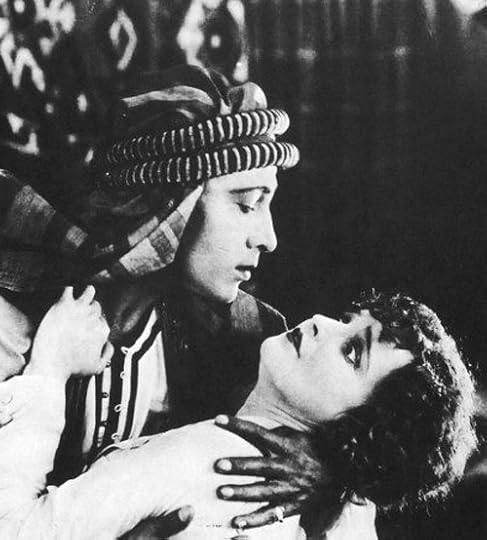
This book was pretty much our grandmothers' and great-grandmothers' Fifty Shades of Grey. It really has no redeeming qualities; it's rather fascinating and off-putting at the same time. It's sort of like a very old-timey Harlequin romance, except for All. That. Rape. This book is seriously rape fantasy reading, in a 1920s kind of way (which means the bedroom door is firmly closed on anything more than kissing), and unless you can get into that on some level, you're really going to hate this novel. There are also lots of beautiful wild horses that get subdued and broken by the sheik and his men, and the analogy to the relationship of the main characters is not subtle.
In Algeria, the sheik character, Ahmed, kidnaps a beautiful and independent but cold-hearted Englishwoman, Diana Mayo, (a) because he hates the English generally (for reasons disclosed later in the book that made me think, geez, get over it, big guy), and (b) just 'cause he wants her and he can do it. No one has ever seriously told this guy "No" before, and he's an extreme alpha male who wouldn't believe it anyway. There's lots of casual racism in this one, and the N word is used a couple of times by some of the characters.
The sheik's dark eyes mesmerize, the heroine quivers, her bosom heaves, her pride gets lost somewhere along the way, everyone gets all melodramatic, you get the idea. Oh, also: pretty much every guy who sees Diana wants her bad, including the sheik's bestie, a French nobleman, which causes issues later on.
I really can't recommend it but it was interesting reading, in a kind of salacious way, and from a historical point of view. It also led to a film and Rudolph Valentino becoming the sex symbol for that era.
In honor of Rudy:

October 12, 2013
1 ½ Melodramatic and Very Disturbing Stars
I don't know where to start with this very disturbing, highly repetitive, and very melodramatic book. Oh, the melodrama! A previous reviewer stated that she kept thinking of a silent movie while reading the reactions and internal dialogue of the heroine. I couldn't agree more! All I kept seeing in my mind's eye was this picture.

The Sheik, written in 1919, both horrified and intrigued me at the same time. I truly HATED the storyline—the racism, animal cruelty, perpetual smoking, and repeated rape of the heroine at the hands of the hero were appalling (the rapes took place behind closed doors). Nonetheless, I couldn't seem to pull myself away from it either. It was akin to watching a train wreck. I wouldn't be surprised if this book was the genesis for the Bodice Ripper, and it screamed Stockholm syndrome and the mental affects of an abusive relationship. Still, I read the book from start to finish and I have no doubt that I will be thinking about it for some time to come.
I don't know where to start with this very disturbing, highly repetitive, and very melodramatic book. Oh, the melodrama! A previous reviewer stated that she kept thinking of a silent movie while reading the reactions and internal dialogue of the heroine. I couldn't agree more! All I kept seeing in my mind's eye was this picture.

The Sheik, written in 1919, both horrified and intrigued me at the same time. I truly HATED the storyline—the racism, animal cruelty, perpetual smoking, and repeated rape of the heroine at the hands of the hero were appalling (the rapes took place behind closed doors). Nonetheless, I couldn't seem to pull myself away from it either. It was akin to watching a train wreck. I wouldn't be surprised if this book was the genesis for the Bodice Ripper, and it screamed Stockholm syndrome and the mental affects of an abusive relationship. Still, I read the book from start to finish and I have no doubt that I will be thinking about it for some time to come.

November 12, 2011
Serious trigger warning for sexual violence, abusive relationship, animal harm.
There are all kinds of observations I could make about this book. Diana's perceptions of Arab women were especially interesting to me. I didn't even mention the godawful racism below, but that could be another post just as long. This post is about rape. Discussing other things in the comments is fine and welcomed, though.
Setting aside the issue of assigning a potentially triggering text, I would totally assign The Sheik in an advanced feminist rhetoric class. (I took one of those once, so that makes me competent to design my own, right folks?) It would be perfect for examining the question of why women write and read romances in which the hero stalks, harasses, insults, kidnaps, and/or rapes the heroine prior to their declaring their mutual love.
The classic answer to this question is that rape fantasies are actually empowering to women because the fictional rapist is actually under the control of the writer, reader, or fantasizer. In the only feminist criticism of the novel I could find on JSTOR, Karen Chow (in a 1999 Feminist Review article) sums up an earlier critique (by Patricia Raub in 1992):
I think The Sheik is about survival.
Diana is trapped by the Sheik. She cannot escape, even through suicide. She has given up hope of being rescued. He has absolute power over her and has systematically taken away everything from her: her bodily autonomy, her ability to dress to please only herself, her privacy, her pride in her independence, her obedience. No one, no matter how kind, who has access to her has the ability or inclination to free her. Even as she attempts to escape she knows:
I read The Sheik as a survival manual for women, a guide to living with your rapist when no one will ever question his right to your body, your attention, your work. How do you do this? You fall in love with him. You notice and cherish his every gentle action (even his omission to rape you sometimes). You explain away his cruelty to yourself. Your goal is to be certain that he loves you back, because if he does then everything was worth it. Diana does all of these things in the second half of the novel, and they work for her.
The "marital rape exemption" (the legal idea that one cannot be raped by one's spouse) was formally abolished in England 72 years after the publication of The Sheik. Twenty years after that, clients of the rape crisis center I volunteer at (in a state which abolished the exemption two years later than England) are still battling against the notion that people have the right to their sexual partner's consent. Films made during that 72-year period have treated the corporal punishment of a wife by her husband as ordinary, sexy, or funny. Before and after 1919 I have found numerous uses of the word "seduction," whether by nineteenth-century feminist reformers or twentieth-century film critics, that display not a shred of interest in whether the seduction was welcomed by both parties or perpetrated by only one.
I have some idea of how bad things are now for women who are sexually, physically, and emotionally abused by their partners. It is their stories that I recognized in The Sheik. But it gives me the horrors to think about what things were like before the rape crisis movement. I would bet anything that a very significant part of what made The Sheik a bestseller was its value as a survival manual. The validation in what would have been for many women an accurate portrayal of their psychological journey. The balancing of anger and hatred against a man who hurts, with love and wanting of the same man who is the entire world and can give what no one else can give. This book says, "Yes. I know what it feels like. It hurts. You can't think clearly about it. But you know, and I know, that that's the way the world is. That's what men are like and that's what women are for. Once you understand that you can redirect your pain so that it's not useless, so that sometimes there will be happiness. And if your happiness is not enough, then you can share Diana's."
-----
I need to give some credit for helping me to process these ideas to Janice Radway's Reading the Romance (1984), which introduced me to both the empowerment theory and the idea that women who lack resources and cultural narratives for escaping unsatisfying relationships can use romance novels to reinforce in themselves the idea that their relationships can be satisfying.
I have refrained from discussing Stockholm Syndrome because I don't know enough psychology to make authoritative statements about it, but I found this essay useful in confirming that Stockholm Syndrome does have something to do with what I'm writing about. (One of the Google ads I'm seeing on that page says "Make Him Addicted To You: Say These 'Secret' Words To Make Him Fall Madly In Love With You.")
There are all kinds of observations I could make about this book. Diana's perceptions of Arab women were especially interesting to me. I didn't even mention the godawful racism below, but that could be another post just as long. This post is about rape. Discussing other things in the comments is fine and welcomed, though.
Setting aside the issue of assigning a potentially triggering text, I would totally assign The Sheik in an advanced feminist rhetoric class. (I took one of those once, so that makes me competent to design my own, right folks?) It would be perfect for examining the question of why women write and read romances in which the hero stalks, harasses, insults, kidnaps, and/or rapes the heroine prior to their declaring their mutual love.
The classic answer to this question is that rape fantasies are actually empowering to women because the fictional rapist is actually under the control of the writer, reader, or fantasizer. In the only feminist criticism of the novel I could find on JSTOR, Karen Chow (in a 1999 Feminist Review article) sums up an earlier critique (by Patricia Raub in 1992):
In hindsight, the initial 'rape' scenes participate in a rape fantasy that is a common trope in romance novels -- the typically stunning, always desirable hero forces the heroine into sex, an event that, while hardly empowering, allows her to lose her inhibitions without taking moral responsibility for doing so; consequently, the heroine is able to express herself sexually.Chow complicates this argument by pointing out that Diana is completely passive throughout, never taking any actions to win the Sheik's love or sexual attention; rather
it is not Diana the character but the woman reader, writer and filmgoer in the material world who is liberated by reading these steamy passages ... Diana may not be active or liberated, but Hull-as-author might be; in giving Diana power over Ahmed at the end of the book ... Hull offers women the chance to identify with Diana's passions and share them vicariously ... In choosing to buy books like The Sheik, through which they could treat themselves to an erotic and emotional fantasy, women readers became active participants in a woman-made market of desire.I think these ideas can be useful, but I don't think that they are adequate to explain The Sheik.
I think The Sheik is about survival.
Diana is trapped by the Sheik. She cannot escape, even through suicide. She has given up hope of being rescued. He has absolute power over her and has systematically taken away everything from her: her bodily autonomy, her ability to dress to please only herself, her privacy, her pride in her independence, her obedience. No one, no matter how kind, who has access to her has the ability or inclination to free her. Even as she attempts to escape she knows:
The effects would remain with her always, nothing would ever be the same again, but the daily dread, the daily contamination would be gone, the helpless tortured feeling, the shame of submission that had filled her with an acute self-loathing that was as intense as her passionate hatred of the man who had forced her to endure his will. The memory of it would live with her for ever. He had made her a vile thing. ... She had been down into the depths and she would carry the scars all her life.Then he captures her again, shooting her horse from under her.
The Sheik leaped to the ground and ran towards her. He caught her wrist and flung her out of his way, and she lay where she had fallen, every nerve in her body quivering. She was beaten and with the extinguishing of her last hope all her courage failed her. She gave way to sheer, overwhelming terror, utterly cowed. Every faculty was suspended, swallowed up in the one dominating force, the dread of his voice and the dread of the touch of his hands.The Sheik questions her about her escape, then pulls her up to sit before him on his horse as they return to his camp. "She made no kind of resistance, a complete apathy seemed to have come over her." This ride is the turning point of the story. Diana has reached the nadir of her captivity, all of her hopes finally crushed.
It was useless to try and struggle against him any more. Her brain was a confused medley of thoughts that she was too tired to unravel, strange, conflicting ideas chasing wildly through her mind. She did not understand them, she did not try. The effort of thinking made her head ache agonisingly. She was conscious of a great unrest, a dull aching in her heart and a terrible depression that was altogether apart from the fear she felt of the Sheik. She gave up trying to think; she was concerned only with trying to keep her balance.It is on this ride that Diana begins to think of herself as in love with the Sheik. First, through a fog of misery and confusion, she begins to think of him with ambivalence instead of hatred.
His nearness had ceased to revolt her; she thought of it with a dull feeling of wonder. She had even a sense of relief at the thought of the strength so close to her. Her eyes rested on his hands, showing brown and muscular under the folds of his white robes. She knew the power of the long, lean fingers that could, when he liked, be gentle enough. Her eyes filled with sudden tears, but she blinked them back before they fell. She wanted desperately to cry.And then, her conflicted emotions and thoughts resolve themselves into love:
Quite suddenly she knew—knew that she loved him, that she had loved him for a long time, even when she thought she hated him and when she had fled from him. She knew now why his face had haunted her in the little oasis at midday—that it was love calling to her subconsciously. All the confusion of mind that had assailed her when they started on the homeward journey, the conflicting thoughts and contrary emotions, were explained. But she knew herself at last and knew the love that filled her, an overwhelming, passionate love that almost frightened her with its immensity and with the sudden hold it had laid upon her.This is how Diana will survive when all hope and possibility have been taken away from her. If the Sheik controls everything about her, the only choice left to her--the only thing that even seems like a choice--is how she can feel in the secrecy of her heart. She can continue as before, with her desires being, exhaustingly, the only unambiguous vote against what the Sheik is doing to her. Or she can align herself with every facet of her environment that supports him. I imagine her as an iron filing struggling to resist a giant magnet, and finally giving in. No wonder it's a relief. No wonder it feels good.
I read The Sheik as a survival manual for women, a guide to living with your rapist when no one will ever question his right to your body, your attention, your work. How do you do this? You fall in love with him. You notice and cherish his every gentle action (even his omission to rape you sometimes). You explain away his cruelty to yourself. Your goal is to be certain that he loves you back, because if he does then everything was worth it. Diana does all of these things in the second half of the novel, and they work for her.
The "marital rape exemption" (the legal idea that one cannot be raped by one's spouse) was formally abolished in England 72 years after the publication of The Sheik. Twenty years after that, clients of the rape crisis center I volunteer at (in a state which abolished the exemption two years later than England) are still battling against the notion that people have the right to their sexual partner's consent. Films made during that 72-year period have treated the corporal punishment of a wife by her husband as ordinary, sexy, or funny. Before and after 1919 I have found numerous uses of the word "seduction," whether by nineteenth-century feminist reformers or twentieth-century film critics, that display not a shred of interest in whether the seduction was welcomed by both parties or perpetrated by only one.
I have some idea of how bad things are now for women who are sexually, physically, and emotionally abused by their partners. It is their stories that I recognized in The Sheik. But it gives me the horrors to think about what things were like before the rape crisis movement. I would bet anything that a very significant part of what made The Sheik a bestseller was its value as a survival manual. The validation in what would have been for many women an accurate portrayal of their psychological journey. The balancing of anger and hatred against a man who hurts, with love and wanting of the same man who is the entire world and can give what no one else can give. This book says, "Yes. I know what it feels like. It hurts. You can't think clearly about it. But you know, and I know, that that's the way the world is. That's what men are like and that's what women are for. Once you understand that you can redirect your pain so that it's not useless, so that sometimes there will be happiness. And if your happiness is not enough, then you can share Diana's."
-----
I need to give some credit for helping me to process these ideas to Janice Radway's Reading the Romance (1984), which introduced me to both the empowerment theory and the idea that women who lack resources and cultural narratives for escaping unsatisfying relationships can use romance novels to reinforce in themselves the idea that their relationships can be satisfying.
I have refrained from discussing Stockholm Syndrome because I don't know enough psychology to make authoritative statements about it, but I found this essay useful in confirming that Stockholm Syndrome does have something to do with what I'm writing about. (One of the Google ads I'm seeing on that page says "Make Him Addicted To You: Say These 'Secret' Words To Make Him Fall Madly In Love With You.")

August 4, 2022
This review is going to be rather choppy as I have so many mixed feelings. When I read a book I try to take into account when it was written rather than use todays mores. The Sheik was written in 1919, WWI has just ended, woman have just gained the right to vote, and many countries were still colonies. This book needs every trigger warning available. Nothing is on the written page its all inferred. The plot of the book was Diana...I HATE YOU! I HATE YOU! I HATE YOU till I Love you and I am nothing without you and I can't live unless I am with you.
The first half of the book is difficult as I can't even call it a romance as it's a repeated rape of a kidnapped woman who is used as a sex slave. The writing is so cruel and has no redeeming factors regarding the Shiek. Diana character is written as a strong independent woman ahead of her time. Who all men desire and has had little love growing up.
Now to the parts I enjoyed. The feelings the book give of the beauty and even the strength and brutality of the desert. The writing is really very good and entertaining. The back story for the Sheik needed to be mixed into the book and not explained at the end. Even then it would be hard to call this book a "romance". I never saw the couple falling in love as it never seems plausible...more like a switch is flipped on with Diana.
Glad I read the book, but I don't think I would ever reread it.
The first half of the book is difficult as I can't even call it a romance as it's a repeated rape of a kidnapped woman who is used as a sex slave. The writing is so cruel and has no redeeming factors regarding the Shiek. Diana character is written as a strong independent woman ahead of her time. Who all men desire and has had little love growing up.
Now to the parts I enjoyed. The feelings the book give of the beauty and even the strength and brutality of the desert. The writing is really very good and entertaining. The back story for the Sheik needed to be mixed into the book and not explained at the end. Even then it would be hard to call this book a "romance". I never saw the couple falling in love as it never seems plausible...more like a switch is flipped on with Diana.
Glad I read the book, but I don't think I would ever reread it.

April 14, 2011
Re-read, and loved it even more the second time!
A total Bodice-Ripper romance classic!
Where to begin?
Well first off this book drew me right in from the beginning to the end!
When I first started it I was expecting it to be hard to get into considering the date/time it was written in by this author.
But not at all!
It was very modern, and very easy to follow as well to connect with all the characters.
So lets get to the characters.
Diana:
What an independent, obstinate, spirited, plain spoken woman.
Raised as boy, with no affection from her guardian brother, no genteel upbringing, she knew little of what affection was and least of all love.
She was a person unto herself and answered only to herself and made her own rules.
So its not a wonder when she is kidnapped by Ahmed her body and mind recoiled and went into shock.
Alas..hate and fear are born.
Until she learns what it is like to surrender and give of herself (in more ways than one)
Ahmed Ben Hassen:
Powerful Sheikh of the desert.
He sees Diana one time in Briska and has to have her!
A man who takes what he wants with no thought to anything but what he wants and needs.
He kidnaps her and forces her into submission..night after night.
Ahmed is a totally arrogant "alpha-male" with a very complex personality and Diana tries to resist and defy him at all times but finds she cannot..and eventually falls for her dark and handsome captor.
Diana then fears he will get bored with her and send her away as others before her.
I was really on the fence with Ahmed at times seeing him threw Diana's eyes, yet at the same time being as captivated myself by this mysterious man.
If your expecting "sizzling love scenes" in this book you wont find it in The Sheik.
What you have instead is a "lights-off" and the rest is left up to your own imagination, which personally I found more fun.
So..was there any "eye-rolling" "head-shaking" on my part?
Well yes, there was one for me:
Diana finally makes her escape after waiting so long for the right moment..and after riding so long she must stop at the next Osis to rest herself and the horse.
Ok..what of 2 things if I were in her shoes would I have thought of if I was making my escape into the hot and dry desert?..water..check..some food..check, dang-it! all she thought of to bring was her cigarettes!
Oh well she needed them to calm herself she thought after all she had been through **eyes roll here**
And sometimes through some of Diana's "meltdowns" (they are quite dramatic at times)
I somehow found the silent film playing in my head LOL!
But all and all this is a story told in a prose that was totally enthralling and gripping!
A real classic Bodice-Ripper romance and the reason I give it a 5 star is because most romantic stories today leave nothing to the imagination, where as this romantic Captor/Captive tale let me do that.
I couldn't put it down and tried to slow down my reading as I didn't want to see the end.
And the end?
Worth the wait! And that's all III give on that.
If you can borrow from your library its worth every moment of your read time!
Luckily for me I found the sequel
and cant wait to find out what happens further in the lives of Diana and her Sheikh!
A total Bodice-Ripper romance classic!
Where to begin?
Well first off this book drew me right in from the beginning to the end!
When I first started it I was expecting it to be hard to get into considering the date/time it was written in by this author.
But not at all!
It was very modern, and very easy to follow as well to connect with all the characters.
So lets get to the characters.
Diana:
What an independent, obstinate, spirited, plain spoken woman.
Raised as boy, with no affection from her guardian brother, no genteel upbringing, she knew little of what affection was and least of all love.
She was a person unto herself and answered only to herself and made her own rules.
So its not a wonder when she is kidnapped by Ahmed her body and mind recoiled and went into shock.
Alas..hate and fear are born.
Until she learns what it is like to surrender and give of herself (in more ways than one)
Ahmed Ben Hassen:
Powerful Sheikh of the desert.
He sees Diana one time in Briska and has to have her!
A man who takes what he wants with no thought to anything but what he wants and needs.
He kidnaps her and forces her into submission..night after night.
Ahmed is a totally arrogant "alpha-male" with a very complex personality and Diana tries to resist and defy him at all times but finds she cannot..and eventually falls for her dark and handsome captor.
Diana then fears he will get bored with her and send her away as others before her.
I was really on the fence with Ahmed at times seeing him threw Diana's eyes, yet at the same time being as captivated myself by this mysterious man.
If your expecting "sizzling love scenes" in this book you wont find it in The Sheik.
What you have instead is a "lights-off" and the rest is left up to your own imagination, which personally I found more fun.
So..was there any "eye-rolling" "head-shaking" on my part?
Well yes, there was one for me:
Diana finally makes her escape after waiting so long for the right moment..and after riding so long she must stop at the next Osis to rest herself and the horse.
Ok..what of 2 things if I were in her shoes would I have thought of if I was making my escape into the hot and dry desert?..water..check..some food..check, dang-it! all she thought of to bring was her cigarettes!
Oh well she needed them to calm herself she thought after all she had been through **eyes roll here**
And sometimes through some of Diana's "meltdowns" (they are quite dramatic at times)
I somehow found the silent film playing in my head LOL!
But all and all this is a story told in a prose that was totally enthralling and gripping!
A real classic Bodice-Ripper romance and the reason I give it a 5 star is because most romantic stories today leave nothing to the imagination, where as this romantic Captor/Captive tale let me do that.
I couldn't put it down and tried to slow down my reading as I didn't want to see the end.
And the end?
Worth the wait! And that's all III give on that.
If you can borrow from your library its worth every moment of your read time!
Luckily for me I found the sequel
and cant wait to find out what happens further in the lives of Diana and her Sheikh!

June 17, 2011
The Sheik by Edith M. Hull, published in 1919, is as influential to the modern romance genre as Austen’s Pride and Prejudice. Perhaps, even more so.
It was a blockbuster of a success, despite its many detractors. While some modern readers may cringe at its depiction of women, sexual roles, and racial attitudes, The Sheik remains a compelling read one hundred years after its publication.
“What I have I keep, until I tire of it–and I have not tired of you yet.”
This year, 2022, is the 50th anniversary of Kathleen E. Woodwiss’ the Flame and the Flower, the first “modern romance novel.” The roots of modern romance go back further than 1972, however.
Although Pride and Prejudice and other works by Jane Austen were critiques of manners and social mores, the love stories were at the heart and center. For that reason, her books are both literature and considered to be the first romances.
But as far as I’m concerned, Jane Austen and all her imitators–Georgette Heyer included–didn’t influence the modern historical genre as The Sheik did.
Oh, I liked the story of Elizabeth Bennett and Fitzwilliam Darcy just fine. I don’t obsess over it as many do. Charlotte Bronte’s tale of Jane Eyre was far more to my liking, anyway. Jane Eyre, however, is more of an ancestor to Gothic romance.
For the kind of romances I enjoy, their roots lie with Edith Maude Hull’s masterpiece, The Sheik. It is the grandmother of the bodice ripper. If not for the closed-door bedroom scenes, this book would have fit right in with the romances penned in the 1970s.
In 1921, the silent film adaptation of the novel starring Agnes Ayres was released. It catapulted Rudolph Valentino’s career into movie stardom. I recall watching the film as a teen and swooning over the fantastic tale.
Decades later, I finally got around to reading the novel.
He had seen her, had wished for her, and had taken her, and once in his power, it had amused him to break her to his hand.
British-born Diana Mayo has it all: fashionable looks, wealth, and a multitude of male admirers. She’s young, thoroughly modern, and fiercely independent. If someone tells her not to do something, she considers it a dare. Filled with boredom, the wild Diana travels to Algeria to seek adventure.
And she finds it in the powerful Sheik Ahmed Ben Hassan, who kidnaps her and whisks her off to his desert oasis.
Between the two will be fierce clashes filled with passion. While Diana is a contemporary-minded woman who demands equality from her peers, she cannot resist the allure of the savage, almost primitive male who seeks to dominate her.
Some historians have noted that during “conservative” eras, the idealized feminine form becomes more “traditional.” Typically, in times of social transformation, she is perceived to be more fluid.
In the 1960’s natural hair, short skirts, and slim figures, a la model Twiggy or Mia Farrow, reigned.
In the 1980s, the style was big hair, full lips, and 36-24-36 figures like Kelly LeBrock and Cindy Crawford.
The 1920s was a post War society with women in politics and the popularization of the motion picture. Ideas of sex, gender, and sexual mores were radically changed from the rigid Victorian/Edwardian and Gilded Age Eras on both sides of the Atlantic. Hair was bobbed, hemlines were raised, and large breasts were out-of-fashion.
The Sheik is a product of its time, with Hassan noting:
But the emotion that this girl’s uncommon beauty and slender boyishness had aroused in him had not diminished during the months she had been living in his camp.
The omniscient narrator constantly refers to Diana’s boyish figure and her as a splendid example of a “garcon manque,” a French term for tomboy. That was the old-fashioned term for girls who “behave” like and hang around boys.
It made for a fascinating sexual dynamic that was only flirted with and never really delved deeply into.
Because The Sheik was such a phenomenal hit, critics could not ignore it, and they were divided in their opinions. Unlike, say, Fifty Shades of Grey, The Sheik cannot be dismissed for lack of quality.
The New York Times labeled the book as “shocking” but written with “a high degree of literary skill.” It was considered “salacious” and “tawdry.”
“What do you expect of a savage? When an Arab sees a woman that he wants he takes her. I only follow the customs of my people.”
If there was contention about this book a hundred years ago when it was released, it’s practically obscene today. This novel is viewed as problematic. It has been accused of promoting part of rape culture and reeks of colonial attitudes.
There may be merit to discussing those arguments, as nothing exists in a vacuum. Nevertheless, I say, “Yes. And?” Fiction demands the freedom to write from any perspective. If it is a story worth telling, the story will be told.
“If he killed me he could not kill my love!”
When released 123 years ago The Sheik was an immediate bestseller. Yet it received no respect from critics. The book was labeled “poisonously salacious” by the Literary Review. It was even banned from some communities.
And it was a huge sensation, launching a subgenre of desert romances, several sequels, film adaptations, and Rudolph Valentino’s career.
The influence of The Sheik on romance is undeniable. For many readers, it still strikes a chord today. Despite Diana’s position as a kidnapping victim, there is a strong theme of female power and independence.
Even so, The Sheik gives a picture of the social order of its time. It captured the contemporary attitudes toward colonialism. Perhaps worse, it portrayed sexual dominance as a means to love.
Maybe I should hate myself for having enjoyed this book so much, but I don't. E. M. Hull’s The Sheik made me feel like a 12-year-old young girl discovering romance. For me, it was a thrilling experience!
It’s pure entertainment, a rush from start to finish. I loved the film; the book was even better.
Without this romance, I don’t know if bodice-rippers or the Harlequin Presents line would have ever existed.
As for the naysayers?
Perhaps it’s good advice not to take fiction so seriously.
The Sheik is unreality. A dark fantasy. An erotic nightmare. Perhaps a little of both.
It was a blockbuster of a success, despite its many detractors. While some modern readers may cringe at its depiction of women, sexual roles, and racial attitudes, The Sheik remains a compelling read one hundred years after its publication.
“What I have I keep, until I tire of it–and I have not tired of you yet.”
This year, 2022, is the 50th anniversary of Kathleen E. Woodwiss’ the Flame and the Flower, the first “modern romance novel.” The roots of modern romance go back further than 1972, however.
Although Pride and Prejudice and other works by Jane Austen were critiques of manners and social mores, the love stories were at the heart and center. For that reason, her books are both literature and considered to be the first romances.
But as far as I’m concerned, Jane Austen and all her imitators–Georgette Heyer included–didn’t influence the modern historical genre as The Sheik did.
Oh, I liked the story of Elizabeth Bennett and Fitzwilliam Darcy just fine. I don’t obsess over it as many do. Charlotte Bronte’s tale of Jane Eyre was far more to my liking, anyway. Jane Eyre, however, is more of an ancestor to Gothic romance.
For the kind of romances I enjoy, their roots lie with Edith Maude Hull’s masterpiece, The Sheik. It is the grandmother of the bodice ripper. If not for the closed-door bedroom scenes, this book would have fit right in with the romances penned in the 1970s.
In 1921, the silent film adaptation of the novel starring Agnes Ayres was released. It catapulted Rudolph Valentino’s career into movie stardom. I recall watching the film as a teen and swooning over the fantastic tale.
Decades later, I finally got around to reading the novel.
He had seen her, had wished for her, and had taken her, and once in his power, it had amused him to break her to his hand.
British-born Diana Mayo has it all: fashionable looks, wealth, and a multitude of male admirers. She’s young, thoroughly modern, and fiercely independent. If someone tells her not to do something, she considers it a dare. Filled with boredom, the wild Diana travels to Algeria to seek adventure.
And she finds it in the powerful Sheik Ahmed Ben Hassan, who kidnaps her and whisks her off to his desert oasis.
Between the two will be fierce clashes filled with passion. While Diana is a contemporary-minded woman who demands equality from her peers, she cannot resist the allure of the savage, almost primitive male who seeks to dominate her.
Some historians have noted that during “conservative” eras, the idealized feminine form becomes more “traditional.” Typically, in times of social transformation, she is perceived to be more fluid.
In the 1960’s natural hair, short skirts, and slim figures, a la model Twiggy or Mia Farrow, reigned.
In the 1980s, the style was big hair, full lips, and 36-24-36 figures like Kelly LeBrock and Cindy Crawford.
The 1920s was a post War society with women in politics and the popularization of the motion picture. Ideas of sex, gender, and sexual mores were radically changed from the rigid Victorian/Edwardian and Gilded Age Eras on both sides of the Atlantic. Hair was bobbed, hemlines were raised, and large breasts were out-of-fashion.
The Sheik is a product of its time, with Hassan noting:
But the emotion that this girl’s uncommon beauty and slender boyishness had aroused in him had not diminished during the months she had been living in his camp.
The omniscient narrator constantly refers to Diana’s boyish figure and her as a splendid example of a “garcon manque,” a French term for tomboy. That was the old-fashioned term for girls who “behave” like and hang around boys.
It made for a fascinating sexual dynamic that was only flirted with and never really delved deeply into.
Because The Sheik was such a phenomenal hit, critics could not ignore it, and they were divided in their opinions. Unlike, say, Fifty Shades of Grey, The Sheik cannot be dismissed for lack of quality.
The New York Times labeled the book as “shocking” but written with “a high degree of literary skill.” It was considered “salacious” and “tawdry.”
“What do you expect of a savage? When an Arab sees a woman that he wants he takes her. I only follow the customs of my people.”
If there was contention about this book a hundred years ago when it was released, it’s practically obscene today. This novel is viewed as problematic. It has been accused of promoting part of rape culture and reeks of colonial attitudes.
There may be merit to discussing those arguments, as nothing exists in a vacuum. Nevertheless, I say, “Yes. And?” Fiction demands the freedom to write from any perspective. If it is a story worth telling, the story will be told.
“If he killed me he could not kill my love!”
When released 123 years ago The Sheik was an immediate bestseller. Yet it received no respect from critics. The book was labeled “poisonously salacious” by the Literary Review. It was even banned from some communities.
And it was a huge sensation, launching a subgenre of desert romances, several sequels, film adaptations, and Rudolph Valentino’s career.
The influence of The Sheik on romance is undeniable. For many readers, it still strikes a chord today. Despite Diana’s position as a kidnapping victim, there is a strong theme of female power and independence.
Even so, The Sheik gives a picture of the social order of its time. It captured the contemporary attitudes toward colonialism. Perhaps worse, it portrayed sexual dominance as a means to love.
Maybe I should hate myself for having enjoyed this book so much, but I don't. E. M. Hull’s The Sheik made me feel like a 12-year-old young girl discovering romance. For me, it was a thrilling experience!
It’s pure entertainment, a rush from start to finish. I loved the film; the book was even better.
Without this romance, I don’t know if bodice-rippers or the Harlequin Presents line would have ever existed.
As for the naysayers?
Perhaps it’s good advice not to take fiction so seriously.
The Sheik is unreality. A dark fantasy. An erotic nightmare. Perhaps a little of both.

April 18, 2011
EDITED: 7/20/13
I decided that this book deserves a 5 star after never leaving my mind since I read it in 2011.
Whew, Ahmed Monseigneur! I have never feared a couple not ending up together as I did with Diane and Ahmed! Up until the last page you are left in agonizing suspense. When Diane loves or hate it is with such a passion that defies all reasoning. In the beginning I was amazed by the hatred she had for the hero and couldn’t see the way out of such blatant malevolence. The animosity she had towards him was so great at times that I despaired of her ever falling in love with him. My agony was unwarranted as she fell in love with him with such compelling passion that u are blown away by its intensity! You feel everything the poor girl was feeling straight to the heart! The transition from hate to love was non existent. The author does not coddle the reader . There were no softening of her feelings until the moment she fell. Ahmad the cruel brute was also a wonderful complex character, seeing him bought to his knees by Diane was beautiful to watch. Their story was told in a prose that was enthralling . To say the least this book was gripping. The last chapter was something to behold! The author flipped the script in the end with something that you never see in romance these days. I read the chapter twice just to feel the passion again. I’m sure I’ll read this one again in the near future!
I decided that this book deserves a 5 star after never leaving my mind since I read it in 2011.
Whew, Ahmed Monseigneur! I have never feared a couple not ending up together as I did with Diane and Ahmed! Up until the last page you are left in agonizing suspense. When Diane loves or hate it is with such a passion that defies all reasoning. In the beginning I was amazed by the hatred she had for the hero and couldn’t see the way out of such blatant malevolence. The animosity she had towards him was so great at times that I despaired of her ever falling in love with him. My agony was unwarranted as she fell in love with him with such compelling passion that u are blown away by its intensity! You feel everything the poor girl was feeling straight to the heart! The transition from hate to love was non existent. The author does not coddle the reader . There were no softening of her feelings until the moment she fell. Ahmad the cruel brute was also a wonderful complex character, seeing him bought to his knees by Diane was beautiful to watch. Their story was told in a prose that was enthralling . To say the least this book was gripping. The last chapter was something to behold! The author flipped the script in the end with something that you never see in romance these days. I read the chapter twice just to feel the passion again. I’m sure I’ll read this one again in the near future!

April 24, 2022
I read this atrocity as part of a project with some friends, reading through a list of books that are supposed to have shaped the romance genre. This was our first book: it's apparently considered one of the earliest bodice-rippers, and had a significant influence on the genre. I went into this expecting it to be bad, and it was worse than I thought. This book is a violently racist bunch of rape-apologism, no two ways about it. I considered not reviewing it at all, because no more eyes are needed on this thing. However, I decided to write a review for two reasons. First, actual positive, recent reviews of this book suggest that people are still picking it up, and others should know what this book actually contains. Second, if The Sheik really is a foundation of the romance genre, I think it's important to think through what that means for the genre today.
I know there's a lot of scholarship out there about this book. I deliberately haven't read any of it yet, though I do plan to. I came into this reading experience wanting to see, as your average modern-day romance reader, what, if anything, I might be able to trace in terms of its influence.
In many ways this book does feel like it belongs to the distant past, and bears little resemblance to the romance I currently read. In part because, outside of this reading project, if someone tells me that a book is violent or rapey or sexist or orientalist or racist my reaction tends to be to... not read it. But I do actually think it's problematic to dismiss this book as just being "of its time" and not look any closer at what it's doing. Plenty of non-racist books were being written around this time, including by Algerian women themselves (for whom The Sheik reserves some of its most upsetting orientalist descriptions). Plus... racism, orientalism, and sexual violence did not disappear from literature after the 1920s, and certainly not from romance. They've just changed- perhaps in their intensity, certainly in their means of expression. These are really just preliminary thoughts, but there were three primary things about this book that struck me as worth thinking about the ways romance has meaningfully distanced itself from its antecedents, and the ways it maybe hasn't distanced itself far enough.
Not Like Other Girls: Our heroine, Diana Mayo, is definitely "not like other girls," in some ways quite literally. She's constantly described as "boyish" and unfeminine, particularly in terms of her decision to set out through the desert alone. She's headstrong, she can shoot a gun, she wears pants. Of course, this is only the case at the beginning of the book. In fact, her primary arc is that, by being repeatedly subjected to sexual violence by the Sheik, she learns submissive femininity, and rejects her unconventional ways. Clearly readers of the time were supposed to embrace that as a positive thing.
I want to tread *really* carefully here, because I think comparing the actual rape that takes place in these books to... really anything else, is a dicey prospect. But it did get me thinking about that thing I've seen in m/f romance novels where a heroine is presented as unconventional, independent, etc. and then somehow loses that aspect of her character via contact with the hero. It really made me wonder exactly what the "not like other girls" trope is doing in romance. What does it say about the contexts in which we value "traditional femininity"? Like, it's fine as a structural convention requiring women to end up in heterosexual marriages with children, but rejected as uninteresting when it's an individual choice of expression?
I also think there's a lot more to be said about Diana as a prototype of the "girl in pants" histrom trope, and how that girl often ends up back in a more traditional mold of gender expression once she has sex with the hero. I don't know that I have the space or the expertise to go into that here, but plenty of smarter people than me have talked about the transphobia underlying that trope, and it definitely got an early start alongside lots of other problematic content here.
The Alpha hero: Reading this book definitely got me thinking about whether that term actually means anything, given that it's been applied equally to characters like Ahmed in The Sheik, who is a viscerally cruel rapist, and a range of modern romance heroes, some of whom are just a bit grumpy and sexually dominant. Maybe it's time to retire that term already? Like, clearly romance has (thankfully) changed a lot in the intervening years.
Reading The Sheik though did make me wish that we (and by we I mean romance readers) would dig a little bit deeper into the assumption that there's an inherent feminism to a plot where a cold or cruel hero eventually stops being cruel to one woman because her love teaches him to have feelings. Because reading The Sheik... it's kind of that narrative in its absolute worst and most vile expression? He assaults her, she inexplicably falls in love with him, he's cold and distant, and at the literal 11th hour (I mean, like, on the last page) he falls to his knees and promises to love her forever. Readers today can see why that's problematic. And maybe what's going on in The Sheik is different enough from today's "alpha hero" that it's no longer fair to compare them. But a century later, in very different books... are we still overstating the power of narratively overthrowing the "alpha hero"? I don't know. But it did make me wonder.
An obsession with whiteness: This is the big one. I cannot overstate how racist this book is in its language, its descriptions, its depictions of the Arab characters in the narrative. Again, I would hope that most modern readers could see why this is awful. But the most insidious part, to me, is of course the "big reveal" at the end of the book that Ahmed is actually English. In fact, he's a duke. So basically, the book borrows every shitty, racist, trope in the world when it's portraying Ahmed as violent and horrible to Diana, and just before he's about to move into the space of being paired off with our white heroine, we're reassured of his whiteness. It's absolutely foul, but also let's be real, at its heart it's doing something that is still around today, which is centering whiteness as the only form of romantic desirability. When we think about the type of later histroms where colonialism is never mentioned, where everyone is white and cis and straight... it's worth thinking about that world not as an invisible norm, but as something that was shaped by a longer history of much more virulent ways of centering whiteness as desirability. Which, again, not to say things haven't changed. They have. But it's worth thinking about where the genre has come from, too, and how problematic tropes re-populate the genre in new forms.
I guess that was my overall impression, reading this trash fire of a book. The act of reading romance critically can be... really difficult. Because it's a genre that gets unfairly shit on, a lot. So I really do get the impulse to defend it from all critiques. But it's also a genre - like literally every other genre - that has problematic antecedents. We've certainly moved away from them in important, meaningful ways. But I don't think that negates the importance of casting a critical eye on the genre's past and its relationship to the present?
Anyway, that was a lot of words, mostly of me trying to work through incoherent thoughts.
Tl;dr: this is a horrible book.
I know there's a lot of scholarship out there about this book. I deliberately haven't read any of it yet, though I do plan to. I came into this reading experience wanting to see, as your average modern-day romance reader, what, if anything, I might be able to trace in terms of its influence.
In many ways this book does feel like it belongs to the distant past, and bears little resemblance to the romance I currently read. In part because, outside of this reading project, if someone tells me that a book is violent or rapey or sexist or orientalist or racist my reaction tends to be to... not read it. But I do actually think it's problematic to dismiss this book as just being "of its time" and not look any closer at what it's doing. Plenty of non-racist books were being written around this time, including by Algerian women themselves (for whom The Sheik reserves some of its most upsetting orientalist descriptions). Plus... racism, orientalism, and sexual violence did not disappear from literature after the 1920s, and certainly not from romance. They've just changed- perhaps in their intensity, certainly in their means of expression. These are really just preliminary thoughts, but there were three primary things about this book that struck me as worth thinking about the ways romance has meaningfully distanced itself from its antecedents, and the ways it maybe hasn't distanced itself far enough.
Not Like Other Girls: Our heroine, Diana Mayo, is definitely "not like other girls," in some ways quite literally. She's constantly described as "boyish" and unfeminine, particularly in terms of her decision to set out through the desert alone. She's headstrong, she can shoot a gun, she wears pants. Of course, this is only the case at the beginning of the book. In fact, her primary arc is that, by being repeatedly subjected to sexual violence by the Sheik, she learns submissive femininity, and rejects her unconventional ways. Clearly readers of the time were supposed to embrace that as a positive thing.
I want to tread *really* carefully here, because I think comparing the actual rape that takes place in these books to... really anything else, is a dicey prospect. But it did get me thinking about that thing I've seen in m/f romance novels where a heroine is presented as unconventional, independent, etc. and then somehow loses that aspect of her character via contact with the hero. It really made me wonder exactly what the "not like other girls" trope is doing in romance. What does it say about the contexts in which we value "traditional femininity"? Like, it's fine as a structural convention requiring women to end up in heterosexual marriages with children, but rejected as uninteresting when it's an individual choice of expression?
I also think there's a lot more to be said about Diana as a prototype of the "girl in pants" histrom trope, and how that girl often ends up back in a more traditional mold of gender expression once she has sex with the hero. I don't know that I have the space or the expertise to go into that here, but plenty of smarter people than me have talked about the transphobia underlying that trope, and it definitely got an early start alongside lots of other problematic content here.
The Alpha hero: Reading this book definitely got me thinking about whether that term actually means anything, given that it's been applied equally to characters like Ahmed in The Sheik, who is a viscerally cruel rapist, and a range of modern romance heroes, some of whom are just a bit grumpy and sexually dominant. Maybe it's time to retire that term already? Like, clearly romance has (thankfully) changed a lot in the intervening years.
Reading The Sheik though did make me wish that we (and by we I mean romance readers) would dig a little bit deeper into the assumption that there's an inherent feminism to a plot where a cold or cruel hero eventually stops being cruel to one woman because her love teaches him to have feelings. Because reading The Sheik... it's kind of that narrative in its absolute worst and most vile expression? He assaults her, she inexplicably falls in love with him, he's cold and distant, and at the literal 11th hour (I mean, like, on the last page) he falls to his knees and promises to love her forever. Readers today can see why that's problematic. And maybe what's going on in The Sheik is different enough from today's "alpha hero" that it's no longer fair to compare them. But a century later, in very different books... are we still overstating the power of narratively overthrowing the "alpha hero"? I don't know. But it did make me wonder.
An obsession with whiteness: This is the big one. I cannot overstate how racist this book is in its language, its descriptions, its depictions of the Arab characters in the narrative. Again, I would hope that most modern readers could see why this is awful. But the most insidious part, to me, is of course the "big reveal" at the end of the book that Ahmed is actually English. In fact, he's a duke. So basically, the book borrows every shitty, racist, trope in the world when it's portraying Ahmed as violent and horrible to Diana, and just before he's about to move into the space of being paired off with our white heroine, we're reassured of his whiteness. It's absolutely foul, but also let's be real, at its heart it's doing something that is still around today, which is centering whiteness as the only form of romantic desirability. When we think about the type of later histroms where colonialism is never mentioned, where everyone is white and cis and straight... it's worth thinking about that world not as an invisible norm, but as something that was shaped by a longer history of much more virulent ways of centering whiteness as desirability. Which, again, not to say things haven't changed. They have. But it's worth thinking about where the genre has come from, too, and how problematic tropes re-populate the genre in new forms.
I guess that was my overall impression, reading this trash fire of a book. The act of reading romance critically can be... really difficult. Because it's a genre that gets unfairly shit on, a lot. So I really do get the impulse to defend it from all critiques. But it's also a genre - like literally every other genre - that has problematic antecedents. We've certainly moved away from them in important, meaningful ways. But I don't think that negates the importance of casting a critical eye on the genre's past and its relationship to the present?
Anyway, that was a lot of words, mostly of me trying to work through incoherent thoughts.
Tl;dr: this is a horrible book.

December 28, 2013
So, I never reviewed this back when I read it. Oops.
This is THE original bodice ripper.
Despite being (correctly) labeled as jazz age chick-lit, it's very well-written...which amuses me, given the level of repetitive trash that passes for 'independent publishing' these days.** This was the 1920s version of 50 Shades -- but unlike Ana & Christian, Diana & her Sheik really grabbed my attention & kept me eager for a HEA. Hull imprints a good depth of character in the leads, which more people might appreciate if they could stop sniveling over the 1920s-inherent content like rape, colonialism, etc. This wasn't a politically correct era, yet Hull dared to have a white girl fall in love with a Sheik, & vice versa. How brave of her! Accordingly, negative traits on both sides define the MCs' initial prejudice, which is why they need to grow & change. FFS. Not every protagonist has to share the reader's POV on everything from page 1, right?
*crickets chirping*
Anyway. I digress. Apologies for that mini-rant.
Yes, there's arguable Stockholm Syndrome. But where does SS end & character development begin? The line isn't clearly defined, nor should it be -- that's what makes a gripping story. ;) So to anyone who shares a love of 70s-style romance novels: if you haven't read this yet, give it a try. The prose is old-fashioned but not so much that it's difficult to comprehend. Then imagine yourself with bobbed hair & a flapper dress, cramming chapters between your boring typewriter job & cigarette breaks. :D
**I'm not saying that everything in self-pub'd romance is poorly edited with no relevant content beyond a sparkly abdominal cover. Just most of it. >___>
This is THE original bodice ripper.
Despite being (correctly) labeled as jazz age chick-lit, it's very well-written...which amuses me, given the level of repetitive trash that passes for 'independent publishing' these days.** This was the 1920s version of 50 Shades -- but unlike Ana & Christian, Diana & her Sheik really grabbed my attention & kept me eager for a HEA. Hull imprints a good depth of character in the leads, which more people might appreciate if they could stop sniveling over the 1920s-inherent content like rape, colonialism, etc. This wasn't a politically correct era, yet Hull dared to have a white girl fall in love with a Sheik, & vice versa. How brave of her! Accordingly, negative traits on both sides define the MCs' initial prejudice, which is why they need to grow & change. FFS. Not every protagonist has to share the reader's POV on everything from page 1, right?
*crickets chirping*
Anyway. I digress. Apologies for that mini-rant.
Yes, there's arguable Stockholm Syndrome. But where does SS end & character development begin? The line isn't clearly defined, nor should it be -- that's what makes a gripping story. ;) So to anyone who shares a love of 70s-style romance novels: if you haven't read this yet, give it a try. The prose is old-fashioned but not so much that it's difficult to comprehend. Then imagine yourself with bobbed hair & a flapper dress, cramming chapters between your boring typewriter job & cigarette breaks. :D
**I'm not saying that everything in self-pub'd romance is poorly edited with no relevant content beyond a sparkly abdominal cover. Just most of it. >___>

April 22, 2022
CW: rape
I read this so you don’t have to. That's a little tongue in cheek but I wouldn't recommend this to anyone unless they too want to embark on a Romance History Project. A few friends and I are doing exactly that, tracing where the genre began and how it's evolved. This book is frequently cited as the first romance novel up a lot when looking into the origins of romance and so we decided it had to be included on our list, even though none of us wanted to read it due to its racist and rapey content. There’s value in reading source material and not just taking everyone else’s word for it so we did our best to just get through it. It was even rougher than anticipated.
This was Hull's debut, published in 1919. It was a massive international bestseller and its success led to a 1921 movie starring Rudolph Valentino, which was also a huge hit. Robert Smythe Hichens and Kathlyn Rhodes both wrote desert romance before this but The Sheik was by far the most successful. The popularity led to contemporary sheik romance and more of the "forced seduction" trope.
Pamela Regis describes The Sheik as “the ur-romance novel of the twentieth century” in A Natural History of the Romance Novel. However, my research after we finished reading this suggests there are other starting points. It's helpful to think through who is benefitted by elevating certain titles over others and it's also a good reminder to check sources so as not to replicate faulty information. The Rosary by Florence Barclay came out in 1910 and The Finding of Jasper Holt by Grace Livingston Hill was published in 1915, both of which could be cited as precursors for inspirational romance. I read a ton of Grace Livingston Hill when I was growing up but since I don't remember any of the plots, I never would have guessed that it could fall under the auspices of this project.
As to The Sheik, it was painful to read. Very tell, not show style, which is almost always a struggle for me. While this is primarily written from Diana’s POV, there was also a lot of head hopping where we’d suddenly get the POV from a male character, who of course, was madly in love with Diana. Even aside from the problematic bits, this was just plain not a good story. It also has the dubious distinction of being the most racist book I’ve ever read. Just when I thought it couldn’t get worst, chapters 8 and 9 proved me wrong. People often cite it being written in 1919 as the reason for why elements didn’t age well and sure, fine, but not everything published then or earlier was racist. Diana was a white supremacist, no bones about it.
I didn’t like either of the main characters. Diana was haughty, entitled, and melodramatic. She embarked on a trip across the desert against everyone’s advice—that’s the level of her arrogance. She’s captured by Ahmed, who set her up to be kidnapped by him before she even left, basically because he hates the English. He rapes her repeatedly and also physically assaults her. This is our purported MMC. The sexual violence happens off page; we learn what happened as Diana is recovering and afraid of what might be next. I have to wonder if not seeing the rape on page is why there are actual recent 5 star reviews for this atrocious book. In general, I believe in the wide variety of opinions people have about books and it is more than possible to enjoy a book despite its problematic aspects but I'm hard pressed to understand a rave review from anyone who’s reading this now.
I’m no stranger to dark romance and the ability to root for bad characters doing bad things so I wondered if there might be a way to view this through that lens. However, dark romance is intentional in its depravity. There’s no sugar coating what’s happened or pretending it’s fine. The Sheik has no such awareness. While Diana initially recognizes what Ahmed did to her as rape, it’s not too long before she decides she’s in love with him and she only worries that he’ll tire of her. Perhaps it’s how she rationalizes what he did or simply the only way she can survive a horrific situation. But at no point did I believe her love was real or that Ahmed would become someone to root for.
Reviews refer to this as “the original bodice ripper” but frankly, I don’t want this to be in any way associated with the genre I love. I can't see believe in this as a romance. Nothing that happened between Ahmed and Diana was consensual. Diana believing she was in love really came out of nowhere. I honestly thought I’d misread it or that my digital copy was missing a section or two. It is not until the very end—I’m talking last few pages—that Ahmed says he loves her too. And do you know when he realized said feelings? When a rival sheik kidnapped Diana and almost raped her. How convenient. How…familiar. And Diana is so sick with love for him that she’d rather die by suicide than have him send her away “for her own good”. It’s only Ahmed’s quick instincts that he’s able to push the gun away from her head in time. This is not in any way a healthy dynamic, nor does it prove their devotion to one another.
I didn’t believe they loved each other. I didn’t believe the HEA. I have no idea why this book was as popular as it was at the time, other than that the exoticism and racism played into people's beliefs. It’s unfortunate that it birthed the proliferation of sheikh romances and it's reprehensible that they're still published today. It's possible there's an ethical way to write sheik romance but I don't know that it could be ethical while written by white authors. It’s a racist, Orientalist trope through and through, no matter how many of its authors insist they're trying to portray this region in a positive light.
If we take this as a precursor to romance, it explains why Romancelandia has so many pockets of bigotry today. For further analysis of this book's imprint on romance, I commend you to read Charlotte's review. We have so much farther to go.
But seriously. Don’t read this.
Further Reading:
Journal of Popular Romance: On Teaching, Not Teaching, and Teaching The Sheik by Eric Murphy Selinger (December 21, 2020)
Journal of Popular Romance: Review essay on The Sheik by Amy Burge and Rachel Robinson (December 21, 2020)
The Conversation: The Sheik: 100 years on, the desert romance still flutters hearts not stirred by #MeToo by Ellen Turner (February 14, 2019)
Journal of Popular Romance: Love in the Desert: Images of Arab-American Reconciliation in Contemporary Sheikh Romance Novels by Stacey E. Holden (August 29, 2015)
Journal of Popular Romance: The Depiction of Masculinity and Nationality in The Sheik by jay Dixon (December 21, 2020)
ByGone Derbyshire: Hull, Edith Maude - A forgotten Derbyshire writer by Peter Seddon (date unknown)
Smart Bitches Trashy Books: The Sheik Retold by Victoria Vane and E.M. Hull by Redheadedgirl (September 21, 2015)
Characters: Diana Mayo is a 21 year old white British woman. Ahmed Ben Hassan is a 36 year old Arab Sheik . This is set in Algeria.
Content notes: MMC rapes FMC repeatedly off page, sexual enslavement, intimate partner violence (mainly emotional but he also physically assaults her), suicidal ideation and thwarted attempt , kidnapping , attempted murder of MMC by rival sheik’s men (near death but recovers), attempted strangulation of FMC by rival sheik (MMC rescues her in time), murder (including , sexual assault with intent of rape by rival sheik (MMC arrives in time; the irony), violence, raider attack, gunfire, gunshot wound (secondary character), racism, racist stereotypes of MENA, racial slurs (including the n-word), Orientalism, Islamaphobia, colonialism, physical abuse of servants, murder of horses, animal abuse, FMC has anger issues, sexual shaming (MMC basically says FMC is frigid), fatphobia (including the depiction of the villain), classism, MMC’s father was an alcoholic who physically abused his mother until she escaped (she was also only 17 when they married), past death of adoptive father, past death of MMC’s mother (he was 2), men thrown from untamed horse (injured, one died), FMC hunted and killed a tiger (past), cigarettes, alcohol, FMC wears “men’s” clothing and was raised “like a boy”, gender essentialism, misogyny, sexism, ableist language, mention of FMC’s father dying by suicide after her mother died giving birth to her, reference to man who loses his thumb after his gun backfires
I read this so you don’t have to. That's a little tongue in cheek but I wouldn't recommend this to anyone unless they too want to embark on a Romance History Project. A few friends and I are doing exactly that, tracing where the genre began and how it's evolved. This book is frequently cited as the first romance novel up a lot when looking into the origins of romance and so we decided it had to be included on our list, even though none of us wanted to read it due to its racist and rapey content. There’s value in reading source material and not just taking everyone else’s word for it so we did our best to just get through it. It was even rougher than anticipated.
This was Hull's debut, published in 1919. It was a massive international bestseller and its success led to a 1921 movie starring Rudolph Valentino, which was also a huge hit. Robert Smythe Hichens and Kathlyn Rhodes both wrote desert romance before this but The Sheik was by far the most successful. The popularity led to contemporary sheik romance and more of the "forced seduction" trope.
Pamela Regis describes The Sheik as “the ur-romance novel of the twentieth century” in A Natural History of the Romance Novel. However, my research after we finished reading this suggests there are other starting points. It's helpful to think through who is benefitted by elevating certain titles over others and it's also a good reminder to check sources so as not to replicate faulty information. The Rosary by Florence Barclay came out in 1910 and The Finding of Jasper Holt by Grace Livingston Hill was published in 1915, both of which could be cited as precursors for inspirational romance. I read a ton of Grace Livingston Hill when I was growing up but since I don't remember any of the plots, I never would have guessed that it could fall under the auspices of this project.
As to The Sheik, it was painful to read. Very tell, not show style, which is almost always a struggle for me. While this is primarily written from Diana’s POV, there was also a lot of head hopping where we’d suddenly get the POV from a male character, who of course, was madly in love with Diana. Even aside from the problematic bits, this was just plain not a good story. It also has the dubious distinction of being the most racist book I’ve ever read. Just when I thought it couldn’t get worst, chapters 8 and 9 proved me wrong. People often cite it being written in 1919 as the reason for why elements didn’t age well and sure, fine, but not everything published then or earlier was racist. Diana was a white supremacist, no bones about it.
I didn’t like either of the main characters. Diana was haughty, entitled, and melodramatic. She embarked on a trip across the desert against everyone’s advice—that’s the level of her arrogance. She’s captured by Ahmed, who set her up to be kidnapped by him before she even left, basically because he hates the English. He rapes her repeatedly and also physically assaults her. This is our purported MMC. The sexual violence happens off page; we learn what happened as Diana is recovering and afraid of what might be next. I have to wonder if not seeing the rape on page is why there are actual recent 5 star reviews for this atrocious book. In general, I believe in the wide variety of opinions people have about books and it is more than possible to enjoy a book despite its problematic aspects but I'm hard pressed to understand a rave review from anyone who’s reading this now.
I’m no stranger to dark romance and the ability to root for bad characters doing bad things so I wondered if there might be a way to view this through that lens. However, dark romance is intentional in its depravity. There’s no sugar coating what’s happened or pretending it’s fine. The Sheik has no such awareness. While Diana initially recognizes what Ahmed did to her as rape, it’s not too long before she decides she’s in love with him and she only worries that he’ll tire of her. Perhaps it’s how she rationalizes what he did or simply the only way she can survive a horrific situation. But at no point did I believe her love was real or that Ahmed would become someone to root for.
Reviews refer to this as “the original bodice ripper” but frankly, I don’t want this to be in any way associated with the genre I love. I can't see believe in this as a romance. Nothing that happened between Ahmed and Diana was consensual. Diana believing she was in love really came out of nowhere. I honestly thought I’d misread it or that my digital copy was missing a section or two. It is not until the very end—I’m talking last few pages—that Ahmed says he loves her too. And do you know when he realized said feelings? When a rival sheik kidnapped Diana and almost raped her. How convenient. How…familiar. And Diana is so sick with love for him that she’d rather die by suicide than have him send her away “for her own good”. It’s only Ahmed’s quick instincts that he’s able to push the gun away from her head in time. This is not in any way a healthy dynamic, nor does it prove their devotion to one another.
I didn’t believe they loved each other. I didn’t believe the HEA. I have no idea why this book was as popular as it was at the time, other than that the exoticism and racism played into people's beliefs. It’s unfortunate that it birthed the proliferation of sheikh romances and it's reprehensible that they're still published today. It's possible there's an ethical way to write sheik romance but I don't know that it could be ethical while written by white authors. It’s a racist, Orientalist trope through and through, no matter how many of its authors insist they're trying to portray this region in a positive light.
If we take this as a precursor to romance, it explains why Romancelandia has so many pockets of bigotry today. For further analysis of this book's imprint on romance, I commend you to read Charlotte's review. We have so much farther to go.
But seriously. Don’t read this.
Further Reading:
Journal of Popular Romance: On Teaching, Not Teaching, and Teaching The Sheik by Eric Murphy Selinger (December 21, 2020)
Journal of Popular Romance: Review essay on The Sheik by Amy Burge and Rachel Robinson (December 21, 2020)
The Conversation: The Sheik: 100 years on, the desert romance still flutters hearts not stirred by #MeToo by Ellen Turner (February 14, 2019)
Journal of Popular Romance: Love in the Desert: Images of Arab-American Reconciliation in Contemporary Sheikh Romance Novels by Stacey E. Holden (August 29, 2015)
Journal of Popular Romance: The Depiction of Masculinity and Nationality in The Sheik by jay Dixon (December 21, 2020)
ByGone Derbyshire: Hull, Edith Maude - A forgotten Derbyshire writer by Peter Seddon (date unknown)
Smart Bitches Trashy Books: The Sheik Retold by Victoria Vane and E.M. Hull by Redheadedgirl (September 21, 2015)
Characters: Diana Mayo is a 21 year old white British woman. Ahmed Ben Hassan is a 36 year old Arab Sheik . This is set in Algeria.
Content notes: MMC rapes FMC repeatedly off page, sexual enslavement, intimate partner violence (mainly emotional but he also physically assaults her), suicidal ideation and thwarted attempt , kidnapping , attempted murder of MMC by rival sheik’s men (near death but recovers), attempted strangulation of FMC by rival sheik (MMC rescues her in time), murder (including , sexual assault with intent of rape by rival sheik (MMC arrives in time; the irony), violence, raider attack, gunfire, gunshot wound (secondary character), racism, racist stereotypes of MENA, racial slurs (including the n-word), Orientalism, Islamaphobia, colonialism, physical abuse of servants, murder of horses, animal abuse, FMC has anger issues, sexual shaming (MMC basically says FMC is frigid), fatphobia (including the depiction of the villain), classism, MMC’s father was an alcoholic who physically abused his mother until she escaped (she was also only 17 when they married), past death of adoptive father, past death of MMC’s mother (he was 2), men thrown from untamed horse (injured, one died), FMC hunted and killed a tiger (past), cigarettes, alcohol, FMC wears “men’s” clothing and was raised “like a boy”, gender essentialism, misogyny, sexism, ableist language, mention of FMC’s father dying by suicide after her mother died giving birth to her, reference to man who loses his thumb after his gun backfires

November 20, 2011
Stockholm Syndrome much?
Wow, I have finally found a character as contemptible as Bella Swan. Diana Mayo is an insult to women everywhere. How could anyone, on principle, love a rapist?
I couldn't find one single attribute in her I could relate to. Honestly, if it were me, I would have killed him as soon as he gave her that gun and said he trusted her.
How can a woman, in her right mind, see the bruises on her arm and think: "It's not his fault, he doesn't know his own strength. If he killed me I'd still love him." How entirely disgusting. Where is your sense of dignity, Diana? Where?
Still, I have to admit the book was a page turner, and even shocked and disgusted by their character and actions, I really was curious to know how Ahmed and Diana's "love" story would end. It kept me entertained.
Wow, I have finally found a character as contemptible as Bella Swan. Diana Mayo is an insult to women everywhere. How could anyone, on principle, love a rapist?
I couldn't find one single attribute in her I could relate to. Honestly, if it were me, I would have killed him as soon as he gave her that gun and said he trusted her.
How can a woman, in her right mind, see the bruises on her arm and think: "It's not his fault, he doesn't know his own strength. If he killed me I'd still love him." How entirely disgusting. Where is your sense of dignity, Diana? Where?
Still, I have to admit the book was a page turner, and even shocked and disgusted by their character and actions, I really was curious to know how Ahmed and Diana's "love" story would end. It kept me entertained.

September 5, 2013
5 ++ Stars Original 1919 Landmark Historical Romance


The Arrogant and Mesmerizing Blue Eyed Sheik
This is the original and first Sheik story and still the best! I encourage you to download and read this Classic for FREE from Amazon or Guttenberg.
Given the time of publication in 1919, almost 100 years ago during the shocking destruction and loss of life of The Great War (WWI)and the renewed interest in the Arab World due to the British fighting the Ottoman Empire there in Arab lands, and in the context of the repressed Victorian times of the novel's setting, The Sheik was an extraordinary book.
I have a personal fondness for an exotic romance adventure tale and this tale is a bit reminiscent of the sweeping epic of Lawrence of Arabia. It too is set in the same time frame of The Great War. The difference in the Arabic tribal culture and Western culture was so significant in Lawrence of Arabia that it was hard for me to wrap my mind around their way of life and thinking as depicted.
So too, Ahmed Ben Hassan's behavior and the Sheik needs to be viewed and evaluated in that foreign and somewhat alien context. I initially strongly disliked some aspects of The Sheik, beyond the forced sex, including such things as the racial slurs and smoking but with reflection also recognize that the characters were products of the historic time frame being written about and in the historic time frame of the books development and publication. In that light, The Sheik may have been considered progressive!
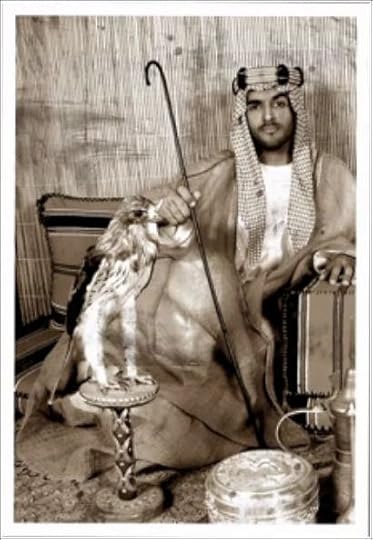
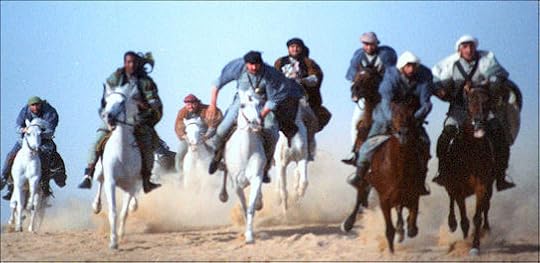
I loved The Sheik as a historical romance and am not surprised as it also reminds me of two other landmark historical romance fiction books: Gone with the Wind and Sweet Savage Love. The Sheik predates both of these by almost 20 and 50 years respectively. The only pre-existing similar popular romance fiction that I can think of that this novel could be derivative of would be Shakespeare’s The Taming of the Shrew. The Sheiks sensual descriptions and the crossing of racial lines made the book considered pornography by many of the day!
For good or bad, The Sheik does NOT have explicit sex scenes but could be considered to be dark and edgy as it does have kidnapping, rape, deadly violence, and animal cruelty. And in some ways, The Sheik is even more extreme than any contemporary bodice ripper I have read – which must have made it VERY shocking for the time. No wonder it was banned!!
It is important to note that the animal cruelty is not intended as such given the context and timeframe - any more than the Native American would be thought cruel for deploying such methods for breaking a horse.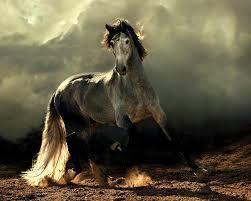
Ironically I also think the shooting of the horse was critical in the story as it was intended to display both Diana's and Hassan's stubborn natures. Ahmed was willing to sacrifice a trained and valued horse to capture her - a great sacrifice indeed for a mere woman. That he is even willing to kill or injure her in the process of bringing the horse down for her disobedience, is also a definite statement on how far he will go if challenged with anyone – as was Diana’s attempt to shoot him in the face.


E.M. Hull made the hero and heroine mirror images of each other to break down ethnic and cultural barriers and to make their love more inevitable and plausible. They share similar childhoods; interests and hobbies, and character flaws; and foils or opposites in body via ethnicity, physical appearance, and sex.
Both are wealthy and are used to an odd mix of Spartan and opulent life styles. Both are also well educated and read and speak multiple languages. They are also both very proud and arrogant and are used to free reign and getting their way. Yet both have had harsh upbringings and were oddly deprived of love and tenderness in their youth.
Both are also incredibly physically attractive with one being dark and the other fair. Both are also used to using the power of their good looks and strong wills on the opposite sex - she with her feminine manipulation and aloofness and coldness and he with male manipulation through physical domination and control and passion.
There is an ongoing analogy and comparison of Diana to the wild and proud yet fragile Arabian horses Ahmed so loves and Ahmed to the fierce and powerful predatory Arabian Tiger, which in Diana's mind, arouses both fear and fascinated admiration.
Diana and Ahmed also share a deep and abiding love of the outdoors and the beauty of the desert.

One cannot miss that she shares Ahmed affection for his closet and most dear Best Friends - his valet, his French friend the writer, and his huge and lumbering beast of a dog. And all his friends return her affections and are fiercely protective of her!
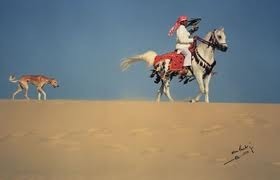
But most of all they share an absolute passion and love of horses and horse-back riding.
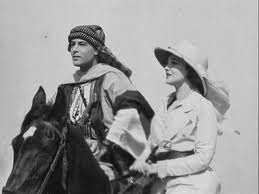
They can no more resist loving these beautiful Arabian horses than they can resist loving each other. .

At the root of it all, Ahmed and Diana evolve through the course of the story with each other being the catalyst for this change. They do not fall instantly fall in love - just the opposite. Instead they come to respect and admire each other and - despite their initial ingrained prejudices about each other’s ethnic background, culture, and sex - grow to love each other.
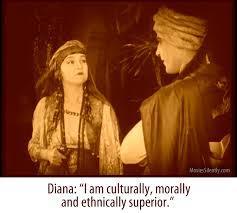
I initially strongly disliked some aspects of the book beyond the forced sex including such things as the racial slurs and smoking but with reflection also recognize that the characters were products of the historic time frame being written about and in the historic time frame of the books development and publication, and given that frame work the book is actually progressive.
Given the Victorian context, and the lack of actual sex scene descriptions, Diana's ongoing "rape" may not be as extreme or as forced as some may perceive in that context as well.
In Victorian times, women were not openly encouraged to enjoy sex. For a lady, sex was generally perceived as a painful and degrading duty, done in the dark and partially clothed, with the sole purpose to produce heirs. Sex was dirty, bestial, and base. Only a mistress or prostitute would enjoy sex for the sake of sex. Thus for many women, who felt morally suppressed or dirty for wanting sex, forced sex was a fantasy way of eliminating that guilt.
In the context of her times, Diana would have normally been forced to submit to a man in more ways than one via marriage. For the titled and wealthy, a woman's marriage was often arranged based upon status and wealth more than mutual interests and attraction.
Diana is an extreme aberration from the average Victorian woman. Parentless, no one has arranged or forced her to marry and her Brother to whom such responsibility should have fallen has been negligent and instead allowed her to behave as a man. She has now reached her majority and has come into her own wealth and independence. She has no intention of marrying ever and is on her own solo, typically male or Honeymoon taken, Grand Tour of Europe and the Exotic East.
While fiercely independent, Diana has an even greater aversion to sex and marriage than most Victorian woman as she has been deprived of any physical love and dislikes even to be touched. Undoubtedly she perceives sex as an act of domination and control. Given her extreme aversion to marriage and sex, and her spurning of earlier marriage offers, Diana appears destined to be a virginal eccentric spinster as she is already "on the shelf" and has decided to go, as a Lady, unescorted on a trip with wild men! Absolutely shocking!
In the beginning, it is obvious that Ahmed forces her submission to him through intimidation and physical might but how much he actually seduces her in the bedroom after her initial submission remains up to the reader’s imagination. There are no explicit sex scenes.
That she is physically attracted to him, and he to her, is obvious throughout the book.
As Ahmed brags about his prowess with other females, he is "Oriental" with much experience, and he is very physically attractive and fit, the reader could surmise that he is very likely talented indeed - in stark contrast to the repressed and indolent Victorian male.
How much Diana's self-loathing and hate of Ahmed is due to his awakening her passions and making her in fact a slave to him in spirit and mind, as well as body, is up to speculation.
I prefer to think that behind the scenes, he does indeed seduce her and thus her growing love of him beyond that explained by Stockholm syndrome.
I am not alone in this interpretation. For an excellent and detailed review with book excerpts hinting at this complex physical and emotional relationship, please see review: http://www.goodreads.com/review/show/...
Besides the conflict in the relationship between Diana and Ahmed, there is plenty of other action and conflict in this adventure tale. Numerous times throughout the story the hero and heroine are almost killed. One of the many close calls was Diana's capture by the opposing tribe and the subsequent fight scenes. As Diana is almost killed at least 3 times in total, if one includes the horse shooting, the melodrama and violence was a bit over the top. As it was not always predictable, I did enjoy it as a change!
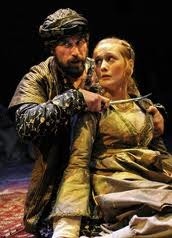
As with any bodice ripper, the male lead needs to evolve from anti-hero to hero and some excuse must be made for his unacceptable earlier behavior and amends must be made. Because, despite any repressed female's rape fantasy, actual rape is reprehensible and an act of violence not love.
In the case of the Sheik, a child hood tragedy back story is used to make Sheik Hassan's initial behavior, i.e. Dina's kidnap and rape, and his earlier rage more palatable. A similar explanation is used to explain Diana's spurning of men, her repressed nature, her traveling alone, etc.. Both of their dysfunctional pasts and early childhood traumas and deprivations are revealed to the reader and to each other through the course of the story .
While this backstory does seem a bit contrived, even today early child trauma is frequently used as a plot device in many contemporary romance books as a justification hero or heroine bad behavior. Given that this book is almost 100 years old, and that psychology was in its infancy as a field, the author may have been actually innovative in using this particular plot device...
In the end, out of all the trauma, and near death encounters, Diana and Hassan do ultimately find forgiveness - Diana of Sheik Ahmed Ben Hassan's treatment of her and he of himself for having harmed her.
To give them a more perfect and acceptable HEA, E.M. Hull uses another frequently used plot device deployed in formulaic romances: The HEA made possible, despite the original barriers of race, class etc., by This device is an overused trick and one we see regularly in simple children's fairy tales and Greek tales.
In this case, I was VERY disappointed Though I do recognize that the change does make their union more equitable and makes his strict non-adherence to Moslem Law and his attraction to and eventual love and admiration of Diana's spirited independence more believable.
I suspect the real reason was this to make their union more palatable to the general English public's sensibilities of the time. A public who was then even more prejudiced than today.
Overall, I thought The Sheik interesting and fascinating as a romance adventure novel and was delighted to read it for FREE.
I just watched the silent movie classic The Sheik with Valentino and loved it. It is in some ways better than the book as it softens or eliminates some of the more shocking aspects.
Valentino and the movie made the Sheik so much more lovable by portraying him as almost childlike. He is almost innocent of the severity of his crime.
He is used to the Arab culture where women are a cheap commodity to be bought and sold. He, as a powerful sheik, is used to woman fawning on him and falling at his feet.

He looks so wounded when she turns away his kisses, aw. He closes his eyes and looks so guilt ridden and conflicted when he realizes how deeply he has hurt her.
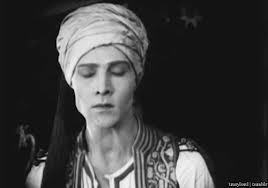
All three, the movie, the original Sheik, and the Sheik Retold were new for me and all three have a different take on the same basic story line.
While, I have enjoyed them all, the original The Sheik is my favorite.
Given the time of publication of approx. 100 years ago, and in the context of the times, this was an EXTRAORDINARY book and will remain as a timeless classic of historical romance for every generation.
I encourage you to download and read it as a bit of cultural literary history.
You will undoubtedly experience a love hate relationship with this book at times – but you may find that despite your initial distaste, you come away with a new perspective and potentially a new found love.
The Sheik has worked its way both into my heart and mind, and onto my Classics and Favorites list ...
For an excellent and detailed review of what to love in the book, a different interpretation please see review: http://www.goodreads.com/review/show/...
(Update log: revised from original Sept 5, 2013 to fix image error.)
The Arrogant and Mesmerizing Blue Eyed Sheik
This is the original and first Sheik story and still the best! I encourage you to download and read this Classic for FREE from Amazon or Guttenberg.
Given the time of publication in 1919, almost 100 years ago during the shocking destruction and loss of life of The Great War (WWI)and the renewed interest in the Arab World due to the British fighting the Ottoman Empire there in Arab lands, and in the context of the repressed Victorian times of the novel's setting, The Sheik was an extraordinary book.
I have a personal fondness for an exotic romance adventure tale and this tale is a bit reminiscent of the sweeping epic of Lawrence of Arabia. It too is set in the same time frame of The Great War. The difference in the Arabic tribal culture and Western culture was so significant in Lawrence of Arabia that it was hard for me to wrap my mind around their way of life and thinking as depicted.
So too, Ahmed Ben Hassan's behavior and the Sheik needs to be viewed and evaluated in that foreign and somewhat alien context. I initially strongly disliked some aspects of The Sheik, beyond the forced sex, including such things as the racial slurs and smoking but with reflection also recognize that the characters were products of the historic time frame being written about and in the historic time frame of the books development and publication. In that light, The Sheik may have been considered progressive!
I loved The Sheik as a historical romance and am not surprised as it also reminds me of two other landmark historical romance fiction books: Gone with the Wind and Sweet Savage Love. The Sheik predates both of these by almost 20 and 50 years respectively. The only pre-existing similar popular romance fiction that I can think of that this novel could be derivative of would be Shakespeare’s The Taming of the Shrew. The Sheiks sensual descriptions and the crossing of racial lines made the book considered pornography by many of the day!
For good or bad, The Sheik does NOT have explicit sex scenes but could be considered to be dark and edgy as it does have kidnapping, rape, deadly violence, and animal cruelty. And in some ways, The Sheik is even more extreme than any contemporary bodice ripper I have read – which must have made it VERY shocking for the time. No wonder it was banned!!
It is important to note that the animal cruelty is not intended as such given the context and timeframe - any more than the Native American would be thought cruel for deploying such methods for breaking a horse.
Ironically I also think the shooting of the horse was critical in the story as it was intended to display both Diana's and Hassan's stubborn natures. Ahmed was willing to sacrifice a trained and valued horse to capture her - a great sacrifice indeed for a mere woman. That he is even willing to kill or injure her in the process of bringing the horse down for her disobedience, is also a definite statement on how far he will go if challenged with anyone – as was Diana’s attempt to shoot him in the face.
E.M. Hull made the hero and heroine mirror images of each other to break down ethnic and cultural barriers and to make their love more inevitable and plausible. They share similar childhoods; interests and hobbies, and character flaws; and foils or opposites in body via ethnicity, physical appearance, and sex.
Both are wealthy and are used to an odd mix of Spartan and opulent life styles. Both are also well educated and read and speak multiple languages. They are also both very proud and arrogant and are used to free reign and getting their way. Yet both have had harsh upbringings and were oddly deprived of love and tenderness in their youth.
Both are also incredibly physically attractive with one being dark and the other fair. Both are also used to using the power of their good looks and strong wills on the opposite sex - she with her feminine manipulation and aloofness and coldness and he with male manipulation through physical domination and control and passion.
There is an ongoing analogy and comparison of Diana to the wild and proud yet fragile Arabian horses Ahmed so loves and Ahmed to the fierce and powerful predatory Arabian Tiger, which in Diana's mind, arouses both fear and fascinated admiration.
Diana and Ahmed also share a deep and abiding love of the outdoors and the beauty of the desert.
One cannot miss that she shares Ahmed affection for his closet and most dear Best Friends - his valet, his French friend the writer, and his huge and lumbering beast of a dog. And all his friends return her affections and are fiercely protective of her!
But most of all they share an absolute passion and love of horses and horse-back riding.
They can no more resist loving these beautiful Arabian horses than they can resist loving each other. .
At the root of it all, Ahmed and Diana evolve through the course of the story with each other being the catalyst for this change. They do not fall instantly fall in love - just the opposite. Instead they come to respect and admire each other and - despite their initial ingrained prejudices about each other’s ethnic background, culture, and sex - grow to love each other.
I initially strongly disliked some aspects of the book beyond the forced sex including such things as the racial slurs and smoking but with reflection also recognize that the characters were products of the historic time frame being written about and in the historic time frame of the books development and publication, and given that frame work the book is actually progressive.
Given the Victorian context, and the lack of actual sex scene descriptions, Diana's ongoing "rape" may not be as extreme or as forced as some may perceive in that context as well.
In Victorian times, women were not openly encouraged to enjoy sex. For a lady, sex was generally perceived as a painful and degrading duty, done in the dark and partially clothed, with the sole purpose to produce heirs. Sex was dirty, bestial, and base. Only a mistress or prostitute would enjoy sex for the sake of sex. Thus for many women, who felt morally suppressed or dirty for wanting sex, forced sex was a fantasy way of eliminating that guilt.
In the context of her times, Diana would have normally been forced to submit to a man in more ways than one via marriage. For the titled and wealthy, a woman's marriage was often arranged based upon status and wealth more than mutual interests and attraction.
Diana is an extreme aberration from the average Victorian woman. Parentless, no one has arranged or forced her to marry and her Brother to whom such responsibility should have fallen has been negligent and instead allowed her to behave as a man. She has now reached her majority and has come into her own wealth and independence. She has no intention of marrying ever and is on her own solo, typically male or Honeymoon taken, Grand Tour of Europe and the Exotic East.
While fiercely independent, Diana has an even greater aversion to sex and marriage than most Victorian woman as she has been deprived of any physical love and dislikes even to be touched. Undoubtedly she perceives sex as an act of domination and control. Given her extreme aversion to marriage and sex, and her spurning of earlier marriage offers, Diana appears destined to be a virginal eccentric spinster as she is already "on the shelf" and has decided to go, as a Lady, unescorted on a trip with wild men! Absolutely shocking!
In the beginning, it is obvious that Ahmed forces her submission to him through intimidation and physical might but how much he actually seduces her in the bedroom after her initial submission remains up to the reader’s imagination. There are no explicit sex scenes.
That she is physically attracted to him, and he to her, is obvious throughout the book.
As Ahmed brags about his prowess with other females, he is "Oriental" with much experience, and he is very physically attractive and fit, the reader could surmise that he is very likely talented indeed - in stark contrast to the repressed and indolent Victorian male.
How much Diana's self-loathing and hate of Ahmed is due to his awakening her passions and making her in fact a slave to him in spirit and mind, as well as body, is up to speculation.
I prefer to think that behind the scenes, he does indeed seduce her and thus her growing love of him beyond that explained by Stockholm syndrome.
I am not alone in this interpretation. For an excellent and detailed review with book excerpts hinting at this complex physical and emotional relationship, please see review: http://www.goodreads.com/review/show/...
Besides the conflict in the relationship between Diana and Ahmed, there is plenty of other action and conflict in this adventure tale. Numerous times throughout the story the hero and heroine are almost killed. One of the many close calls was Diana's capture by the opposing tribe and the subsequent fight scenes. As Diana is almost killed at least 3 times in total, if one includes the horse shooting, the melodrama and violence was a bit over the top. As it was not always predictable, I did enjoy it as a change!
As with any bodice ripper, the male lead needs to evolve from anti-hero to hero and some excuse must be made for his unacceptable earlier behavior and amends must be made. Because, despite any repressed female's rape fantasy, actual rape is reprehensible and an act of violence not love.
In the case of the Sheik, a child hood tragedy back story is used to make Sheik Hassan's initial behavior, i.e. Dina's kidnap and rape, and his earlier rage more palatable. A similar explanation is used to explain Diana's spurning of men, her repressed nature, her traveling alone, etc.. Both of their dysfunctional pasts and early childhood traumas and deprivations are revealed to the reader and to each other through the course of the story .
While this backstory does seem a bit contrived, even today early child trauma is frequently used as a plot device in many contemporary romance books as a justification hero or heroine bad behavior. Given that this book is almost 100 years old, and that psychology was in its infancy as a field, the author may have been actually innovative in using this particular plot device...
In the end, out of all the trauma, and near death encounters, Diana and Hassan do ultimately find forgiveness - Diana of Sheik Ahmed Ben Hassan's treatment of her and he of himself for having harmed her.
To give them a more perfect and acceptable HEA, E.M. Hull uses another frequently used plot device deployed in formulaic romances: The HEA made possible, despite the original barriers of race, class etc., by This device is an overused trick and one we see regularly in simple children's fairy tales and Greek tales.
In this case, I was VERY disappointed Though I do recognize that the change does make their union more equitable and makes his strict non-adherence to Moslem Law and his attraction to and eventual love and admiration of Diana's spirited independence more believable.
I suspect the real reason was this to make their union more palatable to the general English public's sensibilities of the time. A public who was then even more prejudiced than today.
Overall, I thought The Sheik interesting and fascinating as a romance adventure novel and was delighted to read it for FREE.
I just watched the silent movie classic The Sheik with Valentino and loved it. It is in some ways better than the book as it softens or eliminates some of the more shocking aspects.
Valentino and the movie made the Sheik so much more lovable by portraying him as almost childlike. He is almost innocent of the severity of his crime.
He is used to the Arab culture where women are a cheap commodity to be bought and sold. He, as a powerful sheik, is used to woman fawning on him and falling at his feet.
He looks so wounded when she turns away his kisses, aw. He closes his eyes and looks so guilt ridden and conflicted when he realizes how deeply he has hurt her.
All three, the movie, the original Sheik, and the Sheik Retold were new for me and all three have a different take on the same basic story line.
While, I have enjoyed them all, the original The Sheik is my favorite.
Given the time of publication of approx. 100 years ago, and in the context of the times, this was an EXTRAORDINARY book and will remain as a timeless classic of historical romance for every generation.
I encourage you to download and read it as a bit of cultural literary history.
You will undoubtedly experience a love hate relationship with this book at times – but you may find that despite your initial distaste, you come away with a new perspective and potentially a new found love.
The Sheik has worked its way both into my heart and mind, and onto my Classics and Favorites list ...
For an excellent and detailed review of what to love in the book, a different interpretation please see review: http://www.goodreads.com/review/show/...
(Update log: revised from original Sept 5, 2013 to fix image error.)

Read
July 4, 20174/17 Guilty Pleasures module
If you think 'Beauty and the Beast' has Stockholm Syndrome, this takes it to a whole new level.
If you think 'Beauty and the Beast' has Stockholm Syndrome, this takes it to a whole new level.

December 14, 2013
Stephen King, Clive Barker--hell, even H.P. Lovecraft have all been dethroned by E.M. Hull. Seriously, in addition to being one of the most disgusting "romance novels" ever published, it's also downright horrifying and offensive as hell.
There's not a whole lot to the plot. Diana Mayo is a headstrong, fiercely independent young woman who pretty much gives societal conventions of the female gender the middle finger. In short, she's a boss-ass bitch (bitch bitch bitch...) and for the first 20 pages or so I really enjoyed her. Anyway, Diana wants to go on a little adventure into the desert before going to America with her jackass of a brother, who plans on getting married there and living the easy life. Big bro thinks the trip is a totally bad idea, Diana tells him to stuff it, and after her brother tells her how he hopes one day she'll find a man who can tame her (that should be the first indicator that things are about to go to some very dark places), Diana rides off with a guide and a few other people.
They're soon attacked by a group of Arabs and Diana is captured by one of them. She is taken back to their main camp, where she learns two things:
1) She's just been kidnapped by the sheik--the ruler of the men in his camp--and he wants her, consent or no.
2) Her rapist is kinda hot (you see where this is going?)
So the Sheik pretty much rapes Diana every night for a whole month. We're never shown any of this, since this book was written back in the days where all sex scenes faded to black before the main event. However, we are shown how traumatized Diana is by the whole ordeal. She experiences typical rape victim traits: she has flashbacks of the assaults, she hates herself and views herself as unclean, and she blames herself and her own weakness for being unable to stop the Sheik from raping her. It's pretty upsetting.
I'd heard about this book and the Rudolph Valentino movie before. I knew Diana was going to end up with her asshole rapist--I mean, her brooding and ~exotic~ Prince Charming. It still felt like a punch in the stomach and a kick to the head when it actually happened, though, mainly because it came out of fucking nowhere, and also because at that point Diana was running away from him and the Sheik had shot her horse (which was actually one of his horses she stole to run away from HER RAPIST) to cut her escape short. Aw, he loves her so much he's willing to unnecessarily kill animals to be with her.
So the moral of the story is essentially this: rape=love and is therefore okay. But later on in the book, Diana is about to be raped by ANOTHER sheik, but this one is all fat and gross and ew. So really I guess the moral is rape is only okay if your attacker is good-looking.
I could go on and on about how sick this book made me, but then this would probably end up being the longest review of any book on GR, so I hope I was able to give you the gist of my hatred for this toxic waste of a novel. The fact that so many people have given it 3, 4, even 5 star reviews honestly makes me want to cry.
There's not a whole lot to the plot. Diana Mayo is a headstrong, fiercely independent young woman who pretty much gives societal conventions of the female gender the middle finger. In short, she's a boss-ass bitch (bitch bitch bitch...) and for the first 20 pages or so I really enjoyed her. Anyway, Diana wants to go on a little adventure into the desert before going to America with her jackass of a brother, who plans on getting married there and living the easy life. Big bro thinks the trip is a totally bad idea, Diana tells him to stuff it, and after her brother tells her how he hopes one day she'll find a man who can tame her (that should be the first indicator that things are about to go to some very dark places), Diana rides off with a guide and a few other people.
They're soon attacked by a group of Arabs and Diana is captured by one of them. She is taken back to their main camp, where she learns two things:
1) She's just been kidnapped by the sheik--the ruler of the men in his camp--and he wants her, consent or no.
2) Her rapist is kinda hot (you see where this is going?)
So the Sheik pretty much rapes Diana every night for a whole month. We're never shown any of this, since this book was written back in the days where all sex scenes faded to black before the main event. However, we are shown how traumatized Diana is by the whole ordeal. She experiences typical rape victim traits: she has flashbacks of the assaults, she hates herself and views herself as unclean, and she blames herself and her own weakness for being unable to stop the Sheik from raping her. It's pretty upsetting.
I'd heard about this book and the Rudolph Valentino movie before. I knew Diana was going to end up with her asshole rapist--I mean, her brooding and ~exotic~ Prince Charming. It still felt like a punch in the stomach and a kick to the head when it actually happened, though, mainly because it came out of fucking nowhere, and also because at that point Diana was running away from him and the Sheik had shot her horse (which was actually one of his horses she stole to run away from HER RAPIST) to cut her escape short. Aw, he loves her so much he's willing to unnecessarily kill animals to be with her.
So the moral of the story is essentially this: rape=love and is therefore okay. But later on in the book, Diana is about to be raped by ANOTHER sheik, but this one is all fat and gross and ew. So really I guess the moral is rape is only okay if your attacker is good-looking.
I could go on and on about how sick this book made me, but then this would probably end up being the longest review of any book on GR, so I hope I was able to give you the gist of my hatred for this toxic waste of a novel. The fact that so many people have given it 3, 4, even 5 star reviews honestly makes me want to cry.

August 20, 2009
My last recorded reading of this all-time-favorite was in 2003 but the first time was when I was a pre-teen sneaking the book out of my grandmother's bookcase to sample "forbidden fruit" (well over 50 years ago!). I was so taken by the romance and thrill of the story that I have never forgotten the feelings and this is my go-to book when I need mental comfort food or to recapture the sense of being young and embarking on an adventure.
I collect copies of this book. I still have my grandmother's copy, a 1921 American first printing which is now falling to pieces. It still has Gram's maiden name faintly visible on the flyleaf so she must have gotten it shortly before marrying my grandfather. I have since bought 4 more copies of the Small, Maynard & Co hardcover edition: one was loaned to an acquaintance & never seen again but I still have a July 1921- 12th printing, a Nov '21 -38th printing, and a December '21 -53rd printing (!). It was a wild best-seller in its day and at least half of the re-printings were before the release of the Valentino film. I also own a 1963 mass market paperback version [on the cover: "he's pop, op, and camp" with photos from the film]; and a 2001 trade paperback reprint ed with a still from the movie on the cover (pub by Pine Street Books of the Univ. of Pennsylvania Press). I passed on acquiring the Barbara Cartland Library of Love edition as it is an abridgement. [I don't do online purchasing for these books as it's too easy- I like to rely on serendipity to find copies:]
As to the story itself- it does not really pass muster for modern sensibilities. A little (a LOT) politically incorrect both racially and socially but I would still like to see a modern remake of a film version although it would have to remain a period setting. In high school and later my college dorm room a large framed poster of Valentino in full sheik regalia graced my wall (it's still hanging in my parent's rec room). For a fun look at the Valentino/Sheik hysteria watch Gene Wilder's movie "The World's Greatest Lover"
I collect copies of this book. I still have my grandmother's copy, a 1921 American first printing which is now falling to pieces. It still has Gram's maiden name faintly visible on the flyleaf so she must have gotten it shortly before marrying my grandfather. I have since bought 4 more copies of the Small, Maynard & Co hardcover edition: one was loaned to an acquaintance & never seen again but I still have a July 1921- 12th printing, a Nov '21 -38th printing, and a December '21 -53rd printing (!). It was a wild best-seller in its day and at least half of the re-printings were before the release of the Valentino film. I also own a 1963 mass market paperback version [on the cover: "he's pop, op, and camp" with photos from the film]; and a 2001 trade paperback reprint ed with a still from the movie on the cover (pub by Pine Street Books of the Univ. of Pennsylvania Press). I passed on acquiring the Barbara Cartland Library of Love edition as it is an abridgement. [I don't do online purchasing for these books as it's too easy- I like to rely on serendipity to find copies:]
As to the story itself- it does not really pass muster for modern sensibilities. A little (a LOT) politically incorrect both racially and socially but I would still like to see a modern remake of a film version although it would have to remain a period setting. In high school and later my college dorm room a large framed poster of Valentino in full sheik regalia graced my wall (it's still hanging in my parent's rec room). For a fun look at the Valentino/Sheik hysteria watch Gene Wilder's movie "The World's Greatest Lover"

June 14, 2022
Bulgarian review first, followed by the English translation below
Бабата на всички bodice rippers е от 1919 г., а Рудолф Валентино игражда филмовата си кариера през 20-те от холивудската екранизация (която няма много общо с книгата освен заглавието).
Една от тропите в този откачен и вече избягван с политкоректни писъци поджанр на историческите любовни романи е може ли пълно с насилие в начало да прерастне в нещо градивно, смислено и добро? И тъй като жанрът е любовен - в любов?
Конкретно в тази книга - може. Хюл се е постарала да се обоснове. Причината не е елементарна, а се корени в целия досегашен живот на Даяна. На пръв поглед тя е силна, безцеремонна, независима девойка, която поради богатството си може да си позволи пълно пренебрегване на обществените изисквания към ролята на жените в началото на 20 век (трите К - Църква, Кухня, Деца). Даяна е добра спортистка и стрелец, пътува по цял свят и няма намерение да се кротва в някой изискан салон с брачни окови.
Обаче в самомнителността си тя напълно пропуска, че светът е опасно място и на всеки могат да се случат ужасни неща. Когато е отвлечена в пустинята от местен племенен главатар, накрая го разбира. Случват и се наистина лоши неща, и се сблъскват два адски арогантни характера, които обаче неусетно започват да се харесват и привързват един към друг.
За Даяна безспорно е стокхолмски синдром, който е неизбежен. Защото всъщност тя е емоционално осакатено момиче, и то още от детството си. Майка, починала при раждането и, самоубил се от мъка баща (решил, че не си струва да се грижи за децата), свръхегоистичен много по-голям брат, за когото е най-лесно да подмята стоварилото му се сестриче като домашен любимец и да го третира като същество от неидентифициран пол и с несъществуващи емоционални нужди от близост и грижа. И не по-малко лекомисленото и снобско обкръжение. Тя е дълбоко самотна и не се чувства нужна на никого. Това, което Даяна не подозира, че кипи в нея като нужда от някаква близост, се отприщва във възможно най-вредната за нея ситуация. Нещо като пиле-сираче, което решава, че първото зърнато същество му е майка. А нейната неочаквана реакция променя и героя. С когото всъщност тя споделя доста общи интереси, като любовта към активния живот сред природата и към животните, крайния индивидуализъм и самотата.
Изобщо, има доста приключения и малко тупаник, расизмът се усеща (арабите са наричани “деца” от добронамерени англичани и французи, и “мръсни негри” от недобронамерени). Но Хюл е направила фокуса - да превърне един противоречив сюжет в интересно четиво, без да залага само на сензационността. Е, тя е в основата на всичко, разбира се, това не е сериозна книга все пак. И, както се казва, “не повтаряйте видяното тук в домашни условия.”

Бабата на всички bodice rippers е от 1919 г., а Рудолф Валентино игражда филмовата си кариера през 20-те от холивудската екранизация (която няма много общо с книгата освен заглавието).
Една от тропите в този откачен и вече избягван с политкоректни писъци поджанр на историческите любовни романи е може ли пълно с насилие в начало да прерастне в нещо градивно, смислено и добро? И тъй като жанрът е любовен - в любов?
Конкретно в тази книга - може. Хюл се е постарала да се обоснове. Причината не е елементарна, а се корени в целия досегашен живот на Даяна. На пръв поглед тя е силна, безцеремонна, независима девойка, която поради богатството си може да си позволи пълно пренебрегване на обществените изисквания към ролята на жените в началото на 20 век (трите К - Църква, Кухня, Деца). Даяна е добра спортистка и стрелец, пътува по цял свят и няма намерение да се кротва в някой изискан салон с брачни окови.
Обаче в самомнителността си тя напълно пропуска, че светът е опасно място и на всеки могат да се случат ужасни неща. Когато е отвлечена в пустинята от местен племенен главатар, накрая го разбира. Случват и се наистина лоши неща, и се сблъскват два адски арогантни характера, които обаче неусетно започват да се харесват и привързват един към друг.
За Даяна безспорно е стокхолмски синдром, който е неизбежен. Защото всъщност тя е емоционално осакатено момиче, и то още от детството си. Майка, починала при раждането и, самоубил се от мъка баща (решил, че не си струва да се грижи за децата), свръхегоистичен много по-голям брат, за когото е най-лесно да подмята стоварилото му се сестриче като домашен любимец и да го третира като същество от неидентифициран пол и с несъществуващи емоционални нужди от близост и грижа. И не по-малко лекомисленото и снобско обкръжение. Тя е дълбоко самотна и не се чувства нужна на никого. Това, което Даяна не подозира, че кипи в нея като нужда от някаква близост, се отприщва във възможно най-вредната за нея ситуация. Нещо като пиле-сираче, което решава, че първото зърнато същество му е майка. А нейната неочаквана реакция променя и героя. С когото всъщност тя споделя доста общи интереси, като любовта към активния живот сред природата и към животните, крайния индивидуализъм и самотата.
Изобщо, има доста приключения и малко тупаник, расизмът се усеща (арабите са наричани “деца” от добронамерени англичани и французи, и “мръсни негри” от недобронамерени). Но Хюл е направила фокуса - да превърне един противоречив сюжет в интересно четиво, без да залага само на сензационността. Е, тя е в основата на всичко, разбира се, това не е сериозна книга все пак. И, както се казва, “не повтаряйте видяното тук в домашни условия.”
The grandmother of all "bodice rippers" dates back to 1919, and Rudolph Valentino built his legendary film career in the 1920s upon the Hollywood adaptation (which, truth be told, has little in common with the book other than the title).
One of the tropes in this wild and now politically-incorrectly shunned subgenre of historical romance is: can a beginning rooted in violence evolve into something constructive, meaningful, and good? And since this is a romance novel—can it turn into love?
In this specific book, it can. Hull has made a conscious effort to justify it. The reason isn't superficial; it’s rooted in Diana’s entire past. At first glance, she is a strong, blunt, independent young woman whose wealth allows her to completely ignore the societal expectations of women in the early 20th century (the three Ks—Kirche, Küche, Kinder). Diana is an accomplished athlete and marksmanship expert, traveling the world with no intention of settling into the "marital shackles" of a refined salon.
However, in her self-assurance, she completely misses the fact that the world is a dangerous place and terrible things can happen to anyone. When she is abducted into the desert by a local tribal chieftain, she finally realizes this. Truly dark things happen to her, and two incredibly arrogant characters clash—only to imperceptibly begin to like and bond with one another.
For Diana, it is undoubtedly a case of Stockholm Syndrome, which feels inevitable. Beneath the surface, she is an emotionally crippled girl, scarred since childhood. A mother who died giving birth to her, a father who committed suicide out of grief (deciding it wasn't worth living to care for his children), and a hyper-selfish older brother who treated her like a stray pet rather than a human being with emotional needs. She is profoundly lonely. What Diana doesn't realize is that her repressed need for intimacy erupts in the most harmful situation possible—much like an orphaned chick deciding the first creature it sees is its mother. Yet, her unexpected reaction changes the hero as well, with whom she actually shares many interests: a love for an active outdoor life, animals, extreme individualism, and solitude.
Overall, there is plenty of adventure and a bit of "roughhousing"; the racism of the era is palpable (Arabs are called "children" by the well-meaning and "dirty" by the ill-meaning). But Hull pulled off a trick: she turned a controversial plot into an engaging read without relying solely on sensationalism. Well, sensationalism is the foundation, of course—this isn't "serious" literature. As they say: "Don't try this at home."

August 10, 2022
Well!
I can understand that this novel, published when it was (1919), was described in the press with such as 'shocking' and 'poisonously salacious' because the views of people in the immediate post-Edwardian/early George V era were such that a tale told like this would perhaps shock many folk! Of course, today it does not do so but then I can imagine it definitely raised a few eyebrows!
But whatever the views were of the novel, it did not prevent massive sales; the edition I have just read is from Boston in 1921 and with a 1921 copyright by the Boston publishers it first appeared in January 1921. The edition I have is the 'thirty-ninth printing' and it is dated November 1921! Each month after it first appeared there were one or more printings thus proving its popularity.
And I can fully understand that for, with the attitudes of the day, an English lady, Diana Mayo, in the African desert cavorting with an Arab sheik, Ahmed Ben Hassan, tests pre-conceived traditions and would have provided compulsive reading for the public. And they were provided with a full dose of heart-wrenching melodrama that they probably would not have encountered previously. An example is when Ahmed 'held her palpitating in his arms ... "Little fool," he said with a deepening smile. "Better me than my men."' Her reply was '"Oh, you brute! You brute!" she wailed, until his kisses silenced her.' Great stuff and the readers lapped it up.
Diana was a headstrong young lady so when her brother Aubrey Mayo was going to America from the Algerian city of Biskra, she felt that it would be more exciting to have a trip into the desert before joining him over there. So she takes the trip, encounters the Sheik and the events unfold in spectacular fashion. She goes through a whole gamut of emotions as the Sheik shows her no respect but over time the situation changes, and with it her feelings do also.
The first of the so-called 'Desert Romances' was an astonishing debut novel written by London-born Edith Maud Hull (née Henderson)who wrote it while her husband was away serving in World War I. And considering the relatively small cast of characters, apart from the bloodthirsty Arabs, the action is dramatic with an overall brooding and tense mood pervading throughout the novel. Indeed, suffice it to say that it is a gripping read.
Interestingly, by 1923 the novel had gone through over a hundred editions, and sales had surpassed all other best-sellers combined. And, of course, it was the basis for the film of the same name starring the Italian actor Rudolph Valentino in the title role. In addition, as late as 2005, some publishers regarded her novels as 'erotic fiction'!
I can understand that this novel, published when it was (1919), was described in the press with such as 'shocking' and 'poisonously salacious' because the views of people in the immediate post-Edwardian/early George V era were such that a tale told like this would perhaps shock many folk! Of course, today it does not do so but then I can imagine it definitely raised a few eyebrows!
But whatever the views were of the novel, it did not prevent massive sales; the edition I have just read is from Boston in 1921 and with a 1921 copyright by the Boston publishers it first appeared in January 1921. The edition I have is the 'thirty-ninth printing' and it is dated November 1921! Each month after it first appeared there were one or more printings thus proving its popularity.
And I can fully understand that for, with the attitudes of the day, an English lady, Diana Mayo, in the African desert cavorting with an Arab sheik, Ahmed Ben Hassan, tests pre-conceived traditions and would have provided compulsive reading for the public. And they were provided with a full dose of heart-wrenching melodrama that they probably would not have encountered previously. An example is when Ahmed 'held her palpitating in his arms ... "Little fool," he said with a deepening smile. "Better me than my men."' Her reply was '"Oh, you brute! You brute!" she wailed, until his kisses silenced her.' Great stuff and the readers lapped it up.
Diana was a headstrong young lady so when her brother Aubrey Mayo was going to America from the Algerian city of Biskra, she felt that it would be more exciting to have a trip into the desert before joining him over there. So she takes the trip, encounters the Sheik and the events unfold in spectacular fashion. She goes through a whole gamut of emotions as the Sheik shows her no respect but over time the situation changes, and with it her feelings do also.
The first of the so-called 'Desert Romances' was an astonishing debut novel written by London-born Edith Maud Hull (née Henderson)who wrote it while her husband was away serving in World War I. And considering the relatively small cast of characters, apart from the bloodthirsty Arabs, the action is dramatic with an overall brooding and tense mood pervading throughout the novel. Indeed, suffice it to say that it is a gripping read.
Interestingly, by 1923 the novel had gone through over a hundred editions, and sales had surpassed all other best-sellers combined. And, of course, it was the basis for the film of the same name starring the Italian actor Rudolph Valentino in the title role. In addition, as late as 2005, some publishers regarded her novels as 'erotic fiction'!

March 4, 2012
Full disclosure: I only read this because it was referenced as the first official novel of the romance genre in an article. It was very interesting, but I can't in good conscious recommend it because it is precisely what I hate in a novel – the author tells you, constantly and incessantly, exactly what the main protagonist is thinking and why it makes sense in the context of her life. Part of the writing style is probably due to the time period, the book originally being published in the 1920s (1919 to be precise), but I will always argue that authorial laziness is partly to blame when ‘telling’ instead of ‘showing’.
I also couldn’t help but re-write it as I read it in order to visualize how it would read differently in a modern romance. For example: Diana wouldn’t have been ‘ravished’, instead she would have been a slave to her desires, but in this novel the most proper word to describe the Sheik’s actions is rape. The outdated mores are true to the time period and mildly amusing as long as you can stomach them (and there is no actual descriptions as there would be in a novel today). It’s hard to root for the couple to end up together, she is, after all, being raped repeatedly, and she is giving up her whole life to continue living in the desert with her abuser, but the sudden ending is mildly satisfying.
One final thought: does everybody else think she lets her brother continue to believe she is dead? I can’t imagine how she would introduce her new husband to anybody.
I also couldn’t help but re-write it as I read it in order to visualize how it would read differently in a modern romance. For example: Diana wouldn’t have been ‘ravished’, instead she would have been a slave to her desires, but in this novel the most proper word to describe the Sheik’s actions is rape. The outdated mores are true to the time period and mildly amusing as long as you can stomach them (and there is no actual descriptions as there would be in a novel today). It’s hard to root for the couple to end up together, she is, after all, being raped repeatedly, and she is giving up her whole life to continue living in the desert with her abuser, but the sudden ending is mildly satisfying.
One final thought: does everybody else think she lets her brother continue to believe she is dead? I can’t imagine how she would introduce her new husband to anybody.

February 10, 2012
Are you kidding me???? The sheik kidnaps her and rapes her repeatedly over a period of little more than a month; treats her like crap, forces her to obey him, is cruel to animals and rotten to everyone around him and this woman FALLS IN LOVE WITH HIM AND CAN'T LIVE WITHOUT HIM? This novel was a terrible book. Rape is a violent, degrading act and this man's actions should never have been forgiven. He should have been killed off and she was the stupidest woman ever. I would have given it half a star but there isn't a way to do that. A horrific book. Plus, it is NOT a love story. A man who loves a woman would not rape her.
This entire review has been hidden because of spoilers.

March 19, 2016
What starts off as a seemingly feminist tale of morals, quickly descends into pulpy, semi-romantic fantasies of submission and exoticism. Diane Mayo is quite uninteresting as a main character, and her romantic liaison with an Arab sheik who kidnapped and raped her never quite comes across as plausible or even interesting.
This used to be a Fifty Shades of Grey-kind of thing in the twenties. Now it's just racist and anti-feminist. Sad story.
This used to be a Fifty Shades of Grey-kind of thing in the twenties. Now it's just racist and anti-feminist. Sad story.

June 11, 2013
What a horrible piece of tripe. Good Lord. This was simply the most painfully bad book I have ever read. True love equals rape, physical and emotional abuse and codependent martyrdom of the most depraved sort. And of course the whole time the "sheik" is secretly white because no white woman could be attracted to a real Middle Eastern. I feel ill.

April 17, 2011
Just picked up a hardcover copy at the UBS. Publishers A.L. Burt Company, inscription inside "To Albert. Xmas 1923."

November 14, 2019
Nayeli - per RFS
.
«Le belle donne, madame» disse lentamente, «hanno la sfortuna di portare a galla ciò che di più bestiale e vile esista nel carattere degli uomini. Nessun uomo sa mai quale indegno atto può compiere sotto l’influsso di una tentazione.»
«Ed è sempre la donna a pagare!»
Nonostante la grande fama che lo precede (The Sheik è una riedizione di un romanzo del 1919, da cui è stato tratto un film interpretato da Valentino), non è un libro che consiglierei, se non agli appassionati di letteratura storica.
Si tratta di un romanzo che si inserisce nella narrativa d’avventura di inizio secolo (sulla stessa scia di Salgari, per capirci) e di questo genere mantiene le caratteristiche: un buon ritmo narrativo nonostante la trama smunta, una discreta ambientazione dai tocchi esotici e affascinanti, un pizzico di mistero (giusto una punta) per rendere pepata la narrazione.
Purtroppo, però, per essere considerato un romance, e in particolare un dark, manca tutto il resto. Se le caratterizzazioni dei personaggi sono decise e, per quanto riguarda quella femminile perfino anticonformiste, purtroppo la stessa cura non è stata riservata all’approfondimento psicologico, cosa che rende la trama del tutto irrealistica.
Negli storici non è raro trovare confusione tra attrazione e amore, in particolare per il fatto che in questo genere letterario i personaggi non hanno l’opportunità di conoscersi con calma, e tendono a fare dichiarazioni d’amore e proposte di matrimonio non appena trovano un altro personaggio che li attrae particolarmente. Questo è un aspetto comprensibile, mentre non lo è *spoiler* che una donna si innamori del suo stupratore senza che venga presa in considerazione la sindrome di Stoccolma, una dinamica Dom/sub o comunque di manipolazione dell’autostima, oppure una reazione come puro istinto di sopravvivenza o di adattamento.
È vero che nei dark romance a volte accade che una vittima finisca per innamorarsi di un uomo violento, stupratore, tormentato e malato, ma è anche vero che in questo genere letterario vengono esplorati a fondo i sentimenti personali di ognuno dei personaggi. Questo permette di mostrare i risvolti dell’animo che possono giustificare o attenuare, in qualche modo, gli atteggiamenti negativi, e si riesce a donare una certa umanità al carnefice di turno. Spesso, inoltre, quando accade che la vittima si accorge di essersi innamorata, esplodono i conflitti interiori, il senso di colpa per un comportamento contro-intuitivo e che razionalmente una donna che ha subito delle violenze sessuali non può assolutamente accettare a cuor leggero.
In The Sheik non troviamo nulla di tutto questo: si glissa sulle scene di violenza, cosa che rende il romanzo più accettabile (certamente questo è un limite dovuto all’epoca della pubblicazione), e che priva il carnefice della patina crudele di cui altrimenti verrebbe ricoperta la sua immagine. L’innamoramento accade da un giorno all’altro, nel giro di tre righe, dopo quattro mesi in cui la vittima è stata stuprata e umiliata ogni singolo giorno.
Non passando attraverso i suoi sentimenti, si lascia intendere che la violenza non si porti dietro tutta una serie di emozioni odiose e annichilenti, finendo per sottovalutare il senso di umiliazione, insicurezza, sottomissione, e di crollo dell’autostima che una serie ripetuta di stupri porta con sé.
Dare per scontata la violenza, senza raccontarla neppure in un gesto, lascia il rapporto tra il rapitore e la donna abusata solo sul piano di una lesione di intimità, sull’aspetto della sottrazione delle libertà, e priva di solidità e di basi psicologiche questo rapporto che si vuole in seguito far diventare romantico, portando questa relazione al livello della mera narrazione fantasiosa.
"Il cuore prese a batterle furiosamente. Perché non rabbrividiva a contatto col suo corpo? Che cosa era successo? La consapevolezza fu come un lampo: capì che lo amava. Lo amava da tempo, anche quando aveva creduto di odiarlo, anche mentre aveva cercato di fuggire da lui. (…) Ma ora sapeva cosa voleva dire provare amore: ed era un sentimento di una potenza ineguagliabile. Il suo cuore ora era schiavo di quell’uomo spietato, così diverso da tutti gli uomini che aveva conosciuto, un selvaggio che non conosceva alcuna legge se non quella dei suoi desideri, che l’aveva rapita per soddisfare un capriccio passeggero, che l’aveva trattata con malvagia crudeltà."
Questa scarsità di approfondimento emotivo si manifesta anche in altre sfaccettature: ad esempio manca la sensazione dell’intimità tra i due personaggi dovuta alla vicinanza forzata e prolungata, così come il senso di libertà trovato dalla protagonista vivendo nel deserto nonostante la segregazione (sensazione che ho immaginato l’autore trasmettere).
A ogni modo, al di là dei miei dubbi sullo stile che certamente è lontano dai gusti contemporanei, più di tutto trovo odioso che sia stato riproposto un romanzo in cui uno stupratore impenitente viene premiato con l’amore della vittima: non ne sentivo la mancanza.
.
«Le belle donne, madame» disse lentamente, «hanno la sfortuna di portare a galla ciò che di più bestiale e vile esista nel carattere degli uomini. Nessun uomo sa mai quale indegno atto può compiere sotto l’influsso di una tentazione.»
«Ed è sempre la donna a pagare!»
Nonostante la grande fama che lo precede (The Sheik è una riedizione di un romanzo del 1919, da cui è stato tratto un film interpretato da Valentino), non è un libro che consiglierei, se non agli appassionati di letteratura storica.
Si tratta di un romanzo che si inserisce nella narrativa d’avventura di inizio secolo (sulla stessa scia di Salgari, per capirci) e di questo genere mantiene le caratteristiche: un buon ritmo narrativo nonostante la trama smunta, una discreta ambientazione dai tocchi esotici e affascinanti, un pizzico di mistero (giusto una punta) per rendere pepata la narrazione.
Purtroppo, però, per essere considerato un romance, e in particolare un dark, manca tutto il resto. Se le caratterizzazioni dei personaggi sono decise e, per quanto riguarda quella femminile perfino anticonformiste, purtroppo la stessa cura non è stata riservata all’approfondimento psicologico, cosa che rende la trama del tutto irrealistica.
Negli storici non è raro trovare confusione tra attrazione e amore, in particolare per il fatto che in questo genere letterario i personaggi non hanno l’opportunità di conoscersi con calma, e tendono a fare dichiarazioni d’amore e proposte di matrimonio non appena trovano un altro personaggio che li attrae particolarmente. Questo è un aspetto comprensibile, mentre non lo è *spoiler* che una donna si innamori del suo stupratore senza che venga presa in considerazione la sindrome di Stoccolma, una dinamica Dom/sub o comunque di manipolazione dell’autostima, oppure una reazione come puro istinto di sopravvivenza o di adattamento.
È vero che nei dark romance a volte accade che una vittima finisca per innamorarsi di un uomo violento, stupratore, tormentato e malato, ma è anche vero che in questo genere letterario vengono esplorati a fondo i sentimenti personali di ognuno dei personaggi. Questo permette di mostrare i risvolti dell’animo che possono giustificare o attenuare, in qualche modo, gli atteggiamenti negativi, e si riesce a donare una certa umanità al carnefice di turno. Spesso, inoltre, quando accade che la vittima si accorge di essersi innamorata, esplodono i conflitti interiori, il senso di colpa per un comportamento contro-intuitivo e che razionalmente una donna che ha subito delle violenze sessuali non può assolutamente accettare a cuor leggero.
In The Sheik non troviamo nulla di tutto questo: si glissa sulle scene di violenza, cosa che rende il romanzo più accettabile (certamente questo è un limite dovuto all’epoca della pubblicazione), e che priva il carnefice della patina crudele di cui altrimenti verrebbe ricoperta la sua immagine. L’innamoramento accade da un giorno all’altro, nel giro di tre righe, dopo quattro mesi in cui la vittima è stata stuprata e umiliata ogni singolo giorno.
Non passando attraverso i suoi sentimenti, si lascia intendere che la violenza non si porti dietro tutta una serie di emozioni odiose e annichilenti, finendo per sottovalutare il senso di umiliazione, insicurezza, sottomissione, e di crollo dell’autostima che una serie ripetuta di stupri porta con sé.
Dare per scontata la violenza, senza raccontarla neppure in un gesto, lascia il rapporto tra il rapitore e la donna abusata solo sul piano di una lesione di intimità, sull’aspetto della sottrazione delle libertà, e priva di solidità e di basi psicologiche questo rapporto che si vuole in seguito far diventare romantico, portando questa relazione al livello della mera narrazione fantasiosa.
"Il cuore prese a batterle furiosamente. Perché non rabbrividiva a contatto col suo corpo? Che cosa era successo? La consapevolezza fu come un lampo: capì che lo amava. Lo amava da tempo, anche quando aveva creduto di odiarlo, anche mentre aveva cercato di fuggire da lui. (…) Ma ora sapeva cosa voleva dire provare amore: ed era un sentimento di una potenza ineguagliabile. Il suo cuore ora era schiavo di quell’uomo spietato, così diverso da tutti gli uomini che aveva conosciuto, un selvaggio che non conosceva alcuna legge se non quella dei suoi desideri, che l’aveva rapita per soddisfare un capriccio passeggero, che l’aveva trattata con malvagia crudeltà."
Questa scarsità di approfondimento emotivo si manifesta anche in altre sfaccettature: ad esempio manca la sensazione dell’intimità tra i due personaggi dovuta alla vicinanza forzata e prolungata, così come il senso di libertà trovato dalla protagonista vivendo nel deserto nonostante la segregazione (sensazione che ho immaginato l’autore trasmettere).
A ogni modo, al di là dei miei dubbi sullo stile che certamente è lontano dai gusti contemporanei, più di tutto trovo odioso che sia stato riproposto un romanzo in cui uno stupratore impenitente viene premiato con l’amore della vittima: non ne sentivo la mancanza.

April 22, 2022
I read this for science. Science is apparently painful. Negative stars. It’s a terrible book full of racism, misogyny, violence, and the most unhealthy relationship dynamics you can imagine. If this is the book modern romance wants to trace its foundations back to, no wonder we have so many problems with racism, misogyny, and unhealthy relationship dynamics.
Overall rating: burn it with fire
Hannah Angst Scale™️ rating: n/a - the only angst I experienced is the angst of putting myself through that
Content notes: all of them. If it’s a trigger just assume it’s in this book. The biggest would be racism, racial slurs, sexual violence, non-sexual violence and murder, sexism/misogyny, animal cruelty, and suicidal ideation/gesture.
But seriously don’t read this.
Overall rating: burn it with fire
Hannah Angst Scale™️ rating: n/a - the only angst I experienced is the angst of putting myself through that
Content notes: all of them. If it’s a trigger just assume it’s in this book. The biggest would be racism, racial slurs, sexual violence, non-sexual violence and murder, sexism/misogyny, animal cruelty, and suicidal ideation/gesture.
But seriously don’t read this.

November 15, 2010
This is a remarkably offensive book by modern standards. Racism, sexism, you name it. I think, ironically, the most offensive part is the revelation at the end that...is somehow supposed to make everything that has happened more palatable? Just the fact that Hull thought it would is obscenely offensive.
...That said, there's a reason this is a classic. It's got remarkably good writing, lots of adventure, and a story and passion romance novelists have been trying -- and failing -- to emulate ever since.
2 stars for the book, +1 because despite everything, you can tell why this became the sensation that it did.
...That said, there's a reason this is a classic. It's got remarkably good writing, lots of adventure, and a story and passion romance novelists have been trying -- and failing -- to emulate ever since.
2 stars for the book, +1 because despite everything, you can tell why this became the sensation that it did.

August 16, 2022
I blame myself for reading an old book titled the sheik.
Can't even be mad about the racism in it.
So many prejudices and false misrepresentations, but nothing new 😖
And expecting a book written in 1917 to have a good presentation of Arab culture is stupid.
Especially when books written this past year are still fetishizing Arabs.
Can't even be mad about the racism in it.
So many prejudices and false misrepresentations, but nothing new 😖
And expecting a book written in 1917 to have a good presentation of Arab culture is stupid.
Especially when books written this past year are still fetishizing Arabs.

July 5, 2017
4/17 Guilty Pleasure module.
I was genuinely disgusted reading this book, and if I didn't have to read it for university you can guarantee I would never have touched it in a million years. Just so problematic. So problematic.
I was genuinely disgusted reading this book, and if I didn't have to read it for university you can guarantee I would never have touched it in a million years. Just so problematic. So problematic.

August 10, 2013
I'd really, really like to think that this book was supposed to be a stealthy deconstruction of abusive relationships, shuffled into exotic parts because it would have been easier to present a "barbarian" than an Englishman as an abuser ; a look into what pushes a woman to persuade herself into caring for the abuser and consequently a very fine presentation of how Stockholm is developed preceeding the incident that defined the syndrome by decades. And then, unfortunately, Poe's Law struck and the lowest common denominator took it seriously.
The above paragraph proves that I'm an idiot who can't learn better even after everything that came to pass. (Yes, unfortunately, I'm 99.999% sure that the author played "The Taming of the Shrew" straight and saw nothing wrong with it.)
I'm not sure what made this book easier to go through than more modern entries. Maybe it's that I knew what was coming. Maybe it's the lack of standard purple prose or, thankfully, period-imposed censure that left us without graphic scenes of rape that our heroine "enjoys despite herself". Maybe it's just my brain refusing to believe a woman would write this, grasping at the straws that spawned the first paragraph of this review.
If you can stomach the idea, read it ironically. Or read it to see how little (<0.0000000000000000000000000000000001%) has the Romance genre improved even after three waves of feminism. And then let's weep for the humanity together. You bring the tissues, I'll bring the Belgian finest.
The above paragraph proves that I'm an idiot who can't learn better even after everything that came to pass. (Yes, unfortunately, I'm 99.999% sure that the author played "The Taming of the Shrew" straight and saw nothing wrong with it.)
I'm not sure what made this book easier to go through than more modern entries. Maybe it's that I knew what was coming. Maybe it's the lack of standard purple prose or, thankfully, period-imposed censure that left us without graphic scenes of rape that our heroine "enjoys despite herself". Maybe it's just my brain refusing to believe a woman would write this, grasping at the straws that spawned the first paragraph of this review.
If you can stomach the idea, read it ironically. Or read it to see how little (<0.0000000000000000000000000000000001%) has the Romance genre improved even after three waves of feminism. And then let's weep for the humanity together. You bring the tissues, I'll bring the Belgian finest.

January 4, 2017
3.5
Leí "El Árabe" por Florencia Bonelli. En su biografía habla de como este libro despertó su curiosidad literaria. Seré honesta, me salté algunas páginas de la novela. En parte por la forma que esta escrito, es de hace +/- 90 años y las autoras en aquellos tiempos eran más descriptivas en sus novelas en lugar de las páginas llenas de diálogos que estamos acostumbradas hoy en día y otro por la actitud arrogante y elevada de la prota Diana Mayo y la actitud cavernícola de Ahmed, ambos complicados personajes desde que salen a escena.
El Árabe es uno de esos libros denominados bodice ripper o también llamados 'seducción forzada' y aunque sucede a puertas cerradas, la verdad es que creo que nunca le daré 5 estrellas a libros así. Así como no hice buenas migas con 'La llama y la flor' de Kathleen E. Woodiwiss. Cuando estos libros salieron hace años causo un shock en las lectoras de la novela romántica y fueron los primeros en describir las escenas de amor pero creo que en la actualidad y más con el empoderamiento femenino la temática de la seducción forzada es difícil de aceptar y asimilar. Sé que es ficción y si, me encanta leer libros acerca de hombres con actitud alfa, posesivos y que se creen la última Coca Cola del mundo y creo que otras personas tambien disfrutan de este tipo de novela porque esta en papel, o sea es ficción pero que debe ser condenable en la realidad.
Es un libro que te shockea pero a la vez no puedes parar de leer, sobre todo las últimas 30 páginas pues es ahí donde se concentra el drama de la novela. Aun con el sindrome de Estocolmo que sufre la protagonista, la novela satisfacio mi curiosidad y eso es todo.
Leí "El Árabe" por Florencia Bonelli. En su biografía habla de como este libro despertó su curiosidad literaria. Seré honesta, me salté algunas páginas de la novela. En parte por la forma que esta escrito, es de hace +/- 90 años y las autoras en aquellos tiempos eran más descriptivas en sus novelas en lugar de las páginas llenas de diálogos que estamos acostumbradas hoy en día y otro por la actitud arrogante y elevada de la prota Diana Mayo y la actitud cavernícola de Ahmed, ambos complicados personajes desde que salen a escena.
El Árabe es uno de esos libros denominados bodice ripper o también llamados 'seducción forzada' y aunque sucede a puertas cerradas, la verdad es que creo que nunca le daré 5 estrellas a libros así. Así como no hice buenas migas con 'La llama y la flor' de Kathleen E. Woodiwiss. Cuando estos libros salieron hace años causo un shock en las lectoras de la novela romántica y fueron los primeros en describir las escenas de amor pero creo que en la actualidad y más con el empoderamiento femenino la temática de la seducción forzada es difícil de aceptar y asimilar. Sé que es ficción y si, me encanta leer libros acerca de hombres con actitud alfa, posesivos y que se creen la última Coca Cola del mundo y creo que otras personas tambien disfrutan de este tipo de novela porque esta en papel, o sea es ficción pero que debe ser condenable en la realidad.
Es un libro que te shockea pero a la vez no puedes parar de leer, sobre todo las últimas 30 páginas pues es ahí donde se concentra el drama de la novela. Aun con el sindrome de Estocolmo que sufre la protagonista, la novela satisfacio mi curiosidad y eso es todo.

August 29, 2008
Even though I grew up loving this book, I have to only give it two stars for it's long and boring sections. Also because of the 'embarrassing' aspect in the story. For some reason, women are drawn to this story and it was a huge hit back in the 1920's when it first came out. It was also made into a silent film with Rudolph Valentino. My sisters and I were all in love with the actor, the film, and this book when we all first discovered it for ourselves in the mid-90's. But I tried to have my husband read it (to see what a male would think of it) and he couldn't stand it. He's never 'not finished' a book before but this was the one exception. He said it was way too boring. Anyway, the story is about a beautiful girl (Diana Mayo) who is exploring the middle eastern desert with a guide when she is abducted by a handsome Arabian Sheik (Ahmed) who had noticed her earlier at a hotel casino. So, yeah, basically he captures her, does what he pleases with her for months, and, (unrealistically)she falls in love with him. Cheezy, I know, but it appeals to women somehow. And he, of course, is in love with her and he saves her a couple of times and... it's kind of a pre-requisite romance novel I'm afraid. But not as graphic, I assume. (I do NOT read 'romance novels' if you know what I mean). But as I said before, my sisters and I were quite obssessed with it when we were younger. It's what I'd call a 'girly book'.
This entire review has been hidden because of spoilers.
Displaying 1 - 30 of 313 reviews