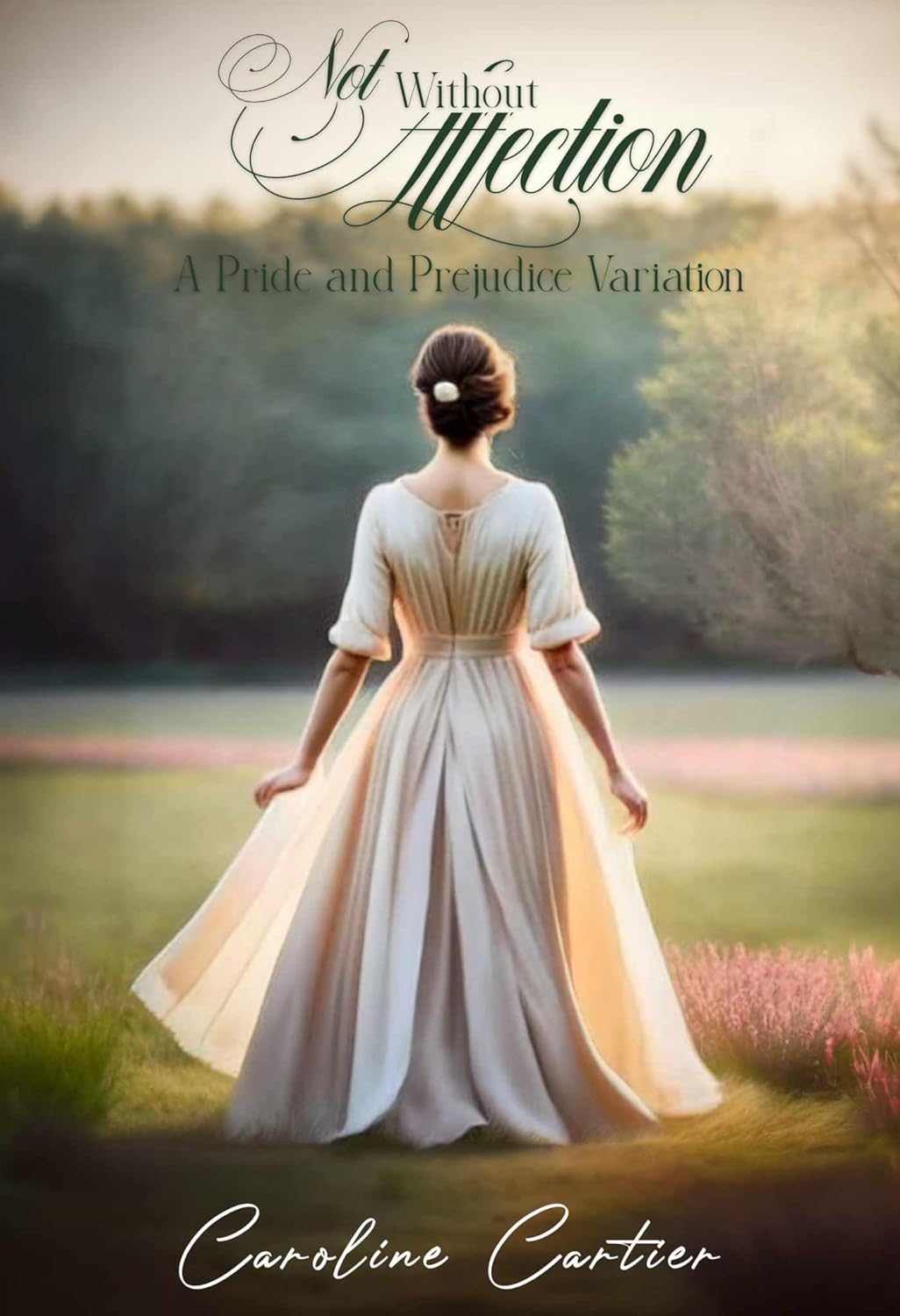
I always find variations with Mr. Collins as a villain to be interesting. Austen portrays him as a buffoon, but he has a rather sinister amount of power over the women of the Bennet family, so I think this is a trope that is often explored and for which there is a lot of room for variation. This version had some well-done elements, but in general, it was kind of all over the place. For instance, the whole subplot with Lady Amelia at the end came out of left field, made little sense, and seemed totally unnecessary to the story. I was also frustrated that Elizabeth seems to understand Wickham's underlying perfidy for the first part of the book, then abruptly changes course.
There were some subtle changes to Austen's prose that bothered me and seemed unnecessary. For example, Austen says, of Elizabeth's reaction to seeing Pemberley, "She had never seen a place for which nature had done more, or where natural beauty had been so little counteracted by an awkward taste." The author here changes this to "I cannot think of any place for which nature has done more, or where G-d's natural beauty has been so little restrained by awkward tastes." Is this some sort of Christian fiction virtue signaling? If you are going to quote Austen, just do so-she is the GOAT.