Shabba.
Right, we’ve got that out of the way.
(The record is mentioned once in the book, BTW.)
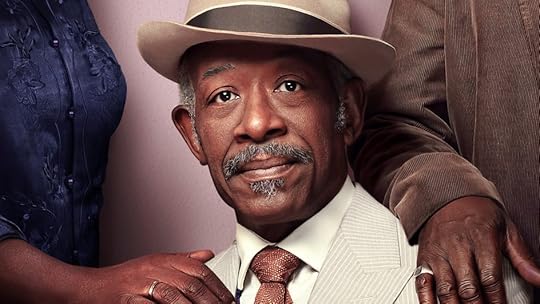
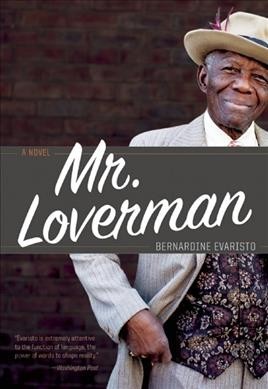
A novel about a seventy-four year old black Caribbean man in East London who’s been in a down-low gay relationship for most of his adult life, and is forced to confront the possibility of divorce from his wife and finally coming out – to some people that may sound rather worthy. Actually, it’s a joy to read: Barrington (aka Barry) is brilliant company as a narrator, he’s funny, well-read and has a great turn of phrase. One of those rare fictional characters where presence and charisma have been created perfectly from mere ink and paper, to the extent that sometimes he makes jokes which from other people might sound uncool, but from him quite the opposite. He’s like an older Peter O’Toole character (but not as decrepit as in Venus) – in the difficult ways as well as the fun ones. Even during the sort of mundane scenes that are often boring in contemporary novels, the smile rarely left my face.
Carmel, Barry’s wife, also has some of the narrative, covering their earlier life together (his is in the present day). Whilst she’s not witty in the same way, these chapters are well written with a slightly poetic structure, more obviously emotive - she's had bouts of severe post-natal depression, a successful career in local government housing, and has suffered under the impression that her husband is a lifelong womaniser - there's lots of big stuff to say because of the amount of time her chapters each cover.
Like characters in Small Island and the sequel to The Lonely Londoners, Barry spotted the opportunity in derelict, cheap houses in then-unfashionable parts of London in the fifties and sixties. By the 2010s he's comfortably established as a well-off landlord, paying for his grandson to attend a top private school. He must be sitting on a fortune, but he and Carmel still live in the first house he bought (he's a Millionaire Next Door type), and they've watched the gentrification of the area happen around and with them. Whilst he hasn't been racially insulted in the street for about twenty years, he still experiences some frostiness in wealthy and central areas of London. The contrast in the acceptance of his wife and elder daughter in senior jobs in local authorities - where they could even be part of a majority in some departments - versus the blocks his other daughter's found in the world of fashion, ring completely true with the compartmentalised communities and sets of attitudes I've noticed in big English cities. (If you work and live in certain highly integrated occupational or geographical areas, it's possible to perceive racism as no longer a daily problem - but there are different worlds not very far away where it still is.)
Without actually declaring themselves, Barry and Morris, his best mate (and partner) have made friends with some locals who implicitly get his relationship situation, including an old health-food shop owner who arrived with the white hippie trustafarians of the 60s and 70s, and a former friend of his daughter, a lesbian from Montserrat who was bravely out from the late 70s onwards. Carmel, meanwhile, socialises mostly with her Pentecostal Christian friends. It's evident that homophobia - from religious people, and in popular culture, such as dancehall lyrics (Barry and Morris still like going clubbing) and violence against 'batty men' - feels a closer, more contemporary threat to Barry than it might for a white bloke of similar social standing. Although a number of characters disagree with Carmel’s opinions about homosexuality, the narrative doesn’t judge her. And if you’ve been around someone like her as, say, a colleague or neighbour, that kind of neutrality, not just dismissing her as a bigot, and seeing different sides of her, whilst keeping something reserved, is familiar.
Okay, there are moments in the book that are a bit two-dimensional or cartoonish. And can you really have a novel about the lives of gay men who sometimes cruised in the late 70s without once alluding to HIV, luck, acquaintances lost? A while ago I might have given 4 or 4.5 stars but right now I’m tired of all that stingy cheese-paring bits of stars: I’ve given so few 5s this year (and am also retrospectively bumping up one or two of the most enjoyable or impressive books).
This book and its central character are really likeable and entertaining. That’s why more people should read it. It also happens to say a lot of the right things and to fit the criteria of those who like to preach demographic quotas for leisure reading – who too often say people *should* read a book because of representation issues, rather than recommending something because it’s well written and/or fun. It’s intersectional without using the term – a word which the narrator would surely make fun of whilst also kind of seeing the point. The most right-on readers could emphasis the pain this man has caused his family, others can enjoy the character as a loveable, stylish, witty rogue - the different sides are all there.