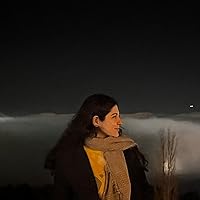
a favorite and it is blowing now fabulous leaves all over:
O wild West Wind, thou breath of Autumn's being, Thou, from whose unseen presence the leaves dead Are driven, like ghosts from an enchanter fleeing,
Yellow, and black, and pale, and hectic red, Pestilence-stricken multitudes: O thou, Who chariotest to their dark wintry bed
The winged seeds, where they lie cold and low, Each like a corpse within its grave, until Thine azure sister of the Spring shall blow
Her clarion o'er the dreaming earth, and fill (Driving sweet buds like flocks to feed in air) With living hues and odours plain and hill:
Wild Spirit, which art moving everywhere; Destroyer and preserver; hear, oh hear!
II Thou on whose stream, mid the steep sky's commotion, Loose clouds like earth's decaying leaves are shed, Shook from the tangled boughs of Heaven and Ocean,
Angels of rain and lightning: there are spread On the blue surface of thine aëry surge, Like the bright hair uplifted from the head
Of some fierce Maenad, even from the dim verge Of the horizon to the zenith's height, The locks of the approaching storm. Thou dirge
Of the dying year, to which this closing night Will be the dome of a vast sepulchre, Vaulted with all thy congregated might
Of vapours, from whose solid atmosphere Black rain, and fire, and hail will burst: oh hear!
III Thou who didst waken from his summer dreams The blue Mediterranean, where he lay, Lull'd by the coil of his crystalline streams,
Beside a pumice isle in Baiae's bay, And saw in sleep old palaces and towers Quivering within the wave's intenser day,
All overgrown with azure moss and flowers So sweet, the sense faints picturing them! Thou For whose path the Atlantic's level powers
Cleave themselves into chasms, while far below The sea-blooms and the oozy woods which wear The sapless foliage of the ocean, know
Thy voice, and suddenly grow gray with fear, And tremble and despoil themselves: oh hear!
IV If I were a dead leaf thou mightest bear; If I were a swift cloud to fly with thee; A wave to pant beneath thy power, and share
The impulse of thy strength, only less free Than thou, O uncontrollable! If even I were as in my boyhood, and could be
The comrade of thy wanderings over Heaven, As then, when to outstrip thy skiey speed Scarce seem'd a vision; I would ne'er have striven
As thus with thee in prayer in my sore need. Oh, lift me as a wave, a leaf, a cloud! I fall upon the thorns of life! I bleed!
A heavy weight of hours has chain'd and bow'd One too like thee: tameless, and swift, and proud.
V Make me thy lyre, even as the forest is: What if my leaves are falling like its own! The tumult of thy mighty harmonies
Will take from both a deep, autumnal tone, Sweet though in sadness. Be thou, Spirit fierce, My spirit! Be thou me, impetuous one!
Drive my dead thoughts over the universe Like wither'd leaves to quicken a new birth! And, by the incantation of this verse,
Scatter, as from an unextinguish'd hearth Ashes and sparks, my words among mankind! Be through my lips to unawaken'd earth
The trumpet of a prophecy! O Wind, If Winter comes, can Spring be far behind?
I O wild West Wind, thou breath of Autumn's being, Thou, from whose unseen presence the leaves dead Are driven, like ghosts from an enchanter fleeing,
Yellow, and black, and pale, and hectic red, Pestilence-stricken multitudes: O thou, Who chariotest to their dark wintry bed
The winged seeds, where they lie cold and low, Each like a corpse within its grave, until Thine azure sister of the Spring shall blow
Her clarion o'er the dreaming earth, and fill (Driving sweet buds like flocks to feed in air) With living hues and odours plain and hill:
Wild Spirit, which art moving everywhere; Destroyer and preserver; hear, oh hear!
II Thou on whose stream, mid the steep sky's commotion, Loose clouds like earth's decaying leaves are shed, Shook from the tangled boughs of Heaven and Ocean,
Angels of rain and lightning: there are spread On the blue surface of thine aëry surge, Like the bright hair uplifted from the head
Of some fierce Maenad, even from the dim verge Of the horizon to the zenith's height, The locks of the approaching storm. Thou dirge
Of the dying year, to which this closing night Will be the dome of a vast sepulchre, Vaulted with all thy congregated might
Of vapours, from whose solid atmosphere Black rain, and fire, and hail will burst: oh hear!
III Thou who didst waken from his summer dreams The blue Mediterranean, where he lay, Lull'd by the coil of his crystalline streams,
Beside a pumice isle in Baiae's bay, And saw in sleep old palaces and towers Quivering within the wave's intenser day,
All overgrown with azure moss and flowers So sweet, the sense faints picturing them! Thou For whose path the Atlantic's level powers
Cleave themselves into chasms, while far below The sea-blooms and the oozy woods which wear The sapless foliage of the ocean, know
Thy voice, and suddenly grow gray with fear, And tremble and despoil themselves: oh hear!
IV If I were a dead leaf thou mightest bear; If I were a swift cloud to fly with thee; A wave to pant beneath thy power, and share
The impulse of thy strength, only less free Than thou, O uncontrollable! If even I were as in my boyhood, and could be
The comrade of thy wanderings over Heaven, As then, when to outstrip thy skiey speed Scarce seem'd a vision; I would ne'er have striven
As thus with thee in prayer in my sore need. Oh, lift me as a wave, a leaf, a cloud! I fall upon the thorns of life! I bleed!
A heavy weight of hours has chain'd and bow'd One too like thee: tameless, and swift, and proud.
V Make me thy lyre, even as the forest is: What if my leaves are falling like its own! The tumult of thy mighty harmonies
Will take from both a deep, autumnal tone, Sweet though in sadness. Be thou, Spirit fierce, My spirit! Be thou me, impetuous one!
Drive my dead thoughts over the universe Like wither'd leaves to quicken a new birth! And, by the incantation of this verse,
Scatter, as from an unextinguish'd hearth Ashes and sparks, my words among mankind! Be through my lips to unawaken'd earth
The trumpet of a prophecy! O Wind, If Winter comes, can Spring be far behind?
I've quite enjoyed some of Shelley's shorter poetry and I'd been itching to read this. It's a really lovely poem, with very strong themes of nature, mortality, and revolution and change. If you are new to poetry or unfamiliar with Romantic period poetry, it may be helpful to read through this poem once, then read an analysis on it. I usually always do after I read something just to be clear I understood it and took everything from it that I could have, just in case! I recommend Shmoop because I like their style.
This poem can be difficult to understand if you're unfamiliar with Shelley's style and even if you are familiar with it, you might want to give it a second read. I found I definitely needed the second read to really digest it! But I don't mind that. I really love Percy Bysshe Shelley and I loved West Wind. Around the time he wrote this, he and his wife, Mary Shelley had just lost their son, William. Percy uses strong imagery of death and hits on the theme of mortality constantly in this poem, which I can only relate to the recent loss of his son. Examples: "Thou, from whose unseen presence the leaves dead / Are driven, like ghosts from an enchanter fleeing" and "Each like a corpse within its grace, until / Thine azure sister of the Spring shall blow"
However, Shelley also talks a lot about the cyclicity of seasons and regeneration come Spring. I think, perhaps, this provides insight into his deep feelings over the loss of his son and how he was trying to cope with it. Shelley continues in saying that he wishes to be spread by the wind, like the "leaves dead," and have his thoughts be spread out among people. Shelley was incredibly radical, politically and socially, as well as in literary terms; so, wishing to have his ideas spread out to others in the hopes of inciting change and revolution is not surprising to hear. I enjoy the way he uses the ways of the wind, how it causes such things like the spreading of seeds, which compares to the way he wants his thoughts spread, like seeds in other peoples' minds.
This is one of my favorite Percy Bysshe Shelley poems and I highly recommend it, though you may need to give it a second read or use the help of an analysis if you're unfamiliar with his work or Romantic period poetry. Ode of the West Wind is a very well-written and well-structured poem, with very strong themes that he carries very craftily throughout the entirety of the poem.
Quotes: "Loose clouds like earth's decaying leaves are shed, / Shook from the tangled bough of Heaven and Ocean"
"I fall upon the thorns of life! I bleed!"
"The trumpet of a prophecy! O Wind, / If Winder comes, can Spring be far behind?"
This is a beautiful and poignant poem about a man realizing that the west wind brings autumn and this winter, yet has the forethought to also realize if it brings winter, it also brings spring. As I said, it's a beautiful and poignant poem.
“Oh, lift me as a wave, a leaf, a cloud! I fall upon the thorns of life! I bleed!”
The West Wind is not peaceful or gentle. It is, as Shelley calls it, “the breath of Autumn’s being.” Autumn is a season of transition , when summer’s abundance fades, and death prepares the way for renewal. The West Wind mirrors this: it destroys, but it also preserves.
In Indian mythology, Shiva is the destroyer while Vishnu is the preserver. Shelley’s wind embodies both , sweeping away the sick, fallen leaves, while at the same time tucking seeds beneath the snow, safeguarding life until spring returns in fresh hues. Death is inevitable, but rebirth is necessary.
Adore this poem so much, I have to count it as a read on here. I’ve read it at least five times today, and completely torn it to pieces with annotations and thoughts. Side nerdy note: I really like terza rima in poetry.
Very interesting take on the decay of the west. In this instance, the author treats the decay as a necessary action that will allow for rebirth (Herman Hesse explores a similar theme in his novel Siddhartha).
It’s almost as if a great cleansing occurs, paving way for a new rise.
The speaker adresses the West Wind by calling it "Wild". He evaluates it as a destroyer and preserver at the same time. He is of the view that this wind takes the old and pale leaves away and grows the new seeds. The writer is may of the view that Westerns are making progresses amd eliminating the useless things. Is it so by the way?
this poem was a great innovation when it first came out. its revolutionary soul was perfectly depicted through the amazing words of the poet, i love it
⭐ Ode to the West Wind — Nostalgic, Powerful, and a Bit Elusive
Reading Ode to the West Wind takes me back to my 10th standard English class — the memory of encountering Shelley’s words for the first time still lingers like the wind itself: strong, sweeping, and slightly mysterious.
At that age, I remember being struck by the intensity of the imagery — the storms, the falling leaves, the wild energy of the west wind itself — yet I also found it hard to fully decipher what each line meant. Even now, reading it again, there’s a certain elusiveness in Shelley’s words that keeps the poem hovering between clarity and mystery.
What I love about it is the emotional power. You can feel the poet’s longing, his hope for renewal, and the deep connection he draws between nature and human experience, even if the exact meaning of some lines slips through your fingers. There’s a rhythm and a force in the language that makes it feel alive, almost like the wind is speaking directly to you.
For me, this poem isn’t just about understanding every metaphor; it’s about experiencing it, letting the energy and the melancholy wash over you, and remembering the first time you felt poetry hit with real weight. Nostalgic, stirring, and just a little elusive — Ode to the West Wind is a poem I’ll keep returning to, even if I don’t fully grasp every line.
Tahla balada se mi prostě zapsala do srdce. Měla jsem ji číst v němčině, ale k dispozici jsem měla překlad ze začátku 20. století, a popravdě jsem měla problém pochopit ji. Tak jsem si ji přečetla v originále. To už bylo lepší (což mě překvapilo, vzhledem k tomu, jak málo s angličtinou v posledních měsících pracuji). No a nakonec mi to nedalo a zachtělo se mi porovnat originál také s českým překladem (od Jarmily Urbánkové, ne s tím od Vrchlického). Úplně nejvíc mě zasáhl čtvrtý zpěv. A obecně to spojení něčeho "špatného" a zároveň něco nového, plného naděje, ta touha po změně, odhodlání... A tolik drobných symbolů, které se dají vykládat samozřejmě z perspektivy "teď zkoumáme, co je tu romantického", ale mohou vás zasáhnout i osobně, protože některé problémy se neřeší pouze v určitých epochách (literární) historie, ale pořád. Minimálně na osobní rovině. Romantismus je mi sympatický (a vždycky byl) právě pro svou subjektivitu, pro osobní nasazení autorových myšlenek a pocitů. Jasně, ne každé dílo spadající sem mě zaujalo nebo nadchlo, ale většina přeci jen ano. No a právě Óda západnímu větru všemu nasadila korunu.
Percy Bysshe Shelley এই কবিতায় পশ্চিমা বাতাসকে শুধু প্রকৃতির শক্তি হিসেবে নয়, পরিবর্তন ও বিপ্লবের প্রতীক হিসেবেও উপস্থাপন করেছেন। ভাষা অত্যন্ত শক্তিশালী, সুরেলা এবং আবেগপূর্ণ; প্রতিটি canto-তে এক ধরনের তীব্র গতি অনুভব করা যায়। Shelley-এর হতাশা, আশা এবং নতুন সূচনার আকাঙ্ক্ষা কবিতাটিকে গভীর অর্থপূর্ণ করে তোলে। বিশেষ করে শেষের লাইন — “If Winter comes, can Spring be far behind?” — আশাবাদ ও পুনর্জাগরণের এক অবিস্মরণীয় বার্তা হয়ে আছে। Romantic poetry-এর মধ্যে এটি সবচেয়ে প্রভাবশালী ও অনুপ্রেরণামূলক কবিতাগুলোর একটি।
Short and powerful, Shelly’s beautiful use of language and rhythm in this poem invoke wonderful imagery. It is a poem full of passion and life, with elegant descriptions and bold vocabulary— perfectly portraying its themes of death, rebirth, and strength. A beautiful, short piece that I truly and thoroughly enjoyed.
Oh, lift me as a wave, a leaf, a cloud! I fall upon the thorns of life! I bleed!
We are as helpless, as wounded, as shattered as Shelley was 200 years ago. How heart breaking is it that we experience same shattered feelings with people of places we never been to, and of time that is unknown to us.
I was in my customs class and honestly anything that has to do with customs processes makes me feel dumb so I just pulled this out on a poetry site and read it as I pretended to be working on the assignment we had.
"Ode to the West Wind" is an enchantigly written poem about the beauty of nature. This is certainly my favorite kind of romatic poetry. I do suspect, however, that the seasonal change in this work is a metaphor for social change, especially when keeping Shelley's political positions in mind.