"Mischief works superbly as a social satire and examination of the human condition... At times Wilson's story approaches Swift's Gulliver's Travels in its rigour, humour and moral force. Hugely recommended." Independent on Sunday
"A sparkling gem.. a marvellous deadpan act, conjuring outrageous tricks." GQ
Shortlisted for The Whitbread Fiction Prize
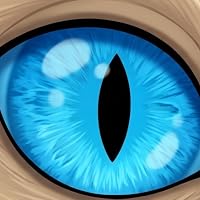
Charlie Duckworth has orange skin, crocus yellow eyes, a solitary tuft of black hair on his head, and a penis twisted like a corkscrew. Unusual for Islington, but natural for the last surviving member of the Brazilian Xique Xique tribe. Wrenched from his native home by a well-meaning zoologist, Charlie is brought to London and given an unremarkable, middle-class, English upbringing. But his strange looks and gentle spirit leave him sadly ill-equipped to deal with human prejudice...
Christopher Wilson has written several novels, including - Gallimauf's Gospel, Baa, Blueglass, Mischief, Fou, The Wurd, The Ballad of Lee Cotton, Nookie, and The Zoo. His work has been translated into several languages, adapted for the stage, long-listed for the Booker Prize, twice shortlisted for the Whitbread Fiction Prize, and shortlisted for the Historical Writers Association Gold Crown.
Chris wrote a doctorate on the psychology of humour at The London School of Economics, worked as a research psychologist at University College London, The London Hospital and The Arts Council, and lectured for ten years at London University Goldsmiths College. He has taught creative writing in prisons, at university and for The Arvon Foundation.
I guess there are reasons why this book is out of print and so few have read it but literary merit isn’t one. It’s razor sharp satire and very entertaining. Yet there isn’t a lot of info about it other than a few summaries that are rehashed here and there. The cover on the version above couldn’t have helped it’s popularity—if the paperback I picked up had that creature on it I probably would have left it there.
The author had a phd in the “psychology of humour”, which somehow didn’t surprise me despite not knowing that was a thing. The main character becomes (and is later treated by) a psychologist and the book is funny as hell. It lampoons boarding schools and university (following a rich tradition in British literature), work, relationships, and just what it means to be human. Prejudice is a major theme. I read that the author also wrote a book about a black child born with white skin. I found that interesting because while reading this book I remember being reminded of the movies Starman and The Brother From Another Planet, also fish out of water stories.
I love books that make me laugh at how ridiculous we are and this book did as good a job of that as any Ive read for a long time.
Chris Wilson's "Mischief" is one of the funniest books I have ever read. It attests to Mr. Wilson's literary skills that the book is hilarious while being nothing less than a philosophical treatise on the weaknesses and evils of human nature. To provide a sample of Mr. Wilson's writing and humor here is a fragment where he compares ideas and people: "Principles are precious, pure and brilliant; whilst people are dull and sordid [...] Which do you prefer - Truth, Art or your neighbour?"
Charlie, the narrator of the story, is found as a baby in Brazilian rain-forest by a British zoologist, Dr. Duckworth, who adopts him and takes him to England. Charlie learns that he is the last of the Xique Xique tribe. As he is almost hairless and orange-colored and as he seems to be developing at a slower rate than other people, he believes he is not a human being but rather a hominid creature, a different species than homo sapiens. Even so, he completes his university education, finds a job, and manages to succeed in quite a few sexual conquests. There is much more to the plot but it does not need to be divulged.
Charlie's special circumstances give him an opportunity to illuminate and condemn some of the worst vices of human race: hypocrisy, vanity, stupidity, affinity to violence, etc. "People - the hyenas of creation." is the most astute characterization of the human nature I have ever encountered. The "learned class", the academia, is the subject of especially biting satire, and rightly so. The novel is full of wisdom and despite its philosophical themes it is never boring. Clever word-plays and often outrageously funny humor make the book a pleasure to read.
An audit of the entire species, conducted by the last surviving member of an Amazonian tribe who has been raised in Islington and concludes, from the evidence of his own body, that he must be some kind of ape.
Charlie is guileless, six foot nine, and cannot stop smiling at people in trouble, which they take amiss. He goes to boarding school, then university, and the send-up of both is very funny. That's the book you think you're reading.
Then two things happen. He works out what he is and tries to get back to Brazil, and nobody is interested in a tribe that's extinct apart from him. And he falls in love with another imperfect creature and loses her when she stops being imperfect. She gets fixed, and being fixed takes her somewhere he can't follow.
By the end he fits in. He's learned it. That's the horror, and Wilson lets it sit there without a word of comment.
So yes: humans are incurable dicks, established with serene clarity over 198 pages. And then he asks to join anyway, because what else is there. And he isn't being polite. He's got nowhere to go back to and nobody left who was like him.
An entertaining, original book about Charlie, the last surviving member of an obscure Brazilian group. He's actually ape-like (sort of), but he learns to descend into humanity in order to survive. One of a kind.
This quirky novel has far more going for it than simply wit. I picked it up expecting a light read and was pleased to find shrewd commentary upon the human condition as well as of the choices we make in our behavior toward all other living beings.
By far one of the wittiest and wickedly funny explorations of the human condition I've read in a long time. It begins with what may (or not) be a simple act of kindness, namely the adoption of an abandoned child in the Amazonian rain-forest by a British zoologist, but quickly develops into a brutal but nonetheless side-splittingly funny analysis of human nature. Brought to England to be raised and educated, Charlie, the principal character and narrator, suffers an unparalleled crisis of identity. Due to his somewhat unusual appearance i.e. bright orange skin, yellow eyes, virtually bald from head to toe, eventually growing to be over seven feet tall, not to mention other peculiarities of his anatomy, Charlie believes himself to be some sort of ape, and not of the human species. Despite completing his education, getting a job, enjoying a number of relationships, and being obviously intelligent and articulate, this last trait being unique to humans, this is a question that is intentionally never truly resolved. Although not believing himself to be human, Charlie desperately wants to be accepted as such, or at least be accepted into human society. The problem facing Charlie is that he possesses none of the human character vices such as greed, anger, intolerance, aggression, and deceitfulness to name but a few, whilst at the same time being over endowed with an abundance of redeeming qualities such as empathy, kindness, and a distaste for violence of any kind. In his struggle to be human, Charlie tries to understand and embrace the former. It is hard for the reader not be sympathetic to his plight, whilst at the sane time secretly hoping that he fails, and retains everything that is good about himself. The book itself has a very literary and academic feel to it yet still retains an easy to read style. If I had to express just one criticism it would be that perhaps the author's account of humanity is just a tad too pessimistic, but overall, a brilliant satire much in the vein of Swift's Gulliver's Travels, though with Swift it is more of a political satire; both comic and sad in equal measure, occasionally graphic though not obscenely so, this is a book that cleverly dissects human nature, and to a lesser extent, the academic world environment about him. Thoroughly enjoyable.
An engaging read, if ultimately difficult to identify with (perhaps a bit dated and a bit alienating, the latter on purpose).
The writing style is fluid, if trying a bit too hard at times to hit a note of humor à la Catch 22 (it never quite gets there, and Yossarian is a more entertaining figure than Charlie).
The hook's novelty kept me reading at a point when I wasn't sure I would keep on, but it wore off after a while, and though it's purposefully unclear whether the main character's hypothesis about his own species is correct or merely a delusion, I felt frustrated by the mystery.
Overall, a solid read, but no passages particularly moved me.
Very enjoyable book about a found child in the Brazilian forest. He's adopted by an English couple who raises him as a normal human being but he's copper with yellow eyes and about 7 foot tall. He's closer to ape than human but has a serious identity disorder.
Very well written and in an ingenious way, insightful to the human condition.
Coming of age tale of a young non-human primate who learns of his otherness through solitary textual investigation as a teenager. He was discovered as an infant alone in a remote area of Brazil where one of the biologist/explorers, Dr. Duckworth, somewhat unwillingly becomes his adoptive father. He is brought back to England. Ironies abound. The biologist parent not recognizing the telltale signs that he belongs to another species, the kindness and consideration he exhibits in stark contrast to his human counterparts, his ability to excel academically, how he decides to learn to behave in a more human way which means becoming more brutish, duplicitous, manipulative. Sweet but sad tale of his ultimate surrender to behaving as one would expect of a member of our species.