

What do you think?
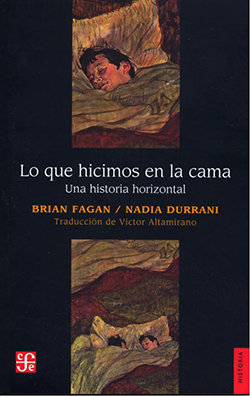
Lo que hicimos en la cama. Una historia horizontal
Luis XIV gobernó Francia desde su dormitorio. Durante la segunda Guerra Mundial Winston Churchill gobernó Gran Bretaña desde el suyo. Los viajeros acostumbraban acostarse con extraños y familias enteras compartían la cama en muchos hogares preindustriales. Las camas era artículos caros y, a menudo, de exhibición. A Tutankamón lo enterraron en un lecho de oro; los griegos acaudalados partían al más allá en camas-comedor y a los victorianos de clase media fallecidos se les reclinaba sobre una cama en el salón.
En esta amplia historia social, que cubre los últimos 70000 años, Brian Fagan y Nadia Durrani analizan el papel infinitamente variado a lo largo del tiempo. Este era un lugar para el sexo, la muerte, el parto, la naración de historias y la socialización, así como para dormir. ¿Pero quién hacía qué con quién, por qué razones, y como era que esto podía variar increíblemente según el momento y el lugar? Es apenas en la era moderna que la cama se ha transformado en una zona privada y oculta, y en gran medida su rica historia social ha quedado en el olvido.
En esta amplia historia social, que cubre los últimos 70000 años, Brian Fagan y Nadia Durrani analizan el papel infinitamente variado a lo largo del tiempo. Este era un lugar para el sexo, la muerte, el parto, la naración de historias y la socialización, así como para dormir. ¿Pero quién hacía qué con quién, por qué razones, y como era que esto podía variar increíblemente según el momento y el lugar? Es apenas en la era moderna que la cama se ha transformado en una zona privada y oculta, y en gran medida su rica historia social ha quedado en el olvido.
236 pages, Paperback
First published September 24, 2019
About the author
Brian M. Fagan
144 books283 followersBrian Murray Fagan was a British author of popular archaeology books and a professor emeritus of Anthropology at the University of California, Santa Barbara.
Ratings & Reviews
Friends & Following
Create a free account to discover what your friends think of this book!
Community Reviews
Displaying 1 - 30 of 59 reviews

September 21, 2019
How I read this: Free ebook copy received through NetGalley
Despite the eyebrow-lifting name, this was kind of a dull book on how our understanding and use of the bed and bedroom evolved. The book starts with the sleeping practices of the earliest humans to the ones of today and details the evolution of communal sleeping into private sleeping that we prefer now. It also goes into the concept of privacy, which basically didn't exist up to the Victorian times (humans often slept in groups or shared beds with family members or even guests, regardless of relationships.) That part was interesting to read about. There is also info about the tradition of birthing beds and death beds, as well as beds being places of governance (the "state bed" which was often a place Kings or Queens ruled from.) All the information is mildly interesting, but it didn't engage me all that much, unfortunately.
I thank the publisher for giving me a free copy of the ebook in exchange to my honest review. This has not affected my opinion.
Despite the eyebrow-lifting name, this was kind of a dull book on how our understanding and use of the bed and bedroom evolved. The book starts with the sleeping practices of the earliest humans to the ones of today and details the evolution of communal sleeping into private sleeping that we prefer now. It also goes into the concept of privacy, which basically didn't exist up to the Victorian times (humans often slept in groups or shared beds with family members or even guests, regardless of relationships.) That part was interesting to read about. There is also info about the tradition of birthing beds and death beds, as well as beds being places of governance (the "state bed" which was often a place Kings or Queens ruled from.) All the information is mildly interesting, but it didn't engage me all that much, unfortunately.
I thank the publisher for giving me a free copy of the ebook in exchange to my honest review. This has not affected my opinion.

June 29, 2021
Milline tore raamat ja keegi pole sellest mulle kõssanudki, sattus lihtsalt raamatukogust läbi joostes teele ette.
Voodi võetakse üksipulgi lahti, ja mitte ainult ehitusdetailides, kuigi ka seda tuleb ette. Ennekõike ikkagi kõik see, mida voodis tehtud on. Sünnist surmani. Lisaks voodis toimunud seltsielu ja sealt valitsetud riigid. Porduelu, mis sõltuvalt ajastust ja geograafilisest asukohast võis tähendada kõikvõimalikke kombinatsioone. Leheruumi jagus ka kokkupandavatele reisivooditele (koguni magamiskottide kujunemisele) ja unerohustki oli juttu.
Lohutav oli jälgida mitmete arvamuste/uskumuste muutust läbi ajaloo. Olgu selleks magamistoa õhk (kord peeti ebatervislikuks ruumi tuulutamist, rohked ja paksud voodieesriided aitasid hoida hea ummuksis õhu, siis jälle vastupidi), voodis pikali sünnitamine (see ajalugu oli ka põnev lugeda, m i k s üldse naised voodisse suruti sünnitama), väikelaste magamine koos vanema(te)ga või voodilutikad (arvati aitavat nii mõnegi tervisehäda puhul... no tõesti!).
Muide, suhtumine on olnud erinev ka une kestusesse. Meist paljude uskumus, et üks pikk ja terviklik uni on efektiivse päeva alus, ei pruugi pädeda. Kahefaasiline uni on hoopis tõhusam. Ja see ei pea tähendama ainult seda, et magad pika ööune ja sutsaka lõunaund, vaid võibki olla kahes osas ööuni. Viimasel ajal täitsa minu teema.
Väga põnev lugemine ja kindel soovitus kõigile neile, kes voodist lugu peavad!
P.S. Eriti meeldis mulle (ei mäleta, millal ja kelle) suhtumine, et padjad on naiste pärusmaa ja meestele on sobilik puuhalg pea all magada.
Voodi võetakse üksipulgi lahti, ja mitte ainult ehitusdetailides, kuigi ka seda tuleb ette. Ennekõike ikkagi kõik see, mida voodis tehtud on. Sünnist surmani. Lisaks voodis toimunud seltsielu ja sealt valitsetud riigid. Porduelu, mis sõltuvalt ajastust ja geograafilisest asukohast võis tähendada kõikvõimalikke kombinatsioone. Leheruumi jagus ka kokkupandavatele reisivooditele (koguni magamiskottide kujunemisele) ja unerohustki oli juttu.
Lohutav oli jälgida mitmete arvamuste/uskumuste muutust läbi ajaloo. Olgu selleks magamistoa õhk (kord peeti ebatervislikuks ruumi tuulutamist, rohked ja paksud voodieesriided aitasid hoida hea ummuksis õhu, siis jälle vastupidi), voodis pikali sünnitamine (see ajalugu oli ka põnev lugeda, m i k s üldse naised voodisse suruti sünnitama), väikelaste magamine koos vanema(te)ga või voodilutikad (arvati aitavat nii mõnegi tervisehäda puhul... no tõesti!).
Muide, suhtumine on olnud erinev ka une kestusesse. Meist paljude uskumus, et üks pikk ja terviklik uni on efektiivse päeva alus, ei pruugi pädeda. Kahefaasiline uni on hoopis tõhusam. Ja see ei pea tähendama ainult seda, et magad pika ööune ja sutsaka lõunaund, vaid võibki olla kahes osas ööuni. Viimasel ajal täitsa minu teema.
Väga põnev lugemine ja kindel soovitus kõigile neile, kes voodist lugu peavad!
P.S. Eriti meeldis mulle (ei mäleta, millal ja kelle) suhtumine, et padjad on naiste pärusmaa ja meestele on sobilik puuhalg pea all magada.

September 18, 2019
I'm fascinated by sleep, so when I saw What We Did In Bed: A Horizontal History by Brian Fagan & Nadia Durrani was available on NetGalley it was a no-brainer. This non-fiction gem contains a history of beds through time, including changes in beds from the Egyptian Pharaohs all the way to the modern age. Sleeping habits are discussed, including bed sharing amongst family members and travelling strangers and co-sleeping with children.
Dreams, sex, childbirth and death are all activities that happen in bed and are given much consideration within the text.
Futons, reed mats, raised beds, beds on ropes, bundling boards, truckle beds, pallet beds, waterbeds and inner spring beds are all covered with interest. Deathbeds and funerary couches were a highlight, as were the seemingly excessive bedding layers required to make a Victorian era bed.
It was fascinating to learn medieval Europeans slept at an angle partially upright, and that the witching hour was first recorded in 1883 and took place between midnight and 4.00AM.
I enjoyed reading about famous people who required very little sleep, including Winston Churchill, Leonardo da Vinci, Voltaire, Benjamin Franklin, Thomas Edison and Napoleon. Modern day 'short sleepers' include Margaret Thatcher, Bill Clinton and Donald Trump.
However, I was most pleased to discover What We Did In Bed included one of my favourite sleep related topics: segmented sleep and the fact that we used to sleep in two four hour chunks with a gap of wakefulness in between. The author of one of my favourite books At Day's Close: Night in Times Past by A. Roger Ekirch was referenced together with his thoughts on biphasic sleep.
Authors Fagan and Durrani explain on page 4:
".. a practice known as segmented sleep that seems to have been commonplace before electric light turned night into day. People slept for, say, four hours, after which they would awaken and spend time having sex, analyzing dreams, praying, doing chores, meeting friends, or committing crimes and other devilish deeds, and then return to bed for another four hours or so."
Here an interesting quote about bed design from page 4:
"By Tutankhamun's time, around the mid-fourteenth century BC, the basic design of the bed (as we would recognize it) was well established, albeit slightly higher at the pillow end and with a footboard to prevent the sleeper from sliding off."
And I enjoyed this tidbit from France during the reign of the Sun King from page 158:
"At Versailles a valet always sat inside the wooden enclosure around the king's bed because the court was concerned about sorcery. An enemy of the monarch could sprinkle spell-carrying mixtures on the bed that could endanger the occupant."
In conclusion, there was plenty to bookmark and highlight during the reading process, but I'm not convinced the title accurately sums up the content. Perhaps 'A Horizontal History' might have been more accurate. While the book did cover sleep, dreams, sex, childbirth, illness and death, there wasn't enough focus on other recreational activities that we engage in right now whilst in bed. I guess I was left wanting more.
What We Did In Bed: A Horizontal History by Brian Fagan & Nadia Durrani is recommended reading for anyone with an interest in beds and sleep across history.
Dreams, sex, childbirth and death are all activities that happen in bed and are given much consideration within the text.
Futons, reed mats, raised beds, beds on ropes, bundling boards, truckle beds, pallet beds, waterbeds and inner spring beds are all covered with interest. Deathbeds and funerary couches were a highlight, as were the seemingly excessive bedding layers required to make a Victorian era bed.
It was fascinating to learn medieval Europeans slept at an angle partially upright, and that the witching hour was first recorded in 1883 and took place between midnight and 4.00AM.
I enjoyed reading about famous people who required very little sleep, including Winston Churchill, Leonardo da Vinci, Voltaire, Benjamin Franklin, Thomas Edison and Napoleon. Modern day 'short sleepers' include Margaret Thatcher, Bill Clinton and Donald Trump.
However, I was most pleased to discover What We Did In Bed included one of my favourite sleep related topics: segmented sleep and the fact that we used to sleep in two four hour chunks with a gap of wakefulness in between. The author of one of my favourite books At Day's Close: Night in Times Past by A. Roger Ekirch was referenced together with his thoughts on biphasic sleep.
Authors Fagan and Durrani explain on page 4:
".. a practice known as segmented sleep that seems to have been commonplace before electric light turned night into day. People slept for, say, four hours, after which they would awaken and spend time having sex, analyzing dreams, praying, doing chores, meeting friends, or committing crimes and other devilish deeds, and then return to bed for another four hours or so."
Here an interesting quote about bed design from page 4:
"By Tutankhamun's time, around the mid-fourteenth century BC, the basic design of the bed (as we would recognize it) was well established, albeit slightly higher at the pillow end and with a footboard to prevent the sleeper from sliding off."
And I enjoyed this tidbit from France during the reign of the Sun King from page 158:
"At Versailles a valet always sat inside the wooden enclosure around the king's bed because the court was concerned about sorcery. An enemy of the monarch could sprinkle spell-carrying mixtures on the bed that could endanger the occupant."
In conclusion, there was plenty to bookmark and highlight during the reading process, but I'm not convinced the title accurately sums up the content. Perhaps 'A Horizontal History' might have been more accurate. While the book did cover sleep, dreams, sex, childbirth, illness and death, there wasn't enough focus on other recreational activities that we engage in right now whilst in bed. I guess I was left wanting more.
What We Did In Bed: A Horizontal History by Brian Fagan & Nadia Durrani is recommended reading for anyone with an interest in beds and sleep across history.

March 2, 2021
The title alone would have made me pick this up.
What We Did in Bed is about the historical importance of our beds.
This was a fascinating read when you discover beds is a modern concept, including privacy and having your own bedroom.
Despite the interesting facts and tidbits about historical figures, the writing is quite dry, like a textbook and the type teeny tiny, which is not conducive to a person who has worn glasses since she was a teenager.
I enjoyed how the bed has evolved through the years but wanted more fun facts about the bedroom habits of famous people.
What We Did in Bed is about the historical importance of our beds.
This was a fascinating read when you discover beds is a modern concept, including privacy and having your own bedroom.
Despite the interesting facts and tidbits about historical figures, the writing is quite dry, like a textbook and the type teeny tiny, which is not conducive to a person who has worn glasses since she was a teenager.
I enjoyed how the bed has evolved through the years but wanted more fun facts about the bedroom habits of famous people.

December 11, 2025
This was such a great book. Full of interesting information. Much of the information was derived from another book, written in 1962, the first edition that is, the more popular edition was published in 2004, but this book leans heavily on the research of that first book, from 1962, by Lawrence Wright. Still, this book is a more modern book and written in a much more enjoyable and accessible way. Great read, though I was disappointed that there was no information on cast iron antique bed frames. There should have been something written about that rich history, but unfortunately, there was nothing on it. Still, a great book.

January 5, 2025
Aasta esimene✨️📖
Mõnda aega ootel olnud raamat, mis osutus üle ootuste maru huvitavaks! Kuivõrd laiahaardeliselt ning globaalselt on käsitletud voodi/magamisasemete ajalugu. Ja millist rolli see on laiemas sotsiaalses mõistes omanud.
Vast kõige suurema ahhaa- momendina oli lähemalt teada saada kuidas alles 19.sajandist muutus seni justkui kogu ilmarahvale avatud magamistuba ja voodi, tänapäeva mõistes esmakordselt privaatseks ning üha eraldatumaks paigaks kodus.
Igal juhul on see raamat kõigile sotsiaalajaloo huvilistele suurepärane lugemine!🫶
Mõnda aega ootel olnud raamat, mis osutus üle ootuste maru huvitavaks! Kuivõrd laiahaardeliselt ning globaalselt on käsitletud voodi/magamisasemete ajalugu. Ja millist rolli see on laiemas sotsiaalses mõistes omanud.
Vast kõige suurema ahhaa- momendina oli lähemalt teada saada kuidas alles 19.sajandist muutus seni justkui kogu ilmarahvale avatud magamistuba ja voodi, tänapäeva mõistes esmakordselt privaatseks ning üha eraldatumaks paigaks kodus.
Igal juhul on see raamat kõigile sotsiaalajaloo huvilistele suurepärane lugemine!🫶

February 13, 2022
This is a fun history of the bed and its many functions through the ages. If you're looking for a history of sex this will be a disappointment. However, if you're looking for a deep dive into a piece of furniture, this is for you!
This unbiased review is based on a complimentary copy provided by the publisher.
This unbiased review is based on a complimentary copy provided by the publisher.

October 2, 2022
I love a good “history of ____” type of book that traces an item/theme through history. This was an easy little bedside table read.

November 21, 2022
I really enjoy histories of physical culture and everyday objects. Not only do they blur the disciplinary lines between archaeology, anthropology, and history, but they often have an almost Platonic awareness of the world. What I’m referring to here is a tendency to treat the mundane attentively, and to uphold an ontology which separates appearance from reality. If you take a closer look at the world, you start to realize that nothing is mundane, and no subject matter is trivial.
A good example of these philosophical tendencies is What We Did in Bed, a refreshing and entertaining piece of cultural history from Brian Fagan and Nadia Durrani. Although today’s bed is usually reserved for sleep and sex in the Western world, that hasn’t always been the case in the West, nor anywhere else for that matter. For Fagan and Durrani, beds are revelatory objects that have the power to “[…] reveal who we are, how we live, and what we think […]”. A bed is not only a bed; rather, a bed is a meaning-laden socio-cultural product. A bed is more than its mere utility as a piece of furniture, though it is certainly that, too. Beyond the appearance of its everyday use lies a rich background of meanings and symbols, which can be accessed through historical interpretation. In this reading of ‘the everyday’, what appears to be neutral and innocuous on the surface can actually be a portal into the deeper structures of the human condition.
What can a bed reveal about the human condition over time and space? As it turns out, quite a lot, actually. As Fagan and Durrani point out, “[l]ife usually begins and generally ends on a bed”. At one point or another, the bed has been the setting upon which birth, death, and almost everything in between has occurred throughout human history. Beds have been encoded with a near-infinite array of meanings, including different conceptions of privacy, hygiene, gender roles, social status, reproductive practices, funerary rituals, labour relations, and even international diplomacy. The who, what, where, when, why, and how of sleep can reveal the ways in which we think about ourselves and the world. For millennia, all sorts of human needs and values have been inscribed on the bed, that most fundamental of all pieces of furniture. And as an entry point into human history, it’s a pretty fascinating place to climb in.
A good example of these philosophical tendencies is What We Did in Bed, a refreshing and entertaining piece of cultural history from Brian Fagan and Nadia Durrani. Although today’s bed is usually reserved for sleep and sex in the Western world, that hasn’t always been the case in the West, nor anywhere else for that matter. For Fagan and Durrani, beds are revelatory objects that have the power to “[…] reveal who we are, how we live, and what we think […]”. A bed is not only a bed; rather, a bed is a meaning-laden socio-cultural product. A bed is more than its mere utility as a piece of furniture, though it is certainly that, too. Beyond the appearance of its everyday use lies a rich background of meanings and symbols, which can be accessed through historical interpretation. In this reading of ‘the everyday’, what appears to be neutral and innocuous on the surface can actually be a portal into the deeper structures of the human condition.
What can a bed reveal about the human condition over time and space? As it turns out, quite a lot, actually. As Fagan and Durrani point out, “[l]ife usually begins and generally ends on a bed”. At one point or another, the bed has been the setting upon which birth, death, and almost everything in between has occurred throughout human history. Beds have been encoded with a near-infinite array of meanings, including different conceptions of privacy, hygiene, gender roles, social status, reproductive practices, funerary rituals, labour relations, and even international diplomacy. The who, what, where, when, why, and how of sleep can reveal the ways in which we think about ourselves and the world. For millennia, all sorts of human needs and values have been inscribed on the bed, that most fundamental of all pieces of furniture. And as an entry point into human history, it’s a pretty fascinating place to climb in.

June 14, 2022
Ak aj vy máte vrelý vzťah so svojou posteľou :) alebo sa len jednoducho chcete dozvedieť o nej pikošky, ktoré ste zaručene ešte nevedeli, kniha "Čo sme robili v posteli" je presne pre vás.
Ľudia a nie len ľudia majú potrebu spať odjakživa. Ale mali odjakživa aj postele ako ich poznáme dnes? Na čo všetko vedela taká posteľ poslúžiť. Táto publikácia vás chronologicky prevedie jej vývojom a kategóriami - kapitolami, na ktoré využitie bola zameraná. Veľmi mi vyhovovalo, že kniha nebola nudno, rozsiahlo encyklopedicky písaná. Štýl textu bol svieži, moderný, miestami až vtipno, že som sa ozaj bavila. Ale povedzme si pravdu, miestami som z textu bola až znechutená. Ale aj taká je naša história a divné praktiky ľudí. Text je obohatený aj o fotografie, čo vám zaručene nasávanie nových vedomostí spríjemní.
Toto osvieženie na pultoch našich kníhkupectiev rozhodne odporúčam a určite si užijete netradične zameraný pohľad do histórie.
Ľudia a nie len ľudia majú potrebu spať odjakživa. Ale mali odjakživa aj postele ako ich poznáme dnes? Na čo všetko vedela taká posteľ poslúžiť. Táto publikácia vás chronologicky prevedie jej vývojom a kategóriami - kapitolami, na ktoré využitie bola zameraná. Veľmi mi vyhovovalo, že kniha nebola nudno, rozsiahlo encyklopedicky písaná. Štýl textu bol svieži, moderný, miestami až vtipno, že som sa ozaj bavila. Ale povedzme si pravdu, miestami som z textu bola až znechutená. Ale aj taká je naša história a divné praktiky ľudí. Text je obohatený aj o fotografie, čo vám zaručene nasávanie nových vedomostí spríjemní.
Toto osvieženie na pultoch našich kníhkupectiev rozhodne odporúčam a určite si užijete netradične zameraný pohľad do histórie.

March 26, 2024
It’s 3.5 like a 7/10
A book I landed upon by chance, fate or serendipity. I thought to read it on a whim and I am glad I did.
A very unusual book that shares through generations and thousands of years how the following have evolved and shaped - history of bed, sleeping norms , role of bed from being the centre piece of palaces and homes to now a safe private haven.
It talks about bed and the role it played historically in death , births and rituals surrounding both key events. There is in-depth journey of beds being communal and open to becoming individual, of bedfellows and traditions and how sleeping together was such a common practice between friends family foes and even strangers.
It also gives us an insight of how we have complicated the sleeping norms and patterns over a period of time . Some interesting insights and anecdotes across kings , queens, and civilisation.
An absolute delightful read.
A book I landed upon by chance, fate or serendipity. I thought to read it on a whim and I am glad I did.
A very unusual book that shares through generations and thousands of years how the following have evolved and shaped - history of bed, sleeping norms , role of bed from being the centre piece of palaces and homes to now a safe private haven.
It talks about bed and the role it played historically in death , births and rituals surrounding both key events. There is in-depth journey of beds being communal and open to becoming individual, of bedfellows and traditions and how sleeping together was such a common practice between friends family foes and even strangers.
It also gives us an insight of how we have complicated the sleeping norms and patterns over a period of time . Some interesting insights and anecdotes across kings , queens, and civilisation.
An absolute delightful read.

August 21, 2025
Čítanie zaujímavé, preklad dosť mätúci miestami.

November 23, 2021
sel raamatul ja siin leiduvatel faktidel polnud iseenesest midagi viga, hästi kirjutatud ja ladusalt loetav, tõlge ja toimetamine kvaliteetne, ühtegi etteheidet mul pole. ainult et... see teemapüstitus oli mu meelest jaburavõitu ja ei töötanud eriti hästi. tähendab, see polnud mite voodite ega magamise ega millegi sellise ajalugu (mis on okei, sest ma pole kindel, kas sellist ajalugu tarvis on), vaid lihtsalt hulk üldiseid populaarteaduslikke heietusi maailma ja asjade üle, igaüks neist siis mingil moel voodiga seotud (magamine, seks, sünd, surm, reisil magamine, ruumipuudus tänapäeva linnakorterites... misiganes).
kirjutanud on selle arheoloogid, aga arheoloogiat jääb isegi minu, va ajaloopõlguri jaoks kuidagi väheks. algas üsna paljutõotavalt Skara Brae majade ja sealsete voodite kirjeldusega, aga jube palju oli ikka seda, et "tegelikult me ei tea, kõik asitõendid on ammu mädanenud-kõdunenud". eks ma saan aru, et arheoloog pole süüdi ja on ise ka õnnetu, et vanal ajal nii palju asju puust või riidest tehti, aga ikkagi.
ja ka muu jutt oli kõik kuidagi... enne teada põhiosas. kuidas sünnitamine kodudest haiglatesse liikus ja kuidas briti troonipärijate sünni juures pidi veel 20. sajandi esimesel poolel välisminister viibima ja kuidas võõrastemajades võõrastega voodeid jagati ja kuidas Louis mitmesiganes oma voodist riiki valitses ja kõik seda imet vaatamas said käia. tore, kui seda enne ei tea, aga mina teadsin. aa, ja see jutt, kuidas vanasti magati kaks korda öö jooksul, vahepeal oldi üleval? seda ma ka alailma kuskilt kuulen, aga minu meelest pole keegi seda suutnud kuigi veenvalt tõestada. #ajalugupoletäppisteadus
kirjutanud on selle arheoloogid, aga arheoloogiat jääb isegi minu, va ajaloopõlguri jaoks kuidagi väheks. algas üsna paljutõotavalt Skara Brae majade ja sealsete voodite kirjeldusega, aga jube palju oli ikka seda, et "tegelikult me ei tea, kõik asitõendid on ammu mädanenud-kõdunenud". eks ma saan aru, et arheoloog pole süüdi ja on ise ka õnnetu, et vanal ajal nii palju asju puust või riidest tehti, aga ikkagi.
ja ka muu jutt oli kõik kuidagi... enne teada põhiosas. kuidas sünnitamine kodudest haiglatesse liikus ja kuidas briti troonipärijate sünni juures pidi veel 20. sajandi esimesel poolel välisminister viibima ja kuidas võõrastemajades võõrastega voodeid jagati ja kuidas Louis mitmesiganes oma voodist riiki valitses ja kõik seda imet vaatamas said käia. tore, kui seda enne ei tea, aga mina teadsin. aa, ja see jutt, kuidas vanasti magati kaks korda öö jooksul, vahepeal oldi üleval? seda ma ka alailma kuskilt kuulen, aga minu meelest pole keegi seda suutnud kuigi veenvalt tõestada. #ajalugupoletäppisteadus

Want to Read
August 14, 2019WHAT WE DID IN BED is an clever and erudite mico-history regarding humanity's use of the bed. Throughout human history, we have used the bed for far more than just sleeping. The book begins with an exploration of the earliest beds (nests in trees, perhaps?) and then explores the earliest surviving examples of beds. As a personal preference, I enjoy reading, writing, and eating in bed. Apparently, so did our ancestors throughout history! There are lots of fun and fascinating facts to learn within this book. It is a fast but also educational read. WHAT WE DID IN BED is perfect fans of CONSIDER THE FORK and A HISTORY OF THE WORLD IN SIX GLASSES.

January 4, 2020
Beds. Their history, evolution, types of, what they were and are used for (certainly not just sleeping apparently), attitudes to them, beds as status symbols, what is actually meant by the word “bed” – everything you never knew you needed to know is contained in this entertaining and engaging study of beds and bedrooms. Perhaps more a book to dip in and out of rather than plough straight through, as I found the accumulation of facts somewhat overpowering at times, but overall an original and illuminating work of social history.
March 8, 2023
This is not a book about sex! It is a detailed history of the role beds have played in our lives over the millennia. Yes, there is one chapter devoted to sex, however it is presented tastefully. If you enjoy history,and want an entertaining and quick read, you should check this out.
August 7, 2019
What We Did in Bed is interesting and informative. It is a short book that is amusing for some, but is a bit dry. I would buy this as a gift.

May 11, 2022
Zaujímavé čítanie :)

October 11, 2021
Má krásnu obálku od Frenkyho Hříbala, a, čo je super, má aj meno prekladateľa na obálke! Čo už by malo byť new normal, ale nie je, a preto je skvelé, ak to robí malé začínajúce vydavateľstvo.
Každopádne, ak vám nestačí pekná obálka 🙂, toto je značne zaujímavá kniha o tom, akú úlohu hrala posteľ v spoločnosti naprieč dejinami. Posteľ dnes berieme ako niečo výsostne súkromné, čo by vlastne nemalo byť vidieť, ale po väčšinu histórie to tak vôbec nebolo, no a tu máte všetko pekne na kôpke, od egyptských faraónov po stredoveký Londýn, od čínskych cisárov po francúzskych pôrodníkov, a tak celkovo kto spal ako, s kým a kde. Čítanie na dobrú noc ako stvorené.
Jednu prekladateľskú pikošku vám poviem: v stredovekom Anglicku bežne spali pocestní v hostincoch v spoločných posteliach, a jedna z nich bola legendárna: Veľká posteľ z Ware (dnes je vystavená v jednom londýnskom múzeu). Bola taká legendárna (a taká veľká), že sa dokonca objavila v Shakespearovej hre Večer trojkráľový, lenže do pôvodného slovenského prekladu sa nedostala, lebo u nás by sa alúzia úplne stratila. Vo verši „Lží popíš toľko, koľko sa ich sprace na papier, aj keby bol taký veľký ako posteľná plachta,“ je „posteľná plachta“ v origináli „plachta dosť veľká pre posteľ z Ware“.
Každopádne, ak vám nestačí pekná obálka 🙂, toto je značne zaujímavá kniha o tom, akú úlohu hrala posteľ v spoločnosti naprieč dejinami. Posteľ dnes berieme ako niečo výsostne súkromné, čo by vlastne nemalo byť vidieť, ale po väčšinu histórie to tak vôbec nebolo, no a tu máte všetko pekne na kôpke, od egyptských faraónov po stredoveký Londýn, od čínskych cisárov po francúzskych pôrodníkov, a tak celkovo kto spal ako, s kým a kde. Čítanie na dobrú noc ako stvorené.
Jednu prekladateľskú pikošku vám poviem: v stredovekom Anglicku bežne spali pocestní v hostincoch v spoločných posteliach, a jedna z nich bola legendárna: Veľká posteľ z Ware (dnes je vystavená v jednom londýnskom múzeu). Bola taká legendárna (a taká veľká), že sa dokonca objavila v Shakespearovej hre Večer trojkráľový, lenže do pôvodného slovenského prekladu sa nedostala, lebo u nás by sa alúzia úplne stratila. Vo verši „Lží popíš toľko, koľko sa ich sprace na papier, aj keby bol taký veľký ako posteľná plachta,“ je „posteľná plachta“ v origináli „plachta dosť veľká pre posteľ z Ware“.

July 19, 2020
临终之床也往往有着重大的象征意义,比如葬礼上使用的长榻。人们在哈萨克斯坦的贝雷尔发掘出一座公元前200年的蒙古式墓葬,墓室中一张高高的、精致的木床上安放着两具塞西亚贵族的尸体。在墓室之外,11匹陪葬的战马躺卧在用桦树皮做的“床”上,马鞍和马具完好无损。这种墓葬的意象,与古代游牧民族的信仰密切相关:他们崇拜天穹之上那些骑着战马的神明,它们象征着仰赖于强壮善跑的马匹以生存与领导的世界。在来世,如果这些贵族没有了他们的战马,就意味着失去了所有的权力。直到维多利亚时代,亲友环绕在临终之床周围的告别依然是一种隆重的仪式,尽管现在的人已经不赞成在卧室中进行社交活动了。男女分手时的分居往往是激烈、狂热的,尤其对现代城市的中产阶级而言更是如此。对他们来说,自己的卧室成了私人的避难所,这种观念已经席卷了西方社会。
任何不能在床上做的事,根本不值得去做。——格劳乔·马克斯(喜剧演员)
引言
第一章 裸床
躺下的冲动
和人类祖先同床
睡在地上
睡在高处
欧洲的风尚
第二章 穿越时间去睡觉
半夜清醒
工业化的睡眠
第三章 爱之床
仰睡
神圣与亵渎
第四章 去叫接生婆
公元前的一次分娩
魔法与医学
帐篷和分娩椅
在床上分娩
产床与疾病
现代床上分娩
第五章 人生最后一张床
仪式和灵魂
富丽堂皇的临终之床
围在床边
临终遗言
每个人的临终之床
第六章 陌生的床伴
旅途中的床伴
床的家务事
枕边话
陪婴儿睡
臭虫和其他床上动物
消失的床伴
第七章 移动的床
旅行床
流动的行军床
野外的度假床
睡觉用的“网”
铁路床和公路床
第八章 君主之床
正义之床
富丽堂皇的床
太阳王的起床仪式
在床上运筹帷幄
第九章 私人的避难所
寻求隐私的冲动
修建隔离墙
被隔开的卧室
分床而睡
如何整理卧室
床的养护
第十章 未来的床
改变你的睡眠
呼呼大睡
未来的床与梦
明天的床
引言
喜剧演员格劳乔·马克斯曾开玩笑说:“任何不能在床上做的事,根 本不值得去做。”也许他说的没错,因为几乎人类做过的一切事,确实都 曾发生在床上。对古埃及人而言,床是连接今生与来世的重要纽带;在莎 士比亚时代,床是欢愉的社交场所;在第二次世界大战期间,温斯顿·丘 吉尔曾在床上治理国政。 然而,在今天,这张“床”已经被人们推进了阴暗的角落。睡眠理疗师 告诉我们,床应该且只能用来睡觉或者亲热。也许,正是由于如今床 所具备的这种“私密”属性,多数现代历史学家和考古学家往往都忽略了 它的真实作用。令人惊讶的是,很少有人专门作文或著书来探索床的历 史,探讨床在我们人类的生活中扮演的不同角色。无论如何,我们人类一 生中仍有三分之一的时间是在床上度过的,它有各种令人回味的故事值 得我们讲述。我们的祖先在床上所做的事涵盖了从受孕到死亡的一切。 考虑到写这样一本书会出现的无限可能性,我们决定以“床”为线索,扩 展出一系列主题,摘选发生在床上的动人故事,讲述成一段全新的、横 向的历史。 性、生、死、食、治、谋、恐、梦—卧室这座剧场为艺术家提供了丰富 的灵感。在中世纪的欧洲,有一种艺术主题曾反复出现:三位智者赤身 卧躺在同一张床上,接受上天的祝福。18世纪,许多文雅的男性艺术家 更喜欢将创作焦点转向那些疲倦地躺在凌乱床单中的赤裸女性,她们或 许正无助地面对狂暴的敌人或野兽的侵袭,就像亨利·富塞利的《梦 魇》(1781年)中的少女。1787年,法国艺术家雅克-路易·大卫描绘了苏 格拉底临终之际的场景,画中那位70岁的哲学家肌肉饱满、生气勃勃— 他是法国大革命前夕坚定地反抗不公正权威的典型化身。再后来,还有 关于无人空床的图像,比如为我们所熟知的梵高的《在阿尔的艺术家卧 室》(1888年)中那张覆盖着猩红色被子的木床,以及罗伯特·劳森伯格的 《床》(1955年)—他在自己的被子上涂上了指甲油、牙膏和颜料。更近一 些的作品是装置艺术家盐田千春创作的以床为主题的复杂而近乎超凡
脱俗的《在沉睡间》(2002年)。作品中,身着白色睡衣的女人们在医院 的病床上沉睡着,女性疾病的象征、虚弱的表现和神话的理念在这里被 糅合在一起。 在与床有关的作品中,最著名的或许是英国艺术家翠西·艾敏的《我 的床》(1998年)。借助某个瞬间的灵感,艾敏将她自己与男伴分手后的 床铺真实地展示出来。这张凌乱的床上随意地扔着沾染经血的内衣、空 酒瓶、烟头和用过的安全套。《我的床》招致了各种非议,不仅因为人们 质疑它能否算作真正的“艺术品”,还因为在当今时代,“床”被视作极度 私密的地方,不应该在文明社会中讨论,更不应该暴露出来。但这种观 点也是最近才出现的。历史学家卡罗尔·沙玛斯曾戏谑地把近代早期形 容为“床的时代”,那时的床一般都被陈列在主要的房间中,以便所有人 都能看到,因为它可能是这家人最值钱、最值得炫耀的家当。但是,我们 对床的痴迷,还可以追溯到更久远的年代。 我们不知道人类祖先最早使用的床是什么样的。他们生活在四处游 荡着饥肠辘辘的捕食者的非洲腹地,起先睡在树上。随着时间的推移,他 们学会躲进足以遮风挡雨的岩石下面或是可以当作开放式营地的洞穴 里,在明亮的火堆前缩紧身体,相互依偎而眠。可我们的祖先如何在夜里 保护自己免受野兽伤害呢?他们学会了用火。火不仅提供了温暖和熟 食,还保护了他们休息的场所,让他们能在夜里安心聚集,酣睡无忧。在 大型猛兽夜夜捕食的原始世界中,火给予了他们光明和安慰。我们可以 想象,一支狩猎队围坐在燃烧的火堆边,火焰在黑暗中舞动。有时候, 野兽的眼睛会在幽暗中闪烁,它们伺机而动,追寻着猎物,或是捡食人 类丢弃在远离火堆处的残羹剩饭。当夜幕降临,人类的生活范围就仅 限于火堆旁和作为庇护所的岩石下了。 已知最古老的“床”是从南非的一个洞穴中发掘出来的。7.7万年前, 一批现代人(morden humans)在洞穴的地面上挖出了这些床。碰巧,在古 日耳曼语词根中,“床(bed)”的意思正是“从土地中挖掘出的休息之地”。 这个定义简直再贴切不过了,不仅因为它形象地描述出最早的床是被挖 出来的,还因为它点明了床的性质—一个一直用来休息的地方,尽管它 的实际用途要广泛得多。
在温暖舒适的现代房屋里,我们早已忘记人类的祖先在自然环境中 是多么脆弱,但对于人们睡觉的方式和场所而言,感到温暖、得到保护总 是至关重要的。在0摄氏度以下的气候中,比如冰河时代晚期或是200年 前加拿大的北极圈内地带,人们会在气温骤降、白昼缩短的日子里把自 己裹进厚厚的皮毛,在床上缩成一团。4000多年前的冬天,在加拿大巴 芬岛的冰屋里睡觉的人们必须在半睡半醒的状态下熬过几个月的漫长 极夜。他们挤在一起,蜷缩在又厚又暖和的麝牛皮下面,食物和燃料就放 在他们伸手可得的地方。 直到今天,世界上仍然有数以百万计的人睡觉时裹着毯子和毛皮, 或干脆和衣睡在土地、水泥地或是木地板上。但随着五千年前人类文明 的兴起,床的高度,尤其是精英阶层的床的高度逐渐上升。在古埃及,干 燥的气候使当时的床榻得以留存。在大约公元前14世纪中叶的图坦卡蒙 时代,床的基本设计(就像我们知道的那样)已经比较完善了,尽管放置 枕头的那一端稍高一些,并且还配有防止熟睡者从床上滑落的护板。这 种睡觉平台的式样似乎比较单一,但随着我们深入挖掘,会发现更多的 款式:箱床、吊床、低矮的水床和高出地面16英尺[1]的床。尽管如此,在过 去的五千年里,床那矩形的基本设计却几乎没什么变化,就连床垫也都 差不多。鲜草、干草还有麦秸秆,几个世纪以来一直被塞进麻袋或布袋 里当作床垫的基本材料。比较富裕的人睡着多层床垫,避免臭虫叮咬, 也能减轻填料刮擦引起的瘙痒感。助眠技术的伟大发展是21世纪的产 物,说到底无非是为了对抗失眠症而衍生出的骗局和拙劣的医术。 有大量的研究围绕睡眠及其发展史展开,特别是一种被称为“分段 式睡眠”的方法,似乎早在电灯把夜晚变成白天之前就已被广泛应用。比 方说,人们先睡大约4个小时,然后醒过来,花点儿时间亲热,分析一 下刚才做的梦、祈祷、做家务、见朋友,或者干些不正经的勾当,之后再 躺回床上接着睡上4个小时。在17世纪的伦敦,凌晨3点的街头还回荡着 商贩的叫卖声,这说明当时一定会有心甘情愿光顾的客人。想想看,或许 正是我们现代人想要否认这种“自然”的睡眠节奏,才导致我们如今要依 赖价值数十亿美元的安眠药才能安然入睡。那么,我们能不能简单地通 过了解过往的生活来解决眼前的失眠问题呢?
除了睡觉以外,在床上还有很多事情可做。即使是在不同的文化习 俗中,床也总是进行性活动的平台,但和什么人睡、什么时候睡、怎么睡, 就因社会环境的差异而有所不同。尽管英国王子们可能会感到畏缩,但 王室成员的房事往往是经过精心策划的。埃及法老和中国皇帝的性活动 都有官员专门进行记录。皇宫之外的性活动更加自由一些,但是对任何 离经叛道的行为都戴着有色眼镜的教会,自然会对其加以谴责。 我们往往也会忽略在鲜有文字记载的时代谈话是多么重要,因为那 时每件事都是通过口耳相传的方式代代流传的。黑暗的冬夜是长辈和萨 满巫师讲述故事、吟诵圣歌、祈求超自然奥秘的时间。他们讲的故事可 能耳熟能详,一遍遍地被人们复述,但也解释了宇宙的诞生、人类的起 源,还有人与玄妙未知和自然界的强大力量之间的联系。我们花在床上 的时间是一种黏着剂,把人类紧紧粘在一起,让我们懂得爱,懂得学 习。一个人睡觉和消磨时间的地方,就是他生活的中心。 在人类的绝大部分历史中,我们所谓的隐私是不存在的。很多人会 与别人同床共枕,因为这样可以为彼此提供安全保障。孩子、父母甚至整 个家庭或血缘群体,都会彼此倚靠着睡在一起。有关床的社会规范十分 灵活,并且不断演变,今夜同床而眠的伙伴有可能在明晚就换成了另一 个人。19世纪,在欧洲和美国,无论是在陆上旅行还是在海上旅行的途 中与陌生人同床共枕仍屡见不鲜,而直到今天,这种情况在某些国家仍 非常普遍。旅店为旅客提供单独的床位,或是按住宿者的人头收费。这 种安排床位的方式不大容易让人安然入睡。16世纪的英国诗人安德鲁· 巴克利就曾对此抱怨说:“有些人翻来覆去,有些人喋喋不休,还有些人 喝得醉醺醺的,带着满身酒气爬上床铺。”卧室作为一种独立的房间, 曾是王室和贵族的身份象征,但即使在那时,卧室也经常发挥公共舞台 的作用。法国国王路易十四在床上治理国政。最近二百年,我们这些老百 姓才用墙把卧室隔出来,让它变成完全私密的空间。然而,这种隐私也 将由能使人与网络无缝连接的、未来主义的“互联床”打破。直到工业革 命时代,甚至还要再晚些,床都是兼具实用意义与象征意义的场所,可以 说,它是我们生活舞台的支柱。 这是一个什么样的舞台啊!人的一生往往都始于床,又终于床。王室 成员的出生和死亡总是伴随着很高的风险,特别是在继承权存疑的情 况下,因此这些人的预期寿命往往都不长,甚至会在毫无预兆的情况下
暴毙。古代中国和印度的皇帝都在戒备森严的状态下入睡,英国女王伊 丽莎白一世和埃及法老也是如此。这些地位显赫的人物的生死,都要有 目击者在场为其见证。英国王室成员分娩时,内政大臣必须在场,直 到1948年查尔斯王子出生这个规定才被废止。1688年,多达42位各界名 流聚集在圣詹姆斯宫,见证詹姆斯二世的儿子诞生。剑桥的一位历史学 家将这个事件称为历史上第一场围绕王室成员降生的“媒体马戏团”表 演。 临终之床也往往有着重大的象征意义,比如葬礼上使用的长榻。人 们在哈萨克斯坦的贝雷尔发掘出一座公元前200年的蒙古式墓葬,墓室 中一张高高的、精致的木床上安放着两具塞西亚贵族的尸体。在墓室之 外,11匹陪葬的战马躺卧在用桦树皮做的“床”上,马鞍和马具完好无 损。这种墓葬的意象,与古代游牧民族的信仰密切相关:他们崇拜天穹 之上那些骑着战马的神明,它们象征着仰赖于强壮善跑的马匹以生存与 领导的世界。在来世,如果这些贵族没有了他们的战马,就意味着失去 了所有的权力。直到维多利亚时代,亲友环绕在临终之床周围的告别依 然是一种隆重的仪式,尽管现在的人已经不赞成在卧室中进行社交活动 了。男女分手时的分居往往是激烈、狂热的,尤其对现代城市的中产阶级 而言更是如此。对他们来说,自己的卧室成了私人的避难所,这种观念 已经席卷了西方社会。几个世纪以来,床的基本制作技术也首次发生了 变化,床开始变得更精致、更复杂。1826年,人们开始使用金属螺旋弹簧 取代传统的皮带或绳索。工业革命带来的以机器纺织的棉质床上用品填 补了维多利亚时代那些制作精良的衣柜里的大部分空间。在那个环境 普遍潮湿、充斥着对随之而来的结核病的恐惧的时代,人们需要小心翼 翼地让这些被褥保持干爽。一个维多利亚时代的主妇曾抱怨说,仆人们 从来没有把床整理好:他们的第一个想法永远是把整张床罩上,搞得“又 闷又不透气,让人难受”。现代实验表明,当时的仆人至少要花半个小时 才能把一张床整理好。直到20世纪70年代,床上用品领域才发生了迄今 为止最伟大的革命:羽绒被问世了,这使人们不再需要无休止地换洗毛 毯、上下层床单以及其他床上用品。 今天,顶尖水准的床是一面反映我们日益提高的工艺技术以及习惯 多任务处理的后工业社会的镜子。它配备了USB端口和其他设备,以便 床上的人时刻与外部世界保持联系。与此同时,不断增长的城市人口和
居高不下的房价正导致数以百万计的人居住在托管公寓、狭小的单室公 寓和拥挤不堪的高层建筑中。床,要么被折叠到墙上,要么就重新出现在 家中的公共空间里。 现在,这本书揭开了盖在床上的被子—人类科技中最基本的部分。 它揭示了作为最容易被忽视的人类造物之一,床的那段让人感到陌生 的、时而滑稽的,却总是非常引人入胜的历史。从淘气的床伴在中世纪房 屋的大厅里的嬉戏到国家元首的睡眠习惯,我们调查了发生在那块小 小的探索之地上的复杂变化,以及人们在那里做过的一切。
任何不能在床上做的事,根本不值得去做。——格劳乔·马克斯(喜剧演员)
引言
第一章 裸床
躺下的冲动
和人类祖先同床
睡在地上
睡在高处
欧洲的风尚
第二章 穿越时间去睡觉
半夜清醒
工业化的睡眠
第三章 爱之床
仰睡
神圣与亵渎
第四章 去叫接生婆
公元前的一次分娩
魔法与医学
帐篷和分娩椅
在床上分娩
产床与疾病
现代床上分娩
第五章 人生最后一张床
仪式和灵魂
富丽堂皇的临终之床
围在床边
临终遗言
每个人的临终之床
第六章 陌生的床伴
旅途中的床伴
床的家务事
枕边话
陪婴儿睡
臭虫和其他床上动物
消失的床伴
第七章 移动的床
旅行床
流动的行军床
野外的度假床
睡觉用的“网”
铁路床和公路床
第八章 君主之床
正义之床
富丽堂皇的床
太阳王的起床仪式
在床上运筹帷幄
第九章 私人的避难所
寻求隐私的冲动
修建隔离墙
被隔开的卧室
分床而睡
如何整理卧室
床的养护
第十章 未来的床
改变你的睡眠
呼呼大睡
未来的床与梦
明天的床
引言
喜剧演员格劳乔·马克斯曾开玩笑说:“任何不能在床上做的事,根 本不值得去做。”也许他说的没错,因为几乎人类做过的一切事,确实都 曾发生在床上。对古埃及人而言,床是连接今生与来世的重要纽带;在莎 士比亚时代,床是欢愉的社交场所;在第二次世界大战期间,温斯顿·丘 吉尔曾在床上治理国政。 然而,在今天,这张“床”已经被人们推进了阴暗的角落。睡眠理疗师 告诉我们,床应该且只能用来睡觉或者亲热。也许,正是由于如今床 所具备的这种“私密”属性,多数现代历史学家和考古学家往往都忽略了 它的真实作用。令人惊讶的是,很少有人专门作文或著书来探索床的历 史,探讨床在我们人类的生活中扮演的不同角色。无论如何,我们人类一 生中仍有三分之一的时间是在床上度过的,它有各种令人回味的故事值 得我们讲述。我们的祖先在床上所做的事涵盖了从受孕到死亡的一切。 考虑到写这样一本书会出现的无限可能性,我们决定以“床”为线索,扩 展出一系列主题,摘选发生在床上的动人故事,讲述成一段全新的、横 向的历史。 性、生、死、食、治、谋、恐、梦—卧室这座剧场为艺术家提供了丰富 的灵感。在中世纪的欧洲,有一种艺术主题曾反复出现:三位智者赤身 卧躺在同一张床上,接受上天的祝福。18世纪,许多文雅的男性艺术家 更喜欢将创作焦点转向那些疲倦地躺在凌乱床单中的赤裸女性,她们或 许正无助地面对狂暴的敌人或野兽的侵袭,就像亨利·富塞利的《梦 魇》(1781年)中的少女。1787年,法国艺术家雅克-路易·大卫描绘了苏 格拉底临终之际的场景,画中那位70岁的哲学家肌肉饱满、生气勃勃— 他是法国大革命前夕坚定地反抗不公正权威的典型化身。再后来,还有 关于无人空床的图像,比如为我们所熟知的梵高的《在阿尔的艺术家卧 室》(1888年)中那张覆盖着猩红色被子的木床,以及罗伯特·劳森伯格的 《床》(1955年)—他在自己的被子上涂上了指甲油、牙膏和颜料。更近一 些的作品是装置艺术家盐田千春创作的以床为主题的复杂而近乎超凡
脱俗的《在沉睡间》(2002年)。作品中,身着白色睡衣的女人们在医院 的病床上沉睡着,女性疾病的象征、虚弱的表现和神话的理念在这里被 糅合在一起。 在与床有关的作品中,最著名的或许是英国艺术家翠西·艾敏的《我 的床》(1998年)。借助某个瞬间的灵感,艾敏将她自己与男伴分手后的 床铺真实地展示出来。这张凌乱的床上随意地扔着沾染经血的内衣、空 酒瓶、烟头和用过的安全套。《我的床》招致了各种非议,不仅因为人们 质疑它能否算作真正的“艺术品”,还因为在当今时代,“床”被视作极度 私密的地方,不应该在文明社会中讨论,更不应该暴露出来。但这种观 点也是最近才出现的。历史学家卡罗尔·沙玛斯曾戏谑地把近代早期形 容为“床的时代”,那时的床一般都被陈列在主要的房间中,以便所有人 都能看到,因为它可能是这家人最值钱、最值得炫耀的家当。但是,我们 对床的痴迷,还可以追溯到更久远的年代。 我们不知道人类祖先最早使用的床是什么样的。他们生活在四处游 荡着饥肠辘辘的捕食者的非洲腹地,起先睡在树上。随着时间的推移,他 们学会躲进足以遮风挡雨的岩石下面或是可以当作开放式营地的洞穴 里,在明亮的火堆前缩紧身体,相互依偎而眠。可我们的祖先如何在夜里 保护自己免受野兽伤害呢?他们学会了用火。火不仅提供了温暖和熟 食,还保护了他们休息的场所,让他们能在夜里安心聚集,酣睡无忧。在 大型猛兽夜夜捕食的原始世界中,火给予了他们光明和安慰。我们可以 想象,一支狩猎队围坐在燃烧的火堆边,火焰在黑暗中舞动。有时候, 野兽的眼睛会在幽暗中闪烁,它们伺机而动,追寻着猎物,或是捡食人 类丢弃在远离火堆处的残羹剩饭。当夜幕降临,人类的生活范围就仅 限于火堆旁和作为庇护所的岩石下了。 已知最古老的“床”是从南非的一个洞穴中发掘出来的。7.7万年前, 一批现代人(morden humans)在洞穴的地面上挖出了这些床。碰巧,在古 日耳曼语词根中,“床(bed)”的意思正是“从土地中挖掘出的休息之地”。 这个定义简直再贴切不过了,不仅因为它形象地描述出最早的床是被挖 出来的,还因为它点明了床的性质—一个一直用来休息的地方,尽管它 的实际用途要广泛得多。
在温暖舒适的现代房屋里,我们早已忘记人类的祖先在自然环境中 是多么脆弱,但对于人们睡觉的方式和场所而言,感到温暖、得到保护总 是至关重要的。在0摄氏度以下的气候中,比如冰河时代晚期或是200年 前加拿大的北极圈内地带,人们会在气温骤降、白昼缩短的日子里把自 己裹进厚厚的皮毛,在床上缩成一团。4000多年前的冬天,在加拿大巴 芬岛的冰屋里睡觉的人们必须在半睡半醒的状态下熬过几个月的漫长 极夜。他们挤在一起,蜷缩在又厚又暖和的麝牛皮下面,食物和燃料就放 在他们伸手可得的地方。 直到今天,世界上仍然有数以百万计的人睡觉时裹着毯子和毛皮, 或干脆和衣睡在土地、水泥地或是木地板上。但随着五千年前人类文明 的兴起,床的高度,尤其是精英阶层的床的高度逐渐上升。在古埃及,干 燥的气候使当时的床榻得以留存。在大约公元前14世纪中叶的图坦卡蒙 时代,床的基本设计(就像我们知道的那样)已经比较完善了,尽管放置 枕头的那一端稍高一些,并且还配有防止熟睡者从床上滑落的护板。这 种睡觉平台的式样似乎比较单一,但随着我们深入挖掘,会发现更多的 款式:箱床、吊床、低矮的水床和高出地面16英尺[1]的床。尽管如此,在过 去的五千年里,床那矩形的基本设计却几乎没什么变化,就连床垫也都 差不多。鲜草、干草还有麦秸秆,几个世纪以来一直被塞进麻袋或布袋 里当作床垫的基本材料。比较富裕的人睡着多层床垫,避免臭虫叮咬, 也能减轻填料刮擦引起的瘙痒感。助眠技术的伟大发展是21世纪的产 物,说到底无非是为了对抗失眠症而衍生出的骗局和拙劣的医术。 有大量的研究围绕睡眠及其发展史展开,特别是一种被称为“分段 式睡眠”的方法,似乎早在电灯把夜晚变成白天之前就已被广泛应用。比 方说,人们先睡大约4个小时,然后醒过来,花点儿时间亲热,分析一 下刚才做的梦、祈祷、做家务、见朋友,或者干些不正经的勾当,之后再 躺回床上接着睡上4个小时。在17世纪的伦敦,凌晨3点的街头还回荡着 商贩的叫卖声,这说明当时一定会有心甘情愿光顾的客人。想想看,或许 正是我们现代人想要否认这种“自然”的睡眠节奏,才导致我们如今要依 赖价值数十亿美元的安眠药才能安然入睡。那么,我们能不能简单地通 过了解过往的生活来解决眼前的失眠问题呢?
除了睡觉以外,在床上还有很多事情可做。即使是在不同的文化习 俗中,床也总是进行性活动的平台,但和什么人睡、什么时候睡、怎么睡, 就因社会环境的差异而有所不同。尽管英国王子们可能会感到畏缩,但 王室成员的房事往往是经过精心策划的。埃及法老和中国皇帝的性活动 都有官员专门进行记录。皇宫之外的性活动更加自由一些,但是对任何 离经叛道的行为都戴着有色眼镜的教会,自然会对其加以谴责。 我们往往也会忽略在鲜有文字记载的时代谈话是多么重要,因为那 时每件事都是通过口耳相传的方式代代流传的。黑暗的冬夜是长辈和萨 满巫师讲述故事、吟诵圣歌、祈求超自然奥秘的时间。他们讲的故事可 能耳熟能详,一遍遍地被人们复述,但也解释了宇宙的诞生、人类的起 源,还有人与玄妙未知和自然界的强大力量之间的联系。我们花在床上 的时间是一种黏着剂,把人类紧紧粘在一起,让我们懂得爱,懂得学 习。一个人睡觉和消磨时间的地方,就是他生活的中心。 在人类的绝大部分历史中,我们所谓的隐私是不存在的。很多人会 与别人同床共枕,因为这样可以为彼此提供安全保障。孩子、父母甚至整 个家庭或血缘群体,都会彼此倚靠着睡在一起。有关床的社会规范十分 灵活,并且不断演变,今夜同床而眠的伙伴有可能在明晚就换成了另一 个人。19世纪,在欧洲和美国,无论是在陆上旅行还是在海上旅行的途 中与陌生人同床共枕仍屡见不鲜,而直到今天,这种情况在某些国家仍 非常普遍。旅店为旅客提供单独的床位,或是按住宿者的人头收费。这 种安排床位的方式不大容易让人安然入睡。16世纪的英国诗人安德鲁· 巴克利就曾对此抱怨说:“有些人翻来覆去,有些人喋喋不休,还有些人 喝得醉醺醺的,带着满身酒气爬上床铺。”卧室作为一种独立的房间, 曾是王室和贵族的身份象征,但即使在那时,卧室也经常发挥公共舞台 的作用。法国国王路易十四在床上治理国政。最近二百年,我们这些老百 姓才用墙把卧室隔出来,让它变成完全私密的空间。然而,这种隐私也 将由能使人与网络无缝连接的、未来主义的“互联床”打破。直到工业革 命时代,甚至还要再晚些,床都是兼具实用意义与象征意义的场所,可以 说,它是我们生活舞台的支柱。 这是一个什么样的舞台啊!人的一生往往都始于床,又终于床。王室 成员的出生和死亡总是伴随着很高的风险,特别是在继承权存疑的情 况下,因此这些人的预期寿命往往都不长,甚至会在毫无预兆的情况下
暴毙。古代中国和印度的皇帝都在戒备森严的状态下入睡,英国女王伊 丽莎白一世和埃及法老也是如此。这些地位显赫的人物的生死,都要有 目击者在场为其见证。英国王室成员分娩时,内政大臣必须在场,直 到1948年查尔斯王子出生这个规定才被废止。1688年,多达42位各界名 流聚集在圣詹姆斯宫,见证詹姆斯二世的儿子诞生。剑桥的一位历史学 家将这个事件称为历史上第一场围绕王室成员降生的“媒体马戏团”表 演。 临终之床也往往有着重大的象征意义,比如葬礼上使用的长榻。人 们在哈萨克斯坦的贝雷尔发掘出一座公元前200年的蒙古式墓葬,墓室 中一张高高的、精致的木床上安放着两具塞西亚贵族的尸体。在墓室之 外,11匹陪葬的战马躺卧在用桦树皮做的“床”上,马鞍和马具完好无 损。这种墓葬的意象,与古代游牧民族的信仰密切相关:他们崇拜天穹 之上那些骑着战马的神明,它们象征着仰赖于强壮善跑的马匹以生存与 领导的世界。在来世,如果这些贵族没有了他们的战马,就意味着失去 了所有的权力。直到维多利亚时代,亲友环绕在临终之床周围的告别依 然是一种隆重的仪式,尽管现在的人已经不赞成在卧室中进行社交活动 了。男女分手时的分居往往是激烈、狂热的,尤其对现代城市的中产阶级 而言更是如此。对他们来说,自己的卧室成了私人的避难所,这种观念 已经席卷了西方社会。几个世纪以来,床的基本制作技术也首次发生了 变化,床开始变得更精致、更复杂。1826年,人们开始使用金属螺旋弹簧 取代传统的皮带或绳索。工业革命带来的以机器纺织的棉质床上用品填 补了维多利亚时代那些制作精良的衣柜里的大部分空间。在那个环境 普遍潮湿、充斥着对随之而来的结核病的恐惧的时代,人们需要小心翼 翼地让这些被褥保持干爽。一个维多利亚时代的主妇曾抱怨说,仆人们 从来没有把床整理好:他们的第一个想法永远是把整张床罩上,搞得“又 闷又不透气,让人难受”。现代实验表明,当时的仆人至少要花半个小时 才能把一张床整理好。直到20世纪70年代,床上用品领域才发生了迄今 为止最伟大的革命:羽绒被问世了,这使人们不再需要无休止地换洗毛 毯、上下层床单以及其他床上用品。 今天,顶尖水准的床是一面反映我们日益提高的工艺技术以及习惯 多任务处理的后工业社会的镜子。它配备了USB端口和其他设备,以便 床上的人时刻与外部世界保持联系。与此同时,不断增长的城市人口和
居高不下的房价正导致数以百万计的人居住在托管公寓、狭小的单室公 寓和拥挤不堪的高层建筑中。床,要么被折叠到墙上,要么就重新出现在 家中的公共空间里。 现在,这本书揭开了盖在床上的被子—人类科技中最基本的部分。 它揭示了作为最容易被忽视的人类造物之一,床的那段让人感到陌生 的、时而滑稽的,却总是非常引人入胜的历史。从淘气的床伴在中世纪房 屋的大厅里的嬉戏到国家元首的睡眠习惯,我们调查了发生在那块小 小的探索之地上的复杂变化,以及人们在那里做过的一切。

May 29, 2024
A veces damos por sentado las obviedades que circundan nuestra cotidianidad. Aquí la muestra de que un buen estudio antropológico nos hace repensar, desde un simple objeto como la cama, que nuestra sociedad ha cambiado MUCHO en tan solo muy pocos años.

February 9, 2022
Mul oli algul raske selle raamatu liigitamisega, on see nüüd ajalugu või teadus, aga kuna ilmus elava teaduse sarjas, no las siis olla nii. Eks raamat ongi mitut asja korraga, autorid, erialalt arheoloogid, viivad meid läbi ajaloo ning nende jutt on samal ajal nii teaduslik kui ajalooline (no totakas väljendusviis, aga ma ei oska paremini ütelda).
Huvitav on teada saada, et tekikott praegusel kujul tekkis umbes 1970nendatel, varem kasutati hästi palju linasid, viktoriaanliku voodi ülestegemine võis teenijal võtta vabalt pool tundi. Eks üldse on läbi ajaloo olnud erinevaid voodeid, tükk aega magati maas või siis koopapõrandal, võimalusel oli all soojenduseks-pehmenduseks veel midagi, peale võeti loomanahk. Või kui õpiti tuld tegema, siis tuli juurde tule ümber koos magamine. Eks see on suures osas oletusi täis, või siis on praeguste loodusrahvaste ning primaatide pealt vaadatud ja informeeritud eeldusi tehtud. Kindlamad teadmised hakkavad siiski peale ajast, mil kirjutamine rohkem levima hakkas. Aga ka siis on kohati infot väga vähe, kuna magamine oli tihtipeale lihtsalt üks osa elust. Samas jällegi, kõik olenes ajast ja piirkonnast.
Kui rääkida magamisasendist, siis ka siin on olnud mitmeid huvitavaid erisusi, kuni tänapäevani välja. Tiibeti rändrahvad magavad näiteks seni põlvili, Saharas mõnikord kükkis. Rembrandt magas näiteks sisuliselt püsti, poolistuvat asendit on ikka päris palju olnud.
Kui voodist endast rääkida, siis ega tükk aega magati üldse põrandal. Olenevalt piirkonnast tehti seda päris kaua, Jaapanis uusajani välja. Pea alla sobis puuhalg hästi, seal võis olla õõnsus juuste jaoks. Põrandal magades muidugi pidi vaatama, et putukad igalepoole ei roniks, kuhu neil asja polnud.
Või siis uni ise, mis on on ka läbi ajaloo olnud erinev. Industriaalajastu saabudes hakati magama õhtust hommikuni, varem magas talupoeg looduse ja pudulojustega samas rütmis, ülik magas nii nagu ise tahtis. Eks siin on ka igalpool omad erisused, päris palju on olnud mitmes etapis magamist, kus magati algul mõnetunnine jupp, siis oldi umbes sama kaua öösel ülal, palvetati või tegeleti muu põneva vooditegevusega ning magati jälle hommikukupoole mõnda aega.
Raamatus on eraldi juttu veel sünnist, seksist, surmast. Räägitakse sellest, kuidas amiši noored teineteist voodis tundma õpivad, noori eraldab puust vahesein ja mõlemad on täiesti riides. Vist isegi kõige huvitavam osa mu jaoks oli koos magamisest - kuna pikka aega oli nii, et näiteks kaubareisijad, ringiliikuvad poliitikud, rändmungad pidid puhkama, siis olid öömajades voodid tihtipeale jagatud. Selles polnud midagi seksuaalset, tavaline jagamismajandus koos vajadusega sooja ja turvatunnet saada. Või siis perede koosmagamine, eraldi puudutatakse vastsündinud ja "hällisurmasid".
Raamatu stiil mõjus mu jaoks vahel natuke kuivalt. See oli kokkuvõttes huvitav lugemine ning autorite napp huumor kumas siit ja sealt mõnusalt läbi. Samas kuidas ma nüüd ütlengi... ma vist naudin ise natuke teistsugust lähenemist, rohkem mahlasemat. Isegi mitte väljenduviisi mõttes, pigem oli see raamat kohati natuke õpiku-maiguline. Jällegi - see pole üldsegi mitte halb, lihtsalt mu jaoks oli kokkuvõttes tegu "normaalse" raamatuga.
Kirjastus Argo kodulehel saab ka jupikest raamatust lugeda: https://argokirjastus.ee/toode/mida-m...
Seega lühidalt: oli huvitav, kindlasti tasus ühe korra lugemist.
Huvitav on teada saada, et tekikott praegusel kujul tekkis umbes 1970nendatel, varem kasutati hästi palju linasid, viktoriaanliku voodi ülestegemine võis teenijal võtta vabalt pool tundi. Eks üldse on läbi ajaloo olnud erinevaid voodeid, tükk aega magati maas või siis koopapõrandal, võimalusel oli all soojenduseks-pehmenduseks veel midagi, peale võeti loomanahk. Või kui õpiti tuld tegema, siis tuli juurde tule ümber koos magamine. Eks see on suures osas oletusi täis, või siis on praeguste loodusrahvaste ning primaatide pealt vaadatud ja informeeritud eeldusi tehtud. Kindlamad teadmised hakkavad siiski peale ajast, mil kirjutamine rohkem levima hakkas. Aga ka siis on kohati infot väga vähe, kuna magamine oli tihtipeale lihtsalt üks osa elust. Samas jällegi, kõik olenes ajast ja piirkonnast.
Kui rääkida magamisasendist, siis ka siin on olnud mitmeid huvitavaid erisusi, kuni tänapäevani välja. Tiibeti rändrahvad magavad näiteks seni põlvili, Saharas mõnikord kükkis. Rembrandt magas näiteks sisuliselt püsti, poolistuvat asendit on ikka päris palju olnud.
Kui voodist endast rääkida, siis ega tükk aega magati üldse põrandal. Olenevalt piirkonnast tehti seda päris kaua, Jaapanis uusajani välja. Pea alla sobis puuhalg hästi, seal võis olla õõnsus juuste jaoks. Põrandal magades muidugi pidi vaatama, et putukad igalepoole ei roniks, kuhu neil asja polnud.
Või siis uni ise, mis on on ka läbi ajaloo olnud erinev. Industriaalajastu saabudes hakati magama õhtust hommikuni, varem magas talupoeg looduse ja pudulojustega samas rütmis, ülik magas nii nagu ise tahtis. Eks siin on ka igalpool omad erisused, päris palju on olnud mitmes etapis magamist, kus magati algul mõnetunnine jupp, siis oldi umbes sama kaua öösel ülal, palvetati või tegeleti muu põneva vooditegevusega ning magati jälle hommikukupoole mõnda aega.
Raamatus on eraldi juttu veel sünnist, seksist, surmast. Räägitakse sellest, kuidas amiši noored teineteist voodis tundma õpivad, noori eraldab puust vahesein ja mõlemad on täiesti riides. Vist isegi kõige huvitavam osa mu jaoks oli koos magamisest - kuna pikka aega oli nii, et näiteks kaubareisijad, ringiliikuvad poliitikud, rändmungad pidid puhkama, siis olid öömajades voodid tihtipeale jagatud. Selles polnud midagi seksuaalset, tavaline jagamismajandus koos vajadusega sooja ja turvatunnet saada. Või siis perede koosmagamine, eraldi puudutatakse vastsündinud ja "hällisurmasid".
Raamatu stiil mõjus mu jaoks vahel natuke kuivalt. See oli kokkuvõttes huvitav lugemine ning autorite napp huumor kumas siit ja sealt mõnusalt läbi. Samas kuidas ma nüüd ütlengi... ma vist naudin ise natuke teistsugust lähenemist, rohkem mahlasemat. Isegi mitte väljenduviisi mõttes, pigem oli see raamat kohati natuke õpiku-maiguline. Jällegi - see pole üldsegi mitte halb, lihtsalt mu jaoks oli kokkuvõttes tegu "normaalse" raamatuga.
Kirjastus Argo kodulehel saab ka jupikest raamatust lugeda: https://argokirjastus.ee/toode/mida-m...
Seega lühidalt: oli huvitav, kindlasti tasus ühe korra lugemist.

October 26, 2021
Britský antropológ Brian Murray Fagan a archeologička Nadia Durrani zostavili pozoruhodnú publikáciu o premenách prístupu k našim lôžkam. Tie zďaleka neboli len miestom na spánok, ale plnohodnotným spoločenským predmetom slúžiacim tak pre intímnosti, ako aj pre vládnutie. Tak pre narodenie, ako aj zomieranie, čo prežíva vo svojej podstate dodnes. Viac si môžeme prečítať vďaka vydavateľstvu mamaš a prekladu Ivany Krekáňovej.
Obliekam sa do svojho pyžamka. Už som dopil mätový čaj a ďalší pracovný deň je predo dvermi. Pro forma si nastavím budík, no oveľa spoľahlivejšie funguje vnútorný rytmus môjho psa. Ten ma spoľahlivo zobudí ešte pred ním. Uložím sa. Prevalím sa nabok, dám si medzi stehná prikrývku, zatvorím oči. Ideálne, ak cítim krém z nechtíka lekárskeho, ale ak nie je, vystačím si aj bez neho, zasnívam sa takmer okamžite. Nespím dlho a utvrdzujem sa v ilúzii, že nechrápem, no okolie ma presviedča o opaku, a keď sa mi vyplaví z nevedomia nejaká ťaživá nočná mora, prichytím sa, že je to tak – chrápem, ale len keď ležím na chrbte. Dnes využívame posteľ predovšetkým ako pohodlnú plochu oddeľujúcu dni v týždni. Tento banálny spánkový rituál je však ďaleko od toho, čo znamená kultúra postelí v kontexte historických otázok.
Ako si ľahnúť a nestať sa korisťou pre divokú zver? Ako udržať teplo a zároveň bezpečnosť pri spánku? Ako sa uložiť okolo ohniska spolu so svojím kmeňom? Ako byť nablízku vlastnému pánovi a kam potom položiť hlavu? Ako sa uchrániť pred náruživými vpádmi opitých vojakov a šľachticov? Ako spať na cestách a obrniť sa voči pocitu, že spím na jednej posteli s cudzími ľuďmi? Ako všetkým naokolo ukázať, čo si môžem dovoliť? Ako zostať v spoločenskom úrade aj popri dlhotrvajúcom ochorení? Ako sa menila kultúra spánku?
No, nie je to len tak – ľahnúť si. Odkedy človek chodí po tejto zemi, hľadá ideálny priestor, kam položiť svoje unavené telo. Prirodzené inštinkty hovoria, že by sme mali zostať v teple, čo dosiahneme vrstvením rôznych prírodných materiálov a, samozrejme, aj vďaka blízkosti ďalšieho tela. Keď sme však zbavení treskúcej zimy a zaspávame v objatí rodinných príslušníkov alebo náhodných súkmeňovcov, ešte zďaleka nie je koniec všetkým nástrahám. Preto si prví ľudia neustielali na holej zemi, ale na vyvýšených miestach. Neskôr prešli k primitívnejším prístreškom, uchýlili sa do jaskyne, či postupne vytvárali obydlia, ktorých súčasťou boli aj akési plochy alebo vyhĺbené miesta na spánok, no ku klasickým vyvýšeným posteliam, aké používame dodnes, už nie je ďaleko, hoci v mnohých, najmä východných kultúrach, pretrvala aj forma spánku na „upravenej“ zemi.
Keď sa na izolované a pokojné miesta, na ktorých možno zažívať intimity a spánok, dostala posteľ, zďaleka to ešte neznamenalo, že za týmito dverami alebo stenou nájde unavený svoj pokoj. Zoberme si barokovú maľbu, akú vytvoril španielsky maliar zo 17. storočia Francisco de Zurbarán – Zrodenie panny. Vidíme, ako izbu vyčerpanej matky navštevujú ženy a nosia jej občerstvenie, zatiaľ čo skúsené pôrodné baby čistia telo novorodenej svätej Panne Márii, no plachty zostávajú čisté a bez poškvrny ako jej počatie. Okrem biblickej symboliky v druhom pláne čítame, akú funkciu mala spálňa, do ktorej malo prístup služobníctvo aj blízki. Domovská posteľ bola oveľa viac spätá so životom a s umieraním aj s nevyhnutnými verejnými návštevami. Ďalším ilustračným vzorom môže byť obraz od francúzskeho eklektického maliara Alexandra Cabanela – Žena ležiaca v posteli. V skutočnosti je v centre obrazu cudne ležiaca žena na bohato dekorovanej posteli, no prirodzenú spoločnosť jej robí mladá vrstovníčka a zarmútená stará žena so slzami v očiach demonštrujúca tragický výraz antickej scény, v ktorej, okrem iných bohatých prvkov interiéru, visí na stĺpe grécka výzbroj. Hoci všetko je naklonené samote, táto spoločnosť ju spoluvytvára, neintervenuje ju. Podobných príkladov z výtvarného umenia by sme si mohli uviesť viac, ale čitateľ publikácie Čo sme robili v posteli. Horizontálna história si vystačí s tými, čo sú zakomponované práve v tejto knihe. Obrazy sprevádzajú kapitoly na miestach, kde sa oboznamujeme s jednotlivými funkciami rôznorodého ležania a spánku.
Autorská kombinácia Brian Murray a Nadia Durrani navyše vytvárajú korektný a vyvážený portrét vo vzťahu k obom pohlaviam, pretože téma postele skĺza k otázkam sexuálneho života, v ktorom sa o rovnoprávnosti nedalo vždy hovoriť.
https://medziknihami.sk/clanky/co-sme...
Obliekam sa do svojho pyžamka. Už som dopil mätový čaj a ďalší pracovný deň je predo dvermi. Pro forma si nastavím budík, no oveľa spoľahlivejšie funguje vnútorný rytmus môjho psa. Ten ma spoľahlivo zobudí ešte pred ním. Uložím sa. Prevalím sa nabok, dám si medzi stehná prikrývku, zatvorím oči. Ideálne, ak cítim krém z nechtíka lekárskeho, ale ak nie je, vystačím si aj bez neho, zasnívam sa takmer okamžite. Nespím dlho a utvrdzujem sa v ilúzii, že nechrápem, no okolie ma presviedča o opaku, a keď sa mi vyplaví z nevedomia nejaká ťaživá nočná mora, prichytím sa, že je to tak – chrápem, ale len keď ležím na chrbte. Dnes využívame posteľ predovšetkým ako pohodlnú plochu oddeľujúcu dni v týždni. Tento banálny spánkový rituál je však ďaleko od toho, čo znamená kultúra postelí v kontexte historických otázok.
Ako si ľahnúť a nestať sa korisťou pre divokú zver? Ako udržať teplo a zároveň bezpečnosť pri spánku? Ako sa uložiť okolo ohniska spolu so svojím kmeňom? Ako byť nablízku vlastnému pánovi a kam potom položiť hlavu? Ako sa uchrániť pred náruživými vpádmi opitých vojakov a šľachticov? Ako spať na cestách a obrniť sa voči pocitu, že spím na jednej posteli s cudzími ľuďmi? Ako všetkým naokolo ukázať, čo si môžem dovoliť? Ako zostať v spoločenskom úrade aj popri dlhotrvajúcom ochorení? Ako sa menila kultúra spánku?
No, nie je to len tak – ľahnúť si. Odkedy človek chodí po tejto zemi, hľadá ideálny priestor, kam položiť svoje unavené telo. Prirodzené inštinkty hovoria, že by sme mali zostať v teple, čo dosiahneme vrstvením rôznych prírodných materiálov a, samozrejme, aj vďaka blízkosti ďalšieho tela. Keď sme však zbavení treskúcej zimy a zaspávame v objatí rodinných príslušníkov alebo náhodných súkmeňovcov, ešte zďaleka nie je koniec všetkým nástrahám. Preto si prví ľudia neustielali na holej zemi, ale na vyvýšených miestach. Neskôr prešli k primitívnejším prístreškom, uchýlili sa do jaskyne, či postupne vytvárali obydlia, ktorých súčasťou boli aj akési plochy alebo vyhĺbené miesta na spánok, no ku klasickým vyvýšeným posteliam, aké používame dodnes, už nie je ďaleko, hoci v mnohých, najmä východných kultúrach, pretrvala aj forma spánku na „upravenej“ zemi.
Keď sa na izolované a pokojné miesta, na ktorých možno zažívať intimity a spánok, dostala posteľ, zďaleka to ešte neznamenalo, že za týmito dverami alebo stenou nájde unavený svoj pokoj. Zoberme si barokovú maľbu, akú vytvoril španielsky maliar zo 17. storočia Francisco de Zurbarán – Zrodenie panny. Vidíme, ako izbu vyčerpanej matky navštevujú ženy a nosia jej občerstvenie, zatiaľ čo skúsené pôrodné baby čistia telo novorodenej svätej Panne Márii, no plachty zostávajú čisté a bez poškvrny ako jej počatie. Okrem biblickej symboliky v druhom pláne čítame, akú funkciu mala spálňa, do ktorej malo prístup služobníctvo aj blízki. Domovská posteľ bola oveľa viac spätá so životom a s umieraním aj s nevyhnutnými verejnými návštevami. Ďalším ilustračným vzorom môže byť obraz od francúzskeho eklektického maliara Alexandra Cabanela – Žena ležiaca v posteli. V skutočnosti je v centre obrazu cudne ležiaca žena na bohato dekorovanej posteli, no prirodzenú spoločnosť jej robí mladá vrstovníčka a zarmútená stará žena so slzami v očiach demonštrujúca tragický výraz antickej scény, v ktorej, okrem iných bohatých prvkov interiéru, visí na stĺpe grécka výzbroj. Hoci všetko je naklonené samote, táto spoločnosť ju spoluvytvára, neintervenuje ju. Podobných príkladov z výtvarného umenia by sme si mohli uviesť viac, ale čitateľ publikácie Čo sme robili v posteli. Horizontálna história si vystačí s tými, čo sú zakomponované práve v tejto knihe. Obrazy sprevádzajú kapitoly na miestach, kde sa oboznamujeme s jednotlivými funkciami rôznorodého ležania a spánku.
Autorská kombinácia Brian Murray a Nadia Durrani navyše vytvárajú korektný a vyvážený portrét vo vzťahu k obom pohlaviam, pretože téma postele skĺza k otázkam sexuálneho života, v ktorom sa o rovnoprávnosti nedalo vždy hovoriť.
https://medziknihami.sk/clanky/co-sme...

December 17, 2023
Üllatavalt huvitav lugemine ühe tänapäeva maailmas asendamatu mööblieseme ajaloost, sest magame me ju kõik, kuigi kas just alati voodis. Raamatust saab teada, et maailmas on rahvaid, kes magavad näiteks põlvili või kükkis. Ja mina veel kunagi imestasin, kuidas hobused püstiasendis magada saavad. Voodi definitsioon on ka muidugi erinev, kuigi kuju poolest olevat see juba aegade algusest meile hästituntud ristkülik. Voodi kui maapinnast kõrgemal asetsev ristkülik on muidugi veelgi uuema aja nähtus, mis algselt näitas kõrgemat sotsiaalset staatust. Jällegi meenub oma elust paralleel, kuidas vanemad olid ahastuses, kui pärast tudengipõlve ühikast oma korterisse kolides jätkasime põrandal mattidel magamist (seda teen muide siiani). Et nemad ikka annavad raha, et saaksime endale voodi osta. Kunagi see muidugi oligi luksuskaup, mida kõik endale lubada ei saanud. Ja tänapäeval näiteks Jaapani muidu kõrgeltarenenuks peetavaks kultuuris magatakse samuti peamiselt põrandal, seda muidugi ka ruumisäästmise eesmärgil, mis ilmselt üha suurlinnastuvas maailmas üha enam päevakorda tuleb.
Raamatus on peamiselt keskendutud voodi rollile seksuaalelus, sünnis ja surmas - kuigi alati pole ka nendeks muidugi voodit vaja olnud. Ilmekas on erinevate voodite kirjeldused, näiteks kunagi ühte kõrtsi tellitud hiigelsuur voodi, kuhu palju teelisi korraga magama panna sai. Aegade algusest on olnud täiesti normaalne, et võõrad teekäijad üheskoos magavad, sest teiste magajate selts andvat sooja ja turvatunnet ning lisaks olevat nii ka odavam. Omaette ooper on muidugi valitsejad oma uhkete hiigelvooditega, millest terve elu käis. Samas polnud neil pulmaööl ega sünnitusel mingit privaatsust. Privaatsuse kui sellise teema seoses voodi ja magamistoaga ongi viimaste sajandite nähe ja kaudselt tööstusrevolutsiooni produkt. Tänapäeval on unest kui sellisest saanud muidugi äri nagu iga teinegi ja kohati ulatuvad voodite ja selle tarvikute edasiarendused ja hinnad ulmeliselt kosmiliste mõõtmeteni.
Raamatu stiil tundus kohati veidi hüplik olevat ja midagi eriti põrutavat voodi ajaloost sellest just välja ei koorunud, kuid huvitavaid fakte ja teadmiskillukesi kogunes lugedes palju. Kas või see, et tekikott võeti kasutusele alles 1970. aastatel. Ühtekokku oli aga ladusalt edenev ja üldhariv, kohati humoorikaski teos, mida täitsa soovitan.
Raamatus on peamiselt keskendutud voodi rollile seksuaalelus, sünnis ja surmas - kuigi alati pole ka nendeks muidugi voodit vaja olnud. Ilmekas on erinevate voodite kirjeldused, näiteks kunagi ühte kõrtsi tellitud hiigelsuur voodi, kuhu palju teelisi korraga magama panna sai. Aegade algusest on olnud täiesti normaalne, et võõrad teekäijad üheskoos magavad, sest teiste magajate selts andvat sooja ja turvatunnet ning lisaks olevat nii ka odavam. Omaette ooper on muidugi valitsejad oma uhkete hiigelvooditega, millest terve elu käis. Samas polnud neil pulmaööl ega sünnitusel mingit privaatsust. Privaatsuse kui sellise teema seoses voodi ja magamistoaga ongi viimaste sajandite nähe ja kaudselt tööstusrevolutsiooni produkt. Tänapäeval on unest kui sellisest saanud muidugi äri nagu iga teinegi ja kohati ulatuvad voodite ja selle tarvikute edasiarendused ja hinnad ulmeliselt kosmiliste mõõtmeteni.
Raamatu stiil tundus kohati veidi hüplik olevat ja midagi eriti põrutavat voodi ajaloost sellest just välja ei koorunud, kuid huvitavaid fakte ja teadmiskillukesi kogunes lugedes palju. Kas või see, et tekikott võeti kasutusele alles 1970. aastatel. Ühtekokku oli aga ladusalt edenev ja üldhariv, kohati humoorikaski teos, mida täitsa soovitan.
September 1, 2019
This proved to be what I hoped for – one of those delicious books telling you so much you didn't know about a subject you never really previously thought to find that interesting. But from prehistoric padded cave cells to the most urban and urbane mattresses in pods, this covers everything about mankind's bedding, bedrooms, and what happens under the sheets. Yes, there is a little bit about sex here and there, but this is about the social, cultural history of the whole thing, of how beds got to be four-postered, or simple, lightweight and collapsible, or things from which French kings would deliver their rarefied eminency. It's thoroughly diverse as well, with so many anecdotes, references and a welter of suitable minutiae. Here are beds where you give birth, beds where you die (half of us in hospital ones, though, and not our own as most would hope), and beds that weren't even in what we think of as bedrooms. Oh, and sleeping bags. This glory of riches is wonderful, but noticeably repetitive, which is a shame. It's as if each chapter was a separate, high-falutin' essay of its own, and each had to present all the information relevant to each one, when a simple edit would have ironed all the commonalities out. But even with its high levels of erudition it's not high-falutin', for with its punning chapter titles it clearly speaks to the layman. It certainly spoke to me, and even if I had too much deja vu, I loved it. Four and a half stars.

March 4, 2023
#чиммизаймалисявліжку — нонфік Браяна Фагана і Наді Дуррані. Його випущено київським видавництвом #snowdrop у 2019 році.
Гадаю, сама книжка — легко написаний коктейль із гайпу, епатажу і, можливо, вузькоспеціалізованих фактів. Оскільки в анотації згадано факт, що Черчилль керував країною зі свого ліжка, а сама книжка починається з описів ліжок і їхніх розмірів. Таким чином, автори показують нам їх еволюцію, зокрема — перетворення з публічного місця на приватне.
Читається швидко, емоції протягом читання змінюють одна одну. Чим далі, тим стиль написання видавався мені все більш розрізненим; склалося враження, що з якогось моменту на інформацію з кожного джерела виділено по одному абзацу. Або кілька джерел чергували, аби було цікавіше. Бо ніби й читаєш, але інколи не встигаєш за плином авторських думок.
Незвичайно.
Гадаю, сама книжка — легко написаний коктейль із гайпу, епатажу і, можливо, вузькоспеціалізованих фактів. Оскільки в анотації згадано факт, що Черчилль керував країною зі свого ліжка, а сама книжка починається з описів ліжок і їхніх розмірів. Таким чином, автори показують нам їх еволюцію, зокрема — перетворення з публічного місця на приватне.
Читається швидко, емоції протягом читання змінюють одна одну. Чим далі, тим стиль написання видавався мені все більш розрізненим; склалося враження, що з якогось моменту на інформацію з кожного джерела виділено по одному абзацу. Або кілька джерел чергували, аби було цікавіше. Бо ніби й читаєш, але інколи не встигаєш за плином авторських думок.
Незвичайно.

June 2, 2024
Un excelente ensayo sobre un tema que, en mi experiencia, no había encontrado en la literatura: la historia de la cama. Estupendamente bien estructurado, gracias a las plumas de Brian Fagan y Nadia Durrani, quienes realizaron un gran trabajo de investigación para hacer un recorrido de este objeto a lo largo del tiempo, desde los tiempos del hombre primitivo hasta los del hombre moderno, pasando por su evolución tanto física como funcional. Cada capítulo trata sobre sus distintos usos: la cama para dormir, la cama para dar a luz, la cama como reposo para la muerte y la cama como objeto de descanso, pero también para tomar decisiones. Es un extraordinario recorrido que uno no habría de imaginar, en un principio, fuera tan interesante. Gran narrativa que va uniendo todos los puntos a través de una línea temporal, y en donde se presentan estampas documentarias.

August 22, 2019
Intriguing History. Fagan and Durrani do a superb job of showing the construction, uses, and activities associated with the humble bed throughout hisrory. Truly eye opening in so many ways, it really does bring to mind the quote about if something happens for just a couple of generations, people generally assume the thing has always been that way. Here, Fagan and Durrani do an excellent job of showing how the bed and its associated practices have changed throughout history, and in particular over the last couple of centuries. Truly amazing work, and very much recommended.
August 19, 2019
Thank you to Yale University Press and NetGalley for an ARC in exchange for an honest review.
Very well-written, interesting and clever history of beds - who knew so much could be written with hardly a mention of what must occur to most people when they hear the phrase "what we did in bed"! I loved the way the author followed the historical development of how using beds evolved, and then all the various uses beds were/are put to.
Very well-written, interesting and clever history of beds - who knew so much could be written with hardly a mention of what must occur to most people when they hear the phrase "what we did in bed"! I loved the way the author followed the historical development of how using beds evolved, and then all the various uses beds were/are put to.

September 29, 2019
Wow! I never thought of the bed having so much history. I cannot imagine sharing a bed with strangers like travelers did in the past. That seems so gross to me, but apparently it was what you did when you traveled. And whole families used to share a bed. This book was filled with weird facts that anyone that loves obscure information will eat up!
Displaying 1 - 30 of 59 reviews