'The Notting Hill Mystery' was first published between 1862 and 1863 as an eight-part serial in the magazine 'Once a Week', written under the pseudonym Charles Felix. It has been widely described as the first detective novel, pre-dating as it does other novels such as Wilkie Collins' 'The Moonstone' (1868) and Emile Gaboriau's first Monsieur Lecoq novel (1869) that have previously claimed that accolade.
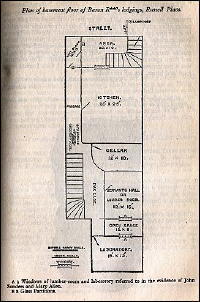
The story is told by insurance investigator Ralph Henderson, who is building a case against the sinister Baron 'R___', suspected of murdering his wife in order to obtain significant life insurance payments. Henderson descends into a maze of intrigue including a diabolical mesmerist, kidnapping by gypsies, slow-poisoners, a rich uncle's will and three murders. Presented in the form of diary entries, family letters, chemical analysis reports, interviews with witnesses and a crime scene map, the novel displays innovative techniques that would not become common features of detective fiction until the 1920s.
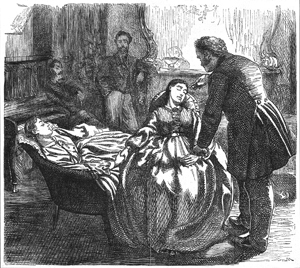
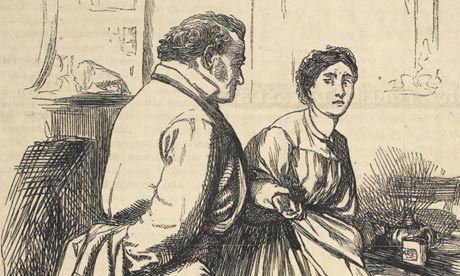
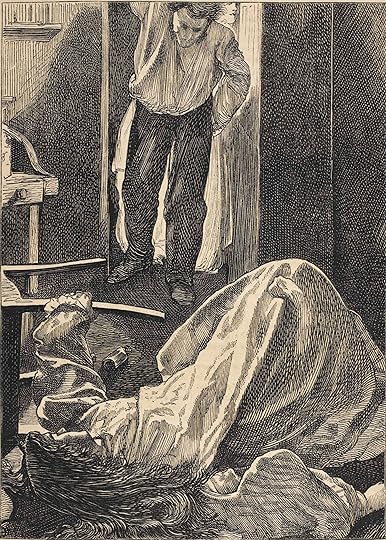
Now made available again, with George du Maurier's original illustrations included for the first time since the original serial publication, this new edition of The Notting Hill Mystery will be welcomed by all fans of detective fiction.
Charles Warren Adams (1833-1903) was an English lawyer, publisher and anti-vivisectionist, now known from documentary evidence to have been the author of The Notting Hill Mystery. This is usually taken to be the first full-length detective novel in English.
Born in 1833, he was the son of children's author Charlotte Adams, and the younger half-brother of clergymen and authors William Adams and Henry Cadwallader Adams. As a lawyer, Adams was involved in the bailout of the publishing firm Saunders, Otley & Co., which published his crime novel Velvet Lawn (1864) and detective novel The Notting Hill Mystery (1865) under the pseudonym Charles Felix. He died in 1903.
The Notting Hill Mystery by Charles Warren Adams is a 2015 British Crime Library publication. (Originally published in 1862)
Groundbreaking British Mystery!
Ralph Henderson is an insurance investigator who carefully lays out a solid case of insurance fraud and murder. Much like a police detective would, he uses good old -fashioned shoe leather to conduct interviews and gather evidence. Then, he presents his case in writing, almost like a lawyer would do to convince a jury-who, in this case, happens to be you- the reader!
The details are fascinating, if a bit melodramatic. The Baron R is the prime suspect and poisoning appears to be his modus operandi… that and his talents as Mesmerist. There are a few surprising twists before all is said and done, keeping things interesting- if a bit far-fetched.
The modern reader would probably pan this book today. Some un-PC threads, (a kidnapping by a band of ‘Gypsies’), and implausible plot devices, although popular at the time the book was written, might turn some readers off today.
Other than that, what makes this book stand out, like the synopsis states, is that it is believed to be the first full length detective novel. The book could also technically pass as an inverted mystery, as it is clear right from the get-go who the murderer is. The reader remains interested because they want to see how the murderers were committed. I think this book does set a standard for the future of mystery novels and for that reason, I think mystery lovers might find this book of interest.
It is also Henderson’s presentation of the facts that kept me invested in the story. It would have been nice to see him return in subsequent installments, to see his character fleshed out a bit, because he is quite good at his job. I found myself wondering about his looks, his private life, etc.
This one is worth checking out for its historical value and contribution to crime fiction. The British Crime Library has a nice selection of these classic mysteries available in digital format. I’m looking forward to exploring more of them this year! 3.5 stars
*Just to be clear, the publishing date is for the release in digital format. The book was not written in present day, but set in the 1800s. This is NOT historical fiction as I have seen some categorize it as such.
"𝙋𝙚𝙧𝙙𝙤𝙣𝙚, 𝙒𝙖𝙩𝙨𝙤𝙣, 𝙥𝙪𝙚𝙙𝙚 𝙧𝙖𝙩𝙞𝙛𝙞𝙘𝙖𝙧𝙢𝙚 𝙘𝙪𝙖𝙣𝙙𝙤 𝙜𝙪𝙨𝙩𝙚, 𝙥𝙚𝙧𝙤 𝙡𝙚 𝙖𝙨𝙚𝙜𝙪𝙧𝙤 𝙦𝙪𝙚 𝙚𝙣 𝙚𝙨𝙩𝙚 𝙘𝙖𝙨𝙤 𝙣𝙤 𝙥𝙪𝙚𝙙𝙚 𝙝𝙖𝙘𝙚𝙧𝙡𝙤. 𝙀𝙨𝙩𝙖 𝙣𝙤𝙫𝙚𝙡𝙖 𝙚𝙨 𝙪𝙣 𝙢𝙖𝙜𝙣𝙞𝙛𝙞𝙘𝙤 𝙚𝙟𝙚𝙢𝙥𝙡𝙤 𝙙𝙚𝙡 𝙗𝙪𝙚𝙣 𝙥𝙧𝙤𝙘𝙚𝙙𝙚𝙧 𝙚𝙣 𝙘𝙪𝙖𝙡𝙦𝙪𝙞𝙚𝙧 𝙞𝙣𝙫𝙚𝙨𝙩𝙞𝙜𝙖𝙘𝙞𝙤́𝙣 𝙦𝙪𝙚 𝙨𝙚 𝙡𝙡𝙚𝙫𝙚 𝙖 𝙘𝙖𝙗𝙤. 𝘼 𝙥𝙖𝙧𝙩𝙚 𝙙𝙚 𝙨𝙚𝙧 𝙪𝙣 𝙗𝙪𝙚𝙣 𝙤𝙗𝙨𝙚𝙧𝙫𝙖𝙙𝙤𝙧, 𝙣𝙪𝙚𝙨𝙩𝙧𝙤 𝙦𝙪𝙚𝙧𝙞𝙙𝙤 𝙨𝙧. 𝙍𝙖𝙡𝙥𝙝 𝙃𝙚𝙣𝙙𝙚𝙧𝙨𝙤𝙣, 𝙥𝙤𝙨𝙚𝙚 𝙪𝙣𝙖𝙨 𝙙𝙤𝙩𝙚𝙨 𝙙𝙚 𝙙𝙞𝙨𝙘𝙚𝙧𝙣𝙞𝙢𝙞𝙚𝙣𝙩𝙤 𝙚𝙭𝙩𝙧𝙖𝙤𝙧𝙙𝙞𝙣𝙖𝙧𝙞𝙖𝙨. 𝘿𝙤𝙩𝙚𝙨 𝙦𝙪𝙚 𝙢𝙖́𝙨 𝙙𝙚 𝙪𝙣𝙤 𝙚𝙣 𝙎𝙘𝙤𝙩𝙡𝙖𝙣𝙙 𝙮𝙖𝙧𝙙 𝙦𝙪𝙞𝙨𝙞𝙚𝙧𝙖𝙣 𝙩𝙚𝙣𝙚𝙧. 𝙎𝙤𝙗𝙧𝙚 𝙩𝙤𝙙𝙤 𝙨𝙞 𝙣𝙤𝙨 𝙧𝙚𝙛𝙚𝙧𝙞𝙢𝙤𝙨 𝙖𝙡 𝙞𝙣𝙨𝙥𝙚𝙘𝙩𝙤𝙧 𝙇𝙚𝙨𝙩𝙧𝙖𝙙𝙚".⠀ ⠀ Como es lógico, no sé si Sherlock Holmes habría dicho algo parecido de haber leído esta novela, pero creo que por ahí andaría... ⠀ Hablar sin desvelar nada de esta historia es bastante difícil, pero si he de remarcar algo es el extraordinario planteamiento que nos ofrece el autor y el modo tan característico de ir resolviendo un enigma que, de por sí, se nos es dado en las primeras páginas. Aquí lo importante no es saber cómo murió... sino el cómo diablos lo hizo! Y por qué lo hizo... Dos incógnitas que nos serán relevadas a través de cartas y de los testimonios de diferentes personajes.
I thoroughly enjoyed this intriguing Victorian mystery. Great use of form and perspective in the presenting of ‘evidence’, too. A fascinating read for anyone interested in the history of the detective genre.
Good grief -- this book might possibly win the award for most convoluted murder mystery I've ever read, but it's definitely and seriously fun. It's definitely got a thin plot, but it rates high on my enjoyment-o-meter because of its diabolical craziness and downright crazy story elements.
First serialized in 1862/1863 in the magazine Once A Week, this book was quite popular with readers. According to Julian Symons in his Bloody Murder, the book was very likely an attempt to "repeat the success of The Woman in White," complete with its own Count Fosco-like villain, but was in "several ways an original work." (51) That's for sure, in more ways than one.
The Notting Hill Mystery is reputedly the first modern English detective novel, and Adams gave it a number of new, innovative twists and ingredients that set it apart from other books/serializations featuring detectives that were quite popular at the time. For one thing, the detective here, Ralph Henderson, has nothing at all to do with the police; instead he is an agent collecting evidence for an insurance company. For another, the book is filled with elements such as a cryptic fragment of a letter in French, a marriage certificate, statements and depositions from several witnesses, and even a floor plan of a victim's home. Old hat you may say -- we've certainly seen the likes of those sorts of things in tons of mystery books we've read, but while we take them for granted, back then these were all new additions to the standard detective stories of the time. There are overlapping layers of narrative that bring with them not only new levels of mystery, but which also bring the reader ever closer to the truth of what has actually happened.
The Notting Hill Mystery presents, as I said, a most convoluted murder mystery. Ralph Henderson is trying to determine the truth behind the death of woman after her husband had taken out several policies on her life totaling 25,000 pounds. The novel is his report to the Secretary of the ____ Life Assurance Association, and he lays out two "alternatives" which "present themselves" after careful consideration of the evidence. He himself, as he says, is unable to decide between the two, so offers his facts "in the form in which they would be laid before counsel."
The fun of this book is in uncovering the diabolical craziness at play. As Symons says, the methodology underlying the murder may seem "preposterous to us," but it "seemed much less ridiculous to the Victorians," a hugely important point to consider while reading this novel. I actually chuckled a number of times while reading this book, but at the same time, I was completely engrossed and couldn't wait to see Henderson's conclusions at the end. It's that kind of book, really -- as silly as it may seem, I just couldn't help myself turning pages while wondering if the murderer would actually be caught and if so, if he could even be prosecuted.
It's also an important milestone in the history of detection novels, written well before Sherlock first made an appearance in print. I would recommend it to anyone who has an interest in the history of crime writing/crime fiction, and also to anyone who loves discovering something quite off the beaten path. Even though it might make you groan inwardly here and there or do the inner eyeroll at places because it's a) fairly obvious and b) just plain silly at times, I just loved it.
Before Émile Gaboriau’s L'affaire Lerouge (1866), Wilkie Collins’ The Moonstone (1868), or Sir Arthur Conan Doyle’s A Study in Scarlet (1886), there was The Notting Hill Mystery. Written under the pen name Charles Felix (now believed to be Charles Warren Adams) and first serialized in 1862 in a magazine, it became the first detective novel when it was published in one volume in 1865.
Before I got an ARC of this book from NetGalley, I had heard of neither the author nor the novel. The Notting Hill Mystery follows the attempts by insurance investigator Ralph Henderson to prove that the death of Baron R**’s wife was no accident but murder. Readers will realize immediately that Baron R** is guilty; after all, what innocent man takes out five £5,000 life insurance policies on his wife’s life in the span of four months? The fun of the novel could have been tracing how Henderson manages to uncover evidence in what appears to be a perfect crime and expose the baron. Instead, for a full fourth of the novel, it bogs down in a ponderous exchanges of letters recounting the entire life of Gertrude Boleton Anderton, the wispy semi-invalid who will become Baron R**’s victim, literally from before her birth. After this tedious backstory, the novel continues as a series of depositions, documents, letters, and other paperwork that the pedantic Henderson ferrets out. While some authors can make epistolary novels into great successes (e.g., Bellfield Hall: Or, The Observations of Miss Dido Kent by Anna Dean; Lady Susan by Jane Austen; Bridget Jones's Diary by Helen Fielding; The Color Purple by Alice Walker; Where'd You Go, Bernadette by Maria Semple; Daddy-Long-Legs by Jean Webster), Adams simply doesn’t pull it off.
Audiences have evolved in the 150 years since The Notting Hill Mystery was first published; however, 21st century audiences continue to appreciate 19th century novels, such as The Moonstone, The Woman in White, the Sherlock Holmes stories, Jane Eyre, Great Expectations, and many more because of memorable characters and gripping narratives. The Notting Hill Mystery has neither. What it does have are cardboard villains (hypnotist Baron R** being clearly a charlatan and a malevolent crook), sickly-pale simpleton victims, implausible coincidences worthy of a Victorian Penny Dreadful, silly supernatural doings, and even the canard about child-abducting gypsies. If there’s a Victorian melodrama cliché missing, I can’t imagine what it is. I found myself skimming to get to the end.
Poisoned Pen Press, in re-releasing this groundbreaking novel, has done a favor to students of the history of the mystery; run-of-the-mill mystery buffs won’t find anything of value here. With my love of 19th century novels, I am more patient than most readers; even so, had I not been under obligation to provide a review, I would have bailed before I was one-fifth of the way through.
To reiterate in the interest of full disclosure, I received this book from NetGalley and Poisoned Pen Press in exchange for an honest review.
to hunt down/look into. Wanda found a site: Read here. Thanks for your incredible sleuthing skills, Wanda.
Opening is The Private Enquiry Office, Clements Inn, London, January 1958: GENTLEMEN, In laying before you the extraordinary revelations arising from my examination into the case of the late Madame R**, I have to apologise for the delay in carrying out your instructions of November last.
See who the illustrator is, none other than G du M!
The Notting Hill Mystery is, according to the introduction, either the first true detective story or among the first true detective stories, though it departs a little from the type by featuring not a police or private detective, but an insurance investigator, and by presenting all the gathered evidence without presenting the investigation by which the evidence was acquired.
Baron R- has recently insured his wife for a startling sum. Obviously, doubts begin to arise when she does, in fact, die shortly after, apparently by taking poison while sleepwalking. Our investigator is sent to make sense of the event, and through diligent sleuthing, uncovers a bizarre swirl of soap-opera family drama, mesmerism, and, of course, murder. Quite a number of murders, actually.
The Good:
I’m a sucker for the epistolary novel, ever since I read Dracula, and this one is especially well done. Each speaker (or writer, rather) has a distinct and identifiable voice, so that they don’t all run together. Each one sounds like an individual. That added verisimilitude makes you wonder – just once or twice – whether you might not actually be reading a case file rather than a work of fiction.
And, while there is a certain amount of the expected swooning and crying out and running from rooms that Victorian works so frequently exhibit, it doesn’t skew ridiculous even once. I’d say that a woman being eaten alive by a powerful acid has every right to cry out, actually.
The Bad:
The long, convoluted language is a little hard to get through, though not excessively so.
The plot also hinges on some really laughable period “science”.
In Conclusion:
It was certainly a very interesting read, if for no other reason than because I enjoyed identifying some of the early earmarks of the nascent genre. The Notting Hill Mystery certainly does differ markedly from the genre it helped create.
I was a little irked when it became apparent that it’s really a paranormal mystery, not because I dislike paranormal mystery but because I was expecting something more grounded in reality. However, once I had reconciled myself to that fact, it was a very enjoyable read. I can’t really fault the book for not being what I expected, especially when it does such a good job of being what it is.
Solid four stars.
I received a copy of this book from NetGalley in exchange for an honest review.
The main point of interest in this classic is the fact that it was a first. The introduction is more interesting than the book in many ways, putting it in its context and explaining why it was significant. The introduction is short, don’t get me wrong, but the story itself is a fairly typical one in many ways. You can guess at the motives, and the mysteriousness is not at all mysterious to someone used to the genre. Not that it’s bad, just that it’s not particularly unique or surprising in any way. The writing is workmanlike, and in some places dips into being almost incomprehensible (but then, I find Dickens like that at his worst, and some people think he writes amazing prose, so take me with a pinch of salt). The plot probably was rather shocking at the time, but leaves me going, so? And of course, the poisoning by proxy is rather… impossible.
In any case, I had fun reading it in terms of connecting the dots with other classics of crime fiction, and it wasn’t a bad way to pass the time, but it’s not something I’m wildly enthusiastic about or would particularly recommend.
From FreeLiterature: The Notting Hill Mystery (1862-1863) - arguably the first English detective novel - published in 8 episodes in Once a Week (Illustrated by George Du Maurier) - Charles Felix a pseudo. of Charles Warren Adams.
A classical mystery fiction, with some hints of gothic style of the 19th century which certainly influenced many writers.
[It is unnecessary for us to state by what means the following papers came into our hands, and it would be no compliment to the penetration of our readers if we indicated beforehand the nature of the mystery they are supposed to unravel. It will, however, require a very close attention to names and dates to comprehend the view of the compiler, as to the case he is investigating; and, so far, it is requisite to rely on the reader's patience and discernment. The whole particulars of the case will extend to some seven or eight numbers of "Once a Week" and some things which are dark at first will appear clearer in the sequel. If the compiler has really discovered a new species or description of crime, it is natural that the evidence of it, which is circumstantial, should be somewhat difficult of acceptance. The illustrations are simply added to make the reader's task more agreeable, but, of course, it is not pretended that they were made simultaneously with the events they represent.]
Hailed as the "first detective fiction" novel, this one is so incredibly unique. It predates Wilkie Collin's "The Moonstone" (1868) as it was written in a serialized format between November 29, 1862 and January 17, 1863. Written in an epistolary format between letters, journal entries, and depositions it was an absolute delight to read. I was so intrigued with the plot as it seemed like such a novel concept to put into a novel for the time period. This story tells of tins linked with a physical/mental connection, mesmerism, a conspiracy over an inheritance, murder most foul, poisons, and the ending leaves you to draw a conclusion based on the evidence presented to you, dear reader. I can only imagine the suspense it must have caused with the serial readers.
Really only worth reading in the context of historical interest and significance. I have no doubt that this novel serves a historically important role in the development of the detective/crime genre, but it reads like a police report—entirely “factual” and utterly void of character development—and the plot’s “solution” relies heavily on metaphysical phenomena by which the Victorians were fascinated, but which today’s readers will find impossible to take seriously!
This entire review has been hidden because of spoilers.
Published in 1862, this book can lay claim to being one of the earliest detective stories, although our investigator is not a policeman but is working for an insurance company. When he becomes aware that a client, Baron R, had insured his wife’s life shortly before her death, he begins an enquiry that uncovers two other suspicious deaths that may well be connected.
This was intriguing and I really liked how the story was uncovered via reports from witnesses, fragments of notes, etc. It’s not a whodunnit, Baron R is a definite wrong ‘un (reminded me of Count Fosco) and the only one in the frame, but it’s about what happened, how and why. It is clearly Victorian in its themes and melodrama, and good fun.
There was quite a heavy reliance on dates, which can be confusing but in this case was not too hard to follow, and the ending didn’t really have a definite resolution, but it was definitely original and interesting.
Considerada la primera novela detectivesca de la historia, aunque su protagonista no sea un detective, sino el investigador de una compañía de seguros. Gracis a sus informes sabremos si la muerte de la señora R. ha sido realmente un accidente o no. Una investigación que lleva a descubrir mucho más de lo que se espera Original y rápida de leer. Me ha enganchado desde el primer momento. Muy recomendable. 📖❤️
It was a very enjoyable read. I loved how the mystery slowly unveiled itself through the evidence presented throughout the story. It made the whole experience feel even more intriguing and immersive. I am really glad I read it. It's also fascinating to see where the concept of detective mysteries really began.
This is seen, by scholars, as the first successful English detective novel, and one should really read it for historical perspective rather than to feed your modern taste. This edition is a British Library facsimile reprint of the 1865 book printing, which lacks the George du Maurier illustrations that were part of its original serial publication. All we get in this volume is a frontispiece map of the key house. (The author's name, Charles Felix, was a pseudonym for the lawyer Charles Warren Adams.)
Just like some other famous first-of-the-genre novels like Frankenstein and Dracula, this is a novel in documents, sort of epistolary, sort of a legal brief. Specifically it is the summary report of an investigator hired by several insurance companies to see if they should pay certain life insurance claims, and to whom. This allowed the author to play with different voices and points of view (since it quotes letters, diary entries, depositions, interviews), without cramming it all into dialogue. One or two of the bits are nearly illiterate.
The basic question the investigator must address is the death of a wife, which is suspected of being a poisoning, and the death of her husband by suicide, just before he was exonerated by the autopsy. That would be complex enough, but it turns out that several other deaths may have a bearing on the case, and so they, too, are reported and examined. Oh, and there are missing sisters, gypsies, and mesmerism thrown in, just to complicate matters further.
The report strongly resembles what I'm hearing about the Mueller Report, too, in that our investigator puts a case, but resists making a final, definitive judgment.
It's a quick read, and it's interesting to see how a genre got started.
This facsimile also includes all the ads for the publisher's other books in the back. I rather enjoyed going through them. (The publishing house dissolved within the decade, after both its founders died.) Seventeen pages are devoted to a single title, with one page being the book's title page, one page being a list of all the newspapers and magazines that had reviewed it, and the rest being those reviews, quoted. The title had come out the year before at half-a-crown a copy, but now the price had dropped sharply to a single shilling, despite it now being a longer work. And it was:
The Brown Book for 1865 A Book of Ready Reference to the London Hotels, Lodging & Boarding Houses; Breakfast & Dining Rooms; Metropolitan Railways; Public & Circulating Libraries; Amusements; Picture Galleries; Hospitals, Schools, & Charitable Institutions; Religious, Learned, and Artistic Societies.
With full Information as to Situation, Specialty, &c, &c,
and a
HANDY LIST
showing the nearest post office, money-order office, cab stand, police, telegraph, and commissionaire station, fire engine and escape, hospital, &c.
to upwards of
ONE THOUSAND of the PRINCIPAL STREETS OF THE METROPOLIS.
This story was first published in 1862 and 1863 as a magazine serial, giving the author's name as Charles Felix. The book caught my eye in the library because of the line under the title claiming it to be 'The First Detective Novel'. The story is told by an insurance investigator who is reporting to several companies. With each company, Baron R insured his wife's life for a considerable sum. The investigator builds a case against the baron, whom he suspects of murdering his wife.
The story-telling technique is ahead of its time, consisting of reports, diary entries, letters and interviews, capturing the tones of voice. Henderson, the investigator, is meticulous in checking dates and times, and exploring the background to events. The narrator comments on the 'chain of evidence linking mysterious occurrences' as 'not only circumstantial but so delicate and complicated that the failure of a single link would render the remainder worthless'.
This sober approach to story-telling combines with sensational stuff: jealous rage, a duel, the kidnapping by gypsies of a girl (a twin), slow poison, mesmerism,a rich man's will, and cold-blooded murder.
A chilling feature was the way in which the baron is viewed by so many characters: 'a kind-hearted gentleman'; 'I never saw such a good husband'.
I read Mike Ashley's introduction after I read the novel. (I always read introductions last.) He gives background information supporting the claim of 'first detective novel', and details about the author - a publisher trying to keep afloat!
I don’t like unsolved true crime shows. I don’t like historical mysteries that we will never have a chance to solve. I absolutely hate mystery books that don’t have solutions. Why?! The only good thing about this book I can think of is the format. It was interesting trying to gather the clues from all the letters and reports. Having them all written in different voices made it even more fun. But for me, that was not enough to make the book worth reading.
December 2024 - narrated by Kevin Green on LibriVox Like The Moonstone or The Women in White, by Wilkie Collins, The Notting Hill Mystery is less mysterious than atmospheric. Personally, I don't mind that a bit, but if you are looking for a traditional murder mystery, The Golden Age of Detective Fiction is where to begin. However, if you enjoy Sir Arthur Conan Doyle, R. Austin Freeman, or as I mentioned, Wilkie Collins' mysteries, like I do, you will probably like this one as well.
To quote Wallace Shawn's Vizzini: Inconceivable! Mesmerism, somnabulism, a child kidnapped by gypsies, and "murder by deputy." Generally considered the first detective novel, published in the early 1860s, the book has much Victorian melodrama. An insurance investigator compiles a record of letters and affidavits to prove a case against a mysterious baron.
Anyone interested in the roots of the Detective Mystery genre, as I am, will want to read The Notting Hill Mystery (1862). There are reasons to call it, as many have, the first detective story. There is also controversy. Traditionally, Edgar Allan Poe is the granddaddy of the detective story: Murders in the Rue Morgue (1841), and Wilkie Collins is the inventor of the mystery novel: Woman in White (1859) and Moonstone (1968). Where does Charles Warren Adams fit in?
That is basically the question that propelled me through the depositions and correspondence that make up the bulk of this book. I was looking for "the figure of the detective" as described in Charles Brownson's study, The Figure of the Detective: A Literary History and Analysis (2014), which I am currently reading.
To make this fun, and not get caught up in semantics, I assumed that Ralph Henderson, the insurance investigator in Notting Hill, was the "detective figure", just as Kinsey Milhone is a detective who works at times for an insurance company, although she is primarily a private investigator. And as a headline in the NYTimes Book Review put it (i am remembering so the wording isn't exact): "Dupin...Sherlock. Who is Ralph?"
Auguste C. Dupin is the self-appointed solver of the Rue Morgue case. He refers to a sensational murder mystery written up in the papers, all the time telling his friend ( the narrator) how what is needed and missing in the police work is the power of brilliant deductive reasoning...HIS. Sherlock Holmes essentially does the same thing, i.e. extol the virtues of deduction to Watson. Ralph Henderson definitely DEDUCES from his thorough accumulation of the evidence a satisfying version of events; we are privy to his train of reasoning, not just in the final, lengthy explanation, but along the way as well. But unlike Dupin and Sherlock, Ralph doesn't brag. He is all business.
And THAT may be the issue here. Perhaps Henderson's lack of personality and charm prevent him from being the first Detective (in a) story. The story has almost everything else familiar to us detective story fans: motive, tangible clues, significant dates, conflicting testimony, room diagrams, incomplete writing, detailed logistics, unreliable witnesses....
Plus a solution that makes sense. Poe's story didn't have that.
El libro comienza con una introducción muy detallada del escritor Mike Ashley defendiendo que este es el primer libro de detectives. En este texto podemos ver muchos ejemplos de novelas anteriores en las que aparecían detectives y policías como personajes, pero la trama no se basaba en su trabajo. No obstante se iba viendo como los lectores tenían interés en este tipo de historias, y como los escritores comenzaban ya en el siglo IXX a agregar esta clase de personajes a sus obras.
La idea en sí tiene su complejidad, aunque después se aportan los datos de manera que no queda demasiada sorpresa por acontecer. Siendo la primera obra de este género, lo perdonamos, ya que el autor, abogado también, estaba exponiendo todas las pruebas posibles de un caso complejo con mucha maestría: da detalles muy interesantes, y denota el saber que ha ido adquiriendo a lo largo de los años de profesión.
Además, esta edición cuenta con algunas preciosas ilustraciones de George du Maurier, que acompañan de vez en cuando el texto. Aún así, la imaginación queda satisfecha, como he dicho con anterioridad, por los detalles que el autor ofrece, llenos de realismo y explicaciones muy convincentes. Obviamente, el género ha mejorado mucho con el tiempo, y hoy en día esta clase de libros te tiene enganchado desde el principio, pero en este caso, los datos van siguiéndose unos a otros, las entrevistas, los documentos... para así demostrar la culpabilidad de uno de los personajes.
La lectura de este libro es recomendable para adictos a las novelas de detectives, policiacas y thrillers, ya que éste fue su predecesor. No obstante, aunque el argumento es complejo, la forma de escribirlo hace que se simplifique tanto que no termina sorprendiendo, por lo que quizá a algunos lectores no guste demasiado.
I can appreciate the work needed to construct a book like this, but it's not a riveting read when you have to unscramble the Victorian script. In fact, I'm not even sure it was a story, just a series of statements tacked together. Not my cup of tea.
A fun read, but definitely NOT the first detective novel. "The Notting Hill Mystery" is sort of like Law & Order for the Victorian period: heavy emphasis on compiled evidence, interviews, deposition, etc. We do not know the detective at all as a person, and we do not follow in his detective work. If compiled evidence + conclusions about a crime = a detective novel, then Collins' Woman in White fits the bill and came earlier (in 1859). To me, though, a detective novel needs a detective -- either a goofy one or a hardcore serious Sherlock Holmes. "Notting Hill" doesn't have that -- but Dickens' "Bleak House" and Braddon's "Trail of the Serpent" and "Lady Audley's Secret" all do, and they came earlier. To call this novel the "first detective novel" seems a 20th century move, obsessed with evidence and court cases -- and one that doesn't take into account Victorian ideas about detection and the role of the detective.
First published in serialized form between 1862 and 1863, The Notting Hill Mystery is considered one of the first detective novels. I loved Wilkie Collins' The Woman in White and fully expected to love this one too. I listened to it on Librivox and was wishing I had instead read it on Project Gutenburg. It is told as an epistolary novel, in letters, depositions and journal entries, and the form didn't translate as well to audiobook.
In this one a woman dies shortly after her husband bought a large life insurance policy on her. Supposedly she took poison while sleepwalking, which leads the insurance company to send an investigator to look into the situation. He unravels the facts and finds that not only was she murdered, so were many others. The story is complicated and messy, and told with somewhat convoluted language by today's standards. This one is typically victorian, and marked by gothic elements.
Real historical fiction, as in fiction written way back there in history. 1862 to be exact.
I read elsewhere that this is the one of the first pieces of "deductive" fiction - where our narrator collects information from various sources - interrogations of participants and witnesses, letters and reports, and pieces the solution together from evidence. Less sensational than Wilkie Collins and the Woman in White (1859) and well before Sir Arthur Conan Doyle and the Study in Scarlet (1887)
It involves hot topics of the day - insurance, aristocracy, mesmerism, orphans, new medicines, sleepwalking, the continent as a place to escape, and the like.
I didn’t really enjoy this one as much as some of the other British crime classics I’ve read, much to do with the writing style and possibly because it was quite an early novel. Not enough element of surprise really, very obvious from the outset who dun-nit.



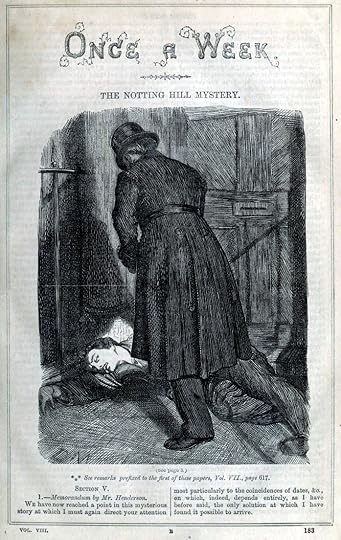 See who the illustrator is, none other than G du M!