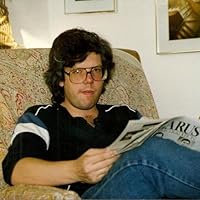
Alfred Bester was an American science fiction author, TV and radio scriptwriter, magazine editor and scripter for comic strips and comic books.
Though successful in all these fields, he is best remembered for his science fiction, including The Demolished Man, winner of the inaugural Hugo Award in 1953, a story about murder in a future society where the police are telepathic, and The Stars My Destination, a 1956 SF classic about a man bent on revenge in a world where people can teleport, that inspired numerous authors in the genre and is considered an early precursor to the cyberpunk movement in the 1980s.
Alfred Bester (yes, Koenig's B5 character's name is an homage to him) is best remembered for his novels The Stars My Destination and The Demolished Man, but he was also a very accomplished short fiction writer. The Dark Side of the Earth was his second collection of short fiction (following Starburst) and appeared as a mass-market paperback original from Signet in 1964. It contains seven stories, two original to the book, and the other five from F & SF magazine. The oldest story in the book is Time Is the Traitor and the rest of the stories are from the late 1950s - early '60s. Bester was a very imaginative writer, and he combined the sharp satire of Pohl with the wacky humor of Sheckley to good effect. My favorites are The Flowered Thundermug (what a terrific title!), the more serious Will You Wait? and The Men Who Murdered Mohammed, which was a finalist for the Hugo award for best short fiction of 1958. (Robert Bloch's That Hell-Bound Train won that year.)
I'm a real sucker for these very old SF shorts. Bester's work holds up better than most, as it's less sexist than most and more than just Twilight Zone gimmick. But most of these have been collected elsewhere, so if you're a rabid reader like me you've probably already seen them. --- Did I already read this and give it away? Can't find it now, but I really want to read the TT The Men Who Murdered Mohammed.
আলফ্রেড বেষ্টার পুরনো, চমৎকার, এবং আমার মোটামুটি অপরিচিত। কোত্থেকে কোত্থেকে যেনো এই বইয়ে তার একটা গল্প আছে, দা মেন হু মার্ডারড -, ঐটা পড়লাম, আর পড়ে মনে হলো, আরে, এই লোক ত ভালো, নেড়েচেড়ে দেখা যায়, অতঃপর অনেকদিন পর ল্যাপ্টপে চোখ লাগায়ে আবার চোখের বংশনাশ।
প্রথম গল্প টাইম ইজ দা ট্রেইটর, বা তৃতীয়টা, প্রেমের গল্প যেটা, দুইটাই আসলে প্রেমের গল্প, দুইটাই হালকা, পড়তে ভালো। মেন হু - আর উইল ইউ ওয়েট আরেকটু জমাট, এই সংকলনের কোনো গল্পই অবশ্য আজিমভ কোঙের মত প্রজ্ঞাধারী না। কিন্তু পুষায়ে নিয়েছে এই লোকের রসের হাঁড়ি, চুইয়ে চুইয়ে পড়তেছে যেনো, মুগ্ধ করবেই, মোহিতও, শেষ গল্পটা যেমন, দেয় ডোন্ট মেইক লাইফ -, একটা গড়পর গল্পরে রীতিমত সড়্গড় করে ফেলেছেন বেষ্টার এইখানে। পাই ম্যান বা ফুলেল থান্ডারমাগের কথাও আলাদা করে বলতে হয়, পাই ম্যানে যেই অদ্ভূত নিরীক্ষা তার, আমি সম্ভবত এর আগে সায়েন্স ফিকশনের মোড়কে স্ট্রীম অফ কনশাসনেসের পরিবেশনা দেখি নাই কোনোদিন। বিষয়টাও ত অদ্ভূত, ভারসাম্য আনছে একটা লোক, পৃথিবীর বুকে -
ফ্লাওয়ারড থান্ডারমাগ শুরুতে ঢিমেতালে আগাইলেও কয়েক পাতার ভেতরেই গল্প পুরোদমে দৌড় হাঁকায়, আর তার পর যা ঘটে, তা শুধু দেখার মত।
আমি আসলেই সুপারিশ করবো জনে জনে, অমসৃণ হইলেও এটা একটা বেশ পলকা মশলাদার বই। বেষ্টারের নাম আগে জানতাম না এতে অবশ্য খেদ নাই, কতজনেরেই ত চিনি না ঠিকমত।
Alfred Bester is best known for two of the most classic science-fiction novels ever written: “The Demolished Man” and “The Stars my Destination.” He was a Grand Master of the art, credited with being one of the most influential writers in the genre, virtually “inventing” character-driven science-fiction at a time when sci-fi was often dismissed as juvenile “hack” writing. Bester brought a literary sensibility to his craft, developing deep and original novels and short stories that highlighted his intellect and imagination. He was also a writer for television and comic books, and he was so influential that he had a character in the “Babylon 5” television series named after him. Bester was not a “hard” science-fiction writer in any sense, though he obviously had a good grasp of mathematical and scientific concepts. He instead focused his energies on creating complex characters and plots that sometimes roamed into an almost “beat” or avant-garde narrative style.
So I stumbled on a really nice copy of “The Dark Side of the Earth” at one of my favorite used bookstores, a 1964 Signet first paperback edition. All of the stories were previously printed in “The Magazine of Fantasy and Science Fiction” between the decade 1953 through 1963. This was my first taste of Bester’s short fiction, and it was a good trip through the Grand Master’s mind. Stories in order of appearance:
“Time is the Traitor” - You can’t go home again, a painful lesson learned by the “Most Powerful and Decisive Man” in the known universe. Good story, hampered a bit by a somewhat dated portrayal of one of the main characters.
“The Men Who Murdered Mohammed” - Time-travel isn’t all it’s shaped up to be, as the main protagonist discovers. Good story that suffers from a technical contrivance at the beginning. As I said earlier, Bester did not have the stuff where technical science-fiction was concerned, focusing instead on his quirky and sometimes difficult characters. Lots of sly humor in this one.
“Out of This World” - One of my favorite stories in the collection. Crossed telephone wires lead to an illicit romance that takes some nice twists and turns. I liked the characters and the plot was well designed.
“The Pi Man” - One of the quirkier stories in the book. I’m not even sure if this qualifies as science-fiction, per se. The plot is a bit obtuse, the main character suffering from an overload of “pattern perception” that makes for all sorts of problems with his personal and professional life. Nowadays this sort of behavior would be seen as being somewhere on the autism spectrum. For it’s time, it must have just seemed weird. This story kind of veers into experimental, avant-garde writing tropes.
“The Flowered Thundermug” - A short novelette that starts off confusing but quickly picks up pace and depth of story. TONS of humor in this one, as the protagonists hurdle pell-mell into a wild and satisfying conclusion. The only drawback is that no one under the age of 40 will get any of the character-name jokes. Too bad. They are pretty funny.
“Will You Wait” - Probably my favorite story in the collection. Nothing but pure, fierce farce told with deft humor and sly satire. Makes dealing with the Devil sound downright funny.
“They Don’t Make Life Like They Used To” - A good post-apocalyptic tale that lags from odd character development. I do think that people who have been isolated for years might react a bit differently when confronted with contact from another human being. Intriguing tale in spite of that fact. Perhaps a bit Stephen King-ish in tone. Ultimately I liked it.
All in all, a slightly uneven but enjoyable introduction to Bester’s short stories. I’ll definitely seek out more of his short fiction in the future. A well-spent 4 bucks at the used book store.
An interesting collection of short stories but at times hit and miss with me. It contains six short stories and one novella, The Flowered Thundermug. The novella was nicely witty but then it sort of ended and left me feeling.... well, like eh?? Time is a Traitor took a bit of getting into but ultimately I liked it very much. I also liked the premise of The Men who Killed Mohammed, dealing with the impact of traveling into the past and the consequences of trying to change events. Out of this World was fascinating, a problem with phone lines (a problem I didn't suspect) that results in a relationship you don't expect. The Pi Man was also very interesting; actions vs reactions, cause and effect. I liked that one. Will You Wait was quite humorous, I mean how hard is it to try and sell your soul to the devil? The Don't Make Life Like they Used to is about the last man and woman on earth. The ending was very creepy... All in all a good collection, not a great collection but worth reading (3.5 stars)
Bester kadang kala dibaca seperti Vonnegut. Geliga, whimsical dan karut (absurd). Antara kegemaran "Will You Wait?", "Out of this World", "The Pi Man".
Ada yang mantap, ada yang bagus, ada yang "ehh".
Ni apa jangkaan aku kepada SF. Pendek, ringkas, padat, tajam dan geliga.
I finished this a long time ago and weirdly forgot to update GR. not sure if I can review at this point. but I enjoyed the collection. I skipped a story or two I was not enjoying.
Excellent collection of short stories, that sometimes is very funny, but always is very interesting. Unfortunately it does not manage to avoid the casual 60ies sexism, but what can you do. It is a product of it's time. But man, time is the traitor, the pi man, can you wait, all of the stories in here were bangers.
I don't typically read short stories. And when I do, Ron Rash, Mark Helprin, Junot Diaz, Bonnie Joe Campbell, and Rick Bass are some of my favorites. And really, I'm hard pressed to think about when I've ever read a collection of short stories in the Science Fiction genre.
Overall, this book was a quick read, strange, wondrous, and, yes, kind of dark. It did feel a bit uneven at times. A few of the stories I'd give five stars to, though one or two I lost interest part of the way through, I think because they were heavily weighted and invested in ideas, and not necessarily things.
Read it? Yes. Have your life changed by it? Probably not. Recommend only for someone who reads Sci-Fi/Fantasy.
I've heard a lot of good things about Afred Bester, but this early collection of short stories didn't really justify it. Only one of the collection (The Flowered Thundermug) was memorable. The rest were average to uninteresting, and there was an undertone of sexism running through the stories that I didn't hugely like either. I'm still going to read The Demolished Man at some point though.
Bester not only had great ideas, he was among the very best stylists in SF: urbane, smart, playful. Impressed as I am by Harlan Ellison's 1992 fragmented story "The Man Who Rowed Christopher Columbus Ashore," it surprised me to read Bester's "The Pi Man" and see he was doing something very similar in 1959. This story collection is well worth tracking down.
This is the second - chronologically later - half of what was first published as a Best Of. And Bester's earlier fifties work was better, often brilliant. There are good stories here, but for me they are hinting tantalisingly at even better ones. Three and a half yes, but just not quite worth four stars to me.
A collection of six varying short stories, all with varying degrees of comedy and often quite nonsensical (though that's what makes them fun no?). Some are more engaging than others ,I particularly enjoyed the 4th a satire of hollywood and media worship and the 6th concerning a post- apocalyptic world. The stories are highly varied and are an easy and fun read.
Some of the stories in this collection of short stories might appear old-fashioned or missing real technological trends. The quality of writing, though, shines through undimmed.
Advancing into sleepless woods, Each year the ice getting thinner, And the trapped waters darker; The mind's frosty ballet superbly staged On a floor of nerves; Breath shorter, skin veined and rough; Understanding a woman's precarious beauty For the first time, I stand in a frozen year, And hear the whisper of darkened lives. Do the words come from inside or out? That sort of knowledge eludes me now.
Sometimes, when I go for a walk, I see an old man's face smiling without humour. His fleshy lips resemble an ear Moving cautiously without any sound. He waits for me at the end of a milky street Which turns unpredictably into swamp or rust. It is the old man I may never reach, Distracted by everything that must be lived, My hands twitching like butterflies in the brief sunlight.
* * *
The Hospital
I When you see me driving Through traffic, Speeding, putting on the brakes, You think: "He knows what he is doing, Where he goes Everything is settled."
But the nights on Rikers Island Are filled with dwarfish faces. They sit up with me on sleepless nights, Bargaining with insomnia. They tell me that I am broken, Mended by silence.
II You hand over me in the white gloom Like a pear That will not ripen.
You are my hospital, I ask you for a pencil. I say: "I want to write you a letter."
Your eyes are shells scrubbed by waves, White sea-prints through which I see The wards of predictable terror.
Sometimes the doctor comes in And takes my pulse.
III I believe the hospital walls, My illness Which only a stone could diagnose. And I know, quivering doctor, I know the eyes awake in the stuttering heart; The bunched muscles of horses climbing the air, Wild horses, not ridden or seen But dying man sees them. He cries out for rescue.
* * *
The Dark Side of the Earth, December 1972
We don't talk about the war anymore, Living on the dark side of the earth, The winter side, Yet we do not keep silent either. We repeat ourselves until the words Become thin as insect husks, Forgetting the stripped faces, the soup of limbs Left when bombs have fallen. It is dark here, a peculiar winter. The ice storm caught us unawares And we froze into body postures and went on living, But the inmost room in our bodies was a grave. How else could bombers inch across the sunlight, And the earth get drunk with shudders, And the dead be indistinguishable from mud, If our most comfortable wealth did not belong to death. When words make nothing happen they turn against the sayer. We are eaten by our words, and so are silent, And don't talk about the war anymore.
* * *
Uptown
A streak of car paint; A shopping cart dragged past the window By a closed black face. The worst is when the sidewalk becomes a mirror, And the woman becomes a mirror, With her abstract face, her teeth like thrush eggs.
Thin child-body in November, why do you Pass by me? Lovely freckled girl, Naked inside those wraps of clothing, Or maybe not. Maybe you are dressed Underneath too, like an old armchair, A crucifix of gray patched cloth, But no bare touches where the secrets grow, Soft as mushrooms underneath.
A boy handing behind the bus wants to fly. He squats on the rear fender, wondering What the spread-eagled shape is grinning at him From the scarred pavement, like Michelangelo's Prisoner. Broknm arms, yellow grin. No wings, but rising From the mirror with the flesible haste Of internal injuries.
In the middle of Broadway a tree strips down for winter. It reminds me of Robinson Crussoe Who sat on his island, winter and summer, Moving his lips with squirrely haste, While cars and buses grunted by him on both sides.
He too stripped down for winter long ago Now, alone among the carnivores, Face creased like a prune, he is master Of all he surveys, and blind to boot.
The sky darkens. Old men hurry home before the knives. It is odd to think our movements come from within, As if gusts of wind blew from each separate bone; Each of us a hurricane - calm eyes, violent flesh - Making memories for windless days.
* * *
Answering the Storm
My words are not sung, they are not spoken. They crowd under my skin, They die and are buried in the graves Of my skin.
*
I see the unread poems in store windows: A fire hydrant with two black nipples, Men kissing in a doorway with lips like razor blades. An alarm gallops in the street Spreading quiet among the deaf who listen, Thinking they hear.
*
The mourners cannot keep still, Their laughter shakes in the grass.
You can answer the storm only with a storm, The quiet only with a deeper quiet.
*
Sunset pours in my fingers. Despair is a room where teeth flash But not words, Lips but not hungers. You turn over on the bed, Waves hiss onto the rocks; Near the beach, a white seal wallows In pale water.
*
I answer you, running from the half-opened mouth Which brays behind me. Are those prayers it cries? I don't think so. Wounds, yes.
* * *
The Lover
A stone crushes you when you breathe. You feel weary, Like freezing in a snowdrift.
What kind of life kills itself anyway? What are its tools? A few drinks, a little talk.
You lean against the window Knowing you could jump If you wanted to.
Your feet echo As you go downstairs, Walking stiffly against the wind.
You don't stop to buy a newspaper, You wait absently for the green light, Smiling at the doorman of the cold house
Where your lover waits, His beak gagged open, his wedge-shaped tongue Trembling.
* * *
PART TWO
* * *
After the Creation
I Beetle dozing in the moist clay, Your bright shell Pumping like a heart;
I watched you crawl In the striped darkness of the shed, Resembling an eyelid drooped in the dirt, A wilted prayer Smelling of pepper and dead books.
Rust clenched into brightness.
II From you I inherit my patience With pure horror; My faceted eyes, all but one of their gleams Turned inward; My self-knowledge; my dread of footsteps.
Because you scrapes and clicks Are brothers to the small tongues of earth. Because in my solitude you outnumber me; Because, like God, you are everywhere; Because the world is manna to beetles.
III I dreamt my heart was a beetle. It brushed my skin with bare wires, And I had the revelation of stone. It twitched in the passageways of my throat. It ate me from within, creating hunger And the seasons of flesh; It died and left me with a book of skin, My only honesty.
IV But when the beetle unfolds its stubby wings, When its eyes wander like watery pins, There will be nothing.
No children killed over again Before your eyes. Nothing to crawl through the insomniac streets, Adrift in the ominous peacefulness Of work and love.
The chitinous claw descends like a snowflake, And the beetle of the first day, The life-lode, Starts over again its countdown toward nightmare.
* * *
Robinson Crusoe's Notebook
When I am alone, The world becomes an erotic dream. Sex boils in my shoes, I plunge my penis into every open flower. Bushes sway, pendulous and ripe; I touch them timidly. On my hilltop of erect green leaves The other words are gone: Friends, lovers, acquaintances; The quiet surrounds them like a moist palm.
My skin explores the earth. Pine shadows touch me, and I yield, Wading in their milky darkness, Afraid to have a name, Afraid it will search me out Like a shirt of weariness.
Silence is sex, Solitude is sex. The unused body blossoms into sex. Earth colour of marmalade, Failed wells inside me spitting dust And broken stones, Suddenly you are filled with water, Like a hand kneading my soft flesh, Drooped over me by the slow wind of sex, And the warm wind of sex.
*
I remember the smile of a woman Who hadn't spoken for three days, Her lips smelling of cold ash, Her stomach flat as a wish; A woman with no hungers.
Her hands were tunnels, She had faces I had never sen.
Her face of cold grass, Breasts whispering to themselves; Her face without music Bent inward like a prayer; Her face of rain misting slowly, bitterly.
When she talked, Loaves of quiet heaped In the green light of the cafe.
*
Convalescing after a deep wound. It is June, and they are cutting hay. The obedient stalks fall silently all one way As the fields are put in order, I too lie down all one way, Obedient to the memory of pain, Abiding by its wish. Inside me, the ache of healing, As if I prayed with my flesh. Even the scar resembles a language I must learn.
*
What is left when pain goes away? Not a body, not even expectations.
The animal goes on twitching After its dead.
I have been broken, As light is broken when it penetrates water. I don't even frighten birds, They settle on my hand.
All the loneliness in the world Gathers here, Billowing toward the sun. It will rain, they say. But rain is food, And loneliness doesn't give, It takes.
*
The scratching noise of a cicada, Branches floating at different levels in the forest, An ant lost on a sea of pink trousers. Suddenly a deer browsing a few feet away, Me frozen still, not blinking or breathing. He must smell me, because he backs off Cautiously between low-hanging branches. Meat-eaters are lonely, They smell of danger.
*
After several days of not talking, The words leave you. Every sound becomes their voice: Pear tree, wild clover.
A pair of blue wings settle near my foot. The stones resist my impulse To explore their resistance to pain. Even peace becomes warfare. The insanities taste you, and it is good. Will you consent to crawl among them, Knowing your children? Will you taste the brackish pond water, Wallowing in grass, Your face covered with green scum?
You pick your way through high grass Like a bird confused by headlights. You are the image staring up out of the pond, And the space the branches close behind. You take the shape the wind takes When it enters a room You have learned the charity of talking; A circle that cannot close, and yet is perfect.
* * *
A Song
I looked at the earth until the earth looked into me, And the smell of chestnut blossoms made me sleepy; And the forest, like a rotten quilt, warmed me and chilled me.
A chestnut trunk shivered beside me As rain hit the leaves and rolled free. My lives stood up in speckled sunlight and talked with me.
Their voices were muffled by wrecked leaves and moss. A breeze crept in their faces, their words were lost, Like a handful of seeds dropped on the yellow moss.
* * *
The failure of Narcissus
I A pool of water Scooped in the flat of a rock. When I look into it I see nothing, Not even my face; Only a trap door of ripples.
Dizziness grabs me under my shirt. It's a long way into the red weave of trees, A long chilly way. The black wingtips of a hawk Lean against the wind.
II A chalky quiet seeps under trees And rubs against the white stone cliffs. My face opens wide, exposing a face of uncut stone. Painstakingly I write down these words, Trying to reach you from the face where I am shipwrecked, Inhuman, recalling the movement of lips Like waves along a beach.
* * *
Keeping the Peace
I would like to write for nobody. To hide my words under a stone And wait for an answer, questioning The roar of branches in the night wind. Is it for me? Is this the criticism I can expect?
* * *
The Face of Not Talking
Wind whose secrets are told In the chestnut wood; Butterfly topping toward me, flower-high; I hang on to you, needing your help Against the creatures of silence, Smooth wanderers made of not talking, Of stumbling day by day Into the face of quietness.
* * *
The Encounter
Come close and hug me, strange faces, Flesh-makers, Treading down the grass beside me In the world, where I am alone To be with you, delicate-toothed, Slack-jawed mothers.
I A man reveals himself to a tree Along Riverside Drive.
Light falls from his narrow face And his incomplete eyes;
While the sperm of lonely men Lie jewel-like on the leaves.
II Dawn of blue milk and rolled newspapers; Dawn of incantations, when the poet Spits into a dried well, And water the colour of arsenic spurts forth;
Your moth-eaten black cloak, Your face like the wing-span of a bat, Are impatient.
The lamp-carrying vampire has slept too long.
The crabs in the caves of the flesh Are anxious and pale.
III The stick woman stands in a glass booth With her mouth tilted open, Giving a piece of her mind to the stale air:
"I want you to know what's on my mind, I want you to know about floating. It's sleeping out, why don't you Keep me warm? Are you listening, Are you a victim?"
I know you, dark specialist, Knife-point of trembles, Telephone with your guts hanging out.
These are you streets Where everything eats itself alive.
IV Lautréamont, my vampire, My exile, I'd give a lot to know what you looked like, Who your lovers were, What desert baked in your skull When you wrote out fables for the new Kabbala, The book of cruelties.
You walked in the early light Among dog turds, picnic wrappers And the astonished green of city grass.
You said nothing, but your lips moved And a bird leapt out; From the jaws of the bird, a fish;
From the fish, a jackal with moonlike teeth. From the open wound crawled a quiver Of scales and saliva. It was your birthright, and your clung sucking To its belly.
V You possess the key to a room without windows. Around the table a crowd eats and drinks Without sound. There are boys and mothers, Pale ladies in green velvet, lace cuffs.
Sometimes the room trembles. You wake up, And peer through half-closed eyes At the table where a new guest eats and drinks. You see the scar at the base of his neck Where you dreamed him.
VI Once I found a stone angel. Its wings were humped, Its eyes halfway between murder And pleading.
Maybe its chipped face Was an image Of the killer sharpening his tools In the smiles of happy men. Lautréamont, that angel is the face I give you. It is yours, for nothing.
VII When you died, Paris was at war; People starved in the streets; The ghost inside you hugged by a deadlier ghost. And this is what killed you: The horror at no longer being alone.
* * *
Insomnia
I Insomnia is the long way around.
I think of colourless faces, who choose The assignation of sweat and smell and too much time. They go where the sleepers go, but they do not hurry, Sending each part of their body to a separate death.
II You sit beside me on my red sofa, It is like sitting alone. Shadows from a passing bus crawl over the floor; They remind me of men, lips caked with gray, Walking limply from streetlight to streetlight.
III But now even the poor are sleeping, And the old people in their green rooms, Faces almost innocent as they practice The leap into death. I watch them In torn black coats, athletic and solitary, Lips chewing bits of memory, like old bread.
IV We sleep fitfully, Pinned to our beds by an enormous weight. The night is soft, pulpy as a bruise. We cover over this wound with our faces. Our ambitions bandage it, our talk soothes it. We are a way of forgetting the night.
* * *
The Sentence
An eye stares at me From the dark connection, as I head out of December Into another ending.
Softly the body fails.
I am the victim in a room, composing letters To myself. It is the small talk prisoners know.
* * *
PART FOUR
* * *
The City of Changes, Venice 1973
I Returning to thunder, white buildings, And a damp smell rising from the sidewalk. Lightning plunges through me, exposing The gray wall I lean against Like Rodin's half-carved statues.
I feel sympathy for the motionless water, It is a mirror with no gift for images, A cat's eye attuned to the miracle of loneliness, Maneuvering in the shadowy space with sure feet.
Remembering too much or too little, I have the solidity of a rainstorm, Beating sudden fingers into oily water, Molding myself minute by minute To this beautiful grave.
II What comes from water must return to it; First the image goes, later we follow.
This passage over black sand, This passage between names we know as thirst; Searching for shadows where the light fails and we begin, Bearing maps, compass, legible stars, And a sound rising in concert that does not touch the silence, Merging, cell by cell, into one bodily song.
Listen! It is the city subsiding into patience Under rose-coloured bricks; It is the green anguish of doorsills; It is the tide feeling its way along marble steps; It is a floor for echoes; It is the impossibility of touching what we see, Carried further by death, so much further.
III These are the changes we know: A desert whispering into flower, A lover betrayed, A tree choosing its darkness.
Each day we fail, sitting in forgotten chairs, Changing our sex, our colour, Loving what we hate. We choose death over again. Like a bride without smiles We marry the stone husband who hugs us, Our perfect shadow, inscribed with our name.
My exhausted eyes, my face Staring up at me from the water, Are traveler's wounds. Beneath them hides the life the wild man saw Like a sediment in his cup of visions.
IV Adrift on the surface of death, He caressed its image, and they spoke to him, Stirred by a strange wind which crept out of roots, Rasping and sighing, for they spoke with his own breath:
"Come into the marketplace, Come into the city of changes Where we live, as in a mirror. Having given up your name, you will move Across the space of death without hindrance. You will be a link between all things, A road of images.
"The heavy flesh of dahlias, Their translucid green stems, Whatever smolders in its own sunlight, - Bird, fish, or man - barters its name And its memory in the marketplace of death.
"You will be the bridge and the water under it. You will be the soil and the root. You will be the blood and the vein it flows through. You will be the rock and the wind. The poem plunges in your flesh, Its needle wounds you. You are its food. Only in your can the poem become alive."
V We are a soil for violent flowers. We eat envy, anguish is our poem. Yet things become beautiful in our company.
This day is cool and bright. Behind each gate geraniums burst like glances, The ocean extends its patient fingers between the buildings. The peace we cannot live surrounds us, Penetrating the pores of buildings.
It is our gift to another country, Like the unburied ghost of heroes Who walk at night and leave their messages. Things grow old in it and become human, As we cannot do.
Lo que más me llamó la atención de estos relatos (aunque técnicamente una es una novela corta) es el sentido del humor de Bester. A diferencia de otros autores de ciencia ficción, no se toma los grandes temas tan en serio. Creo que mi cuento favorito es El hombre Pi. Todos son excelentes, pero éste destaca sobre los demás. Lástima que la prosa de Bester esté un poco olvidada (con excepción de sus novelas El hombre demolido y Las estrellas, mi destino).
Mucha gente tiene la idea errónea de que, debido a que actualmente la ciencia ha avanzado más, la ciencia ficción será también mejor. Falso. Probablemente lo único notable sea que en la vieja ciencia ficción hay una buena dosis de sexismo (en ambos sentidos, pro y anti) y que, por alguna razón, los conflictos en los protagonistas eran de tipo, principalmente, moral. Por otra parte, los maestros clásicos de la ciencia ficción solían ser mucho más arriesgados en los temas que trataban, mucho más radicales en sus propuestas y, hay que decirlo, considerablemente más valientes. Sería difícil ver publicado un libro como Forastero en tierra extraña en los tiempos que corren. Ya sea porque los editores eviten los temas susceptibles de provocar a los orcos reaccionarios de twitter o porque los autores han decidido navegar dentro del remanso de lo políticamente correcto. Como sea, la ciencia ficción clásica, si bien ingenua, tiene un gusto único.
Several of these stories appear in Starlight: Time is the Traitor, , The Men Who Murdered Mohammed, The Pi Man, and They Don’t Make Life Like They Used To. I also have a strong sense of having read Out Of This World before, but I don’t know where.
All of those stories were worth reading again.
“The Flowered Thundermug” was a very funny take on future people trying to emulate the reader’s time period, turning everything into hard-boiled fiction of an even more childish nature than usual. It is very funny.
“Will You Wait” is an extremely short story about selling your soul to the devil in a buyer’s market. There’s also a strong sense that he’s talking about the business of writing as well.
Alfred Bester is a highly respected Science Fiction author and after reading his excellent novel The Stars My Destination and now this, it's easy to see why. In this short story collection, Bester shows off with his sharp, witty prose, winking at the reader a number of times in a way that is amusing rather than annoying. There's cloning, time travel, deals with the devil and post-apocalypses. At times, a couple of the stories are purposefully challenging to read due to the experimental stylings, choice of language or plot structure.
As with all short story collections that I've read so far, a couple of them didn't hit the mark for me. A snappy, short and enjoyable read overall.
This book was my first bester book, and I'd likely try another one of his. It reads like a 40s paid for by the word collection of short stories.
With some of them interesting (man who killed Muhammad, Time is a traitor) to confusing (pi man) to unbearable slogs (the flowered trundlemug) and mediocre.
The writing is quick, and old fashioned. With at times stream of consciousness like paragraphs and almost noir descriptions.
Overall it was just okay.
This entire review has been hidden because of spoilers.
"Despite enjoying Alfred Bester’s famous novels The Demolished Man (1952) and The Stars My Destination (1956), I found his short stories in The Dark Side of the Earth (1964) on the whole nowhere near as masterful. Yes, they are witty, comedic, playful, silly, pseudo-intellectual (references to film directors [..."
6/10. Media de los 7 libros leídos del autor : 6/10.
Con algún libro de renombre (Tigre, tigre o El hombre demolido) y con temáticas atractivas en general (viajes en el tiempo, poderes paranormales) sin embargo no me llegó al alma. En la era de los clásicos era difícil competir con los grandes monstruos de la época.
"A genius is someone who travels to truth by an unexpected path."
"Hassel does not make a circle in time, ending where the story begins - to the satisfaction of nobody and the fury of everybody - for the simple reason that time isn't circular, or linear, or tandem, discoid, sjyzygous, longinquitous, or pandicularted. Time is a private matter, as Hassel discovered."
This is not his best work. I'm a big fan of his novels, but I found most of these shorts to be a little "unfinished". Not a bad, quick read. And some good ideas actually.