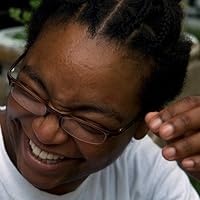
Gloria Wekker analyzes the phenomenon of mati work, an old practice among Afro-Surinamese working-class women in which marriage is rejected in favor of male and female sexual partners. Wekker vividly describes the lives of these women, who prefer to create alternative families of kin, lovers, and children, and gives a fascinating account of women's sexuality that is not limited to either heterosexuality or same-sex sexuality. She offers new perspectives on the lives of Caribbean women, transnational gay and lesbian movements, and an Afro-Surinamese tradition that challenges conventional Western notions of marriage, gender, identity, and desire. Bringing these women's voices to the forefront, she offers an extensive and groundbreaking analysis of the unique historical, religious, psychological, economic, linguistic, cultural, and political forces that have shaped their lives.
Gloria Daisy Wekker is an Afro-Surinamese Dutch emeritus professor (Utrecht University) and writer who has focused on gender studies and sexuality in the Afro-Caribbean region and diaspora. She was the winner of the Ruth Benedict Prize from the American Anthropological Association in 2007.
Wekker does an excellent, wonderful job of exploring the Mati work and culture ("marriage is rejected in favor of male and female partners") in Suriname through the life story of Juliette, a 70+ year old woman who all her love loved women and sought to build community with them, and support them in all ways possible.
The women in 1920s Suriname sought to (as black folks of African descent and Caribbean roots living in the diaspora do) create and sustain alternative families, children, relatives, and lovers.
This is an accessible book for those who are interested in narratives that contest dominate western narratives about gender, sexuality, identity, desire, and their intersections with race, class, and etc.
What a totally fascinating book. I knew nothing about Suriname before i started reading this. Like, aside from knowing it was somewhere in Latin America, i couldn't have told you a thing else about it. I learned a ton from reading Wekker's book -- and about/from the perspective of a group of women who rarely get to have a voice in academic (or non-academic) literature.
My only complaint was that the author's formatting of the direct quotations in Sranan Tongo (and, occasionally Dutch) vs. the translated quotes in English made it very difficult to tell where the translation started and, even moreso, where the translation stopped and the book's main text picked up. An editor should have helped fix this. But while really annoying, this is overall a minor complaint.
I read it for a black feminist theory class. It seemed that no one in the class liked it as they thought her approach was ethically shady as she got involved with her informants. I don’t think I am in any position to judge her ethics not having been in her position however I believe in researcher’s ethics instead of western institutionalized ethics board structures.
That said, I liked the way book was honest about Mari work. It did not exoticize or romantic Mati to be this cool queer thing done in Suriname. It talked about its negatives too. I felt especially uneasy about the part where she talked about how old women initiated young teenagers into it. I think it is very questionable. But I am glad Wekker did not shy away and shared this finding.
I think Wekker is a good writer and thinker and I think that is a very ambitious dissertation. Project for her and very honest writing. I think you cannot run away from critics which such honest writing and I am sure she know of it yet chose to let people know of the truth of her work, herself and Suriname.
Insightful and very academic. It does get tedious for a lay reader but if you love oral histories from remote parts of the world, this one's a good bet.
Interesting work that brings forth the idea of sex and sexuality as liberatory project by which social and economic ties can be forged, especially for working class women, the potential non commensurability of Western labels (e.g. lesbian, bisexual) of sexuality on all same sex actions/peoples/behaviors; the idea of sexuality as behaviors done rather than identities claimed.
Potentially problematic as the issue of sexual violence, especially against young girls is touched upon but not delved into.
Learned alot about Suriname and working-class sexuality (primarily the mati (or *lesbian*/*bisexual*) culture). Now I need to seriously brush up on my Dutch colonial history, but with coursework and prelims it's unlikely to happen anytime soon.
Very brave for the author who revealed her relationship with her Mati friend. Great job, and I love everything she presented. I come from one of the Asian countries where same sex sexual activities are being condemned and criticized. learned alot