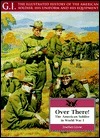
Was Very psyched when I found this book at a local thrift store(charity Shop) as this was another cool series from the late 20th Century. The GI series, from Greenhill Books in the UK and Stackpole Books in the USA, were an early response to the success of the Osprey Series for the Gamer/Modeler/Military Enthusiast market.. Using extant art and photos from the period and a few modern artifact shots, these books feature a little bit of overall prose, a colour section of plates and photos from the period or of items of interest taken recently, and then a long b/w photo collection, with short descriptions of each. While lacking the chapters, graphs and maps of the competing series, these books had more old pictures with captions In this one, Jonathan Gawne, an author with a strong relationship with US Military history takes us into the world of the USAEF, General Black Jack Pershing's American Army in Europe. It's a fun way to learn about this era of American history.
When the war finally came to America, the US Army was a small force distributed around the west it had so recently conquered, with its main overseas engagement with the Philippines. Gawne shows us a force rapidly changing from the Pancho Villa Expedition in Mexico to a major European War fought with the latest technology. Regular units, National Guard divisions, and fresh units made up of raw draftees all needed to be raised, fit out, trained, sent overseas, and then fed into action. An enormous undertaking for an army that had last been maneuvering at the operational level in 1865. It's actually amazing that any US troops got into action at all, but they did- and they proved to a useful adjunct to the Allied cause.. Largely armed with British and French weapons, American infantry proved stubborn in defense and aggressive on the attack- just what the exhausted Allies wanted. I think even the general audience reader will like to see how rapidly the Americans got up to speed- in a photo collection.
There are few adult themes and no graphic injury or violence portrayed, so this is a good choice for the Junior Reader over about 10/11 years with an interest in History. For the Gamer/ Modeler/ Military Enthusiast this is a good resource, but best if used alongside others. The gamer gets good shots of the Army- but not real scenario/campaign help. The Modeler does get a lot of build/diorama ideas- but might want more colour resources. The Military Enthusiast gets a fun look at the WWI American Army - and the AEF- all through pictures and captions. I learned a few new things from the pages, and I think most general audience member will as well. A bit dated, but still a good book to add to the collection...