Jump to ratings and reviews
Rate this book

Father Nature: The Science of Paternal Potential

Rate this book
How and why human males evolved the capacity to be highly involved caregivers—and why some are more involved than others. We all know the importance of mothers. They are typically as paramount in the wild as they are in human relationships. But what about fathers? In most mammals, including our closest living primate relatives, fathers have little to no involvement in raising their offspring—and sometimes even kill the offspring sired by other fathers. How, then, can we explain modern fathers with the capacity to be highly engaged parents? In Father Nature, James Rilling explores how humans have evolved to endow modern fathers with this potential and considers why this capacity evolved in humans. Paternal caregiving is highly advantageous to children and, by extension, to society at large, yet highly variable both across and within human societies. Rilling considers how to explain this variability, and what social and policy changes might be implemented to increase positive paternal involvement. Along the way, Father Nature also covers the impact fathers have on children’s development, the evolution of paternal caregiving, how natural selection adapted male physiology for caregiving, and finally, what lessons an expecting father can take away from the book, as well as what benefits they themselves get from raising children, including increased longevity and “younger” brains. A beautifully written book by a father himself, Father Nature is a much needed—and deeply rewarding—look at the science behind “good” paternal behavior in humans.

392 pages, Hardcover

Published October 1, 2024

5 people are currently reading
1895 people want to read

About the author

James K. Rilling

1 book4 followers

Ratings & Reviews

What do you think?
Rate this book

Friends & Following

Create a free account to discover what your friends think of this book!

Community Reviews

5 stars
3 (16%)
4 stars
8 (44%)
3 stars
6 (33%)
2 stars
1 (5%)
1 star
0 (0%)
Displaying 1 - 5 of 5 reviews
Profile Image for Cav.
913 reviews213 followers
June 21, 2025
"In college, I became fascinated by the study of human origins and human evolution. The fascination was strong enough to dissuade me from applying to medical school and instead pursue a PhD in anthropology..."

Father Nature was a decent read, but the writing was a bit dry at times. As the title implies, the book is a science-based look into the subject.

Author James K. Rilling is Professor of Psychology and Professor of Psychiatry and Behavioral Sciences at Emory University, and Director of the Laboratory for Darwinian Neuroscience.

James K. Rilling:
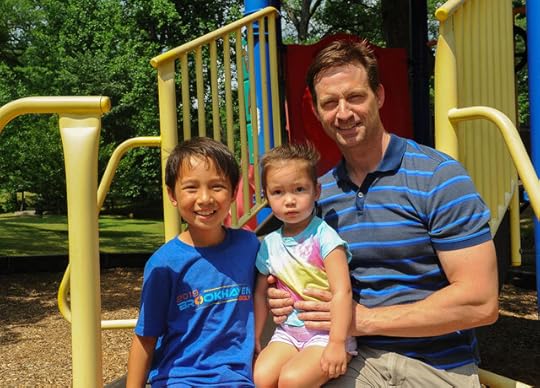
jamesrilling-Becky-Stein

The book gets off to a bit of a slow start, and the pace never really livened up as it progressed. I found a lot of the writing a bit flat. The author writes in a matter-of-fact, no-frills style. The book reads more like an academic paper than a book with an engaging story to tell. This was my biggest gripe.

Rilling drops the quote at the start of this review early on, and it continues:
"...I had the good fortune of attending graduate school at a time when new noninvasive brain imaging methods had just become available, providing a golden opportunity to address big anthropological questions with the methods of modern neuroscience. After subsequent postdoctoral training in neuroimaging, I began investigating the neural basis of human behavioral specializations such as cooperation and language. Sometime later, it occurred to me that paternal caregiving was also a human specialization and a neglected and worthy topic of investigation. Spurred on by a generous grant from the John Templeton Foundation, I redirected my research focus to investigating the biology of fatherhood. In the midst of that Templeton grant, my wife gave birth to our first child, a delightfully plump boy named Toby. Raising him while researching and learning about fatherhood presented me with a remarkable opportunity for my home life to inform my research and vice versa. My daughter Mia was born five years later and provided a whole new set of lessons that helped to shape my knowledge of fatherhood beyond the mere academic. They are now twelve and six years old, and I feel I have learned enough about fatherhood over those twelve years, both at home and at work, to have some useful knowledge to pass on to others. This book is my effort to do so."

The book presents a lot of evolutionary theory. The author examines mammalian and primate paternity, incorporating a few case studies and relevant scientific findings as he progresses. The roles of many common neurotransmitters and hormones on male psychology relating to paternity are also discussed at length.

He drops this interesting quote about a few of history's greatest monsters:
"Joseph Stalin, Adolf Hitler and Mao Tse-tung all shared at least one thing in common: they hated their fathers. All three men had abusive and strongly authoritarian fathers. Mao Tse-tung’s father beat him when he did not work hard enough. When Mao later took merciless revenge on his political enemies, he told the men who were torturing them that he would like to have seen his father treated similarly.1 Joseph Stalin bitterly resented his father, a violent alcoholic who beat him severely.2 Hitler’s father ruled the family “with tyrannical severity and injustice,” and he viewed him as the enemy.3 Remarkably, all three seemed to have loved their mothers, and at least Hitler and Mao saw themselves in alliance with their mother against their father.4
It would be foolish to conclude that these fathers were responsible for the devastation and suffering their sons unleashed on the world. Most people who were abused by their fathers as children do not become tormenters, and some even thrive. There are surely a host of genetic, environmental, historical, and sociopolitical factors that collectively conspired to produce these horrific developmental outcomes. Yet we can still ask how things might have been different if each of these men had been raised instead by a warm, nurturing father who provided strong moral guidance and set appropriate limits without harsh discipline."

********************

Father Nature was a decent read, and there was a lot of interesting ground covered in these pages. I am a bit of a stickler when it comes to the readability of my books, though, and unfortunately, this one missed the mark towards that end for me. The book was also pretty long, and I felt it could have done with a more rigorous editing.
I would still recommend it
3.5 stars.
Profile Image for Maher Razouk.
792 reviews252 followers
October 17, 2024
هرمون الأوكسيتوسين
.
.
إن فئران الماندرين من الثدييات القليلة التي يشارك ذكورها في تربية الصغار. وعلى غرار إناث الفئران، يمر فئران الماندرين الذكور بتحول سلوكي عميق عندما يصبحون آباء، ويلعب هرمون الأوكسيتوسين دوراً حاسماً في هذا التحول. فإذا قدّمتَ الصغار لذكرٍ ليس أباً، فمن المرجح أن يهاجمها ويحاول قتلها. ولكن إذا فعلتَ الشيء نفسه مع فأر أب، فسوف يقترب منها ويلعقها وينظفها، حتى لو لم تكن الجراء من فصيلته. والواقع أن مستويات الأوكسيتوسين في دم الآباء أعلى مقارنة بغير الآباء، كما أن لديهم المزيد من مستقبلات الأوكسيتوسين في ذلك المحور العصبي الحاسم لسلوك الوالدين، المنطقة البصرية الأمامية الوسطى من الوطاء (MPOA). وإذا أعطيت الآباء دواءً يحجب مستقبلات الأوكسيتوسين في المنطقة البصرية الأمامية الوسطى من الوطاء، فإن لعقهم وتنظيفهم للصغار يقل. لذا يبدو أنه عندما يصبح ذكور فئران الماندرين آباءً، تحدث زيادة في إفراز الأوكسيتوسين بالإضافة إلى زيادة في عدد مستقبلات الأوكسيتوسين في MPOA، وهذه الزيادة في إشارات الأوكسيتوسين تسهل السلوك الأبوي.
.
James K. Rilling
Father Nature
Translated By #Maher_Razouk
Profile Image for Salo.
77 reviews
Want to read
June 25, 2025
I don’t want to read this. I will likely never want to read this. BUT I saw a guy in a man bun (think clean shaven hozier turned finance bro) reading it pensively on the bus and thought everyone should know
Profile Image for Ala.
436 reviews9 followers
March 14, 2026
An entertaining, well-researched exploration of the biological roots of dad-duty. The book is at its best when diving into the animal kingdom, offering fascinating insights into how different species, from primates to fish, handle paternal care. However, the sections focused on human fatherhood felt a bit redundant, often presenting well-known information that most parents already intuitively understand.

While the science is solid, it lacks groundbreaking revelations regarding the modern human experience. It is a light read, especially if you enjoy biological trivia.
Displaying 1 - 5 of 5 reviews