"[Quarterlife is] by a distance the best debut of the year." —Sam Sacks, Wall Street Journal
India’s literary novel of the year—an enthralling, award-winning debut from a “blazingly original voice” (Vauhini Vara).
“In the fashion of the big novels by Salman Rushdie or Amitav Gosh” (Biblio), Quarterlife is a groundbreaking portrait of a nation on the cusp of a new age. When the Bharat Party comes to power after a divisive election, Naren, a jaded Wall Street consultant, is lured home to Mumbai. With him is Amanda, a restless New Englander eager to embody her ideals through a teaching fellowship in a Muslim-majority slum. Meanwhile, Naren’s charismatic brother Rohit, an amateur filmmaker, sets out to explore his roots and befriends the fiery young men of the Hindu nationalist machine. Their journeys lead them into an astonishing milieu of brutal debates and infatuations as fraught as they are addictive, feeding into a festive night when all of Mumbai is on the streets—where the simmering unrest erupts. Hailed as “a landmark novel” (Indian Express), Quarterlife is a brilliantly innovative work that tests the limits of what the novel can achieve.
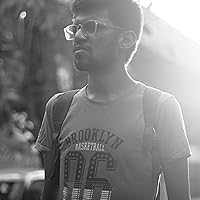
Devika Rege is the author of Quarterlife. The novel came out in India in 2023, where it was hailed as 'a landmark novel' by The Indian Express. It was also a finalist for five literary awards, eventually winning the Mathrubhumi Book of the Year Award and the Ramnath Goenka Sahitya Samman. It was published in the USA by Liveright in 2024. Devika is a graduate of the universities of Mumbai and Iowa, and lives in Bangalore.
Devika Rege’s Quarterlife left me as uncomfortable in the end as it had found me in the beginning. For it took me on a journey back in time. The time, whose beginning was riddled with anxieties and uncertainties about the future for some of us, while for others perhaps it stood on the verge of trumpeting its way onto becoming something that their subconscious had long dreamt of.
The rift in these notions, in my view, appeared with such an unforeseen intensity that it left a permanent divide in the society. Since then, to live a normal life has turned into an unnerving experience and all efforts to make sense of how and why we came to this point now seem a vain endeavour.
This book is a meditation on the transforming social, cultural, political topography of the country in the times succeeding 2014 elections. The author has, quite ambitiously, attempted at capturing and sketching the various approaches - and consequently the underlying beliefs - which people from diverse backgrounds held onto in the wake.
It gives a panoramic view into the minds of its characters as it navigates nuances and complexities around discourses within a group or in one to one conversations between two characters, and leaves the reader strangely enchanted – bewildered more accurately – at possibly getting a closer glimpse into their ideologies and a perceptive understanding of the reasons for the tenets they carry.
We are taken to distinct settings – a high rise apartment in a posh locality in Bombay, a school run by an NGO in a slum, a studio, a village house, a protest site, a Ganpati Visarjan procession – and are made privy to the inevitable fissures following the convergence of different characters in these places.
It once again brought back the feelings of distress and disconcert that I had once experienced in my dealings with right wing enthusiasts in my immediate surroundings. I was naïve then. I have learnt better with time.
The book offers neither hope nor a closure. It holds a mirror in fact, to the fabric of society which withers on and on, with each of us still clasping tighter to our own truths as if this is the nature of desperate times, of life.
This is a very well written book. One of the best debuts by an Indian writer writing in English I would say. The writing is almost flawless and left me in awe of the clarity of understanding that holds Rege’s pen. Her experimental last chapter is an epilogue where she gives us glimpses into her own journey and concerns, something I could not shake off even after leaving the last page.
Devika Rege’s debut novel Quarterlife begins with a successful and very competitive NRI, Naren Agashe, finally getting a green card. Instead of rejoicing and looking forward to an even more illustrious career in the US, Naren decides to go back home to Mumbai, India. India, where a newly-elected government, formed by the Bharat Party, has been promising the world to voters: a corruption-free establishment, employment, development, investments. To Naren, India’s prospects look far brighter than those of the West.
With Naren comes Amanda, a photographer nominated for a fellowship with an NGO in Mumbai. Amanda will be spending the next few months in the heart of Mumbai’s Deonar suburb, documenting the work being done by the NGO. When Naren and Amanda arrive in Mumbai, they are soon absorbed into the frenetic pace of the city. Naren gets sucked into the glittering, brash world of big business; Amanda goes to the other extreme, finding herself getting the greatest culture shock of all in grimy Deonar. Naren’s younger brother, Rohit, who runs a small film studio along with a couple of friends, ends up in a relationship with Amanda—while also going off on a solo road trip to search for his roots.
All of this might seem like a predictable tale of personal journeys, but woven into the stories of these three people (and those who surround them: friends, family, and associates) is a web of all that makes up present-day India: the many schisms, the extremes, the political climate, fraught with anger and intolerance. All these people, no matter how seemingly distant their lives may seem from the political intrigues of the state and the nation, end up ensnared in that web. Naren finds that big business must collaborate with politics in order to get even bigger. Amanda discovers the nuances of religion in India, from the Hindu-Muslim conflicts to the less apparent—to her—spectre of casteism. Rohit, making friends with a talented small-town cinematographer named Omkar, finds himself going down paths he could never have envisaged.
Quarterlife is one of the best character-driven novels out in India this year: this is wholly about how people think, how their perceptions shape their behaviour, and how those perceptions may change. The bulk of the story is told from the viewpoints of the three main characters, with Naren, Amanda and Rohit being the focus of alternating chapters. You see Amanda beginning to make sense of the delicate (and tense) relationships around her in Deonar. Naren, driven and ambitious, doing whatever it takes to get ahead in the rat race. Rohit, pulled and pushed between the radical Omkar on the one hand, his urban, liberal colleagues and friends on the other. The feelings, the thoughts, the inner conflicts, the character arcs, are all nuanced and very real.
In their interactions with other characters like Omkar, Manasi, Cyrus, Gyaan, Ifra and Kedar, even more thoughts and perspectives are revealed, each vivid and life-like. In one of the most impactful sections of the book, where Rege brings alive the Ganpati visarjan, she goes into the minds of many varied, even nameless characters: each gets only a paragraph or so devoted to them, but the paragraphs build up to form a searing, unforgettable view of what is probably Mumbai’s biggest festival.
Rege’s research and the thought that’s gone into this book are obvious. Quarterlife looks at varied matters: politics, business, religion, casteism, the conceptions (or misconceptions) of history and heritage. Patriarchy, women’s rights, corruption. The Bollywood-politics nexus. All, however, are woven so organically into the overall story that it rarely feels forced. This, one feels, is a reflection of reality.
Occasionally, there is a tendency to go on and on: a little tighter editing would have helped tone this down. But, on the whole, Quarterlife is a fine debut. We have much to look forward to from Devika Rege.
In a single sentence, this is a novel of ideas that represent the contemporary India. Ideas that ossify the political consciousness and conviction in a group of quarterlives. Of course when you use 'contemporary' these days, it can only mean post-2014.The group of youth, through who the novel qualifies as a political bildungsroman, felt very familiar. I have met them in University spaces, social media and even family groups. In sketching out how they come to the political opinions they hold, the author pans out the corporate greed, communal politics and the always present specter of casteism which together construct the reality of the 'new' India (??). Skipping the cloak of subtlety here, Rege assumes the role of a chronicler of Modi-era.
Though I have apprehensions about her characterization and their representation, I liked how she exposes the youth of the 'new' India who believes themselves to be ideologically superior to the generation of their parents. In doing so, she clearly scrutinizes the tags of 'liberal' and 'apolitical'. I also liked how she constantly weaves in "restlessness" through her characters and their thoughts. Quite a reminder that if living in the contemporary times is not peaceful, so is reading about it.
Even when the liberal tone bothered me at places, it cannot be denied that the power of Rege's narrative language is commendable. So is her perspicacious narration of her characters' inner world and how she directs the path. What begins like a chess set where characters are moved at author's will soon transforms into a stage where players are outside the authorial intention. They confront each other and the reader. Ideas and voices overlap. This is where, I believe, potential of novel as a genre is revealed.
I do not usually write reviews for books I did not like but here you go.
This book is already a contender for the worst book I'll read this year. Fiction often invites outsiders to different contexts and worldviews. But reading this book, I only ever felt like an outsider. It is a book written for people like the character Naren-- apolitical, rich-NRI class.
It's a liberal's wildest fantasy—the idea that the left, the right, the rich, and the poor are all just people going through life. While ostensibly this might have some truth, to actually show it requires depth, care, and subtleness that the book lacks. The first and most important thing to do in this regard is to move beyond the stereotypes and make complex characters. Better writers like Neel Mukherjee do this by adding unique idiosyncrasies, or Rohinton Mistry by writing rich internal life and life histories. In this novel, given the number of actors, it is a tall task that the book fails at miserably. With the possible exception of Omkar, the allegory to the Shiv Sena karyakarta, all the characters merely reemphasise all the stereotypes.
The narrative style is an interesting choice-- different characters make up the narrators for chapters and it is their pov the readers see through. This style keeps the pacing simple and fast. However, to do this well, one would need to keep character development relatively consistent in terms of their inner lives and depth. Someone like Douglas Stuart does this absolutely masterfully. This book, unfortunately, utterly fails at that. Every character is just seen as the caricature of their sociopolitical position and does little to disavow that notion.
Apart from the substandard writing, the book makes far too many suspect political choices. The only Dalit character is an affluent consultant who alleges they have moved beyond caste and never thought about it growing up. I wonder if there is a station in life in India where a Dalit person can be privileged enough to be that oblivious of their caste-- I imagine so would Yashica Dutt. The left-leaning Muslim character is economically elite making any political worries seem vacuous at best. The Shiv Saniks and RSS karyakartas are in touch with reality and, in the end, without hate.
Perhaps the most telling scene is when the religious procession goes from in front of the mosque. In what could have been a seething reflection of the routinized violence against Muslims, the book instead shows the Imam coming out and partaking in the procession, the BJP politicians working with the Police to avoid violence, and lastly, the two sides being equally disposed to violence.
In such a politically unstable time, it requires courage to write about contemporary India. There are many Indian authors, like Megha Majumdar, who are showing this courage. Unfortunately, Devika Rege and her book show the odious result of writing without it.
It always has been, in fact. We tend to believe otherwise, but the fact is, seeds in the garden grow given the soil they're planted in aren't barren and are fed enough of sunlight. Equally!
Quarterlife by Devika Rege reads as a meditation of the New India that is. An India that was & An India that will be, as Marx points out that History repeats itself. It's 2014! Bharat Party is awarded with the mandate based on their divisive ideology which was wrapped with economic development promises by the supreme leader who comes from a humble background. The Conclave Party was shown the exit due to its corrupt governance of the royal family.
Naren returns to Mumbai in hope of the great days promised by the humble leader, his brother Rohit in Mumbai runs a production company. Amanda is set to leave England to work through a fellowship here in a slum in Mumbai.
The Left The Right The Centre and all other shades colored in this novel - Rohit who befriends Omkar, is good at handling the camera & is your usual bigoted right winger friend of the group. Rohit's cousin Kedar & friends Gyaan, Ifra and Cyrus are all different shades of the left. Some are moderate, while some get an immense ego boost from ranting against the elite and the establishment. Naren himself is ambitious with a mindset tilting towards the free market while Rohit is still on his self-exploration.
In a sense, Quarterlife is very much a character driven prose, almost like a stream of their consciousness flowing seamlessly - the writing reminded me of Mohsin Hamid's, in a good way. The author skilfully weaves the characters, each representing a distinct hypothesis on the New India while they are grappled with the questions of identity and are in an allure of corporate greed. The commentaries on present day ideologies across the spectrum are multi-layered along with Rege's writing style that makes it an immersive reading experience.
Ultimately, Quarterlife is a rich experiment of structure and ideas of this socio-political voyage of the youth, a voyage where the personal is always political.
Quarterlife is a beautiful book about being; it’s a book about caste, religion, politics and freedom in modern day India. I feel like I’ve read and heard about books that talk about politics and social dynamics in this country but never have I ever come across a fiction book that tackles these in present times. Reading this book is an experience unlike any other because it tells you what to think and lets you think for yourself at the same time — the book is segregated into sections called anxiety, transformation, stalemate, atmosphere, vigil, and release, which set a general vibe for the pages to come but, at the same time, these pages also let you explore yourself and I think that’s so different from anything I’ve felt while reading.
At the heart of this book are three main characters — Naren, Rohit and Amanda — and we get to explore their inner worlds throughout this story. The book tackles the modern dilemmas we face as we try coexisting and building relationships with people who think like us and the ones who don’t, and how difficult it is to understand if everyone can always be morally and ethically correct. What price do people pay for being this way? Is asking for justice the same as wanting to be on the right side of history? Is being complacency justified just so you can live “normally”? Is everything political? Do you need to always care?
Quarterlife tries to answer these questions through a multitude of experiences that reach past our three upper-caste, privileged, wealthy characters. There are a plethora of ideological opinions and debates throughout the book that feel reminiscent of the country in 2014 and where India is as a nation right now. However, political thought in modern-day India is not a straight line that can take you from A to B but is riddled with contradictions not even a fictional book can solve. Likewise, the characters in this book slowly lose themselves to their ideas of identity and freedom and privilege.
One part of the book that really really struck out to me was the depiction of the festival of Ganesh Chaturthi and how Rege managed to create an atmosphere of devotion, sacrilege, devastation, misery and violence all at once; it’s as if one festival, a state-wide mass celebration, can mean many things to many people in the best and worst way possible. The book got a little slow in the middle but this section was jam-packed with emotions I don’t think I can describe.
The last chapter of the book is not from the voice of any of the characters but of the narrator— they cross a river in Varanasi to reach the ‘other side’ where none of what we know of is happening, where a pleasant breeze blows and families find themselves on a picnic under the shade of a tree, where you’re in the moment but also away. Don’t we all wish to find the other side?
This endless hate and strife and division, he thinks, when will it erupt and destroy them all and return the earth to silence?
It was so refreshing yet disheartening to read Quarterlife, disheartening not because I didn’t like this book but becasue just thinking about where this country is descending towards, where our world is descending towards made me feel so… helpless.
I really struggled to finish Quarterlife by Devika Rege. I listened to the audiobook and the narrator Soneela Nankani was fine but I found this book too long and it just dragged on. It’s about Naren who returns home to India after working on Wall Street. It’s interesting his views on living in America compared to India and the novel’s exploration of caste and racism.
Thank you to the publisher via NetGalley for my ALC!
It is rare to find the blurbs on the jacket of a book to be true and in this case positively so. “The secret history of a nation”, Jeeth Thayil describes the book. To me the novel transcends further to become a handhold in making sense of my own quarterlife, often subvocalized with the word crisis.
The unassuming syntax of Devika Rege’s prose captures the anxieties of an entire generation through her characters so real and alive on the page. Their tussles over philosophies – personal, political, and economic tell a familiar story with nuance and underlying wit. The force fields that erupted among friends and families after the 2014 general election could be identified as the germ of the novel. The relationships we severed or didn’t, owing to where the other party’s sympathies lay. The parochial instincts that were inspired in the vast majority by the now establishment under the guise of capitalism. Some who confirmed to the political consensus with an almost semitic fervour for the fatherland that placated their identity crisis. And in exploring all these the characters revealed the most intimate secrets of the workings of their mind.
The subversive qualities of the book is unparalleled in recent times. The last section called “Release” is particularly insightful and bequeaths the reader an idea of continuity and evolution where some comfort is to be found.
Anybody with writerly ambitions must prepare to be embarrassed before picking this one.
Somewhere during the heated and emotionally charged moments of the lockdown, when we were seeing death and division all around us and losing touch with social connections, most WhatsApp discussions started turning into shouting chambers of politically charged perspectives. I have been a culpable participant in such discussions.
Now imagine unrolling one of these discussions and giving each participant a chapter in a novel to share their perspective. That’s how Quarterlife reads. For someone who is already clued into the politics of the country, the book offers very little. There is no grand arc, just a constant barrage of events centered around politics. This might still have worked if the focus had remained on a few characters: the insider Rohit, the outsider Amanda, and the in-betweener Naren. But midway through, the author decides to expand the story through the POVs of other characters, an activist, a heartlander, and so on. The effort is earnest. The author wants to fit in many perspectives and show how most of them are driven by some kind of calling or selfish motive.
In doing so, however, the book goes nowhere. It could just be me, especially since it’s been a while since I’ve read a work of fiction by an Indian author. What I did like about the book was the author’s unique voice, the ability to blend the narrative with a poetic flair. For a debut novel that's definitely shows promise. Will definitely keep an eye on what they write next.
This novel is a suprise on multiple levels - how deep and wide the themes and the observations of a country, its peoples and current epoch, how young the author is, how well I connected my own quarterlife with the people and the times decades and miles away from it and, finally, how it connected to our children’s generational concerns. It speaks of a good book and hopefully the one I will keep coming back to for additional insights. Warmly recommending this novel to the curious minds keen on exploring new lands and on reading one of the rarely deep accounts of the times we live in.
So atrocious I almost DNFed several times. Unlikeable, one-dimensional characters; overwrought, purple prose that was way too proud of itself; and worst of all, bad pacing. I haven't read a book with such terrible balance between showing/telling and anecdote/skimming forward through time in a while. The plot was ~fine~, but not enough to make up for the rest of it.
"O Bappa, he thinks, his grip tightening on the window frame, Bappa, I believe every word I speak, but there are nights when I have no religion and no politics, I have only desires."
For some reason Quarterlife is an under the radar novel. I think it was the best novel published in 2024.
Quarterlife introduces four main characters and follows their life over a year in Bombay. It’s the most nuanced exploration of the range and layers of cultural identities in modern society that I’ve read in a long time. Part of its success is Rege’s ability to gently pull us towards empathy (at least at times), without melodrama, pity or sympathy, to the context and perception of right wing male characters. Of course, she also has the required critiques of liberalism that are expected in any novel. Her characters sufficiently suffer from the anxious weight of their cognitive dissonance. Rege avoids these themes becoming stale by crafting such a dynamic plot and taking advantage of India’s rich settings.
While this is possibly the quintessential millennial Indian novel (that also explores myth and history and colonialism as well as I remember in anything Rushdie wrote), it’s really a contemporary global novel. Rege’s characters experience the conflicted success and tragedies that are profoundly relevant to any person in a modern democratic (capitalist) society.
Also this is just a well written, sensitive, entertaining book.
A snapshot of contemporary India set in Mumbai and Konkan that follows the life of half a dozen 25-year-olds. An investment-banker NRI (Naren) who returns to contribute to the development of "Naya Bharat", his brother (Rohit), an aspiring filmmaker, and his American friend from New Hampshire (Amanda), who is travelling to document life in a slum as a part of her fellowship, make up the protagonists. The book examines the fault lines of caste, religion, modernisation and the BJP's new India through an obvious liberal lens that the reader of such a book, urban progressive/liberal/NRI, would anticipate and agree with. But Devika turns her gaze to the life of Omkar, who is probably my most favourite character, an all-heart man from Konkan who is actively involved in an RSS-like outfit. The polarisation is laid bare, and exploration of the liberals' failings, along with the Right's, is complete.
My only gripe with the book is that the characters, apart from Amanda and Omkar are not fleshed out fully. The book ends with more questions than answers. More trauma than drama and an acute, unsaid assessment of the crossroads we find New India in.
Major proof that right-wingers don't read is in the fact that none of them in India has ordered a ban on this book. Not like this book is incendiary exactly. And while Rege does end the book with the implication that right-wing extremity will lead everyone to a terrible place—some way more worse-off, both physically and mentally, than others—Rege still paints her characters, all of them across the political spectrum, with a brush of empathy for where they've been and what they've gone through. It does provide the book, the first of its kind that I can remember directly dealing with people and their politics post 2014, with depth, making it richer as it goes on.
The book is divided into five parts, with the first two focussing on the points of view of three characters. The unfortunate part of it is that of the three protagonists, two of them did not seem very interesting to me personally: Naren, the US-returnee, who seems like every other upper-middle class Indian man, a species most of us are tired of, and Amanda, a white woman who does social work at Deonar—you know the type. Rohit's chapters of trying to find his roots, and eventually entering right-wing spaces, were a more interesting route. I did wonder if there was a reason Rege did not want to have chapters from the perspectives of the minority characters in the book (and I'd get it that sometimes a writer may think it is not their place).
Thankfully, Rege opens up the book in the third part. After well over a hundred pages of build-up, the book explodes in a kind of familiar way that had me turning the pages quickly. What was happening on the page was not unfamiliar. A lot of us went through the early Modi years getting into squabbles with people we thought friends, those who thought Modi was good for the country, those who thought he would bring development, those who thought the responsibility of a prime minister meant something like 2002 wouldn't occur again. And I saw my ex-friends reflected in characters like Naren, Rohit, and Omkar in this book. Now that we're a few years removed from then—even if right-wing threat remains as potent as ever, this was the most fun part of the book. I felt a visceral rush reading conversations that I had engaged in back in the day.
One thing that Rege also manages well is the range of characters and their backgrounds and motivations and politics. Any Indian knows Indian politics isn't necessarily as straightforward as right-wing, centrism, and left-wing. There are people belonging to different religions, castes, classes, sexual orientations, and political parties, and Rege doesn't stop herself from digging into the potential thorniness of fragile identities. For instance, Ifra is a Muslim, but also richer than some of the right-winger Hindus in the story, leading to jealousy; she has a chance to leave the nation but is unsure if that is the right thing to do when she sees how poorer Muslims live across her city. Omkar is from a backward caste, but joins a party that pushes Hindu supremacy, only because he also sees himself as Hindu first. Manasi is the product of an intercaste marriage between an upper-caste person and a Dalit, but tries not to lead her life thinking "everything is political". Cyrus is a gay Parsi who is generally apolitical. Amanda, the white woman who comes from a family that votes Republican, feels that she's doing the right thing when she goes to the police about a poor lower-caste man who sexually harasses a teen, but unravels when doing so leads to the man being harassed by upper-caste people, mob justice, and eventually death by suicide. India is a land of such contradictions and Rege doesn't shy away from trying to portray the murkiness inherent.
Regarding the structure of the book and Rege's writing, I was a little surprised by the third-person voice in the initial two parts because I felt a first-person voice would've worked better. Of course, then Rege does change structure in the third part, bringing many more people into the picture, and then third-person voice made further sense once we moved to the ambitious fourth part, which includes four chapters set across one night, the night of the 11th day visarjan, which, if you're a Mumbai resident, would know is one of the most important days of the year for this city. In this part, Rege is like an omnipresent, omniscient god, gliding over all the characters, whether protagonists or supporting parts or even some who've been around for only a scene in non-speaking parts, to see what they're upto during the farewell to Ganesha. It's truly sprawling at the end, scanning different areas of the city, whether it's those on the road, ones residing in chawls, or those living in palatial towers. But there is still one writerly twist in the final part, when first-person voice finally gets employed. I'm not sure if this final part/chapter works; I'm yet ambivalent about it. The writing itself is mostly brisk, characters' internal motivations brought out well. There were some parts where my attention did fade, like in Amanda's final chapter, which includes a lengthy description trying to be poetic, or a sex scene featuring Amanda. But such passages are few and far between. (Now that I think of it, most of the sus writing passages were Amanda-related.) But anything Bombay was well sketched out.
Bombay novels are my drug; I love reading them. As someone who has lived here all my life, I like reading about places I have walked through, visited, or where I know friends stay—its people familiar in personality and caricature. Quarterlife does fit in very well in that tradition of Bombay books. What I will say makes this one slightly different is that a large part of this Bombay novel takes place in a posh apartment in a high-rise. Not that the common man's humble abode doesn't get any coverage, but a move in setting to an upper-middle class, well-to-do Brahmin family's speckless home in a luxurious Bandra West building does seem fitting for a book that is looking at lives in India post Modi.
I won a free copy of Quarterlife via a Goodreads giveaway. This was an ambitious, sweeping debut novel about a group of friends and relatives living in contemporary India. While the characters were vivid, there were quite a lot of them, maybe too many. While the story is told primarily from the perspective of brothers Naren and Rohit, as well as Amanda, an American woman temporarily in the country who is entangled to varying degrees with both, there are a number of other secondary and tertiary characters that ebb and flow. There is less a plot and more a confluence of ideas and interactions or conversations among people. The writing was sometimes confusing, and overall the book could’ve used some tightening and streamlining, particularly in the last 25%. I would recommend this book to anyone who enjoys a character driven read or wants to learn more about contemporary India; however, if you aren’t already well versed in Indian politics you may find yourself Googling a lot.
The best fiction I've read about contemporary India. Modernism at its best and an empathetic but ultimately critical of the cast of young characters you encounter here in the upper classes and their aspirants (the neoliberal returning NRI, the more-evolved contemporary version of the Western do-gooder/seeker, the upwardly mobile rural base of Hindutva). Rohit felt like a particularly good characterization of the disaffected Zoomers who somehow manage to end up finding meaning in the "authenticity" of reactionary movements. The book is both formally and thematically ambitious...at times to a fault, with overwrought prose and underdeveloped minor characters. But these are forgivable sins in a debut novel.
A very interesting read though the multitude of political parties/splinters, not to mention the ideas espoused by each, often confused me. Ultimately the confusion turned to admiration of the scope of the novel. I agree that the characters were all too-similarly earnest but that was a minor detraction for me. The last part, Release, sealed my positive regard with the author's vulnerability and the visceral description of Varanasi. Overall, a book that was energetic and life affirming, instead of being limpid, passive and wan as many books are and even strive to be.
Found myself sympathising with everyone, yet liking no one. Also a great postmortem of the city, and those who call it Bombay + those who call it Mumbai
An astonishing novel, and the best new book I’ve read in years. Devika Rege writes with a scope that manages to be both intimate and epic at the same time, capturing a melting pot of ideologies and identities that clash against each other. A vital key to understanding the complexities of modern India and Hindu nationalism, this novel is not only one of the great literary debuts, but is surely destined to become a great literary classic.
A bit of an epic, but a pretty rewarding analysis of modern day India.
The book unfolds through the perspectives of three narrators; an expat Indian returning home, his younger brother who never left, and a white friend from college with a visiting charity.
Caste and class are beautifully described, as well as their intricate relationship with gender, race and sexuality. Through the individual struggles of the characters you get a sense of India defining itself on the world stage, striving towards modernity whilst retaining its unique cultural heritage. The inherent tensions this poses are reflected in the turmoil the three main characters find themselves in.
As a vignette of India conflicted by economic growth and rising nationalism this book is very effective. The characters feel perhaps slightly wooden however as they carry this more abstract purpose on their shoulders. Not the easiest reading but satisfying all the same
Compelling story about the competing draws of capitalism and broad social and environmental survival. Unfortunately I couldn't understand everything about Indian history and caste. My loss.
I know this is objectively a Good Book but it took me way too long to read and became a bit of a slog. Admittedly I had to pause to review some stuff for FP but still, something about “Quarterlife” just made it drone on and on, even as it deftly handled the hydra that is Hindutva. Now back to reading books at a normal pace 😅
must confess to being lost at times, but this was a much more interesting way to try to understand what Hindu nationalism is and why it’s rising than reading the news. And the last chapter was one of the coolest endings to a book I’ve seen in a while
Compelling novel about two Indian brothers, their friends, a white woman from America and the election of a Modi like leader. Rege does a great job letting the characters speak the different viewpoints of Indians dealing with rising authoritarianism, increasing censorship and threats of physical harm to those who are not hindi. Very timely!
This book was super ambitious. The author really had a big scope of interweaving these three different stories layered with all this political upheaval and tension. I think the premise was really good but the execution got lost on me at times, while the writing was good sometimes it took a while to get through a sentence. The ending was interesting… almost felt like the easiest conclusion. I did learn a lot about India and the Bharata Party from this book so yay 3.5/5