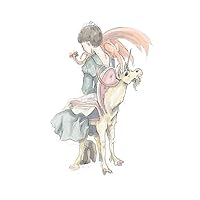
In the beginning, when the world is new, Jad the young shepherd meets his god, and his god is an idiot.
But before Jad can tell anyone, he and his friend, Tez, stumble across a soldier from a faraway land in the river, bleeding from a sword strike. He tells the boys that soldiers are coming to take their village, and kill anyone who resists.
Jad’s father says they’ll fight. Their god will protect them. The soldier says many gods have been fed to the expanding empire’s terrible god eater, including his own. If only, he says, the village had a Speaker of magic—who Jad’s father would deem a terrible heretic—only then might they be able to save their village.
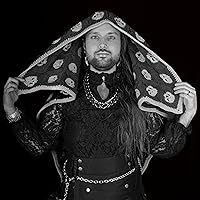
Lee Burton is a Percy Janes First Novel Award winner, and a finalist in The Writers of the Future contest. In 2023, he'll be publishing the first of his Speaker Series stories.
He lives in St. John's, Newfoundland, where for the past ten years he has worked as an author and freelance editor. Though his stories are diverse, they all revel in the music of words and celebrate imagination.
After enjoying The Last Speaker, I was eager to check out this book and learn more about the "Speakers' Origins."
Burton did not disappoint! It was very cool to see the same magical realism of The Last Speaker in a very different time and place. The worldbuilding is beautifully interwoven with the plot in a way that makes it interesting and easy to follow. I especially liked how this story can stand alone - no need to read The Last Speaker to understand it. Even so, I'd say if you like one, it's worth checking the other out.
Thank you for a chance to read this book for free. I'm leaving this review of my own accord.
"In the beginning, when the world is new, Jad the young shepherd meets his god, and his god is an idiot."
I'll admit right now, I didn't read the rest of the blurb. I didn't need to. This line had me like a crook around the ankles, and at a criminally low $1, I had to buy it to find out what happened next.
True to the snippet of the blurb I did read, the story opens with Jad guarding his flock from a predator that may or may not be lurking nearby. "Where is the lion?" Straight away, we're pulling into the story: wondering, as Jad does, if the beast is indeed watching him from somewhere at the edges of the meadow. It could be anywhere, right? Jad had already seen it once. And look -- one of the sheep is missing!
Being the good shepherd that he is, Jad goes looking for the wayward sheep, and it's here-in the process of saving said sheep-that Jad meets Zua.
Zua, their merciful god.
Zua, to whom the villagers give offerings for good luck.
Zua, who condemns trickery.
Zua...the idiot?
Zua is not at all what Jad expected, and the effect of this meeting ripples like a steady current throughout the rest of the book. Here we have a boy who has seen his god, who cannot question his existence anymore than he could any other lived experience, and yet how is he to have faith in a being who barely even registered that Jad was there? This doolally god couldn't help him, or anyone! And now, Jad bears the unfortunate burden of knowledge while the rest of the village dwells in hopeful ignorance.
What's a young man to do?
As you can tell, gods/mythology feature strongly in The Lion. Zua is but one god of many, and we soon learn -- from a wounded soldier Jad encounters and then helps -- of one god who would eat all the others. (God eater is an amazingly visceral title, by the way, and I'm here for it) This terrible god is worshipped by a fierce people who invade foreign lands and claim them as their own...and they're on their way to Jad's village.
Now comes the part where I have to try and explain the intriguing themes without giving the story away.
There's the exquisitly subtle expression of love between father and son. Jad's father is torn between his beliefs and paternal love when he realises there is something a little different about Jad. There is tension there, to be sure. But there are also a few truly beautiful moments, like when the father carries Jad, and there's this second of reluctance when it comes time to set him back on his feet.
Right in the feels, I tell you.
Then there's the trauma aspect, which I can't really go into without vomiting spoilers all over the place, but suffice it to say that Jad sees some shit and is forever changed because of it. There's plenty of moral questions in there to ponder as well. How much effort should a child have to go to to help an adult? How can we really tell if an adult has good intentions? If someone has the ability to save people, but fails to do so, can they be held accountable?
I want to pepper the author with questions about the wounded soldier - the Rada. Burton does such a good job of showing us how Jad almost trusts him. How that trust ebbs and flows throughout the story. I still don't know where I stand with the Rada, even having finished the book, but I do definitely have some wild theories. (Which I will have to either confirm or deny for myself while reading the next book.)
Finally there's the big one -- the questioning of faith -- and I love that Burton has approached it not by discrediting theology altogether, but by suggesting that maybe the villagers' faith is misplaced. Zua might help the occasional sheep, but he's not really there to solve anyone's problems. Maybe god doesn't even "help those who help themselves". Maybe the only way for the Zuans to help themselves is to...you know...help themselves.
I'm interested to know what role the gods will play in the rest of the series. Are gods from other lands less idiotic than Zua? Are they indeed more bloodthirsty, or is this just another projection of the peoples who worship them and commit attrocities in their name? And finally, with zero context so as to avoid spoilers, can gods in this world be created?
While The Lion doesn't end on a cliffhanger, there are plenty of dangling questions to leave the reader wanting more, and I do indeed want more. The prose is elequent, the descriptions (at times) a little quirky and (always) delightfully unique. It's been a while since I started an indie book that I didn't immediately stop, and I'm happy to say that I didn't only finish this book, but that I loved it.
Thankfully, its sequel is already out, and I have a sneaking suspicion that Jad will, at some point, have to protect his flock from a lion once again.
"The Lion" is a taut, profound novella that delivers both a fully accessible story of a peaceful village being pulled into a larger conflict, *and* a whole slew of delicious metaphors regarding belief, conflict, and morality.
I say novella but between its length (151 printed pages) and sheer tightness of writing, "The Lion" feels more complete than almost any other fantasy novel I've read in years. Like all good folktales, it starts very small, very humble: a boy tending to his sheep. This is our focal character but more importantly he's also our tone-setter. Burton makes the harmony between tone and subject look effortless. At no point did I feel as though I wasn't seeing this world through a 12-year-old boy's eyes, even though Burton adheres to limited third person perspective and never, ever dips into YA fiction foibles.
Perhaps the most impressive factor is "The Lion" is technically an 'origin' story for a world Burton has already established in other books. Certain revelations near the end did have the weight of prequel significance but I was never left wondering if I'd missed something important. "The Lion" is perfectly stand-alone but, yes, very much an enticing introduction to Burton's deft hand at meaningful storytelling.
I noticed exactly one typographical error and it was extremely easy to miss: a single letter wrong in a made-up name used only a handful of times.
Finding an indie gem this brilliant is bittersweet. I relish that I seem to have joined some sort of clandestine club, Those Who Now Know Lee Burton's Work, but I lament that such works are not more widely appreciated. There should be academic papers on "The Lion". The author cites Le Guin as an inspiration but I think this wouldn't be out of place alongside Rushdie, Marquez, Chiang or even Borges. Another reviewer DID call "The Lion" magic realism and I understand the comparison -- it's literary and allegorical in a real-world sense despite its primitive fantasy conceit. But I think that label scares some people off, and I understand that too. So I'll leave it at 'poignant folktale'. Perhaps the sequel, "Strayed" (which slid right into my library the moment I finished "The Lion") will change that assessment as I expect Burton to pull the camera out a bit...but labels are just a convenience for marketing. As a reader I want one thing and one thing above all else: good writing, regardless of genre.
And "The Lion" is very, very good writing indeed. It never isn't. Read it, and find yourself a more enriched human being for the experience.
I read this novella as part of the SFINCS4 contest. I received a complimentary copy, but my review is honest and my opinions are my own. Rating to be added after Round 1.
The Lion takes place in a small village of sheep farmers located on a mountainside. The main character is twelve-year-old Jad, who is learning to be a shepherd, moving the sheep between the mountain pastures. He knows he must keep vigilant if he wants to protect his flock from a mountain lion. This seemingly simple life becomes much more complicated as we learn that Jad has unusual powers. He is able to command the sheep to stay near his crook while he searches for lost stragglers, and assumes this is normal. However, when he finds himself in the presence of his village’s god, Zua, who ignores him, Jad sees the god as an idiot and starts questioning the religion he has always been taught to respect. While up in the mountain pasture, Jad and his violent cousin Tez find a wounded soldier and they are suddenly able to understand and communicate in his foreign language, Jad starts to wonder what these powers could mean. The soldier warns them that an army is coming to take over their village and make slaves of them. On return to the village Tez’s father turns him against Jad, mistrustful of his ability to communicate with the foreign spy. The soldier is beginning to realise that Jad is a Speaker, whose abilities should mean he can heal him. I liked Jad and found his innocence and childish simplicity of thought endearing. He recognizes violent tendencies in others and is suitably wary. He assumes everyone can do the things he can and when he discovers that is not the case he becomes confused by the extent of his abilities and how best to use them to protect his loved ones from a deadly battle. The wounded soldier was something of a puzzle to me which was made more confusing at the end of the story. The worldbuilding was strong in this novella; the tribal village and the realities of living on a windy mountainside came to life. The Lion was an enjoyable story and part of a larger series, but works well as a standalone.
Decent book, but definitely on the gritty magical realism side. Evocative descriptions of weather, landscape, physical and mental sensations, and intensely detailed descriptions of wounds and gore. There’s a lot of attention given to the grotesque, festering wounds of the injured man. The author was certainly going for hyper-visceral…
The story has a subtle, slow build-up, with the main character mostly herding sheep, and there's a couple of strange encounters (I'm not entirely sure what bearing Zua the sheep god actually is supposed to have on the story other than issues of faith). There's ominous hints of an incoming invasion, and a fair bit of talking amongst characters, a couple of which are extraordinarily obnoxious (Tez, the main character's best 'friend' especially). A lot of talking with said wounded man, with accompanying gross descriptions.
I know this isn't the kind of book where you should expect spectacular displays of magic, but... I am only human, I did hope for something more from Jad, and ended up feeling, well… underwhelmed in that regard. Although to be honest, the story did go in a direction I didn't expect, and thankfully wasn't soul-crushingly grim.
There were some overly repetitive phrases like ‘anvil eyes’, and ‘Zua is an idiot’ and occasional awkward sentence structure.
The book is a bit of an odd length, like a chunk of something meant to be more epic, though at least it feels like a complete story; it builds up to a climax and doesn’t end on a cliffhanger or feel arbitrarily cut off. It’s a bit too short to really have a lot of character development, especially at the rate Jad was going. Realism over narrative satisfaction… I get it, but it’s not really what I like in a story.
It's a competently-told story, just not the kind of thing I usually enjoy reading. Those who are into grounded stories may enjoy it more.
TheLion is perhaps one of the tightest and most stream-lined pieces of prose I have read so far this year. There's nothing wasted in the writing and every word counts. It is a quick read, but to finish the phrase with the typical "and easy" would really be doing a disservice to the work.
Which isn't to say that Burton's writing is a struggle to read, however. I devoured the work in two short sessions, only interrupted by necessity. The Lion has beautiful flow and rhythm that is part of why it is so quick and delightful to read. I frequently found myself pausing to reread phrases not because I didn't grasp them the first time (a common enough issue), but because I just wanted to appreciate the writing a second time.
The plot of The Lion is straightforward enough, but the story is another matter. Through his young protagonist, Burton touches on all the sensitivities of adolescence that we so often remember only with faint nostalgia and embarrassment: the cruel taunting of "friends", the early rebellions and questioning of our elders, the fear of outright failing our parents, the belief that we're more mature than we actually are, and the reckoning that comes along with facing all of the above when they come to bear. This is a story of magic, certainly, but also the story of an isolated community and how the loneliness he feels shapes a young boy who doesn't quite fit in and isn't quite yet a man.
Young Jad's growth in the novella is sharp and harsh, but he faces it with believably fallible pre-teen knees and tears. I timed my reading well, because I cannot wait for the next story in this branch of Burton's universe, and it's apparently coming quite soon.
The Lion is a quick read yet a very interesting one. On the surface, the premise of the story is simple enough, boy loses sheep, boys going to get told off by his dad, boy finds sheep... and his father's god. Wait? His fathers god? And he is an idiot?
I was intrigued to say the least, how could this manifest into more of a tal but manifest it did and so very well. (One of my favourite quotes being; "I'm not getting any blood into my leg. It'll stale and fall off")
The writing style took me a bit of getting used to, but it suits the narrative well. In the spirit of full transparency, I will be reading the book again as I keep feeling I have missed something, some nuance or interpretation. This is the beauty of this book, the extensive use of metaphor that makes you think
The worldbuilding is intriguing and I feel I need to learn more about the previous book in order to really get the most out of this one. Yes, it can absolutely be read as a standalone, but for my taste, and not for any fault of the book, I felt like I wanted more from it.
I received an advance review copy for free, and I am leaving this review voluntarily.
This was quite the amazing book, I am now definitely a big fan of Lee Burton. This was different from my usual fare but I am so glad I got to read it. I want to read the other book that seems to be connected with this book, as it has to be as good as this one. This was a wild and fun ride. Totally enjoyable.