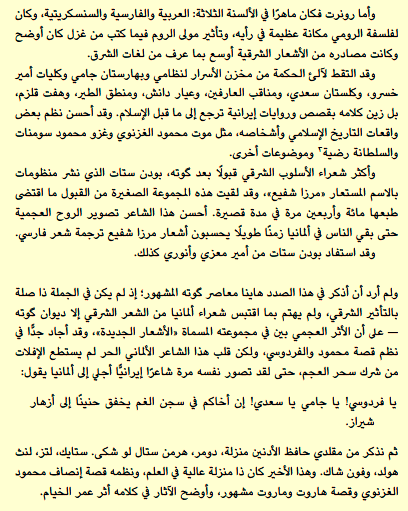
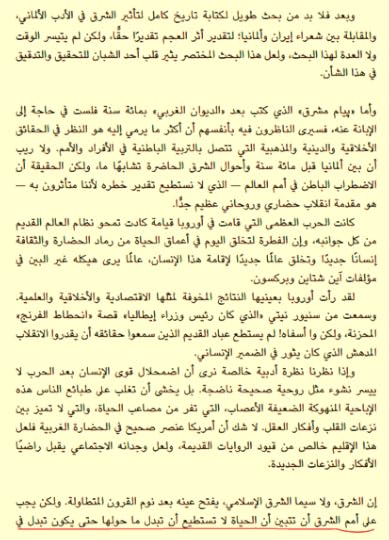
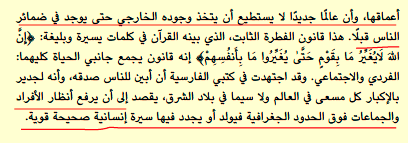
Payam-i-Mashriq (Urdu: پیامِ مشرق; or Message from the East; published in Persian, 1923) is a philosophical poetry book of Allama Iqbal, the great poet-philosopher of the Indian subcontinent. Payam-i Mashriq is an answer to West-östlicher Diwan by Goethe, the famous German poet. The Payam has been very rightly acclaimed as "a genuine attempt by an eminent Eastern poet, endowed with knowledge of Western literature and thought....to enter into a dialogue with Europe." The work includes a collection of quatrains, followed by a group of poems setting forth Iqbal’s philosophy of life in lyrical form and some poetical sketches that picture European poets, philosophers and politicians.
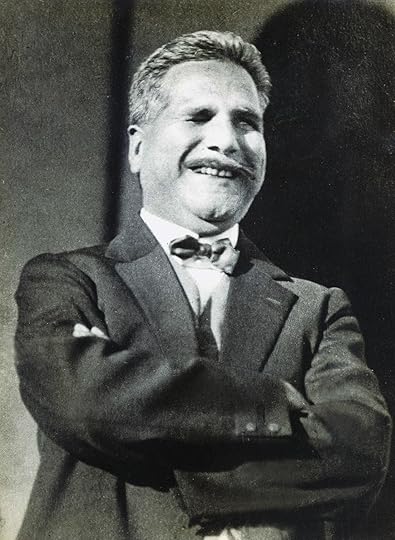
Sir Allama Mohammad Iqbal also known as Allama Iqbal was born in 1877 in Sialkot, Punjab, in British Ruled India, now Pakistan, and was educated in the local school and college in Sialkot, before going on the university in Lahore. There he studied Arabic and philosophy as an undergraduate, then in 1899 did an M.A. in philosophy (being ranked first in the Punjab, and awarded a Gold Medal). He was appointed to a Readership in Arabic at the Oriental College in Lahore, and over the next few years became well known as a poet, as well as writing his first book (in Urdu), The Knowledge of Economics (1903).
In 1905 he travelled to Europe to continue his philosophical studies, first at Cambridge, then at Munich, where he obtained his doctorate with a thesis entitled The Development of Metaphysics in Persia. From 1907 to 1908 he was Professor of Arabic at the University of London; during this period he studied for the bar, becoming a barrister in 1908, when he returned to Lahore to practise law. While practising as an advocate at the Lahore High Court he continued to a part-time academic career as professor of philosophy and English Literature, being appointed Professor of Philosophy at the Government College, Lahore in 1911. He was knighted in 1923.
Despite his law practice, his philosophical work, and his gradual entry into politics, first as a member of the Punjab Legislative Council and later as president of the All India Muslim League, Iqbal was probably best known and respected as a poet. Nevertheless, his other activities brought him some measure of fame, especially six lectures that he gave at Madras, Osmania University at Hyderabad, and Aligarh, which were later published as The Reconstruction of Religious Thought in Islam (1930). During the early thirties he travelled extensively in the Middle East and Europe, participating in international political conferences, meeting philosophers and politicians, and writing.
His political view was that in theory a Muslim state wasn't desirable, as he held to the ideal of a world-wide Muslim community; nevertheless, he held that, at least in the short and medium terms, the only way for Indian Muslims to be able to live according to the tenets of Islam was in such a state, and he campaigned accordingly. He died in Lahore in 1938, some nine years before the creation of Pakistan, where his birthday is celebrated as national holiday.
Iqbal's philosophical work involved bringing various philosophical influences, including Leibniz, Hegel, and Nietzsche, to his Islamic scholarship, thus holding out the promise of a revival of genuine Islamic philosophical thought — a return of Islam to its place in the philosophical world. That promise has yet to be truly fulfilled, though it remains in place.
"To exist in pure duration is to be a self, and to be a self is to be able to say 'I am'." (The Reconstruction of Religious Thought in Islam p.56)
This is the first time I've read Persian poetry of Iqbal. The translation is excellent, as it's rendered into Urdu by another great poet of 20th-century, Faiz Ahmad Faiz.
My Persian is very weak and hence couldn't understand much of the verses in original Persian; still, it's pleasure to read the original for the sheer beauty and melody of language.
In Urdu translation, Faiz leaves some Persian words untranslated. The characteristic brevity of Persian language is evident in Urdu translation as well. The style in Payam-e-Mashriq felt different from other poetry collections that I've read. It feels less dense (again probably because of Persian succintness). The verses are not particularly difficult to understand literally but readers like me, who don't have that much grasp on poetry, will need to look up some words in dictionary or consult explanatory notes here and there.
Payam-e-Mashriq (message from the East) was published in 1923, in response to the German poet Goethe's West-östlicher Divan (West-Eastern Divan), it's comprised of three parts : 1-(لالہ طور (رباعیات 2-افکار 3-(مئے باقی (غزلیات
I haven't read Goethe's Divan, but on some quick search, found these books/parts in his Divan which bear similar titles as those in Iqbal's :
*Book of Reflection (Tefkir Nameh) *Book of the Cupbearer (Saki Nameh)
At present, I've read this collection 2-3 times but need to read it more deeply. I'll try to write a better review when I've read it a few more times.
سرودِ انجم
ہستی مری، مرا نظام مستی مری، مرا خرام ہے اسی دورِ بے مقام سے مری ہستئ دوام دور فلک سے شادکام، میں دیکھتا چلا گیا
جلوہ گۂ شہود کو بت کدۂ نمود کو رزمِ نبود و بود کو کشمکشِ وجود کو عالمِ دیرو زود کو، میں دیکھتا چلا گیا
گرمئ کارزار بھی خامئ پختہ کار بھی تاج و سریرودار بھی خوارئ شہریار بھی بازئ روزگار بھی، میں دیکھتا چلا گیا
آقا کی سروری گئ بندے کی چاکری گئ زارئ و قیصر ی گئ شانِ سکندری گئ رسمِ صنم گری گئ، میں دیکھتا چلا گیا
پردہ ہے کیا ظہور کیا تیرگی کیا ہے نور کیا چشم و دل و شعور کیا فطرتِ نا صبور کیا یہ سبھی نزد و دور کیا، میں دیکھتا چلا گیا
تیرا ہے بیش میرا کم سال ترا، میرا ہے دم شبنم کو سمجھا جامِ جم رکتے نہیں میرے قدم پاؤں کوئی جہاں نیا، میں دیکھتا چلا گیا
Two of Urdu's greatest poets,in one volume.Faiz was asked to translate Iqbal's Persian masterpiece Piyam e Mashriq,on the occasion of Iqbal's centenary,in 1977.
In his introduction,Faiz is all humility.Considering Iqbal far superior to himself,he acknowledges that he has only translated parts of the book,and those he felt he couldn't do justice to,are missing.
Faiz does a great job in translation.He could always find the perfect words and he does so here,too.At times,the translation resembles Iqbal's own Urdu poetry.
As for Iqbal,there is grandeur and majesty in his verse.It is a joy to read,even if it is difficult to comprehend at times, and too philosophical.
Memang karya seunggul ini, tidak cukup untuk dibaca sekali lalu sahaja. Banyak lapisan-lapisan yang perlu diselak untuk memahami pesan-pesan digubah oleh Muhammad Iqbal ini.
Pada satu lapisan, kita dituntun untuk menyelongkar ke dalam diri tetapi pada lapisan lain, kita mengagumi bagaimana wacana yang disusun Iqbal kepada pemikiran serong Barat ketika umat Islam berada pada roda terbawah peradaban.
Karya Iqbal juga boleh dibaca dalam satu bentuk kesatuan, tetapi tidak bermakna potongan-potongannya tidak boleh dinikmati dengan sendiri-sendiri.
Apapun, sebagaimana karya penting yang lain, Pesan Dari Timur ini adalah karya yang patut diulang-ulang kerana masih banyak lapisan yang belum tertangkap pada mata sederhana kita.
ما يميز شعر إقبال عن غيره من الشعر العرفاني هو أنه لم يقتصر على وصف النور وإنما جمع إليه الضياء بحرارته فكان شعره نور قمر وضياء شمس كان شعره نوراً وناراً ........
كانت أبيات اقبال الأخيرة قبل وفاته بدقائق : نغمات مضين لي هل تعود **** ونسيم من الحجاز سعيد آذنت عيشتي بوشك رحيل **** هل لعلم الأسرار قلب جديد
طاف العالم وقلبه معلق بالحجاز وبتلك الدار التي تعلق بساكنها تعلقاً فريداً يظهر في شعره بشكل جلي
تمت القراءة بتاريخ 30-10-2017 تمت المراجعة بتاريخ 15-11-2017
التقييم
للمعنى ⭐️⭐️⭐️1/2 لترجمة عبد الوهاب عزام التي بالرغم من غرابتها في بعض الأبيات إلا ان هناك إشراقات كثيرة في الترجمة ⭐️⭐️⭐️
في مقدمة الكتاب جمال خلاب في ذكر عبد الوهاب عزام لقصته مع شعر اقبال وترجمته له بالإضافة إلى بيان أسلوبه في الترجمة :ورأيي كمتلقي في ترجمة عبد الوهاب عزام لشعر اقبال بالإضافة إلى لفتة عن فلسفة اقبال وماذا أعجبني في شعره تجدها هنا
جہاں میں ہے عجب ہنگامہ یا رب سبھی مست ایک جامِ ارغواں سے نگاہوں سے تو ملتی ہیں نگاہیں جدا ہے دل سے دل اور جاں ہے جاں سے . یہ کیسے ہے کہ خورشیدِ فلک گرد بہت دور اور آنکھوں کے میاں ہے ہے خاکی کے قریں اور خاک سے دور تو نا گاوں سوز! کس جا ہے کہاں ہے؟ . ھر جذبہ تیرے دل میں اس عشق کا صدقہ ہے از تاب و تبِ رُومی تا حیرتِ فارابی . وہ اگر گھر میں نہیں تو رونقِ خانۂ نہیں اس جگہ سے پھر تہی تر کوئی کا شانہ نہیں . آرزو ہے کہ نظر آئے میرا ماہِ تمام ھاتھ سینے پہ ہے، اور آنکھ لگی ہے لبِ بام . گرچہ لب خاموش ہیں پر تیری چشمِ ناز کو خوں شدہ دل سے مرے، حرف و سخن ہے یا نہیں
*لا تستطيع تحطيم قيد عبودية غير الله إلا بـ "لا إله إلا الله" يامن أنت ملاذي، لقد اتجهت إليك بآمالي ورغباتي. ابحث بقلبك حتى تظل شابا دائما، ويغدو وجهك من التجلي كالأرجوان.
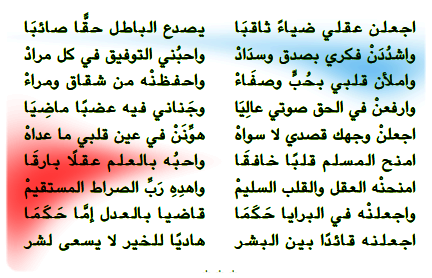
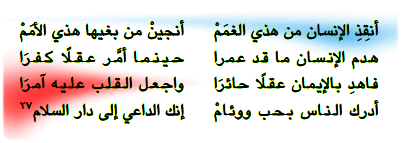
املأوا الأنفس خيراً وهدى وأجمعوا بالحب هذا البددا أغسلوا بالحب هذا الدرنا أطفئوا بالود هذا الضغنا --------------------- ايها المسلم يامن خلقا ليكون الحق فيه خُلُقا انهض ياصاح بالعبء الثقيل أنت في الارض عن الله وكيل قد قضى الخلاق بالأمر اليك قسم الارزاق يوماً بيديك سيطرن بالحق في هذي البلاد واحكمن بالعدل مابين العباد أنقذ الأنسان من هذا الشقاء وأزل من أرضنا هذا العناء أملأ الأرض بحب وصفاء وسلام وودادٍ وإخاء -------------------
الديوان احتوى العديد من القصائد في عدة مجالات، ولكن عند قرائتك تشعر بأن المترجم لم يوفق في بعض الكلمات التي قد قصدها الشاعر، مما يؤثر على الاستمتاع بالمعنى.