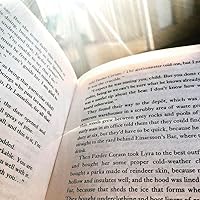
"Genom det stora gamla fönstret syntes trädgården, de avlägsna, blomstertunga syrenbuskarna, dåsiga och vissna i den kyliga luften; och en dimma, alldeles vit och tät, drog sig tyst fram mot syrenerna, ville hölja in dem. Sömniga råkor kraxade i de avlägsna träden. ”Gode Gud, varför är jag så ledsen?” Möjligen känner varje fästmö så inför sitt bröllop. Vem vet! Eller var det Sasjas inflytande? Men Sasja hade ju under flera år malt på om ett och samma, som om han läst innantill, och när han talade lät det alltid så naivt och konstigt. Men varför kunde hon inte sluta tänka på Sasja? Varför?"
Dramas, such as The Seagull (1896, revised 1898), and including "A Dreary Story" (1889) of Russian writer Anton Pavlovich Chekhov, also Chekov, concern the inability of humans to communicate.
Born (Антон Павлович Чехов) in the small southern seaport of Taganrog, the son of a grocer. His grandfather, a serf, bought his own freedom and that of his three sons in 1841. He also taught to read. A cloth merchant fathered Yevgenia Morozova, his mother.
"When I think back on my childhood," Chekhov recalled, "it all seems quite gloomy to me." Tyranny of his father, religious fanaticism, and long nights in the store, open from five in the morning till midnight, shadowed his early years. He attended a school for Greek boys in Taganrog from 1867 to 1868 and then Taganrog grammar school. Bankruptcy of his father compelled the family to move to Moscow. At the age of 16 years in 1876, independent Chekhov for some time alone in his native town supported through private tutoring.
In 1879, Chekhov left grammar school and entered the university medical school at Moscow. In the school, he began to publish hundreds of short comics to support his mother, sisters and brothers. Nicholas Leikin published him at this period and owned Oskolki (splinters), the journal of Saint Petersburg. His subjected silly social situations, marital problems, and farcical encounters among husbands, wives, mistresses, and lust; even after his marriage, Chekhov, the shy author, knew not much of whims of young women.
Nenunzhaya pobeda, first novel of Chekhov, set in 1882 in Hungary, parodied the novels of the popular Mór Jókai. People also mocked ideological optimism of Jókai as a politician.
Chekhov graduated in 1884 and practiced medicine. He worked from 1885 in Peterburskaia gazeta.
In 1886, Chekhov met H.S. Suvorin, who invited him, a regular contributor, to work for Novoe vremya, the daily paper of Saint Petersburg. He gained a wide fame before 1886. He authored The Shooting Party, his second full-length novel, later translated into English. Agatha Christie used its characters and atmosphere in later her mystery novel The Murder of Roger Ackroyd. First book of Chekhov in 1886 succeeded, and he gradually committed full time. The refusal of the author to join the ranks of social critics arose the wrath of liberal and radical intelligentsia, who criticized him for dealing with serious social and moral questions but avoiding giving answers. Such leaders as Leo Tolstoy and Nikolai Leskov, however, defended him. "I'm not a liberal, or a conservative, or a gradualist, or a monk, or an indifferentist. I should like to be a free artist and that's all..." Chekhov said in 1888.
The failure of The Wood Demon, play in 1889, and problems with novel made Chekhov to withdraw from literature for a period. In 1890, he traveled across Siberia to Sakhalin, remote prison island. He conducted a detailed census of ten thousand convicts and settlers, condemned to live on that harsh island. Chekhov expected to use the results of his research for his doctoral dissertation. Hard conditions on the island probably also weakened his own physical condition. From this journey came his famous travel book.
Chekhov practiced medicine until 1892. During these years, Chechov developed his concept of the dispassionate, non-judgmental author. He outlined his program in a letter to his brother Aleksandr: "1. Absence of lengthy verbiage of political-social-economic nature; 2. total objectivity; 3. truthful descriptions of persons and objects; 4. extreme brevity; 5. audacity and originality; flee the stereotype; 6. compassion." Because he objected that the paper conducted against [a:Alfred Dreyfu
En liten kort novell som var min första bekantskap med Tjechov. Blev förvånad hur mycket jag gillade flytet i språket. Hade nog trott att författarens språk skulle vara svårare. En liten trevlig upplevelse, men ändå inte så väldigt märkvärdig. Är glad att jag läste den för jag blev helt klart nyfiken att läsa mer av författaren.
This is only the second short story by Chekhov/Tjechov/Tschechow (Чехов !) I've read and already I know I'll be reading many more. In this one he gives you the feeling that he anticipates for his people and for his beloved Russia a better, more human future, a future that has not yet arrived 110 years after his death. It is still a future worth working and hoping for.
Fästmön (femte tryckningen, Novellix 2018) av Anton Chekhov (1860-1904) utgavs för första gången 1903. Denna Ryska författare och dramatiker skrev, trots sitt förhållandevis korta liv, en stor mängd noveller och pjäser.
Denna novell handlar om en ung kvinna som är förlovad och snart ska gift sig. Hon blir influerad, och övertygad av, en manlig bekant att istället för att gifta sig fly sitt kommande äktenskap, sin hemstad och sin familj för att istället åka utomlands och studera.
Teman som berörs här är enligt oss frestelse, neofili, det kvinnliga kaosartade behovet av rörelse, hemmahörighet, återkomstens konsekvenser, storstad kontra småstad och om gräset verkligen är grönare på den andra sidan.
Vi blev imponerade av Chekhov, och hur hans stil på ett till synes enkelt och spartanskt sätt, lyckas förmedla så mycket trots novellens korta längd.
I enjoyed this short story very much! The way Chekhov writes is beautiful and detailed, I liked his style of writing very much. This story is very much worth a ready! 😁
Om plikt, identitet och kalla fötter. Tror den hade kunnat vara mycket bättre om den hade varit längre. Det finns mycket potential att utveckla. Bra som novell också.
Väldigt kort, liten novell som var ganska trevlig att läsa. Hade den varit längre är det tveksamt om det tillfört något. Språket i denna var definitivt mer rent än i de flesta andra ryska noveller som jag hunnit läsa. Egentligen ingen särskilt intressant läsning - helt OK.
Very peaceful but yet a difficult read. I found myself separated from the story as I found myself re-starting the first section. Nadja is having doubts of her marriage as she dreams about the life she had in Moscow - Not my bag of tea for a story. I cannot bear these poetic love stories but that is only my personal preference. Nevertheless a beautiful written story about life and prospects. Worth high ratings. I probably will read other stories by Chekhov. [Read in Swedish.]
Though long for a short story, it held my interest from beginning to end.
I’m trying to get into the Russian classics, and even though this is only the second Russian classic author I’ve read, I’m liking them thus far. I particularly like the descriptive language and the use of both pre- and last name when describing a character.
Intressant novell. Det är allt jag kan säga Andra gången jag läser den och den är fortfarande intressant, en snabb läsning som gör en inspirerad på att utmana livet och ifrågasätta vilken väg man egentligen ska välja.