Jump to ratings and reviews
Rate this book

The Wives of Los Alamos

Rate this book
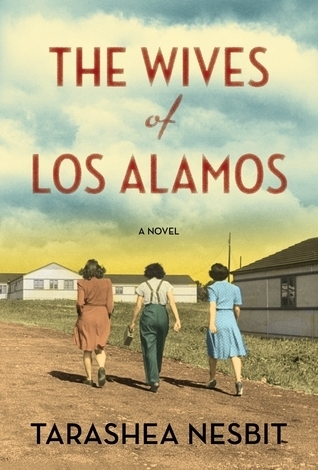
Their average age was twenty-five. They came from Berkeley, Cambridge, Paris, London, Chicago—and arrived in New Mexico ready for adventure, or at least resigned to it. But hope quickly turned to hardship as they were forced to adapt to a rugged military town where everything was a secret, including what their husbands were doing at the lab. They lived in barely finished houses with a P.O. box for an address in a town wreathed with barbed wire, all for the benefit of a project that didn’t exist as far as the public knew. Though they were strangers, they joined together—adapting to a landscape as fierce as it was absorbing, full of the banalities of everyday life and the drama of scientific discovery.

And while the bomb was being invented, babies were born, friendships were forged, children grew up, and Los Alamos gradually transformed from an abandoned school on a hill into a real community: one that was strained by the words they couldn’t say out loud, the letters they couldn’t send home, the freedom they didn’t have. But the end of the war would bring even bigger challenges to the people of Los Alamos, as the scientists and their families struggled with the burden of their contribution to the most destructive force in the history of mankind.

The Wives of Los Alamos is a novel that sheds light onto one of the strangest and most monumental research projects in modern history, and a testament to a remarkable group of women who carved out a life for themselves, in spite of the chaos of the war and the shroud of intense secrecy.

240 pages, Kindle Edition

First published April 24, 2014

360 people are currently reading
6976 people want to read

About the author

TaraShea Nesbit

4 books289 followers
TaraShea Nesbit is the author of THE WIVES OF LOS ALAMOS and BEHELD. Her nonfiction, fiction, and critical essays have appeared in Granta, The Guardian, Salon, Fourth Genre, The Los Angeles Review of Books, and elsewhere. She is an associate professor at Miami University and lives in Cincinnati with her family.

Ratings & Reviews

What do you think?
Rate this book

Friends & Following

Create a free account to discover what your friends think of this book!

Community Reviews

5 stars
1,051 (13%)
4 stars
2,238 (29%)
3 stars
2,674 (35%)
2 stars
1,162 (15%)
1 star
475 (6%)
Displaying 1 - 30 of 1,501 reviews
Profile Image for Susan.
3,552 reviews
April 7, 2014
We didn't like this book. We don't like stories told in first person plural. We felt this made the story unnecessarily vague and lacking the personalization that would endear the story to the reader. We felt that the author perhaps told the story in this manner to avoid having to be detailed. But we felt that lack of detail lessened the impact of what was taking place. If we had something else to read we would have stopped reading this book after the second chapter. We only have the book an extra star because we have been reading other books on the same subject.
Profile Image for Maureen .
1,707 reviews7,486 followers
September 22, 2019
I was really looking forward to reading this fictional book about the wives of the scientists who created the Atomic bomb. Unfortunately I found the author's style of writing frustrating. Written in first person plural, (I was hoping that this would change after the first chapter) it was difficult to feel any emotion at all, it all felt very clinical. It meant that there was no depth to the characters, and was far too impersonal. We did gain some insight into how they had to live their lives, but it could have been so much more interesting. Because the project was top secret, not even closest family knew exactly where, or how they were living, until it was all over. It's a shame though, that something which promised a fascinating insight into these women’s experiences, was spoilt by this really strange way of imparting this piece of history
Profile Image for Sarah-Hope.
1,464 reviews207 followers
June 24, 2025
I expect that most reviews of Tarashea Nesbit's The Wives of Los Alamos will begin as this one does, by noting that the entire work is written in the first person plural. The Wives of Los Alamos doesn't contain a number of individual characters; instead, it is people by a single, plural "character," a chorus singing in unison. This plural voice is the central fact of the novel, and it shapes the reader's experience. Let me give you a quick sample from the opening:

We were European women born in Southampton and Hamburg, Western women born in California and Montana, East Coast women born in Connecticut and New York, Midwestern women born in Nebraska and Ohio, or Southern women from Mississippi or Texas, and no matter who we were we wanted nothing to do with starting all over again, and so we paused, we exhaled, and we asked, What part of the Southwest?

Reading the first chapter, I found the "We" unsettling, not knowing of whom it was comprised.

Reading the second chapter, I found the "We" exhilarating, a stylistic device that felt almost musical in the way it simultaneously documented multiple experiences.

Further in, I found it alienating. While individual names were mentioned, the plural voice had no name besides "We," so the central figures of the novel remained strangely disembodied. I could not, as I usually do, feel that I was getting to know them, building my own relationship with them.

And after a while, it became tedious: a clever idea that had been taken too far, an effect that wasn't worth its cost in terms of plot and characterization. I felt I wasn't reading a novel so much as a hugely overgrown, kudzu vine of a prose-poem. I mourned the lack of an editor who put her foot down, who insisted on content as well as style.

But then the bomb is made. The bomb is made; it is dropped on Hiroshima; it is dropped on Nagasaki. Photos come back from the blast area: shadows where people were instantly incinerated, others of individuals dying quickly from radiation burns or more slowly from radiation poisoning. And at this moment, the "We" became absolutely essential.

The "We" became essential because the scale of the bomb was beyond individual experience, because it evoked a multitude of responses that could only be embodied in a plural voice. As a reader I needed that simultaneous chorus of shock and fear and self-justification and weariness and horror and, even, indifference. I became deeply grateful that this story hadn't been trusted to the voice, the perspective of a single narrator.

The Wives of Los Alamos is a brilliant piece of work. Yes, the voice wearies after a while, but once it becomes essential it remains essential. I feel deeply grateful that Tarashea Nesbit understood that fact and let it shape her work and my experience as a reader.
Profile Image for Abbey.
573 reviews35 followers
May 20, 2014
I can appreciate the attempt at unifying a character cast by consistently referring to said cast in the royal "we" or "they" or "us." It was a good idea to set the tone. After page 10, it got old. By page 20, I was done.
53 reviews6 followers
September 17, 2020
I was a Los Alamos wife; the narrative voices in this novel could be my own voice. Even fifty-six years later, my feelings were theirs.
Profile Image for Berengaria.
948 reviews187 followers
August 19, 2023
4 stars

Don't be fooled by the "women's history" title and cover. This is plotless Literary Fiction with experimental ornamentation as much as it is minutely researched historical fiction.

Despite that, at the end, you close the novel with an extraordinarily good sense of what being at Los Alamos between 1942 and 1945 was like. The details of everyday life that carry the story accumulate into a strong, tangible feeling of actually having been there in a very journalistic fashion.

Those readers who have read about or seen movies/documentaries about the research and development of the atomic bomb will find a lot of extra detail here to flesh out the non-fiction facts.

I will admit a bias: I adore experimental fiction. I love funky paragraph breaks and missing punctuation and commas that run riot through a text screaming lines from Melville and Marx.

The "collective narrative" is one of my most favourite because it allows a group to tell their story as a singular unit, but retaining all of their individuality. Rather like a group of bees collectively telling the story of their hive. The style speaks to my interest in unity and oneness, while allowing for individuality.

This works extraordinarily well for the story of the community of women at Los Alamos. They were all different, but yet shared a collective war time experience unlike that of any other group.

Here is a sample of the style...
They were our husbands and we thought what they thought, and we thought the opposite, and we tried to keep quiet, or we tried to be loud and have our voices heard."

The we shows how all of the women were in the same situation, but all had different ways of dealing with it.

The niggles:

The entire novel is written this way and as great as it is, it can get a little much at times due to the lack of a plot. Less would have been more and I think the novel would have worked far better if it had been a good 30-50 pages shorter and left out some of the more mundane details.

I also found myself wanting to hear the women scientists' perspectives (there were a handful) on life at Los Alamos, but because they were never "one of the wives" their stories are not included. I found that a shame, but apparently it did not fit Ms Nesbit's focus or the historical evidence is lacking.

Taken as a whole, "The Wives of Los Alamos" is a courageous and remarkable contribution to historical fiction and fiction concerning the lives of women in the 20th century.

It is certainly unusual in style and approach, which will make it difficult for more traditional readers to handle, but it achieves everything it sets out to do with bravado.

Profile Image for Cynthia Archer.
507 reviews34 followers
October 25, 2013
I could not get past the author's style of writing: first person plural. It is a very subjective choice, and it made the beginning intriguing. Unfortunately, it quickly got old, at least for me, and I found myself wondering when she was going to switch to a more personal narrative. As I continued reading, I realized that that change wasn't going to happen, and I resigned myself to what I found an increasingly irritating style.
Los Alamos has been written about in numerous non-fiction books and memoirs. This focus is interesting since it's historic fiction and is told as seen through the eyes of the women, both wives of scientists and women scientists themselves. It focuses more on the community and people's daily life with very little written about the actual work of creating and testing the atomic bomb. The required subterfuge was certainly a real strain on the incidentally affected spouses and their families, and this is also brought out well in the story. These were some of the things that kept me reading even when I wanted to quit.
Unfortunately, I am a reader who really enjoys strong character development, and this book does not produce that. I suspect that some people will enjoy this different style as evidenced by some of the high ratings. If you are interested in a rather impersonal and multifaceted view of the families who lived at Los Alamos during the research and development of the A-bomb, then you may find this book to be a good choice. It also will please those who want a quick and informative read that doesn't delve deeply into any one individual perspective. The Wives of Los Alamos: A Novel, presents a highly unique and unusual look at a much written about group of people and their experience.
Profile Image for Kari.
190 reviews
October 28, 2013
Interesting, but could not get past the author's style.
Profile Image for Alexandra.
271 reviews15 followers
March 4, 2014
TaraShea Nesbit’s "The Wives of Los Alamos" tells the collective story of the women who moved to Los Alamos to be with their scientist husbands during the Manhattan Project. Collective story, that is, because the book is written in a distinct and novel manner: the first person plural. “Our husbands joined us in the kitchen and said, We are going to the desert, and we had no choice except to say, Oh my! as if this sounded like great fun. Where? we asked, and no one answered.” While this style choice might seem to be limiting, Nesbit is able to get across the range of emotions and personalities that made up the wives of Los Alamos. Drawn from real stories, "The Wives of Los Alamos" is a lyrical and realistic glimpse into the complicated and secretive life of the women who accompanied their husbands to an unknown town to work on an unknown project.

Nesbit writes beautifully, and she is able to bring individual personalities into the mix of her collective narrator. Some women love Los Alamos, some hate it. Some wives are happy to be in the dark about what their husbands are working on, while others do their best to find out what the great secret is. Nesbit explores the women’s connection with their Pueblo Indian maids and the young Army soldiers on the base. "The Wives of Los Alamos" does an excellent job of weaving together the stories of many different communities and age groups, and the ways in which the project to build the bomb upended their lives.

Nesbit chose to change the names of some of the real-life characters she based the book on. For example, one character is presented as the wife of a scientist who could only be Edward Teller. In the fiction, it is a little disconcerting, for those who know the history well, that the character’s name is “Helen” instead of Teller’s wife’s real name, “Mici.” “Robert,” the lone scientist who chooses to leave the project in December 1944, is based on Joseph Rotblat, who later won the Nobel Peace Prize for founding the Pugwash Conferences and promoting nonproliferation of nuclear weapons. Using the real names at least in some instances might have made it easier for people to look up further information about the scientists and their wives. But the use of surrogate names is reminiscent of the Manhattan Project‘s security officials who insisted on calling Enrico Fermi “Mr. Farmer” and Niels Bohr “Mr. Baker” despite the fact they were internationally known Nobel laureates, and further underscores the secrecy the wives encountered at Los Alamos.

Nesbit’s book raises the bar for historical fiction. Readers who enjoy innovative story styles will like the book; people who prefer a more straightforward structure may not. I welcome "The Wives of Los Alamos" as an excellent contribution to the literature of Los Alamos and women in the Manhattan Project.

While often overlooked by historians, Nesbit conveys the many ways in which the wives of Los Alamos contributed as part of the project and in establishing a community for their families. To hear more stories from these women and other Manhattan Project participants, check out the Atomic Heritage Foundation’s “Voices of the Manhattan Project” website here.

Disclaimer: I received an advance review copy of the book at my work from Bloomsbury Publishing.
Profile Image for Laura.
488 reviews77 followers
November 21, 2013
Let's get one thing out in the open first. This book is written in the first person plural. This is unusual and it might drive some readers crazy. At first I kept thinking, oh, soon the real book is going to start and it will be more conventional. But no, it's "we did this" though the whole book. But once I adjusted to it, and realized it's not exactly a novel, I did enjoy the book. The book is the story of the families who went to Los Alamos, NM in the 1940s while their husbands (and a few women) worked on building the first atomic bomb. Since it's a story of a community, rather than a single person, there's no dramatic event or plot, other than the obvious lead-up to the detonation of the bomb. But over the course of the book you really get a sense of what it's like to live in a community shrouded in secrecy, to be uprooted and not be able to share any of your experiences with outsiders. There are fascinating details about how the scientists' families interact with local Native Americans, and the end of the book deals with how everyone came to terms with the impact of their work. I definitely recommend the book to those willing to try something a little different.

Profile Image for Antoinette.
1,048 reviews233 followers
September 23, 2019
To like this book, you have to like the voice it is written in. It is written in all the wives' voices, as a collective. I did not enjoy the style- never felt any connection to the wives or the story. It was written in snippets, almost like diary entries. Truthfully, I would not have bothered to finish this book, other than it is a book club read. The best part of the book was the ending!
Profile Image for Rebecca.
4,178 reviews3,436 followers
July 17, 2014
Get used to two words: “we” and “or.” I find the first-person plural perspective intriguing, if not always successful. I’m also interested in the current vogue for novels about famous wives (see my recent BookTrib articles on the subject). So this book should have been perfect for me, right?

Well, I did like it, but I have the same qualms as I did with The Buddha in the Attic – this is a good panoramic picture, giving the range of experience of the wives who accompanied scientists building the atomic bomb out in the New Mexico desert; however, without any developed characters (only a handful are even named), there is no one to latch on to and become emotionally engaged with. So we as readers know the facts, but barely know the people. (In fact, Robert Oppenheimer feels like the most distinctive and sympathetic character.)

Another issue for me was that this POV doesn’t always make grammatical sense in Nesbit’s usage: it requires plurals that, in context, are almost incoherent: “We did not want to explain why our bellies were small again, but where was our baby?” or “On the eve of our own wedding our husbands woke...” or “Our Betties and Jo Anns square-danced...”

“Was Los Alamos a summer camp for adults?” I enjoyed learning about daily life in this strange desert encampment, but my favorite parts may have been when Nesbit ventures just outside it, showing the women going on horseback rides, seeing how their Native American maids live, and watching fearfully for the sight of a mushroom cloud. “Some of us thought we, or our husbands, were murderers, that we had helped light a fuse that would destroy the world.”

I think on balance I would have preferred a third-person narrative that moved between the perspectives of multiple characters, or even a group biography. But this is a quick and evocative read nonetheless.
Profile Image for Christine Rebbert.
326 reviews8 followers
April 26, 2014
Some of us read reviews of this book and waited for our turn at the library. Some just went out and bought it. A few of us had it passed to us by a friend who'd read it. As we started, we noticed that the contrivance of the style was basically identical to that of the many voices in "The Buddha in the Attic" by Julie Otsuka. Those who hadn't read "The Buddha" were experiencing this style for the first time. Some liked the style; some didn't. A few of us found it interesting that the style was being used for the second time about women who were forced to move to an alien location and continue through the Second World War to hold their families together, not understanding why they were sent there.

"The Buddha"'s women were Japanese sent to internment camps; these "Wives" were the wives of scientists sent to the wilds of New Mexico while their husbands toiled by day and into the night on a project they were not permitted to tell the wives about.

While being called a "novel", there didn't seem to be any central characters or plots, just this group of women with their similarities and their differences all trying to cope with the harsh environment and not understanding, really, why they had to be there.

So one of us -- me! -- found this literary contrivance rather tiresome the second time around, and decided that in talking about everybody, you're really talking about nobody.
Profile Image for Jenny.
875 reviews37 followers
November 16, 2013
I thought that the premise of this book sounded fantastic and I couldn't wait to read it, yet when I actually sat down to read it, I found that the execution just wasn't that great.

This book was written in a very unique manner. The narrator of the story refers to everyone as "we" or "some of us", rather than referring to the majority of characters by their names. At first I was fine with this stylistic decision, I found it fitting to the story, and thought that it added a nice touch. Yet as the story wore on, I got incredibly annoyed with it. After a couple chapters in, it got difficult to read everything as "we" or "some of us" and I found myself growing frustrated with the book and author. I wish that the characters had been referred to more by their names instead, I would have found that a lot easier to read.

The story itself was interesting. I had never previously read a book about anything like this, so it was an interesting story to follow. I wish that I had been able to finish it without the writing driving me nuts, because I probably would have been able to enjoy the story a lot more that way.

Overall, I just couldn't get past the writing in this book. The reference to characters as "we" just irked me and I wasn't able to fully enjoy the story because of that. I was rather disappointed with this book.

I received this book for review purposes via NetGalley.
Profile Image for George Ilsley.
Author 12 books316 followers
July 31, 2023
All the recent talk about "Oppenheimer" (one of the physicists responsible for building a nuclear bomb) reminded of this novel, which follows the women (the "wives") as they live in the newly constructed top secret location of Los Alamos.

This is my original review of the novel:

The freshest narrative I've read in a long while. I loved this book!

Behind the scenes family drama during the development of nuclear bombs in the US.
Profile Image for Shelleyrae at Book'd Out.
2,609 reviews556 followers
October 5, 2014

"Some of us thought we saved half a million lives. Some of us thought we, our husbands, were murderers, that we had helped light a fuse that would destroy the world." p 198

In 1943, following the attack on Pearl Harbor, the North American government established a hidden enclave in Los Alamos, New Mexico, drafting the nation's best scientists, engineers and chemists into service. The men (and a handful of women) were tasked to work on a secret enterprise, requiring them to uproot their wives and children with little notice and move to the South West, forbidden to reveal any information about their new position or location to employers, colleagues, friends, or even family.

While the technicians toiled away in laboratories and offices, their wives and children struggled to adapt to their new environment, making homes in flimsy pre-fab's without bathtubs or electric stoves, shopping for wilting vegetables and sour milk, surrounded by barbed wire and armed guards. The wives of Los Alamos created a community with dancing and book clubs and cocktail parties, cared for their children and sent letters home, heavily redacted by the censors. They remained largely ignorant of the work their husband's were doing until the day the atom bomb was dropped on Japan.

Nesbit reveals the stories of the wives of Los Alamos using the first person plural narrative (we, us). It is an unusual style and did take me a little time to adjust to, but I came to appreciate the way in which it emphasised the unique community and the wives shared experiences, despite their individual differences. The narrative feels authentic and convincing I expect that Nesbit relied on genuine research to ensure the accuracy of the details.

I really enjoyed this unique book. The Wives of Los Alamos is a fascinating novel giving the reader a glimpse into one of the world's most pivotal events - the development and use of the Atom Bomb, from a perspective rarely considered by history. I'd like to read more about the women's experiences of Los Alamos.
Profile Image for Tara.
Author 24 books615 followers
August 15, 2024
I'm now in awe of TaraShea Nesbit and her writing. I can't wait to read her second novel. With my background in flash fiction and prose poetry, I gobbled up each exquisitely crafted paragraph. I also appreciate authors experimenting and taking chances on structure and pov. I admire the huge task of pulling this together by using a universal "we" and her being able to condense so much information from a short period of time. She leaves the reader with an artful and radiant impressionistic painting of what life was like for Los Alamos wives. And I can verify her impeccable research as well. Highly rec for lovers of literary fiction.
Profile Image for Michael Nye.
Author 20 books44 followers
May 3, 2014
This debut novel uses the first person collective voice to tell the story of the wives of the scientists who built the atomic bomb. It's an unusual narrative choice, and a difficult one, which is why so few novels are written from this perspective. The collective narrative allows the story to move in and out of characters lives, while reminding the reader that all these women are viewed as one, both by others and themselves.

Nesbit's training is as a poet, and viewing this book almost like poetry rather than a novel will help with your expectations. There's a lyric, mysterious quality to all the events that happen, and the narrative voice ducks and weaves around the edges of "truth" in order to demonstrate complexity. The plot moves forward with the war - relocation, VE-Day, VJ-Day. It's an untraditional novel, which is both its strength and (for some readers) its weakness.

It works for me. Definitely worth your time, too.
Profile Image for Sterlingcindysu.
1,655 reviews75 followers
September 12, 2018
A reader won't find much about bomb making in this book--not because the wives didn't make it, but because there's just not much info until the last chapter when the wives realize what their husbands were working on.

This book is written in the collective we which makes for a fast read and not much detail. For example:

In rainy Septembers we often would get colds...or not. We would take whatever pills we could find and hope our children would let us sleep and our husbands would make a dinner so we could rest. We would miss our mothers and chicken soup...or not.

So you see it might be a book you would like...or not.
Profile Image for Lynn.
1,204 reviews206 followers
July 31, 2023
A fascinating story about the lives of the wives of Los Alamos during the 1940s and beyond. Told in the first person plural, (which takes some getting used to) the story becomes a collective telling of what these women experienced when they arrived at Los Alamos, a desolated, no man’s land of dilapidated and yet unbuilt homes and the harsh conditions they faced. It explores the major and minor events of their lives, the isolation from their families and the rest of the world, their reactions to the secrets they knew their husbands were keeping from them about their work, the day today mundaneness of their lives, the closeness and distance they felt from each other, their reactions when they learned what their husbands were really doing at Los Alamos and their lives after Los Alamos.

This book was not what I expected it to be, and yet it was so much more. It is especially relevant after seeing the movie “Oppenheimer”, which focuses solely on the men and their mission. The book highlights how difficult the lives of these women were, yet the men were blind to anything but their own work. This book celebrates the strength and courage of the wives of Los Alamos, and how important they were to the mission of Los Alamos, for better or worse.

A definite recommend.
Profile Image for Laurielib.
630 reviews12 followers
March 17, 2014
Imagine leaving home and moving to an unknown place; maybe having your name changed; not being able to talk to your husband about his job or even know what he is doing; cut off from your family and friends; and being in primitive conditions where a bath and even a cup of coffee are challenges.  This is life for the Wives of Los Alamos.  I've long been fascinated by the history of Los Alamos and the development of the atomic bomb. Tarashea Nesbit adds immeasurably to that history with her debut novel told from the scientists wives' perspective.  Communication and strong marriages were difficult since they didn't know what their husbands were doing and were unable to discuss their work.  Sex became a way to keep marriages alive and births were rampant.  Families couldn't visit and only in case of death in a family could the wives leave Los Alamos.  Nesbit takes all these facts and weaves them into a compelling, dramatic portrait of life in 1940's Los Alamos.
Nesbit's writing style takes an issue and using plural pronouns give us the opportunity  to really get inside the skin of these women.  We know their innermost thoughts,  feelings, worries and fears.  "When we saw the explosion from afar we thought it was awful, beautiful or triumphant or all of the above".  And after the bombs were dropped on Hiroshima and Nagasaki, we cheered, we shuddered, we were glad the war was over or we wondered what horror we had unleashed on humanity.  The reader finds it easy to understand and sympathize with each of the contrasting views.
 It was a frustrating life of isolation and when they were offered jobs it was for typing, secretarial or switchboard work.  I'm reminded of Sandra day O'Connor who graduated near the top of her law school class at Stanford and had trouble finding a job other than as a legal secretary. As one wife said we loved potty training, it was one of the few elements where we had control.  As completion of the bombs got closer the isolation only increased.  Husbands were working longer and wives knew something important was happening but hadn't a clue to the immensity of the project.  Names like "Gadget" or "tube alloy" were words and wives were not privy to their true meaning.  
This is a novel where intelligent, well educated and talented women find themselves at the juxtaposition of trying to live normal lives in the most abnormal circumstances.
Profile Image for Kats.
758 reviews58 followers
May 22, 2015
Tavia Gilbert's voice is ideal for the audio book's telling of the story by The Wives of Los Alamos. Hers is a personable and detached voice all at once, and so goes the narration, written masterfully by TaraShea Nesbit, in the first person plural. The only other novel I've read in that voice is The Buddha in the Attic by Julie Otsuka about the Japanese "import brides" moving to the US in the early 20th century, which was another fascinating read about a large group of women suffering the same fate. Personally, I think it's a brilliant narrative device; we hear from all the women at once and yet learn of discernible individual stories, choices or opinions. Here is an example from just before the wives move to New Mexico:

We lied and told our children we were packing because we would be spending August with their grandparents in Denver or Duluth. Or we said we did not know where we were going, which was the truth, but our children, who did not trust that adults went places without knowing where they were going, thought we were lying. Or we told them it was an adventure and they would find out when we got there.


I would have loved to have had the opportunity to speak with the author at the Booktopia Boulder event a year ago. I am very interested in learning more about the research she did, whether or not she actually interviewed any actual "wives of Los Alamos", and how she was able to write with that precision and control, in a style that's difficult to pull off successfully whilst dealing with such an emotive subject. Brilliant book! 4.5 stars
Profile Image for Karin Slaughter.
Author 123 books85.1k followers
May 2, 2014
While it took a while to get used to the collective narrative voice, I really loved this book for the history. The way the families were just swept away and basically kept as prisoners who were not allowed to have contact with the outside world (or, for that matter, to even know why they were there) was shocking. And living in the quonset huts without provisions or bathtubs or any support reminds me that there was never a time when our government was a well-oiled machine, especially toward the supporters of the (typically at that time) men who were doing projects for the government. The most important aspect of this story was that we were at some time able to get the top minds in the world working together toward one goal. On a personal note, I loved the end where the women walked away having learned so much from the local Indian women, and would enjoy some kind of follow-up on how these women took that culture back to far-flung lands.

Somebody is going to make this story into a movie.
Profile Image for Cheri.
2,041 reviews2,962 followers
December 9, 2015

Told from the perspective of the wives who were whisked away from their former lives, families, could tell no one where they really were going or what their husbands were working on, living in the ultimate "Gated Community." A bathtub was a status symbol - even though there was almost never water to fill it. They lived for years unable to vote since they were no longer state citizens, unable to obtain a divorce or even a fishing license in the state of New Mexico. When they went back to try and recapture whatever lives they had before, they were able to bring back very little. Very few, if any, pictures of that time made it back, including photos of their children taken at milestones in their very young lives. They all went home with their thoughts and feelings of what their husbands had done.
Profile Image for Sally906.
1,454 reviews3 followers
April 29, 2014
I have never read a book written in such an unusual way. Instead of a character narrating the story, or a group of characters taking it in turns to narrate the story from their different points of view, THE WIVES OF LOS ALAMOS is told by all the women all at the same time; a sort of collective everywoman. Greek chorus is another expression that came to mind. I found it to be both refreshingly different and terribly off-putting.

Set in World War II THE WIVES OF LOS ALAMOS is set in an isolated part of New Mexico where scientists from all over the USA, along with their wives who came from all over the world, were sent to work on the development of the Atomic Bomb.

“…We were European women born in Southampton and Hamburg, Western women born in California and Montana, East Coast women born in Connecticut and New York, Midwestern women born in Nebraska and Ohio, or Southern women from Mississippi or Texas…”

Even though the wives came from different States, different countries, different levels of society, and each had different personalities, families, languages and needs they all had one thing in common they each followed their husbands and didn't know where they were going until they got there. Assured that their new homes would all be equipped with everything they needed, when they actually arrived the wives found that the homes were still being built, and the school and hospital hadn’t even been started. Eventually though they all settled into the secret town located in the middle of nowhere each in houses that all looked the same while not being allowed to tell the outside world where they were.

“…We were a group of people connecting both honestly and dishonestly, appearing composed at dusk and bedraggled at day break, committed, whether we wanted it or not, to share conditions of need, agitation, and sometimes joy, which is to say: we were a community...”

So the ‘us’ and ‘we’ continued for page after page wandering all over the place until the bomb was dropped and they were all allowed to go home. In fact that is the backbone of the story, the women were told they were moving, the families all arrive, they detailed their lives there, the social activates, marital relations, affairs, schooling, medical events, then the war ends, and they have all to return to their previous lives after the war. And the reader gets to know no one. It was like a flock of birds flying in and flying out and you just get an impression of busy birds doing what birds do but you don’t get to check just one bird out. I wanted to get involved with the women and the life on the base but I couldn’t. It was like I was reading a history book. I got information but not a relationship. In fact sometimes the different opinions were so different that the last part of a sentence almost contradicted the first part, which emphasised that despite the sameness of their lives their thought were widely different.

The only time I felt that the collective narration paid off was when the bomb went off because the women all had multiple reactions to the detonation of this new and terrible weapon that their husbands had helped to create and the range of reactions just couldn’t have been conveyed as well with one or two points of view.

"…Some of us thought we saved half a million lives. Some of us thought we, our husbands, were murderers, that we had helped light a fuse that would destroy the world…"

When I was offered the chance to read this book I was really excited. I thought I was going to learn through the women about the men who created a weapon that changed the world of warfare for ever. A weapon that as terrible as it was, was actually a mere ‘pop’ when compared to the even bigger bombs that have been developed and now have the potential to end all life on this planet. But disappointingly I learned nothing except the almost senseless day to day activity of the women who themselves were told nothing about what was going. Neither did I get closer to any of the individual women to see life on the base through their eyes. So in that sense I was let down. In fact I kept thinking of the wives as being like a flock of noisy, gregarious, aggressive and gossipy starlings which concentrated on one thing then quickly got distracted by another shiny thing and flew off. However, while it didn’t necessarily meet my expectations it is an incredible debut story and is a really different take on a secretive period of history that changed the world. I will certainly look out for more books by TaraShea Nesbit


Rating: C – Above average. Was very readable and I really liked it but was easily able to put it down and walk away for a while.
Profile Image for Lilirose.
580 reviews76 followers
March 14, 2025
Che delusione questo libro.
Mi aspettavo un punto di vista originale su una delle pagine più controverse e discusse della seconda guerra mondiale, invece mi sono ritrovata tra le mani un romanzo banale che non approfondisce nessuna tematica e non suscita il minimo interesse nel lettore.
Il problema più grande, da cui derivano tutti gli altri, è la sciagurata decisione di scrivere usando la prima persona plurale: in questo modo non solo si appesantisce la narrazione, ma diventa anche impossibile l' analisi psicologica dei personaggi dato che in realtà non ce ne sono, c'è solo un io collettivo che dice tutto e il contrario di tutto. Insomma una scelta che ha danneggiato sia la forma che la sostanza dell'opera: complimenti all'autrice.
C'è poco altro da dire su questo libro: è superficiale, poco scorrevole e povero di informazioni; è più interessante leggere la pagina wikipedia del Progetto Manhattan, e non lo dico per esagerazione ma per esperienza diretta.
Profile Image for Kalen.
578 reviews102 followers
March 5, 2014
**** 1/2

What a curious book. I really liked it--it's beautifully poetic--and I'll think about it for ages. It seems odd to call it a novel because there is no character development to speak of and the plot is quite loose, telling many people's stories all at once. But I don't know what else you would call this series of linear vignettes....

Additionally, it's told in first person plural (we instead of I or she) which takes some getting used to but didn't detract (for me) as some reviewers have indicated. I'm curious how our Booktopia discussion will go because beyond, "Why first person plural?" I'm not sure where the conversation goes, really. I'm interested to find out.
Profile Image for Ric.
1,447 reviews134 followers
November 19, 2023
Using the first person plural to set the tone for the story was a fine idea, but writing the whole story like that basically dehumanized everyone in it because all of the wives were more or less treated as the same person having the same thoughts. I really wanted to read a book about the women behind the scientists at Los Alamos, but instead I read about a weird hive mind of women who couldn’t stop talking in the first person plural. By the third chapter it got really old because there were essentially no characters and no detail.
Profile Image for Adam.
105 reviews14 followers
September 11, 2016
At some point in the of development of their skill, a writer will want to experiment. They'll read other writers who've successfully challenged the tropes and structures of literature--Vonnegut, Grudin, Calvino, Oates--and want to do the same, and at some level this is understandable. For all the freedom and opportunity provided by literature, there are also borders: stories are told in chapters, the audience is never addressed, dialogue is accompanied by verbs and adverbs to signify the speaker and their state of mind, and so on. Writing is, for lack of a better analogy, a prison with no walls--a democracy of one constrained paradoxically by history and tradition. For most writers, open defiance is an understandable--if short-lived--impulse that often produces little publishable material and a large sense of embarrassment. Sometimes, though, the products of these rebellious little diversions find their way to print.

TaraShea Nesbit's The Wives of Los Alamos is told entirely in first person plural and by the titular figures--dozens, then hundreds, of women whose husbands have been relocated to New Mexico to help develop the atomic bomb. This itself is not unusual--quite a few books have been written from a collective point-of-view, the most famous being Jeffrey Eugenides' The Virgin Suicides--but it's also a difficult mode in which to tell a story, as it requires consistency. The reason Eugenides' first-person-plural novel works is because all of his narrators share the same memories: their infatuation with the same five girls gives way to horror as each girl commits suicide for no discernible reason. By retelling the story with more than one narrator, Eugenides builds a sense of inevitability and complicity beneath the events, like bystanders watching the injured crawl away from a traffic accident without helping: the boys observe but don't act--cannot act--as though each has passed off responsibility to the next, over and over again.

Nesbit's narrators, while sharing the same basic experiences--the loneliness of the desert, the loss of family life, the growing distance between spouses and neighbors--are also different, pitting themselves against one another as they attempt to reconcile the mundanity of their lives with the need to feel important and do important things. (At one point, the collective women talk of pregnancy as the only true method for getting a better house.) Nesbit's narrators write about neighbors being exiled from house parties, gossip about bed-jumping and thievery, despondency over what they've each given up. And because Nesbit wants to strike this balance throughout her book--individual lives and shared experiences--she is forced to write all 230 pages as a compromise that justifies neither side and makes for a book that is both dull and without a clear destination.

Take, for example, the passage--chosen randomly--about how their husbands' new assignments have affected their marriages:
Sometimes our husbands returned from the Tech Area and said they could not stand it anymore. We did not know if it was us or here or their work, but we were concerned it was us. We could not talk to our best friends about this suspicion, because they were back in Idaho, or in New York. A couple of us said, I can't take this, either, and actually left. We returned to our mothers. We became Nevadans and moved to Reno for a quick divorce. And our husbands moved into the singles dorms and were unofficially, or officially, separated.

The occurrence of "or" in this one passage--four notations of difference, of other possibilities and realities--is minor compared to the volume of conjunctions that haunt every chapter. From one chapter to the next, this balance--between the singular and the all--threatens to shake Nesbit's entire story apart.

In a way, the plural narrators are an intelligent, intuitive idea for this subject. Writing of an era when women were relegated to the duties of a mother and housewife and little more, the protagonists serving together adds to the sense of one war being fought alongside another--the soldiers of the United States and the soldiers of feminism, each fighting against dehumanization and tyranny, and the latter looking for a way to assert their own individuality, make their own choices, and be themselves, even--and especially--when conscripted into a faraway domestic-military bureaucracy that prohibits all three. Both are wars for freedom, though one is waged on a global scale while the other is waged quietly in millions of living rooms. And in that sense, yes, Nesbit's gamble makes sense. But attempting to tell the story of strong, independent women by lumping them all together as one voice--except when there is tragedy, gossip, backstabbing, and other sordid events--seems somehow counterproductive, maybe even paradoxical, and it hurts any point Nesbit may be trying to make. Her book is the story of women, pure and simple, but because of a silly narrative choice, The Wives of Los Alamos becomes a book with hundreds of hearts but no soul.


This review was originally published at There Will Be Books Galore.
Profile Image for Michael.
852 reviews636 followers
May 9, 2014
It wasn’t until the attack on Pearl Harbour in 1941 that the Americans really got involved in the Second World War and they did this in a big way. It was often referred to as Project Y, a secret laboratory that sourced scientist from all over the country to help the allies in their war efforts. The Laboratory was located in Los Alamos, New Mexico and the secret project was The Manhattan Project.

TaraShea Nebit’s debut novel The Wives of Los Alamos explores the birth of the atomic age. Although many may have wondered what it was like for the wives of these scientist. The secrets their husbands had to keep and somehow convince their wives and families to move to an undisclosed location. If we took the time and really thought about what it would have been like, we might have come up with the same answers as Nebit.

However TaraShea Nebit did the research (resources used are mentioned at the end of the novel) and then set out to write this unique novel. The Wives of Los Alamos is written in the collective voice of the wives of Los Alamos, which takes a while to get used to. The plural first person perspective is rather odd and it tends to keep the reader at arm’s length and never really allows an intimate look at the feelings these women must have been going through. With lines like “We married men just like our fathers, or nothing like them, or only the best parts.“ I get the sense that the author is generalising the feelings and while I appreciate the research she did, this type of writing feels more like speculation rather steaming from truth.

I find it difficult to review this novel, there is no protagonist and the plot is a very basic look at different aspects of life set out to drive the book along. TaraShea Nebit is very clever and the novel pushes the reader to actually imagine what life would be like for these families. In a time where everyone is concerned with war these families are uprooted and forced to live with a completely different sets of worries in mind. Secrecy can tear families apart and the importance of The Manhattan Project demands that this secret be kept. I can’t imagine a life like this but The Wives of Los Alamos offers some idea.

I found it difficult to connect with the women in the story, they were nameless and faceless. Their collective voices all sang the same tune but really people are not all the same that I never got a look into the emotions and thoughts of just one of the women. A biography from one of these women would have been better; The Wives of Los Alamos gives you a taste but left me wanting so much more.

This was a fascinating novel but it never went into any great detail of the social complexities facing these families. I would have liked to explore the psychological effects this great secret had on the family and relatives. Even have a peek into the cultural effects of birth of the atomic age, considering the Los Alamos National Laboratory played key roles in both the Atom and Hydrogen bomb. It is a fascinating period of American history and science, The Wives of Los Alamos has whet my appetite and I might look at some of the books TaraShea Nebit mentioned at the end.

This review originally appeared on my blog; http://literary-exploration.com/2014/...
Displaying 1 - 30 of 1,501 reviews

Can't find what you're looking for?

Get help and learn more about the design.