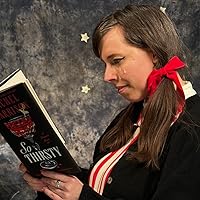
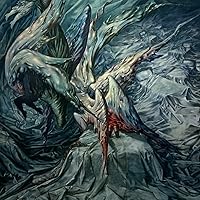
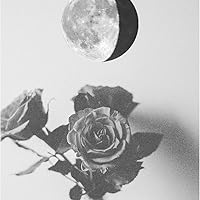
In this intimate collection of poetry, spells are cast, hearts are broken, and prayers go unanswered. Sad Sexy Catholic follows the journey of a young twenty-something as she navigates the already difficult task of existing made even harder by trauma, body dysmorphia, a personality disorder, and leftover guilt from a religious upbringing. The speaker in these poems strives to find softness, even in the darkest of moments.
Goddamn it. I binge-read it. I was trying to go slow; make it last but I found my way with it, settled into the prose and that feeling of creeping on someone's intimate journaling...do you know that feeling? Like your sister left her diary open on her bed while she took a phone call on the downstairs landline so you sneak a peep with your heart beating fast and your eyes darting back and forth over the words all fast? THAT. -- "You knew this would end in a knife fight. An exchanging of teeth." -- CLASH published this as a tiny, sleek, sexy chapbook with pink, fucking pages and a tiny, soft font. It can fit in your pocket on your left butt cheek on your way to your OBGYN appointment. Put it in your purse. Keep it in your top drawer next to all your lacy things and the soaps you save for a special occasion. -- "I burn this sage to keep the demons from my bed." -- Final recommendation: Pop culture, sad girl, poetry-loving, ex-communicated, proud sinners will eat this up and display it proudly with all their other pocket-sized treasures. A MUST HAVE
"You knew this would end in a knife fight. An exchanging of teeth. I place your name in my mouth & spit the letters into sigils. This is the part where I show you how good I am at everything."
I’ve been a sinner since the day I was born. This book of poetry was written for me and they were spectacular.
I loved this tiny, bittersweet book of poetry--romantic in a cigarettes-and-motel-sunsets kind of way. It reminded me of being a teenager reading Francesca Lia Block, but these poems were cast in a darker, smokier shade despite the pink backdrop to each page. All the poems were stunning, but my favorites were the shortest ones--showing just how much can be accomplished in a few carefully chosen words.
I picked this one up immediately when I saw it on vacation at a bookstore. It spoke to me and I was immediately intrigued. I'm an ex catholic (raised in it) if you don't know; now a happy, at peace Pagan Eclectic Witch. Are you the black sheep of the family? This book speaks to that. Catholic guilt, trauma, repression, abuse and misogyny - check, check, checkity check. All of that is covered in this beautiful yet heart wrenching little pink book of poetry. I wanted to savor this but devoured it instead and am already planning a re-read.
This spoke to me on a level my inner child needed to hear.
This is definitely going to be one of my top 2024 reads. Thank you Lauren for writing this book and putting these words out there that many of us feel.
"I was God's favorite, once - enough schoolgirl in me to make Mary sweat."
"I forget how to soften, how it feels to have faith in anything."
"I let myself be romanced by the violins, the radio anything but silent..."
"I burn this sage to keep the demons from my bed."
I cannot say I am a huge poetry reader, but I love clash books publication and will try anything from them! Enjoyed this one a lot, devoured in one sitting.
No star rating because I am not sure how to rate poetry. However, would totally recommend this for all.
incisive poems about sex, Catholic guilt, and carving out (at times while spilling blood) a place for oneself in this world. some of the best typesetting i’ve seen in a poetry collection in a while. delicious, forbidden fruit.
The very first book of poetry I bought (independently, with my own money, no less) was the F&F Collected Works of Sylvia Plath from an indie bookshop in Oxford. I was staying in the university city a couple of days for an entrance interview at one of the colleges (an interview I failed for, ironically, arguing with the don over poetry (‘don’ – I mean, come on. Who do they think they are?).
But the trip wasn’t a total waste – I had a great time getting lashed on Guinness in quaint pubs with a few mates, and just about making it through the college gates before curfew. And getting that collection of poetry. At the time, I was so juiced on Plath, studying a selection of her work for my A-level Eng Lit, that I just had to own her entire body of work. And I read that collection like I would read a novel, repeatedly going back to certain poems – ones that particularly struck me hard; ones which contained mesmerising lines or images; or ones that were little conundrums which needed to be cracked.
I have since, over the years, discovered, bought and read the works of other poets I have discovered, and enjoyed them – but I’ve never felt again that surge of excitement and obsession and absolute compulsion to read that I felt when I bought that Plath collection.
That is until now, a full thirty years on, when I bought Lauren Milici’s remarkable collection, Sad Sexy Catholic.
Diminutive in size and resembling a pocket prayer book, on first appearance it belies the punch each beautifully-written poem packs, heralded by, on opening the book, the pages being hot pink. It’s a stunning juxtaposition of presentation which echoes the dichotomy within the title: sex and religion; playfulness and conformity. What follows are a serious of caustic examinations of relationships and the cruelty and oppression of masculinity. Worse still, the violence which lurks beneath the surface of these relationships – violence which often explodes in visceral dead blooms: ‘ask where/he hit me and I’ll let you’, the poetic narrator deadpans in ‘All the Good Girls Go Missing’, a poem itself which meticulously portrays the spectre of brutality which exists for women making even the simple decision of whether to go out for the night or not. ‘Good’, the male voice responds to this hesitancy: ‘girls like you/always go missing. don’t be so small & blonde’. It’s a shocking, barely-veiled threat – the man using these fears to control, to keep his partner within his jurisdiction, while also blaming her for her potential to go missing. It’s one of the most chilling, laser-precise, bare encapsulations of sexual assault victim-blaming I’ve ever read.
Opening poem, ‘Eve Was Framed’, sets out the collection’s stall right from the get-go, both by its declaratory title and by its opening line: ‘Today, a boy says, good news: I love you again,/as if this were a gift. As if all men were God’. I defy anyone reading this quietly devastating opening gambit not to feel their eyes well with hot tears before their body shakes with hotter rage. In fact, I’m not sure I’ve ever read such a succinct encapsulation of patriarchal privilege, both secular and sacred: the push-pull of relationships and religion, driven by the fickle, cruel male. A litany of betrayals by men and God.
This opener also firmly establishes a key, striking theme of the collection: the complexity of the poet’s relationship with religion and, specifically, Catholicism: attraction and repulsion; delight and revulsion; obsession and indifference - the great dynamic dichotomy of any good lapsed Catholic and the very bedrock of Catholic guilt which Milici portrays exquisitely.
Throughout the collection, Milici interweaves pop-culture references with heart-stopping, lyrical musings. But as high-culture and pop-culture are two sides of the same coin, so, too, is Christianity and the occult, the Bible and the ritual of tarot often becoming intertwined. Milici deploys powerful, seemingly conflicting, imagery throughout her poems: the ‘Book of Revelations’ versus the ‘Five of Wands’, for example, cleverly making these connections between the Bible and tarot which can both be used as dogmatic tools for control and in which the roles of women are all but erased. Indeed, the history and development of tarot cards and tarot reading was highly male-dominated, culminating in, in 1910, with the complete effacement, by the Rider publishing company, of the female artist of the popular Rider-Waite Tarot Deck, Ms. Pamela Coleman Smith.
This entire landscape of male oppression, suffocation and subjugation, often violent, suffuses the collection: the burial of women’s bodies, both actual and metaphorical, not wanting ‘to worry about the soil anymore’ and writing ‘my own ending to the story about the/missing woman’ (‘Upheaval’); ‘Ken dolls’ who use seduction and eyes that are ‘so fucking blue’ to cripple and control (‘Your Ex-girlfriend Comes to Me in a Dream and Reminds Me That I Ain’t Shit’); narrow escapes from the shadow and immanent universality of domestic violence in ‘It Only Took a Whisper: ‘I leave because I’m good/at that – there’s always some bullshit/reason to kill your girlfriend’; the biblical punishment of women and, again, their subjection in religious texts (‘cunt crafted from ribcage’ – ‘Bright White Light’). These are piercing, agonizing vignettes of male dominance and belittlement; of fear-mongering and the stripping of confidence. And the Venn diagram of sex and violence becomes a perfect circle, for me, in two poems, in particular, toward the end of the perfectly-structured collection: the spectacularly-titled ‘I Think Burt Reynolds is the Kind of Guy Who Keeps the Light On’ and ‘Sorry’. In the first, the poetic-I reflects: ‘sometimes when a man says/I want to pin you/he means, to the wall/mounted like a prized buck’, a sinister image of woman as both a living, sexual object and a lifeless, hunted possession. In the second poem, Milici delivers another immediate sucker-punch: ‘the boy you wanted so bad/asks how wide your mouth can go/so you show him -/wider, the boy says. suffer’. It’s a wincingly painful image of manipulation (both physical and psychological), humiliation and dominance replete with sexual and violent subtext: patriarchal puppeteering for shits and giggles.
But the line I keep coming back to is one, again, taken from pop-culture which has since ascended to high-culture: ‘sometimes my arms bend back’, a line spoken by a modern paradigm of the violated and male-exploited woman – Laura Palmer in David Lynch’s seminal series, Twin Peaks. It is delivered by this tragic victim of supernatural and earthly male violence to Special FBI Agent Dale Cooper during his dream within the Red Room and represents her being tied up against her will before being gang-raped by petty criminals Jacques Renault and Leo Johnson, a violent assault which is the precursor to her brutal murder. Toward the end of the collection, Milici poignantly depicts Laura’s torment and her broken dreams in the poem ‘Sometimes My Arms Bend Back’ – her lost ‘fairytale’. As in ‘Upheaval’, the poetic-I attempts to ‘rewrite’ her fate: ‘When they ask what happened, tell them a witch/pricked my finger. Tell them I washed up on shore’. Laura, here, attempts to commute her rape and murder to a spell-induced sleep; the fairytale slumber of Sleeping Beauty. And perhaps this isn’t too far wide of the mark – she is, after all, trapped within the Black Lodge, living her half-life. But I was also reminded of, once more, the patriarchal subtext of the story of Sleeping Beauty – that an awakening can only be achieved by the non-consensual kiss of the One True Love.
But the genius of Milici’s craft is her use of this line, ‘sometimes my arms bend back’, earlier in the collection, this time related to another poetic narrator in the poem, ‘An Admission of Something Other Than Guilt’. ‘I won’t take anything off for you’, the narrator concludes. And seeing this snippet of Laura Palmer’s dream-testimony within another, poetic context set off an explosion of ideas in my brain – a myriad of connotations of this line for millions of women worldwide: the bending back of arms during violent sex; or in a domestic violence situation, the brutality of the action leaving no marks but being no less painful; perhaps a bending back of arms a man uses to control where he wants his partner to go within a physical space; or the metaphorical bending back of arms, in order for the male aggressor to get what he wants. It’s a line and an image which has taken on a whole new meaning for me, and which will forever haunt me. Such is the power of Milici’s poetry and voice.
Yet despite the often visceral nature of the collection, there is a wicked, dark humour which runs through the poems and, in fact, a subversion and mockery of the masculine, egotistical Ideal-I. In ‘I Think Burt Reynolds…’, Milici takes the archetypal ‘man’s-man’, Reynolds, all chest-wig, tan, ‘tache and barrel chest and throws it on its head by suggesting this Hollywood Adonis is insecure in the sack. Then there’s the pithy emasculation of, ‘the poem comes quick/like you – a soft/unraveling/followed/by/silence (‘The Poem Comes Quick’). Elsewhere, men are frequently referred to as ‘boys’, naïve, gauche but nevertheless cruel lovers occupying the meatsuits of what they consider to be ‘real men’. Then there are the plans of performative suicide by the male partner of ‘My Boyfriend Wants to Die’. Even the perfect ‘Ken dolls’ of ‘Your Ex-girlfriend’ are vulnerable, imperfect: they ‘melt in the sun/leaving all the Barbies/to wonder’. Wonder what? What they saw in him in the first place? Or the potential of a rebellion? As Milici astutely observes in ‘Aren’t We Lucky’: ‘the kid who comes/alive/& kisses the first girl he sees/as if his heart isn’t already the shape/of a permanent fist’ pervades society. The poet, therefore, while rightly criticising such toxic masculinity, also examines how and why this might happen, and is still happening, in the 21st century: boys as products of the men who produce them who are, in turn, produced by the patriarchal systems which hold dominion over society.
Despite this cliff-face of oppression and failed relationships depicted in the collection, there is a sense of resistance and resilience exhibited by the poetic narrator. In ‘Bound’, while a male partner performs a (sexual?) act with his partner whom he has drunkenly coaxed into this act, he asks, ‘how does it feel’? to which she replies, acerbically, ‘darling it’s like kneeling in gold/like giving yourself over to God’ (again, that pervasive symbiosis of religion and sex; of man and God). And yet, the narrator maintains her own sense of control and power when she reveals: ‘when you ask me how I’m doing I want to tell you/that I sent a photo of my body to a stranger/that I bite/but I’ve never bitten you’. It’s a damning indictment of this drunken partner, and a quiet moment of revenge and empowerment. In ‘Remember When I Cried In That Church We Found’, the narrator, in response to her partner’s exasperation that the ‘woman that i love/is too sad / to breathe’, responds: ‘darling anywhere i am is lonely so/don’t take it personally’. While melancholic and anguished, it is a beautiful takedown; a cutting iteration of ‘not everything is about you’ and the self-centredness of masculinity. There are also frequent references to transformation; metamorphosis. ‘In Case You Were Wondering’ concludes, ‘In the morning, I will become something else/entirely’. And the entire collection ends with an explosive image of righteous, feminine, occult rage: ‘I place your name/in my/mouth/& spit/the letters/into sigils./This is the part where I show you/how good I am/at/everything./Even this’. It’s an electrifying, heady and formidable conclusion to this subversive, radical anti-prayer book and I couldn’t help but think of the conclusion to Plath’s ‘Lady Lazarus’:
‘Out of the ash/I rise with my red hair/And I eat men like air’.
And so I finish where I began; with the poet who really turned me onto poetry – and Milici has reignited that passion in me. Like I did with that Plath collection, three decades ago, I will be returning to Sad Sexy Catholic again and again and again – I have been doing this already, since I finished it back in January. Re-reading each poem over and over; trying to unlock the imagery; trying to solve the enigmas. Uttering them out loud, marvelling at the rhythms and wordplay; the meticulous crafting of this perfectly formed collection.
Ultimately, in an era in which toxic masculinity has (and I hesitate to say ‘arisen’, as it has always existed in society) been embraced, even by our political leaders, Sad Sexy Catholic is a vital collection for our times and Lauren Milici one of the most exciting literary, poetic voices out there. This flawless little collection deserves to be (and should be) read widely, across all demographics, because it could just shift, even slightly, the way we think about relationships, sexuality, religion, gender and our daily human interactions.
This poetry challenged me to let go of ghosts of the past that still hurt me.
The title, Sad Sexy Catholic, offers a perfect window into what is on offer from the compact but emotionally devastating thoughts on gorgeous, inviting pink pages.
I have grappled with issues in my faith my whole life and Lauren understands the call of the rituals and safety in community of an ancient church while also being troubled by the interjections of troublesome human men into the hierarchy of the faith. Above all Lauren seeks to be forgiven just as hard as she wants us to forgive. The people who hurt us, the people we hurt, and when we hurt ourselves. We can seek to be Godlike while recognizing that God can bleed and be killed.
The hauntology of depression in the face of picture perfect media representation is a running theme, from wishing to experience the love seen elsewhere to a poignant reminder of Hank Williams dying in the car at 29. If you grapple with depression it will seem as if Lauren has the ability to pluck your doubts from your brain and tell you that you’re not alone, she’s drowning with you.
It was a great shock to me to come across “on the last cold night of march i fell asleep in my clothes & dream of a burial” - quite literally an exact description of my own (hopefully) final suicide attempt. Lauren dreamt the dream I lived through and I saw her dreams of my life on a page 2 years later. That’s magic, time travel, Delphi.
I would be remiss to ignore the SEXY part after addressing the sad and the catholic. Lauren is openly grappling with being conventionally beautiful to others while hating who she sees in the mirror. If you have struggled with dysmorphia in your life you will identify so strongly with her hungry and adventurous sexual stories of teeth and ties that aren’t chasing hedonism, but the satisfaction of feeling loved and like the most important thing to somebody for those precious moments before the clouds come back. Lauren prays, Lauren fucks, and Lauren invites you to bless her and feel her lusts for absolution from the spirit and from the flesh both.
This book make me understand things I already knew and taught me to see what was already in front of me, it’s a rare gift to be able to learn about someone else’s journey and realize they are both offering you salvation if you stay while begging to to save then if you go.
This book will require several rereads to unpack all the glory and shame that I missed in my short bursts devouring a few poems per day. It is superlative.
This little pink of wonder is FANTASTIC. Yes, I am not a poetry expert but this collection connected to me in every way. Each poem is short and sweet, leaving such some heartbreaking moments and honest feelings. You can just feel the author's rawness seeping out of the pages and sucking you into each moment. I easily read this in one sitting and was just beyond impressed by how simple the collection is but still has so much depth and passion. The collection works perfectly well as a whole and just tickles that little sad awkward goth girl that's been inside of me since my teens.
This is definitely something I will reread over and over again. Also, CLASH killed it with the print work. The pages are pink...I REPEAT..THE PAGES ARE PINK!! Absolutely stunning and such an adorable size.
The author did a fantastic job and I highly recommend this book. I give it all the stars! I need to read more from this author and from CLASH!
"He's lonely the way God was lonely when He made fucking everything even the front lawn in West Virginia."
There's a TikTok going around of this girl asking why every unhinged girl you ever meet says they went to Catholic school. When I saw that, I had to laugh because she's one hundred present correct but doesn't know why. All I can say is that Catholicism breaks your brain in a very specific way, especially if you're a young woman. And Lauren Milici? She fucking gets it, and she wrote a whole poetry collection about it, for us unhinged Catholic school girlies.
"lay in wait like a proper saint. don't forget to be good."
In Sad Sexy Catholic, Milici explores heartbreak, grief, and love through a feminist lens that continually pushes up against and questions the components of faith. She begins the collection with the absolute punch in the face that is "Eve Was Framed" that perfectly sets the tone for what will follow. Then she'll take the reader to a softer place in a poem like "Remember When I Cried In That Church We Found" that is a quieter moment of grief and reflection. The arch of this collection is just pitch-perfect. I could just list all the poems I loved, but that would be the entire book so I'll just keep it to these.
"I forget how to soften, how it feels to have faith in anything."
I want to walk around the all-girls Catholic I attended and hand each girl a copy of this book. I want a time machine so I can go and give myself a copy at 16. Absolutely fantastic and essential. My only criticism is that I wish it was longer. Recommended!
Every poem in Sad Sexy Catholic spoke to the trauma survivor in me that feels melancholy in the wake of all that was taken. Lauren bares her scars to the world in a way that is both beautiful art and a comfort to the girls who’ve had similarly painful experiences.
The line “I forget how to soften, how it feels to have faith in anything.” caused me to weep because of its powerful admission and how I can relate completely.
Every poem is magic, but if pressed to name my favorites I’d have to say Remember When I Cried in That Church We Found? is my absolute favorite followed closely by Eve Was Framed and Bound.
I’m torn on if it’s a 3 or a 3.5, but for now, we’ll give it a 3!
TLDR is honestly that some of it didn’t feel ready to be produced, and I also HATE when a publication artificially inflates a page count. Nothing is printed poem wise on the left side, meaning the actual book is half the size, which just feels like a waste.
For what it’s actually doing though, I didn’t think it was that bad. I don’t know if I would grab it again, but I would certainly recommend it to the sad sexy Catholics out there, not looking for difficult poetry!
some strong poems, like bright white light and love poem in spite of everything, but i take a lot of issue with this book. i feel as though all of the blank pages are quite wasteful, and some of the poems feel underdeveloped. also, i don’t think this was written for me, which is fine, but i didn’t particularly enjoy it. sad because i did have high expectations for something entitled sad sexy catholic! but hey we can’t all love everything
Sad Sexy Catholic is full of poems that demand to be read multiple times until you forget where they began or were meant to end. Lauren Badillo Milici stabs at the reader in single-page flurries until we too love or hate or cherish or discard whatever or whomever she tells us to.
Sidenote: This book demands to be consumed in its physical form. If you aren't reading these poems on pocketbook-sized pink pages with elaborate borders, you aren't really reading them.
Ngl one of those books I picked up solely for the cover but it was just okay. Loved Devotion a lot, liked Sad Sexy Catholic and Oracle. Lots of wordvomit I didn’t find endearing.
Probably would have worshipped this back in college during ye olde Tumblr days because I used to write a lot of poetry that’s similar to the poems here though. 🤷🏻♀️
I don't feel qualified to review poetry, but this was a deeply personal collection that kept be engaged throughout. Between this and Milici's previous volume, I'm excited to see what comes next.
(Also, as a note, the physical design of this volume was outstanding. Pink pages!)
This is the first poetry book I’ve ever bought. Daylight is my favorite poem from the book. Each poem is haunting and will leave an impression long after you read them. Looking forward to a volume 2 or next collection.
Sad Sexy Catholic is a must-read; both haunting and stunning in equal measure and you simply will not want to put it down. You will carry the words in these poems with you long after you have finished this collection.
Relatable, and creatively inspiring in the most genuine way. Re-reads come in the shape of sharing with friends, diving in for artistic inspiration, and re-living nostalgia in ways that only Lauren can transcribe.