

What do you think?

The Real Thing
Work by the prolific American-born author and literary critic of the late 19th and early 20th centuries. He spent much of his life in Europe and became a British subject shortly before his death. He is primarily known for novels, novellas and short stories based on themes of consciousness and morality.
48 pages, Paperback
First published January 1, 1892
About the author
Henry James
4,714 books4,136 followersHenry James was an American-British author. He is regarded as a key transitional figure between literary realism and literary modernism, and is considered by many to be among the greatest novelists in the English language. He was the son of Henry James Sr. and the brother of philosopher and psychologist William James and diarist Alice James.
He is best known for his novels dealing with the social and marital interplay between émigré Americans, the English, and continental Europeans, such as The Portrait of a Lady. His later works, such as The Ambassadors, The Wings of the Dove and The Golden Bowl were increasingly experimental. In describing the internal states of mind and social dynamics of his characters, James often wrote in a style in which ambiguous or contradictory motives and impressions were overlaid or juxtaposed in the discussion of a character's psyche. For their unique ambiguity, as well as for other aspects of their composition, his late works have been compared to Impressionist painting.
His novella The Turn of the Screw has garnered a reputation as the most analysed and ambiguous ghost story in the English language and remains his most widely adapted work in other media. He wrote other highly regarded ghost stories, such as "The Jolly Corner".
James published articles and books of criticism, travel, biography, autobiography, and plays. Born in the United States, James largely relocated to Europe as a young man, and eventually settled in England, becoming a British citizen in 1915, a year before his death. James was nominated for the Nobel Prize in Literature in 1911, 1912, and 1916. Jorge Luis Borges said "I have visited some literatures of East and West; I have compiled an encyclopedic compendium of fantastic literature; I have translated Kafka, Melville, and Bloy; I know of no stranger work than that of Henry James."
He is best known for his novels dealing with the social and marital interplay between émigré Americans, the English, and continental Europeans, such as The Portrait of a Lady. His later works, such as The Ambassadors, The Wings of the Dove and The Golden Bowl were increasingly experimental. In describing the internal states of mind and social dynamics of his characters, James often wrote in a style in which ambiguous or contradictory motives and impressions were overlaid or juxtaposed in the discussion of a character's psyche. For their unique ambiguity, as well as for other aspects of their composition, his late works have been compared to Impressionist painting.
His novella The Turn of the Screw has garnered a reputation as the most analysed and ambiguous ghost story in the English language and remains his most widely adapted work in other media. He wrote other highly regarded ghost stories, such as "The Jolly Corner".
James published articles and books of criticism, travel, biography, autobiography, and plays. Born in the United States, James largely relocated to Europe as a young man, and eventually settled in England, becoming a British citizen in 1915, a year before his death. James was nominated for the Nobel Prize in Literature in 1911, 1912, and 1916. Jorge Luis Borges said "I have visited some literatures of East and West; I have compiled an encyclopedic compendium of fantastic literature; I have translated Kafka, Melville, and Bloy; I know of no stranger work than that of Henry James."
Ratings & Reviews
Friends & Following
Create a free account to discover what your friends think of this book!
Community Reviews
Displaying 1 - 30 of 107 reviews
July 1, 2022
Ok, I’m done with Henry James. I disliked The Turn of The Screw but I said to give the author another chance with my Short Story Group. Verbose and uninteresting. This one tries to add some humor but I could not care less.

July 2, 2022
Are you “the real thing”? Of course not; there is no single thing because we all act a little differently in different situations, as Erving Goffman famously demonstrated in The Presentation of Self in Everyday Life. It’s affected by mood, health, and intoxication, and often it’s not entirely conscious and deliberate. Sometimes it’s kind (not mentioning job insecurity to a grandparent who worries), sometimes it’s to gain advantage (bigging oneself up on a date or job interview) and other times it’s outright dishonest.
Authenticity has a different aspect for an artist and their models.
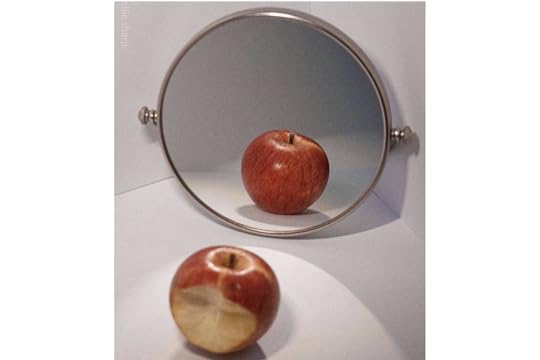
Image: A half-eaten apple can look untouched in a mirror (Source)
In this short story from 1892, a London artist remembers the unfortunately named Major and Mrs Monarch. They arrived at his studio, looking “distinguished” but with “an indefinable air of prosperous thrift”.
Rather than wanting to pay him to paint their portrait, it eventually emerges through their embarrassment that they are offering themselves as models for the illustrations he describes as his “pot-boilers”.
“We thought that if you ever had to do people like us we might be something like it.”
As the Major says, they are “the real thing”, or more accurately, used to be before they lost all their money.
The artist amuses himself with inferences and observations:
“She was singularly like a bad illustration.”
He thinks they’d be better suited to adverts for waistcoats, hotels, or soap - but doesn’t say so, as they are so earnest and ashamed. The Major makes it clear they would do it “for the figure” (the body and pose, without recognisable faces). Oh, the insecurity of the middle class; an impoverished duke would brazen it out. Class and money do not correlate here in the UK.
Nevertheless, the artist agrees to use them.
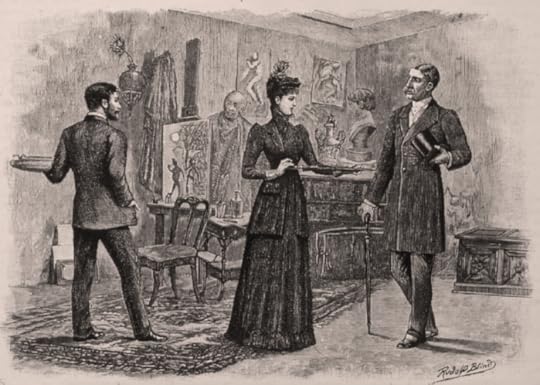
Image: Meta: a black and white illustration of the artist working on a black and white illustration of the Monarchs. It was published with the story in the magazine “Black & White” in 1892 and is by Rudolph Blind. (Source)
He finds them amusing, interesting, pathetic, though he develops a degree of fondness for them. Most problematically, they are not very useful. Unlike his regular working-class models, they are too real, too much and always themselves.
“When I drew the Monarchs I couldn’t anyhow get away from them - get into the character I wanted to represent.”
And thus the tables end up being turned and roles cleverly reversed. Gently sharp observations on class and money are juxtaposed with deeper thoughts about art, identity, and reality.
Quotes
• “A dim smile that had the effect of a moist sponge passed over a ‘sunk’ piece of painting, as well as of a vague allusion to vanished beauty.”
• “She looked as sad as a woman could look whose face was not charged with expression... The hand of time had played over her freely, but to an effect of elimination.”
• “I placed her in every conceivable position and she managed to obliterate the differences.”
• “She was the real thing, but always the same thing”
• “They had both accepted their failure, but they couldn’t accept their fate”
See also
Oscar Wilde’s The Picture of Dorian Gray.
Short story club
I read this as one of the stories in The Art of the Short Story, by Dana Gioia, from which I'm aiming to read one story a week with The Short Story Club, starting 2 May 2022.
You can read this story here.
You can join the group here.
Authenticity has a different aspect for an artist and their models.
Image: A half-eaten apple can look untouched in a mirror (Source)
In this short story from 1892, a London artist remembers the unfortunately named Major and Mrs Monarch. They arrived at his studio, looking “distinguished” but with “an indefinable air of prosperous thrift”.
Rather than wanting to pay him to paint their portrait, it eventually emerges through their embarrassment that they are offering themselves as models for the illustrations he describes as his “pot-boilers”.
“We thought that if you ever had to do people like us we might be something like it.”
As the Major says, they are “the real thing”, or more accurately, used to be before they lost all their money.
The artist amuses himself with inferences and observations:
“She was singularly like a bad illustration.”
He thinks they’d be better suited to adverts for waistcoats, hotels, or soap - but doesn’t say so, as they are so earnest and ashamed. The Major makes it clear they would do it “for the figure” (the body and pose, without recognisable faces). Oh, the insecurity of the middle class; an impoverished duke would brazen it out. Class and money do not correlate here in the UK.
Nevertheless, the artist agrees to use them.
Image: Meta: a black and white illustration of the artist working on a black and white illustration of the Monarchs. It was published with the story in the magazine “Black & White” in 1892 and is by Rudolph Blind. (Source)
He finds them amusing, interesting, pathetic, though he develops a degree of fondness for them. Most problematically, they are not very useful. Unlike his regular working-class models, they are too real, too much and always themselves.
“When I drew the Monarchs I couldn’t anyhow get away from them - get into the character I wanted to represent.”
And thus the tables end up being turned and roles cleverly reversed. Gently sharp observations on class and money are juxtaposed with deeper thoughts about art, identity, and reality.
Quotes
• “A dim smile that had the effect of a moist sponge passed over a ‘sunk’ piece of painting, as well as of a vague allusion to vanished beauty.”
• “She looked as sad as a woman could look whose face was not charged with expression... The hand of time had played over her freely, but to an effect of elimination.”
• “I placed her in every conceivable position and she managed to obliterate the differences.”
• “She was the real thing, but always the same thing”
• “They had both accepted their failure, but they couldn’t accept their fate”
See also
Oscar Wilde’s The Picture of Dorian Gray.
Short story club
I read this as one of the stories in The Art of the Short Story, by Dana Gioia, from which I'm aiming to read one story a week with The Short Story Club, starting 2 May 2022.
You can read this story here.
You can join the group here.

June 23, 2022
The Real Thing (1892) is both an aesthetic parable and a social satire in the manner of Maupassant. In typical Jamesian style, the narrative is witty, delicate, multi-layered, and ambiguous, with twists and false bottoms (in the same way as, say, The Turn of the Screw).
The story is about a painter and his models and deals, in a broader sense, with artistic creation, appearance and reality, social personas and stereotypes. It also reads as a sort of aesthetic manifesto, whereby art cannot be confined to a simple “photographic” imitation of reality and is, instead, meant to act as a sort of “developing solution” for what lies beyond the outward forms of things and people. In this sense, The Real Thing, written at the crest of the Realist movement, could be construed as a forerunner of literary modernism.
Yet, as always with Henry James, the final word is never entirely conclusive, and the end-reveal elevates the story beyond the mere plane of aesthetics into a more profound sense of humanity and understanding.
The story is about a painter and his models and deals, in a broader sense, with artistic creation, appearance and reality, social personas and stereotypes. It also reads as a sort of aesthetic manifesto, whereby art cannot be confined to a simple “photographic” imitation of reality and is, instead, meant to act as a sort of “developing solution” for what lies beyond the outward forms of things and people. In this sense, The Real Thing, written at the crest of the Realist movement, could be construed as a forerunner of literary modernism.
Yet, as always with Henry James, the final word is never entirely conclusive, and the end-reveal elevates the story beyond the mere plane of aesthetics into a more profound sense of humanity and understanding.

January 22, 2024
The Short Story Club
What an unusual short story! First of all, in terms of the subject - the paradoxically low value of 'the real thing' in art if it is not expressive enough. Then, what an acurate description of a common type of people - charming easy-going parasites who constantly count on others for help.
On the other hand, the author's (it is the first encounter with H. James) writing does not appeal to me and it is difficult to say why. I sometimes do not understand his logic.
'Hawley had made their acquaintance—he had met them at my fireside—and thought them a ridiculous pair. Learning that he was a painter they tried to approach him, to show him too that they were the real thing; but he looked at them, across the big room, as if they were miles away: they were a compendium of everything that he most objected to in the social system of his country. Such people as that, all convention and patent-leather, with ejaculations that stopped conversation, had no business in a studio. A studio was a place to learn to see, and how could you see through a pair of feather beds?'
What an unusual short story! First of all, in terms of the subject - the paradoxically low value of 'the real thing' in art if it is not expressive enough. Then, what an acurate description of a common type of people - charming easy-going parasites who constantly count on others for help.
On the other hand, the author's (it is the first encounter with H. James) writing does not appeal to me and it is difficult to say why. I sometimes do not understand his logic.
'Hawley had made their acquaintance—he had met them at my fireside—and thought them a ridiculous pair. Learning that he was a painter they tried to approach him, to show him too that they were the real thing; but he looked at them, across the big room, as if they were miles away: they were a compendium of everything that he most objected to in the social system of his country. Such people as that, all convention and patent-leather, with ejaculations that stopped conversation, had no business in a studio. A studio was a place to learn to see, and how could you see through a pair of feather beds?'

July 2, 2022
Well, this was a wonderful read. Not only is Henry James one of my favorite writers, but many differing, tangential ideas, would rush to my mind as I read this story. The read was part of the Short Story Group.
Mysterious the mind is, and particularly mystifying it is when we think of what goes on inside it while reading. As I had just finished an essay, by Guillermo Solana, in the catalogue of the current exhibition at the Thyssen Museum on the American painter Alex Katz (born 1927), the “Real Thing” in the story acquired expanded meanings.
I focused then on the issue of representation in art.
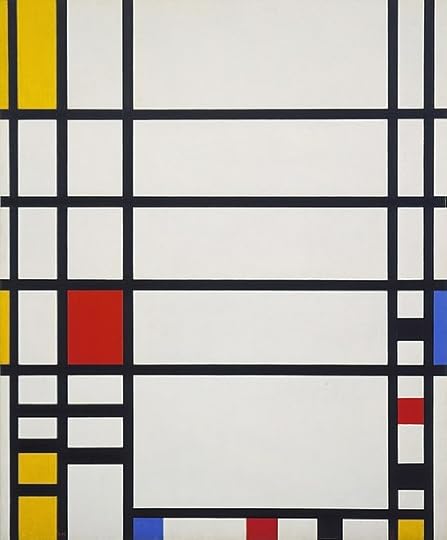
Solana explains that for Katz it was crucial to distance himself completely from the sitter, and considering that he painted his wife Ada repeatedly, this must have been a hard thing to achieve. His portraits do not aim to be portraits. There is nothing of Ada, her personality, her emotions, that we learn from these portraits. Katz is fascinated by a face, and this face becomes as aseptic as Piet Mondrian’s Trafalgar Square.
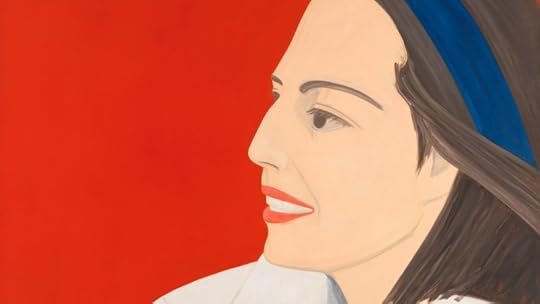
The narrator in The Real Thing has a similar aim when he uses models. He is not portraying them; instead, he wants to transform them, following his own artistic abilities, in whatever he may want – often illustrations of figures in a story provided by an editor – so another level of representation. The problem the illustrator faces is that the self-proclaimed 'models' in the story, the couple of “Monarchs”, cannot be represented because they have already represented themselves, forestalling any artistic transformation - the models are stubbornly burdened and cannot be emptied, cannot be 'models1. They make it impossible for the artist to access what is at the core of his goal. If Katz empties his portraits of individual features to present the painterly, James’s Narrator needs to empty his models to transform them into other personalities. Neither is interested in portraying the sitter.
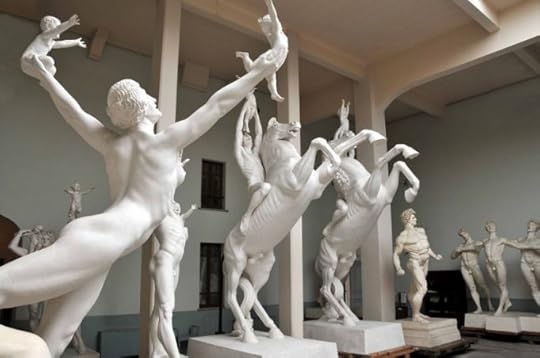
Another association that came to my mind was the Hendrick Christian Andersen Museum in Rome. At his death he bequeathed his home and study as well as his works to the Italian State. Not many people visit this place now, and I did because I was following James’s steps in Rome. James and Andersen met at the end of the 19thC and became intimate. Andersen’s work is kitsch and his ideas, in their utopianism, appear too close to fascist beliefs. As I had always associated James with the very sophisticated painter Singer Sargent , I was stunned by the fact of James being taken over by the vulgarity in the art of his friend Andersen. Did James think that this was anywhere near “the Real Thing”?
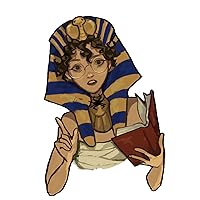
And the final association was a conversation I had recently with a friend around the Spanish term Impostado, which originates from the Italian (a term used for a position of the voice when singing) but which in Spanish has taken the additional meaning of ‘counterfeit’. While reading this story, that conversation came back to my mind and now I will get the Spanish translation, Lo Auténtico, as a gift for my friend, in an edition that, fittingly, is illustrated. I look forward to having a look at those illustrations. Did Almudena Hidalgo, the illustrator, manage to reflect the Real Thing of what was, originally, a counterfeit or Unreal Thing?

June 22, 2022
Major and Mrs Monarch, a couple who had fallen on hard times financially, asked an artist to hire them to model for his commercial illustrations. Some of the artist's illustrations depicted people of the upper class so Major Monarch said they would have the advantage of being "the real thing; a gentleman, you know, or a lady."
The artist also hired other models - a lower class woman, Miss Churm, and an immigrant street peddler, Oronte. The Monarchs were very stiffly themselves so their illustrations looked like photographs. While the other two models were not noble, they had a natural ability to adapt to the role. The artist was able to interpret reality instead of documenting it like a photograph. It's the artistic interpretation that communicates the meaning to the viewer. So artifice can sometimes be more valuable than the real thing.
The story also looked at the changes brought on due to the Industrial Revolution and the greater global economy in the later Victorian era. England was changing to an urban, manufacturing economy which benefited the middle class, the working class, and immigrants. These three classes are represented by the artist, Miss Churm, and Oronte who are all capable and flexible as they work. The landed gentry historically had benefited from agriculture, but workers were leaving the farms. The Monarchs, who are struggling financially, had no real skills and found it difficult to change with the times. The artist and others felt uncomfortable hiring the higher class couple for menial work as servants, even if the Monarchs were willing to do the job.
"The Real Thing" has many layers of meaning concerning art, life experiences, reality, economics, and class tensions. It's a wonderful, thought-provoking work with some dry humor!
The artist also hired other models - a lower class woman, Miss Churm, and an immigrant street peddler, Oronte. The Monarchs were very stiffly themselves so their illustrations looked like photographs. While the other two models were not noble, they had a natural ability to adapt to the role. The artist was able to interpret reality instead of documenting it like a photograph. It's the artistic interpretation that communicates the meaning to the viewer. So artifice can sometimes be more valuable than the real thing.
The story also looked at the changes brought on due to the Industrial Revolution and the greater global economy in the later Victorian era. England was changing to an urban, manufacturing economy which benefited the middle class, the working class, and immigrants. These three classes are represented by the artist, Miss Churm, and Oronte who are all capable and flexible as they work. The landed gentry historically had benefited from agriculture, but workers were leaving the farms. The Monarchs, who are struggling financially, had no real skills and found it difficult to change with the times. The artist and others felt uncomfortable hiring the higher class couple for menial work as servants, even if the Monarchs were willing to do the job.
"The Real Thing" has many layers of meaning concerning art, life experiences, reality, economics, and class tensions. It's a wonderful, thought-provoking work with some dry humor!

July 2, 2022
Este es definitivamente uno de los relatos de Henry James que más he disfrutado; tanto, que no pude parar de leer de corrido y hubiese odiado que alguien me hubiera interrumpido en media lectura.
Tenemos en Lo real una de las historias en las que el autor se enfoca en el arte y el lado artístico de la gente; en este caso, un pintor, quien además trabaja como ilustrador de revistas y novelas —no pude evitar pensar en aquellas típicas ilustraciones de los libros de Dickens y pensar en cómo el artista las hacía en aquel entonces—, recibe cierto día la visita de un matrimonio, Los Monarchs, quienes piden ser contratados como modelos, y quienes podrían ser útiles para futuros proyectos del artista.
El matrimonio, aparentemente son representados por lo que ellos son en realidad, como “lo real” y no “lo falso” de su papel que juegan en la sociedad. ¿Será esto cierto? Y de serlo, ¿será beneficioso para un artista retratar exactamente lo que ve, sin transformar lo que tiene delante en algo completamente diferente?
Una historia, donde si bien la narrativa del autor no es tan compleja, su prosa sigue siendo fascinante; unos cuantos personajes, los necesarios para llevar a cabo la acción de la historia, y un final, que te da lo que el lector pide (o al menos lo que yo pedía que fuera), donde incluso nuestro narrador se pregunta en algún momento, “¿habrá quienes puedan aceptar su fracaso, pero lamentablemente no acepten su destino?”
Un 5 estrellas modesto, para mí, ya que no es definitivamente lo mejor que he leído del autor, y sin embargo, es de las historias que más he disfrutado leyendo y además, de las más redondas y que van directo al grano en su mayor parte. Totalmente recomendable.
“Algo en ellos inspiraba confianza: sus ropas, sus modales, su apostura; pero si la confianza es un gran bolsillo vacío en el cual ocasionalmente tintinea una moneda, ese tintineo, al menos, debe ser audible.“
Tenemos en Lo real una de las historias en las que el autor se enfoca en el arte y el lado artístico de la gente; en este caso, un pintor, quien además trabaja como ilustrador de revistas y novelas —no pude evitar pensar en aquellas típicas ilustraciones de los libros de Dickens y pensar en cómo el artista las hacía en aquel entonces—, recibe cierto día la visita de un matrimonio, Los Monarchs, quienes piden ser contratados como modelos, y quienes podrían ser útiles para futuros proyectos del artista.
El matrimonio, aparentemente son representados por lo que ellos son en realidad, como “lo real” y no “lo falso” de su papel que juegan en la sociedad. ¿Será esto cierto? Y de serlo, ¿será beneficioso para un artista retratar exactamente lo que ve, sin transformar lo que tiene delante en algo completamente diferente?
Una historia, donde si bien la narrativa del autor no es tan compleja, su prosa sigue siendo fascinante; unos cuantos personajes, los necesarios para llevar a cabo la acción de la historia, y un final, que te da lo que el lector pide (o al menos lo que yo pedía que fuera), donde incluso nuestro narrador se pregunta en algún momento, “¿habrá quienes puedan aceptar su fracaso, pero lamentablemente no acepten su destino?”
Un 5 estrellas modesto, para mí, ya que no es definitivamente lo mejor que he leído del autor, y sin embargo, es de las historias que más he disfrutado leyendo y además, de las más redondas y que van directo al grano en su mayor parte. Totalmente recomendable.
“Algo en ellos inspiraba confianza: sus ropas, sus modales, su apostura; pero si la confianza es un gran bolsillo vacío en el cual ocasionalmente tintinea una moneda, ese tintineo, al menos, debe ser audible.“

May 4, 2016
The depressing tale of a husband and wife, former artist models, past their prime but still believing they are the "real thing" as models go, and an artist who tries to use them as sitters, but realizes it's a lost cause. James excellent writing and character development saves the day for this otherwise bleak story. 3.5 stars

June 24, 2022
After the spontaneous [young Italian] Oronte had been with me a month, and after I had given him to understand several different times that his native exuberance would presently constitute an insurmountable barrier to our further intercourse, I waked to a sense of his heroic capacity. He was only five feet seven, but the remaining inches were latent.
Henry James really deserves to be better known as a humorist, along the lines of Mark Twain — or if you're Canadian, Stephen Leacock. This short story is stuffed with snide asides and droll observations — all with the effect of James rolling his eyes at the reader, letting them inside the joke.
What is the real thing, here in the art studio, where life imitates art? No, I have that backwards. Art is drawn from models who are clever imitators, who are good at impersonating reality. Art is a mirror for make-believe; and make-believe is "the real thing".
The down on their luck couple, Major and Mrs. Monarch (the Monarchs! big eye-roll), are unable to be anything but themselves, for that is the role (the rut) they had been following for too long. It is the more flexible members of the working class who prove to be adaptable and evocative.
As a fan of punctuation, I was impressed to discover a comma ending an aside in parentheses (it looked something like this,) which jumped out at me; but I also thought Why Not?
Why not, Henry James? Why not write more tellingly about the young Italian man, the itinerant fruit-peddler in the "tight yellow trousers" the "artist" adopted?
Henry James really deserves to be better known as a humorist, along the lines of Mark Twain — or if you're Canadian, Stephen Leacock. This short story is stuffed with snide asides and droll observations — all with the effect of James rolling his eyes at the reader, letting them inside the joke.
What is the real thing, here in the art studio, where life imitates art? No, I have that backwards. Art is drawn from models who are clever imitators, who are good at impersonating reality. Art is a mirror for make-believe; and make-believe is "the real thing".
The down on their luck couple, Major and Mrs. Monarch (the Monarchs! big eye-roll), are unable to be anything but themselves, for that is the role (the rut) they had been following for too long. It is the more flexible members of the working class who prove to be adaptable and evocative.
As a fan of punctuation, I was impressed to discover a comma ending an aside in parentheses (it looked something like this,) which jumped out at me; but I also thought Why Not?
Why not, Henry James? Why not write more tellingly about the young Italian man, the itinerant fruit-peddler in the "tight yellow trousers" the "artist" adopted?

June 25, 2022
“I like things that appeared; then one was sure. Whether they were or not was a subordinate and almost always a profitless question.”
A fascinating story around the unusual topic of communicating the real through art.
I learned early that nothing falls flat in a story like a real-life anecdote. But it really happened! No matter, it isn’t believable. Maybe partially because the writer isn’t trying hard enough to make it believable, but real life taken as it is does not often work in fiction.
James is exploring something similar here. A formerly-distinguished now down-on-their-luck couple shows up at an artist’s studio to be used as models for his book illustrations. They see themselves as “the real thing,” gentlefolks like those in the story he’s illustrating. Yet when using them, the artist can’t make his illustrations work.
“But after a little skirmishing I began to find her too insurmountably stiff; do what I would with it my drawing looked like a photograph or a copy of a photograph.”
What was missing? Therein lies the story, told in James's characteristic layered meanings and opaque detail.
Fun and thought-provoking.
A fascinating story around the unusual topic of communicating the real through art.
I learned early that nothing falls flat in a story like a real-life anecdote. But it really happened! No matter, it isn’t believable. Maybe partially because the writer isn’t trying hard enough to make it believable, but real life taken as it is does not often work in fiction.
James is exploring something similar here. A formerly-distinguished now down-on-their-luck couple shows up at an artist’s studio to be used as models for his book illustrations. They see themselves as “the real thing,” gentlefolks like those in the story he’s illustrating. Yet when using them, the artist can’t make his illustrations work.
“But after a little skirmishing I began to find her too insurmountably stiff; do what I would with it my drawing looked like a photograph or a copy of a photograph.”
What was missing? Therein lies the story, told in James's characteristic layered meanings and opaque detail.
Fun and thought-provoking.

June 29, 2022
Major and Mrs Monarch, upper class types fallen on hard times offer to pose for an artist/illustrator as ‘the real thing’. For the artist though, their inflexibility as sitters (they are always themselves) make them less suitable than the working class models he usually uses. A quiet and subtly humorous look at art being a representation of reality not ‘the real thing’.

March 13, 2023
In this short story, James introduces readers to an aspiring artist who works as an illustrator of novels. When a once-affluent gentle couple arrive at his studio asking for work as models, the artist is confounded. Major and Mrs. Monarch are examples of what a real genteel couple represent while the artist’s regular models are flexible when it comes to playing different parts for his drawings. The Monarchs claim that they are “the real thing” but is this what the artist needs in his work? This story looks at the idea of art being a representation of reality.

December 6, 2018
The Real Thing is a brilliantly written short story about an aspiring artist and his relationship with his models. Our artist, like many of his kind, works as an illustrator for books, but hopes to become a renowned portrait painter. When an impeccably dressed couple arrives at his door, based on their expensive clothes, he hopes they are there to commission a portrait from him. However, what they are looking for is employment. They are hoping to pose for paintings and are desperate to find employment. Both of them are pleasant to look at, have great posture and can sit for ages without moving. They are the real thing- a perfect gentlemen and a perfect lady. They seem ideal models at first. The artist employs them to pose for a book. However, somehow they simply don't do. Every time our artist draws them, they end up looking too tall. They can't offer a variety of expression. They can't act. He can't place them into poses. They simply don't do as models.
Our artists realizes he can't use them but grows quite fond of them and finds it hard to let go of them. It doesn't help that Mr and Ms Major are in financial difficulties and so desperate to work. They are willing to do anything, even work as servants but their education and manners make this impossible. Nobody would hire a perfect gentlemen to work as a servant. It makes everyone feels uneasy.
The psychological tension between the artist and models was so well depicted in this story. Moreover, this story manages to raise a lot of interesting questions about the nature of art. Our artist could be a writer for that matter. I had a feeling that James also wrote about himself. For what is art? Is it an escape from the everyday life? I found myself wondering about our modern world and its vulgarity. It is hard not to feel for Mr and Ms Major. They are such decent people, so absolutely harmless and pleasant. The irony of the fact that their fine manners makes them unable to find employment! The tragedy of it all. People with manners and education are not supposed to be poor, to go starving...and yet they do. I suppose this story shows (among other things) that nobody has it easy. We are all shaped by our surroundings. We're all trapped in the same cage.
The Real Thing is a tale poignant with sadness. Despite the fact that I found this story to be quite depressing, I immensely liked it. It is written in such a beautiful and melancholic way. I found it to be deeply moving. I would even say that this was possibly my favourite short story by Henry James. He managed to fit so much into this short prose form. The psychological portrayal of characters is simply masterful. Such a great short story.
Our artists realizes he can't use them but grows quite fond of them and finds it hard to let go of them. It doesn't help that Mr and Ms Major are in financial difficulties and so desperate to work. They are willing to do anything, even work as servants but their education and manners make this impossible. Nobody would hire a perfect gentlemen to work as a servant. It makes everyone feels uneasy.
The psychological tension between the artist and models was so well depicted in this story. Moreover, this story manages to raise a lot of interesting questions about the nature of art. Our artist could be a writer for that matter. I had a feeling that James also wrote about himself. For what is art? Is it an escape from the everyday life? I found myself wondering about our modern world and its vulgarity. It is hard not to feel for Mr and Ms Major. They are such decent people, so absolutely harmless and pleasant. The irony of the fact that their fine manners makes them unable to find employment! The tragedy of it all. People with manners and education are not supposed to be poor, to go starving...and yet they do. I suppose this story shows (among other things) that nobody has it easy. We are all shaped by our surroundings. We're all trapped in the same cage.
The Real Thing is a tale poignant with sadness. Despite the fact that I found this story to be quite depressing, I immensely liked it. It is written in such a beautiful and melancholic way. I found it to be deeply moving. I would even say that this was possibly my favourite short story by Henry James. He managed to fit so much into this short prose form. The psychological portrayal of characters is simply masterful. Such a great short story.

April 21, 2024
This is a short story of an artist for hire who is approached by Major Monarch and his wife, an impecunious couple who wish to sit for him. It’s about what people are and what they might represent, given the opportunity. Can you pretend to be something you are not?
The Major (retired) and his wife put themselves forward as suitable subjects for the artist’s commissions on the basis that they are ‘the real thing’, a concept which is never explicitly explained, even if somebody knew exactly what it might mean. There is an implicit assumption that people of discernment would recognise ‘the real thing’ when they see it.
The Monarchs have fallen on hard times, their money largely gone. He is unable to find employment, but he and his wife know how to dress, have the right clothes, know the niceties of etiquette and society, how to behave visiting a country house, but such things do not readily translate into an income. Major Monarch (how Dickensian) is in a similar situation to another retired major, the one from Elizabeth Bowen’s The Death of the Heart, Major Brutt, who writes letters to his connections asking for aid to secure a placement, but they are letters written more in resignation than in hope.
In their desperation to secure sittings, Major Monarch asks ‘Wouldn’t it be rather a pull sometimes to have …The real thing; a gentleman, you know, or a lady.’ (p221) The artist acknowledges this point but the ‘central intelligence’ (the other concept at work here) is that while he would like to make his fortune with big oils, for which the Monarchs might be suitable, he has to make do with drawing black and white illustrations where Mrs Monarch might do: ‘And indeed I could see the slipshod re-arrangement of stale properties - the stories I tried to produce pictures for within the exasperation of reading them- whose sandy tracts the good lady might help to people’ (p221), but he already has the people to meet that need, including Miss Churm, a freckled cockney who catches the bus, who ‘could represent everything, from a fine lady to a shepherdess’. (p222)
Major Monarch and his wife seek to present themselves as the epitome of gentility and class, but they simply do not have it in a way to create a convincing illustration. The Monarchs rely on what they are which is not enough. The artist finds more interest in a working woman of lower class and an Italian migrant, both of whom can actually work. They have more of the real thing or perhaps can simply represent it better.
NB: Page numbers are taken from Ann Charters: The Story and Its Writer: An Introduction to Short Fiction: Compact Sixth Edition.
The Major (retired) and his wife put themselves forward as suitable subjects for the artist’s commissions on the basis that they are ‘the real thing’, a concept which is never explicitly explained, even if somebody knew exactly what it might mean. There is an implicit assumption that people of discernment would recognise ‘the real thing’ when they see it.
The Monarchs have fallen on hard times, their money largely gone. He is unable to find employment, but he and his wife know how to dress, have the right clothes, know the niceties of etiquette and society, how to behave visiting a country house, but such things do not readily translate into an income. Major Monarch (how Dickensian) is in a similar situation to another retired major, the one from Elizabeth Bowen’s The Death of the Heart, Major Brutt, who writes letters to his connections asking for aid to secure a placement, but they are letters written more in resignation than in hope.
In their desperation to secure sittings, Major Monarch asks ‘Wouldn’t it be rather a pull sometimes to have …The real thing; a gentleman, you know, or a lady.’ (p221) The artist acknowledges this point but the ‘central intelligence’ (the other concept at work here) is that while he would like to make his fortune with big oils, for which the Monarchs might be suitable, he has to make do with drawing black and white illustrations where Mrs Monarch might do: ‘And indeed I could see the slipshod re-arrangement of stale properties - the stories I tried to produce pictures for within the exasperation of reading them- whose sandy tracts the good lady might help to people’ (p221), but he already has the people to meet that need, including Miss Churm, a freckled cockney who catches the bus, who ‘could represent everything, from a fine lady to a shepherdess’. (p222)
Major Monarch and his wife seek to present themselves as the epitome of gentility and class, but they simply do not have it in a way to create a convincing illustration. The Monarchs rely on what they are which is not enough. The artist finds more interest in a working woman of lower class and an Italian migrant, both of whom can actually work. They have more of the real thing or perhaps can simply represent it better.
NB: Page numbers are taken from Ann Charters: The Story and Its Writer: An Introduction to Short Fiction: Compact Sixth Edition.

October 5, 2013
A down-and-out middle-aged couple, still proud of their youthful accomplishments as models, carrying themselves with an accustomed regal bearing, comes to the studio of a portrait-maker looking for a job.
I've never seen characters like them so brilliantly sketched in a short story of only twenty or so pages before. By the time it was winding up, I was completely pulled in, amazed that an immense pity had welled up from deep inside me for these luckless husband and wife.
I've never seen characters like them so brilliantly sketched in a short story of only twenty or so pages before. By the time it was winding up, I was completely pulled in, amazed that an immense pity had welled up from deep inside me for these luckless husband and wife.
Read
November 16, 2025جزو خسته کننده ترین داستانهایی که خوندم بود، ولی یکی از داستان های مهم از سبک رئالیسمه.
استاد حرف های جالبی زد:
"The city stories, are more often than not, stories about masks. Because the life of the man in city, is to live with a mask all the time."
"The monarchs being models, intensify the feeling of their dryness, their distance from showing the essence of being a human– the soul. The artist painting them makes good practice of describing them in the eye of the true observer."
The last sentence was: 'If it be true I am content to have paid the price-for the memory.'
"The importance of stories, is that they give flesh and emotions to people, who outside of it are nothing but 2d masks. Stories are memories. Everything in the world will fall apart and fade, but the memory of a person."
So in a way, you could say the only real thing, is the ghost of a person persisting in this decaying world.
استاد حرف های جالبی زد:
"The city stories, are more often than not, stories about masks. Because the life of the man in city, is to live with a mask all the time."
"The monarchs being models, intensify the feeling of their dryness, their distance from showing the essence of being a human– the soul. The artist painting them makes good practice of describing them in the eye of the true observer."
The last sentence was: 'If it be true I am content to have paid the price-for the memory.'
"The importance of stories, is that they give flesh and emotions to people, who outside of it are nothing but 2d masks. Stories are memories. Everything in the world will fall apart and fade, but the memory of a person."
So in a way, you could say the only real thing, is the ghost of a person persisting in this decaying world.

July 15, 2022
"You're the real thing,
Even better than the real thing."
--Bono Vox, U2
Reading Henry James for me is a lot like wading through molasses and, in case my simile is unclear, that would be a laboriously sticky and unpleasant undertaking.
If GoodReads were to expand its features instead of currently eliminating them (jeezus, Goodreads, what did Trivia ever do to you? frankly, it was one of your best features; get rid of the "comments" if you need to trim things down; how many times does some self-important blowhard need to be told how "excellent" his review is?), I'd suggest adding a feature that allowed reviewers to compare their average ratings of authors with the click of a button. And if such a feature existed I'm pretty sure Mr. James would be my lowest rated author of all. Gawd is he dense, and dull, and slow moving, and mostly concerned with ideas and people I have little to no interest in.
So I was pleasantly pleased to find myself enjoying "The Real Thing" probably more than anything else I've ever read by James. And don't think for a moment that, A) I'm not mildly ashamed of myself here; or B) that I haven't read much by the man. After all, my career as an English major started off with Washington Square as the first major work of my course sequence, and later I took a Hawthorne/James class (talk about a duo from hell) in my graduate degree. I can rattle off the names Lambert Strether, Spencer Bryden, John Marcher, and Roderick Hudson with the best of them, although I'd rather not. So I understand the place James has won for himself in the canon of great literature. I just have found myself really and truly bored with what I've read by him. And yes, that even includes "The Turn of the Screw." But here with "The Real Thing," not only did I find the style to be far less stultifying than I assumed it would be going in, I actually enjoyed myself and found the story to be rather amusing, entertaining even, something I had not thought James capable of doing for me.
The story opens with our narrator, an illustrator of popular magazines who harbors the fatuous notion that one day he just might become a famous artist along the lines of John Singer Sargent, opening the door to a handsome middle-aged couple, a bit regal in their bearing, although a bit shy and awkward at the same time. Rather than coming to have their portrait commissioned, as our narrator hopes, they are looking for work from him as models because it turns out they've experienced some sort of financial misfortune. "It's an awful bore," says Mrs. Monarch to our narrator. And after some thought, the artist engages them, perhaps more out of pity than anything else. They are likable people, and perhaps he can relate to the downturn they've had in life, but the two of them are terrible models because they inspire the artist to absolutely nothing, and that's obviously a problem in his line of work, although Major and Mrs. Monarch don't really understand why. "Wouldn't it be rather a pull sometimes to have--a--to have?" Major Monarch awkwardly asks, "The real thing; a gentleman, you know, or a lady." But no, it would not, because these two are clearly out of their depths and not at all capable of effectively modeling for the artist like his cockney Miss Churm or Orante, the Italian fresh off the boat, "perhaps a bankrupt orange-monger," the narrator thinks to himself, "but he's a treasure."
Major and Mrs. Monarch, not so much, although they fancy themselves so and can't quite understand how the cockney and the Italian organ grinder are so much better at the modeling job than the two of them are, which causes Major Monarch to stuffily ask when he begins to realize this, "Is he your idea of an English gentleman?" But what the Monarchs don't understand here is what the narrator refers to as "the alchemy of art." Or, as the insightful Miss Churm (who can't spell and loves beer and has no respect for the letter "h"), says of Mrs. Monarch,"Well, if she can sit I'll tyke to bookkeeping." I guess it's kind of thing the Monarchs can't understand at all, that real art is far more than just precise representation of the thing itself, that there is inspiration and artistic creation involved in the process. The Monarchs are absolutely incapable of aiding in this artistic process, and the realization of their shortcoming in comparison to their social lessers is a painful one to the couple that takes a while for them to grasp. Our narrator says, "They had accepted their failure, but they couldn't accept their fate. They had bowed their heads in bewilderment to the perverse and cruel law in virtue of which the real thing could be so much less precious than the unreal."
And that last sentence there is the gist of James' story, something my own recent reading has borne out. I am about to finish up Hamnet in another day or two, Maggie O'Farrell's historical novel from two years ago about the death of William Shakespeare's son in Stratford while he was away in London. Little in the novel could be referred to as "the real thing"; historically, factually, we know nothing of the events that led to Hamnet's death. However, through the "alchemy of art," the author O'Farrell has created a beautiful story here that becomes a meditation on loss and grief and is truer than any sort of non-fiction work a historian might have written about the same events.
I'll tell you this for sure, O'Farrell's novel is a far better read than, say, Stephen Greenblatt's Will in the World, which is a spectacular work of non-fiction by perhaps the greatest living Shakespeare scholar, but Hamnet is not only more enjoyable to read than Will in the World (and I say that because I have given Greenblatt’s book three attempts and never gotten anywhere close to the finish line), but it's truer and better than any "real thing" Greenblatt has written about Shakespeare despite it being entirely "unreal," a work of the imagination created by that same artistic alchemy James is describing in “The Real Thing.”
+++++++++++++++++++++++++++
Read for the GoodReads short story discussion group
Even better than the real thing."
--Bono Vox, U2
Reading Henry James for me is a lot like wading through molasses and, in case my simile is unclear, that would be a laboriously sticky and unpleasant undertaking.
If GoodReads were to expand its features instead of currently eliminating them (jeezus, Goodreads, what did Trivia ever do to you? frankly, it was one of your best features; get rid of the "comments" if you need to trim things down; how many times does some self-important blowhard need to be told how "excellent" his review is?), I'd suggest adding a feature that allowed reviewers to compare their average ratings of authors with the click of a button. And if such a feature existed I'm pretty sure Mr. James would be my lowest rated author of all. Gawd is he dense, and dull, and slow moving, and mostly concerned with ideas and people I have little to no interest in.
So I was pleasantly pleased to find myself enjoying "The Real Thing" probably more than anything else I've ever read by James. And don't think for a moment that, A) I'm not mildly ashamed of myself here; or B) that I haven't read much by the man. After all, my career as an English major started off with Washington Square as the first major work of my course sequence, and later I took a Hawthorne/James class (talk about a duo from hell) in my graduate degree. I can rattle off the names Lambert Strether, Spencer Bryden, John Marcher, and Roderick Hudson with the best of them, although I'd rather not. So I understand the place James has won for himself in the canon of great literature. I just have found myself really and truly bored with what I've read by him. And yes, that even includes "The Turn of the Screw." But here with "The Real Thing," not only did I find the style to be far less stultifying than I assumed it would be going in, I actually enjoyed myself and found the story to be rather amusing, entertaining even, something I had not thought James capable of doing for me.
The story opens with our narrator, an illustrator of popular magazines who harbors the fatuous notion that one day he just might become a famous artist along the lines of John Singer Sargent, opening the door to a handsome middle-aged couple, a bit regal in their bearing, although a bit shy and awkward at the same time. Rather than coming to have their portrait commissioned, as our narrator hopes, they are looking for work from him as models because it turns out they've experienced some sort of financial misfortune. "It's an awful bore," says Mrs. Monarch to our narrator. And after some thought, the artist engages them, perhaps more out of pity than anything else. They are likable people, and perhaps he can relate to the downturn they've had in life, but the two of them are terrible models because they inspire the artist to absolutely nothing, and that's obviously a problem in his line of work, although Major and Mrs. Monarch don't really understand why. "Wouldn't it be rather a pull sometimes to have--a--to have?" Major Monarch awkwardly asks, "The real thing; a gentleman, you know, or a lady." But no, it would not, because these two are clearly out of their depths and not at all capable of effectively modeling for the artist like his cockney Miss Churm or Orante, the Italian fresh off the boat, "perhaps a bankrupt orange-monger," the narrator thinks to himself, "but he's a treasure."
Major and Mrs. Monarch, not so much, although they fancy themselves so and can't quite understand how the cockney and the Italian organ grinder are so much better at the modeling job than the two of them are, which causes Major Monarch to stuffily ask when he begins to realize this, "Is he your idea of an English gentleman?" But what the Monarchs don't understand here is what the narrator refers to as "the alchemy of art." Or, as the insightful Miss Churm (who can't spell and loves beer and has no respect for the letter "h"), says of Mrs. Monarch,"Well, if she can sit I'll tyke to bookkeeping." I guess it's kind of thing the Monarchs can't understand at all, that real art is far more than just precise representation of the thing itself, that there is inspiration and artistic creation involved in the process. The Monarchs are absolutely incapable of aiding in this artistic process, and the realization of their shortcoming in comparison to their social lessers is a painful one to the couple that takes a while for them to grasp. Our narrator says, "They had accepted their failure, but they couldn't accept their fate. They had bowed their heads in bewilderment to the perverse and cruel law in virtue of which the real thing could be so much less precious than the unreal."
And that last sentence there is the gist of James' story, something my own recent reading has borne out. I am about to finish up Hamnet in another day or two, Maggie O'Farrell's historical novel from two years ago about the death of William Shakespeare's son in Stratford while he was away in London. Little in the novel could be referred to as "the real thing"; historically, factually, we know nothing of the events that led to Hamnet's death. However, through the "alchemy of art," the author O'Farrell has created a beautiful story here that becomes a meditation on loss and grief and is truer than any sort of non-fiction work a historian might have written about the same events.
I'll tell you this for sure, O'Farrell's novel is a far better read than, say, Stephen Greenblatt's Will in the World, which is a spectacular work of non-fiction by perhaps the greatest living Shakespeare scholar, but Hamnet is not only more enjoyable to read than Will in the World (and I say that because I have given Greenblatt’s book three attempts and never gotten anywhere close to the finish line), but it's truer and better than any "real thing" Greenblatt has written about Shakespeare despite it being entirely "unreal," a work of the imagination created by that same artistic alchemy James is describing in “The Real Thing.”
+++++++++++++++++++++++++++
Read for the GoodReads short story discussion group

July 13, 2022
I didn't like this short story
March 22, 2022
A short story available for free for Kindle from Amazon. First written in 1892.
Here, an unnamed painter has a genteel couple offer to pose for him (for pay) in high-brow novels as "the real thing"...yet to him, a working class girl and an Italian immigrant actually look "the real thing" in the paintings.
Could you tell?
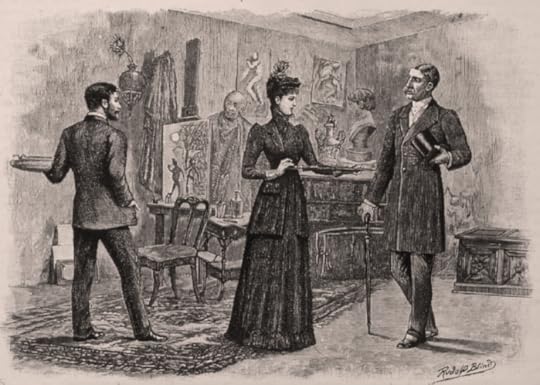
Here, an unnamed painter has a genteel couple offer to pose for him (for pay) in high-brow novels as "the real thing"...yet to him, a working class girl and an Italian immigrant actually look "the real thing" in the paintings.
Could you tell?

September 20, 2023
Loved this. Subtle satire. What more could I want! (other than a witty , well-written old fashion mystery). I have GR's reviewer George to thank for the info that Henry James had a sense of humor with this as an example. I have always avoided James until now. I do not like long sentences, which apparently he is known for, but it wasn't a problem in this story. It was short and well read on Librivox audio. I liked his description of people's movements and facial expressions. It's going on my list of favorites.

Want to Read
September 7, 2020- Major and Mrs. Monarch, aristocratic couple fallen on hard times offer themselves as models for an illustrator, despite their regal bearing they prove to be poor subjects ('She was always a lady certainly, and into the bargain was always the same lady.')
- "Rutland Ramsay" is the name of the awful novel the artist is illustrating. ('a great deal of country-house life—treated, it is true, in a fine, fanciful, ironical, generalised way—and there was a considerable implication of knickerbockers and kilts.') Still the Monarch's are unsuitable, a lower class pair of models are better.
- 'in the deceptive atmosphere of art, even the highest respectability may fail of being plastic.'
- "Rutland Ramsay" is the name of the awful novel the artist is illustrating. ('a great deal of country-house life—treated, it is true, in a fine, fanciful, ironical, generalised way—and there was a considerable implication of knickerbockers and kilts.') Still the Monarch's are unsuitable, a lower class pair of models are better.
- 'in the deceptive atmosphere of art, even the highest respectability may fail of being plastic.'

September 27, 2022
I’m not familiar with the work of Henry James, though of course I know of him.
This story is about an artist who draws sketches for books, magazines and so on and thus requires models.
A middle-aged couple, the Monarchs, turn up looking for work.
Mr Monarch is a “perfect gentleman” while Mrs Monarch is “smart” with an “irreproachably ‘good’” figure; they are both good-looking.
But their was a “blankness”” in their faces, and to me they seem to have no substance. Who are they really?
They are willing to do anything - “I’d be anything”.
We’re told of another model the artist has - Miss Churm. She was no gentlewoman, was “a trifle blowsy” and couldn’t spell. But she was excellent as a model because she could “represent” everything,
The story is partly about the artist – though he liked the Monarchs at first – “they looked so well everywhere”, “they were not superficial”” “they kept themselves up”, he gets bored with them.
They’re so keen to be employed by him, and they are in such acute need of money, apparently. So they keep coming, pressing him for work.
The problem with Mrs Monarch was that she “had no sense of variety”, She was always a lady but always the same lady.
The value of Mis Churm was that she had “no positive stamp”. She was always in demand, never in want of employment.
He tried to find other employment for the Monarchs but ”they didn’t take”,so that made them even more desperate to get work from him.
I confess I found the story boring because James goes into excessive detail about the Monarchs, their qualities and drawbacks, and about everything else.
A friend returns from abroad, and tells him that he doesn’t like his types – they won’t do.
“Ce sont des gens qu’il faut mettre à la porte” - they re people you need to get rid of.
The artist had really tried to find all sorts of, any sort of, work for them, Eventually, he got rid of them, but it was difficult.
I didn’t care for this story.
This story is about an artist who draws sketches for books, magazines and so on and thus requires models.
A middle-aged couple, the Monarchs, turn up looking for work.
Mr Monarch is a “perfect gentleman” while Mrs Monarch is “smart” with an “irreproachably ‘good’” figure; they are both good-looking.
But their was a “blankness”” in their faces, and to me they seem to have no substance. Who are they really?
They are willing to do anything - “I’d be anything”.
We’re told of another model the artist has - Miss Churm. She was no gentlewoman, was “a trifle blowsy” and couldn’t spell. But she was excellent as a model because she could “represent” everything,
The story is partly about the artist – though he liked the Monarchs at first – “they looked so well everywhere”, “they were not superficial”” “they kept themselves up”, he gets bored with them.
They’re so keen to be employed by him, and they are in such acute need of money, apparently. So they keep coming, pressing him for work.
The problem with Mrs Monarch was that she “had no sense of variety”, She was always a lady but always the same lady.
The value of Mis Churm was that she had “no positive stamp”. She was always in demand, never in want of employment.
He tried to find other employment for the Monarchs but ”they didn’t take”,so that made them even more desperate to get work from him.
I confess I found the story boring because James goes into excessive detail about the Monarchs, their qualities and drawbacks, and about everything else.
A friend returns from abroad, and tells him that he doesn’t like his types – they won’t do.
“Ce sont des gens qu’il faut mettre à la porte” - they re people you need to get rid of.
The artist had really tried to find all sorts of, any sort of, work for them, Eventually, he got rid of them, but it was difficult.
I didn’t care for this story.

August 12, 2016
The Monarchs, a genteel older coupe who have fallen on hard times, approach an artists who illustrates books (as so many did in James’ time) seeking employment as models. Their pitch: Unlike many others who pose for a living, they, the Monarchs, are “the real thing.” And indeed they are. But is that enough. They are the real thing, but what sort of thing is that and who cares about it. James is by no means the first or last to take swipes at the outlived-their-usefullness aristocracy (the Medieval era, when nobles earned their keep the hard way, by fighting the kings wars and managing agricultural estates that were expected to produce, was long long gone and by James time, it was becoming harder and harder for the upper crust to continue to pretend that they were valuable or important). But this story is one of the most creative approaches I’ve seen and by presenting it in such an atypical way, he breathes new life into what often turns out to be a hackneyed theme.

January 8, 2016
not sure how useful of a rating this is considering henry james could literally write about trash blowing in the wind and i would give it three stars. i liked the story a lot but found it difficult to pull together what it was trying to communicate when i was finished. but i got there eventually so its chill
February 18, 2023
I think this is my first Henry James. A strong culmination was missing but I liked the prose.
P.S. forgot how to write proper reviews, need to work on it☺️
P.S. forgot how to write proper reviews, need to work on it☺️

April 18, 2018
I liked it, but I think it would have been better in a shorter version, sometimes it became too repetitive in my opinion.
March 27, 2025
Lol idk this was just funny to me

July 5, 2022
3.5 stars.

May 3, 2023
I am of two minds about Henry James' prose. I find it can be airless and impenetrable (The Beast in the Jungle, Wings of the Dove) or accessible and almost chatty (The Portrait of a Lady). This story falls into the latter category for me.
I love the chatty, somewhat caustic narrator. The characters are so sharply and wickedly drawn.
I wonder if the novelist whose work the narrator is commissioned to illustrate is Anthony Trollope
I love the chatty, somewhat caustic narrator. The characters are so sharply and wickedly drawn.
I wonder if the novelist whose work the narrator is commissioned to illustrate is Anthony Trollope
September 16, 2015
I have mixed feelings about this story. I can't decide if I liked it or not. The story didn't feel like it had a solid path which was frustrating. However, I really enjoyed the idea of reality versus appearance.
Henry James spends a substantial amount of the text discussing the appearance of the people in the story and how that is juxtaposed to the reality of their situations. The premise of the story revolves around the fact that what is seen is not always the case and that a perfect specimen is not always the ideal candidate for a project. While there is no doubt that the Monarchs are honest aristocrats, they cannot be anything other than who they are. This poses problems for the narrator of the story who wants to do right by these people, but cannot see past their class.
James opens the story by describing the Monarchs. Their outward appearance and behavior does not suggest that they are pursuing employment, but that they are looking to employ the artist for portraits instead. Here James lays the foundation for understanding that things are not always how they seem. The Monarchs feel they are perfect for acting as sitters because they are truly aristocrats, even though they have fallen on hard times, and feel it would benefit the artist to use “the real thing.” The artist takes them into his employ and James is able to drive home the idea that reality is not always the best substitute for ideals.
The publishers and other readers want to see the ideals of society and the narrator is unable to supply this by using the Monarchs. He is unable to divorce the couple from their former status and makes them larger-than-life on the page. This shows how the narrator feels about his subjects, he is unable to draw them realistically because he interprets them as more prominent than himself and others. He is able to draw Miss Churm and Oronte to scale because he is taking a model who is not high class and molding it into the ideals that society wants to see in the print. Being of the aristocracy is so ingrained in the Monarchs, they are unable to become anything else. It is better for the artist to remake his models again and again than to work with the reality because the realness makes it impossible to see anything else.
Henry James spends a substantial amount of the text discussing the appearance of the people in the story and how that is juxtaposed to the reality of their situations. The premise of the story revolves around the fact that what is seen is not always the case and that a perfect specimen is not always the ideal candidate for a project. While there is no doubt that the Monarchs are honest aristocrats, they cannot be anything other than who they are. This poses problems for the narrator of the story who wants to do right by these people, but cannot see past their class.
James opens the story by describing the Monarchs. Their outward appearance and behavior does not suggest that they are pursuing employment, but that they are looking to employ the artist for portraits instead. Here James lays the foundation for understanding that things are not always how they seem. The Monarchs feel they are perfect for acting as sitters because they are truly aristocrats, even though they have fallen on hard times, and feel it would benefit the artist to use “the real thing.” The artist takes them into his employ and James is able to drive home the idea that reality is not always the best substitute for ideals.
The publishers and other readers want to see the ideals of society and the narrator is unable to supply this by using the Monarchs. He is unable to divorce the couple from their former status and makes them larger-than-life on the page. This shows how the narrator feels about his subjects, he is unable to draw them realistically because he interprets them as more prominent than himself and others. He is able to draw Miss Churm and Oronte to scale because he is taking a model who is not high class and molding it into the ideals that society wants to see in the print. Being of the aristocracy is so ingrained in the Monarchs, they are unable to become anything else. It is better for the artist to remake his models again and again than to work with the reality because the realness makes it impossible to see anything else.
Displaying 1 - 30 of 107 reviews