Jump to ratings and reviews
Rate this book

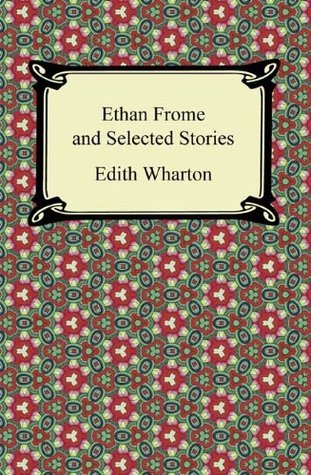
Ethan Frome and Selected Stories [with Biographical Introduction]

Rate this book
Edith Wharton was born in 1862 into an aristocratic New York family. Educated by the best governesses and tutors, Wharton profited from an exceptional education. She began her writing career with short stories before moving to novels. Collected in "Ethan Frome and Selected Stories," are the best of both. In her 1911 novel "Ethan Frome" a young engineer on assignment in a small New England town becomes fascinated by the deformed and troubled local Ethan Frome. This fascination leads him on a quest to unravel Frome's unique history while discovering a great deal about the society around him. In the short story "Afterward," a dirty business transaction comes back to haunt one family in this dynamic ghost story. The humorous short story "Xingu" follows a group of posh pseudo-intellectuals who host literary luncheons when one day one of their favorite authors pays a visit. Also included are "The Pretext" and "The Legend." Edith Wharton may be most recognized for her novels but it is in her short stories that her panache, spirit, and intellect come shining through with unavoidable delight.

130 pages, Kindle Edition

Published May 15, 2012

27 people are currently reading
1223 people want to read

About the author

Edith Wharton

1,383 books5,237 followers
Edith Wharton emerged as one of America’s most insightful novelists, deftly exposing the tensions between societal expectation and personal desire through her vivid portrayals of upper-class life. Drawing from her deep familiarity with New York’s privileged “aristocracy,” she offered readers a keenly observed and piercingly honest vision of Gilded Age society.

Her work reached a milestone when she became the first woman to receive the Pulitzer Prize for Fiction, awarded for The Age of Innocence. This novel highlights the constraining rituals of 1870s New York society and remains a defining portrait of elegance laced with regret.

Wharton’s literary achievements span a wide canvas. The House of Mirth presents a tragic, vividly drawn character study of Lily Bart, navigating social expectations and the perils of genteel poverty in 1890s New York. In Ethan Frome, she explores rural hardship and emotional repression, contrasting sharply with her urban social dramas.

Her novella collection Old New York revisits the moral terrain of upper-class society, spanning decades and combining character studies with social commentary. Through these stories, she inevitably points back to themes and settings familiar from The Age of Innocence. Continuing her exploration of class and desire, The Glimpses of the Moon addresses marriage and social mobility in early 20th-century America. And in Summer, Wharton challenges societal norms with its rural setting and themes of sexual awakening and social inequality.

Beyond fiction, Wharton contributed compelling nonfiction and travel writing. The Decoration of Houses reflects her eye for design and architecture; Fighting France: From Dunkerque to Belfort presents a compelling account of her wartime observations. As editor of The Book of the Homeless, she curated a moving, international collaboration in support of war refugees.

Wharton’s influence extended beyond writing. She designed her own country estate, The Mount, a testament to her architectural sensibility and aesthetic vision. The Mount now stands as an educational museum celebrating her legacy.

Throughout her career, Wharton maintained friendships and artistic exchanges with luminaries such as Henry James, Sinclair Lewis, Jean Cocteau, André Gide, and Theodore Roosevelt—reflecting her status as a respected and connected cultural figure.
Her literary legacy also includes multiple Nobel Prize nominations, underscoring her international recognition. She was nominated for the Nobel Prize in Literature more than once.

In sum, Edith Wharton remains celebrated for her unflinching, elegant prose, her psychological acuity, and her capacity to illuminate the unspoken constraints of society—from the glittering ballrooms of New York to quieter, more remote settings. Her wide-ranging work—novels, novellas, short stories, poetry, travel writing, essays—offers cultural insight, enduring emotional depth, and a piercing critique of the customs she both inhabited and dissected.

Ratings & Reviews

What do you think?
Rate this book

Friends & Following

Create a free account to discover what your friends think of this book!

Community Reviews

5 stars
430 (29%)
4 stars
501 (33%)
3 stars
355 (24%)
2 stars
125 (8%)
1 star
67 (4%)
Displaying 1 - 30 of 78 reviews
Profile Image for Esteban del Mal.
192 reviews61 followers
June 6, 2013
Ethan Frome is one of those stories that people have a strong reaction to, typically in the negative. And if you read it and rated it one or two stars, you probably don't like it because you think everyone falls somewhere on the Seth Rogan/Tony Robbins spectrum of affable enthusiasm for life. You probably also grew-up in some nondescript suburb which you never moved from, most of your friends are white, and if not, they at least share your taste in chain restaurants and are consistently, non-threateningly, predictably homogeneous in both disposition and appearance. Like chain restaurants. You also were probably never in a fistfight, and if you were, it was probably at the bicycle rack after school and you, or your adversary, opted to eat grass before fisticuffs erupted and even then the confrontation was broken up by what would become your aforementioned homogeneous lifetime friends and their, as well as your, equally homogeneous adversaries. Adversaries that are now counted among your friends and which sometimes accompany you to your weekly outings at chain restaurants. You have quite probably never bounced a check and may consider at least one parent a best friend. Both of your parents helped you pay for college, if not paid for it altogether. You stand to inherit their home when they die, but you can no more conceive of your parents as dead as you can conceive of yourself as having debt in the form of a college loan. Those that do have debt in the form of a college loan you find vaguely distasteful because debt in the form of a college loan is a consequence of a life of poor decisions. You have remained at least an acquaintance of your date to your high school prom. Your last anxious moment came about when your were confronted with the possibility of getting a new hair style. The rain, you opportunely tell others, makes you sad. This assertion confirms you as a person of great depth and feeling amongst your peers. You hope to one day be a member of Jimmy Fallon's live studio audience and to visit The Wizarding World of Harry Potter. The most that anyone will remember about you upon your death is that you had a series of new cars throughout your life and that you did not like to talk about politics.
Profile Image for Frank.
2,099 reviews29 followers
January 19, 2023
Edith Wharton was an American novelist, short story writer, and interior designer. Wharton drew upon her insider's knowledge of the upper-class New York "aristocracy" to portray realistically the lives and morals of the Gilded Age. In 1921, she became the first woman to win the Pulitzer Prize in Fiction, for her novel The Age of Innocence. She was inducted into the National Women's Hall of Fame in 1996. Among her other well known works are The House of Mirth, the novella Ethan Frome, and several notable ghost stories.

This volume actually contains the novella Ethan Frome along with four of Wharton's short stories. Frome was a very melancholy story set in the New England farm country at the turn of the twentieth century. The novel starts out with a visitor to Starkfield, Massachusetts, who notices a man who is lame and scarred who picks up his mail at the post office. The man is Ethan Frome and the visitor is able to piece together his story bit by bit. Frome lives with his wife Zeena on a desolate farm where twenty years earlier he lived with his wife and a destitute relative of his wife named Mattie Silver. Frome desires Silver and Silver returns the affections but they cannot have each other. Zeena is manipulative and as cold as the frigid landscape of their farm in the winter. She wants Mattie gone but Ethan feels otherwise. This leads to some very dire consequences which result in Frome's disfigurements.

This is the first I have read of Edith Wharton. I really liked her writing style and descriptive passages. The novella was very bleak and sad but painted a realistic picture of life in the New England farm country and it’s harsh winter conditions. I also have copies of both The Age of Innocence and The House of Mirth that I will be looking forward to.

Stories:
The Pretext - This was an interesting but rather sad and heart-breaking story of a middle-aged woman married to an instructor at a college in New England. A young visitor from England gives the woman lost hopes as she gets caught up in a doomed romantic fling with the younger man. The young man returns to England and breaks off his engagement there because of his love for someone in America. But was it really love or just a pretext to break off the engagement? I would hope the former.

Afterward - This was a good old-fashioned ghost story by Wharton. A couple from America moves to England after the husband has made his fortune after a windfall from the "Blue Star Mine." They move into a house that may be haunted but the locals say you will only know this until afterward. All seems well until the husband becomes distraught and then disappears after a stranger visits. I enjoyed this one a lot.

The Legend - This story is about an author named Pellerin who disappeared some twenty years previously and is presumed dead. But a man is found passed out in Central Park who turns out is the missing author. His works have become legend and are studied by many but are they construed as how the author originally wrote them? This is a story that makes you think of how an author's works are interpreted after their death and do scholars look at them as the author intended. Interesting story.

Xingu - This volume ended on a real high note with this hilarious story. It's about a lunch group or book club that consists of some very pretentious ladies. The group has a visit from a famous guest author who doesn't seem interested in discussing her book but nastily asks the group questions about its purpose. One of the members who is somewhat ostracized because she hasn't read the author's book states that the group had been busily studying Xingu. Everyone chimes in agreement but do they really even know what it is? The guest author is also at a loss but wants to learn more. So what is Xingu? It's a river in Brazil and Wharton masterfully talks of it as if it is some great philosophy or religion. I really enjoyed this one!

Overall, I enjoyed this collection from Wharton and will be looking forward to reading more of her.
Profile Image for Tyler.
149 reviews12 followers
January 22, 2023
Dark, beautiful, tragic, scary...if this had been written 60 years earlier it would have been by the Brontes, and they would have turned it into a ghost story. The fact that Edith Wharton did not do this and yet it still feels like a ghost story is evidence of her skill as a realist.

She's so talented at writing charming male protagonists who have secret but major flaws, and she's so talented at writing villainous female antagonists who are secretly deeply relatable.
Profile Image for library ghost (farheen) .
429 reviews333 followers
May 21, 2025
In Ethan Frome, we have the making of an unlikely tragic hero. He seems like someone too caught up in his narrow world to be a dreamer. But so he is. And ultimately his tragedy is that his feelings were not sustainable by his limited means, that his choices are between seeing his heart ripped from his chest or doing something he could never morally sanction. the path he took was questionable but ultimately he was just trying to make the best of a rotten situation.
Profile Image for Jeanette.
339 reviews75 followers
June 20, 2009
The bleak New England setting of Ethan Frome helps set the tone for this rather bleak little novel.
Ethan Frome is a poor, down trodden, and in my opinion weak willed farmer. He is married to Zeena, a hypochondriac, uncommunicative, rigid, complaining, manipulative (I could go on...) woman.
When Zeena's destitute cousin Mattie Silver moves in with the Fromes Ethan quickly becomes enamored with the young, happy woman who seems to be the exact opposite of his wife in every way. Ethan finds himself being pulled between doing the right thing and what he thinks will make him happy.
It is a tragic story filled with a strong sense of pessimism, depression and hopelessness but written in a good way, i.e. not overly melo-dramatic.
A brilliant novel. Maybe just don't read it when you are looking for something happy and uplifting.
Profile Image for Ken Oder.
Author 11 books135 followers
January 28, 2018
This novella and collection of short stories was my first foray into the world of Edith Wharton. It proved to be an interesting journey. Ethan Frome is a good read. Wharton develops the three main characters so well you fell they are in the room with you. She makes great use of the Massachusetts landscape to create the atmospherics of this story. The winter clime is as frigid as Ethan's wife; the land as barren and bleak as his life; the rocks and fields as unforgiving as his fate. And the story is the very definition of irony. Of the short stories, Pretext is my favorite. Wharton captures perfectly a woman's late-in-life infatuation with a younger man. She tells the story entirely through the eyes of the woman, which makes the ending devastatingly effective. Another tour de force in irony. A great writer, at her best in this collection.
Profile Image for Kiri Dawn.
596 reviews27 followers
August 29, 2021
I have mixed feelings about this one. It is well-written and poignant. But it's not happy and I disliked each miserable character. As with most of the books I've read for On Reading Well, there is very little redeeming good found to contrast the darkness here. It wallows in self-centeredness and victimhood, although Wharton does not ask her reader to feel sorry for her characters. And while the ugly traits portrayed are painted with painful honesty, there is nothing inspirational at the end. But it is a good length for misery; I can handle 100 pages of depression. Very reminiscent to my feelings on finishing my reread of Gatsby.
608 reviews1 follower
November 7, 2021
.
I read this collection last month, and I was impressed.
This fist story, Ethan Frome, was great . It’s about a man (Ethan), his sickly wife Zeena, and her cousin/aid Mattie. It’s a triangle of a tragic love story—-but the last paragraph is just **chef’s kiss** perfect !!
“There was no way out—none. He was a prisoner for life, and now his one ray of light was to be extinguished.”

I also enjoyed the next story titled The Pretext.
It’s about an aging woman in a dull marriage living in a conformist atmosphere . A younger man comes to town, meets her, and is smitten, but must return home to England + fiancé .
This pretext liaison is so ironic and I flew through this story .
“What had happened was as much outside the sphere of her marriage as some transaction in a star. It had simply given her a secret life of incommunicable joys, as if all the wasted springs of her youth had been stored in some hidden pool, and she could return there now to bathe in them.”

The third story, Afterward, was pretty good. It is a ghost story and I was shocked to find it here, but eerily happy to read it on Halloween.
“Life’s too short for a ghost who can only be enjoyed in retrospect.”

The subsequent story, The Legend, was okay—but it was difficult for me to read. My mind kept wandering and I kept losing interest. Just about a man—and everyone keeps explaining the legend to the actual legend.

The final story, Xingu, is excellent, and definitely my favorite from this particular assemblage.
It’s about a group of privilege, snooty women in a lunch/book/social club. They have read a particular story and the author is coming to chat. An excluded and mocked member steals the show and the others are left baffled .
“Why not look it up?”

I am so impressed with Wharton’s writing that I have ordered her #pulitzerprize winning novel, The Age of Innocence.

#qotd : Have you discovered any favorite new (to you) authors this year ??
.
.
.
.
.
.
.
.
#ethanfrome #thepretext #thelegend #afterward #xingu #shortstories #edithwharton #barnesandnobleclassics #classicstories #classicbooks #firesidereading #bookquotes #readmorebooks #booksbooksbooks #bookstagram #bookreview
Profile Image for RJ - Slayer of Trolls.
990 reviews191 followers
Want to read
September 29, 2023
Contains the stories:

Ethan Frome - 5/5 - Perhaps Wharton's most popular story, this short novel is set in a bleak winter in a small New England town, where a tragic figure of a man trapped in a loveless marriage (perhaps somewhat autobiographical for Wharton?) finds a glimmer of hope and love. Wharton piles on layer after layer of symbolism and subtlety, making the story as enjoyable to discuss and analyze as it is to read. Wharton would later write Summer, likewise set in rural New England, touching on many of the same themes but with a female protagonist.
The Pretext -
Afterward -
The Legend -
Xingu -
Profile Image for Brendan.
394 reviews11 followers
October 22, 2023
Ethan Frome went places I did not expect. The irony of it all really sealed the deal for me. Scandals have always existed, and Edith Wharton expertly crafted one.
Profile Image for Ben.
165 reviews1 follower
January 31, 2021
“Ethan Frome” (1911): 5 Stars
A novella that can easily be devoured in one sitting, Wharton’s "Ethan Frome" portrays an ill-fated married man in love with his wife’s cousin. The first thirty pages had me questioning the titular character’s introspection – are we to sympathize with his disillusionment or condemn his unfaithfulness? – but a more profound message emerged later in the text. Instinctually one might claim Wharton to be advising us to marry the right person, but further inspection reveals "Ethan Frome" to be a modernist masterwork. Its essence stays with you—I finished the novella three days ago and can’t stop thinking about its concluding tragic twist of irony.

“The Pretext” (1908): 3 Stars
In the same spirit of infidelity, The Pretext imagines married, middle-aged Margaret processing her feelings for a much younger Englishman. The man leaves for England, writes tenderly to our protagonist, and ends up breaking of off an engagement with his previously ascribed English “attachment.” His aunt arrives in Margaret’s conformist college town, demanding to know the culprit of her nephew’s scandal. She refuses to believe Margaret’s responsible given her age and fading appearance, and the insecure Margaret is left assuming herself as pretext, a mere cover for the man’s true intention of leaving his fiancé.

The writing in this one reminded me a lot of Henry James. Both James and Wharton are masters of depicting realist relationships, subtly, and transcribing awkwardness. Coincidentally footnote for the final sentence revealed that James inspired The Pretext and was close friends with Wharton. Never knew that!

“Afterward” (1910): 2 Stars
This unexpected ghost story is about a couple of new money that buys a house in hopes of it being haunted. Wharton’s irony shines in the couple being the vehicle for the house’s haunting. Despite the thrilling premise, the story fell flat for me. Surely one could find critique through a Marxist tradition profitable, nonetheless.

“The Legend” (1910): Four Stars
I think a lot about how words from the past are mis-contextualized or misconstrued to fit a message more relevant today. What would those authors think? Would they bask in their relevance or struggle to embrace the misinterpretation? “The Legend” poses these questions by imagining a widely respected author who’s presumed dead but resurfaces twenty-years later with a changed name. Through the man’s reaction to a lecture on his writing and how he witnesses people argue over his ideas, Wharton encourages her readers to think more about the role of an author.

“Xingu” (1911): Four Stars
On SNL a few months ago, Bill Burr went viral for his bit about suburban white women hijacking the Black Lives Matter movement. “Xingu” captures the same energy with affluent early-twentieth century American women through a satirical imagining of a snooty book club luncheon.
Profile Image for Fabrice Conchon.
308 reviews26 followers
November 4, 2017
Fantastic Edith Wharton ! This book is a set of five short stories, one that I am not very fond of (Afterward, I am not very keen on ghost stories) and the rest being just ... superb.

In the first and most important one, Ethan Frome, this is the story of classic repressed impossible love, in a poor rural setting (unlike in Wharton's masterpiece The age of innocence where the world of the wealthy New York aristocracy is replaced by just a simple village community).

Her very simple style make the book very fluid and at the same time very griping, creating genuine empathy between the reader and the characters of the book. The book is cleverly setup with a narrator that tells the story that he discovers long after it has happen, making us know straight from the beginning that something terrible has happen without exactly describing what. This is not a romantic drama, characters are not heroes who die in a spectacular way but everyday people who do not even die, applying therefore Wharton's motto present also in The age of innocence and a few short stories that live sentence in much worse than death penalty.

The other stories are also great, Xindu is really funny, The pretext is clever and The legend is also interesting, all are mocking this pretentious uptight American high society that Wharton is part of on a delightful way. A masterpiece.
Profile Image for Bryan.
1,009 reviews8 followers
February 12, 2015
Oh my god, the things Edith does to her characters! All of these stories were great. Ethan Frome is obviously a deserved classic, but my favorite was "The Pretext" which broke my heart in one million places. After the emotional turmoil of those two stories, I was happy to end on the hilarious note that was "Xingu."
4 reviews
April 15, 2021
She had the ability to describe such painful truths so precisely- every other sentence had me in awe!
Profile Image for Sophia.
74 reviews12 followers
June 16, 2022
Now, in the bright morning air, her face was still before him. It was part of the sun's red and of the pure glitter on the snow.


Ethan Frome confirmed that I am in fact an Edith Wharton fan! Wharton really is a master in writing longing and desire in such a beautiful and intimate way. I loved how she was able to frame these themes in snowy New England. The imagery was gorgeous! I think that Ethan Frome is very easy to discount as a boring or even frivolous story, but the ideas presented are still very topical today in my opinion. Ethan struggles with feeling emasculated in his current life and with his current wife, but Mattie offers him the opportunity to be the man he feels he ought to be. In the end, Ethan is never able to fully commit to taking the reigns in his own life (which is an interesting analogy to the sledding disaster, where a sled is completely under the control of the outside force of nature). This results in an interesting look at masculinity as a social construct. Aside from that, I also just found Ethan and Mattie's romance to be very touching! It's fleeting, like the romance of Romeo and Juliet, but it's just as beautiful. The short length hinders Ethan Frome from being on the same level as The Age of Innocence, but I still loved this novel.

Additionally, the short stories in this edition were a welcome change from the previous Edith Wharton novels I've read. My favorite was probably Afterward (Xingu being a close second), and The Legend was good but my least favorite of the four.

"Have you any notion how it shifts the point of view to wake under new constellations? I advise any who's been in love with a women under Cassiopeia to go and think about her under the Southern Cross."
(this quote was probably my favorite part of The Legend)
Profile Image for Wisty.
1,267 reviews1 follower
January 26, 2020
Ok, so I started this a very long time ago; I read the first short story back in October!

I've already read Ethan Frome and was not in the market to be depressed again, so rather than rereading the whole thing, I skimmed through some of my favorite parts. I really bought this for those four short stories at the end, and they didn't disappoint at all.

The Pretext (10/9/19)
A classic Edith story, depressing and romantic and wonderful and sad!

Afterward (10/19/19)
Just goes to show Edith's versatility, this was like a gothic ghost story that actually gave me the chills.

Legacy (12/13/19)
My least favorite of the bunch, but still great.

Xingu (1/25/20)
This was actually the funniest thing I've ever read. It was a total satire of these people who sit there and try to be cultural but actually know nothing. It was truly, truly brilliant.
Profile Image for Davis.
43 reviews1 follower
September 16, 2025
7 of 10.

I really enjoyed this! "The Legend" was decent, "Afterward" was good, while "Xingu" and "Ethan Frome" were excellent. However, the real treat was "The Pretext," which I loved.

Critique: Wharton's satire is normally soft, though it was a little "ham-handed" (clumsy and blunt) or overextended in a few instances. Additionally, though well written and plotted, the substance and delivery of the two ghost stories does not meet the same standard of the other three stories.

Praise: It's the stories, stupid! Wharton's imagination takes us to, perhaps, familiar places, but wraps her plots in interactions that will make you either ache or laugh out loud. Whereas "The Pretext" turns its readers upside down several times with the melancholy and revelation of an unfulfilled life, "Xingu" gives readers a delightful feast of misunderstanding and innuendo.

I recommend this to you as an entertaining, engaging book that won't drain you, but could still get you to think quite a bit about how you see life, fate, and role in society.
Profile Image for Joe1207.
60 reviews5 followers
September 17, 2018
Ethan Frome was required reading in high school. I hated it—everyone did. Same with most of the books on my “need to reread” list, i.e. The Scarlet Letter, A Raisin in the Sun, and The Odyssey. But time marched on; a week ago, I realized I still remembered the story. Surprising, but not as surprising as the revelation I could relate to Ethan now. Curiosity carried me forward.

The narrator is Ethan-curious. But their interest goes beyond small-town gossip: they think and speak like him. The narrator says, “[Ethan] had always been more sensitive than the people about him to the appeal of natural beauty,” (23) then details the allure of snowy Starkfield on the next page.

The speaker often leads the witness. The Starkfield community, Ethan included, suffers money troubles: “It was clear that the Varnum fortunes were at the ebb, but [Mrs. Hale and the landlady] did what they could to preserve a decent dignity.” (11). Our first introduction to the Eady family follows this description; Denis is called the “rich Irish grocer.” (12). Ten pages later, he is reintroduced: “Denis Eady was the son of Michael Eady, the ambitious Irish grocer, whose suppleness and effrontery had given Starkfield its first notion of ‘smart’ business methods.” (21). Following the “impartial” observation earlier, readers wonder about the author’s feelings toward Irish people.

I don’t think Wharton is xenophobic. This is one example where she failed to execute an idea. The same happens with Mattie’s dance: Wharton tells us about Ethan’s ennui before we witness it. Another defect includes Ethan’s rushed feelings when first meeting Mattie. I sense Wharton was eager to jump into the meat of her story and simplified where possible. Ethan Frome has enough content for a novel. The potential for remarkable scenes is here; if only they were allowed space to breathe.

For what it is, Ethan Frome is a commendable short story, if not novella. It fits neatly into the Romantic tradition, with declarations of love, symbolism, and foreshadowing front and center. Though, its place in the pantheon of American literature depends on your interpretation. Readers will find plenty to digest from the complicated moral and societal strictures, but less from a feminist approach.

Many readers see restrictions from Ethan’s perspective, no doubt because of the narrator: the Frome family gravestones “mocked his restlessness, his desire for change and freedom.” (32). Zeena exacerbates Ethan’s discontent with her “fault-finding” and “obstinate silence.” (37). Christian ethics lurk in the background with watchful figures such as Jotham (37, 80). Zeena’s faux-Christian duty to house Mattie contributes to Ethan’s frustration (36).

Ignoring the ham-fisted epitaphs reveals subtle details about Zeena that injure Ethan’s image of innocence. Like Denis Eady, she is smart: “She seemed to possess by instinct all the household wisdom that [Ethan’s] long apprenticeship had not instilled in him.” She is a go-getter: Ethan follows her orders, leaving her “to see to things.” This dynamic “restored his shaken balance” after his mother’s death, but now “her efficiency shamed” him. (41).

Ethan enjoys a “thrilling sense of mastery” (50) over Mattie, saying he “restrained” (56) himself by resisting a kiss. By contrast, he feels “weak and powerless” against Zeena. His “manhood was humbled” (77) because “now [Zeena] had mastered him.” (66). He stands up to Zeena only once—when he insists on driving Mattie to the train station—and he rides this exhilarating high to command Mattie into the sled using the “note of authority in his voice.” (88). Moments before their accident, Mattie “yielded.” (92).

Toxic gender roles manifest like roots on an old oak. “Within a year of their marriage [Zeena] developed the ‘sickliness’.” When she “fell silent,” Ethan “recalled his mother’s growing taciturnity, and wondered if Zeena were also turning ‘queer.’ Women did, he knew.” (42). Readers learn at the start, from Harmon Gow, that “sickness and trouble” (13) follows Ethan. But these troubles only surface in the women around him—and maybe that has less to do with the women and more to do with Ethan.

Zeena connects the dots: “I’d ‘a’ been ashamed to tell [Dr. Buck] that you grudged me the money to get back my health, when I lost it nursing your own mother!” (63). Mattie is no different: “So strange was the precision with which the incidents of the previous evening were repeating themselves that [Ethan] half-expected, when he heard the key turn, to see his wife before him on the threshold; but the door opened, and Mattie faced him. She stood just as Zeena had stood.” (46-7).

On the surface, Ethan Frome grabs the baton from feminist literature such as “The Yellow Wallpaper.” The last line helps with this interpretation: “if [Mattie] ha’ died, Ethan might ha’ lived; and the way they are now, I don’t see’s there’s much difference between the Fromes up at the farm and the Fromes down in the graveyard; ‘cept that down there they’re all quiet, and the women have got to hold their tongues.” (99). Unfortunately, the story sends mixed signals.

The narrator’s sincere defense of Ethan subverts any feminist vision in Ethan Frome. And any evidence suggesting a biased narrator like Harmon Gow is tenuous. The message is simpler: relationships break down from restrictive social roles. Wharton’s personal life parallels this interpretation, further eroding the theory of a hidden, overarching feminism.

I remain skeptical of Ethan Frome in high school classrooms. Best case scenario, students learn every side has a story. Worst case scenario, students side with Zeena and overlook half the story. Worse still are the readers pulling for Ethan—from my experience, this included most peers and my teacher. These readers have the difficult task of dismissing Ethan’s aggression and authority over the women of Starkfield.
Profile Image for Kaidan.
14 reviews
June 22, 2019
Ethan Frome is an unique book that induces different reactions depending on the reader’s personality/ views. The book was deviously written to make you root for the cheating spouse and hate the wife that was only trying to keep her husband. Now, I’ve heard the viewpoint of someone who supported the wife. They said, “it was amazing to see the patience that Zenobia Frome had, to put up with Ethan the whole time till she finally cracked. But in the end they got what they deserved.” I personally didn’t see it that way, I was wrapped up in Ethan and Mattie and I found myself rooting for them then reprimanding myself for doing so. It was an ongoing battle for me but in the end, I found it depressing that that had happened to Ethan and Mattie. I personally found Zenobia annoying, but I still couldn’t help thinking that Ethan was in the wrong(at some parts of my internal battle). As I said, the end had me wishing that they had just died together but I have heard that the end was punishment for their wrongs; ironic justice. This book does teach a valuable lesson. Actions have consequences. I believe Ethan’s first mistake was marrying Zenobia. It teaches that you must think through things before you act. Ethan’s recklessness led to his downfall. In the end, he brought his suffering on himself.
This entire review has been hidden because of spoilers.
Profile Image for Gina Johnson.
673 reviews25 followers
February 14, 2021
Ethan Frome - 3 stars - the writing was good and it certainly showed the effects of even emotional infidelity...but man...it’s a downer. The only thing that even came close to redeeming it for me was reading the chapter about it in Karen Swallow Prior’s book “On Reading Well”.

The Pretext - 2 stars - I just didn’t enjoy this one much...although the internal dialogue and the ways she justified herself were interesting...

Afterward - 4.5 stars - this short story was just the right amount of creepy and spooky and I really enjoyed it.

The Legend - 4 stars - another fun one! The irony in several of these stories had me laughing out loud.

Xingu - 4.5 - this may have been my favorite one! So short but totally had me laughing at the way Mrs. Roby had everyone trying to look like they were “in the know”.
Profile Image for EuroHackie.
964 reviews22 followers
February 1, 2023
Ethan Frome is pathetic in a completely relatable way. I'm still not sure that he didn't have the entire relationship with Mattie only in his head . Ethan, Mattie, and Zeenia got the ending they deserved, I suppose. My experience with all of Wharton's fiction thus far is that she has quite a bitter outlook on life, and this slim novella is no different.

The four included short stories were interesting as well. My favorite was probably "Xingu," if only because the people who deserved some comeuppance actually received it in the most delicious way! "Afterward" was also quite creepy - if this is an example of her supernatural fiction, I'd love to see more.
Profile Image for Dean McIntyre.
660 reviews3 followers
April 24, 2023
ETHAN FROME by Edith Wharton -- Reading again one of my high school assignments, this time with great admiration for Wharton. Ethan is a poor, unhappily married, weak-willed farmer, married to Zeenie, a hypochondriacal overbearing woman. Her cousin Mattie, young, beautiful, vivacious, moves in to help and care for Zeenie but Zeenie is unhappy with her. Ethan is strongly attracted to Mattie, moreso the longer she remains. Zeenie orders her husband to dismiss Mattie and hire a new caregiver. The tragedy and somewhat of a surprise ending that follows involves winter, cold, snow, a sleigh, and an oak tree. Wharton's skill in developing her characters, describing and using their surroundings and place, bringing the reader into their actions and emotions are magnificent.
Profile Image for kristina.
179 reviews2 followers
November 6, 2023
I love the way Wharton writes. She so intricately weaves a web of intimacy with her words where you feel almost as if you are the character she is writing about, and that she has gotten nothing wrong in her assessment of you. Ethan Frome was my favorite story in the collection, and it in and of itself deserves 5 stars for the way she sets up how the story is presented through an outsider’s perspective and the way she reels you into Frome’s state of mind (in the past). I loved this so much, everything down to the book’s cover and the notes detailing Wharton’s life and influences.

This has (finally) gotten me back to my “classics” kick (which is well overdue seeing as reading YA has microwaved my brain and I need to get it back to its proper form).
Profile Image for Socraticist.
241 reviews3 followers
July 29, 2025
Five stars for “Ethan Frome” and three stars for three of the four short stories.

I’ve reviewed on Goodreads the first book (in a different version) and I don’t have much enthusiasm for discussing the stories. They are simply not that interesting unless you want to take the time and trouble to untangle Edith Wharton’s stylistic knots of carefully chosen ornamental verbiage. Unlike in the novel, it just feels like she is overreaching, not trying to convey ideas so much as to win admiration for her literary pyrotechnics. It’s not for me.

That observation does not extend to “Xingu”, which is great fun indeed. Wharton here does not hold back any and all temptation to satirize. It’s over the top with both barrels blazing.
Profile Image for Michelle.
14 reviews
June 20, 2019
Probably my favorite book of all times. I'm disappointed it's not more highly rated. I absolutely love the characters, and the dark, depressing tone of it. I can only read it in the winter time, while I read Edith Wharton's Summer in the summertime. I enjoyed Edith Wharton's writing style, as well as her elaborate diction. It's a great book to teach to students, especially at the AP level. It's short, complexed, and high interest, at least in my opinion. It has romance, loss, and it's set hundred years ago, a classic.
This entire review has been hidden because of spoilers.
Profile Image for Megan.
332 reviews
July 19, 2021
Ethan Frome, my grandmother says, is a perfect short story. I agree. However, I don’t agree with the historical perspective that Ethan’s wife Zeena is a villain and Ethan the tragic hero. The story is epically sad and needlessly so, if the characters had felt free to tell the truth. Wharton’s understated commentary about the plight of women in this era is poignant noting her own personal story. I was really shocked by the two twists and overall enjoyed Ethan Frome immensely. I enjoyed the story “The Pretext” which was also quite depressing and hopeless (sensing a theme from Ms Wharton).
Profile Image for Barbara.
596 reviews39 followers
July 1, 2018
I am sure I read Ethan Frome in high school. The story is vaguely familiar. But reading it now with more detailed knowledge of the time period in which it was written and in which it is set, and perhaps the wisdom of many more years and experiences, was a joy. I mightn’t have noticed the exquisite detail in Edith Wharton’s writing back then, but made an impression this time. I won’t say more. My book club is discussing this book this Friday.
482 reviews4 followers
August 20, 2018
Edith Wharton’s story of Ethan Frome is so well written that when I read it in the middle of a muggy and unbearable heat wave I could actually feel the coldness and bleakness of a western Massachusetts winter in the early part of the 20th century. The short stories that are included are full of well developed characters, Wharton’s satire, and her clever endings. My favorite was Xingu.
Profile Image for Amy.
301 reviews1 follower
May 17, 2019
Creepy, gothic like cautionary tale of the dangers of infidelity (which does not have to be physical), while also managing to be entertaining. I kept thinking, "Don't do it, Ethan!" I somehow missed this brief novel before now, but perhaps for the best as it possibly made more impact after a few more trips around the sun. Looking forward to more works by Edith Wharton.
Profile Image for Samantha.
36 reviews
October 11, 2025
I understand this novella to be commonly added to literature curricula in high school. Whyyy?! This book is so drab and dreary and instead of teaching a lesson that one shouldn't seek affairs or infidelity, it actually does the opposite and would make me want to seek a divorce. So depressing and not a good work of fiction like Wharton's other novels.
Displaying 1 - 30 of 78 reviews

Can't find what you're looking for?

Get help and learn more about the design.