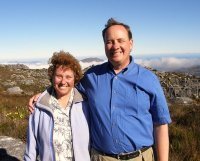
Love and marriage brought American anthropologist Elizabeth Enslin to a world she never planned to make her a life among Brahman in-laws in a remote village in the plains of Nepal. As she faced the challenges of married life, birth, and childrearing in a foreign culture, she discovered as much about human resilience, and the capacity for courage, as she did about herself.While the Gods Were A Journey Through Love and Rebellion in Nepaltells a compelling story of a woman transformed in intimate and unexpected ways. Set against the backdrop of increasing political turmoil in Nepal, Enslin’s story takes us deep into the lives of local women as they claim their rightful place in society and make their voices heard.
Elizabeth Enslin grew up in Seattle and went on to earn her PhD in cultural anthropology from Stanford University in 1990 and marry into a Brahman family in the plains of Nepal. Inspired by local women, especially her mother-in-law, she researched women’s organizing, poetics and politics and agro-ecology. Her creative nonfiction and poetry appear in The Gettysburg Review, Crab Orchard Review, The High Desert Journal, The Raven Chronicles, Opium Magazine and In Posse Review. Recognition includes an Individual Artist Fellowship Award from the Oregon Arts Commission and an Honorable Mention for the Pushcart Prize. She currently lives in a strawbale house in the canyon country of northeastern Oregon, where she raises garlic, pigs and yaks. Learn more at www.elizabethenslin.com
It was quite the unexpected delight to find this book on the shelves at Mandala Book Point there on Kantipath the last time we were in Kathmandu a few years ago. Over the last three decades, we’d lost track of Elizabeth Enslin and Pramod Parajuli, friends we’d made in Iowa City when we were just back from Nepal after my two years in the Peace Corps, living in my parents’ basement, I, looking for some kind of permanent teaching job to prove to my wife I wasn’t some worthless putz she’d agreed to marry, and she, trying to puzzle out the strange new world she had stepped into. Shashi took a quick liking to American football, but found most of the crap we call food here rather unpalatable. It’s been an adventure for her and for me. Thirty-two years later, she still loves football and hates American food, and fortunately we haven’t lived in a basement for quite some time now.
I mention all of this because Enslin’s book tells her own story of crossing cultural boundaries and moving to a new world in Nepal’s Terai, where she learns to find her way and feel at home as well. Enslin is an anthropology student; her husband is an academic teaching in the U.S., and their relationship takes them to live in Pramod’s Brahmin village in the district of Chitwan in the late ‘80s, roughly the same time I was teaching in the hills of Eastern Nepal. The Terai is the hot, flat jungle border region between Nepal and India, not the more familiar Nepal of Naamche Bazaar, Mount Everest, and the Sherpas, the Nepal most Westerners think of, if they ever happen to think of Nepal at all.
In this new world of her husband’s village, Enslin lives with his family and makes connections with the women there during this key point in Nepal’s socio-political recent past. It is a time of growing social and political consciousness; women’s rights are expanding and the democracy movement is gathering strength. In a few short years the king will officially allow political parties to exist, and the first democratically elected government will come to power. The People’s War follows and brings greater reform to the country. And today the President of Nepal is a woman. The world of Nepal Enslin describes in the book is merely on the cusp of even imagining such progress, and Enslin brings to life her time in her husband’s village among the women she meets there with a great eye to detail. I would be remiss but if I fail to mention that Enslin gives birth while living in the Terai, an experience which very few American women can claim!
The summer I found this book at Mandala Books, I was with family in Kathmandu and then traveling the country with little time or interest in writing a review. I don’t know why now three years later today it popped into my head to take care of that lapse on my part, but I recall our relationship in Iowa City with Elizabeth and Pramod quite fondly. I can picture Elizabeth at my parents’ house sitting at the kitchen table where Shashi was tutoring her in Nepali during those meager years of our life. We have come a long ways since those days, as has the country of Nepal. I am happy today to be able to recommend Enslin’s book to readers looking to understand a part of Nepal’s fascinating fabric of life that often gets overshadowed by its hills and mountains to the north.
I was fascinated by the premise of While the Gods Were Sleeping. A young American anthropology student finds herself pregnant and living with her husband’s family in Chitwan, Nepal in the 1980’s.
I anticipated a light-hearted memoir of cultural differences, self-discovery and perhaps acceptance, however the book tends to focus on the political and feminist struggles of the women in Nepal at that time. Of course this is a worthy and important issue and Eslin was well-placed and qualified to learn about women and their situation in a unique and little-documented part of the world. I found the tone too heavy for a memoir though and at times I felt like I was reading a thesis. Eslin doesn’t stray from her profession as an anthropologist to write personally enough for me. I wanted to know more about Enslin’s relationship with her husband, her attitude to motherhood and what she really felt about her Nepalese family. Rather, she focused on the socio-political turmoil of Nepal at that time. Enslin is most believable when she describes her struggle to embrace her seemingly advantageous position of living in Nepal with a local family and her longing for an unrequited desire to live and work as an anthropologist in East Africa.
After a wonderful, inspiring vacation in Africa, anthropology student Elizabeth Enslin decided she wanted to do her field work research there, romantically picturing herself living among and studying women involved in revolutionary or liberation movements, but then she married a man from the Himalayan nation of Nepal and not only did her focus have to shift, after living with her husband’s extended family of Brahmin caste farmers in a compound without electricity or indoor plumbing she discovered that being embedded in another culture is nothing like a holiday visit. Especially when you’re pregnant, a natural introvert, and can’t quite figure out how the unwieldy world you’re now part of can be filtered into a doctoral thesis project.
This is at least a three-fold book, part personal memoir of early married life, part story of an aspiring anthropologist trying to find her way in a new culture, and part intimately researched study of Nepal during a time of political turmoil, especially looking at the evolving and for me sometimes surprising roles of women, caste, and class. As a westerner and a non-Brahmin, Enslin feels her outsider status acutely. It confers a prestige that as an anti-imperialist academic she doesn’t want to exploit, but it also means that even in her husband’s fairly liberal family she’s not considered pure enough to help prepare their food--when she sees a pot boiling over on the stove she has to shout and point to it, but not touch it and thereby pollute the meal. Though not a lighthearted lark, While the Gods Were Sleeping utterly fascinated me.
I read an advanced review ebook copy of this book provided by the publisher through NetGalley. The opinions are mine.
A tourist is always appreciative; an author is always romantic but Elizabeth Enslin in an anthropologist throughout, I love how she sees Nepal as a foreign Buhari; with all its strength and weaknesses and I loved the ending; how she closes the circle of her dissatisfaction through patience and understanding!
I couldn't finish this book. There were three different books trying to be one book, a memoir, a doctoral research paper and a political statement. They did not combine well and I gave up halfway through.
A very interesting remembrance of a young mother and anthropologist's time living in Nepal. I loved the first 2 parts, riveted by the challenges the author faced leaving the comfort of her college life and trying to immerse herself in a new culture. But I found the 3rd section to be a little disjointed and the conclusions forced. There was also a certain amount of emotional distance in the text, which may be in part because of the author's background as an anthropologist, or simply because so much time has past since the events that took place in the book. Despite this, it was still a pretty interesting read!
This is first and foremost an anthropologist's story, which means it isn't really a light read. The author recounts her journey from being a young grad student (working on her PhD at Stanford) who fell in love with a Nepali man, changed her own course of study in order to follow him to India, and eventually married him and lived with his family in the lowlands of Nepal. She had her son in Nepal and her birth experience, with a long and painful labor that began in a loft above a buffalo shed and ended in a third-world hospital, is woven throughout the text. This book is as much about her professional development as an anthropologist as it is about the people she researched. In the end, after some false starts, she focused on the women of Nepal, so there are many scenes of village meetings asking for a meeting hall for women to be built in the 1990s, her study of her mother-in-law's creation of songs and poems with a political message, as well as other issues affecting Nepali women at that time. The material is interesting, but not particularly engaging. It has a sort of academic dryness. I have to say though, she is a women with spunk. Laboring in a buffalo shed? That makes her pretty tough in my book. Her labor and delivery were apparently so painful and traumatic she never had more children. Raising her son was easier in Nepal than in the USA though. Extended families live together and the care of children is shared by all. She always had other loving hands to take over and help out, which meant she had more time for her research. In the USA, her son, who was unruly as a toddler, wasn't particularly welcome in some public settings such as restaurants. In Nepal, children were loved and always accepted. She now lives in Oregon, presumably with her husband, although the book is not clear on that. This book would appeal to anyone with an interest in Nepal, or in the study of anthropology.
Overall I found it very interesting, but a bit uneven. The ending didn’t really fit overall. Her story seemed to just... stop. Like it was missing the final chapter.
3.5 stars. "While the Gods Were Sleeping" is the story of a young woman anthropologist who follows her love first to India and then to his home country of Nepal where she studies and learns to live amongst the people of his small town. Most of the book surrounds the way that she gives birth in this environment, which is quite different than what she's used to in the United States. There is a lot of rumination on the differences between life and Nepal in life in the United States. This book would be a great choice for anyone who is interested in the nitty-gritty of traveling off the beaten path.
I was hooked by the descriptions of the the exotic setting of Nepal. I never really knew much about that country prior to reading this book. I also really like the descriptions of the author's journeys through India as well. The other uses a lot of descriptions that really made me feel as if I were in both of those countries. I thought that the author did a really good job of giving a really realistic descriptions of both of these places: both the beautiful and the harsh.
I also really like the author's descriptions of all of the different people that she meets. At first, her soon-to-be husband's family is not quite sure of what to make of those white American who finds herself in their small village. How will she fit into their community? Will she really have a place there? Will she take their son away to America? However, they are incredibly gracious and make the author feel welcome. I really liked the author's description of how these people see the world.
Overall, if you're looking for a book where you can do a steady bunch of armchair traveling, this is definitely a book that you should pick up.
How do you review someone's life story? That's the dilemma I am faced with. While I thought Elizabeth's story of life in Nepal was interesting and even eye-opening, I don't know that everyone would enjoy it. The story isn't the issue, it's how it's told. Sometimes I actually was a little bored while reading. Like I said, it was interesting subject matter though. Then I would think to myself what a horrible person I was.... how could I be bored by someone's life?! The subject of Nepal and its culture is beyond foreign to me. There's a part that was happy about that though. Nepal is a country that is not so kind toward the female population, and the laws differ so much from our own that I actually was offended a couple of times by things they consider customary. It's like all the bad stories you hear of women being treated as second-class or even worthless come to life. I was baffled why Elizabeth would agree to move there and have her child there. No amenities and very dirty circumstances instead of in North America where there is more resources and cleaner safety standards for deliveries. At least the book explains the answer to that question, and it is what made the story good. In the end, I am glad I read this book. I learned a lot about a country and culture I knew nothing of and heard another human being's story through experiences.
I read the book during our trip to Nepal. Surrounded by chaotic signs, smells, sounds, sights, driven for hours on pot-holed roads, I was eager to get the inner glimpse of this unique community. While the beginning of the book was promising, the last third - detailed descriptions of women’s conversations in the attempt to open a Centre, their political communications - was pretty boring to me. I was glad to see the author grew to love the amazing family she became a part of, but, just as she herself admits, I never felt her deep love for Nepal in this book. I think that’s exactly what influenced the writing, and the choice of details and words. Somehow, the story left me if not cold, then lukewarm. The last disappointment: the author never tells us if she is still married to Pramod. I understand she currently writes a companion volume, but since she put so much emphasis on how her mother and grandmother and father were divorcees, and the value of the family in Nepal, and considering the gaps of time she chose to spend away from her husband - I believe the reader has the right to know how this love story ended - or continued - at least in a nutshell. Even on Elizabeth’s website I could not easily find this information. I will not buy the second book from this writer.
This was the book I chose for my class preparing to travel to Nepal to give them a sense of Nepali culture. It is written by an American anthropologist, trained at Stanford, who marries a Nepali and ends up forsaking her work in East Africa in favor of studying women's organizations near her husband's village in Nepal. The book follows her transformation into a "good daughter-in-law" who fits well into her husband's family while clearly being aware of her American identity, with its limitations and source of power. The restricted role for women, along with the continuing strength of the caste system, permeate the narrative, as does the interwoven and cooperative family structure. I identified with the author, so the book worked well for me. I hope it was as useful to my undergraduates for whom dissertation committees and research proposals are much less familiar.
I first picked up this book because of a personal connection - if you've read it, you'll know a young girl named Pramila plays a decent-sized role in Enslin's experiences in Nepal. I was lucky enough to spend a few weeks living with Pramila in Nagarkot, Nepal, many years after the events of this book. It was utterly fascinating to hear about her stories growing up in Chitwan first-hand, and then again through a different, more rigorously academic lens of Enslin in the novel. Overall, this book was a fascinating insight into a culture so different from my own, and a proxy through which I can reconnect to some amazing memories I had in Nepal.
Beautifully written in many ways and descriptive with just the right touch, yet I wish I could have felt more of the love and understood more of the rebellion. I suppose the whole experience the author describes was an expression of love, but Pramod remained a distant figure through everything, so was the love only for him or for something else as well? There was a history-changing rebellion in Nepal 1990, but I'm unsure if that's the rebellion of the title or if the title is a suggestion of the editors who knew what might attract more readers.
This is a fascinating book, chock full of so many aspects of life: love, identity, history, culture. Many of the reviews here describe the book, so I won't go into those details. What I want to note those is the honest way, Enslin examines what it is like to have your plans shift for love, to learn to be flexible in the shifting, what it is like to be "other," and to have to face yourself in the powerful moments. Aside from this I love a book that takes me somewhere new, takes me deep inside while still acknowledging being an outsider, witnessing and experiencing at the same time.
This wasn't quite what I was expecting. While it was a biography of the author's time in Nepal, it was also heavy on the anthropology. I have to admit I wasn't as interested in that aspect. I was more interested in the stories of her family and the other villagers and bored when she went on about her studies etc. Also, a family tree might have been helpful. All the siblings and their children got a little confusing.
this book was given to me by netgalley for a honest review.. interesting read about a woman's journey staying in Nepal with her husband's family and giving birth with the backdrop of doing her Phd and noticing the oppression of women in then Nepal and helping them with literacy and numeracy skills. one problem had with the book was it seemed a bit flat in parts and would of enjoyed more family interactions.
magyarul ("Amíg az istenek aludtak") - Az írónő antropológus a 80-as évek elején élt Nepálban a nepáli férjével. Erről az időszakról szól a könyv, amely angolul 2014-ben jelent meg... jócskán megkésve. Megmosolyogtató volt olvasni az akkoriban a Stanfordon phd-ző diák messianisztikus-kommunisztikus elképzeléseit a világ megváltásáról. Nem volt olyan érdekes, hogy befejezzem, a könyv kétharmadánál abbahagytam.
मानवशास्त्री एलिजाबेथ एन्स्लिनको जीवनकथा बडो रोचक छ। अमेरिकामा जन्मी हुर्केर आफ्नो रुचि अनुसार विश्वविद्यालयमा अध्ययन गरिरहेकी यी बौद्धिक लेखकको भेट एक नेपाली युवकसँग हुन्छ। उस्तै प्रखर विचारक युवकसँग मन मिलेपछि एकपल्ट नेपाल पनि आउँछिन्। घुमफिर गर्न र नौलो संस्कृति बुझ्न रमाइलो लागे पनि फर्केर पढाइमै तल्लीन हुन्छिन्। आफ्नो देशमा जस्तो कुनै भौतिक सुख सुविधा नभएको चितवनको सानो गाउँमा एउटा संयुक्त परिवारमा बस्ने उनले कल्पना पनि गरेकी हुन्नन्।
जीवनमा नसोचेका कुरा भइदिन्छन्। परिस्थितिवश एन्स्लिन आफ्ना पतिसँगै नेपाल फर्किन्छिन् र गुन्जनगर बस्तीको बाहुन परिवारको ग्वालीको माथिल्लो तल्लामा आएर बस्छिन्। उनलाई पायक पर्ने शौचालय पनि नभएको ठाउँमा बस्न आउनुमा उनको एउटा स्वार्थ हुन्छ, मानवशास्त्री भएको हैसियतले उनी त्यहाँका रीतिथिति बुझ्न चाहन्छिन् अनि त्यसै मेलोमा एउटा विषयवस्तुको छनोट गरी शोधपत्र पनि पूरा गर्न चाहन्छिन्। यसलाई रचनाकारको बहादुरी नै मान्नुपर्छ, आजभन्दा तीन दशकअघि धुलाम्मे सडक भएको गाउँमा पुग्छिन्, आफूभन्दा पूरै फरक परिवारसँग भिज्ने कोसिस गर्छिन् र आफ्नो सन्तानलाई घरमै जन्म दिने आँट पनि देखाउँछिन्।
यहीँ रहँदा बस्दा उनी समाजका विभेदलाई नजिकैबाट छाम्छिन्, पिछडिएका महिलाका दु:खबारे थाहा पाएर तिनलाई आड दिने प्रयास गर्छिन्, आफ्नी सासूले भाका मिलाएर गाउने गीतमा जीवनको लय भेट्छिन्। यिनै भोगाइका कोलाजलाई जतनसाथ समेटेर पुस्तक नै तयार पार्छिन्, ह्वाइल द गड्स वेर स्लिपिङ : अ जर्नी थु्र लभ एन्ड रिबेलियन इन नेपाल। आफूलाई घेरेको परिवार र समाजका सदस्यको बदलिँदो गतिविधिसँग एन्स्लिनले नेपालमा विभिन्न समयमा भएका राजनीतिक, सामाजिक एवं आर्थिक परिवर्तनलाई जोडेकी छिन्। यसर्थ नितान्त व्यक्तिगत अनुभव भए पनि पुस्तकले विस्तृत पृष्ठभूमि अँगालेको छ।
एन्स्लिनको लेखनीको सबैभन्दा सशक्त पाटो उनको इमानदारी हो। अप्ठ्यारा कुरा ढाकछोप गर्ने वा आफूलाई चित्त नबुझेका कुरालाई लिपपोत गरी प्रस्तुत गर्ने प्रयास उनले गरेकी छैनन्। परिवारका सदस्यसँग रिस पोखेकै छिन्, रूढीवादी संस्कारविरुद्ध असहमति जनाएकै छिन् र आफ्ना मनमा उब्जेका असन्तोष अनि असुरक्षाका भावनालाई पनि स्पष्ट पारेकी छन्। उनले मन यतिसम्म उदांग पारेकी छन् कि आफैँलाई प्रश्न र प्रतिप्रश्न गर्छिन्। आफ्नो हेराइ र लेखाइले गलत सन्देश नजाओस् र नेपाली चालचलनको मर्म नमरोस् भनेर उनी सजग छिन्।
गाउँले जीवनका सुन्दर पक्षलाई सूक्ष्म ढंगले उतारिएको छ, पुस्तकमा। गाउँघरका चाडबाड, अर्मपर्म, सामाजिक बनावट, महिलाका समस्या र दैनिक जनजीवनलाई सरल तर सरस भाषामा प्रस्तुत गरिएको छ। विशेष गरी सासू पार्वती पराजुलीको चरित्र चित्रण साह्रै निष्ठापूर्वक गरेकी छन्। प्राय: विदेशी लेखकले जतिसुकै शोध र अनुसन्धान गरे पनि कतिपयको बुझाइ सतही मात्र हुन्छ अनि सामान्य घटनालाई पनि अतिरञ्जित गर्ने र नेपाललाई कुनै अर्कै ग्रहको अलौकिक देशका रूपमा देखाउने होडबाजी चल्छ। तर, एन्स्लिनले वर्षौं नेपालकै रहनसहनमा डुबेर होला, यसको प्रस्तुतिमा पनि न्याय गर्न सकेकी छन्। त्यति मात्र होइन, एन्स्लिनले आफूले देखेका र भोगेका कुरालाई विभिन्न दृष्टिकोणबाट केलाएर, उदाहरण दिएर, त्यसमाथि शोध गरेर सामान्य घटनालाई पनि नौलो पारामा पाठकसामु प्रस्तुत गरेकी छन्। उनको गहन विश्लेषण पढिसकेर यस्तो फरक तरिकाले पनि सोच्न सकिन्छ भनेर पाठ नै मिल्छ।
उसो त संस्मरणको विषयवस्तु आकर्षक हुँदाहुँदै पनि यो एउटै गति र सारमा अघि बढ्न सकेको छैन। बाटो हराएको यात्रीझैँ बेलाबेलामा यसका घटनाक्रम बरालिन्छन्। कहिले लेखक आफ्नै विचार राख्न थाल्छिन् त कहिले कुनै असम्बन्धित घटनातर्फ फड्को मार्छिन्। अनेक टुक्राटाक्री ल्याएर कथामा जोडिएको छ। यसो गर्दा एकसुरमा पढिरहेको पाठकको ध्यान खलबलिन्छ र घटनाहरूबीचको सम्बन्ध अनि समय खुट्याउन पनि गाह्रो पर्छ। अझ संस्मरणमै रमाइरहेका पाठकलाई प्राविधिक शब्द र सिद्धान्तले झिँझो नै लगाउन सक्छ। समाजशास्त्र वा इतिहासमा रुचि भए त पुस्तक उपयोगी हुन्छ तर यसलाई वैयक्तिक अभिव्यक्ति मानेर रस लिइरहेका पाठकले भने कैयौँ पृष्ठ नपढी पल्टाउने डर हुन्छ।
तीन खण्डमा बाँडिएको पुस्तकमा पहिलो र दोस्रो खण्डको बनोट राम्रो छ : तिनमा कथा सहजै अघि बढ्छन्। तर, अन्त्यतिर आइपुग्दा लेखकलाई हतारो भएजस्तो लाग्छ। उनी घटनाहरूलाई समेट्न छाडेर लेखनी टुंग्याउन हतारिन्छिन्। यसले गर्दा केही प्रश्नको उत्तर खोजिरहेका र संस्मरण एउटा निष्कर्ष वा निचोड पर्खिरहेका पाठक निराश हुन पुग्छन्। अर्को महत्त्वपूर्ण कुरा, पुस्तक र यसको शीर्षकबीच कुनै तालमेल छैन।
अलि अगाडिको समयमा हाम्रो देशलाई नयाँ आँखाले हेर्ने रहर जागेका पाठकलाई यो पुस्तक उपयुक्त छ। भाषा, संस्कृति र धर्मका भिन्नतालाई चिर्दै यहाँ आएर आफ्नो घरगृहस्थी सम्हालेकी महिलाको कथा र उनका गहकिला विचार पढेर निकै कुरा सिकिन्छ। एन्स्लिनको मिहिनेत र लगन हरेक पृष्ठमा प्रयुक्त संवादमा भेटिन्छ, उनले संकलन गरेका मौलिक नेपाली गीतमा झल्किन्छ, उनले ध्यानपूर्वक बुनेको नयाँ संसारमा देखिन्छ। नेपाली समाजको नालीबेलीबारे जान्न पनि पुस्तक पढिनु र यसबारे विचार विमर्श गरिनु आवश्यक छ।
Elizabeth Enslin begins her memoir with the story of her son's birth in a small village in Nepal in 1987. After a long labor that wasn't progressing, she takes off through the rural roads of Nepal to the nearest hospital, which was her last choice in her options for giving birth. As Enslin reflects on this day, she sees her 6 years in Nepal in a whole new light and takes the readers through her arrival and years in Nepal. She eventually returns to the states, even spending a brief time in Iowa City while her husband studied at the University of Iowa. This memoir explores her journey as an anthropologist, as a wife of a Nepali, and as a mother.
Elizabeth Enslin and her husband Pramod travel to his home country Nepal as anthropologists. She meets his family for the first time and moves in with his parents and their extended family. She learns the cultural restrictions and norms for women and daughter-in-laws, and adjusts to the primitive lifestyle. Her doctoral study takes on a new focus and through her life in Nepal we learn much about the challenges for women in Nepal, the strong family ties and love of culture, and their resilience for a better future.
Enslin's memoir is quite fascinating, yet parts of it read like a research paper. Some sections were more readable than others. I preferred the parts of the book where she shared snippets of emotion and real life in Nepal. I ended up skimming sections that were heavy in political and anthropological notes where she ventured deep into the research and less into the stories. I also became frustrated with the political piece, especially when much of it wasn't resolved. The constant battle between men and women, between cultural and religious expectations and the different castes were constant road blocks in making any progress. I was especially interested in the tales of pregnancy and delivery, women's issues, the realities of domestic violence, the harsh living conditions, and the various cultural restrictions for women in Nepal. Hearing real concerns, stories, and descriptions of daily life remind me to appreciate the freedoms and choices we have here in America.
I was disappointed that there wasn't some sort of "update" at the end of the book related to the many members of their family. This book was written about her life in the late 1980's and early 1990's. I am curious to know how some of the family fared, especially Aama, the author's mother-in-law. What has happened to the author and her family now that they are living in the US? What has happened to Pramod's family and the culture for women in Nepal now that it is 2014. The only information we have on Enslin is that she is living in a strawbale house in Oregon. A brief epilogue at the end of the book would have given the reader a update on the people of Nepal twenty years later. Maybe this is something that could be offered on the author's website.
If you find learning about other cultures, women's studies, and travel interesting, WHILE THE GODS WERE SLEEPING might be a book for you. A portion of the processed from this book will be donated to the Rural Health Education Service Trust (RHEST) for projects dedicated to improving women's reproductive health in rural Nepal.
I read While the Gods Were Sleeping: A Journey Through Love and Rebellion in Nepal as part of my book club.
Shortly before I started reading it, a massive earthquake hit Nepal, killing more than 8,800 people and injuring more than 23,000. My thoughts immediately went to my Nepali friend and co-worker, because many of her loved ones are still living in Nepal. Luckily, her village was largely spared and she didn't lose anyone close to her. But the devastation in Nepal still occupied my thoughts as I read this book.
While the Gods Were Sleeping is a memoir by anthropologist Elizabeth Enslin. Love and marriage led her to a life among Brahman in-laws in a remote village in the plains of Nepal, where she faced the challenges of married life, birth and childrearing in a foreign culture during increasing political turmoil.
If only the book had been as interesting as that brief synopsis makes it sound.
I really wanted to like this book, and I kept reading to the bitter end despite wanting to give it up about a third of the way through. Although I found some sections about the Nepali culture quite fascinating, the vast majority of it read like a research paper. And when Enslin's voice did come through, it was that of a whiny, spoiled, self-indulgent woman who had no true appreciation of this tremendous opportunity as an anthropologist (and a mother).
I was very interested in the tales of pregnancy and delivery, women's issues, domestic violence, harsh living conditions, and the various cultural restrictions for women in Nepal. The constant battles between men and women, cultural and religious expectations and the caste system in general really reminded me to appreciate the freedoms and choices we have here in America.
I preferred the parts of the book where Enslin shared snippets of emotion and real life in Nepal. But unfortunately these were brief sections in between ones that were heavy in political and anthropological notes where she ventured deep into the research and less into the stories, so I ended up skimming a lot.
I was also disappointed that there wasn't some sort of update at the end of the book related to the many members of Enslin's husband's family. The story ends in the early 1990s, and I'm curious to know how their lives unfolded. Even a brief epilogue would have been nice.
Enslin was presented with the unique life opportunity to fully immerse herself into Nepali culture, but in my opinion she wasted it. I disliked her writing style and did not have much respect for her as a person, so this book was not for me.
I'd still love to visit Nepal someday though, and my thoughts are with those who are dealing with the aftermath of the country's recent tragedy.
Other cultures fascinate me, especially their family traditions, structures, and day to day life. I have often wondered what it would be like to be transplanted into the society of another country totally unlike mine. I was able to experience this through Ms. Enslin’s very interesting biography. Even more of a bonus to me, it was through the eyes of a woman. Elizabeth loved anthropology and her burning desire was to live in Africa and do research among the women there. When she fell in love with Pramod Parajuli at Stanford University, she never dreamed she would find herself in Nepal living with his family. It is one thing to go and study people in a foreign country, but it is quite another to become an intimate part of them as a family member. I learned so much about the Hindu faith and culture. She was a brave and adaptable woman, both emotionally and physically. While his family lovingly accepted her, their strict Hindu practices kept her at arm’s length in some areas of their lives. She is not pure enough to help with meals or even remove a pot from the stove that is boiling over. If she did the meal would have to be thrown out and remade. Yet in other areas she must follow the guidelines as a daughter-in-law and family member consistent with their society. Upon arriving she knew little of the language. She also had to deal with very crude living conditions, no indoor plumbing, appliances, heating or air-conditioning, monsoons. Add to this experience being pregnant! She and Pramod decided to move into the loft in the barn over the livestock for more privacy. Their only access was a narrow ladder. Their room had the added company of scorpions, spiders, not to mention the aroma of the buffalo below. It was here she went into labor. Complications necessitated she be taken by a hospital several miles away. In unsanitary conditions with limited medical help she gave birth to a small baby boy. After that she was thrown into raising a child in this Brahman civilization. This gave yet another personal viewpoint, I have rarely seen written about. She adjusted beautifully. I personally would have been terrified in every way. I cannot begin to explain the many facets of life in Nepal that Ms. Enslin’s book thoroughly reveals. I learned not only about the family and the Hindu faith, but also about political conditions past and present, the life of the women, responsibilities, hardships, their viewpoints on life, recreation, and more. You really do want to read this book! I received this book free from FBS Associates, which requires an honest, though not necessarily positive, review. The opinions I have expressed are my own.
As they say... third time's a charm... and so it was for my third attempt to read Elizabeth Enslin's While The Gods Were Sleeping. It didn't work the first two times but this third time, embarrassingly long after the powers that be were kind enough to grant me an ARC, hit the mark and I fell deep into Enslin's account of life in Nepal.
The first plus of the story is that I know very little of Nepal. I read about the massacre of King Birendra, Queen Aishwarya, and other members of their family at the height of my fascination with all things royal. And then I never knew much more, saving for passing news articles about Living Goddesses and social reforms.
The family that Enslin married into was part of the Brahman caste, and while one of the more well-known castes, I still learned a lot from almost living vicariously through them and their interactions with Enslin. The role of women in the family, how foreigners fit or don't fit... it was enlightening.
Enslin is, was... I'm not sure what she does now... an anthropologist and she made a study of the women in Nepal. Their roles in the family, their fight for roles outside the family... seeing these things through their songs and poems and speeches was honestly inspiring.
One thing I wanted more of was Aama, Enslin's mother-in-law. She was a strong, feisty woman who, at the end of the account, was working to set her life story down to be remembered. I would read that story in a heartbeat.
If you want to read a non-fiction book that focuses on the role and the strength of women in a Third World country, I cannot recommend this book enough.
(I received a copy of While The Gods Were Sleeping from NetGalley in exchange for an honest and original review. Apologies to the author and Seal Press for the very belated review.)
I loved the photo cover for this book! That girl drew me and convinced me that this was a book I needed to read. I really wanted to love this book, and I kept reading to the bitter end despite wanting to give it up about 2/3 of the way through. However at the end the story just fell flat for me. Maybe I wanted more than the book could give, maybe I had expectations of some grand revelation, or maybe I just missed the point. What I loved best is how raw and relatable Enslin is throughout the memoir. I enjoyed reading about Enslin’s experiences in Nepal and how the women worked together (or at times against each other). As a mother I appreciated the comparisons of child rearing in US to those in Nepal. In particular Enslin’s thoughts and realizations regarding her personal experiences of childbirth and letting go of some of her hang-ups about that event were insightful. At the end I felt let down that the book didn’t wrap up with something bigger and perhaps that is more a projection of my expectations when in fact I should be celebrating the courage of these women in taking the risk to learn and unite. The more I think about this the more I realize that I probably didn’t give the book a fair chance because I wanted it to be more. I received a copy of this book from NetGalley.com in exchange for an honest review and that is what this is. I am still on the fence about this book.
I wanted to re-read the description of this book to make sure I hadn't just been careless when I first checked it out. But no, it markets this book as a memoir of a woman's life in Nepal. And there's some of that, to be fair--the birth of her half-Nepali son in rural Nepal is a framing device for the book, and we do delve somewhat into her relationship with her husband. But he drops out of the book except for brief passing references after they arrive in Nepal.
A great deal of the book involves Enslin deciding what she wants her anthropology doctoral thesis to be. Which is exactly as irritating as it sounds. She also follows several local women's movements which rely heavily on knowledge of Nepali history and political parties, which she never really gives thoroughly. And throughout, she keeps admitting she doesn't (or didn't) know much about Nepal. Even the title is weird because one of the last bits of the book is her talking about how little she learned about Hindu deities during her time in Nepal.
It's not that the anthropological stuff is boring, but it definitely reads more like thesis than memoir, which is not what I'm looking for in my leisure reading. And all mixed up with the personal stuff, I never really knew what I was going to get when I sat down to read.
Yeah. Weird book. Description is not an accurate representation.
Writing a review about this book pulls me as a reader in different directions. One concerns the intrinsic merit of the author as a writer, and that aspect deserves credit for sharing personal memories and for her distinctive and individual style. The book gives form to one's preconceived ideas of hearsay by confirming realities. The author shares knowledge and information gained through experience and her credibility as a reliable narrator gives magnetic power to her recollections. Her memoirs alone shape the density of the content leaving no need for the political information, which eclipsed at times the truly interesting parts of her story: her candid and photographic account of her life as a foreigner in Nepal. Had she stuck with the original streamline of her observations without the political sidetracking and I would have shelved the book alongside my classics. It is haunting, and she tells her story with grammatical poise. The distressing part of reviewing this book concerns the objective challenge to judge it as a triumph when it deals with the harrowing truth of women's oppression. A truth raw in some countries because of its primitive cruelty in utter poverty, but no less painful or real in other parts of the world where it is glossed over by facades that capitalism isn't wide enough to cover. The gods are still sleeping and the curse is not over.
The anthropologist Elizabeth Enslin was focusing on African cultures when she meets her future husband und therefore shifts her attention to Nepal. In his home village she fully immerses in the old and traditional culture which provides her with deep insight in a very new way of living. Especially the role of women and the caste system have a lot of astonishing aspects to offer which sometimes led her to seriously question her decision for living there.
Apart from some funny, astonishing and sometimes appalling anecdotes, what I really appreciated about the book was the personal experience and way Elizabeth Enslin shares them with the readers. Each piece of the puzzle adds to forming a whole picture of a very different culture which still works according to its own, old traditions and habits which sometimes seem to be completely out of space. Additionally, it was very informative and to learn about the structures and especially about the language, this was the most interesting part for study for me. Above all, the slow progress of women towards independence and more rights and the struggle connected with this were very illustrating for readers who happen to live in a society were equal rights and treatment are not questioned anymore.
A few weeks ago, I embarked on a project at work that revolved around the economy of Nepal’s terai region. I was apprehensive because all of the work that I had done in the past involved topics and places that I was familiar with, and now I was going to be studying an area about which I knew nothing. I scanned the internet and found little, so I looked for some books that might give me more insight. Most of the literature focuses on Nepal’s most iconic area–the Himalayan mountains. I could find little written about life in Nepal’s terai. One book however, caught my eye–Elizabeth Enslin’s While The Gods Were Sleeping. Although the book focuses on women’s issues in the area, Enslin is an anthropologist, so I suspected that she would also describe the life of agricultural workers in this area, which she did. The book takes place in the late 1980s and early 1990s. Nepal was changing at that time and has continued to change since then, so everything that was written may be dated, but it is the best resource for now.