

What do you think?
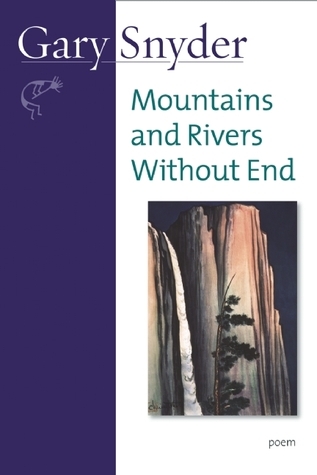
Mountains and Rivers Without End: Poem
In simple, striking verse, legendary poet Gary Snyder weaves an epic discourse on the topics of geology, prehistory, and mythology. First published in 1996, this landmark work encompasses Asian artistic traditions, as well as Native American storytelling and Zen Buddhist philosophy, and celebrates the disparate elements of the Earth — sky, rock, water — while exploring the human connection to nature with stunning wisdom. Winner of the Bollingen Poetry Prize, the Robert Kirsch Lifetime Achievement Award, and the Orion Society's John Hay Award, among others, Gary Snyder finds his quiet brilliance celebrated in this new edition of one of his most treasured works.
192 pages, Paperback
First published January 1, 1996
About the author
Gary Snyder
336 books670 followersGary Snyder is an American poet, essayist, lecturer, and environmental activist. His early poetry has been associated with the Beat Generation and the San Francisco Renaissance and he has been described as the "poet laureate of Deep Ecology". Snyder is a winner of a Pulitzer Prize for Poetry and the American Book Award. His work, in his various roles, reflects an immersion in both Buddhist spirituality and nature. He has translated literature into English from ancient Chinese and modern Japanese. For many years, Snyder was an academic at the University of California, Davis, and for a time served as a member of the California Arts Council.
Ratings & Reviews
Friends & Following
Create a free account to discover what your friends think of this book!
Community Reviews
Displaying 1 - 30 of 80 reviews

November 6, 2015
I first met Gary Snyder in person in the winter of 1976 in Grand Rapids, Michigan, at my alma mater, Calvin College. The previous year, when I had been the Writers Guild chairman, we had invited in three writers, the novelist Chaim Potok who was the first rabbi to speak on Calvin’s campus, the beat poet Lawrence Ferlinghetti, and the Black Mountain poet Robert Creeley. The following year, Snyder came in. His reading was typically gentle and almost aphoristic, unassuming. When we talked with him afterwards some of us who were studying the problem of world hunger asked him what he would do with what seemed like an intractable problem. He replied that it was mostly a problem of will, as human ingenuity was capable of dealing with it. He said, “You can see if you fly in to an airport; the solution presents itself to you immediately, it shouts out to you: All these finely manicured lawns, highly fertilized, well watered. Instead of raising crops, we water lawns as an increasing number of the world starves.”
Gary Snyder is an American poet once associated with the Beats (buddies with Philip Whalen, Allen Ginsburg and Jack Kerouac--Snyder was Japhy Rider in The Dharma Bums!!), an essayist and environmental activist. Snyder has sometimes been described as the 'laureate of Deep Ecology'. His work reflects his immersion in both Buddhist spirituality and nature, and his poetics are grounded in ordinary speech patterns rather than forms like the sonnet or even haiku, though he more than anyone else brought haiku and other Japanese forms into the U.S. and the west generally, and much work by Ginsburg and Kerouac and others was much influenced over time by Snyder’s introduction to eastern religion and culture.
Some of my favorite collections of poetry include Myths and Texts (1960), Regarding Wave (1969), Turtle Island (1974), The Old Ways (1977) and Practice of the Wild (1990), but in many ways his magnum opus is the text he worked on for four decades, Mountains and Rivers Without End, finally completed in 1996.
"I have some concerns that I'm continually investigating that tie together biology, mysticism, prehistory and general systems theory,” he once said, but the poetry itself never feels this heady. It’s common language and not obviously shaped. It proceeds out of the every day. Existential, of today, as is the Zen Buddhism he practiced. This book is not my absolute favorite, not as intimate-seeming for me as Turtle Island or The Old Ways, but it is impressive, scanning the concerns of much of his career. An essay Snyder writes as an appendix explains how the text came to be written and many of its sources in Japanese art and culture that he began studying as an undergrad at Reed College. The heart of it is about mountains and rivers of the Pacific Northwest and the Sierra Nevada, where he has been living since 1970. It’s one long poem, finally, a kind of sutra, “an extended poetic, philosophic and mythic narrative of the female Buddha Tara.”
I first read it when it came out in 1996, and now for a second time, over a month in reading, a poem or so a day. I made a commitment to reread it ever since I passed near his home through the mountains in late August of the past year. I also read his Danger on Peaks (2004). If you are looking for poetry of nature, with a Buddhist sensibility, check out Snyder. He’s a spiritual poet, a poet of the mountains and rivers and soul. I’d love to see him again, but here I (and you) can hear him:
Gary Snyder at 84 on NPR: http://www.npr.org/2015/04/18/4005736...
How Poetry Comes to Me
Gary Snyder
It comes blundering over the
Boulders at night, it stays
Frightened outside the
Range of my campfire
I go to meet it at the
Edge of the light
• Stats
-bar
Finding the Space in the Heart
Gary Snyder
I first saw it in the sixties,
driving a Volkswagen camper
with a fierce gay poet and a
lovely but dangerous girl with a husky voice,
we came down from Canada
on the dry east side of the ranges. Grand Coulee, Blue
Mountains, lava flow caves,
the Alvord desert—pronghorn ranges—
and the glittering obsidian-paved
dirt track toward Vya,
seldom-seen roads late September and
thick frost at dawn; then
follow a canyon and suddenly open to
silvery flats that curved over the edge
O, ah! The
awareness of emptiness
brings forth a heart of compassion!
We followed the rim of the playa
to a bar where the roads end
and over a pass into Pyramid Lake
from the Smoke Creek side,
by the ranches of wizards
who follow the tipi path.
The next day we reached San Francisco
in a time when it seemed
the world might head a new way.
And again, in the seventies, back from
Montana, I recklessly pulled off the highway
took a dirt track onto the flats,
got stuck—scared the kids—slept the night,
and the next day sucked free and went on.
Fifteen years passed. In the eighties
With my lover I went where the roads end.
Walked the hills for a day,
looked out where it all drops away,
discovered a path
of carved stone inscriptions tucked into the sagebrush
"Stomp out greed"
"The best things in life are not things"
words placed by an old desert sage.
Faint shorelines seen high on these slopes,
long gone Lake Lahontan,
cutthroat trout spirit in silt—
Columbian Mammoth bones
four hundred feet up on the wave-etched
beach ledge; curly-horned
desert sheep outlines pecked into the rock,
and turned the truck onto the playa
heading for know-not,
bone-gray dust boiling and billowing,
mile after mile, trackless and featureless,
let the car coast to a halt
on the crazed cracked
flat hard face where
winter snow spirals, and
summer sun bakes like a kiln.
Off nowhere, to be or not be,
all equal, far reaches, no bounds.
Sound swallowed away
no waters, no mountains, no
bush no grass and
because no grass
no shade but your shadow.
No flatness because no not-flatness.
No loss, no gain. So—
nothing in the way!
—the ground is the sky
the sky is the ground,
no place between, just
wind-whip breeze,
tent-mouth leeward,
time being here.
We meet heart to heart,
leg hard-twined to leg,
with a kiss that goes to the bone.
Dawn sun comes straight in the eye. The tooth
of a far peak called King Lear.
Now in the nineties desert night
—my lover's my wife—
old friends, old trucks, drawn around;
great arcs of kids on bikes out there in darkness
no lights—just planet Venus glinting
by the calyx crescent moon,
and tasting grasshoppers roasted in a pan.
They all somehow swarm down here—
sons and daughters in the circle
eating grasshoppers grimacing,
singing sūtras for the insects in the wilderness,
—the wideness, the
foolish loving spaces
full of heart.
Walking on walking,
under foot earth turns
Streams and mountains never stay the same.
The space goes on.
But the wet black brush
tip drawn to a point,
lifts away.
Gary Snyder is an American poet once associated with the Beats (buddies with Philip Whalen, Allen Ginsburg and Jack Kerouac--Snyder was Japhy Rider in The Dharma Bums!!), an essayist and environmental activist. Snyder has sometimes been described as the 'laureate of Deep Ecology'. His work reflects his immersion in both Buddhist spirituality and nature, and his poetics are grounded in ordinary speech patterns rather than forms like the sonnet or even haiku, though he more than anyone else brought haiku and other Japanese forms into the U.S. and the west generally, and much work by Ginsburg and Kerouac and others was much influenced over time by Snyder’s introduction to eastern religion and culture.
Some of my favorite collections of poetry include Myths and Texts (1960), Regarding Wave (1969), Turtle Island (1974), The Old Ways (1977) and Practice of the Wild (1990), but in many ways his magnum opus is the text he worked on for four decades, Mountains and Rivers Without End, finally completed in 1996.
"I have some concerns that I'm continually investigating that tie together biology, mysticism, prehistory and general systems theory,” he once said, but the poetry itself never feels this heady. It’s common language and not obviously shaped. It proceeds out of the every day. Existential, of today, as is the Zen Buddhism he practiced. This book is not my absolute favorite, not as intimate-seeming for me as Turtle Island or The Old Ways, but it is impressive, scanning the concerns of much of his career. An essay Snyder writes as an appendix explains how the text came to be written and many of its sources in Japanese art and culture that he began studying as an undergrad at Reed College. The heart of it is about mountains and rivers of the Pacific Northwest and the Sierra Nevada, where he has been living since 1970. It’s one long poem, finally, a kind of sutra, “an extended poetic, philosophic and mythic narrative of the female Buddha Tara.”
I first read it when it came out in 1996, and now for a second time, over a month in reading, a poem or so a day. I made a commitment to reread it ever since I passed near his home through the mountains in late August of the past year. I also read his Danger on Peaks (2004). If you are looking for poetry of nature, with a Buddhist sensibility, check out Snyder. He’s a spiritual poet, a poet of the mountains and rivers and soul. I’d love to see him again, but here I (and you) can hear him:
Gary Snyder at 84 on NPR: http://www.npr.org/2015/04/18/4005736...
How Poetry Comes to Me
Gary Snyder
It comes blundering over the
Boulders at night, it stays
Frightened outside the
Range of my campfire
I go to meet it at the
Edge of the light
• Stats
-bar
Finding the Space in the Heart
Gary Snyder
I first saw it in the sixties,
driving a Volkswagen camper
with a fierce gay poet and a
lovely but dangerous girl with a husky voice,
we came down from Canada
on the dry east side of the ranges. Grand Coulee, Blue
Mountains, lava flow caves,
the Alvord desert—pronghorn ranges—
and the glittering obsidian-paved
dirt track toward Vya,
seldom-seen roads late September and
thick frost at dawn; then
follow a canyon and suddenly open to
silvery flats that curved over the edge
O, ah! The
awareness of emptiness
brings forth a heart of compassion!
We followed the rim of the playa
to a bar where the roads end
and over a pass into Pyramid Lake
from the Smoke Creek side,
by the ranches of wizards
who follow the tipi path.
The next day we reached San Francisco
in a time when it seemed
the world might head a new way.
And again, in the seventies, back from
Montana, I recklessly pulled off the highway
took a dirt track onto the flats,
got stuck—scared the kids—slept the night,
and the next day sucked free and went on.
Fifteen years passed. In the eighties
With my lover I went where the roads end.
Walked the hills for a day,
looked out where it all drops away,
discovered a path
of carved stone inscriptions tucked into the sagebrush
"Stomp out greed"
"The best things in life are not things"
words placed by an old desert sage.
Faint shorelines seen high on these slopes,
long gone Lake Lahontan,
cutthroat trout spirit in silt—
Columbian Mammoth bones
four hundred feet up on the wave-etched
beach ledge; curly-horned
desert sheep outlines pecked into the rock,
and turned the truck onto the playa
heading for know-not,
bone-gray dust boiling and billowing,
mile after mile, trackless and featureless,
let the car coast to a halt
on the crazed cracked
flat hard face where
winter snow spirals, and
summer sun bakes like a kiln.
Off nowhere, to be or not be,
all equal, far reaches, no bounds.
Sound swallowed away
no waters, no mountains, no
bush no grass and
because no grass
no shade but your shadow.
No flatness because no not-flatness.
No loss, no gain. So—
nothing in the way!
—the ground is the sky
the sky is the ground,
no place between, just
wind-whip breeze,
tent-mouth leeward,
time being here.
We meet heart to heart,
leg hard-twined to leg,
with a kiss that goes to the bone.
Dawn sun comes straight in the eye. The tooth
of a far peak called King Lear.
Now in the nineties desert night
—my lover's my wife—
old friends, old trucks, drawn around;
great arcs of kids on bikes out there in darkness
no lights—just planet Venus glinting
by the calyx crescent moon,
and tasting grasshoppers roasted in a pan.
They all somehow swarm down here—
sons and daughters in the circle
eating grasshoppers grimacing,
singing sūtras for the insects in the wilderness,
—the wideness, the
foolish loving spaces
full of heart.
Walking on walking,
under foot earth turns
Streams and mountains never stay the same.
The space goes on.
But the wet black brush
tip drawn to a point,
lifts away.

July 20, 2016

Confucius:
In hewing an ax handle, the pattern is not far off.
Ezra Pound:
When making an axe handle, the pattern is not far off.
Snyder:
It's in Lu Ji's Wen Fu, fourth century
A.D. "Essay on Literature"-in the
Preface:
"In making the handle
Of an axe
By cutting wood with an axe
The model is indeed near at hand."
My teacher Shih-hsiang Chen
Translated that and taught it years ago
And I see: Pound was an axe,
Chen was an axe, I am an axe
And my son a handle, soon
To be shaping again, model
And tool, craft of culture,
How we go on.
Hugh Kenner:
Knot and Vortex
Of patterned energies; and first, Buckminster Fuller on knots. He grasps and tenses an invisible rope, on which we are to understand a common overhand knot, two 360° rotations in intersecting planes, each passed through the other.
Pull, and whatever your effort each lobe of the knot makes it impossible that the other shall disappear. It is a self-interfering pattern. Slacken, and its structure hangs open for anlysis, but suffers no topological impairment. Slide the knot along the rope: you are sliding the rope through the knot. Slide through it, if you have them spliced in sequence, hemp rope, cotton rope, nylon rope. The knot is indifferent to these transactions. the knot is neither hemp nor cotton nor nylon: is not the rope. The knot is a patterned integrity. The rope renders it visible. No member of Fuller's audience has ever objected (he remarks) that throughout this exposition he has been holding no rope at all, so accessible to the mind is a patterned integrity, visible or no, once the senses have taught us the contours.
Imagine, next, the metabolic flow that passes through a man and is not the man: some hundreds of tons of solids, liquids and gasses serving to render a single man corporeal during the seventy years he persists, a patterned integrity, a knot through which pass the swift strands of simultaneous ecological cycles, recycling transformations of solar energy. At any given moment the knotted materials weigh perhaps 160 pounds. (And 'Things,' wrote Ernest Fenollosa about 1904, are 'cross-sections cut through actions, snapshots.')
So far Buckminster Fuller (1967). Now Ezra Pound (1914) on the poetic image: '. . . a radiant node or cluster; . . . what I can, and must perforce, call a VORTEX, from which, and through which, and into which, ideas are constantly rushing.' A patterned integrity accessible to the mind; topologically stable; subject to variations of intensity; brought into the domain of the senses by a particular interaction of words. 'In decency one can only call it a vortex. . . . Nomina sunt consequentia rerum.' For the vortex is not the water but a patterned energy made visible by the water.
(The Pound Era, 1971, pp. 145-46)
Snyder:
a web of waters streaming over rocks
air misty but not raining
. . . . . .
Too cold and rainy to go out on the Sound
Sitting in Ferndale drinking coffee
**********************************************
waters streaming over rock
dividing current
On either side
swirls and eddies spinning
off
vortex streets
physicists call these
while trout, silent,
slaloming upstream,
along S-shaped paths
pushed by
spinning waters
A wu way of swimming
No,
not swimming, really--
Swum
*********************************************************************
For Snyder
in Mountains & Rivers,
its not axe handle
not rope
not vortex
It's ancient Chinese scroll
path unwinding along lowland stream
then turning far inland
climbing up
along cascading streambed
leafy hardwoods
pine groves
a village
temples
side trails
horses and hikers
dark rock hills
willows
a swamp
highway 99
the Sound
and smell:
of air brakes
smoked salmon
buttermilk
women
Ferndale, Everett
Seattle, Tacoma
Yreka, Phoenix
San Fran, a fire lookout
Kyoto, Jackrabbit
Bubbs Creek, Elwha
River, Red Sea
Kathmandu, Saigon
Varanasi backcountry
dreams
breath
deva worlds
breath
old woodrat's stinky house
breath
akasha akasha
breath
buttermilk
akasha
no breath
***********************************************
Here's Gary:
http://www.asia.si.edu/explore/china/...
And this, from Gary's first wife, who studied with Hugh Kenner in Santa Barbara:
Destruction - Joanne Kyger

.
First of all do you remember the way a bear goes through
a cabin when nobody is home? He goes through
the front door. I mean he really goes through it. Then
he takes the cupboard off the wall and eats a can of lard.
He eats all the apples, limes, dates, bottled decaffeinated
coffee, and 35 pounds of granola. The asparagus soup cans
fall to the floor. Yum! He chomps up Norwegian crackers
stashed for the winter. And the bouillon, salt, pepper,
paprika, garlic, onions, potatoes.
He rips the Green Tara
poster from the wall. Tries the Coleman Mustard. Spills
the ink, tracks in the flour. Goes up stairs and takes
a shit. Rips open the water bed, eats the incense and
drinks the perfume. Knocks over the Japanese tansu
and the Persian miniature of a man on horseback watching
a woman bathing.
Knocks Shelter, Whole Earth Catalogue,
Planet Drum, Northern Mists, Truck Tracks, and
Women's Sports into the oozing water bed mess.
He goes down stairs and out the back wall. He keeps on going
for a long way and finds a good cave to sleep it all off.
Luckily he ate the whole medicine cabinet, including stash
of LSD, Peyote, Psilocybin, Amanita, Benzedrine, Valium
and aspirin.

December 25, 2020
Environmental activist, rugged philosopher, and Beat poet. Snyder’s essays and poems are essential. Pared of anything extra, but a telescopic view of the natural world. Great collection...

December 27, 2021
Excellent book of nature poetry with Buddhism references.
August 28, 2012
Beautiful. Snyder falls into a slightly different category from other beat poets like Ginsberg, Kerouac, Corso, Bremser etc.
He studied Zen Buddhism in more depth than the other beat writers and poets and there is a certain serenity and harmony in these works which reflect his maturity as a writer and his depth of thought.
Some of these poems read like short travelogues/diary entries as he travels from place to place. I'm not sure whether this falls strictly into the beat poetry catalogue but it's DEFINITELY worth checking out. Snyder is immensely talented. Reading this book, you will discover the true voice of Japhy, the protagonist of Kerouac's classic The Dharma Bums.
Snyder not only reminds us of some of the beauty inherent in nature but of our pressing need to rekindle our connection with it, if we are to avert the looming ecological disaster which seems just around the corner. For this very reason, this book should be taught at the high school level to foster an even greater ecological awareness among the youth of today.
Highly recommended. The most beautiful book of poetry I have read to date. Some heavy philosophy in here too.
He studied Zen Buddhism in more depth than the other beat writers and poets and there is a certain serenity and harmony in these works which reflect his maturity as a writer and his depth of thought.
Some of these poems read like short travelogues/diary entries as he travels from place to place. I'm not sure whether this falls strictly into the beat poetry catalogue but it's DEFINITELY worth checking out. Snyder is immensely talented. Reading this book, you will discover the true voice of Japhy, the protagonist of Kerouac's classic The Dharma Bums.
Snyder not only reminds us of some of the beauty inherent in nature but of our pressing need to rekindle our connection with it, if we are to avert the looming ecological disaster which seems just around the corner. For this very reason, this book should be taught at the high school level to foster an even greater ecological awareness among the youth of today.
Highly recommended. The most beautiful book of poetry I have read to date. Some heavy philosophy in here too.

February 17, 2017
Written after my first reading: I need to buy this book and spend years with it. The poems are dense with images. Don't you envy him and the depth of his experience with place?
After my second reading I feel I have drawn closer to Snyder and his intent. The landscape we are immersed in bears some resemblance to that of my western ancestors. I find glimpses of eternity, of Buddhist practice, of air swirls, mist, rock, grasshoppers, dirt, and vistas. I feel that I enter into the long journey of a life and see where his mind wanders. I feel that I am a future lifeform lamenting the decline of this beautiful ancient ecology. I can grasp what was, what might be by reading. It is not an impossibility for me to enter into the painting and touch the river's eternal course.
After my second reading I feel I have drawn closer to Snyder and his intent. The landscape we are immersed in bears some resemblance to that of my western ancestors. I find glimpses of eternity, of Buddhist practice, of air swirls, mist, rock, grasshoppers, dirt, and vistas. I feel that I enter into the long journey of a life and see where his mind wanders. I feel that I am a future lifeform lamenting the decline of this beautiful ancient ecology. I can grasp what was, what might be by reading. It is not an impossibility for me to enter into the painting and touch the river's eternal course.

December 4, 2020
rim of mountains,
pulp bark chewed snag papermill
tugboom in the river
—used to lean on bridge rails
dreaming up eruptions and quakes—
Slept under juniper in the Siskiyou Yreka
a sleeping bag, a foot of snow
black rolled umbrella
ice slick asphalt
Caught a ride the only car come by
at seven in the morning
chewing froze salami
riding with a passed-out L.A. whore
glove compartment full of booze,
the driver a rider,
nobody cowboy,
sometime hood,
Like me picked up to drive,
& drive the blues away.
We drank to Portland
and we treated that girl good.
I split my last two bucks with him in town
went out to Carol & Billy's in the woods.

October 22, 2021
Enjoyable poetry book. I could see myself returning to this, reading the poems again and again, getting something new with each reading. At first I felt distant from the text, but found in the back some background information on some of the poems. This helped, it grounded me further in, particularly those where my personal knowledge does not match Syder’s in regard to Japanese or Chinese culture and history. The poems I enjoyed the most conjured up imagery of the environment, mountains and trees, using specific language. And these were most since it is about mountains and rivers.
Book rating 4.5
Book rating 4.5
March 24, 2026
Didn’t really hit for me, not on that plane quite, thinking it will need a revisit. I like parts lines but lost in the poetic pondering. He dug deep into the geology hydrology and such in prep for the work and took em forever to complete without end his gang joked but he ended it came about published out relatable. Not who I thought he was on a quick google but pretty silly and fills in some background spice of the jks

July 18, 2023
Stream of consciousness, things noticed on a road trip or a walk in the woods or on a trip down the river.

August 4, 2018
Walking on walking, under foot earth turns. Streams and mountains never stay the same.

June 14, 2011
Original review below and I wouldn't change anything. What struck me on re-read, though, was just how deeply embedded the Chinese scroll painting tradition is in Snyder's poetry. Very little in the volume that isn't top tier, but the list of favorites I flagged this time includes:
Endless Streams and Mountains
Journeys
In the Market
Finding the Space in the Heart
And a few lines from The Flowing:
The Great Mind passes by its own
fine-honed thoughts,
going each way.
Rainbow hanging steady
only slightly wavering with the
swing of the whole spill,
between the rising and the fallin
stands still.
I stand drenched in crashing spray and mist,
and pray.
Original Review:
Snyder worked on this long poem for over 40 years. It was worth it. I read this as the culmination of a couple of months with The Gary Snyder Reader, which was the perfect entry point. M&R brings together all of Snyder's major concerns and reflects the stages of his complicated ongoing journey: his youth in the Pacific Northwest, immersion in the forests and mountains, apprenticeship to a Zen monastery in Japan, decision to homestead a place in northern California and raise his family, environmental activism as part of an encompassing eco-political vision. The poem is divided into four sections, each broadening its perspective and radiating a maturing sense of fierce calmness. While M&R benefits from familiarity with Snyder's other work, it would also be as good an introduction as any.
Endless Streams and Mountains
Journeys
In the Market
Finding the Space in the Heart
And a few lines from The Flowing:
The Great Mind passes by its own
fine-honed thoughts,
going each way.
Rainbow hanging steady
only slightly wavering with the
swing of the whole spill,
between the rising and the fallin
stands still.
I stand drenched in crashing spray and mist,
and pray.
Original Review:
Snyder worked on this long poem for over 40 years. It was worth it. I read this as the culmination of a couple of months with The Gary Snyder Reader, which was the perfect entry point. M&R brings together all of Snyder's major concerns and reflects the stages of his complicated ongoing journey: his youth in the Pacific Northwest, immersion in the forests and mountains, apprenticeship to a Zen monastery in Japan, decision to homestead a place in northern California and raise his family, environmental activism as part of an encompassing eco-political vision. The poem is divided into four sections, each broadening its perspective and radiating a maturing sense of fierce calmness. While M&R benefits from familiarity with Snyder's other work, it would also be as good an introduction as any.

November 25, 2016
I relished this remarkable volume of poetry for months, a taste here and a sampling there. It was so varied in its style - from long, rugged, list-like accountings of road journeys, to fleeting ethereal portraits of nature. Mountains were at the heart of it, although it's a challenging book to fully grasp the connective tissue of, especially for someone like me who'd never read Gary Snyder before. But as I read, I felt at times like each word should be rolled over on the tongue, handled, examined, considered, before moving to the next, it was that rich. Upon finishing, I immediately wanted to skim through again, looking for persistent notions, effecting language. One I'll keep handy for a long time. Recommended, especially if you don't mind not always being sure what you are reading about!

November 30, 2017
Must read for west-coasters and lovers of travel and eastern philosophy.
May 10, 2018
Mountains are mountains are not mountains are mountains are rivers are rivers are not rivers are rivers.

August 15, 2023
What I take from Snyder, and it's considerable, is that structure of post-War feeling that got young men moving between cities, a precipitate toward something irrevocable in that time, and now, with differing forms of movement, almost inconceivable. Its corollary in music is almost certain "cool jazz." So in the first part of this book,
stayed in Olympia with Dick Meigs
-- this was a different year and had moved --
sleep on a cot in the back yard
half the night watch shooting stars
These guys got babies now
drink beer, come back from wars,
"I'd like to save up all my money
get a big new car, go down to Reno
& latch onto one of those rich girls --
I'd fix their little ass" -- nineteen yr old
North Dakota boy fixing to get married next month.
To Centralia in a purple Ford.
This is almost random from the poem's first twenty pages -- but you get some of the imagery, the precipitant, that cold observant litotes that is Snyder's signature, the thing that made him so fetching he became Japhy within Kerouac's Dharma Bums. Or as Oppen writes in "A Narrative," "Some of the young men | Have become aware of the Indian, | Perhaps because the young men move across the continent | Without wealth, moving one could say | On the bare ground. There one finds the Indian . . . " One also finds them leaving cities like San Francisco, into which, before 1967, so many came . . . before the whole world came there.
Lyrics of transport, of "Journeys," or in the Mother's epistolary mode, "Ma," or "Old Woodrat's Stinky House," and others more aphoristic, because it's better to enter a city through understatement. So whether it's Kyoto, Los Angeles, Nevada City, or New York, the poem tries to catch out what one has left out of the backpack.
stayed in Olympia with Dick Meigs
-- this was a different year and had moved --
sleep on a cot in the back yard
half the night watch shooting stars
These guys got babies now
drink beer, come back from wars,
"I'd like to save up all my money
get a big new car, go down to Reno
& latch onto one of those rich girls --
I'd fix their little ass" -- nineteen yr old
North Dakota boy fixing to get married next month.
To Centralia in a purple Ford.
This is almost random from the poem's first twenty pages -- but you get some of the imagery, the precipitant, that cold observant litotes that is Snyder's signature, the thing that made him so fetching he became Japhy within Kerouac's Dharma Bums. Or as Oppen writes in "A Narrative," "Some of the young men | Have become aware of the Indian, | Perhaps because the young men move across the continent | Without wealth, moving one could say | On the bare ground. There one finds the Indian . . . " One also finds them leaving cities like San Francisco, into which, before 1967, so many came . . . before the whole world came there.
Lyrics of transport, of "Journeys," or in the Mother's epistolary mode, "Ma," or "Old Woodrat's Stinky House," and others more aphoristic, because it's better to enter a city through understatement. So whether it's Kyoto, Los Angeles, Nevada City, or New York, the poem tries to catch out what one has left out of the backpack.
October 26, 2020
I'm a Gary Snyder fan, and this book didn't disappoint. I'd read some of the earlier poems, like "Bubbs Creek Haircut" and "Night Highway 99." Seeing them in sequence in the book added to my appreciation. Snyder's intense connection with the natural world is unique and inspiring. As are his grace and ease as he lives his life. Snyder truly is one of a kind. His synthesis of Buddhism and Native American mythology creates a mythopoetic vision unlike any other. Reading his poems you walk with him, you see the rock walls, feel the cold spray of water, hear the voices in the wind. That's his genius a poet and our joy as his readers. However, as this book progresses, it's more and more laden with Buddhist chants and terminology, as if his mission was to include everything he knows. In so doing he broadens the scope and challenge of the book. The problem for me is the connection to nature--its immediacy, its power to illuminate and embody abstractions--is weakened and obscured by the esoterica. No doubt part of the problem is that his knowledge of his topics far surpasses mine. But part of the problem is that his arrow overshoots its target. Nonetheless, the book is an extraordinary accomplishment and a wonderful read. And don't get me wrong--Gary Snyder, now 90, is a great poet. As in, he's there in the pantheon with Pound, Dickinson, Whitman, Sappho, Basho and Li Po.

May 24, 2023
Not really a poetry person, but I've been interested in Snyder as a fascinating individual since reading about him in Kerouac's Dharma Bums years ago. Even though I'm sure heaps of nuance and allegory flew waaaaaayyyy over my head, it was a lot of fun. The hitchhiking stories and general love for nature-immersed abandon both resonated with me, as did the dabbling in eastern philosophy and thought. One thing I appreciated throughout is that these dogmas weren't accompanied by the usual vapid nonsense about auras, spirits, and transcendence to some vague astral plane. Rather, Snyder is surprisingly in tune with modern geography and geology. Mentions of rifts, glaciation periods, plate tectonics, ecology, zoology, and the like are sprinkled among the poems, and it's honestly charming. Snyder uses them to add a sense of appreciation for how alive and mutable our planet is, even if it may not seem so.
A decade ago, aged 23, I reached out to Snyder to ask if he wanted to meet up while I was hitchhiking around the desert. His secretary replied that he was spending time in the high desert. Quite a shame, but it still gives me a smile to see that the man (according to a quick google search after finishing this book) is still alive and kicking (and writing poetry), now age 93.
Another crazy fact: this book took 40 years to finish. Kudos to getting the job done Gary!
A decade ago, aged 23, I reached out to Snyder to ask if he wanted to meet up while I was hitchhiking around the desert. His secretary replied that he was spending time in the high desert. Quite a shame, but it still gives me a smile to see that the man (according to a quick google search after finishing this book) is still alive and kicking (and writing poetry), now age 93.
Another crazy fact: this book took 40 years to finish. Kudos to getting the job done Gary!

November 13, 2020
I think this work is very typical of Snyder's repertoire, yet in a way both more self-involved and less personal. Across the pages I found almost a lazy acquiescence to living things, not that there was some tremendous regard to it all or that any one thing particularly mattered, but that everything was just there.
As a work of poetry, there are definitely some places where it works. The poetic moment, the mythic tradition, and Snyder's undeniable eye for beauty are captivating. On the whole, I found the work struggling with contempt, though. There's a theme of contempt towards women, a theme of powerful overtaking the powerless, and the overall motif of detachment.
Despite the easygoing, serene descriptions Snyder lays out, the manifest connection to tired tropes of obtaining power and mastery over subjects continued a colonial poetic tradition. I'll even admit, it feels weird to dislike this work so much, but the more I paid attention to it the more I found resonances and demonstrations of this tiresome theme.
As a work of poetry, there are definitely some places where it works. The poetic moment, the mythic tradition, and Snyder's undeniable eye for beauty are captivating. On the whole, I found the work struggling with contempt, though. There's a theme of contempt towards women, a theme of powerful overtaking the powerless, and the overall motif of detachment.
Despite the easygoing, serene descriptions Snyder lays out, the manifest connection to tired tropes of obtaining power and mastery over subjects continued a colonial poetic tradition. I'll even admit, it feels weird to dislike this work so much, but the more I paid attention to it the more I found resonances and demonstrations of this tiresome theme.

January 6, 2020
Vuoden ensimmäinen runoteos Gary Snyderin Loputtomat vuoret ja joet ei säväyttänyt ihan samalla tavalla kuin Kilpikonnasaari. Ehkä se johtuu myös siitä, että tässä kyseessä on eeppinen runo, itselle aika haastava tyylilaji. Snyderin elämää ja matkoja valoittava kudelma sisältää kauniin rujoja kaupunkikuvauksia, paljon buddhalais-hindulais-shintolaista mystiikkaa ja tietysti liki loppumattomia luontokuvauksia.
Muutama runo kuitenki sykähdytti, yksi niistä oli Kävelen New Yorkin peruskalliota elävänä Informaation meressä, josta oheinen katkelma:
New York on kuin merivuokko
suuri heivaaja Talouden meressä
kaadereittain koulutettua nuorisoa tyylikkäissä kuteissaan
hypätkää yöelämään, hyvää ruokaa, töiden jälkeen -
prana-herkkää voimaa tykittävissä kammioissa
sydämenjyskerakennukset tulitettuna
syvälle pohjaan kivijalkaan saakkaa
kauppiasmerijalkaväen tulittamana
Muutama runo kuitenki sykähdytti, yksi niistä oli Kävelen New Yorkin peruskalliota elävänä Informaation meressä, josta oheinen katkelma:
New York on kuin merivuokko
suuri heivaaja Talouden meressä
kaadereittain koulutettua nuorisoa tyylikkäissä kuteissaan
hypätkää yöelämään, hyvää ruokaa, töiden jälkeen -
prana-herkkää voimaa tykittävissä kammioissa
sydämenjyskerakennukset tulitettuna
syvälle pohjaan kivijalkaan saakkaa
kauppiasmerijalkaväen tulittamana

July 12, 2025
I'm not the best person to review Mountains and Rivers Without End, as I'm not particularly knowledgeable about nor committed to poetry. I also had to return my copy of the book to the library already, so I can't speak to it in too much detail. But I will say that my reading of the book - inspired by my recent (re?)read of The Dharma Bums - was really enjoyable, and that Snyder has a clear passion for the natural world as well as for Buddhism, environmentalism, and the living and nonliving entities of this world that suffuses the book (what folks in the green humanities might call the "greater-than-human" world). Some of the poems are better than others, though lacking my own copy I can't speak much to which are which; I particularly liked a long poem chronicling Snyder's travels around the western US in (I think) the 1950s or '60s. Throughout, however, the poems are frequently beautiful, thought-provoking, and filled with wonderful imagery.
November 25, 2022
How can we move lightly? With lean body and lean mind? With embrace for all that is? How do we find the space in the heart? In this collection of poems, Gary turns us towards the wilderness:
“—the wideness , the
foolish loving places
full of heart.”
Gary wonderfully weaves together the hard white granite of the high Sierra, the alkaline dust of the Great Basin, the salt of oceans, twisting bark from bristlecone, Japanese landscape painting, brisk zen clarity and austerity, kisses shared with lovers, cerulean Cambrian seas containing the seed of our species and our mountains, dances done for Gods, old coyote and Native American creation myth, and the mouth of baby Krishna —in which the whole universe resides.
I turn to Gary’s work time and time again. Reading these poems feels like a deep breath of cold mountain air.
“Your Bubbs Creek haircut, boy.”
“—the wideness , the
foolish loving places
full of heart.”
Gary wonderfully weaves together the hard white granite of the high Sierra, the alkaline dust of the Great Basin, the salt of oceans, twisting bark from bristlecone, Japanese landscape painting, brisk zen clarity and austerity, kisses shared with lovers, cerulean Cambrian seas containing the seed of our species and our mountains, dances done for Gods, old coyote and Native American creation myth, and the mouth of baby Krishna —in which the whole universe resides.
I turn to Gary’s work time and time again. Reading these poems feels like a deep breath of cold mountain air.
“Your Bubbs Creek haircut, boy.”
October 26, 2025
Gary Snyder's Mountains and Rivers Without End is a seminal collection of poetry, spanning 40 years and incorporating Eastern and indigenous philosophy, ecology, and environmentalism.
The collection explores early East Asian landscape paintings, Buddhist concepts, Indian Hindu and Native American culture, healing lore, ancient rockart, and Arctic Midnight Twilight.
The collection is compared to Walt Whitman's Leaves of Grass and is considered Snyder's pinnacle achievement and a landmark work of American poetry. Critics have noted Snyder's meter can be "clumsy" but the expansive, nonlinear structure is regarded as its distinguishing trait.
The only poem I enjoy was the first poem about a painting from china. how poets from different timelines have added their own thoughts and additional phrases to the original poem and the painting.
The collection explores early East Asian landscape paintings, Buddhist concepts, Indian Hindu and Native American culture, healing lore, ancient rockart, and Arctic Midnight Twilight.
The collection is compared to Walt Whitman's Leaves of Grass and is considered Snyder's pinnacle achievement and a landmark work of American poetry. Critics have noted Snyder's meter can be "clumsy" but the expansive, nonlinear structure is regarded as its distinguishing trait.
The only poem I enjoy was the first poem about a painting from china. how poets from different timelines have added their own thoughts and additional phrases to the original poem and the painting.
May 26, 2025
This is a challenging but deeply rewarding book. It brings together so many of the preoccupations - time, geology, mythology - that can be found in Gary Snyder's prose writing; but the poetic form gives them great power. You try to understand them on an intellectual level, but Snyder crashes ideas, themes, stories and experiences - often separated by continents and centuries - into one another in ways that defy simple understanding. You are forced to accept this non-linear, non-narrative approach, even when you have a vague sense that a story is being told, or a journey described. You begin to let the ideas wash over you, doing nothing but pay attention, and you're rewarded with a new way of thinking.
April 6, 2019
The individual poems that comprise this epic didn't hold my interest or stick with me in the same way as the poems in Turtle Island. Snyder is best read slowly and in the quiet solitude of nature -- perhaps because the natural world he evokes and the eastern philosophical concepts and art that underpin his verse are slightly more interesting than the poetry itself. I enjoy his work, but I don't cherish it, even as I acknowledge the deep passion he holds for his subject matter and the joy of living embodied in his poetics.

November 14, 2011
As has already been stated in many of the the prior reviews for this work, it is quite apparent that this is the likeliness candidate to be considered Mr. Snyder's magnum opus, his master work. Throughout the book many sweeping themes and references to many universal or deep concepts arise, intermingle, and blur. This intertwining of vines of meaning leads to a highly engaging series of poems both long and short that send the reader around the world and off into the depths of the poet's mind and beyond into worlds we can only grasp in a distant sense if we are not very familiar with the source material they are formed in. In particular, two concepts and themes drew my attention more than the others throughout this work.
The first concept is that of Zen Buddhism through the eyes of a Western mind. The concepts of Zen Buddhism in particular and Buddhism in general, are highly abstract and foreign to most Americans. The way that Snyder presents the concepts begins right off the bat, even if not blatantly calling it out. The first poem, Endless Streams and Mountains, is the poet's imagination calling up account after account of stories within and behind a certain Chinese painting. It is clear not from the images themselves so much that one of the inspirations for the author's viewpoints is Zen Buddhism, but more-so in the way they are presented, timeless and eternal while at once fleeting and temporary. This also serves as a history lesson for the hands that the painting has passed through until he finally saw it himself. The line where these cross is not quite clear however, and yet the transition does not seem out of place, but natural. I a not entirely certain how he has accomplished this feat, but it is a great inspiration for a budding author and poet such as myself to strive for.
The way he accomplishes so much throughout a single poem is not singular to the opening poet however. Another such example is the poem titled Boat of a Billion Years. In this poem, there are many, many overt mentions of Buddhist concepts and deities. At the same time, there also appears to be an intermingling of Native American figures and images interspersed throughout the same part of the work. The way it is engaged is also so natural, that unless one is searching for differing sources of imagery, it is near impossible to see where they occur. Another aspect to this poem that while somewhat brief and subtle serves to make the latter portion of the poem open to the more wary reader. This is beginning the poem with the image of the poet on a tanker in the Red Sea watching a Dutch freighter pass in the distance. He uses this concept of distance and the at least somewhat more familiar reference of the Red Sea to draw the reader in, and the oil tanker to put a familiar image of something commonly thought of by a Western mind in that region to slip the reader into first a bit of a daydream and then diving deep into Buddhist references and musings on these references. In short, he utilizes the setting to expand his reader-base substantially with a subtle usage of common images giving way to more distant and abstract ones. For me, this shows many good examples for how to blend disparate images together to create a unique journey into the musings and perhaps beliefs of the poet. This is important as a fiction writer as there are times when a writer must create cultures and even whole worlds, and this is in one way or another done by drawing on one or more sources and adapting them to the setting of the story as desired.
The second concept that stood out throughout the work is that of the long journey along a road. For me, this theme and the emotions it invokes have a deep personal meaning. I have always viewed life itself as a journey, and the image of the wandering hero or adventurer has been one I feel great attachment to. In Snyder's book, this is presented most explicitly in the poem titled Night Highway 99 where he recounts his journey north along Highway 99 to Portland. At this time, he is evidently hitchhiking his way north and recounts some of the activities or sights he encounters at various cities along the way. This poem reads out much like a stylized travel log and is in stark contrast to poems referenced previously. Whereas, those two focus on bringing out abstract images to awaken the reader's deepest imagination, this work attempts to convey the changing emotions Snyder must have felt on the trip. All the same, there is a constant drive forward, a want, no a need to make it to the end of his journey. The poem is long, but this helps to add to the feeling of a long-drawn out endevour to reach the end of the road. The reader longs along with Snyder to make it to the next city the next verse and ultimately, to the end of the poem. As we go about in life, we are ever on the move, it is rare and perhaps impossible to remain fully stopped in life for long. Even if we do not move, the world around us will change and force our hand to move forward, or be lost in the rising tide of change. These images and many more are shown on the reader's guided tour of Highway 99. The journey, is also the oldest archetype for a plot and some believe, the source of all other plots. As a fantasy writer, I enjoy engaging my characters on the quest that is the base framework for the plot of most good fantasy works. Mr.Snyder's poem has no doubt added to my toolbox of elements I may add to enrich this oldest of literary traditions.
I highly recommend this book to anyone who enjoys poetry.
The first concept is that of Zen Buddhism through the eyes of a Western mind. The concepts of Zen Buddhism in particular and Buddhism in general, are highly abstract and foreign to most Americans. The way that Snyder presents the concepts begins right off the bat, even if not blatantly calling it out. The first poem, Endless Streams and Mountains, is the poet's imagination calling up account after account of stories within and behind a certain Chinese painting. It is clear not from the images themselves so much that one of the inspirations for the author's viewpoints is Zen Buddhism, but more-so in the way they are presented, timeless and eternal while at once fleeting and temporary. This also serves as a history lesson for the hands that the painting has passed through until he finally saw it himself. The line where these cross is not quite clear however, and yet the transition does not seem out of place, but natural. I a not entirely certain how he has accomplished this feat, but it is a great inspiration for a budding author and poet such as myself to strive for.
The way he accomplishes so much throughout a single poem is not singular to the opening poet however. Another such example is the poem titled Boat of a Billion Years. In this poem, there are many, many overt mentions of Buddhist concepts and deities. At the same time, there also appears to be an intermingling of Native American figures and images interspersed throughout the same part of the work. The way it is engaged is also so natural, that unless one is searching for differing sources of imagery, it is near impossible to see where they occur. Another aspect to this poem that while somewhat brief and subtle serves to make the latter portion of the poem open to the more wary reader. This is beginning the poem with the image of the poet on a tanker in the Red Sea watching a Dutch freighter pass in the distance. He uses this concept of distance and the at least somewhat more familiar reference of the Red Sea to draw the reader in, and the oil tanker to put a familiar image of something commonly thought of by a Western mind in that region to slip the reader into first a bit of a daydream and then diving deep into Buddhist references and musings on these references. In short, he utilizes the setting to expand his reader-base substantially with a subtle usage of common images giving way to more distant and abstract ones. For me, this shows many good examples for how to blend disparate images together to create a unique journey into the musings and perhaps beliefs of the poet. This is important as a fiction writer as there are times when a writer must create cultures and even whole worlds, and this is in one way or another done by drawing on one or more sources and adapting them to the setting of the story as desired.
The second concept that stood out throughout the work is that of the long journey along a road. For me, this theme and the emotions it invokes have a deep personal meaning. I have always viewed life itself as a journey, and the image of the wandering hero or adventurer has been one I feel great attachment to. In Snyder's book, this is presented most explicitly in the poem titled Night Highway 99 where he recounts his journey north along Highway 99 to Portland. At this time, he is evidently hitchhiking his way north and recounts some of the activities or sights he encounters at various cities along the way. This poem reads out much like a stylized travel log and is in stark contrast to poems referenced previously. Whereas, those two focus on bringing out abstract images to awaken the reader's deepest imagination, this work attempts to convey the changing emotions Snyder must have felt on the trip. All the same, there is a constant drive forward, a want, no a need to make it to the end of his journey. The poem is long, but this helps to add to the feeling of a long-drawn out endevour to reach the end of the road. The reader longs along with Snyder to make it to the next city the next verse and ultimately, to the end of the poem. As we go about in life, we are ever on the move, it is rare and perhaps impossible to remain fully stopped in life for long. Even if we do not move, the world around us will change and force our hand to move forward, or be lost in the rising tide of change. These images and many more are shown on the reader's guided tour of Highway 99. The journey, is also the oldest archetype for a plot and some believe, the source of all other plots. As a fantasy writer, I enjoy engaging my characters on the quest that is the base framework for the plot of most good fantasy works. Mr.Snyder's poem has no doubt added to my toolbox of elements I may add to enrich this oldest of literary traditions.
I highly recommend this book to anyone who enjoys poetry.
April 26, 2023
Snyder write and these poems over 40 years, and they represent a thematic trace of his interest in Buddhism, Asian arts, nature, and the US West Coast (incl Alaska). I didn't realize he was friends with Ginsburg, but I won't hold that against him (I've never enjoyed Ginsburg's poems). If you want to steep your soul in what's it's like to be a hippy, there's probably not a better book. I was hoping for more nature and less Buddhism, but I can still recommend it. He avoid rhyming like the plague, and occasionally mixes prose sections with the more obviously poetic.
April 13, 2021
Hitching the west coast
Snow jackets at Goodwill
Reflections on Japan
Hiking in the eastern Sierras
Meditating on a rocky outcropping
Near mountain lion scat
Words in unusual places
Feels different
Things to do in Portland
Things to do in San Francisco
No need to rush
Let’s just make some tea
Find a spot in some pine needles
To sit cross-legged
and read poetry
Snow jackets at Goodwill
Reflections on Japan
Hiking in the eastern Sierras
Meditating on a rocky outcropping
Near mountain lion scat
Words in unusual places
Feels different
Things to do in Portland
Things to do in San Francisco
No need to rush
Let’s just make some tea
Find a spot in some pine needles
To sit cross-legged
and read poetry

April 20, 2021
Collections are hard to rate - there are indeed some in here I enjoyed more than others, but overall I did not find this poet to resonate with me. When he actually spoke of mountains and nature, I liked it better, but his style did not suit me - it was rambling, trippy at times, he makes lists of objects he sees, but without expounding. Several of the poems concerned subject matter I didn't care to hear about. He is certainly intelligent, observant, and well-traveled. I rather enjoyed the afterword and hearing about his life. I don't doubt that some of my dislike stems from my ignorance and lack of understanding about the cultures and religions he's referencing, particularly Buddhism.
I am a poetry noob - blame my review on this if you like. He's highly acclaimed, so if you like poetry, certainly give him a try, or if you like the more highly spiritual angle. For me, I probably won't pick this author up again, unfortunately.
I am a poetry noob - blame my review on this if you like. He's highly acclaimed, so if you like poetry, certainly give him a try, or if you like the more highly spiritual angle. For me, I probably won't pick this author up again, unfortunately.

November 23, 2024
This was my subway read the last month and reading it in an urban center made my longing for the places described intense.
This book has been described “as if landscape paintings were words” and that couldn’t be truer.
I wasn’t surprised at all when at the end he mentioned that he was friends with Alan watts. He was part of a crazy generation of writers that may never be replicated again.
This book has been described “as if landscape paintings were words” and that couldn’t be truer.
I wasn’t surprised at all when at the end he mentioned that he was friends with Alan watts. He was part of a crazy generation of writers that may never be replicated again.
Displaying 1 - 30 of 80 reviews