

What do you think?
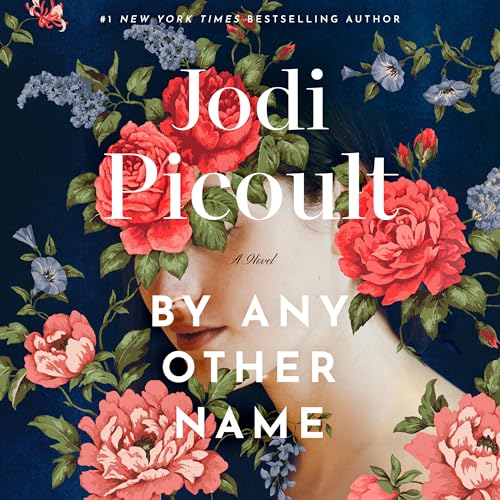
By Any Other Name
Goodreads Choice Award
Nominee for Readers' Favorite Historical Fiction (2024)From the New York Times bestselling co-author of Mad Honey comes an “inspiring” (Elle) novel about two women, centuries apart—one of whom is the real author of Shakespeare’s plays—who are both forced to hide behind another name.
Young playwright Melina Green has just written a new work inspired by the life of her Elizabethan ancestor Emilia Bassano. But seeing it performed is unlikely, in a theater world where the playing field isn’t level for women. As Melina wonders if she dares risk failure again, her best friend takes the decision out of her hands and submits the play to a festival under a male pseudonym.
In 1581, young Emilia Bassano is a ward of English aristocrats. Her lessons on languages, history, and writing have endowed her with a sharp wit and a gift for storytelling, but like most women of her day, she is allowed no voice of her own. Forced to become a mistress to the Lord Chamberlain, who oversees all theatre productions in England, Emilia sees firsthand how the words of playwrights can move an audience. She begins to form a plan to secretly bring a play of her own to the stage—by paying an actor named William Shakespeare to front her work.
Told in intertwining timelines, By Any Other Name, a sweeping tale of ambition, courage, and desire centers two women who are determined to create something beautiful despite the prejudices they face. Should a writer do whatever it takes to see her story live on . . . no matter the cost? This remarkable novel, rooted in primary historical sources, ensures the name Emilia Bassano will no longer be forgotten.
Young playwright Melina Green has just written a new work inspired by the life of her Elizabethan ancestor Emilia Bassano. But seeing it performed is unlikely, in a theater world where the playing field isn’t level for women. As Melina wonders if she dares risk failure again, her best friend takes the decision out of her hands and submits the play to a festival under a male pseudonym.
In 1581, young Emilia Bassano is a ward of English aristocrats. Her lessons on languages, history, and writing have endowed her with a sharp wit and a gift for storytelling, but like most women of her day, she is allowed no voice of her own. Forced to become a mistress to the Lord Chamberlain, who oversees all theatre productions in England, Emilia sees firsthand how the words of playwrights can move an audience. She begins to form a plan to secretly bring a play of her own to the stage—by paying an actor named William Shakespeare to front her work.
Told in intertwining timelines, By Any Other Name, a sweeping tale of ambition, courage, and desire centers two women who are determined to create something beautiful despite the prejudices they face. Should a writer do whatever it takes to see her story live on . . . no matter the cost? This remarkable novel, rooted in primary historical sources, ensures the name Emilia Bassano will no longer be forgotten.
Audio CD
First published August 20, 2024
About the author
Jodi Picoult
106 books99k followersJodi Picoult is the #1 New York Times bestselling author of twenty-eight novels, including Wish You Were Here, Small Great Things, Leaving Time, and My Sister’s Keeper, and, with daughter Samantha van Leer, two young adult novels, Between the Lines and Off the Page. Picoult lives in New Hampshire.
MAD HONEY, her new novel co-authored with Jennifer Finney Boylan, is available in hardcover, ebook, and audio on October 4, 2022.
Website: http://www.jodipicoult.com/
Facebook: https://www.facebook.com/jodipicoult
Twitter: https://twitter.com/jodipicoult
MAD HONEY, her new novel co-authored with Jennifer Finney Boylan, is available in hardcover, ebook, and audio on October 4, 2022.
Website: http://www.jodipicoult.com/
Facebook: https://www.facebook.com/jodipicoult
Twitter: https://twitter.com/jodipicoult
Ratings & Reviews
Friends & Following
Create a free account to discover what your friends think of this book!
Community Reviews
Displaying 1 - 30 of 15,784 reviews

August 2, 2024
My Reviews Can Also Be Found On:
The Book Review Crew Blog
I always find three-star reads hard to review, the rating of this one isn't a reflection of the author's talent or writing capabilities. Many of Jodi Picoult's books have been five-star reads for me. This is more about my personal preference and enjoyment of the book rather than the author's writing style; poetry and Shakespeare are just not for me.
I loved the idea of the book about two women, who are playwrights, one in 1581 (Emilia) who is the true author of William Shakespeare's plays and the other (Melina) is in the present and she's the ancestor of Emilia. The two timeline narratives worked well for me and Jodi Picoult is the consummate storyteller as always, but this is a very long book at over five hundred pages and I found my attention waning throughout.
The majority of the book is in the earlier timeline and I think that is why it didn't work for me. I'm not a big fan of Shakespeare but as always Picoult did a marvellous job with her research it was simply incredible and five hundred years later women are still struggling in the male-dominated world of publishing. Picoult deserves three stars for her writing ability and research alone. Where she lost me was the drag it was to read so much about the Shakespeare writing controversy, its long chapters slowed the pace so much. But I will always love her for her bravery in taking on tough topics of which she gets plenty of hate mail and pushback. Ms. Picoult don't ever stop.
Thank you to NetGalley and the publisher for the Advance Readers Copy.

The Book Review Crew Blog
I always find three-star reads hard to review, the rating of this one isn't a reflection of the author's talent or writing capabilities. Many of Jodi Picoult's books have been five-star reads for me. This is more about my personal preference and enjoyment of the book rather than the author's writing style; poetry and Shakespeare are just not for me.
I loved the idea of the book about two women, who are playwrights, one in 1581 (Emilia) who is the true author of William Shakespeare's plays and the other (Melina) is in the present and she's the ancestor of Emilia. The two timeline narratives worked well for me and Jodi Picoult is the consummate storyteller as always, but this is a very long book at over five hundred pages and I found my attention waning throughout.
The majority of the book is in the earlier timeline and I think that is why it didn't work for me. I'm not a big fan of Shakespeare but as always Picoult did a marvellous job with her research it was simply incredible and five hundred years later women are still struggling in the male-dominated world of publishing. Picoult deserves three stars for her writing ability and research alone. Where she lost me was the drag it was to read so much about the Shakespeare writing controversy, its long chapters slowed the pace so much. But I will always love her for her bravery in taking on tough topics of which she gets plenty of hate mail and pushback. Ms. Picoult don't ever stop.
Thank you to NetGalley and the publisher for the Advance Readers Copy.

August 27, 2024
This book is tied with The Nightingale for favorite reads of the year so far. I absolutely love Emilia & Melina’s stories of courage/bravery/& going against what is ingrained in us from birth as women.
I was not familiar with the idea that Shakespeare was not the author of his works but this book was eye-opening. By Any Other Name should be read in schools & used to challenge what we are taught to be true and expected to believe blindly.
I was not familiar with the idea that Shakespeare was not the author of his works but this book was eye-opening. By Any Other Name should be read in schools & used to challenge what we are taught to be true and expected to believe blindly.

April 16, 2024
How did William Shakespeare obtain the breadth of knowledge as displayed in his plays and poems?
How does he know French and Latin, court customs, and display intimate knowledge of Italy….when he likely only went to the local school for a couple of years, and there is no evidence Shakespeare ever traveled outside of England?
Isn’t it possible that William Shakespeare had “help”?
Lisa, authors wouldn’t dream of doing such a thing.
Really?
Although you might be familiar with Alexandre Dumas as the author behind The Count of Monte Cristo and The Three Musketeers, Dumas employed writers to turn out stories. In fact, one of his co-collaborators, Auguste Maquet, sued him for a derivative work of The Count of Monte Cristo—and won monetary compensation!
At the heart of Jodi Picoult’s novel is Elizabeth Winkler’s work: Shakespeare Was a Woman and Other Heresies. In fact, Picoult credits Winkler’s article and book in her Author’s Note as her original source of inspiration.
In By Any Other Name, Picoult paints a story where Emilia Bassano is a ghostwriter for William Shakespeare. There is also another timeline set in modern day where playwright Melina Green is having a difficult time getting her plays produced. Until one day, Melina’s play is submitted under a different name.
Having just read Winkler’s book, By Any Other Name is very well researched—Picoult certainly has the key players correct.
However, this book seemed to drag. It is far too long and should have been edited down. At times, Picoult over explains which lessens the emotional impact. For example, when one of the characters is dying, she goes on and on. It would have been more impactful to cut this scene down and allow the reader to sort through his or her own emotions.
Also, the character development is underwhelming. Too many characters were one dimensional—all good or all bad (Bess, Hunsdon, Alphonso). By Any Other Name engages in too much telling instead of showing. For example, readers are told that Melina and Andre are best friends, but the emotional response to the relationship between Andre and Melina didn’t feel earned.
While this book is well researched and there are some creative elements in this novel, the bloat interferes with the storytelling.
You can come after me, but perhaps like Shakespeare, I write under a pen name. 😊
*Thanks, NetGalley for a free copy of this book in exchange for my fair and unbiased opinion.
The Green Light at the End of the Dock (How much I spent):
Electronic Text – Free/Nada/Zilch through NetGalley
2025 Reading Schedule
Jan A Town Like Alice
Feb Birdsong
Mar Captain Corelli's Mandolin - Louis De Berniere
Apr War and Peace
May The Woman in White
Jun Atonement
Jul The Shadow of the Wind
Aug Jude the Obscure
Sep Ulysses
Oct Vanity Fair
Nov A Fine Balance
Dec Germinal
Connect With Me!
Blog Twitter BookTube Insta My Bookstore at Pango
How does he know French and Latin, court customs, and display intimate knowledge of Italy….when he likely only went to the local school for a couple of years, and there is no evidence Shakespeare ever traveled outside of England?
Isn’t it possible that William Shakespeare had “help”?
Lisa, authors wouldn’t dream of doing such a thing.
Really?
Although you might be familiar with Alexandre Dumas as the author behind The Count of Monte Cristo and The Three Musketeers, Dumas employed writers to turn out stories. In fact, one of his co-collaborators, Auguste Maquet, sued him for a derivative work of The Count of Monte Cristo—and won monetary compensation!
At the heart of Jodi Picoult’s novel is Elizabeth Winkler’s work: Shakespeare Was a Woman and Other Heresies. In fact, Picoult credits Winkler’s article and book in her Author’s Note as her original source of inspiration.
In By Any Other Name, Picoult paints a story where Emilia Bassano is a ghostwriter for William Shakespeare. There is also another timeline set in modern day where playwright Melina Green is having a difficult time getting her plays produced. Until one day, Melina’s play is submitted under a different name.
Having just read Winkler’s book, By Any Other Name is very well researched—Picoult certainly has the key players correct.
However, this book seemed to drag. It is far too long and should have been edited down. At times, Picoult over explains which lessens the emotional impact. For example, when one of the characters is dying, she goes on and on. It would have been more impactful to cut this scene down and allow the reader to sort through his or her own emotions.
Also, the character development is underwhelming. Too many characters were one dimensional—all good or all bad (Bess, Hunsdon, Alphonso). By Any Other Name engages in too much telling instead of showing. For example, readers are told that Melina and Andre are best friends, but the emotional response to the relationship between Andre and Melina didn’t feel earned.
While this book is well researched and there are some creative elements in this novel, the bloat interferes with the storytelling.
You can come after me, but perhaps like Shakespeare, I write under a pen name. 😊
*Thanks, NetGalley for a free copy of this book in exchange for my fair and unbiased opinion.
The Green Light at the End of the Dock (How much I spent):
Electronic Text – Free/Nada/Zilch through NetGalley
2025 Reading Schedule
Jan A Town Like Alice
Feb Birdsong
Mar Captain Corelli's Mandolin - Louis De Berniere
Apr War and Peace
May The Woman in White
Jun Atonement
Jul The Shadow of the Wind
Aug Jude the Obscure
Sep Ulysses
Oct Vanity Fair
Nov A Fine Balance
Dec Germinal
Connect With Me!
Blog Twitter BookTube Insta My Bookstore at Pango

September 3, 2024
Definitely one of my least favourite of the Jodi Picoult books I've read so far.
I got the impression that the author would have liked to write a non-fiction book / essay about the topic of the Shakespeare authorship but, as that's not what she does, she instead tries to work her argument into a fictional story that was not quite interesting enough to support it.
To be fair, the case for Emilia Bassano/Lanier as the true writer of Shakespeare's plays is the strongest I've read yet (though the bar is set pretty low, in my opinion-- I never felt compelled to buy into the Bacon, De Vere or Marlowe arguments, etc.) Picoult uses her characters to make an impassioned argument that Emilia hid behind the identity of an actor called William Shakespeare.
It's a fairly long book and felt longer because there were stretches that failed to ignite my interest at all. The novel is split between the 16th/17th Centuries and the present. The former takes us into the life of Emilia Bassano, a talented writer at a time when women could not write plays, and shows how she gathered inspiration for and authored the Shakespeare works. The present follows her descendant, Melina, as she navigates the male-dominated world of play-writing in the 21st Century.
The Emilia chapters were really dull for me. A lot of the focus is on her imagination, writing, crafting characters in her head… it had that same quality as when someone describes their dreams to you. (i.e. really boring.)
Melina's story, on the other hand, was less boring but very heavy-handed. Aside from maybe Jasper, everyone is one-dimensional, simply good or bad, with very few shades of grey. Melina is a female playwright who, along with her Black gay friend Andre, comes face to face with white men so openly misogynistic and racist they feel like caricatures.
I find it weird that in a book so focused on women forced to hide behind men to publish their work Jasper Tolle is the most multilayered and interesting character.
One more thing-- there are lots of convincing aspects to the Emilia Bassano argument, but one I just can't wrap my head around is why the book of poetry she did publish in her name would differ in both style and quality. Picoult's argument is that she did it on purpose to disguise her "voice", but I find that a weak explanation.
I got the impression that the author would have liked to write a non-fiction book / essay about the topic of the Shakespeare authorship but, as that's not what she does, she instead tries to work her argument into a fictional story that was not quite interesting enough to support it.
To be fair, the case for Emilia Bassano/Lanier as the true writer of Shakespeare's plays is the strongest I've read yet (though the bar is set pretty low, in my opinion-- I never felt compelled to buy into the Bacon, De Vere or Marlowe arguments, etc.) Picoult uses her characters to make an impassioned argument that Emilia hid behind the identity of an actor called William Shakespeare.
It's a fairly long book and felt longer because there were stretches that failed to ignite my interest at all. The novel is split between the 16th/17th Centuries and the present. The former takes us into the life of Emilia Bassano, a talented writer at a time when women could not write plays, and shows how she gathered inspiration for and authored the Shakespeare works. The present follows her descendant, Melina, as she navigates the male-dominated world of play-writing in the 21st Century.
The Emilia chapters were really dull for me. A lot of the focus is on her imagination, writing, crafting characters in her head… it had that same quality as when someone describes their dreams to you. (i.e. really boring.)
Melina's story, on the other hand, was less boring but very heavy-handed. Aside from maybe Jasper, everyone is one-dimensional, simply good or bad, with very few shades of grey. Melina is a female playwright who, along with her Black gay friend Andre, comes face to face with white men so openly misogynistic and racist they feel like caricatures.
I find it weird that in a book so focused on women forced to hide behind men to publish their work Jasper Tolle is the most multilayered and interesting character.
One more thing-- there are lots of convincing aspects to the Emilia Bassano argument, but one I just can't wrap my head around is why the book of poetry she did publish in her name would differ in both style and quality. Picoult's argument is that she did it on purpose to disguise her "voice", but I find that a weak explanation.

April 30, 2024
Jodi Picoult did it again! She created an inspiring, sentimental women’s fiction blended with historical fiction, powerful feminism, and diverse vibes, intercepting the stories of two women who are not connected by DNA but share the same fate. As two storytellers/aspiring writers try to make their voices heard in a man’s competitive universe, they are forced to write under male pseudonyms to have their works produced. Even though there are five centuries between the timelines, it seems nothing has changed with the power of white male privilege. Not only women but also entire diverse LGBTQ+ writers need to be equally represented, struggling to find their places in the arts just like in any other business industry.
In the present time, we are introduced to Melina Green, who has an estranged relationship with her still-grieving father after the death of her mother. She is trying to make her voice heard and to be seen with the creative words she puts on paper. Her experiences with men who wanted to take advantage of her, including her mentor at a writing program, start to break her optimism to be part of the theater industry in the Big Apple.
When a chance appears to submit her play, her roommate Andre encourages her to do so after they both get drunk and apply under a male name, Mel. Her play turns into the winner of the contest, and her path recrosses with the harsh critic Jasper, who unfairly broke her enthusiasm for her previous play with his biased opinions. There is also another judgmental producer on the board who prevents her from telling the truth about her work, and she needs the help of Andre as the writer of her own play, which attracts the producer’s attention. Andre, a gay black man, created a perfect play about a white woman’s story. This means Melanie hardly finds the convenient moment to come clean about the truth, witnessing her own work slipping away from her fingers as lies turn into torrents and get out of control.
The other storyline is about the mysterious Emilia Bassano, coming from an Italian, musically talented family, forced to become the mistress of Lord Chamberlain who oversees theater production in England. He shares the texts with Emilia to get her opinions, which leads Emilia to write her own play to be performed in theaters. But to achieve this plan, she has to compromise and make an agreement with the young actor William Shakespeare to act as the playwright of her work. This is a small price she has to pay to see her play reach the audiences, but what if she seeks the appraisal of her hard work she poured her heart into?
Overall, this is a fresh, thought-provoking, well-researched, and heartfelt novel creating bridges between different timelines to honor each woman who wouldn’t get the praise they earn and whose voices, creative works, and aspiring efforts should be known by the world. Especially Melanie’s storyline piqued my interest and made me connect with both characters easily. Definitely a must-read for the author’s devoted fans like me and any reader who is looking for inspirational women’s fiction!
Many thanks to NetGalley and Random House Publishing Group/Ballantine Books for sharing this moving book’s digital reviewer copy with me in exchange for my honest thoughts.
medium.com
instagram
facebook
twitter
In the present time, we are introduced to Melina Green, who has an estranged relationship with her still-grieving father after the death of her mother. She is trying to make her voice heard and to be seen with the creative words she puts on paper. Her experiences with men who wanted to take advantage of her, including her mentor at a writing program, start to break her optimism to be part of the theater industry in the Big Apple.
When a chance appears to submit her play, her roommate Andre encourages her to do so after they both get drunk and apply under a male name, Mel. Her play turns into the winner of the contest, and her path recrosses with the harsh critic Jasper, who unfairly broke her enthusiasm for her previous play with his biased opinions. There is also another judgmental producer on the board who prevents her from telling the truth about her work, and she needs the help of Andre as the writer of her own play, which attracts the producer’s attention. Andre, a gay black man, created a perfect play about a white woman’s story. This means Melanie hardly finds the convenient moment to come clean about the truth, witnessing her own work slipping away from her fingers as lies turn into torrents and get out of control.
The other storyline is about the mysterious Emilia Bassano, coming from an Italian, musically talented family, forced to become the mistress of Lord Chamberlain who oversees theater production in England. He shares the texts with Emilia to get her opinions, which leads Emilia to write her own play to be performed in theaters. But to achieve this plan, she has to compromise and make an agreement with the young actor William Shakespeare to act as the playwright of her work. This is a small price she has to pay to see her play reach the audiences, but what if she seeks the appraisal of her hard work she poured her heart into?
Overall, this is a fresh, thought-provoking, well-researched, and heartfelt novel creating bridges between different timelines to honor each woman who wouldn’t get the praise they earn and whose voices, creative works, and aspiring efforts should be known by the world. Especially Melanie’s storyline piqued my interest and made me connect with both characters easily. Definitely a must-read for the author’s devoted fans like me and any reader who is looking for inspirational women’s fiction!
Many thanks to NetGalley and Random House Publishing Group/Ballantine Books for sharing this moving book’s digital reviewer copy with me in exchange for my honest thoughts.
medium.com

September 6, 2024
“There once was a girl who became invisible so that her words might not be.”
Who really wrote Shakespeare’s plays, if not him?
“History is written by those in power.”
So, if history tells us that only men can write, what becomes of the true writers?
The story is told from 2 points of view. Melina, past-present - future time, 2013 – 2027, and Emilia, 1581 – 1645.
“Being a playwright was not a prestigious career, but regardless fame was not the point. It was the work that mattered. Male playwrights who wrote women – didn’t give them the nuance she could. She believed words written by a woman about women might allow audiences to see them more fully, to realize that they had thoughts and dreams and worth.”
How do these two women playwright characters connect – Modern – vs. past?
“I cannot imagine not recognizing you, because you are unforgettable.”
What do we learn about these two women that makes readers want to hope that their talents may be recognized, that they are worthy of being unforgettable?
“Envy is part of being human. You can be jealous of someone without taking that win away from them. It doesn’t have to be an or. It can be an end.”
Will the hardness of Emilia’s life ever give her what she wants? Will the desires of Melina’s life ever give her what she wants? Is it recognition, fulfilment, or a life worthy of talent acknowledged?
“What do you say when you know your words will be your last? I was here. I mattered.”
What will become of Melina’s play, “By any other name?” as she shares Emilia’s story where parts of the play are included after each chapter?
“The Heavens can shift and alter. The world itself can change.”
When women’s stories aren’t told, it suggests that women’s lives don’t matter. You know what does matter. Women lifting up other women.”
Maybe it will come down to one thing.
“There once was a girl, who was seen.”
This semi-historical fiction is so much different than what Picoult has typically written. Although she is always driven by a cause, and this is certainly a cause with an important theme – about unforgettable women. And, a controversy about Shakespeare, that may be more well-known or discussed than most consider.
Picoult does this story with heart, thoughtfulness, harsh realities and a spit and fire that makes readers want to turn pages (and there are a lot of them – 483, plus the author’s note to page 498). But she does it in a way that makes readers want to feel the fight and stand up for women of history and present time.
Be sure to read the extensive author’s note, her Shakespearean references, and Sources and Resources, at the end.
4.5 stars rounded up.
Who really wrote Shakespeare’s plays, if not him?
“History is written by those in power.”
So, if history tells us that only men can write, what becomes of the true writers?
The story is told from 2 points of view. Melina, past-present - future time, 2013 – 2027, and Emilia, 1581 – 1645.
“Being a playwright was not a prestigious career, but regardless fame was not the point. It was the work that mattered. Male playwrights who wrote women – didn’t give them the nuance she could. She believed words written by a woman about women might allow audiences to see them more fully, to realize that they had thoughts and dreams and worth.”
How do these two women playwright characters connect – Modern – vs. past?
“I cannot imagine not recognizing you, because you are unforgettable.”
What do we learn about these two women that makes readers want to hope that their talents may be recognized, that they are worthy of being unforgettable?
“Envy is part of being human. You can be jealous of someone without taking that win away from them. It doesn’t have to be an or. It can be an end.”
Will the hardness of Emilia’s life ever give her what she wants? Will the desires of Melina’s life ever give her what she wants? Is it recognition, fulfilment, or a life worthy of talent acknowledged?
“What do you say when you know your words will be your last? I was here. I mattered.”
What will become of Melina’s play, “By any other name?” as she shares Emilia’s story where parts of the play are included after each chapter?
“The Heavens can shift and alter. The world itself can change.”
When women’s stories aren’t told, it suggests that women’s lives don’t matter. You know what does matter. Women lifting up other women.”
Maybe it will come down to one thing.
“There once was a girl, who was seen.”
This semi-historical fiction is so much different than what Picoult has typically written. Although she is always driven by a cause, and this is certainly a cause with an important theme – about unforgettable women. And, a controversy about Shakespeare, that may be more well-known or discussed than most consider.
Picoult does this story with heart, thoughtfulness, harsh realities and a spit and fire that makes readers want to turn pages (and there are a lot of them – 483, plus the author’s note to page 498). But she does it in a way that makes readers want to feel the fight and stand up for women of history and present time.
Be sure to read the extensive author’s note, her Shakespearean references, and Sources and Resources, at the end.
4.5 stars rounded up.

Did Not Finish
August 10, 2024You know that feeling when you’re super excited to dive into a book, but it just doesn’t grab you? That was my experience with this one, and it breaks my heart to say it, especially since I’m a die-hard Picoult fan.
From the start, the book felt like it was moving at a snail’s pace. I kept waiting for that moment when everything would click, but it never really happened for me. The subject matter didn’t help much either—it just didn’t resonate.
Now, don’t get me wrong, I’m not giving up on this one forever. As this was an ARC, I’m going to hold off on giving it a rating. Maybe one day I’ll pick it up again, and who knows? It might surprise me on the second go. For now, though, this one just wasn’t my cup of tea.
From the start, the book felt like it was moving at a snail’s pace. I kept waiting for that moment when everything would click, but it never really happened for me. The subject matter didn’t help much either—it just didn’t resonate.
Now, don’t get me wrong, I’m not giving up on this one forever. As this was an ARC, I’m going to hold off on giving it a rating. Maybe one day I’ll pick it up again, and who knows? It might surprise me on the second go. For now, though, this one just wasn’t my cup of tea.

July 4, 2024
3.5 stars, rounded up
Jodi Picoult always finds an interesting topic to undertake. This time, she takes on the idea that William Shakespeare did not write all (or any) of his own plays. There have always been suggestions to that point. Of course, it’s always his male contemporaries that are mentioned. Instead, she posits, some were written by a woman, who paid him to use his name. The woman in question, Emilia Bassano, is the young mistress of the Lord Chamberlain. In the days of Queen Elizabeth, women did not perform in plays and they certainly didn’t write them.
Meanwhile, in the present day, a descendant of Emilia’s is also a playwright. Hampered by misogynists, she, too, is forced to pretend her work is that of a man’s.
I was engrossed with the historical story, much less so by the current day’s, which at times felt forced and melodramatic. There’s definitely a Shakespearean feel to it, with everyone pretending to be someone they’re not. “But a work of art from a man that forces you to look through the eyes of someone who hasn't been given a lens of her own - well it’s good allyship, right? It’s pointing out one’s privilege and decrying it simultaneously.” Picoult raises some interesting questions, especially about how our pasts and situations impact what we like or even our ability to understand a work. Yet, some of the conversations come across as way too didactic. There were pages I felt she was hitting me over the head with a sledge hammer.
It took me a while to read this as I found myself researching some of Shakespeare’s works, such as some of his sonnets. Also, I couldn’t wait until the Author’s Note to try to validate some of Picoult’s claims, like that Shakespeare wasn’t well educated. And trying to determine which characters were real.
The story is well researched and gave me a strong sense of Elizabethan times. I wasn’t as enthralled with this book as some of her others, but it will lead to some interesting conversations. I also don’t think it’s necessary to have a deep knowledge of Shakespeare’s plays to enjoy this.
My thanks to Netgalley and Random House/Ballantine Books for an advance copy of this book.
Jodi Picoult always finds an interesting topic to undertake. This time, she takes on the idea that William Shakespeare did not write all (or any) of his own plays. There have always been suggestions to that point. Of course, it’s always his male contemporaries that are mentioned. Instead, she posits, some were written by a woman, who paid him to use his name. The woman in question, Emilia Bassano, is the young mistress of the Lord Chamberlain. In the days of Queen Elizabeth, women did not perform in plays and they certainly didn’t write them.
Meanwhile, in the present day, a descendant of Emilia’s is also a playwright. Hampered by misogynists, she, too, is forced to pretend her work is that of a man’s.
I was engrossed with the historical story, much less so by the current day’s, which at times felt forced and melodramatic. There’s definitely a Shakespearean feel to it, with everyone pretending to be someone they’re not. “But a work of art from a man that forces you to look through the eyes of someone who hasn't been given a lens of her own - well it’s good allyship, right? It’s pointing out one’s privilege and decrying it simultaneously.” Picoult raises some interesting questions, especially about how our pasts and situations impact what we like or even our ability to understand a work. Yet, some of the conversations come across as way too didactic. There were pages I felt she was hitting me over the head with a sledge hammer.
It took me a while to read this as I found myself researching some of Shakespeare’s works, such as some of his sonnets. Also, I couldn’t wait until the Author’s Note to try to validate some of Picoult’s claims, like that Shakespeare wasn’t well educated. And trying to determine which characters were real.
The story is well researched and gave me a strong sense of Elizabethan times. I wasn’t as enthralled with this book as some of her others, but it will lead to some interesting conversations. I also don’t think it’s necessary to have a deep knowledge of Shakespeare’s plays to enjoy this.
My thanks to Netgalley and Random House/Ballantine Books for an advance copy of this book.

July 19, 2024
‘What do you say when you know your words will be your last? I was here. I mattered’
Becoming a successful, female playwright in this day and age is tough. Melina, finds out just how tough when her college play is critiqued to smithereens. A decade on, and still rudderless, she finds inspiration to write a new script, one based upon a 16th Century ancestor, Emilia Bassano - England's first, published female poet. As the story pivots between Melina's and Emilia's lives, and struggles with their writing, with their authorship, parallels begin to emerge. 400 years may have passed but women's voices, women's success within male-dominated areas, still wavers; it's still tenuous at best. Both women, who struggle to be seen, are determined to be heard. However, what's really the cost of remaining anonymous and is it a price worth paying?
This book was full of love, passion, heartache, frustration and even violence. Emilia Bassano's character is based upon the actual woman. Picoult provides compelling evidence and thought-provoking ideas on Shakespeare’s authorship as well as women’s erasure from history; beliefs so engrained, so embedded within our societal psyche, we’re all complicit in perpetuating them.
Picoult’s endnotes are robust and compelling, adding a layer of resonance to the story. She ends by noting that she predicts that this book will generate by far the most hate mail - despite many of her other contentious book topics - from zealots of Shakespeare. That gobsmacked me. And I guess, that only underscores how little has fundamentally changed all these centuries later.
'History, she said, is written by those in power'.
Becoming a successful, female playwright in this day and age is tough. Melina, finds out just how tough when her college play is critiqued to smithereens. A decade on, and still rudderless, she finds inspiration to write a new script, one based upon a 16th Century ancestor, Emilia Bassano - England's first, published female poet. As the story pivots between Melina's and Emilia's lives, and struggles with their writing, with their authorship, parallels begin to emerge. 400 years may have passed but women's voices, women's success within male-dominated areas, still wavers; it's still tenuous at best. Both women, who struggle to be seen, are determined to be heard. However, what's really the cost of remaining anonymous and is it a price worth paying?
This book was full of love, passion, heartache, frustration and even violence. Emilia Bassano's character is based upon the actual woman. Picoult provides compelling evidence and thought-provoking ideas on Shakespeare’s authorship as well as women’s erasure from history; beliefs so engrained, so embedded within our societal psyche, we’re all complicit in perpetuating them.
Picoult’s endnotes are robust and compelling, adding a layer of resonance to the story. She ends by noting that she predicts that this book will generate by far the most hate mail - despite many of her other contentious book topics - from zealots of Shakespeare. That gobsmacked me. And I guess, that only underscores how little has fundamentally changed all these centuries later.
'History, she said, is written by those in power'.

January 10, 2025
Update: I can’t stop thinking about this story. 🥰 I had to come back and update my rating. Cause any book that stays with me like this, deserves a 5-⭐️
An intriguing concept for sure!! 👍 Our world history was definitely penned and credited by men, so it would not surprise me if this was entirely accurate. 🤓
An intriguing concept for sure!! 👍 Our world history was definitely penned and credited by men, so it would not surprise me if this was entirely accurate. 🤓

July 17, 2024
Hi my name is Emilia Bassano and I have long black hair with chestnut streaks that reaches my mid-back and silver grey eyes like limpid tears and a lot of people tell me I look like Venus (AN: if u don't know who she is get da hell out of here!). I'm a courtesan but my teeth are straight and white. I'm also a poet, and I go to the theatre with Christopher Marlowe my gbf (gay best friend) in the 16th century (I’m 23). Yesterday Kit and I went out gossiping and we saw Shakespeare staring at us jealously because he can’t write and he’s also really ugly, and he wants to be our friend but we’re WAY too cool for him. We put up the middle finger at him and ran off to write sonnets about how he’s a no-life loser
So obscenely trite it feels an insult to even be logging this. Entire lines of dialogue and description are recycled multiple times, phrases from Shakespeare, or rather Bassano - are inserted at astounding frequencies - I could go on. It’s unfortunate that the book is of such low caliber, because there’s clearly an argument to be made for Bassano being the ghost-writer to some of Shakespeare’s plays (putting argumentum ex silentio aside) - if only it was communicated in a history book as opposed to through the author’s exasperating mouthpieces, I’d be much more inclined to buy into it in any capacity.
So obscenely trite it feels an insult to even be logging this. Entire lines of dialogue and description are recycled multiple times, phrases from Shakespeare, or rather Bassano - are inserted at astounding frequencies - I could go on. It’s unfortunate that the book is of such low caliber, because there’s clearly an argument to be made for Bassano being the ghost-writer to some of Shakespeare’s plays (putting argumentum ex silentio aside) - if only it was communicated in a history book as opposed to through the author’s exasperating mouthpieces, I’d be much more inclined to buy into it in any capacity.

September 4, 2024
I DNF'd this book at 50%. I think I was an outlier on this book. I hated it. Overall I liked historical fiction portion, but the modern day portion was awful. Women are oppressed by men. Women in the 1500s were definitely second-rate citizens, but the whining about not enough female playwrights was tiresome.

September 14, 2024
**Many thanks to NetGalley, Random House - Ballantine, and Jodi Picoult for an ARC of this book!**
Faust. Dickens. Shakespeare.
What do these three prolific writers have in common?
Their writing is so specific, so unique, and so identifiable that their last names (with the addition of -ian) are COMMONLY used as adjectives.
But what if the third name on that list referenced work written by someone other than the iconic Bard we see plastered all over coffee cups and t-shirts? What if it was written not even by a group of writers under one pseudonym (as many posit)...but by a WOMAN instead?
This theory is at the center of Jodi Picoult's latest effort, By Any Other Name, where our story follows the life and times of poet Emilia Bassano, ancestor to our present day lead, Melina Green. Melina is a playwright, living in New York City with her bestie Andre, and after a humiliating snub by the 'uber important to the theatre world' Jasper Tolle, she has never quite recovered. Her newest play, By Any Other Name, revolves around her ancestor Emilia and is a fascinating exploration into the theory that Shakespeare was NOT the author of his plays as so many believe...but that Emilia was the one at the helm. After becoming a 'courtesan' of sorts to Lord Chamberlain, who oversees theatre productions, Emilia's natural talent with words and curious nature lead her to craft play after play...and for a fee, she allows actor William Shakespeare to present them as his own - after all, it's getting her work in front of an audience that matters, right?
Back in the present, Melina's play is turned down when presented as 'Melina's' work...but as a lark, her buddy Andre decides to submit her play to a festival under the androgynous name MEL Green...and it is instantly snapped up, by none other than the man who turned up his nose at Melina's work so many years, ago, Jasper Tolle. Past and present collide, as both women struggle to make their words heard in a world dominated by men and the male opinion, where their talent and perspective is constantly overlooked. As we learn more about Emilia and the difficult choices she was forced to make, will Melina fall victim to the same fate? Will Jasper finally discover the TRUE origin of the play he has found so moving and all-consuming? Or will it be Andre who pulls back the curtain...and keeps the names of BOTH women obscured in a world that often prefers to keep women silent?
It doesn't matter what Jodi Picoult writes: I'm GOING to read it. There are very few authors I consider essential when it comes to exploring their back catalog...and with 29 NOVELS (as well as short stories, and a musical play) under her belt, tackling this sort of backlist is no easy feat...but I'm determined to get there! If there's one thing I've learned ever since picking up my first Picoult book, it's that Jodi is NEVER afraid to 'go there'...no matter what that entails. From school shootings to abortion, COVID to abuse, LGBTQIA+ issues to euthanasia...her books run the gamut of hot-button issues, and she is NEVER afraid to speak her mind, make her voice heard, and to provide the facts, figures, and heart to back up her assertions through the purvey of memorable characters and twist-filled, driving plots.
So when it comes to the 528 page historical fiction epic that is By Any Other Name...it breaks my heart to say that while there are hints of the trademark Picoult I've grown to know and love, this heavy handed, drawn out, and one note read had me wishing that THIS book was written 'by any other name' than Jodi Picoult.
While Picoult doesn't always lean into subtlety, she DOES usually manage to weave in her thoughts and viewpoints around the topic at hand under the radar, so to speak....but that certainly isn't the case here. This book all but screams its commentary at the reader...and needless to say, it didn't make for the most pleasant reading experience. When we were in Melina's timeline, for example, some of her thoughts and words about women's place in the theatre (as well as the limitations of other marginalized classes) are sort of brought up over...and over...and OVER again. As a playwright herself, perhaps this was cathartic for Picoult, in a sense, to explore her perspective on problems in the industry. However, the way she discussed her frustrations with Andre but was then forced to say to her friend "Well, I'm a white woman...so I still have more privilege than you" just felt like it wasn't EXACTLY the point Picoult was trying to make...but rather, pointed to issues with the book in general.
And that leads me to the next issue I had with this book...it felt like Picoult wanted to write a thesis about how Emilia Bassano was the true author of all of Shakespeare's plays...but decided that, rather than a paper, she'd make it into a novel instead. The problem with this is that, as a novel, it just didn't really work. There were no huge Picoult like twists, there's a wholly unnecessary love story tossed in...and I have NO idea how I was supposed to feel about so much of what transpired here. The plot itself really just sort of revolves around making the audience believe her thesis: nothing else ACTUALLY mattered. I normally appreciate the level of research in Picoult's books, but this one felt EVERY ONE of its 500+ pages. Each of Emilia's sections ALONE were mind-numbingly long, with chapters that seemed to go on forever, and Melina's weren't too enticing either. I struggle with historical fiction many times as it is, but this isn't the sort of HF that will sweep you away to the time period and drop you there...but more the kind where you'll be looking down at the page and saying 'how much do I have left?" far more often than you'd like.
But just wait, because this isn't really JUST historical fiction OR a thesis about Emilia either...there's a lot of 'romance' thrown in...and by romance, I mean more 'action' than you'll see in a bodice ripper from Harlequin. This alone takes this from a book that could be interesting for discussion in a high school or college class and pushes it into the 'wine with your book club of grown adults' set. I don't mind some of this in theory, but WOW. I felt more like I was reading Bridgerton than Picoult sometimes...and for me, that isn't necessarily a good thing. Not only does this also get kind of icky in reference to the age disparity between some of the characters, there's also an abusive husband thrown in at one point, and lots of other relationship strife tossed in that felt at times more like page filler than necessary to the plot. There's also a romance in the present day timeline that is WHOLLY unnecessary (not to mention sort of improbable) that I also could have happily lived without.
What bothered me most about all of it is that Picoult has RARELY been the author to rely on filler, repetition, or your knowledge of other subjects/authors (in this case, if you don't know much about Shakespeare's plays, many of the carefully placed references will be lost on you) to make her point...and I'm just so disappointed that she did all of that here. While I certainly think the novel accomplishes its mission (at least in part) on selling the audience on the concept of Bassano at least POTENTIALLY being author to some or all of these iconic works, I don't feel any sort of emphatic relief at believing it. While I wanted the best for both Emilia and Melina, I didn't feel that same sort of emotional investment in these characters that I've experienced in other Picoult reads, where the pathos naturally followed...and boy, did I miss it! There is an interesting author's note that is NOT to be missed (it's honestly one of the coolest parts of the book, with some real-life ties that will surprise you) but I wish I had felt that same sort of sense of wonder throughout the read, where it wasn't coupled with the exhaustion of just getting through these pages.
And while Picoult's message about the importance of a woman's voice being heard and name being said rang loud and clear...there's a quote ATTRIBUTED to Shakespeare (see?) that I think fits perfectly here:
"Brevity is the soul of wit."
3.5 stars
Faust. Dickens. Shakespeare.
What do these three prolific writers have in common?
Their writing is so specific, so unique, and so identifiable that their last names (with the addition of -ian) are COMMONLY used as adjectives.
But what if the third name on that list referenced work written by someone other than the iconic Bard we see plastered all over coffee cups and t-shirts? What if it was written not even by a group of writers under one pseudonym (as many posit)...but by a WOMAN instead?
This theory is at the center of Jodi Picoult's latest effort, By Any Other Name, where our story follows the life and times of poet Emilia Bassano, ancestor to our present day lead, Melina Green. Melina is a playwright, living in New York City with her bestie Andre, and after a humiliating snub by the 'uber important to the theatre world' Jasper Tolle, she has never quite recovered. Her newest play, By Any Other Name, revolves around her ancestor Emilia and is a fascinating exploration into the theory that Shakespeare was NOT the author of his plays as so many believe...but that Emilia was the one at the helm. After becoming a 'courtesan' of sorts to Lord Chamberlain, who oversees theatre productions, Emilia's natural talent with words and curious nature lead her to craft play after play...and for a fee, she allows actor William Shakespeare to present them as his own - after all, it's getting her work in front of an audience that matters, right?
Back in the present, Melina's play is turned down when presented as 'Melina's' work...but as a lark, her buddy Andre decides to submit her play to a festival under the androgynous name MEL Green...and it is instantly snapped up, by none other than the man who turned up his nose at Melina's work so many years, ago, Jasper Tolle. Past and present collide, as both women struggle to make their words heard in a world dominated by men and the male opinion, where their talent and perspective is constantly overlooked. As we learn more about Emilia and the difficult choices she was forced to make, will Melina fall victim to the same fate? Will Jasper finally discover the TRUE origin of the play he has found so moving and all-consuming? Or will it be Andre who pulls back the curtain...and keeps the names of BOTH women obscured in a world that often prefers to keep women silent?
It doesn't matter what Jodi Picoult writes: I'm GOING to read it. There are very few authors I consider essential when it comes to exploring their back catalog...and with 29 NOVELS (as well as short stories, and a musical play) under her belt, tackling this sort of backlist is no easy feat...but I'm determined to get there! If there's one thing I've learned ever since picking up my first Picoult book, it's that Jodi is NEVER afraid to 'go there'...no matter what that entails. From school shootings to abortion, COVID to abuse, LGBTQIA+ issues to euthanasia...her books run the gamut of hot-button issues, and she is NEVER afraid to speak her mind, make her voice heard, and to provide the facts, figures, and heart to back up her assertions through the purvey of memorable characters and twist-filled, driving plots.
So when it comes to the 528 page historical fiction epic that is By Any Other Name...it breaks my heart to say that while there are hints of the trademark Picoult I've grown to know and love, this heavy handed, drawn out, and one note read had me wishing that THIS book was written 'by any other name' than Jodi Picoult.
While Picoult doesn't always lean into subtlety, she DOES usually manage to weave in her thoughts and viewpoints around the topic at hand under the radar, so to speak....but that certainly isn't the case here. This book all but screams its commentary at the reader...and needless to say, it didn't make for the most pleasant reading experience. When we were in Melina's timeline, for example, some of her thoughts and words about women's place in the theatre (as well as the limitations of other marginalized classes) are sort of brought up over...and over...and OVER again. As a playwright herself, perhaps this was cathartic for Picoult, in a sense, to explore her perspective on problems in the industry. However, the way she discussed her frustrations with Andre but was then forced to say to her friend "Well, I'm a white woman...so I still have more privilege than you" just felt like it wasn't EXACTLY the point Picoult was trying to make...but rather, pointed to issues with the book in general.
And that leads me to the next issue I had with this book...it felt like Picoult wanted to write a thesis about how Emilia Bassano was the true author of all of Shakespeare's plays...but decided that, rather than a paper, she'd make it into a novel instead. The problem with this is that, as a novel, it just didn't really work. There were no huge Picoult like twists, there's a wholly unnecessary love story tossed in...and I have NO idea how I was supposed to feel about so much of what transpired here. The plot itself really just sort of revolves around making the audience believe her thesis: nothing else ACTUALLY mattered. I normally appreciate the level of research in Picoult's books, but this one felt EVERY ONE of its 500+ pages. Each of Emilia's sections ALONE were mind-numbingly long, with chapters that seemed to go on forever, and Melina's weren't too enticing either. I struggle with historical fiction many times as it is, but this isn't the sort of HF that will sweep you away to the time period and drop you there...but more the kind where you'll be looking down at the page and saying 'how much do I have left?" far more often than you'd like.
But just wait, because this isn't really JUST historical fiction OR a thesis about Emilia either...there's a lot of 'romance' thrown in...and by romance, I mean more 'action' than you'll see in a bodice ripper from Harlequin. This alone takes this from a book that could be interesting for discussion in a high school or college class and pushes it into the 'wine with your book club of grown adults' set. I don't mind some of this in theory, but WOW. I felt more like I was reading Bridgerton than Picoult sometimes...and for me, that isn't necessarily a good thing. Not only does this also get kind of icky in reference to the age disparity between some of the characters, there's also an abusive husband thrown in at one point, and lots of other relationship strife tossed in that felt at times more like page filler than necessary to the plot. There's also a romance in the present day timeline that is WHOLLY unnecessary (not to mention sort of improbable) that I also could have happily lived without.
What bothered me most about all of it is that Picoult has RARELY been the author to rely on filler, repetition, or your knowledge of other subjects/authors (in this case, if you don't know much about Shakespeare's plays, many of the carefully placed references will be lost on you) to make her point...and I'm just so disappointed that she did all of that here. While I certainly think the novel accomplishes its mission (at least in part) on selling the audience on the concept of Bassano at least POTENTIALLY being author to some or all of these iconic works, I don't feel any sort of emphatic relief at believing it. While I wanted the best for both Emilia and Melina, I didn't feel that same sort of emotional investment in these characters that I've experienced in other Picoult reads, where the pathos naturally followed...and boy, did I miss it! There is an interesting author's note that is NOT to be missed (it's honestly one of the coolest parts of the book, with some real-life ties that will surprise you) but I wish I had felt that same sort of sense of wonder throughout the read, where it wasn't coupled with the exhaustion of just getting through these pages.
And while Picoult's message about the importance of a woman's voice being heard and name being said rang loud and clear...there's a quote ATTRIBUTED to Shakespeare (see?) that I think fits perfectly here:
"Brevity is the soul of wit."
3.5 stars

June 11, 2024
Rating: ⭐⭐⭐⭐
Genre: Historical Fiction
I have heard many compliments about Jodi Picoult, and despite having a few of her books in my collection, I never had the chance to pick one for one reason or another. When I got the opportunity to grab her new historical fiction, I didn’t hesitate. It was about time.
By Any Other Name tells the story of two talented women in different eras. The similarity between the two is that they both need to hide their names behind someone else’s in order for their work to be recognized.
The story is set in two different timelines. Melina Green is in the present, while Emilia Bassano was in Elizabethan England in the past. The fascinating thing is that Melina is a descendant of Emilia. While I’m not a fan of dual timelines, I didn’t mind it in this book because the author kept the events and characters very distinct and because the POVs were in the third person style, which made things very clear and more interesting.
The author has certainly done a lot of research to write this book, which I admire. The story and message she is telling are both very empowering. Although the book will initially place a greater emphasis on women's empowerment, I see it more as the story of people who are determined to pursue their passions and defy society's norms.
After reading this book, you can't help but question William Shakespeare's work, whether the man was really the original author or if he just put his name on Emilia’s work. History is always fascinating and questionable.
The author's writing was fantastic in both timelines. Nevertheless, I believe that Emilia's story would have been more effective if it had been the entirety of the book. This is not to say that Melina's story was any less interesting; however, the inclusion of two timelines made the book longer and the pace of the story slower at times.
Overall, I really liked this book and the historical information it provided. I’m definitely going to read the author’s other books because this one worked for me.
Thanks to Netgalley and the publisher for the ARC of this book.
Genre: Historical Fiction
I have heard many compliments about Jodi Picoult, and despite having a few of her books in my collection, I never had the chance to pick one for one reason or another. When I got the opportunity to grab her new historical fiction, I didn’t hesitate. It was about time.
By Any Other Name tells the story of two talented women in different eras. The similarity between the two is that they both need to hide their names behind someone else’s in order for their work to be recognized.
The story is set in two different timelines. Melina Green is in the present, while Emilia Bassano was in Elizabethan England in the past. The fascinating thing is that Melina is a descendant of Emilia. While I’m not a fan of dual timelines, I didn’t mind it in this book because the author kept the events and characters very distinct and because the POVs were in the third person style, which made things very clear and more interesting.
The author has certainly done a lot of research to write this book, which I admire. The story and message she is telling are both very empowering. Although the book will initially place a greater emphasis on women's empowerment, I see it more as the story of people who are determined to pursue their passions and defy society's norms.
After reading this book, you can't help but question William Shakespeare's work, whether the man was really the original author or if he just put his name on Emilia’s work. History is always fascinating and questionable.
The author's writing was fantastic in both timelines. Nevertheless, I believe that Emilia's story would have been more effective if it had been the entirety of the book. This is not to say that Melina's story was any less interesting; however, the inclusion of two timelines made the book longer and the pace of the story slower at times.
Overall, I really liked this book and the historical information it provided. I’m definitely going to read the author’s other books because this one worked for me.
Thanks to Netgalley and the publisher for the ARC of this book.

October 14, 2025
I am a huge fan of Jodi Picoult and will pick up any book written by her. Her in-depth research and fearlessness to tackle any topic (school shootings, transgender, the afterlife, etc) has my deepest admiration and respect.
I visited a tiny, local library in a converted house and was thrilled to locate By Any Other Name. I scooped it up and headed home with my new treasure. After dinner, I settled onto the couch and prepared for 4 - 5 hours of reading.
With most Picoult novels, I submerse myself like a submarine and re-emerge many hours later. Typically, I am hooked with the first sentence, the first paragraph, the first page, and the first chapter.
I started reading By Any Other Name and after the first 30 pages, I wasn't hooked yet. So, I read the front flap to better understand what the book was about. I soldiered on but the slow pace hadn't hooked me yet, so then I read some Goodreads reviews. The large majority of reviews were very positive, and I encourage readers to read them. There were a few outlier reviews like mine.
I kept trying to get engaged but eventually it ended up in the DNF pile. It pains me to say that with a Picoult book. I do know that I will continue to read her books because she is a phenomenal author.
I visited a tiny, local library in a converted house and was thrilled to locate By Any Other Name. I scooped it up and headed home with my new treasure. After dinner, I settled onto the couch and prepared for 4 - 5 hours of reading.
With most Picoult novels, I submerse myself like a submarine and re-emerge many hours later. Typically, I am hooked with the first sentence, the first paragraph, the first page, and the first chapter.
I started reading By Any Other Name and after the first 30 pages, I wasn't hooked yet. So, I read the front flap to better understand what the book was about. I soldiered on but the slow pace hadn't hooked me yet, so then I read some Goodreads reviews. The large majority of reviews were very positive, and I encourage readers to read them. There were a few outlier reviews like mine.
I kept trying to get engaged but eventually it ended up in the DNF pile. It pains me to say that with a Picoult book. I do know that I will continue to read her books because she is a phenomenal author.

August 26, 2024
Hate to say it because Jodi is one of my fave authors but I struggled to stay engaged with this one.
March 17, 2024
To me Jodi Picoult is the best author of my generation. She lends her voice to topics that may not be wildly discussed but should be. She STARTS the conversation so that others can finish it.
Picoult’s novels have long been favorites of mine for the characters and the topics. In each of her works I find something to relate to and something to open my mind to a way of thinking that I could not imagine before. In her novels we find scenes that make us accept that things are not always as they seem.
BY ANY OTHER NAME is a different novel for Jodi… it is more historical but blends contemporary so naturally with the dual time line. Picoult shows us in this novel that it’s ok to find your voice outside of what is expected of you- and it’s ok to break the tradition to be seen. This novel was the novel she was meant to write. Fans of her works for the love element and strong characters will love both Melina and Emilia. They will swoon for the men in their lives. For fans of the at Picoult turns all that the reader knows on its head- eyes will be open.
As an English major I always loved the stories of Shakespeare but at times I struggled to separate what I knew of the man from what I saw in the page. This novel allowed me to make sense of some of the questions I’ve held about the Bard. It has allowed me to see his stories in a new light- and as I will go back and reread some of works I will use this new sense to look at the characters differently.
This novel is for fans of Shakespeare, for those that didn’t fully understand him, and for those that at times feel unseen and marginalized. It is a story of strength, love and perseverance. An opus that allows in a timeline to travel 70 plus years and then 400 years ahead to see that while a lot has changed there is still growth that needs to be done This is N important read and one that teaches of belonging and the the need to be heard but not necessarily seen and the strength that comes with being seen I loved this book and can’t wait until others read it so I can share my thoughts and love with other readers
This will not only be a favorite of 2024 but a favorite book of all time
Picoult’s novels have long been favorites of mine for the characters and the topics. In each of her works I find something to relate to and something to open my mind to a way of thinking that I could not imagine before. In her novels we find scenes that make us accept that things are not always as they seem.
BY ANY OTHER NAME is a different novel for Jodi… it is more historical but blends contemporary so naturally with the dual time line. Picoult shows us in this novel that it’s ok to find your voice outside of what is expected of you- and it’s ok to break the tradition to be seen. This novel was the novel she was meant to write. Fans of her works for the love element and strong characters will love both Melina and Emilia. They will swoon for the men in their lives. For fans of the at Picoult turns all that the reader knows on its head- eyes will be open.
As an English major I always loved the stories of Shakespeare but at times I struggled to separate what I knew of the man from what I saw in the page. This novel allowed me to make sense of some of the questions I’ve held about the Bard. It has allowed me to see his stories in a new light- and as I will go back and reread some of works I will use this new sense to look at the characters differently.
This novel is for fans of Shakespeare, for those that didn’t fully understand him, and for those that at times feel unseen and marginalized. It is a story of strength, love and perseverance. An opus that allows in a timeline to travel 70 plus years and then 400 years ahead to see that while a lot has changed there is still growth that needs to be done This is N important read and one that teaches of belonging and the the need to be heard but not necessarily seen and the strength that comes with being seen I loved this book and can’t wait until others read it so I can share my thoughts and love with other readers
This will not only be a favorite of 2024 but a favorite book of all time

June 17, 2024
I’m here for the SCANDAL! 😈
⏰ 𝐒𝐡𝐨𝐫𝐭𝐞𝐬𝐭 𝐒𝐮𝐦𝐦𝐚𝐫𝐲 𝐄𝐯𝐞𝐫: Melina Green, modern playwright, is juxtaposed with her centuries-ago relative Emilia Bassano and they both have the same issue - limits for women in a patriarchal society. Alternating POVs show how far women have traversed (or not) in the theater world.
💡𝐓𝐡𝐨𝐮𝐠𝐡𝐭𝐬: Ya know what I like? Authors who take chances. Picoult takes on what this English teacher has stated since college: I don’t think Shakespeare wrote all his stuff. I have had copies of Hamlet and Othello thrown at me by colleagues for such heresy! (Ok not really, but they do shake their heads and give me resting English teacher face. Frightening).
Picoult uses 2 stories 400+ years apart but intertwines them in a breathless and well-constructed, Wow-have-we-really-come-a-long-way-baby kind of way. 🤔 That’s the question and because this is a novel I will wrestle with and remember, it’s an easy 5 stars. Just when I thought the historical chapters with Emilia were my fave, I’d jump back to loving Melina and feeling the feminist cry of “that is so not fair” running through my veins throughout. Well-written and engaging, the novel kept me hooked.
The research and issues brought forth are what make Picoult’s book the MUST DISCUSS of 2024!
📚𝐆𝐞𝐧𝐫𝐞: Historical fiction/Modern Fiction alternating POV.
😍𝐑𝐞𝐜𝐨𝐦𝐦𝐞𝐧𝐝𝐞𝐝 𝐭𝐨:
- [ ] Shakespeare questioners and rabble-rousers like me!
- [ ] If you agree that well-behaved women rarely make history.
🙅♀️ 𝐍𝐨𝐭 𝐫𝐞𝐜𝐨𝐦𝐦𝐞𝐧𝐝𝐞𝐝 𝐭𝐨:
- [ ] Firm and faithless Shakespearies (like Swifties but armed with iambic pentameter)
- [ ] Na.. second thought read it. It’ll make you mad.
Thank you to the author, NetGalley and Random House Ballantyne for my advanced copy in exchange for my always-honest review and for making me feel righteous and pleasantly smug.
(I follow back bookish peeps!): IG @ ScrappyMags
⏰ 𝐒𝐡𝐨𝐫𝐭𝐞𝐬𝐭 𝐒𝐮𝐦𝐦𝐚𝐫𝐲 𝐄𝐯𝐞𝐫: Melina Green, modern playwright, is juxtaposed with her centuries-ago relative Emilia Bassano and they both have the same issue - limits for women in a patriarchal society. Alternating POVs show how far women have traversed (or not) in the theater world.
💡𝐓𝐡𝐨𝐮𝐠𝐡𝐭𝐬: Ya know what I like? Authors who take chances. Picoult takes on what this English teacher has stated since college: I don’t think Shakespeare wrote all his stuff. I have had copies of Hamlet and Othello thrown at me by colleagues for such heresy! (Ok not really, but they do shake their heads and give me resting English teacher face. Frightening).
Picoult uses 2 stories 400+ years apart but intertwines them in a breathless and well-constructed, Wow-have-we-really-come-a-long-way-baby kind of way. 🤔 That’s the question and because this is a novel I will wrestle with and remember, it’s an easy 5 stars. Just when I thought the historical chapters with Emilia were my fave, I’d jump back to loving Melina and feeling the feminist cry of “that is so not fair” running through my veins throughout. Well-written and engaging, the novel kept me hooked.
The research and issues brought forth are what make Picoult’s book the MUST DISCUSS of 2024!
📚𝐆𝐞𝐧𝐫𝐞: Historical fiction/Modern Fiction alternating POV.
😍𝐑𝐞𝐜𝐨𝐦𝐦𝐞𝐧𝐝𝐞𝐝 𝐭𝐨:
- [ ] Shakespeare questioners and rabble-rousers like me!
- [ ] If you agree that well-behaved women rarely make history.
🙅♀️ 𝐍𝐨𝐭 𝐫𝐞𝐜𝐨𝐦𝐦𝐞𝐧𝐝𝐞𝐝 𝐭𝐨:
- [ ] Firm and faithless Shakespearies (like Swifties but armed with iambic pentameter)
- [ ] Na.. second thought read it. It’ll make you mad.
Thank you to the author, NetGalley and Random House Ballantyne for my advanced copy in exchange for my always-honest review and for making me feel righteous and pleasantly smug.
(I follow back bookish peeps!): IG @ ScrappyMags

August 18, 2024
"The best tales are the ones that contain a kernel of truth."
4.5 ⭐. This is a brilliantly crafted and enticing new novel by the well-loved successful author, Jodi Picoult. Publication date: August 20, 2024.
I'm not usually a fan of books that are told using the dual timeline format because I always end up liking one of the storylines better than the other, except in this book I ended up being captivated and enjoying both timeframes equally. Each storyline grabbed my attention and thrilled me from the very beginning and held me in its grasp until the very end. They each had meaning and complemented each other beautifully. The characters are well-fleshed out and the narrative ran away with my emotions.
As with many of Ms. Picoult's books, this one will probably also draw much controversy. The 16th century timeline portion of the story points to the feasibility that Shakespeare may not have written the plays that are attributed to him and made him famous. Uniquely enough, clues are directed to the real author being a woman.
The important thing to remember is that this is a fictional tale. Fiction is a work that is untrue or fabricated. What makes THIS story so appealing is the possibility of truth that is tucked inside. Like a true novelist and playwright, this author has taken an idea and made us believe that it could be true.
I am nowhere near an expert on the works of Shakespeare, but I believe that you don't need to be one to fully enjoy this book. This may or may not appeal to Shakespeare aficionados, but it will definitely appeal to Jodi Picoult fans. At over 500 pages readers will need to be patient and diligent, but IMHO it is worth it.
My sincere thanks to Random House Publishing-Ballantine and NetGalley for giving me the opportunity to read an ARC of this novel in exchange for an honest review. All opinions expressed are my own.
4.5 ⭐. This is a brilliantly crafted and enticing new novel by the well-loved successful author, Jodi Picoult. Publication date: August 20, 2024.
I'm not usually a fan of books that are told using the dual timeline format because I always end up liking one of the storylines better than the other, except in this book I ended up being captivated and enjoying both timeframes equally. Each storyline grabbed my attention and thrilled me from the very beginning and held me in its grasp until the very end. They each had meaning and complemented each other beautifully. The characters are well-fleshed out and the narrative ran away with my emotions.
As with many of Ms. Picoult's books, this one will probably also draw much controversy. The 16th century timeline portion of the story points to the feasibility that Shakespeare may not have written the plays that are attributed to him and made him famous. Uniquely enough, clues are directed to the real author being a woman.
The important thing to remember is that this is a fictional tale. Fiction is a work that is untrue or fabricated. What makes THIS story so appealing is the possibility of truth that is tucked inside. Like a true novelist and playwright, this author has taken an idea and made us believe that it could be true.
I am nowhere near an expert on the works of Shakespeare, but I believe that you don't need to be one to fully enjoy this book. This may or may not appeal to Shakespeare aficionados, but it will definitely appeal to Jodi Picoult fans. At over 500 pages readers will need to be patient and diligent, but IMHO it is worth it.
My sincere thanks to Random House Publishing-Ballantine and NetGalley for giving me the opportunity to read an ARC of this novel in exchange for an honest review. All opinions expressed are my own.

May 13, 2024
4.5 stars
A story that will send your mind on a what if trip.(more later)
This was a fascinating tale of the possibility that Shakespeare was not the author of his tales, but instead a woman named Emilia Bassano, may be one of the writers who wrote the plays and sonnets that Shakespeare paid for and used as his own. (Treason to the literati, I am sure!)
Initially, we are introduced to a young playwright, Melina Green, a descendant of Emilia, who seems to face the same brick walls that Emilia face living in the 1530's, where women lacked any kind of say or voice in the world. Melina is facing the same challenges as she struggles in modern times to become a playwright and have her work presented on stage.
By Any Other Name is presented in two time spans, hundreds of years apart, yet present the concept that in some areas, women have not really advanced at all.
Most interesting to me however, is the many references and "what ifs" that Jodi Picoult presents about Shakespeare and his ability to have produced the works that have come down to us.
Could it be that Shakespeare a name revered by so many scholars and learners was not the author? What if it was someone (s) else and what if it was a woman? Revolutionary idea perhaps, but as all things there just might a bit of truth to this. Prepare to have your ideas altered by so much contained in this story.
Thank you to Jodi Picoult, Random House, and NetGalley for a copy of this book.
A story that will send your mind on a what if trip.(more later)
This was a fascinating tale of the possibility that Shakespeare was not the author of his tales, but instead a woman named Emilia Bassano, may be one of the writers who wrote the plays and sonnets that Shakespeare paid for and used as his own. (Treason to the literati, I am sure!)
Initially, we are introduced to a young playwright, Melina Green, a descendant of Emilia, who seems to face the same brick walls that Emilia face living in the 1530's, where women lacked any kind of say or voice in the world. Melina is facing the same challenges as she struggles in modern times to become a playwright and have her work presented on stage.
By Any Other Name is presented in two time spans, hundreds of years apart, yet present the concept that in some areas, women have not really advanced at all.
Most interesting to me however, is the many references and "what ifs" that Jodi Picoult presents about Shakespeare and his ability to have produced the works that have come down to us.
Could it be that Shakespeare a name revered by so many scholars and learners was not the author? What if it was someone (s) else and what if it was a woman? Revolutionary idea perhaps, but as all things there just might a bit of truth to this. Prepare to have your ideas altered by so much contained in this story.
Thank you to Jodi Picoult, Random House, and NetGalley for a copy of this book.
August 22, 2024
Jodi Picoult does have a knack for writing thought-provoking and wonderfully written books. She delivered again with By Any Other Name! This book is about two women living in different times (1500's & the present) who are creative, love writing, and have created works that they want known.
1500's - Melina Green is forced into becoming the mistress for Lord Chamberlain, who oversees the theaters in England. She is gifted, strong, witty, artistic, a musician and a gifted writer. Unfortunately, she lives in a time where women have no voice and no opportunities for showing off their skills. So, she must turn to an actor to use his name to make her mark.
Present day - Melina Green is a playwright who has written about the life of her ancestor, Emilia Bassano. When she turns in her work under the name Mel and finds herself having to pretend that a man wrote her work.
There have been rumors and speculation that William Shakespeare did not write his own plays. In By Any Other Name, Jodi Picoult takes this theory on having Emilia Bassano being the writer of the plays. It is obvious that Picoult did a tremendous amount of research prior to writing this book.
This book is told through the POV of both women. I enjoyed how Picoult showed the struggles of both women, their desire to have their work known, the obstacles that they came up against, the misogyny, and their drive. Picoult did a wonderful job of transporting me back in time. Having said that, this book is long and at times, I felt it's length.
This book made me wonder if Shakespeare really did write his plays. Who knows, I still love the ones I have read and seen performed.
Despite its length, I enjoyed this book.
Thank you to Random House Publishing Group - Ballantine and NetGalley who provided me with a copy of this book in exchange for an honest review. All the thoughts and opinions are my own.
Read more of my reviews at www.openbookposts.com 📖

June 8, 2024
’There was once a girl who became invisible so that her words might not be.’
Set in separate timelines this story is shared mainly through these two timelines, and largely through two points of view, and ends in December 2027.
In the 1500s, Emilia is a woman who doesn’t have the chances that most (but not all) women today take for granted, the ability to make their own decisions to begin with, but also the opportunity to be heard, and believed.
Melina, whose ancestor is Emilia Bassano, on the other hand, is a modern young woman, who wants to be taken seriously as a playwright. But there are still very few paths to that, for her, as that field is still largely considered a field for men.
This was a very thought provoking read, the premise being a question of whether or not Shakespeare wrote the books that have been considered his works all these years. And if he wasn’t, then who wrote them.
There is a darkness to this, as well, at times. The abuse by men of the women they have claimed as their own, and their attempts to subjugate them until they are satisfied that the women will do their bidding and obey. There are also dark and heartbreaking moments as the years pass, and family members, even the youngest, are lost to miscarriages, and disease. The price of being a woman.
One of my favourite things about this author and her books is how they are never similar to her other ones that I’ve read. This one is as different from the others - that I’ve read, anyway - as can be. I will be thinking about this one for a long time.
Pub Date: 20 Aug 2024
Many thanks for the ARC provided by Random House Publishing Group - Ballantine / Ballantine Books

September 9, 2024
I just don’t think this author is for me….
This is the second Jodi P book I’ve read and I have the same issues with this one that I had with the first (Mad Honey). Both books feel like they are written by two different authors in the same book. One is a talented story teller and the other is a basic YA type author that tries desperately to squeeze every woke victimization stereotype into a story while totally ignoring any real depth in character development. Half of the book is interesting and well written - the other half is peppered with unnecessary political digs. We get it - you hate conservatives and think you hold all of the most virtuous beliefs. (Yawn). The troupe is old and played out and lacks the true complexity of human nature. The dig against JK Rowling was when I finally put the book down. The audacity of this woman to take a swipe at one of the most talented and successful female writers in generations is wild - considering the subject matter of the book. She’s whining about how women aren’t given the same opportunities as male play writes and she goes after a woman who actually did use her initials to be taken seriously when first publishing her book. The IRONY and lack of self awareness is mind blowing. I’ll take JK’s side every time as she continues to be a voice that fights for women while Jodi gets to cash in on the doors JK opened for her in the literary space. Weird that she used a gay, black man as the character who would be taken more seriously as a play write than a woman while trying to showcase how oppressed women are. (While also making sure that we know how oppressed gay, black and trans people are as well.). It’s almost like she has a checklist of the oppression Olympics that she needed to cover. The least she could do is make the protagonist even slightly likable. 🙄 It’s clear that this woman operates in an echo chamber. Sadly, this book was based on a great idea but the present day story made it unreadable. I would have rather stayed in the 1500’s.
This is the second Jodi P book I’ve read and I have the same issues with this one that I had with the first (Mad Honey). Both books feel like they are written by two different authors in the same book. One is a talented story teller and the other is a basic YA type author that tries desperately to squeeze every woke victimization stereotype into a story while totally ignoring any real depth in character development. Half of the book is interesting and well written - the other half is peppered with unnecessary political digs. We get it - you hate conservatives and think you hold all of the most virtuous beliefs. (Yawn). The troupe is old and played out and lacks the true complexity of human nature. The dig against JK Rowling was when I finally put the book down. The audacity of this woman to take a swipe at one of the most talented and successful female writers in generations is wild - considering the subject matter of the book. She’s whining about how women aren’t given the same opportunities as male play writes and she goes after a woman who actually did use her initials to be taken seriously when first publishing her book. The IRONY and lack of self awareness is mind blowing. I’ll take JK’s side every time as she continues to be a voice that fights for women while Jodi gets to cash in on the doors JK opened for her in the literary space. Weird that she used a gay, black man as the character who would be taken more seriously as a play write than a woman while trying to showcase how oppressed women are. (While also making sure that we know how oppressed gay, black and trans people are as well.). It’s almost like she has a checklist of the oppression Olympics that she needed to cover. The least she could do is make the protagonist even slightly likable. 🙄 It’s clear that this woman operates in an echo chamber. Sadly, this book was based on a great idea but the present day story made it unreadable. I would have rather stayed in the 1500’s.

Read
August 22, 2024DNF at 30%ish. might go back, just too long and historical for me ATM!

July 3, 2024
Emilia Bassano becomes the Lord Chamberlain's mistress at a very young age, she goes to the theatre with him in London, England, and secretly she writes her own plays and poems. So her work can be published, she has to sell it and a male playwright gains all the praise and for centuries.
Melina Green let one bad review when she was younger, put doubts in her mind that’s she’s not good enough to be a playwright and then she decides to tell the story about her long lost relative Elizabethan Emilia Bassano. Thinking he’s helping her, Melina’s roommate Andre steps in and enters her play into a competition and talk about opening a can of worms.
The dual timeline narrative starts both in 1581 and in 2020 and is told from the two women’s characters Emilia and Melina points of view and perspectives and they have a lot in common and not an easy path for them both in matters of the heart.
I received a copy of By Any Other Name by Jodi Picoult from Allen & Unwin and NetGalley in exchange for an honest review. Using real facts about Emilia Bassano Ms. Picoult explores topics such as life in Elizabethan England and women’s roles, sexism and the impact of the plague. While Melina’s character is insecure and vulnerable, she doubts her own abilities and talent, she believes men have better chance of being a successful playwright and the modern plague called Covid hits.
Like many people Ms. Picoult wonders and explores William Shakespeare’s legacy, how was it possible for him to write over thirty plays, while being a full-time actor and producer, did he buy work from others and could he been part of a group or fringe? This book is perfect for fans of the theatre and history, willing to consider all the options, have an open mind and it's a really interesting and thought provoking read.
Four stars from me, if you enjoyed The Escapades of Tribulation Johnson by Karen Brooks as I did and I highly suggest reading By Any Other Name.
Melina Green let one bad review when she was younger, put doubts in her mind that’s she’s not good enough to be a playwright and then she decides to tell the story about her long lost relative Elizabethan Emilia Bassano. Thinking he’s helping her, Melina’s roommate Andre steps in and enters her play into a competition and talk about opening a can of worms.
The dual timeline narrative starts both in 1581 and in 2020 and is told from the two women’s characters Emilia and Melina points of view and perspectives and they have a lot in common and not an easy path for them both in matters of the heart.
I received a copy of By Any Other Name by Jodi Picoult from Allen & Unwin and NetGalley in exchange for an honest review. Using real facts about Emilia Bassano Ms. Picoult explores topics such as life in Elizabethan England and women’s roles, sexism and the impact of the plague. While Melina’s character is insecure and vulnerable, she doubts her own abilities and talent, she believes men have better chance of being a successful playwright and the modern plague called Covid hits.
Like many people Ms. Picoult wonders and explores William Shakespeare’s legacy, how was it possible for him to write over thirty plays, while being a full-time actor and producer, did he buy work from others and could he been part of a group or fringe? This book is perfect for fans of the theatre and history, willing to consider all the options, have an open mind and it's a really interesting and thought provoking read.
Four stars from me, if you enjoyed The Escapades of Tribulation Johnson by Karen Brooks as I did and I highly suggest reading By Any Other Name.
December 15, 2024
I love cozying up to a good historical fiction book in winter and By Any Other Name was the perfect read for this!
The idea that Shakespeare’s most famous works could have been written by someone else isn't anything new. But what Jodi Picoult did in her newest work is breathe life and give a voice to Emilia Bassano Lanier the mostly unknown first female poet of England in a beautifully written novel.
I'm a huge Shakespeare fan so I enjoyed all the nods to his various works in this one.
I enjoyed both perspectives but Emilia’s POV was my favorite. I liked how the book brought attention to how few rights (if any) women had over their lives during Emilia’s time. The book was well-researched and written. The author gives all of her references in the author's note at the end.
The only reason I didn't give this one five stars is because of the length. I don't mind a longer book but at times there was a lot of repetition and information that was not necessary to the story. But even with this flaw, I would still recommend this one. Readers looking for a good historical fiction read will love this one!
I listened to the audiobook version which was read by a full cast. I couldn't put this one down, if you are thinking about picking this one up then I highly recommend this format!
By Any Other Name by Jodi Picoult was published on August 20, 2024, so it is available now. Many thanks to Penguin Random House Audio for the gifted audiobook!
The idea that Shakespeare’s most famous works could have been written by someone else isn't anything new. But what Jodi Picoult did in her newest work is breathe life and give a voice to Emilia Bassano Lanier the mostly unknown first female poet of England in a beautifully written novel.
I'm a huge Shakespeare fan so I enjoyed all the nods to his various works in this one.
I enjoyed both perspectives but Emilia’s POV was my favorite. I liked how the book brought attention to how few rights (if any) women had over their lives during Emilia’s time. The book was well-researched and written. The author gives all of her references in the author's note at the end.
The only reason I didn't give this one five stars is because of the length. I don't mind a longer book but at times there was a lot of repetition and information that was not necessary to the story. But even with this flaw, I would still recommend this one. Readers looking for a good historical fiction read will love this one!
I listened to the audiobook version which was read by a full cast. I couldn't put this one down, if you are thinking about picking this one up then I highly recommend this format!
By Any Other Name by Jodi Picoult was published on August 20, 2024, so it is available now. Many thanks to Penguin Random House Audio for the gifted audiobook!

January 5, 2025
4.5 stars
I’ve read several Jodi Picoult books, and I have to say, By Any Other Name is my favorite. This story was fascinating, gripping, and thought provoking. It made me think, made me feel, and I loved both the historical and contemporary timelines it followed.
Melina Green is a descendant of Emilia Bassano. Melina is a playwright and decides to write a play about her ancestor. Emilia was also a writer, back when women couldn’t be. Melina’s story was interesting, but Emilia’s chapters were the ones I was enthralled with.
I found Emilia’s story heartbreaking but also inspiring. This is a book about women. Picoult does a wonderful job diving into difficult topics and it’s obvious this book was well researched and thought out. It makes me want to get back into reading more of her backlist. I highly recommend this one!
I’ve read several Jodi Picoult books, and I have to say, By Any Other Name is my favorite. This story was fascinating, gripping, and thought provoking. It made me think, made me feel, and I loved both the historical and contemporary timelines it followed.
Melina Green is a descendant of Emilia Bassano. Melina is a playwright and decides to write a play about her ancestor. Emilia was also a writer, back when women couldn’t be. Melina’s story was interesting, but Emilia’s chapters were the ones I was enthralled with.
I found Emilia’s story heartbreaking but also inspiring. This is a book about women. Picoult does a wonderful job diving into difficult topics and it’s obvious this book was well researched and thought out. It makes me want to get back into reading more of her backlist. I highly recommend this one!
“There once was a girl who became invisible so that her words might not be.”
Audio book source: Libby
Story Rating: 4.5 stars
Narrators: Full Cast
Narration Rating: 4 stars
Genre: Historical Fiction
Length: 18h 25m

September 22, 2024
Dear Minor-Attracted People, I have a great book recommendation for you. You will enjoy pages filled with a young girl enjoying her lessons on the intricacies of pleasuring a man and a bonus scene or two with glamorized lovemaking between this 13 year old girl and 56 year old man. She not only loves it, she initiates the interaction. She even seems a bit disappointed when it ends sooner than she expected. You won’t have to search the dark web, this is right here in popular fiction. Your welcome.
For the rest of you that may consider my disgust unwarranted, I do understand that in Elizabethan England the legal age for marriage was 12 for girls. I also know that heretics were burned at the stake. Others were hanged for a short period of time, taken down, disemboweled, extremities cut off, and lastly they were beheaded. However when I’m asked to accept the pov of an executioner protagonist who revels in the fine art of disemboweling prisoners the novel is categorized as Horror. Therefore I might rightly categorize Jodi Picoults’ work here as Pedophilia.
This infuriates me.
For the rest of you that may consider my disgust unwarranted, I do understand that in Elizabethan England the legal age for marriage was 12 for girls. I also know that heretics were burned at the stake. Others were hanged for a short period of time, taken down, disemboweled, extremities cut off, and lastly they were beheaded. However when I’m asked to accept the pov of an executioner protagonist who revels in the fine art of disemboweling prisoners the novel is categorized as Horror. Therefore I might rightly categorize Jodi Picoults’ work here as Pedophilia.
This infuriates me.
April 10, 2024
This review kills me to write as a Jodi Picoult superfan, but this was not a book for me. I’ll preface this by saying that 75% of the book takes place in the Shakespearean era of 1500s and that is very much not my thing, which is why this one was a struggle for me. However, I had to read it because it’s a Jodi book - duh! While I did enjoy the current timeline, it was not enough to bump this one up for me.
I do have to commend Picoult on the massive amount of research that was clearly done for this book and the afterword / authors note very much details this.
There is also significant Jewish representation in this book and what being a Jew in the 1500s looked like. As someone who is always looking for more Jewish representation in her books, this was one of my favorite parts of the book.
If you are more of a fan of Shakespeare, this will hopefully be a hit for you.
Thank you to Random House for an advanced copy. All opinions are my own.
I do have to commend Picoult on the massive amount of research that was clearly done for this book and the afterword / authors note very much details this.
There is also significant Jewish representation in this book and what being a Jew in the 1500s looked like. As someone who is always looking for more Jewish representation in her books, this was one of my favorite parts of the book.
If you are more of a fan of Shakespeare, this will hopefully be a hit for you.
Thank you to Random House for an advanced copy. All opinions are my own.

September 9, 2024
Sadly I can’t rate this lower than 1 star.
I love everything by Jodi Picoult so I tried so hard to love this one but I just couldn’t. It was so incredibly clear that not enough research was put into this book.
Emilia Bassano was born in 1569. According to this book, she became Lord Chamberlain Hunsdon’s mistress in 1582. She would have been 12 or 13 if going off the book. Emilia Lanier Bassano ACTUALLY became his mistress 5 years later in 1587, making her approximately 18. For morality purposes and just truthfulness in general, Jodi REALLY should have done her research there. I’m not saying pre teen mistresses weren’t a thing back then as I’m sure they were in some instances. But the fact is she did not become his mistress that young. She went to him after the passing of her mother in 1587. (Yes I’m aware the book literally states she is 12 in the very beginning. However the fact is she did not become a mistress in 1582.)
This is only one instance of things being horrifically incorrect (studied Emilia for a school project in high school) and if you’re going to market at least half of your book as historical fiction but use this actual human beings life, there’s just so many details that NEED to coincide to make it truthful. I understand embellishing some things I truly do. But this was just… no. If you’re going to write a historical fiction book, make a character up don’t use a real actual human being then change multiple aspects of their lives that are important. I’m honestly just so disappointed in this book. Not Jodi’s best….
I love everything by Jodi Picoult so I tried so hard to love this one but I just couldn’t. It was so incredibly clear that not enough research was put into this book.
Emilia Bassano was born in 1569. According to this book, she became Lord Chamberlain Hunsdon’s mistress in 1582. She would have been 12 or 13 if going off the book. Emilia Lanier Bassano ACTUALLY became his mistress 5 years later in 1587, making her approximately 18. For morality purposes and just truthfulness in general, Jodi REALLY should have done her research there. I’m not saying pre teen mistresses weren’t a thing back then as I’m sure they were in some instances. But the fact is she did not become his mistress that young. She went to him after the passing of her mother in 1587. (Yes I’m aware the book literally states she is 12 in the very beginning. However the fact is she did not become a mistress in 1582.)
This is only one instance of things being horrifically incorrect (studied Emilia for a school project in high school) and if you’re going to market at least half of your book as historical fiction but use this actual human beings life, there’s just so many details that NEED to coincide to make it truthful. I understand embellishing some things I truly do. But this was just… no. If you’re going to write a historical fiction book, make a character up don’t use a real actual human being then change multiple aspects of their lives that are important. I’m honestly just so disappointed in this book. Not Jodi’s best….
Displaying 1 - 30 of 15,784 reviews