

What do you think?
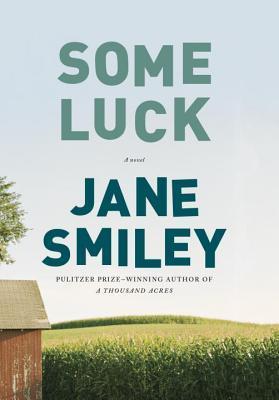
Last Hundred Years: A Family Saga #1
Some Luck
Goodreads Choice Award
Nominee for Readers' Favorite Historical Fiction (2014)On their farm in Denby, Iowa, Rosanna and Walter Langdon abide by time-honored values that they pass on to their five wildly different yet equally remarkable children: Frank, the brilliant, stubborn first-born; Joe, whose love of animals makes him the natural heir to his family's land; Lillian, an angelic child who enters a fairy-tale marriage with a man only she will fully know; Henry, the bookworm who's not afraid to be different; and Claire, who earns the highest place in her father's heart. Moving from post-World War I America through the early 1950s, Some Luck gives us an intimate look at this family's triumphs and tragedies, zooming in on the realities of farm life, while casting-as the children grow up and scatter to New York, California, and everywhere in between-a panoramic eye on the monumental changes that marked the first half of the twentieth century. Rich with humor and wisdom, twists and surprises, Some Luck takes us through deeply emotional cycles of births and deaths, passions, and betrayals, displaying Smiley's dazzling virtuosity, compassion, and understanding of human nature and the nature of history, never discounting the role of fate and chance. This potent conjuring of many lives across generations is a stunning tour de force.
395 pages, Hardcover
First published October 7, 2014
About the author
Jane Smiley
149 books2,887 followersJane Smiley is a Pulitzer Prize-winning American novelist.
Born in Los Angeles, California, Smiley grew up in Webster Groves, Missouri, a suburb of St. Louis, and graduated from John Burroughs School. She obtained a A.B. at Vassar College, then earned a M.F.A. and Ph.D. from the University of Iowa. While working towards her doctorate, she also spent a year studying in Iceland as a Fulbright Scholar. From 1981 to 1996, she taught at Iowa State University. Smiley published her first novel, Barn Blind, in 1980, and won a 1985 O. Henry Award for her short story "Lily", which was published in The Atlantic Monthly. Her best-selling A Thousand Acres, a story based on William Shakespeare's King Lear, received the Pulitzer Prize for Fiction in 1992. It was adapted into a film of the same title in 1997. In 1995 she wrote her sole television script produced, for an episode of Homicide: Life on the Street. Her novella The Age of Grief was made into the 2002 film The Secret Lives of Dentists.
Thirteen Ways of Looking at the Novel (2005), is a non-fiction meditation on the history and the nature of the novel, somewhat in the tradition of E. M. Forster's seminal Aspects of the Novel, that roams from eleventh century Japan's Murasaki Shikibu's The Tale of Genji to twenty-first century Americans chick lit.
In 2001, Smiley was elected a member of The American Academy of Arts and Letters.
Born in Los Angeles, California, Smiley grew up in Webster Groves, Missouri, a suburb of St. Louis, and graduated from John Burroughs School. She obtained a A.B. at Vassar College, then earned a M.F.A. and Ph.D. from the University of Iowa. While working towards her doctorate, she also spent a year studying in Iceland as a Fulbright Scholar. From 1981 to 1996, she taught at Iowa State University. Smiley published her first novel, Barn Blind, in 1980, and won a 1985 O. Henry Award for her short story "Lily", which was published in The Atlantic Monthly. Her best-selling A Thousand Acres, a story based on William Shakespeare's King Lear, received the Pulitzer Prize for Fiction in 1992. It was adapted into a film of the same title in 1997. In 1995 she wrote her sole television script produced, for an episode of Homicide: Life on the Street. Her novella The Age of Grief was made into the 2002 film The Secret Lives of Dentists.
Thirteen Ways of Looking at the Novel (2005), is a non-fiction meditation on the history and the nature of the novel, somewhat in the tradition of E. M. Forster's seminal Aspects of the Novel, that roams from eleventh century Japan's Murasaki Shikibu's The Tale of Genji to twenty-first century Americans chick lit.
In 2001, Smiley was elected a member of The American Academy of Arts and Letters.
Ratings & Reviews
Friends & Following
Create a free account to discover what your friends think of this book!
Community Reviews
Displaying 1 - 30 of 2,939 reviews

August 1, 2014
There are so many elements to Some Luck, long-listed for the 2014 National Book Award, that wherever your interests may lie, there is much here from which to choose. Take your pick—a Pulitzer-winning author going for a triple in the late innings, finishing up her goal of writing novels in all forms. Take your pick—a look at 34 years of a planned hundred year scan of the USA through the eyes of a Midwest family, winning, engaging characters, seen from birth to whatever, good, bad and pffft, where’d that one go? Take your pick—a look at the changes in farming, over the decades, the impact of events like the Depression and massive drought on people you care about. Take your pick—the impact of the end of World War I on the breadbasket, a sniper’s eye view of World War II, the chilly beginning of the Cold War. Take your pick-- the searing summer heat that killed many, the biting snow-bound winter that stole the heat from every extremity. Take your pick-- an infant’s eye view of learning to speak, a teenager’s look at awakening sexuality, an older man looking back on his life. Take your pick—the newness and revolution of cars, tractors, hybrid plants, new fertilizer, the tales brought from the old country, often told in foreign tongues. Take your pick—a bad boy with talent, brains and looks, a steadfast young man taking the old ways of farming and mixing them with the new to make a life and a future, a smart young woman heading to the big city and getting involved with very un-farm-like political interests. Take your pick—shopping for a religion while looking for answers to the sorrows of existence, shopping for political help when no financial seems forthcoming from the nation. Take your pick—love is found, lost, found again, couples struggle through ups and downs, the charring of fate and time, the questions that arise, the doubts, the certainties. Take your pick.

Jane Smiley - from The Guardian
Jane Smiley, born in Los Angeles, raised in a suburb of St. Louis, MO, and now a California resident, spent twenty four years of her life planted in the farm-belt. It’s not heaven, it’s the University of Iowa. Smitten with the place, she stayed on after completing her MFA and PhD, and taught at Iowa State for fifteengrowing seasons years, yielding bumper crops that include a short story, Lily, that earned her an O Henry award, a script for an episode of the TV series Homicide: Life on the Streets, a novella, The Age of Grief, that was made into a film in 2002, a Pulitzer Prize for her novel A Thousand Acres, a YA series on horses, a couple of biographies, a volume that looks at the novel through history, twelve adult novels with this one, and a slew of other work beside. Whatever Smiley is using for her literary fertilizer, can you send me several hundred pound bags? Looking to rotate her offerings, she decided early on that she wanted to write novels in every literary genre, tragedy, comedy, romance and epic. With Some Luck she has produced the first volume in that classic form, in this case The Last Hundred Years Trilogy. The second volume, Early Warning, was released in April of 2015. The third volume, Golden Age was released in October, 2015, and look a little bit into the future.
This first part looks at the growth of the United States from an agricultural, second tier power, to the dominant military and economic power in the world following World War II.
The book consists of thirty four chapters, one for each of the years from 1920 through 1953. Each chapter touches on things that are going on in the world, and how they affect the Langdon clan. From the affect on milk prices as Europe recovers from The Great War, through the boom times of the 20s, the Depression, World War II and the beginnings of the Cold War. With such a large canvas Smiley can look at some of the details that might not stand out in a broad overview, things like the move from livestock to tractors, how the spread of the automobile affects a farm family, changes in how crops are bred. Some of the details of farm life are chilling indeed, a woman giving birth alone in a farm house because no one can hear her calls for help over the driving wind, nothing but brown from the pump signaling the end of available water during a severe drought, the loss of a child to a random accident. Another death from a cause that would be easily treatable today.
An omniscient narrator gives us both a bird’s eye view and close-ups as needed. We often get to look through the eyes of her characters, even from early childhood. Frank creeping around as an infant is precious, particularly when he heads to his favorite hiding place, and more alarming when he is an adult, in the military. There are plenty of Langdons to go around, the prime group, father Walter, mother Rosanna, and each of their kids get time in the spotlight, but to the extent that there is a primary here, it is Frank. He is far from perfect, but he is perfectly engaging. You really, really want to know what he is doing, where he is going, and what is in store for him. Smiley’s writing style is straightforward, dare we say Mid-Western? This is a very effective approach, quietly but steadily advancing the story. She does let loose with some dazzlers from time to time. The paragraph with which I opened this review is an homage to one of those, a Thanksgiving celebration late in the book. I am including the entirety of that bit under a spoiler tag, mostly because of its length, but there might be a detail or two in there that would be actually spoilerish, so you might want to skip it until you have read the book. Caveat lector. There are others bits of writerly sparkle and well-honed craft in the book.
I suppose if I have any gripes with the book it is that I wanted to spend more time with this or that character at this or that period of their life, a hazard in any book that takes in so much real estate and so many characters over so many years.
There are sixty six years to go in the remaining two volumes of Smiley’s trilogy. With any luck at all I won’t miss a single one.
Published – 10/7/14
Review first posted - 8/14/15
=============================EXTRA STUFF
Links to the author’s web site, FB page and Huff-Po blog
----------Interviews
-----NPR – NPR with Lynn Neary
-----The New York Times - by Charles McGrath
-----Bookpage - by Alden Mudge
-----The Millions - by Michael Bourne
-----The Little Village Magazine - by Mallory Hellman
-----Authorlink - by Anna Roins
My review of Smiley's Pulitzer Prize winning novel, A Thousand Acres
Jane Smiley - from The Guardian
Jane Smiley, born in Los Angeles, raised in a suburb of St. Louis, MO, and now a California resident, spent twenty four years of her life planted in the farm-belt. It’s not heaven, it’s the University of Iowa. Smitten with the place, she stayed on after completing her MFA and PhD, and taught at Iowa State for fifteen
This first part looks at the growth of the United States from an agricultural, second tier power, to the dominant military and economic power in the world following World War II.
When I thought about where exactly I wanted to set it, I considered that the most important aspect of any culture is where they get their food — how they think of their food, what their food means to them. So I decided to go back to farming - from Little Village Magazine interviewShe seeds her story in 1920, Denby Iowa. Walter Langdon, 25, and his wife Rosanna have just started their lives together, on their own farm. Baby Frank has recently arrived.
"I feel like it's going back to the center and saying, 'OK, things come from here. This is where the roots are.' ... If we start the family living in Iowa, then they're gonna go lots and lots and lots of places." -from the NPR interviewAnd, over the course of thirty four years the farm will be a touchstone, a place to which the various members of the clan return, for reasons happy and sad.
The book consists of thirty four chapters, one for each of the years from 1920 through 1953. Each chapter touches on things that are going on in the world, and how they affect the Langdon clan. From the affect on milk prices as Europe recovers from The Great War, through the boom times of the 20s, the Depression, World War II and the beginnings of the Cold War. With such a large canvas Smiley can look at some of the details that might not stand out in a broad overview, things like the move from livestock to tractors, how the spread of the automobile affects a farm family, changes in how crops are bred. Some of the details of farm life are chilling indeed, a woman giving birth alone in a farm house because no one can hear her calls for help over the driving wind, nothing but brown from the pump signaling the end of available water during a severe drought, the loss of a child to a random accident. Another death from a cause that would be easily treatable today.
An omniscient narrator gives us both a bird’s eye view and close-ups as needed. We often get to look through the eyes of her characters, even from early childhood. Frank creeping around as an infant is precious, particularly when he heads to his favorite hiding place, and more alarming when he is an adult, in the military. There are plenty of Langdons to go around, the prime group, father Walter, mother Rosanna, and each of their kids get time in the spotlight, but to the extent that there is a primary here, it is Frank. He is far from perfect, but he is perfectly engaging. You really, really want to know what he is doing, where he is going, and what is in store for him. Smiley’s writing style is straightforward, dare we say Mid-Western? This is a very effective approach, quietly but steadily advancing the story. She does let loose with some dazzlers from time to time. The paragraph with which I opened this review is an homage to one of those, a Thanksgiving celebration late in the book. I am including the entirety of that bit under a spoiler tag, mostly because of its length, but there might be a detail or two in there that would be actually spoilerish, so you might want to skip it until you have read the book. Caveat lector. There are others bits of writerly sparkle and well-honed craft in the book.
I suppose if I have any gripes with the book it is that I wanted to spend more time with this or that character at this or that period of their life, a hazard in any book that takes in so much real estate and so many characters over so many years.
There are sixty six years to go in the remaining two volumes of Smiley’s trilogy. With any luck at all I won’t miss a single one.
Published – 10/7/14
Review first posted - 8/14/15
=============================EXTRA STUFF
Links to the author’s web site, FB page and Huff-Po blog
----------Interviews
-----NPR – NPR with Lynn Neary
-----The New York Times - by Charles McGrath
-----Bookpage - by Alden Mudge
-----The Millions - by Michael Bourne
-----The Little Village Magazine - by Mallory Hellman
-----Authorlink - by Anna Roins
My review of Smiley's Pulitzer Prize winning novel, A Thousand Acres

June 19, 2014
I hate to say it, but this book was a disappointment. I was a fan of Smiley's A Thousand Acres, a book that was beautifully written and clever. However, this book, the first segment in a trilogy, leaves much to be desired. The characters are nicely drawn, but they don't do anything other than go to school, perform farm chores, help Mama bake a cake, etc., etc. They are merely pleasant people. There is no protagonist in this novel, no antagonist, no conflict between (or within) characters, and no plot.
The story covers the year by year life of an Iowa farm family from 1920 to 1953. Children are born and grow up, some move away from the farm, marriages and deaths occur, but nothing significant seems to happen. Yes, the family weathers the Depression, a terrible drought, the death of a child, the suicide of an uncle, but there is no depth to these events. They float away, and life goes on. Where are the grit and the pain issuing from such troubles?
I kept turning pages, hoping that on the next page some event, a hint at plot, or a bit of psychological intrigue would occur, but it never did. Even the landscape of the farm was not fully developed; we know we're in Iowa farm country, but that's about it. And when the scene switches to Europe in WWII, I was still waiting for something, some kernel of drama, to show itself. Towards the end of the book, there are suggestions that exciting events will begin to unfold in the next segment, but I do not think it's fair to make the reader slog through 395 plotless pages to get to that point.
Smiley is perhaps intent on showing us a panorama of life in America. But then, can you call the book a novel?
The story covers the year by year life of an Iowa farm family from 1920 to 1953. Children are born and grow up, some move away from the farm, marriages and deaths occur, but nothing significant seems to happen. Yes, the family weathers the Depression, a terrible drought, the death of a child, the suicide of an uncle, but there is no depth to these events. They float away, and life goes on. Where are the grit and the pain issuing from such troubles?
I kept turning pages, hoping that on the next page some event, a hint at plot, or a bit of psychological intrigue would occur, but it never did. Even the landscape of the farm was not fully developed; we know we're in Iowa farm country, but that's about it. And when the scene switches to Europe in WWII, I was still waiting for something, some kernel of drama, to show itself. Towards the end of the book, there are suggestions that exciting events will begin to unfold in the next segment, but I do not think it's fair to make the reader slog through 395 plotless pages to get to that point.
Smiley is perhaps intent on showing us a panorama of life in America. But then, can you call the book a novel?

December 18, 2014
My instinct was to abandon this after 50 pages. Instead I battled onto page 440 until I simply couldn’t take the boredom any more. Maybe if you grew up on a farm in America this might interest you for its period detail and painstaking stocktaking of the hardships of farm life but I’m afraid it was of little interest to me.
I loved A Thousand Acres but this read like the left-overs of that novel. It’s incredible how complex and compelling the characters in Acres were and how dull and one dimensional they are in this novel. It’s a rambling novel without artistry, plot or structure. It’s more soap opera than novel. To me a novel is bad if whole sections can be removed without it making the slightest difference to the overall drift just as you can miss episodes of a soap opera but still easily rejoin the plot. Often it reads like a stocktaking of life rather than a dramatization of it. Early on we get the pov of a six month old baby which was as pointless as it was annoying. The prose style is uninspired too – it reads like an underpainting, a first draft, sketchy, chatty and simply worded. The father and mother have no inner life and so hold no interest. They have countless children – I lost count of the exact number – and of these children one, Frank, was interesting. Every time Frank is the focus the book got more interesting. But I kept thinking of all the brilliant artistry in Kate Atkinson’s family saga Behind the Scenes at the Museum and how pedestrian this was in comparison.
Jane Smiley has written more than thirty books, more books than one could comfortable carry from one room to another in one go. There are some writers who simply write too much and do their reputation harm. Less is more. Iris Murdoch springs to mind. Had she written only six novels maybe her reputation wouldn’t have declined as it shows signs of doing. There’s a feeling writing for Smiley is obsessive. That even when she has nothing new to say she still writes. I certainly felt that about 13 Ways of Looking at the Novel and I felt it about this too.
However, not everyone agrees with me. Charlotte Mendelson says "Here it is at last, the Great American Novel..."
Well, at least I can now eliminate the novels of Charlotte Mendelson's from my reading list!
I loved A Thousand Acres but this read like the left-overs of that novel. It’s incredible how complex and compelling the characters in Acres were and how dull and one dimensional they are in this novel. It’s a rambling novel without artistry, plot or structure. It’s more soap opera than novel. To me a novel is bad if whole sections can be removed without it making the slightest difference to the overall drift just as you can miss episodes of a soap opera but still easily rejoin the plot. Often it reads like a stocktaking of life rather than a dramatization of it. Early on we get the pov of a six month old baby which was as pointless as it was annoying. The prose style is uninspired too – it reads like an underpainting, a first draft, sketchy, chatty and simply worded. The father and mother have no inner life and so hold no interest. They have countless children – I lost count of the exact number – and of these children one, Frank, was interesting. Every time Frank is the focus the book got more interesting. But I kept thinking of all the brilliant artistry in Kate Atkinson’s family saga Behind the Scenes at the Museum and how pedestrian this was in comparison.
Jane Smiley has written more than thirty books, more books than one could comfortable carry from one room to another in one go. There are some writers who simply write too much and do their reputation harm. Less is more. Iris Murdoch springs to mind. Had she written only six novels maybe her reputation wouldn’t have declined as it shows signs of doing. There’s a feeling writing for Smiley is obsessive. That even when she has nothing new to say she still writes. I certainly felt that about 13 Ways of Looking at the Novel and I felt it about this too.
However, not everyone agrees with me. Charlotte Mendelson says "Here it is at last, the Great American Novel..."
Well, at least I can now eliminate the novels of Charlotte Mendelson's from my reading list!

September 18, 2014
Jane Smiley is a natural born storyteller and she writes characters that are so relatable. The Langdons are such a regular family, raising their children and farming their land in Iowa. The story starts in 1920 and everything we learn of a historical context we learn from the effect it had on the family and their community, such as the great depression, droughts when they had to fight to keep their farm going.
We hear from each family member, even the young children. Frankie was such a scamp, always in trouble and his thoughts often made me smile. We follow their sorrows, their joys, their hardships and their successes. As the children get older, finding lives of their own we are shown more history, the war, the threat of communism and eventually the fears of Russian spies.
The book is divided into yearly chapters, ending in 1953. I felt like I could have been reading the life story of people I know. Her writing is just so natural, flowing, her characters so complete. Generational novels can be challenging, sometimes overstuffed but Smiley gave us just enough of each character to let us know them without boring us with needless details. I will so miss this family and am glad this is the first part of a trilogy. Looking forward to catching up with their lives once again.
I also appreciate that this story was linear, no going back and forth in time, just from character to character. As you can tell I loved this book.
ARC from publisher.
We hear from each family member, even the young children. Frankie was such a scamp, always in trouble and his thoughts often made me smile. We follow their sorrows, their joys, their hardships and their successes. As the children get older, finding lives of their own we are shown more history, the war, the threat of communism and eventually the fears of Russian spies.
The book is divided into yearly chapters, ending in 1953. I felt like I could have been reading the life story of people I know. Her writing is just so natural, flowing, her characters so complete. Generational novels can be challenging, sometimes overstuffed but Smiley gave us just enough of each character to let us know them without boring us with needless details. I will so miss this family and am glad this is the first part of a trilogy. Looking forward to catching up with their lives once again.
I also appreciate that this story was linear, no going back and forth in time, just from character to character. As you can tell I loved this book.
ARC from publisher.

September 11, 2014
I'm just not sure how I have come this far in my reading life without have read anything by Jane Smiley until now . I'm sure this will not be my last .
This is one of those stories without major action , just ordinary people living their lives and handling what life deals them . But yet Smiley shows us that these people are extraordinary in their own way . I love these family sagas spanning a period of time because their lives are a canvas for what is happening in the country over these years. This is the story of the Langdon's , an Iowa farming family whose lives are presented to us in chapters from 1920 - 1953 . Through the years , their lives reflect the history of the country. We see the advent of the automobile, the stock market crash and the depression , WWII, the Cold War.
The characters are realistic and Smiley allows us to know this family in an intimate way as we see their development through events in history. What impacted me the most was her portrayal of the beauty and hardships of everyday life through this family. I'm looking forward to meeting again in the next books of the trilogy .
This is one of those stories without major action , just ordinary people living their lives and handling what life deals them . But yet Smiley shows us that these people are extraordinary in their own way . I love these family sagas spanning a period of time because their lives are a canvas for what is happening in the country over these years. This is the story of the Langdon's , an Iowa farming family whose lives are presented to us in chapters from 1920 - 1953 . Through the years , their lives reflect the history of the country. We see the advent of the automobile, the stock market crash and the depression , WWII, the Cold War.
The characters are realistic and Smiley allows us to know this family in an intimate way as we see their development through events in history. What impacted me the most was her portrayal of the beauty and hardships of everyday life through this family. I'm looking forward to meeting again in the next books of the trilogy .

May 5, 2020
By the half-way point of this book, I was struggling to put it down. But this wasn't because I was enjoying it so much; I was simply desperate to get it out of the way and move onto something else. There were sections that I liked well enough, but given that the book was 625 pages long, this is hardly surprising. More surprising were the number of pages where almost literally nothing happened, which were given to the description of, say, crop rotation or horse breeding. I guess Smiley wanted to offer a sense of time and place, which I appreciate, but in achieving this aim she's created a novel that's twice as long and half as interesting as it might have been.

May 22, 2014
This one snuck up on me. The first volume in a trilogy that will follow 100 years in the life of the Langdon family of Denby, Iowa, we follow them now from 1920 to 1953. Each chapter contains one year in the life: from making supper to fighting a war to first love and first child, and Jane Smiley can write the beauty in the ordinary like no one else. Structurally different from anything else I've read, I felt at first like I was simply being dropped into their lives over and over again, but as I approached 1953, I realized how with those drops I had formed a vast ocean of feeling and, yes, love for this family. And I can't wait to meet them again, next year.

Read
July 24, 2014i have no idea what i just read it and why i read it. i kept waiting for an event, a pivot, something that would give the narrative a center. i didn't realize smiley was engaged in an exercise of postmodernist meaninglessness.
but then, this book is not ruled by meaninglessness. meaning is provided to these people's lives by: children. so: best apologia of the traditional family ever written. or worst. or middling. i don't know. i feel so cheated. this is a long fucking book. and i stuck it out till the end. waiting. and waiting. and all to learn that the be all and end all of one's life is to get married and have kids. fuck that noise.
but then, this book is not ruled by meaninglessness. meaning is provided to these people's lives by: children. so: best apologia of the traditional family ever written. or worst. or middling. i don't know. i feel so cheated. this is a long fucking book. and i stuck it out till the end. waiting. and waiting. and all to learn that the be all and end all of one's life is to get married and have kids. fuck that noise.

September 2, 2014
This is one of those books that you want to know how it ends, even the book is awful. I finished it and wondered what the point was, and why did I read it. The story is told from numerous points of view, including the babies' first person account, which I found annoying.

October 14, 2014
There's something about Some Luck that reminded me of Richard Linklater's wonderful movie Boyhood. If you take away the technical challenge of filming the same actors over twelve years on an indie film's budget, what you have is a simple narrative structure--one child's life, told in quotidian moments, one year at a time. Some Luck is the first entry in a trilogy that follows an Iowa family from 1920 to 2019, one year per chapter. (Some Luck ends in 1953.)
In the beginning, the Langdons are a small farming family--a young farmer, his wife, and their one year old son. They will eventually have six children, and Smiley is good at describing the sharply contrasting personalities of the children even at early ages. There are multiple passages told from the point of view of very small children, which are wonderfully free of sentiment and specific to character--I can't think of another novel that has done anything similar. More remarkable still is how Smiley's year-by-year structure shows children becoming adults, step by step.
I suspect I may have made this sound boring or slow, but to me it was neither. Like Boyhood, the passage of time seems as if it's moving a bit too fast; no sooner are you settled in the status quo than it changes again. And the passage of time and the gradual accumulation of incident create a growing emotional force and the sense of a world that is constantly expanding. One of the final chapters includes a Thanksgiving dinner for twenty-three, many of whom are vivid characters that Smiley has followed since birth.
In an early chapter, patriarch Walter Langdon grouses about the Osage-orange hedge through his farmland that obstructs access to the back acreage. Next year, he thinks, he'll have to get some men together to pull up the hedge. By the end of the book, it's his son grousing about the same hedge, making the same plans for "next year." It's a throwaway moment, but emblematic of the book's theme. Some Luck is about the alchemy that turns random accidents and incidents into the story of your family and where you came from. I highly recommend it and I can't wait for the second volume.
In the beginning, the Langdons are a small farming family--a young farmer, his wife, and their one year old son. They will eventually have six children, and Smiley is good at describing the sharply contrasting personalities of the children even at early ages. There are multiple passages told from the point of view of very small children, which are wonderfully free of sentiment and specific to character--I can't think of another novel that has done anything similar. More remarkable still is how Smiley's year-by-year structure shows children becoming adults, step by step.
I suspect I may have made this sound boring or slow, but to me it was neither. Like Boyhood, the passage of time seems as if it's moving a bit too fast; no sooner are you settled in the status quo than it changes again. And the passage of time and the gradual accumulation of incident create a growing emotional force and the sense of a world that is constantly expanding. One of the final chapters includes a Thanksgiving dinner for twenty-three, many of whom are vivid characters that Smiley has followed since birth.
In an early chapter, patriarch Walter Langdon grouses about the Osage-orange hedge through his farmland that obstructs access to the back acreage. Next year, he thinks, he'll have to get some men together to pull up the hedge. By the end of the book, it's his son grousing about the same hedge, making the same plans for "next year." It's a throwaway moment, but emblematic of the book's theme. Some Luck is about the alchemy that turns random accidents and incidents into the story of your family and where you came from. I highly recommend it and I can't wait for the second volume.

January 11, 2025
I loved the everyday 'Steinbeck style' magic of this family saga. I'm definitely interested in more by this author! x One star off as slightly too long and the ending felt a bit abrupt x

July 3, 2014
Life from 1920 through 1953: in Some Luck, Jane Smiley has given us a multi-generational look at farm life, the life of the United States, and in some ways the world, during those decades of change.
While my initial reaction was to be unsure--why is this so fragmented? do I really care about the details of daily farming life?--I came to see the purpose of it all and to truly enjoy the story in all its parts. We begin with the young farmers, Walter and Rosanna and their first child, Frankie, the foundation of this Langdon family. There are others involved, neighbors, cousins, grandparents, etc and all the future in-laws to come, but Walter and Rosanna are the bedrock. We see this extended family through their own observations of their lives and families.
The book is constructed with episodes of alternating viewpoints. As more children are born and situations change, more viewpoints are added. And we continue to move through the years. Each year has a chapter. And as the children grow, the story moves out from the sole focus of the farm to more of the world.
I found many quotable moments that I used in my status updates and there are more for other readers to find. For me, Smiley has very successfully completed this first of a projected trilogy and I plan to read the next book. Recommended
While my initial reaction was to be unsure--why is this so fragmented? do I really care about the details of daily farming life?--I came to see the purpose of it all and to truly enjoy the story in all its parts. We begin with the young farmers, Walter and Rosanna and their first child, Frankie, the foundation of this Langdon family. There are others involved, neighbors, cousins, grandparents, etc and all the future in-laws to come, but Walter and Rosanna are the bedrock. We see this extended family through their own observations of their lives and families.
The book is constructed with episodes of alternating viewpoints. As more children are born and situations change, more viewpoints are added. And we continue to move through the years. Each year has a chapter. And as the children grow, the story moves out from the sole focus of the farm to more of the world.
I found many quotable moments that I used in my status updates and there are more for other readers to find. For me, Smiley has very successfully completed this first of a projected trilogy and I plan to read the next book. Recommended

June 25, 2021
An Iowa farming family saga, told in chapters covering one year each, from the 1920s up to 1953. This is similar to how I can picture my grandparents' lives in the same time period. Having baby after baby. Struggling against bad weather, thriving in good. I enjoyed the audiobook and the story in general. Just a pleasant way to spend a few days. No surprises, just everyday life on the farm during that period in history.
December 1, 2014
When I began this I was not sure how I was going to like the format but I am so glad that I stuck with it. The transitions between characters were so smooth that it really gave it a nice easy flow. The simpleness in which this story was told reminded me of watching the Walton's on tv. Just an ordinary family going through the different stages of their lives. I loved each of the characters and am so glad that I get to continue their journey in the next novel. If your looking for a family saga you can just wrap yourself up in I would strongly recommend moving this of the top of your To Read List. 5 big stars.

September 6, 2014
Some Luck, by Jane Smiley, is the first novel in a trilogy about the Langdon family of Iowa. It encompasses the years 1920 through 1953, with each chapter covering one year in the family's life. The chapters are short and the novel is more like a log than an in-depth character study. I viewed it as a stone skipping over water. It touched on things without going into real depth.
As the novel opens, matriarch Rosanna is 20 years old and her husband Walter is 25. They have just purchased a farm in rural Iowa. They have their first child, Frank, who is in many ways the protagonist of this novel. He is oppositional, strong-willed, but fairly shallow despite his high intellect. Joey, his younger brother, is meek, prone to whining, and Frank picks on him mercilessly. Lillian is the apple of Rosanna's eye and has a maternal bent from her early years. One daughter dies and then a son, Henry is born. All the children are different but I didn't feel like I got to know any of them very well.
The novel, in its 33 year span, goes through the end of WWI, the great depression, the drought that impacted the Iowa farmers, the communist sympathizers in the 30's, the McArthy Era, and WWII. We understand the impact of postpartum depression as Rosanna retreats into herself after the birth of a child. The reader is told, often in minute detail, the difficulties of farming life in the 20's, a time without electricity, tractors, or cars.
As the children grow up and go their separate ways, it is easy to see how this novel is preparing for its follow-up. There is a scene in 1948 where 23 family members are present in the Langdon home to celebrate Thanksgiving. "Something had created itself from nothing - a dumpy old house had been filled, if only for this moment, with twenty-three different worlds, each one of them rich and mysterious."
It is this richness that is lacking in the novel, which skims over so many things without going into depth. While I had a sense of who the characters were, I felt that much was missing. Naturally, it is difficult to go into the lives of so many different people, but it is not impossible, especially for a writer like Ms. Smiley. Ms. Smiley even has chart of the Langdon family tree in the beginning of the book so that the reader can follow along and remember who is who. I wish that the characterizations had been richer even if it meant a longer book. I felt short-changed by the weak characterization and sketchy details that pervaded this novel. I had hoped it would be as wonderful a book as A Thousand Acres but it falls far short of that masterpiece.
As the novel opens, matriarch Rosanna is 20 years old and her husband Walter is 25. They have just purchased a farm in rural Iowa. They have their first child, Frank, who is in many ways the protagonist of this novel. He is oppositional, strong-willed, but fairly shallow despite his high intellect. Joey, his younger brother, is meek, prone to whining, and Frank picks on him mercilessly. Lillian is the apple of Rosanna's eye and has a maternal bent from her early years. One daughter dies and then a son, Henry is born. All the children are different but I didn't feel like I got to know any of them very well.
The novel, in its 33 year span, goes through the end of WWI, the great depression, the drought that impacted the Iowa farmers, the communist sympathizers in the 30's, the McArthy Era, and WWII. We understand the impact of postpartum depression as Rosanna retreats into herself after the birth of a child. The reader is told, often in minute detail, the difficulties of farming life in the 20's, a time without electricity, tractors, or cars.
As the children grow up and go their separate ways, it is easy to see how this novel is preparing for its follow-up. There is a scene in 1948 where 23 family members are present in the Langdon home to celebrate Thanksgiving. "Something had created itself from nothing - a dumpy old house had been filled, if only for this moment, with twenty-three different worlds, each one of them rich and mysterious."
It is this richness that is lacking in the novel, which skims over so many things without going into depth. While I had a sense of who the characters were, I felt that much was missing. Naturally, it is difficult to go into the lives of so many different people, but it is not impossible, especially for a writer like Ms. Smiley. Ms. Smiley even has chart of the Langdon family tree in the beginning of the book so that the reader can follow along and remember who is who. I wish that the characterizations had been richer even if it meant a longer book. I felt short-changed by the weak characterization and sketchy details that pervaded this novel. I had hoped it would be as wonderful a book as A Thousand Acres but it falls far short of that masterpiece.

November 2, 2025
Me ha gustado muchísimo!! Si os gustan las sagas familiares, los libros que hablan sobre la cotidianiedad de la vida y la norteamérica rural, es para vosotros!

September 6, 2014
Jane Smiley is one of my favorite authors. I loved A Thousand Acres, Ten Days In The Hills, and Duplicate Keys. I have just gotten The Greenlanders and look forward to reading it.
I have just finished Some Luck, the first volume of a trilogy that traces the fortunes of an Iowa farming family. Some Luck starts in 1920 and ends in 1953. Each chapter tells the story of a year. The Langdon's live out their lives in the context of the aftermath of a world war, the Great Depression, a second world war and the beginnings of the Cold War. They participate in these events in the way that ordinary people do, surviving the worst, benefiting from the better and mostly just living out their daily lives as their parents and grandparents did before them.
Smiley writes with an immediacy of experience that is exhilarating. Her prose is vivid and her characters alive. I was caught up in their lives, their wants and their losses and emotionally effected by them. I felt American history come alive in the events that shaped their lives. I can't wait to see how Smiley recreates the 60's and 70's.
I have just finished Some Luck, the first volume of a trilogy that traces the fortunes of an Iowa farming family. Some Luck starts in 1920 and ends in 1953. Each chapter tells the story of a year. The Langdon's live out their lives in the context of the aftermath of a world war, the Great Depression, a second world war and the beginnings of the Cold War. They participate in these events in the way that ordinary people do, surviving the worst, benefiting from the better and mostly just living out their daily lives as their parents and grandparents did before them.
Smiley writes with an immediacy of experience that is exhilarating. Her prose is vivid and her characters alive. I was caught up in their lives, their wants and their losses and emotionally effected by them. I felt American history come alive in the events that shaped their lives. I can't wait to see how Smiley recreates the 60's and 70's.

June 11, 2014
Smiley returns to the winning formula of her 1991 Pulitzer Prize winner, A Thousand Acres, which transplanted King Lear to an Iowan farm. Some Luck is the first volume in The Last Hundred Years trilogy, an old-fashioned saga about the Langdons, an Iowa farming family, over the century beginning in 1920. In chronological chapters, one per year from 1920 to 1953, Smiley follows this ordinary couple and their six children as they navigate America’s social changes and re-evaluate their principles during decades of upheaval.
See my full review at Shiny New Books.
See my full review at Shiny New Books.

October 27, 2014
What happened, Jane? You used to spin a tale that was worth reading every word for content and imagery. The story lines were perfect. This year by year account was boring from page 1 and it never got better.

December 16, 2014
Beautifully written, this novel tells the story of the life of the Walter Langdon family from 1920 to 1953. Each chapter covers a year of Langdon family life. Smiley is able to provide bits of historical detail, especially with regard to the farming life, in each chapter. Her writing is so detailed, that the reader feels she is a fly on the wall; a witness to each event.
I did feel that the interest factor in the chapters were patchy, which I guess is life, as some years are more “eventful” than others. I found a few chapters to be too impassive and a little boring, so much so that I wondered why she wrote them. It didn’t seem to move the story further, for me. Because her style is readable and beautiful, I didn’t abandon the book. The best chapters were near the end, detailing Frank and Arthur’s “adventures”. I do hope Smiley dedicates the next book in the trilogy to Frank and Arthur’s espionage relationship.
If you want a fast paced novel, this isn’t for you. There’s not much dialogue. It’s a book to read because you love Jane Smiley and her writing ability.
I did feel that the interest factor in the chapters were patchy, which I guess is life, as some years are more “eventful” than others. I found a few chapters to be too impassive and a little boring, so much so that I wondered why she wrote them. It didn’t seem to move the story further, for me. Because her style is readable and beautiful, I didn’t abandon the book. The best chapters were near the end, detailing Frank and Arthur’s “adventures”. I do hope Smiley dedicates the next book in the trilogy to Frank and Arthur’s espionage relationship.
If you want a fast paced novel, this isn’t for you. There’s not much dialogue. It’s a book to read because you love Jane Smiley and her writing ability.

October 4, 2014
When I hate a book, it is usually pretty easy to say why I hated it. When I love one, it just resonates with me, but I can't always ferret out why I loved it. This books falls into that latter situation.
Jame Smiley is a superb author. I've know this from reading some of her earlier works, and I hoped this book wouldn't let me down. Of course, it did not.
Books with a genealogy chart at the beginning, as this one has, tend to scare me off. Not so. The characters were pretty easy to keep straight, and not so many key players that I needed to refer to the chart. The characters were all their own people so no confusing one with another just because they were too alike, just a big, messy family all thrown together.
I loved the beginning, the world as experienced through the senses and intellect of a baby, a toddler. I really cared about this farming family. The writing was straightforward, not florid, and quite gorgeous in its simplicity.
"The joke was that if he'd killed himself he would have missed the worst year of his life, and still he was glad that he hadn't killed himself."
"At first you thought of people like [redacted] as runaways, and then, after a bit, you knew they were really scouts."
Every chapter was a new year: 1920 - 1953, and the outside world, the wars, and depression, the events that affected the characters, were nicely woven into the story. The trials of farming in changing times rang true.
This novel is supposedly the first of a trilogy, but it stands quite solidly on its own two metaphorical feet.
I was given an advance readers copy of this book for review, and the quotes may have changed in the published edition.
Jame Smiley is a superb author. I've know this from reading some of her earlier works, and I hoped this book wouldn't let me down. Of course, it did not.
Books with a genealogy chart at the beginning, as this one has, tend to scare me off. Not so. The characters were pretty easy to keep straight, and not so many key players that I needed to refer to the chart. The characters were all their own people so no confusing one with another just because they were too alike, just a big, messy family all thrown together.
I loved the beginning, the world as experienced through the senses and intellect of a baby, a toddler. I really cared about this farming family. The writing was straightforward, not florid, and quite gorgeous in its simplicity.
"The joke was that if he'd killed himself he would have missed the worst year of his life, and still he was glad that he hadn't killed himself."
"At first you thought of people like [redacted] as runaways, and then, after a bit, you knew they were really scouts."
Every chapter was a new year: 1920 - 1953, and the outside world, the wars, and depression, the events that affected the characters, were nicely woven into the story. The trials of farming in changing times rang true.
This novel is supposedly the first of a trilogy, but it stands quite solidly on its own two metaphorical feet.
I was given an advance readers copy of this book for review, and the quotes may have changed in the published edition.

February 20, 2015
Some Luck opens during the flapper era jazz age, but the young Langdon family spends their time in the farm fields of Iowa, not the speakeasies of Chicago or salons of Paris. The first of Jane Smiley’s family saga trilogy, there’s one chapter for each year from 1920 to 1953, taking the story through the Great Depression, the Dust Bowl, WWII, and the early days of the Cold War.
In the beginning there’s only Rosanna and Walter, a young married couple who’ve just purchased a farm by taking on substantial debt. Soon children start coming along and as the story goes on through the years readers watch them grow up and make new lives, often far away from their Iowa roots.
Smiley’s writing style is subtle, recounting sometimes quotidian events through the limited third person perspectives of almost all of her many characters, often starting from when they were very young children with limited verbal skills. Much of the story is not high drama, but somehow most of it is compelling anyway and I was completely drawn into the lives of the Langdons. Watching the children grow to adults was fascinating, and Smiley held my interest by making sometimes surprising but ultimately plausible choices for her characters.
In the beginning there’s only Rosanna and Walter, a young married couple who’ve just purchased a farm by taking on substantial debt. Soon children start coming along and as the story goes on through the years readers watch them grow up and make new lives, often far away from their Iowa roots.
Smiley’s writing style is subtle, recounting sometimes quotidian events through the limited third person perspectives of almost all of her many characters, often starting from when they were very young children with limited verbal skills. Much of the story is not high drama, but somehow most of it is compelling anyway and I was completely drawn into the lives of the Langdons. Watching the children grow to adults was fascinating, and Smiley held my interest by making sometimes surprising but ultimately plausible choices for her characters.

July 12, 2015
Not really a plot here in the sense of a beginning, middle, and end. This is just a peek into the life of an Iowa farm family and the variety of this that happen to them over the course of the years 1920 to 1953. Once I realized that this was just going to be a serious of anecdotes, and I didn't need to look for a grand plot our specific meaning, I really settled in and enjoyed watching this family grow and change.
I look forward to checking out the next two books.
I look forward to checking out the next two books.

July 6, 2014
A quiet visit to the small farming community of Denby, Iowa. From 1920 to 1953, the Langdon family comes into full view as we see into their home and look into what is in their hearts and minds. Victories and heartache, births and deaths. Life.
September 11, 2015
This is a tale of a farm family living in Denby Iowa. It is a chronological multi-generational tale,spanning their lives from 1920 to 1953. At first glance, the pace is slow,almost plodding.But as the story progresses, the reader can see that this is deliberate. Family life is rarely full of high drama on a daily basis, and this is about this family's daily lives.
We are privy to the family members private thoughts as they live their lives from childhood to young adult to senior citizen. It was interesting to see each generation subtly shift as times and circumstances changed.
I found it to be a cozy read rather a bit like watching The Waltons, years ago. I know I date myself with that comparison. Oh well.Evidently this is the first installment of a trilogy. Interesting. I do wonder about how that will go.
We are privy to the family members private thoughts as they live their lives from childhood to young adult to senior citizen. It was interesting to see each generation subtly shift as times and circumstances changed.
I found it to be a cozy read rather a bit like watching The Waltons, years ago. I know I date myself with that comparison. Oh well.Evidently this is the first installment of a trilogy. Interesting. I do wonder about how that will go.

October 16, 2015
This book is the first third of an Iowa farm family's 100 year saga. It spanned from 1920 to the mid-fifties and I was completely caught up in the yearly chapters describing births, deaths, disaster, success and failure. Smiley meshed the lives of the Langdons with lots of U.S. and world history. Wonderful style of writing with shifting points-of-view from characters of all ages. Very good read and definitely in for the next ~35 years.

August 10, 2014
To my surprise, I absolutely loved the slower, more meditative first half of the book. Who knew that reading about oat production and plows and wells and one room schoolrooms could be so hypnotic? The rest of the book, in which some of the characters disperse around the country and the world, was just fine, but dang, I could have immersed myself in that farm for another 300 pages.

August 19, 2015
“The farm was the source of all good thing, and what you couldn’t grow or make there, you didn’t need.”
Jane Smiley’s “Some Luck,” the first in her trilogy which follows several generations of a family for one hundred years beginning in 1920. “Some Luck” begins at the family farm of Walter Langdon in Denby, Iowa in 1920, following the changes in the family, additions, moves, births and deaths, changes in farming and community, the local current events and gossip. Weather plays a significant factor in farm life and the daily never-ending work for adults and children alike.
Smiley’s characters are so complete that they will undoubtedly remind you, if only in a gesture or a phrase, some habit that reminds you of someone you knew. The women who never just sat, they sat and shucked corn or peeled potatoes, knit, worked on a quilt or some other chore they could accomplish something while sitting.
“Some Luck” is about family, life, all the things that come with life: heartaches, loves, happiness, sickness, births and deaths. There isn’t a lot of excitement that happens in Denby, Iowa between 1920 and 1953 that you wouldn’t expect, no zombies out in the cornfield, not even baseball players. Of course, some family drama comes along as the family grows, as the family tree grows and goes in differing directions, as some leave the farm for a different lifestyle.
"Some Luck" is just a lovely book about life.
Jane Smiley’s “Some Luck,” the first in her trilogy which follows several generations of a family for one hundred years beginning in 1920. “Some Luck” begins at the family farm of Walter Langdon in Denby, Iowa in 1920, following the changes in the family, additions, moves, births and deaths, changes in farming and community, the local current events and gossip. Weather plays a significant factor in farm life and the daily never-ending work for adults and children alike.
Smiley’s characters are so complete that they will undoubtedly remind you, if only in a gesture or a phrase, some habit that reminds you of someone you knew. The women who never just sat, they sat and shucked corn or peeled potatoes, knit, worked on a quilt or some other chore they could accomplish something while sitting.
“Some Luck” is about family, life, all the things that come with life: heartaches, loves, happiness, sickness, births and deaths. There isn’t a lot of excitement that happens in Denby, Iowa between 1920 and 1953 that you wouldn’t expect, no zombies out in the cornfield, not even baseball players. Of course, some family drama comes along as the family grows, as the family tree grows and goes in differing directions, as some leave the farm for a different lifestyle.
"Some Luck" is just a lovely book about life.

October 4, 2014
This is my review in the Milwaukee Journal:
http://www.jsonline.com/entertainment...
There's a moment in Jane Smiley's new novel "Some Luck" when Frank, one of the more beguiling characters in a large cast, is beguiled himself by an encounter with a mysterious girl he meets at the Iowa State Fair. Later he thinks, "The whole episode just seemed like a little hard bit of a thing that was in your shoe or something. You stopped, shook it out of your shoe, and kept walking."
Smiley's ambitious book chronicling an Iowa farm family from 1920 through the 1950s — the first in a planned trilogy — is a long meditation on the little hard bits of things we encounter in our lives that shape our personal histories. We aren't defined solely by big events like births and deaths, friendships gained and lost, and passions thwarted and fulfilled, but also by small moments: making an angel food cake, almost falling into a well, wondering why we have to grow up, and experiencing "the silent ecstasy" with which we give thanks when we run a finger along the perfect curve of a baby's ear.
The novel begins in Denby, Iowa, with Rosanna and Walter Langdon, a young couple starting a farm and a family. They eventually have six children whose personalities are hard-wired from the start. "Rosanna had noticed that each baby, even from birth, had a way of being hugged." Smiley impresses the reader with their uniqueness by shifting perspectives that disconcertingly include those of the Langdon children as infants and toddlers learning how to grip, walk and manipulate their parents and siblings. We encounter Frank's precociousness, Joey's sensitivity, Lillian's charm, Henry's emotional distance and Claire's playfulness, traits that serve or debilitate them as they mature.
Ultimately, the success and failure each character experiences in their lives is determined by a complex combination of nature, nurture and "some luck," like the weather farmers rely on but can't control. They are in the right place at the right time or vice versa, and are also shaped by the unavoidable influence of political and economic forces like the Great Depression, World War II and the postwar House Un-American Activities Committee.
Smiley writes knowledgeably about the economics and intricacies of farm life, which won't surprise anyone who has read her Pulitzer Prize-winning "A Thousand Acres." She introduces and repeats sumptuous details like fence posts, the Osage-orange hedge, neat rows of corn, the smell of gas from Walter's tractor and the scent of Rosanna's fresh baked homemade biscuits. These details become so achingly familiar through repetition that the reader can't help but feel nostalgic on behalf of the characters when things change, which they will.
Over time, no matter how far away from Denby the characters travel, the Langdon farmhouse takes on a Gothic quality. It is a physical and psychic vortex around which their lives swirl, and a symbol of memory, change and decay. When Frank is an adult and reflects on the home, he compares it to a plane. He says that a plane, unlike a house, "doesn't linger to haunt you, to make you wonder what you did wrong, to make you ponder your sins."
"Some Luck" isn't a plot-driven page-turner, but by the time I got to the end of this big, human book I wondered where the time had gone. Before I knew it, the kids had grown and everyone had gathered for Thanksgiving. Rosanna thinks, "...something had created itself from nothing — a dumpy old house had been filled, if only for the moment, with twenty-three different worlds, each one of them rich and mysterious."
Samuel Johnson wrote, "Human life is everywhere a state in which much is to be endured, and little to be enjoyed." While this might be the case for Smiley's characters, her readers will find much enjoyment in her sharp prose and finely observed details. She's in no hurry to get us anywhere, allowing readers to luxuriate in this study of character, place and time.
http://www.jsonline.com/entertainment...
There's a moment in Jane Smiley's new novel "Some Luck" when Frank, one of the more beguiling characters in a large cast, is beguiled himself by an encounter with a mysterious girl he meets at the Iowa State Fair. Later he thinks, "The whole episode just seemed like a little hard bit of a thing that was in your shoe or something. You stopped, shook it out of your shoe, and kept walking."
Smiley's ambitious book chronicling an Iowa farm family from 1920 through the 1950s — the first in a planned trilogy — is a long meditation on the little hard bits of things we encounter in our lives that shape our personal histories. We aren't defined solely by big events like births and deaths, friendships gained and lost, and passions thwarted and fulfilled, but also by small moments: making an angel food cake, almost falling into a well, wondering why we have to grow up, and experiencing "the silent ecstasy" with which we give thanks when we run a finger along the perfect curve of a baby's ear.
The novel begins in Denby, Iowa, with Rosanna and Walter Langdon, a young couple starting a farm and a family. They eventually have six children whose personalities are hard-wired from the start. "Rosanna had noticed that each baby, even from birth, had a way of being hugged." Smiley impresses the reader with their uniqueness by shifting perspectives that disconcertingly include those of the Langdon children as infants and toddlers learning how to grip, walk and manipulate their parents and siblings. We encounter Frank's precociousness, Joey's sensitivity, Lillian's charm, Henry's emotional distance and Claire's playfulness, traits that serve or debilitate them as they mature.
Ultimately, the success and failure each character experiences in their lives is determined by a complex combination of nature, nurture and "some luck," like the weather farmers rely on but can't control. They are in the right place at the right time or vice versa, and are also shaped by the unavoidable influence of political and economic forces like the Great Depression, World War II and the postwar House Un-American Activities Committee.
Smiley writes knowledgeably about the economics and intricacies of farm life, which won't surprise anyone who has read her Pulitzer Prize-winning "A Thousand Acres." She introduces and repeats sumptuous details like fence posts, the Osage-orange hedge, neat rows of corn, the smell of gas from Walter's tractor and the scent of Rosanna's fresh baked homemade biscuits. These details become so achingly familiar through repetition that the reader can't help but feel nostalgic on behalf of the characters when things change, which they will.
Over time, no matter how far away from Denby the characters travel, the Langdon farmhouse takes on a Gothic quality. It is a physical and psychic vortex around which their lives swirl, and a symbol of memory, change and decay. When Frank is an adult and reflects on the home, he compares it to a plane. He says that a plane, unlike a house, "doesn't linger to haunt you, to make you wonder what you did wrong, to make you ponder your sins."
"Some Luck" isn't a plot-driven page-turner, but by the time I got to the end of this big, human book I wondered where the time had gone. Before I knew it, the kids had grown and everyone had gathered for Thanksgiving. Rosanna thinks, "...something had created itself from nothing — a dumpy old house had been filled, if only for the moment, with twenty-three different worlds, each one of them rich and mysterious."
Samuel Johnson wrote, "Human life is everywhere a state in which much is to be endured, and little to be enjoyed." While this might be the case for Smiley's characters, her readers will find much enjoyment in her sharp prose and finely observed details. She's in no hurry to get us anywhere, allowing readers to luxuriate in this study of character, place and time.

August 25, 2014
Original review can be found at http://kristineandterri.blogspot.ca/2...
I received an advanced readers copy of this book from the publisher via Edelweiss in exchange for an honest review. Thank you!
Some Luck is one of those sleepy stories that sneaks up and grabs you. It tells the story of the Langdon family one year at a time. What starts out a little slow, gains momentum as each chapter and year goes by and before I knew it I was invested in the outcome of each family member.
It was interesting to read about life on a farm during that time frame and how the family struggled, coped and survived during many historical events that occurred during that time. It begins just after the first World War and continues through to the second and beyond. I loved the writing and the characters and found that there was an honesty that is sometimes lacking.
If I had to critique it I would say that it sometimes got confusing when it would jump from one point of view to another in the same chapter. I understand that each chapter represented a year but it did get a little busy at times with the multiple points of view. It was not a huge deal and did not impact my enjoyment but it did make me hesitate a couple times particularly when I was really enjoying one story and it would jump to another.
Over all it was a very solid read and I would recommend it for any fans of historical fiction.
I received an advanced readers copy of this book from the publisher via Edelweiss in exchange for an honest review. Thank you!
Some Luck is one of those sleepy stories that sneaks up and grabs you. It tells the story of the Langdon family one year at a time. What starts out a little slow, gains momentum as each chapter and year goes by and before I knew it I was invested in the outcome of each family member.
It was interesting to read about life on a farm during that time frame and how the family struggled, coped and survived during many historical events that occurred during that time. It begins just after the first World War and continues through to the second and beyond. I loved the writing and the characters and found that there was an honesty that is sometimes lacking.
If I had to critique it I would say that it sometimes got confusing when it would jump from one point of view to another in the same chapter. I understand that each chapter represented a year but it did get a little busy at times with the multiple points of view. It was not a huge deal and did not impact my enjoyment but it did make me hesitate a couple times particularly when I was really enjoying one story and it would jump to another.
Over all it was a very solid read and I would recommend it for any fans of historical fiction.
Displaying 1 - 30 of 2,939 reviews