Update, eleven years later, 1/21/26!: Reread in conjunction with Spring Graphic Novels course, the early focus of which is wordless graphic novels, where we are forced to read images, not words, in order to make sense of the text. And to be challenged to consider the possibility that theses images may not conform to expected narrative-sense-making conventions at all. I have not yet seen the 2024 film adaptation , but am now intrigued. I see that the film is also non-linear, and invites you to consider that this tract of land has been occupied by many different kinds of objects, people, buildings, and so on. I guess many of us tend to think of many buildings, even the houses we live in, as somehow permanent--that store down the street, that park I have always gone to--but we see from this book that change is always happening, impermanence is always happening, we can't count on things always being here. There's an environmental message here, of course.
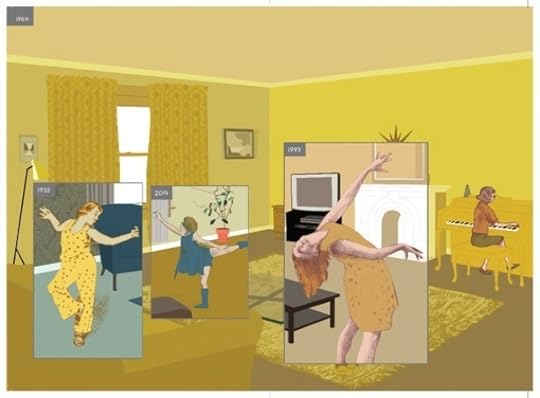
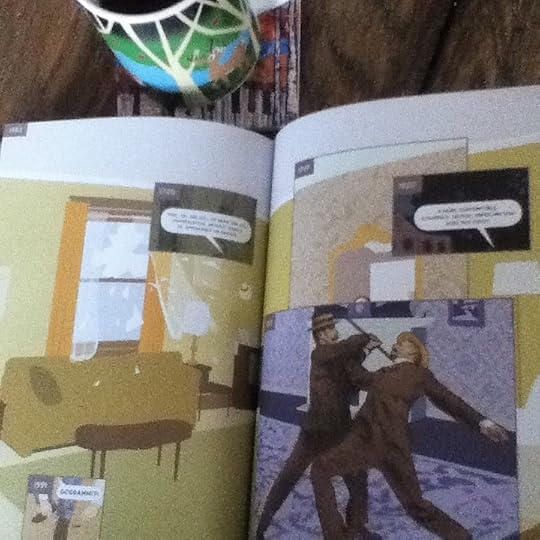
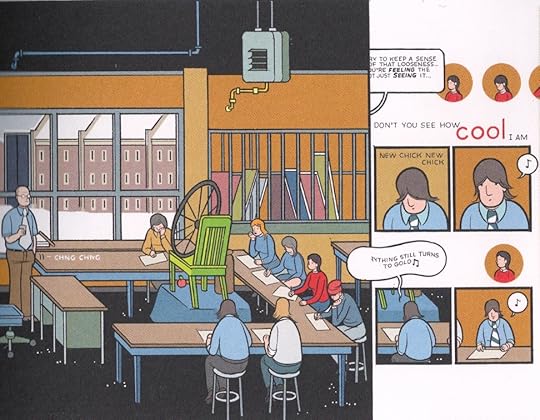
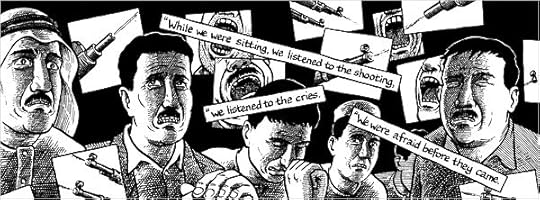
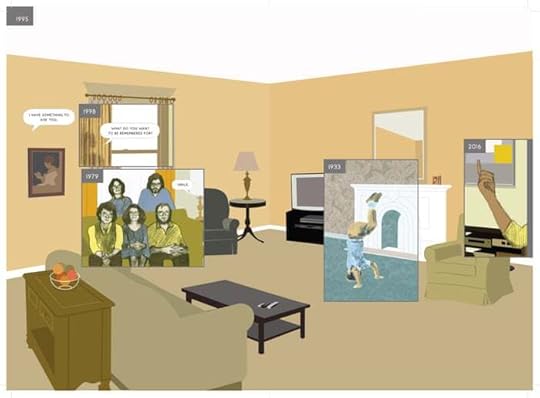
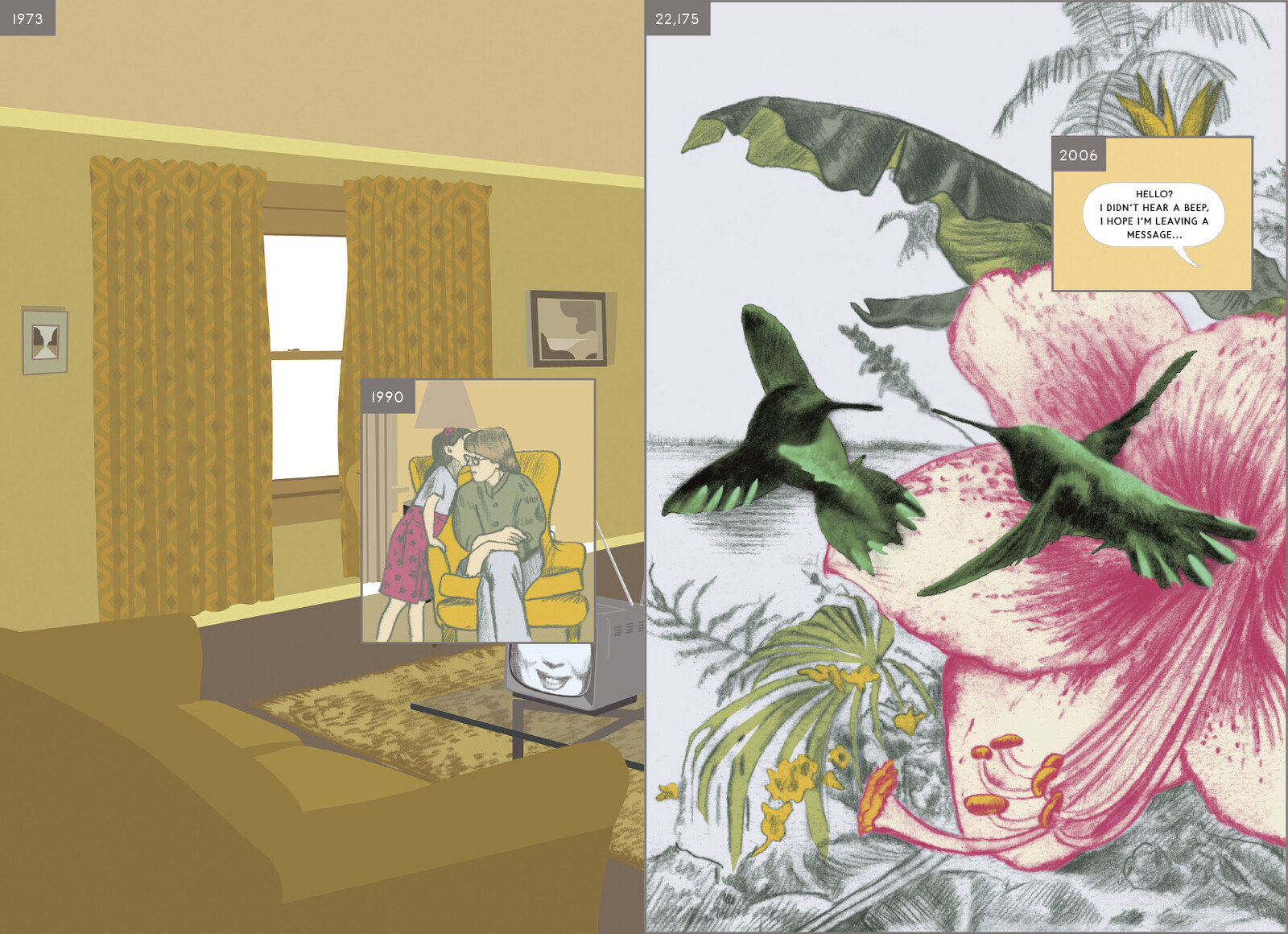
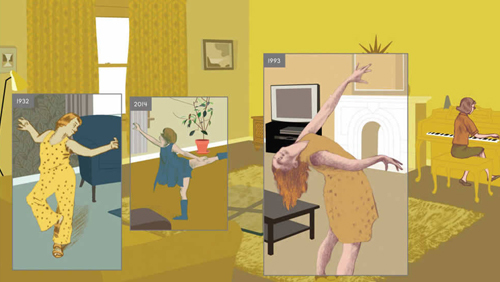
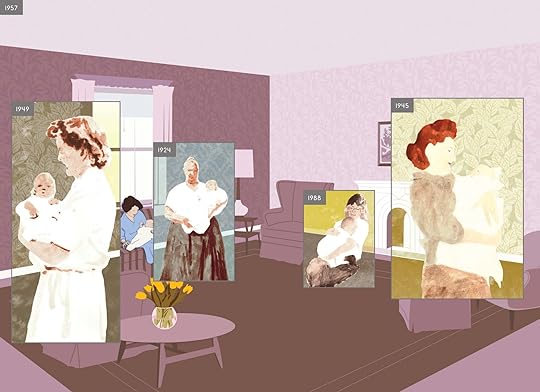
Original review 1/20/15: I read this a a couple months ago and was convinced it was a great work but couldn't exactly say why, which is a particularly lame reviewing comment, worthy of stopping yr reading right there, maybe. I have now read it 3 times and will read it again, but thought I would pause to say I read it one of these times in a classroom with maybe 15 really smart senior undergrads and grad students, all English majors, only one with any art background, some of whom had just wrestled with Ware's also formally challenging Building Stories. And we (the class) still can't exactly figure all of it out but I think we all all into it. On one level, it is clear that it is a meditation on time and space, as it explores one specific location on the planet over human history and the future. There are almost no words, except those incidental to a scene, so it is mainly silent, and none of the words reveal anything approaching a story. So it's essentially non-narrative--except that space/time aspect--a pastiche or collage of visuals, sometimes whole pages devoted to one scene, sometimes many pictures on a page, some all in the present, some extending over multiple years. Each picture is dated, so with some work you can begin to construct mini-narratives or anecdotes about various aspects of the book. Some sense of history.
This book began with a 6 page comic in RAW in 1987 and now, more than a quarter of a century later, we get this fully realized gorgeous volume that extends some of the principles that most comics artists at the time and thereafter recognized as revolutionary. I am a narrative guy, like most people, so initially couldn't see the big deal, but I think in part this is because I don't have enough comics or art background, and because the point of this representation is that it is NOT fundamentally a story. It uses the comics medium to explore a series of interrelated concepts. It's a conceptual or abstract comic; it's also a meta-comic, about what it is the comics medium can do to represent the space-time continuum in ways other arts cannot. And McGuire is also a filmmaker, so he knows that difference. And a musician, with Liquid Liquid. And an illustrator, and maker of picture books for all ages.
So in my class we decided to each take one aspect of the book that interested us--color, animals, children, narrative, whatever--to see if we could assemble a kind of collective interpretation of the book. And patterns form. But I think I really like this work in part because I don't quite fully understand it, because it bears rereading and mining for meaning. It's not obvious in the least what it is about. Like the best art, not easily reducible to written comprehension.
Chris Ware, no stranger to conceptual and meta-comics himself, wrote a review of it in The Guardian that acclaimed it as the greatest comics accomplishment of the new century. He may just be right. It is not particularly emotionally engaging, not being grounded in the personal lives of persons, but on the level of ideas it is definitely engaging.