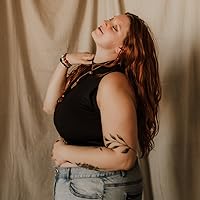
Following the tradition of Nikky Finney, Krista Franklin, and Morgan Parker, Good Dress documents the extravagant beauty of Black relationships, language, and community.
In her debut poetry collection, Brittany Rogers explores the audacity of Black Detroit, Black womanhood, class, luxury and materialism, and matrilineage. A nontraditional coming-of-age, Good Dress witnesses a speaker coming into her own autonomy and selfhood as a young adult, reflecting on formative experiences.
With care and incandescent energy, the poems engage with memory, time, interiority, and community. The collection also nudges tenderly toward What does it mean to belong to a person, to a city? Can intimacy and romance be found outside the heteronormative confines of partnership? And in what ways can the pursuit of pleasure be an anchor that returns us to ourselves?
A pleasure to read a poetry debut from a Black poet from Detroit. I’m not of Detroit nor Black, but I am Michigan born and raised and the nuances to this layered series of place-poems were a treat for the references I was able to parse out on my own (and many thanks for the added teachings in the final Notes section for the rest).
Rogers has immense talent for navigating the personal with the external. Reflecting on womanhood, queer exploration/repression, the church, complex parental relationships, grief, and Black Americans in Detroit in history and the present… there’s a lot here and Rogers traverses it all with a shockingly few amount of words (she didn’t need any more). Take my clumsy musings here for the sloppy efforts that they are and just stop here and read the collection for yourself, it’s better than I’m able to describe it.
Also, it goes without saying—fantastic collection of prose. Don’t miss this collection! I’m already looking forward to Rogers’ next one.
It’s not often that I come across poetry that makes me contemplate such a wide variety of topics: what grievances and guilts linger, how we love what we love, and all the ways a person can move through the world.
GOOD DRESS, the debut poetry collection of Brittany Rogers, is equal parts loving and scathing, exploring childhood memories, manifestations of love, and the tensions between sexuality and religion.
It opens with a bang with “Money,” where a riff on a Cardi B video expands into musings on the true meaning of luxury. In “On Our Third Anniversary,” a gifted charcoal grill becomes a story of missed inheritance, dementia consuming her grandmother’s cooking secrets before they’re known. You’ll find a love letter to a friend in “The Year They Left Everyone to Die,” along with honest meditations on the struggles of motherhood. Across several poems, Rogers revisits her strained relationship with her father and the church.
As a Detroit-born poet, Rogers imbues her work with callbacks to her hometown (the Pistons get a couple shout-outs), from the complicated nostalgia of the Detroit Public Library to mourning the loss of a familiar street. The poem “328 Macomb” touches on the underappreciated history of Elizabeth Denison Forth, a Michigan woman born into slavery who became a landowner and philanthropist.
The collection also advocates for practicing self-love, not in the therapy-speak kind of way but in the raw, honest, vainglorious way that women—especially Black women—are told not to embody. Some poems are tonally reminiscent of Sandra Cisneros, one of my favorite poets. Rogers reclaims the narrative of female sensuality in confessions of sneaking out erotica novels from the library and her stories of conquests that need no justification. As with Cisneros, the voice is unapologetic and all the more beautiful for it.
Like a good album, GOOD DRESS has its refrains, with poems in the shape of self-portraits, therapy forms, and offerings at the altar of Flo Milli. The poet delights in these fresh approaches, with one of the strongest on display in “Good Ground,” a series of associative sections where lines from the end of one part are echoed in the next as the narrator strives to unearth lost family history.
I could list half the poems in this book as favorites (among them “To Tenderness,” “Elegy,” “Throwback Night, Midway Skating Rink”), but that’s just the type of collection GOOD DRESS is—one that deserves to be given vases of sunflowers.
Thanks to the publisher for an advanced copy in exchange for my honest review.
I liked "money" "I lost my virginity after making a pact 'to become women' with my cousins" and "ode to my mama and 'the purple dress,' circa 1992-1993"
Multigenerational female family relationships as a theme always gonna do it for me
Ok, I received "Good Dress" in the mail this week (thank you Tin House !) , and I thought I would just give it a quick browse and come back to it later. But nope. Brittany Rogers put words to paper that had other plans for me. It pulled me in. I had to consume it at once, and take time with each one. This is not just a collection of poems. These poems are novels. Don't tell me otherwise. Each one is so descriptive and packs as much into it as any book I've read. A coming of age collection, a Black Detroit collection, a Black woman collection, a collection exploring relationships outside of the heteronormative. Reflective and informative and personal, I will be returning to this collection again (and again).
Absolutely gobsmacked by these poems. I’ve been so seriously using the library lately but I decided three-check November called for a trip to the bookstore. Started browsing in poetry and found myself straight-up reading two thirds of this in one fell swoop. Found a companion book (more soon) and then savored them all week. . Here’s the blurb from the back: “[it] “documents the beauty and audacity of Black Detroit, Black womanhood, community, class, luxury, materialism, and matrilineage.” Yup. A window into a person and a place entwined. . My favorites are: —My Father Tried —The Year They Left Everyone to Die —Blackout, August 2003, Detroit —Ol’ Dude at the Gas Station Think He Flirtin’ . but really I loved the whole thing. I loved all the library poems, the ice cam poems, and all the love letters to her grandmother. I loved the tone, and the succinctness of her imagery—these are not long sprawled out ramblings, she gets *right* to the point. . “What is it about the end of the world makes you think you are owed an explanation?”
When these poems hit, they hit hard. My favorites include "Bedside Baptist", "Elegy for Remembering", "Benediction, Israel Baptist Church", and "Treatment Plan", one of the many poems in this collection that take on the form of some sort of paperwork from a psychiatrist's office.
I think I will remember these lines for awhile: "My father wept when he saw me in my wedding dress. What is it to love / a man most moved by watching you vow to obey?..."
(Thank you to NetGalley and Tin House Books for this e-arc.)
~Thank you to Tin House for providing me an ARC in exchange for an honest review~
An emotionally raw exploration of Blackness, queerness, motherhood, and the Detroit Public Library system from breakout poet Brittany Rogers. I really enjoyed Rogers' unique, diverse use of form and lovely rhythm as she discusses themes of love, class, and community. I'm looking forward to reading Rogers' future work. My favorites from this collection include "Money," "My Father Tried," and "Black Out, August 2003, Detroit."
GOD just so fucking good. elegant & fun & Heart-Wrenching, stunning engagements with history & the contemporary. one of the best debuts I've ever read honestly but kinda to be expected from someone as thoughtful + engaged with other writers and art as Brittany!
"I will not settle for anything less than sunflowers. In every room, a vase full of their ornate faces, bone-straight backs."
Beautiful. Such a vivid collection, with life and love pouring out of every word. It was a slower start at the beginning but by the time I got about a quarter of the way through I was finding something new and fantastic in every poem. Particular favorites were all the therapy form poems, "Good Ground", "Flo Milli Shit", "All the Reasons I've Said Yes", and the final poem which was a perfect ending.
from "Upbringing": "I grew a mouth like the grown men in my hood. Bouquet of tattoos / across my shoulders. Where brown hair was, a field of watercolors."
Love the picture of the bare footed black woman rocking an afro on the front of the cover! Inside the book, the poems stand on a foundation of creativity and rawness, seasoned with nostalgia that I know well as a native Detroiter.
Brittany Rogers’s Good Dress is a wonderful debut collection, sustained by the feeling of end-of-summer reflection—those final days where one is uncertain whether the sun will sweeten or sour memory.
There’s a lot to admire here, particularly because Rogers covers so much thematic ground without the book ever feeling unfocused. Broadly speaking, each of the themes touch on a coming-of-age experience, but they coalesce because the writing seems so rightfully self-assured. We see nostalgia without cliché, and it’s immensely satisfying to follow a speaker who is in the pocket, simultaneously feeling herself while grieving what it took to get to that point.
Poems often live or die based on their turns, and Rogers maintains such enigmatic precision in how she does so, both stylistically and thematically. She clearly has a well-honed skill and a gift, and it feels almost mysterious to watch her pull so many disparate elements into conversation. She dances between archaic forms and register and hip-hop-tinged looseness, and she pivots effortlessly between sensorial descriptions of food and existential abstractions. These are poems that make you want to eat at a cookout before suddenly satiating that hunger with symbolic meaning.
I suspect different readers will gravitate toward different parts of the book, but I love the poems that wrestle with the distance between a public, documented self and a private self. Through repeated interludes from the Detroit Public Library—like an explanation of debt—or therapy-related documentation like “Intake Form,” the speaker presses against the constraints of “official” language, often allowing readers to see the space between a factual explanation and a truthful explanation. To me, these poems encapsulate the book's core.
Good Dress is so thoughtful about the ways society tries to simplify Black women, and Rogers offer the counterpoint of complexity at every turn.
We reach our arms across the circulation desk and ask for more than they have given us.
- "Self-Portrait as Detroit Public Library, Franklin Branch"
---
He didn't notice my polished toes / my doe legs smoothed with cocoa butter; how carefully I shaved;
- "I Lost My Virginity After Making a Pact / 'To Become Women' with My Cousins"
---
She swears she's here to stay, but the only honesty is death. She reminds me she'll meet the Lord one of these days. I don't want Him to have her. Forgive my blasphemy. She's where I get my ornery tongue. She is where I get my everything. You expect me to give that up? I belong to this line of daughters; before I was born, her kin.
- "Good Ground"
---
I ordered the Fenty months before the last birth, after the miscarriage drug grief by its mangy neck and left the remains—leaky, foul, ruining my clean floor.
I tell myself I earned the impractical—sex, sheer panties, splurging—as I rush to get my purse, stepping over the bills pooled at the front door.
- "Flo Milli Shit"
---
The sun nudges the curtains open, draws me close enough to kiss her heat. I put on the lace, midday, and pose—thigh cocked over milk-drunk sheets.
- "Flo Milli Shit"
---
once I’m tricked into thinking I’m too old for miniskirts, the glory of exposed thighs, large hoops? I imagine my children squinting at old photos proof that I was a woman _before_ them, thinking in this picture _my mama know she fine._
- "Ode to My Mama and 'The Purple Dress,' circa 1992-1993"
---
I know what they say of the hiss of vanity, how it holds me back from heaven. I know also how grief folds my voice into its back pocket. Don’t think me dramatic. People have died touch-starved, penniless. I will not settle for anything less than sunflowers. In every room, a vase full of their ornate faces, bone-straight backs. Everything keeping me alive is the most beautiful.
Following the tradition of Nikky Finney, Krista Franklin, and Morgan Parker, Good Dress documents the extravagant beauty of Black relationships, language, and community. In her debut poetry collection, Brittany Rogers explores the audacity of Black Detroit, Black womanhood, class, luxury and materialism, and matrilineage. A nontraditional coming-of-age, Good Dress witnesses a speaker coming into her own autonomy and selfhood as a young adult, reflecting on formative experiences.
With care and incandescent energy, the poems engage with memory, time, interiority, and community. The collection also nudges tenderly toward curiosity: What does it mean to belong to a person, to a city? Can intimacy and romance be found outside the heteronormative confines of partnership? And in what ways can the pursuit of pleasure be an anchor that returns us to ourselves?
This book provides voice to Black women of today. I enjoyed the snippets of life and plan to revisit these verses as I do with the standouts on my favorite mixtapes.
Thank you to the publisher and NetGalley for providing this eARC.
Good Dress is the debut poetry collection from Brittany Rogers which digs into a range of topics, from race and sexuality to generational trauma and religion.
It's not often that a poetry collection comes around and immediately sweeps me off my feet, but Good Dress did just that. I'd even make the argument it's probably the best poetry I've read this year. Each poem is richly poignant and masterfully written, and I often found myself surprised, or deeply moved, or immediately compelled to reread and soak in the words a bit longer. Rogers' voice is unique and clear on the page, the strong through-line that ties each of these poems even more together than their intertwining themes and occasional reference to Detroit. I could list my favorite poems from this collection, but I fear that it would simply end up being the table of contents, so I'll just say this: if you're in the market for an absolutely stellar poetry debut collection, Good Dress is one you won't want to miss!
So many things to like about this book. The language is direct and forceful, with a full range, from the street to the stars. Although I cannot be a judge of the picture of Black Womanhood, I believe all of this. And I do know Detroit, so the place references resonate with me. I loved the devotion to the various branches of the Detroit Public Library! At several moments I said to myself that I couldn't believe this was a debut collection; Rogers is so sure of herself and confident in her expression.
I also liked the several times she interjected social service forms and came up with the. unique answers to formulaic, bureaucratic questions.
I could pick out many favorite lines through the whole book, but here is how it ends:
Don't think me dramatic. People have died touch-starved, penniless. I will not settle for anything less than sunflowers. In every room, a vase full of their ornate faces, bone-straight backs. Everything keeping me alive is the most beautiful. Every day's color is yellow.
Good Dress is arguably my favorite poetry collection of 2024. In general, I enjoy poetry as a genre, though I sometimes struggle to understand what the poet is talking about (typically the result of confusing language, oblique references, or convoluted imagery). For me, reading Brittany Rogers' poetry was the opposite experience. What I LOVED about her writing was the way that I could access the meaning and feeling of the poems, even if I wasn't particularly familiar with the subject matter. Rogers' writing style is descriptive, clear, vulnerable, and evocative. The poems, a collective tribute to being a Black woman in Detroit, are told in a particularly creative way, sometimes through library overdue notices, patient intake forms, or confidentiality policies, and I loved this experimental approach to her writing.
Thank you to NetGalley and Tin House for my advanced copy. I'm looking forward to reading whatever Brittany Rogers may write in the future!
A collection of poems about identity, being Black in America, Detroit, and family.
from Hunting Hours: "Fooled them. Most girls shy / away. I glutton. I devour. / I do not wait to be made a meal of."
from Blackout, August 2003, Detroit: "What is it about the end of the world, / makes you think you are owed / an explanation? From God. From / your mama. From the boy who ghosted / months ago, when the air became / more steam than breeze, his number / still memorized and half-dialed each evening. / You would chase him down, make him answer / to you while the streetlights are silent, / but this block, this city, don't know / how to tell us apart in the daylight— / done swallowed whole bodies / before this night, ripe for disappearing."
from Ice Cam, Little Caesars Arena, February 2023: "This grief heavy, wrapped around our throats. / Oh, how it makes us casket-sharp, / so flashy the cameras / can't bear to look away."
Rating: 4/5 (Gifted a copy on NetGalley in exchange for an honest review)
Good Dress is a strong debut poetry collection from Brittany Rogers and was a pleasure to read.
Thematically rich, Good Dress covers family troubles, murky relationships, local history, and a life attempting to hold steady against rough tides. While this means some ideas can feel initially scattered or, even worse, be compelling enough you wish the book was just that (I adore the running library poems!), they all come together in the end as a portrait of everyday life, with its immediate problems, looming history, and daily surprises. I really would like to see Rogers’ next collection as I feel it would be really easy to keep improving on this one.
Good Dress had a variety of topics but I found it fairly approachable. It would be a good book for even a casual poetry reader.
Killer collection, as strong and sharp as any I’ve read in ages. Black Detroit lives and breathes across these pages and poems, and Brittany Rogers leaves a trail of flames in her wake. Trying to comment on why any particular poem is great always feels (to me) like it cheapens the work a little bit, or requires a full blown essay to dissect themes, style, voice, choices - I don’t have the energy or know-how to do that. But I can say these poems hit exactly right. You know a poem hits right when you read it, nodding to yourself the whole way through, and you find yourself dwelling on a particular turn of phrase or idea that feels especially audacious or raunchy or painful, but more than anything feels true. Everything in here hits like that - sharp as hell, tuned just right. I loved Good Dress straight through. You should read it.
Oh, how it makes us casket-sharp,/ so flashy the camera/ can't bear to look away. - Brittany Rogers, "Ice Cam, Little Caesars Arena, February 2023"
Rogers understands that sometimes we are most alive when no one can refuse to see us. This collection is adorned with beauty & audacity, a chorus of language that asserts itself in jewels and music. All of Detroit is dancing through this book, the city a tapestry Rogers looms with a nail tech's precision, a braider's deftness. What some think as gaudy is better understood as a kind of love that transcends our feeble notions of shame. Granny's voice reminds us home is a place they can't take from us. The ice on our necks tether us to our kin. Even in the dark, a city can flash its teeth, every nigga a star no one can snuff out.
This debut poetry collection offers a profound exploration of what it means to be a Black woman in Detroit. Brittany weaves in elements like overdue notices and intake forms to provide a fresh take on womanhood,community, sexuality, and relationships.This experimental approach gives the collection a raw, evocative edge that’s hard to forget. While different readers may connect with various parts of the book, I was particularly drawn to the poems that delve into the contrast between our public selves and private lives. Thank you to NetGalley and Tin House for this advanced copy—I can’t wait to see what Brittany Rogers has in store for us next!
Read in a day, but the words still stick with me. Beautiful book of poetry about childhood, family life, and the beauty of Detroit. Anxiously awaiting her next book. Favorite quotes: “I want enough coin to relax, to spoil my damn self, to tend to the baby, gasping and rooting, for milk without worrying about ruining my good dress.”
“In some states, sunlight is a myth whispered by folks who are from not there.”
“My father wept when he saw me in my wedding dress. What is it to love a man most moved by watching you vow to obey?”
It’s always such a treasure to read about places I’m familiar with, and given the Detroit setting, I had plenty to recognize. This is a thoughtfully constructed book of poetry, with an abundance of well-crafted poems and themes. If I had to pick a favorite, it may have been Self-Portrait as Detroit Public Library, Franklin Branch, a cutting commentary on education and literacy funding and policy. Anyway, it’s a strong debut.
Obviously this is a good one for my fellow Michiganders, but also those that love raw, honest poetry.
An excellent collection of poetry on the topics of race, sexuality, misogyny, abuse, and generational trauma. Rogers poetry is well crafted and accessible for poetry readers of any kind.
My favorite poems are: "Self Portrait as Detroit Public Library, Franklin Branch Library", "Rock The Boat is a Song About Strapping", and "Black Out, August 2003, Detroit."
The person who said Brittany Rogers wrote tf outta Good Dress ain't never lied! This collection is part mirror, part window. The undeniable glimpse into Detroit's audacious blackness is matched by the deep dive into womanhood, spirituality, and sexuality that sparks introspection. This is a book you will read more than once and each time you will discover more about yourself and your place in the world. Good Dress is more than just good... it's inimitable!