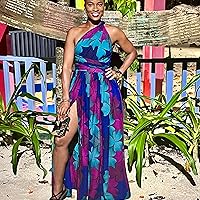
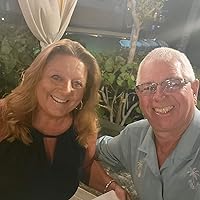
"Throughout her life my mother [Doris] lived in two places at Kingston, Jamaica, where she raised a family of nine children, and Harvey River, in the parish of Hanover, where she was born and grew up."
In the tradition of Michael Ondaatje's Running in the Family and Carlos Eire's Waiting for Snow in Havana comes Lorna Goodison's luminous memoir of her forebears—From Harvey River. When Doris' English grandfather, William Harvey, discovers a clearing at the end of a path cut by the feet of those running from slavery, he gives his name to what will become his family's home for generations. For Doris, Harvey River is the place she always called home, the place where she was one of the "fabulous Harvey girls" and where the rich local bounty of the land went hand in hand with the Victorian niceties and comforts of her parents' house. It is a place she will return to in dreams when her fortunes change, years later, and she and her husband, Marcus Goodison, relocate to "hard life" Kingston and encounter the harsh realities of urban living in close quarters as they raise their family of nine children.
In lush prose, Lorna Goodison weaves memory and island lore to create a vivid, universally appealing tapestry.
Lorna Goodison was born in Jamaica, and has won numerous awards for her writing in both poetry and prose, including the Commonwealth Poetry Prize, the Musgrave Gold Medal from Jamaica, the Henry Russel Award for Exceptional Creative Work from the University of Michigan, and one of Canada’s largest literary prizes, the British Columbia National Award for Canadian Non-Fiction for From Harvey River: A Memoir of My Mother and Her People (2007). Her work has been included in the major anthologies and collections of contemporary poetry over the past twenty-five years, such as the Norton Anthology of Modern and Contemporary Poetry, the Harper Collins World Reader, the Vintage Book of Contemporary World Poetry, the Norton Anthology of World Masterpieces, and Longman Masters of British Literature.
Along with her award winning memoir, she has published three collections of short stories (including By Love Possessed, 2011) and nine collections of poetry.
Her work has been translated into many languages, and she has been a central figure at literary festivals throughout the world. Lorna Goodison teaches at the University of Michigan, where she is the Lemuel A. Johnson Professor of English and African and Afro American Studies.
Beautiful, utterly beautiful… a memoir from a daughter about her mother…. The BEAUTY!
A sweeping memoir set in Jamaica starting from the 1890s to the 1950s with Lorna’s mother Doris Goodison being the center. This book is packed with history of fascinating tidbits about Jamaica, in writing about her mother, Lorna Goodison takes us in what is was like living in Jamaica during that particular time period and she did it so seamlessly. This is a beautiful memoir that I highly recommend to Jamaicans or anyone who loves history and strong females.
From Harvey River: A Memoir of my Mother and Her Island we are introduced to the Harvey family, how they came to settle in Hanover and develop an entire community around the Harvey River. Lorna introduces us to her Great Grandparents, Grandparents, and every other family member who came from English, African and Irish heritage. We meet Margret and David and their offspring who included Doris who is Lorna’s mother. Lorna writes about her mother meeting her father, moving from her childhood home of Lucea to St. Elizabeth, then to Kingston. We see how her life changes with each move and what it means to raise a family in Kingston through sheer grit. I know I keep using the word Beautiful to describe this book but that is exactly the feeling I got when I read this book. It was pure, it was joyous and truly an ode to Jamaica, a Jamaican family and daughter honoring her mother. The book was so easy to read because of the writing, Lorna totally immerses you into the Harvey/Goodison history to the point where you felt like you knew each of them individually.
There are so many greatness contained in this, there is the history of Jamaica- we learn so much about what is happening at each time period. From the Morant Bay uprising, to the abolition of Slavery, the change in rule, there is so much social commentary that shows us the thinking at that time. There such atheneite and simplicity in how the family was depicted. I particularly loved the depiction of a family from the country because I am from the “country” part of Jamaica and a lot of what the Harvey clan went through felt so familiar.
I loved how Goodison wrote about the community the family finds themselves surrounded by. What some family member faced when migrating. Themes such as love, grief, loss, religion, migration, family and hardships are explored in such depth. I do not know how Goodison is able to convey so much in so little space.
I could gush and go on and on about this book, I wish more people would read this masterpiece.
The current read for the World Literature Group on Goodreads, Lorna Goodison represents the "middle generation" between Claude McKay (whom she read in school as a "classic") and the more recent Jamaican writers we have been reading for the group (such as Kei Miller and Margaret Cezair-Thompson); she is a poet and story writer who now teaches in Ann-Arbor (unless she has retired or died in the last ten years). To make a more personal connection, she was born about midway between my parents and myself, and her mother was almost exactly contemporary with my maternal grandmother. I read one of her poetry collections earlier, and will be reading a collection of her short stories next. The subtitle is somewhat misleading, as the book deals with her entire family, and is almost more about her grandmother Margaret and her many aunts and uncles than about her own parents (her mother was one of eight children, and the author has eight siblings of her own). This is a Jamaica which is poor but less violent than the Jamaica of Cezair-Thompson and Marlon James, perhaps because much of the book takes place in Harvey River, a rural area where the Harveys (her mother's family) are the original founders, although the later chapters move to Kingston; perhaps because she moved to the continent (New York, Michigan and Toronto) about a decade before the violent period described by those authors. As with her poetry, it is less political and more personal than the other Jamaican writers I have read. The book is largely about people, and she brings them to life, not only the family members but even those neighbors and others who only feature in one or two paragraphs; the style is more like fiction than I expected in a memoir (and she admits to have adjusted some details, especially of chronology, for the sake of the narrative.)
A wonderful family memoir of a Jamaican family in the late 19th to early 20th century. The third Jamaican author my book club is reading during this year's Jamaican literary journey. The setting of her story is radically different from the Jamaicas we have encountered in Kei Miller's and Margaret Cezair-Thompson's work. Goodison's Jamaica is calm, quiet, pastoral and remarkably non-violent. She traces her mother's side of the family, focusing closely on the lives of her strong and strict grandmother Margaret and her strict and loving mother Doris.
This memoir felt like stories told amongst relatives over a long family meal. At times it was heart-warming and funny. Sometimes boring and slow-going. But in general, it felt like oral history. So, I'm glad to have read this work in order to get a different perspective of Jamaica. Goodison's prose is clear and evocative. She is very good in bringing the old Jamaica back to life. She mentions songs people listened to back then, habits and the way of life before urbanization and the inevitable, gradual changes that occur in any society. Goodison's description of the relationship between colonial Jamaica and the colonizer Britain was very interesting and went beyond the usual, cold and simple narrative of economic colonization. She evoked a time when Britain was still referred to as the "motherland." By the end of the book, I didn't want the memoir to end, because I felt so attached and close to the characters. Definitely a very nostalgic story.
Read this book to "absorb" Jamaican culture, with a little history thrown in. The author gives us an amazingly honest appraisal of her family (not only her mother, but also siblings and aunts and uncles and grandparents) and their relationships to each other. It is amazingly true that each one of us has a character that is unmistakable. One is happy-go-lucky, another is dour. You look at all these people from the same family and each one has a particular essence. There is no way you can mix up one with the other. I liked the honesty of the book, the honesty with which the relationships are depicted.
Don't you sometimes wonder what one's own essence would be if it were to be summarized in a book? How would I be described?
I found the Jamaican dialect, untranslated in this book, confusing, even if it does promote the ambiance of the time and place.
From Harvey River by Lorna Goodison is a memoir of her mother and her island. The author through her maternal family's story brings to you pre-independence life in Jamaica. She beautifully brings the food, the landscape, the language and the culture into the story. She shows the country life, the town life and the hard city life. She introduces us to all different ethnicities living in the island as a result of colonialism. Native Indians, Africans, English and Indians. Her family belonging to the upper class of society, see both the luxuries of mingling and marrying European men. But also the downfall that came with the war and above all of not being considered English enough. The book is a light, heartwarming read. I like how she brings in the history of the place, the art, architecture and literature, while narrating her mother's life.
I don’t usually read memoirs and have no idea what possessed me to read this, but I'm so glad I did. It felt like someone taking me by the hand and walking through their history. Lorna puts so much care and compassion into describing her mother's family that I felt like I was sitting in their house and watching events unfold.
When Doris moves to Kingston, there's an incredible chapter about how her family members impact who she is - her grandfather's memory telling her to slap the woman bullying her, her father telling her how to take care of her patience, the memory of them live on. It's beautiful.
Another 4.5er. This didn't feel like a read but a sail. 100 pages went by in 15 minutes. Heart full.
Update: December 26, 2019.
To read this is to savour sweetness beyond compare: a book that will go down your throat smooth and sweet as honey and make your heart full.
'From Harvey River' spans 3 generations of a Jamaican family from the late 19th to the late 20th c. The first half focuses on Goodison's grandmother Margaret, her husband--both the offspring of interracial couples--and their 7 children in Hanover. The second half centres her mother Doris, her parents' marriage, and their move from the plentiful countryside to "Hard Life" in Kingston, the nation's capital.
I'm not a memoir reader but I have a special relationship with Goodison's poetry. While another writer's move into memoirs would have made me curl my lips, I inwardly shrieked when I saw this book on the nonfiction shelf.
For the few days I sailed through this read--the 1st time years ago, the 2nd in February--I wore a silly grin the entire time. Goodison's Jamaican English is simply the prettiest I have ever seen: lyrical, light, buoyant, playful. It's strange but it almost didn't feel like reading, as though she had skipped a step in the process to conjure the words directly into my neural pleasure network.
To know this family is to know Jamaica. At least, a facet of Jamaican life at a particular time in the smallest island parish, Hanover. Goodison pairs family history with relevant research to reveal home, parts known and parts previously hidden behind a mist. You will not step a foot in this book's land without deft delineations of the people's history and culture palpable in every aspect of everyday life.
This is a different Jamaica than what you may have read in more popular novels but it is one of our truths, lovingly elucidated. (This includes Goodison's less than respectful/understanding portrayal of Rastafari, a far more common attitude in Jamaica than outsiders would first assume.)
The book traces the fall of one family from a life of abundance in rural Hanover, Jamaica to a "hard-life" in Kingston, Jamaica in the mid 1900s. Lovers of Goodison's poetry will be interested to see that she weaves lines from past-published poems throughout the narrative. Particularly interesting from a historical point of view, Goodison traces her family tree as far back as her Great Great Grandparents, who on both the maternal and paternal sides of the family were pairs between black Jamaican women descended from enslaved Africans and white European men visiting the island in the height of British colonialism. The book lends insight to the complex racial history of many families in Jamaica and illustrates chilling memories of pre-emancipation Jamaica. Also very interesting, by the time the family moves to Kingston Goodison is able to catelogue Independence and pre-Independence as well as the intellectual/political revolution which led to full adult sufferage and the emergence of a black empowerment movement (Marcus Garvey) and Rastafari. These historical anecdotes are, however, minor in comparison with the main focus of the memoir, which is on the lives and experiences of Goodison's family members.
A fictionalized memoir of Lorna Goodison's mother Doris as well as Doris's siblings and descendants from the family tree of the Harveys and Wilsons in Jamaica, at least back to the great-grandparents of the early nineteenth century. There are photographs of Doris, Doris's mother and father, and Doris's sisters known as 'The Fabulous Harvey Girls'. Among the highlights are distinctive characterizations through detailed stories about the characters, the social context in which the ups and downs are lived, the inward and outward responses to those changes of fortune, the nurturing environment of foods, childrearing, luxuriant nature, rural bountifulness, adolescent social life, &c. Besides recreating her family's lives and surroundings and bringing her imagination into play to do so, Goodison sometimes transcends the worldly into disembodied dreams about her ancestors.
I have often said that prose can't carry a novel, and that's true--without something to say, prose is just words. This novelised memoir, however, is fascinating both due to its subject matter and the writer's prose. I devoured it in less than 48 hours, swept along by the strong characterisation and hypnotic, lyrical writing. After several less than felicitous reading choices over the past month or two, this was just what I needed.
This is both a richly textured memory of Goodison's childhood in Jamaica, and an evocative history of her people there, long before she was born. After time spent in Canada and the States, she has become the Poet Laureate of Jamaica, so her love of the place as captured here is now clearly reciprocated. And it needs to be said: This is a book about Love! Above all else, it is that.
This is a nice story of a family living in Jamaica, but it is to its detriment that I happened to read The White Woman on the Green Bicycle first. Nothing could be quite as compelling or vibrant after that! I also wish this had included more information on Lorna's life, because I think that would have put more of her mother's life into a perspective.
As far as culinary inspiration, I need to track down a recipe for a gratto!
"The girls had a particular fondness for the small, buttery loaves called gratto, a word which was probably a corruption of the French "gateau."
"Aunt Fanny was their father David's sister, and she ran the bakery with her husband, a silent man who had traveled to Panama and there learned the art of baking. In his case, he had learned the secret art of baking, for he refused to share his recipes with anyone, including his wife. He insisted on being alone when he prepared the dough for the buttery gratto and French bread, the meltingly delicious cashew and molasses biscuits, and the fancy pastries."
I loved the family and friends in "From Harvey River" by Lorna Goodison. I especially liked the seamstress. All of the women would gather in her home to wait for the finish of their wedding dresses. This woman had a heart full of hospitality. Lorna Goodison writes that the cooking pot had a bottomless bottom. Always a meal there for children in the neighborhood or other family members.
I hate to see the memoir end. I have learned much about the Jamaicans. I did want to know more about their time under the ruler ship of the Queen. My questions were answered. I'm surprised the Jamaican language is so easy to read except for when I began reading Phantom's account. He used "I" a million times. I felt so badly when Lorna Goodison's Grandmother died. She and the brother, Flavius, shared their grief beside her favorite place, the sewing machine.
There really is so much to write about the memoir. I wish there were another book. I, at least, wish there had been more time to learn about the sisters in Canada.
I don’t know if I can even find the words to describe how I feel about this book. It is a story of family, perseverance, life and death, struggle and history. I really connected with the story. It made me long to know my grandmother’s mother, her father, to know more about her sisters and brother. It made my heart ache for my grandmother who was really my link to Jamaica. The person who connected me to an island I had only been to once, up until this year. I think when we lost her my connection to Jamaica grew stronger, in my wanting to be close to her. When I saw her name in this book I cried. I wasn’t expecting it and it took me completely off guard. It was beautiful to simply see a family’s history that reflected my own on a page. Moral of the story is, go read this book if you want a warm heart, to laugh out loud and eyes filled with tears. It is magical.
I enjoyed this book. It presents the history of Harvey River in Jamaica and the lives of the Harvey's who founded the town. It follows three generations of the author's family. I thought the book could have been more politically and historically anchored (outside of the family history) - although she certainly does cover themes of slavery and there is a small section of Rastafari (mainly a negative light).
This memoir was a little disjointed; I kept getting the generations mixed up. I was also confused about where the Harvey River was.....I thought it was in the States! It took me awhile to figure out that the family lived in rural Jamaica and relocated to Kingston. My nephew married a girl who grew up in Jamaica, and I was curious about the culture. It's a great narrative of the Jamaican culture. Very interesting.
A really touching memoir. It got a little confusing with all the different generations involved, but I loved how many details were included for each family member. And luckily the author included a family tree at the beginning of the book :)
This is an amazing exploration of the life of a very real woman with the dilemmas of a real woman. What courage! And what lyrical writing. this is the kind of book you read and re-read!
Lorna Goodison's "From Harvey River: A Memoir of My Mother and Her Island" is a captivating tapestry of humor, vivid memories, and profound reflections, weaving together a rich narrative that chronicles Jamaica's evolution from the 16th to the 20th centuries. Goodison's remarkable storytelling ability shines through as she paints a vivid picture of her mother's life and the broader historical context of Jamaica's development. The memoir's irresistible charm lies in Goodison's ability to draw readers into the heart of her family's story. Her personal anecdotes, infused with humor and warmth, create a sense of intimacy and connection with the characters, making the narrative both entertaining and relatable. Goodison's attention to detail and her ability to capture the essence of life in Jamaica during this era make the memoir a treasure trove of historical insights. The book's seamless blend of personal and historical narratives is particularly noteworthy. Goodison skillfully interweaves her mother's story with broader historical events, providing a unique perspective on Jamaica's social, political, and cultural transformations. This approach not only enriches the memoir but also serves as a valuable educational tool, offering readers a deeper understanding of Jamaican history. For lovers of historical narratives, "From Harvey River: A Memoir of My Mother and Her Island" is an absolute gem. Goodison's engaging prose and her ability to bring history to life make the book a captivating read, offering a glimpse into Jamaica's past that is both informative and delightful. In summary, Lorna Goodison's "From Harvey River: A Memoir of My Mother and Her Island" is a remarkable literary achievement, earning every bit of its 5-star rating. Goodison's masterful storytelling, humorous anecdotes, and rich tapestry of personal experiences and historical insights create an unforgettable journey through Jamaica's history. This memoir is a must-read for anyone seeking a charming, insightful, and historically enriching read.
"From Harvey River" was a joy ride for me even though I read it for school. Exploring the genealogy of Doris's family to really experiencing Doris hardships after marriage. Doris character was something else she was so charitable and compassionate. Those pictures Goodison presented of the Harvey Girls just made my stomach filled with butterflies. I loved how this book got me to reflect on my own culture in pakistan. It was filled with diversity of the Jamaican background. I also appreciated how Goodison made herself a character too according to the novel. Some disapprovals I had with this book are that I didn't love how Goodison explained the history with the genealogy of her family. That got me confused and didn't let me interpret the Jamaican history properly. I feel she should have given more eloberation on each history. Because, this went through several historical events that led to Jamaica getting freed on August 1st. I just didn't get the gist of the historical events. On the other hand, Doris's childhood was not explained very well. All her brothers and sisters childhood was presented very well, but her history in part 1 I didn't see a lot of at all. I would like to give this a 3.5 stars because I loved the genealogy aspect this book enclosed, plus the three different generations shown in this book. But, the historical events kind of got me off guard. On the whole, I still enjoyed this novel very much.
The book lives up to its title; paying homage mostly to Dear Dor, but also memorializing other members of the Harvey clan, and venturing here and there into the story of the island itself.
I'm from Harvey River, Jamaica. My maternal family name is Harvey. I am thrilled to be so close to the stories, to recognize some of the people, the places, the manner of speaking, the stories, the ways of walking through the world.
I haven't said "I long to see you so till a short" in a long time, but that's only because I've been away from home for so long. The village was only a shadow of itself when I lived there, I've heard some of the lore from my mother and couldn't be more thrilled to see it in print. I didn't realize that the croton shrubs you see at some very unlikely places are probably grave markers. I didn't know that some of the revolutionaries fled St. Thomas after the Morant Bay Uprising and found refuge in Hanover. I thought Goodison is fairly honest about race and class tensions on the island.
There is drama galore. Love stories can't done. Food for thought by the bundle.
If you're Jamaican, this is a must-read. If you're a citizen of the world, interested in people and places, this makes a fascinating read.
after reading this, i had to spend a while trying to discern what it is about it that i actually liked so much. i don't tend to read a lot of nonfiction because in general, i find them a little boring, but this book has honestly flipped my entire perspective on that. maybe it isn't the genre that i dislike—maybe i just haven't quite liked the specific books i read because i thought from harvey river was GREAT!
i think it's because of lorna goodison's writing style. she humanizes each of the characters which reminds you that they are real people and once had their own lives. they don't read as fictional characters, but also don't just read as names in a book. they genuinely read as people which i find is tough to do in a lot of books. her writing style is sleek and immersive and it makes the book work really well because it's informative, but it isn't boring.
so far, for a uni course this semester, this is the fourth nonfiction memoir style book that i've read and this is definitely my favourite of the four. it genuinely got me invested. it's a really good read if you want to learn something, but also be entertained.
This is an “all-inclusive” family biography by a Jamaican poet, Lorna Goodison. To be gained by reading this book—20th century history and culture of Jamaica, a study in poetic style, and a chance to fall in love with something you might never have known existed.
The author is known as a poet, mostly in Canada and Jamaica. The subjects are her family and not celebrities or famous people at all. It’s written in a very lovely style that makes the unknown people completely fascinating. Half the book takes place in beautiful upcountry Jamaica in the village along the Harvey River where her great grandparents, grandparents and mother lived. Eventually her mother and father had to find a living in the city—Kingston. At first it doesn’t seem like this situation is going to be nearly as pleasant to read, but the characters are so wonderful that it is still a very positive experience.
I’d say this was a family biography for people who would not normally be at all interested in biography.
I could not have imagined that I would have loved this book, a memoir, as much as I did. I loved how this book was written, portraying the very early history of the Harvey family, snippets of Jamaica life in the "olden days", history of Jamaica and its happenings, and so much more. The writer made me feel like a part of the family and its history, so much so I felt like I could feel the emotions of the characters, sharing in their victories and mourning their losses. I think the writer has done well in keeping the promise to her mother, "Don't forget me", because this book will allow her memory to live on in the lives of everyone who gets to read this book.
I imagine Jamaica as the way I have experienced it. Sometimes I forget that the 35 years I have lived is a very short time span. Writer Goodison curates a time in a Jamaica hundreds of years before I was born and brings the story forward to modern day. Some of the things I have known, but I do not know why, or how I know them. Simple things like names of places, why Jamaica is so ethnically diverse, the stories behind sayings and folklore. This book is the pretext to my knowing. I’m intrigued by having myself explained to me in written form.
I came upon a scrap of a review, saved from 15 or so years ago. I found the book and read it. A very straightforward linear memoir, the story of four generations of a family from rural Jamaica, and where life took them. Well-told, the reader comes to know the family members well. Somewhat surprised at the acclaim, though -- the story so personal to that family that it feels less like a public publication and more like something passed down thru the generations for family consumption.
Sweeping memoir of a Jamaican family that at times i felt the writer exposes her 'colonial' ways of thinking in, which sees her connection to whiteness, Europe, coloursm and an anti-African identity exposed. Definitely a writer of her time, one which I hope is being faded out in Jamaican society and lierature.
Very well written. A captivating story of family, values, culture and history. We have visited Lucea Hanover Township Jamaica 16 times ( Jamaica, a total of 20 times) and this is where we fell in love with Jamaica. I so enjoyed going back in time and taking the Historical Journey of this beloved area. The writing was rich and descriptive and painted a visual picture for me as well.