Jump to ratings and reviews
Rate this book

The Way We Are: Lessons from a lifetime of listening

Rate this book
Australia's leading social psychologist examines our society today and asks timely and urgent questions about its future.

Life is messy. Relationships are complex. Outcomes are uncertain. Yet, none of our differences—whether based on ethnicity, politics, religion, cultural tastes and preferences, or gender—are nearly as significant as the humanity we share.

Amidst our epidemics of loneliness, anxiety, depression, and the impacts of entrenched poverty and ubiquitous technology, The Way We Are examines the major trends that are shaking the foundations of the Australian way of life.

Drawing on thousands of interviews over a lifetime of research, Hugh Mackay, much loved and highly respected social psychologist, presents a compelling portrait of Australia today. He celebrates the march towards gender equality and explains the stubborn persistence of misogyny, the anti-social consequences of social media, the complex legacy of the Baby Boomers, and the 'fake wisdom' that guides too much of our thinking. Exploring the steady decline in religious faith and practice, Hugh identifies the many gods we continue to worship, and points to the positive role that dreaming can play in our lives. Though some of his observations may not be easy listening, Hugh's analysis is suffused with affection for our country.

Inspiring, provocative and powerfully argued, The Way We Are is the most important-and uplifting-book you'll listen to all year. It will encourage you to reflect deeply on the What kind of society do we want to become?

'Hugh Mackay is one of this country's most perceptive social commentators.'—Sydney Morning Herald

'Mackay is something of a national treasure.'—Canberra Times

356 pages, Kindle Edition

Published April 30, 2024

72 people are currently reading
477 people want to read

About the author

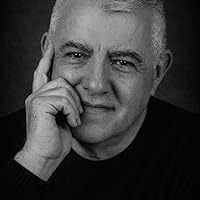
Hugh Mackay

69 books129 followers
Hugh Mackay is a social researcher and novelist who has made a lifelong study of the attitudes and behaviour of Australians. He is the author of twelve books, including five bestsellers. The second edition of his latest non-fiction book, Advance Australia…Where? was published in September 2008, and his fifth novel, Ways of Escape was published in May 2009.

He is a fellow of the Australian Psychological Society and received the University of Sydney’s 2004 Alumni Award for community service. In recognition of his pioneering work in social research, Hugh has been awarded honorary doctorates by Charles Sturt, Macquarie and NSW universities.

He is a former deputy chairman of the Australia Council, a former chairman of trustees of Sydney Grammar School, and was the inaugural chairman of the ACT government’s Community Inclusion Board. He was a newspaper columnist for almost 30 years and now writes occasionally for The Sydney Morning Herald, The Age and The West Australian. He is a frequent guest on ABC radio.

- Biography from Hugh Mackay's website

Ratings & Reviews

What do you think?
Rate this book

Friends & Following

Create a free account to discover what your friends think of this book!

Community Reviews

5 stars
70 (21%)
4 stars
134 (41%)
3 stars
86 (26%)
2 stars
21 (6%)
1 star
10 (3%)
Displaying 1 - 30 of 47 reviews
Profile Image for Otis.
74 reviews
July 27, 2024
Thoroughly enjoyed this book. I feel that Mackay really nails the issues that we are facing in modern society. From modern isolation, to loss of community, loss of communication and face to face interaction, loss of nuance, to obsession with self, Mackay covers off on a long list of the things which make us human which we are forgetting at our own peril.

I did find his section on religion a little bit reductionist and oversimplified, but it was still an interesting take.

Would definitely recommend to others.

Edit: Seems that the majority of negative reviews are purely based on his chapter on gender equality. I find this to be quite funny, as a large part of the themes in the book indicate that a balanced approach to sharing ideas is sorely missing in today's society...I guess his point is proved in this respect. Mackay never says the 'me too' movement is bad (which it certainly isn't), he just highlights that trying to fix the blatant sexism of the past by reversing it on a younger generation of men is not necessarily the best approach. He states that some of the more aggressive 'attitudes' that started up due to the moment foster an 'us vs them' culture which doesn't solve anything, and only seeks to alienate both parties from thoughtful/meaningful discussion and outcomes. Mackay suggests a change in terminology away from 'feminism' to a more inclusive label (I believe he uses equalitarianism, or humanism?), as that term promotes buy-in from all genders and can't be misappropriated. Whether you agree with him or not, he sets out his opinion respectfully and arrives at a conclusion after showing his reasoning.
Profile Image for Peter Langston.
Author 16 books6 followers
July 1, 2024
After many decades conducting social research - his methods actually outlined in the appendices - Mackay continues to offer useful suggestions about the changing nature of Australian society.

His ultimate conclusion in this book which he claims will be his last, is that if Australia is to recapture the essence of who human being are, we need to have more meaningful personal relationships. Convention theory puts the responsibility of governments or leaders to make change but Mackay makes good sense in calling on all of us to be agents of changes, just by the simple act of looking after the people we have contact with, starting with our own neighbourhoods. Much of this harks back to a previous book on kindness.

In an era where connectiveness and access to information have been the selling point for social media, the reverse is true. People have lost the art of sitting with one another, making eye contact and engaging in "the courageous act of really listening". Instead, we have all been duped into believing we must ALL have an opinion on EVERYTHING and it is even more important that we express those opinions INSTANTANEOUSLY, mostly with scant consideration or time to ruminate.

A thoughtful and thought provoking read.
171 reviews1 follower
June 2, 2024
Thought provoking for sure. I definitely had a light bulb moment when he discussed attitudes not necessarily impacting behaviour but instead the other way around. The context Chapter was also fantastic, and you could probably just leave it there. In short, our mental health challenges in society are largely due to an increase in social isolation.

Given he is a researcher, I just found him so opinionated, particularly on matters such as religion.
Profile Image for Ita.
687 reviews8 followers
June 19, 2024
I read this book in two days to be ready to host Hugh's author talk at Tamworth Library. I would have loved to have time to read this one slowly and really think about what he writes. Hugh is such a good speaker and answered all the questions of the audience with grace and intelligence. The chapter
on the Baby Boomers was amusing, on Poverty was eye opening and on Listening is what I need to put into practice!
Profile Image for D'face.
535 reviews7 followers
July 27, 2024
A researcher on Australian society tries to draw conclusions and provide lessons on how to have a better society, principally by having better quality relationships with each other. Some of it is quite tedious and preachy, some insightful.
Profile Image for Cas Maree.
3 reviews
May 31, 2024
DNF
I was honestly enjoying this until he started with his thoughts on sexism and the “Me Too” movement.
Profile Image for Maher Razouk.
779 reviews249 followers
May 4, 2024
في عصر الرأي، يمكنك أن تقول ما تريد وتتوقع أن يؤخذ على محمل الجد، طالما أنك تؤكد رأيك بثقة كافية ولا أحد في الغرفة لديه أي دليل فعلي على عكس ذلك.

("كما يعلم الجميع..." أو "لقد قرأت مؤخرًا شيئًا ما..." هي أدوات بلاغية مفضلة). في عصر الرأي، من الغريب أن هناك شك في الخبراء الذين قد يعرفون بالفعل ما الذي يتحدثون عنه - "لماذا يجب أن يكون رأيهم أهم من رأيي؟‘‘ — خاصة عندما يتمكن الإنترنت من تقديم "دليل" على أي شيء عمليًا.

إذا كنت تعرف أين تبحث، فستجد دعمًا لأي نظرية مجنونة قد ترغب في اقتراحها. ومع ذلك، نظرًا لعدد نظريات المؤامرة التي يتم طرحها كل يوم، فحتى كلمة "نظرية" لها قدر كبير من الجاذبية بحيث لا تكون مناسبة. هناك أيضًا عدد كبير من "الأبحاث" المتاحة في وسائل الإعلام وعلى الإنترنت - بعضها دقيق وموثوق، وبعضها غير مستقر بالتأكيد - لذا يمكنك عادةً دعم الرأي بعبارة "بحسب دراسة تم اجراؤها...". في عصر الرأي، من غير المرجح أن يقوم أحد باستجوابك عن كثب حول سلامة البحث الذي تقتبسه. ففي نهاية المطاف، أنت مدعو فقط للتعبير عن رأيك، وليس لتبريره!!
.
Hugh Mackay
The Way We Are
Translated By #Maher_Razouk
Profile Image for Ruth Hosford.
564 reviews3 followers
June 11, 2024
I was a little disappointed by this book. I was expecting it to be a lot more meaty in its content and very much more definitive about the Australian culture and psyche. There were a few chapters I found interesting: the Baby Boomers (I am one), religion, poverty and the effects of mass media on the nation as a whole. Overall, I found it rather dull in its presentation and not as much of an objective view of the Australian nation as I had hoped for.
Profile Image for Lish.
85 reviews
August 21, 2024
Really wanted to give this a higher rating but I couldn’t move past the tone in which a lot of it was written. It felt too condescending for no apparent reason which was off-putting. It’s a shame because there was nothing overtly wrong with the message, only how it was delivered
196 reviews1 follower
August 7, 2024
I am adopting this book as my new bible, the only things that can save humanity are love, compassion, social harmony and love of fellow human (trying to think of a word not gender based). The Christian, Moslem, Hindu, all the great religion’s message for time immemorial but without the nonsense and mysogyny. Life’s success is about acceptance and social harmony and it is the responsibility of us all.
Profile Image for Deb Chapman.
393 reviews
Read
December 10, 2024
DNF. At 40% of audiobook. Ok, but just trundling thru it, a bit begrudgingly, and then a friend asked me if it was sharing anything new, or that I didn’t already know, and I pondered that for a minute then thought no. And there too many other books out there to engage, entertain, educate and illuminate me so, sorry. Wanted to like it more than I did. Perhaps due to sheer volume of books that Mackay has written, they are beginning to blur into one. Oh I learnt how to pronounce his name. (And this is a longish review for a DNF!)
Profile Image for Courtney.
194 reviews2 followers
September 18, 2025
Overall, I really loved this! This book summarised Mackay’s life’s work as a social psychology researcher on Australia as a society. It was thoughtful and reflective and I found myself going “yes!!!” multiple times. There were a few times I felt that his own opinions came into the book which felt a bit at odds with how a researcher should present their work, but at times it really make the book what it was. He also outlined how he conducted his work and there’s an extensive reference list at the end.

Some thoughts as I read:
- Healthy society > healthy economy
- Looking after each other > aggressive individualism
- Thoughtful discussions about how we live now and why
- Talks about problems facing clinical psychology and clinical psychologists
- Much of the emotional pain experienced is a normal human response to structures that harm us
- There’s more than connects us than separates us because we are a social species, not because we belong to a certain nation or ethnic group or religion - human values not solely Australian values
- How we responded to the pandemic and why. Instability is needed as humans.
- Not sure I agree fully with his views on gender equality
- Gave me things to think about with religion - that we all have something we worship and worshipping books can be a form of religion!
- “You need the community and the community needs you”
Profile Image for Helena Rann.
55 reviews1 follower
October 3, 2025
So important and relevant. Confronting at times but an excellent reminder to be more engaged, more kind, a more active part of humanity.
Profile Image for Barb Rose.
34 reviews
July 14, 2024
I loved the process of reading this book. The reflections of the different topics for me was gold. The challenges of what type of society do we wish to become is so important for our future. Hugh’s style synthesised many issues in Australian society yet enabled me the space to consider my own thoughts on the topic. I will read this book again later in the year to reconsider my view of the future.
Profile Image for Harinder.
185 reviews3 followers
June 16, 2024
Hugh Mackay is just so wise about the human condition. In this book he deploys decades of research and experience not just to explain how we in society find ourselves today, but to give us a way out.

He identifies seven social trends that have driven the social fragmentation we now see among us - shrinking households, high rates of relationship breakdown, declining birth rates, declines in religious faith and practice, increasing mobility (Australians move house on average once every six years; some of us (yours truly) more often than that! we barely know our neighbours), relentless busyness, the IT revolution - Zoom meetings, social media and the like which drive what he calls 'social hunger'.

He says at the start that if we had designed a society around those seven trends, we would end up with exactly what we have now:

First would be the emergence of a rampant individualism breeding a narcissistic, Me-centred culture; second, the emergence of a more competitive, less cooperative ethos; and third, a mental health crisis driven by epidemics of loneliness, anxiety and depression.[page 33]


As dismal as it sounds, what makes Mackay's book so very good is his genuine faith in human nature and his optimism about our ability to course correct. He reminds us that we are, at heart, a communitarian species. We need other people and we need to be with them physically. Eye contact is important to our social connection and to our physical and mental wellbeing. So in many ways, his answer is simple - get out there and meet your neighbours, connect with each other and treasure your families and relationships.

There are many books about the modern condition which just leave you feeling depressed. Hugh's is not one of them.
Profile Image for Ruth Walker.
305 reviews1 follower
May 25, 2024
Thought provoking reading with plenty about loneliness, connection (and the lack of) and the huge changes the internet and social media have brought among many other topics discussed. I also found it interesting reading about the Baby Boomers, the way they choose to live their lives and the changes they have brought to society, including some thoughts on what changes boomers may bring to Aged Care as they need to utilise it. Given the current disastrous state of Aged Care, we can only hope that the Boomers can change things for the better.
Profile Image for Hayley.
30 reviews1 follower
May 10, 2024
Personally, I think this is his best book to date. Read it.
Profile Image for Karina G.
3 reviews
January 10, 2025
Felt like an old man yelling at the clouds. But had a few ideas to contend with
Profile Image for John.
78 reviews3 followers
August 25, 2024
It's often interesting, and often irritating. It's part social psychology, part philosophy, and part evangelism for Christian humanism. But you take the rough with the smooth.

First, some interesting points:-
I didn't know 20- 25% of Australians are illiterate. (But he didn't qualify what counts as illiterate.)

Apparently 'many TV viewers can't recall a single item they saw on the evening news'. (But many people don't watch the evening news nowadays. I don't.)

One person in the world is killed in a car accident every twenty six seconds. Wow. Another piece of information that I can try to remember, or not.

Mackay correctly identifies the malaise of present-day society. It's a 'troubled, fragmented, wounded society'.

It encourages individualism, isolation and a lack of social harmony. We no longer feel as if we belong, and we become alienated, and 'that will sometimes be expressed as aggression, anger or even violence'.

I immediately thought of the rioters in the UK. Rage is sometimes all that there is. Consider the long-suppressed rage of the sexually-abused women in the Metoo movement. 'Maintain the rage' is sometimes the only viable alternative, and it's not always unhelpful.

I could also relate very personally to Mackay's description of the Baby Boomers, my generation. I know what it feels like to be an overgrown adolescent. Before I got married I didn't want marriage responsibility. I just wanted semi-permanent sexual relationships. No commitment. And I demonstrated against the Vietnam War in Grosvenor Square in London along with other Boomers. It was so much fun.

The section I found most difficult to swallow was the chapter about atheism, God, and Gods. Mackay doesn't accept that you can be an atheist. He defines God as whatever your heart most desires, citing Luther and Cupitt. That could be Reason, Shopping, Fashion, Work, whatever. Mackay says 'we all worship something'. But I don't.

And I know that praying doesn't work either, at least not when it comes to changes in society. As Bonnie Garmus said recently No matter how hard you pray that there will not be another mass shooting in the US, there always is another one.

Religion can be good, but religion can also be very harmful. Just as human nature is not inherently good, as Gabe Mate says. We can be good or bad. Human nature is open-ended.

Despite being hard-wired to be social, we can still be hateful, cruel and despicable to each other in our society. There's a burgeoning number of narcissists and sociopaths in our society. Many are doing very well...for themselves.

Eventually Mackay shows his true colours. He definitely doesn't want revolutionary change. He accepts the current economic system, and by implication, he doesn't point the finger at capitalism (unlike Gabor Mate). He wants us to listen to each other, 'just be kind', and be true to our nature.

Mackay's remedy is radical taxation reform. In other words taking from the rich and giving it to the poor. A massive redistribution of wealth by imposing increases in income tax.

It's an impassioned plea, but it's not going to work. And he clearly votes Labor, not Liberal, as if that will do any good.

Beware this book is very preachy, and chock full of generalisations. It can be very irritating. Mackay is aware that he is generalizing, but it still makes his argument weaker.
This entire review has been hidden because of spoilers.
Profile Image for Susan Barnes.
Author 1 book68 followers
March 27, 2025
Social psychologist, Hugh Mackay addresses a wide range of topics in his book, The Way We Are.

In Mackay’s initial chapter called, The Context, he draws attention to seven trends that have given people more ways to connect but has created more loneliness. He refers back to these trends throughout the book.

A brief overview of chapters:

Have another apple, Eve discusses the effects of the overwhelm of knowledge that is so easily accessible in today’s highly connected world.

Fake wisdom is a series of well-known statements that we take for granted are true because they’ve been often repeated, but are they really true?

Are we ready for true gender equality? This chapter is a call to respect everyone, regardless of sex, background or ethics. Some people seem to get all the media attention requesting equality, but equality should be for everyone, not just minority groups.

Poverty is everyone’s problem. Mackay points out the widening gap between the wealthy and those who are struggling. He defines poverty as those who can’t afford to participate in their society in what most people would consider a normal way.

The Boomers’ legacy discusses the changes that Boomers have made to society and how that has affected other generations.

We worship many gods. This chapter discusses the effects of Christian faith, many of which are positive, such as believing in something beyond ourselves is beneficial to our mental health. Church attendees are regularly reminded to show compassion to the less fortunate, and belonging to a close-knit group with shared values is socially and emotionally valuable. Nevertheless, I found this chapter disappointing because he quotes dated historical information. He refers to the New Testament books as myths, stating that they were written long after the events described. However, most ancient historians (even those without faith) are now dating many of these books to around 50-60AD and therefore in living memory of the first readers. It’s unlikely Christianity would have spread so rapidly if people knew the accounts to be inaccurate.

In survival of the kindest, Mackay shares archaeological findings that support the premise that humans have survived because of their ability to connect with one another.

It’s time to hone our listening skills. Here, Mackay shares the powerful and surprising effects of simply paying attention and listening to others. It can do more for someone’s mental health than we would expect.

Sometimes the dream is enough. Mackay shares his rather optimistic view that if we all try hard enough, people can change and show kindness to one another. Thereby improving society for everyone.

An interesting and well-written account of current trends in our society.
Profile Image for John.
Author 11 books14 followers
July 2, 2024
Mackay has been doing social research for 60 years, and has published several books along the way. This is basically a summary and conclusions of his life’s work. He starts with The Context in which we live: we are social animals first but now we live in an individualistic culture: “we are born to connect yet are lonelier than ever”, with bad results for our mental and physical health, so he urges us to join in community activities, initiate conversation with strangers, and the like, which is easier for some personalities than it is for others, here he is the wise old man being preachy and at times talking down to us. Of course, he blames the social media for abolishing eye to eye contact, body language and all these things that constitute social interaction. Looking at a screen doesn’t cut it. Much of this is obvious and has been said before. He emphasizes kindness as a means of making society work, which he defined as “anything we do that shows we take other people seriously.” This is irrelevant to affection but simply enacting the Golden Rule: respect others as we would wish to be respected ourselves. His chapters on gender equality and poverty in a rich society are important and thought provoking. There is a mixed chapter on The Boomer Generation, who faced a prosperous time: in reaction to their parents’ “save, never live beyond your means” they felt entitled to a jolly good time in part because they faced the fear of nuclear annihilation during the Cold War period: “eat drink and be merry, etc.” There was some considerable overgeneralization about who the Boomers were and what their values were and are. His emphasis on collectivization seems to be the backdrop to this concept of “generations”. I’d prefer to see it as an adaptation to current circumstances rather than reifying a whole group as Boomers, or Gen X for that matter, which leads to overgeneralizing: there are huge individual differences within a prescribed generation. He reviews evidence on institutionalized religion – yes it is falling, except for charismatic Christianity, Buddhism and Hinduism – and interesting chapters on kindness again and conversational skills. Yes, there are many important lessons to be learned from his lifetime of listening, even if he is somewhat preachy about it.
Profile Image for D.A. Cairns.
Author 20 books53 followers
March 5, 2025
Hugh nails it again

Not as good as What Makes us Tick and irritatingly humanistic on occasion, The Way we Are is nonetheless a terrific read. Firstly because The author writes from a place of great authority and secondly because he writes with boundless hope. The Way we Are is both aspirational and inspirational.

The central message is that everyone should worship loving kindness as a god and be nice to each other. It's beautiful and it makes perfect sense but is somewhat naive.

Hugh has some incredibly insightful things to say about communication and the human need to belong which are unarguably true. His is a voice of reason, respect and tolerance. I don't know what motivates him but surely it is the God of love himself.

the Way we Are has a terrific appendix in which Mackay talks about qualitative research. It's a behind the scenes look at what he does and what underpins it. The book also has an amazing reference list and a fairly exhaustive index.

I'm a Hugh Mackay fan. I loved The Way we Are and highly recommend if you're someone who wants to understand people, or even just understand yourself.
2 reviews
May 31, 2025
DNF. Could not get past back-to-back chapters on defending Boomers for destroying the housing market because they apparently were justified for seeing housing as an investment they should gobble up instead of somewhere for people to live (and were justified because of the threat of nuclear warfare - I mean, come on), followed by pushing religion as merely a language of love instead of what it often really is - oppression, hatred and bigotry. Last straw for me was name dropping his other books in an obvious effort to go push you to buy them.

This was not inspiring, provocative or powerfully argued - as another user has put it, this gave old man yelling at clouds. Unsure why "Australia's leading social psychologist" is plastered on the cover, as this had very little do with psychology or any real connection to social psychology whatsoever. This is just some old guy pushing his own outdated beliefs in an incredibly sanctimonious way and trying to legitimise it by slapping "social psychologist" on the cover.
Profile Image for Emilia Roux.
5 reviews
September 6, 2025
I really enjoyed the chapters on community, isolation and information in the modern world. There was also some historical and social political context in a uniquely australian landscape woven throughout that made his takes interesting. HOWEVER I found the book to be highly speculative. Most chapters lean heavily on broad stroke opinions, hypocrisies about the dangers of generalisations and as the author says himself ‘big leaps’. As a respected author and academic we can accept this, to an extent, but as with most opinion content it opens the gates for criticism and disagreement.

That being said I enjoyed that this book felt like a discourse, I enjoyed moments of head nodding agreement and eye brow pinching discordance. It’s okay to engage with content we disagree with, otherwise are we not just filling our heads with more of the same, quietly affirming our own opinions again and again until we are lulled into the sweet state of self righteousness that can make us insufferable. that’s all xx
Profile Image for Alex T.
18 reviews
August 5, 2024
I feel the author of this book would say that this review is just another unequipped opinion in the Age of Opinion, fuelled by the information revolution. I don’t disagree; it is true that I am not a social scientist (I did not take that path) and so I am most definitely not equipped nor am I entitled to have an opinion on the subject matter. So all I will say is that while I wholeheartedly resonate with most of the ideas given in this book (e.g., individualism is ruining our sense of community and mutual obligation, kindness is showing others they belong), the shear amount of commentary, needlessly long and numerous examples of the same concepts, and drawn out history lessons made this a challenge to read rather than the enlightening journey I feel it could have been. Needed succinctness. I’m sorry I couldn’t reserve judgement on this one.
Profile Image for Hazel P.
147 reviews3 followers
August 15, 2024
There's too much content and it's overly lengthy. And “The Context” is the best chapter in the book. I initially thought he was like an Australian version of Irvin Yalom when I spotted the title and cover in the bookshop, but obviously I was so wrong. Now I know they operate in different fields, yet Yalom's writings are much more engaging.

Additionally, I feel the chapters on gender equality, poverty, and worship of gods read like they're AI-generated and lack the depth I'd expect from a non-fiction work. The author's main argument throughout the book is the reverence of "common humanity," and he uses this concept repeatedly as an explanation for all topics.

On the other hand, I do find the chapter on patriotism interesting, where he argues that the so-called "Australian values" are not distinctive.

It may be an ok read for someone who doesn't read much (non-fiction).
40 reviews
August 21, 2025
Really lovely and thoughtful take on some of the systemic issues in the world today.

The first chapters are absolutely exquisite and so eloquently put as to why as humans we have been neglecting our duties as a social species.

The rest of the book whilst still beautifully written feels a little bit more of the authors personal views rather than evidence based however it still rings relatively true. My only gripe is the chapter on religion falls a little bit too much into semantic based reasoning and it kind of just spins in circles.

Overall however quite an important book and well worth the read.
Profile Image for Grace.
403 reviews47 followers
June 28, 2024
An interesting and uniquely Australian look at everyday life by a social researcher. A lot of interesting thoughts here, some agreeable, others a bit confronting. The endless discussion of Boomers was tedious at times, as with the constant reiteration of eye contact (without any mention of people with neurodivergence struggling with this social expectation.)
But for the most part an enjoyable exploration of what it is to be alive today.
Profile Image for Saara.
210 reviews
June 4, 2025
fantastic. all about how humans are a social animal who need community, but how our modern ways of living are sending most of us further away from the meaningful community we require.
at time a little preachy and repetitive, but I love the overall message.
be kind, be compassionate, be interested in other people, and SHOW that you are all of these things by being present in your physical interactions with people (it is physical interactions which give us the sense of connection we need).
Profile Image for Scott.
265 reviews
July 9, 2024
This book was more general than what I was expecting and hoping for and that is my fault not the author’s. That said, it contained many good and thought provoking messages, chapter three is a must read for a very large percentage of our society and the chapters on effective communication and listening will be read again.

The pages dedicated to religion detracted from the book for me.
Displaying 1 - 30 of 47 reviews

Can't find what you're looking for?

Get help and learn more about the design.