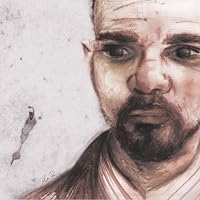
Vladimir Ilyich Lenin (1870-1924), was a Russian revolutionary, a communist politician, the main leader of the October Revolution, the first head of the Russian Soviet Socialist Republic and from 1922, the first de facto leader of the Soviet Union. He was the creator of Leninism, an extension of Marxist theory.
Vladimir Ilyich Ulyanov, better known as Vladimir Lenin, was a Russian revolutionary, leader of the Russian Social Democratic Labour Party (Bolsheviks), statesman and political theorist. After the October Revolution he served as the first and founding head of government of Soviet Russia from 1917 until his death in 1924 and of the Soviet Union from 1922 until his death in 1924.
These are Lenin's "Comments from Afar", since his interest in culture was, as in most things, tied to the revolution he was preparing in Russia. Lenin without power and in exile, 1903-1917, holds forth on Tolstoy, Dostoevsky and his friend Maxim Gorky. He detests all formalism in literature and has a special loathing for "god-making" or mysticism. "The value of Tolstoy is in introducing the mujik (peasant) to Russian literature, not in his search for a higher power or appeals to pacifism". In power (1917-1924) Lenin is less persuasive when pontificating on high art. The secret of Soviet strength lay in fostering a cult of education. Workers, peasants, soldiers, reading and studying all the time. Lenin remarks that this "cultural revolution is the most important thing the Soviet government has done". He chides those, like his guest at the Kremlin the German Communist Klara Zeitkin, who would free art, especially literature, from political concerns.Yet, this attitude fostered the decline of Soviet culture even before Lenin's death. In Soviet Russia at least half a dozen bureaucracies had to vet and pass upwards all orders regarding school books, theaters, museums, and old Czarist art treasures. This command approach to art and literature alienated the very workers it was supposed to serve. LENIN ON LITERATURE AND ART should spark further debate on how a revolutionary society comes to grip with freedom of expression in form and content.
Bastante regularcete cuando Lenin construye desde lo falaz y entusiasta sus arengas de utopía socialdemócrata, divertidísimo cuando Vladimir ejerce de crítico y se descubre como un gran artista del insulto en la onda situacionista.