

What do you think?

The Art of Slow Writing: Reflections on Time, Craft, and Creativity
In a series of conversational observations and meditations on the writing process, The Art of Slow Writing examines the benefits of writing slowly. DeSalvo advises her readers to explore their creative process on deeper levels by getting to know themselves and their stories more fully over a longer period of time. She writes in the same supportive manner that encourages her students, using the slow writing process to help them explore the complexities of craft. The Art of Slow Writing is the antidote to self-help books that preach the idea of fast-writing, finishing a novel a year, and quick revisions. DeSalvo makes a case that more mature writing often develops over a longer period of time and offers tips and techniques to train the creative process in this new experience.
DeSalvo describes the work habits of successful writers (among them, Nobel Prize laureates) so that readers can use the information provided to develop their identity as writers and transform their writing lives. It includes anecdotes from classic American and international writers such as John Steinbeck, Henry Miller, Virginia Woolf and D. H. Lawrence as well as contemporary authors such as Michael Chabon, Junot Diaz, Jeffrey Eugenides, Ian McEwan, and Salman Rushdie. DeSalvo skillfully and gently guides writers to not only start their work, but immerse themselves fully in the process and create texts they will treasure.
DeSalvo describes the work habits of successful writers (among them, Nobel Prize laureates) so that readers can use the information provided to develop their identity as writers and transform their writing lives. It includes anecdotes from classic American and international writers such as John Steinbeck, Henry Miller, Virginia Woolf and D. H. Lawrence as well as contemporary authors such as Michael Chabon, Junot Diaz, Jeffrey Eugenides, Ian McEwan, and Salman Rushdie. DeSalvo skillfully and gently guides writers to not only start their work, but immerse themselves fully in the process and create texts they will treasure.
336 pages, Paperback
First published October 7, 2014
About the author
Louise DeSalvo
36 books77 followersLouise A. DeSalvo (born 1942) is an American writer, editor, professor, and lecturer who currently lives in New Jersey. Much of her work focuses on Italian-American culture, though she is also a renowned Virginia Woolf scholar.
DeSalvo and her husband raised their children in Teaneck, New Jersey before moving to Montclair to be closer to their grandchildren.
She also teaches memoir writing as a part of CUNY Hunter College's MFA Program in Creative Writing.
DeSalvo's publications include the memoir, Vertigo, which received the Gay Talese award and was also a finalist for Italy's Primo Acerbi prize for literature; Crazy in the Kitchen: Food, Feuds, and Forgiveness in an Italian American Family, which was named a Booksense Book of the Year for 2004.
DeSalvo is also a renowned Virginia Woolf scholar. She has edited editions of Woolf's first novel Melymbrosia, as well as The Letters of Vita Sackville-West and Virginia Woolf, which documents the controversial lesbian affair between these two novelists. In addition, she has written two books on Woolf, Virginia Woolf: The Impact of Childhood Sexual Abuse on Her Life and Work and Virginia Woolf's First Voyage: A Novel in the Making.
One of DeSalvo's most popular books is the writer's guide Writing as a Way of Healing: How Telling Our Stories Transforms Our Lives.
(from Wikipedia)
DeSalvo and her husband raised their children in Teaneck, New Jersey before moving to Montclair to be closer to their grandchildren.
She also teaches memoir writing as a part of CUNY Hunter College's MFA Program in Creative Writing.
DeSalvo's publications include the memoir, Vertigo, which received the Gay Talese award and was also a finalist for Italy's Primo Acerbi prize for literature; Crazy in the Kitchen: Food, Feuds, and Forgiveness in an Italian American Family, which was named a Booksense Book of the Year for 2004.
DeSalvo is also a renowned Virginia Woolf scholar. She has edited editions of Woolf's first novel Melymbrosia, as well as The Letters of Vita Sackville-West and Virginia Woolf, which documents the controversial lesbian affair between these two novelists. In addition, she has written two books on Woolf, Virginia Woolf: The Impact of Childhood Sexual Abuse on Her Life and Work and Virginia Woolf's First Voyage: A Novel in the Making.
One of DeSalvo's most popular books is the writer's guide Writing as a Way of Healing: How Telling Our Stories Transforms Our Lives.
(from Wikipedia)
Ratings & Reviews
Friends & Following
Create a free account to discover what your friends think of this book!
Community Reviews
Displaying 1 - 30 of 159 reviews

October 10, 2014
Before I aspired to write, I was a young person who loved to read. And even though it was fun to say that I had read a certain number of Nancy Drew mysteries, reading didn't become a quantifiable activity until 2011 when I joined Goodreads and saw that people were reading 50 books, 100 books, 150 books per year and more! I didn’t even know such a thing was possible, especially not for adults with jobs, relationships, and other interests and responsibilities! And when I saw that many of these people not only read profusely, but managed to write several in-depth reviews of their readings as well, I began to think that I had a lot of catching-up to do. I had no idea how many books I was capable of reading in a year, so in 2012 I set a goal to read 20 books and thought I was really doing something when at year’s end I had read 23! In 2013 I read 41 books, and the 44 books I read in 2014 are definitely a symbol of time well-spent. Still,when I read Louise DeSalvo’s book The Art of Slow Writing, I realized that if I wanted to write more, and better, maybe I was going to have to give up some of my reading!
To my mind, it is ironic that Louise DeSalvo would deliver a book with slow writing as its subject. After all, this woman---who is a Virginia Woolf scholar, to boot---has kicked out about 10 independently-authored books and at least five collaborations in 34 years while also being married and a mother of three who teaches memoir writing in CUNY Hunter College’s MFA Program in Creative Writing! What’s “slow” about her process?
Reading The Art of Slow Writing (subtitled Reflections on Time, Craft, and Creativity) made me realize that I was hungry to love the questions, challenges, and craft of writing. How had I grown so frustrated with the process of not being able to produce something beautiful, quickly? Why was I always measuring myself against prolific, masterful writers---envying their “easy way” with words, and the regularity with which their work appeared on “must read” lists, in “definitive” anthologies, and nominated by various committees of tastemakers as Greatest-Book-Ever!? In my anxious desire for recognition I had allowed external measurements and expectations to crowd-out passion and respect for my own creative process.
To my mind, it is ironic that Louise DeSalvo would deliver a book with slow writing as its subject. After all, this woman---who is a Virginia Woolf scholar, to boot---has kicked out about 10 independently-authored books and at least five collaborations in 34 years while also being married and a mother of three who teaches memoir writing in CUNY Hunter College’s MFA Program in Creative Writing! What’s “slow” about her process?
Reading The Art of Slow Writing (subtitled Reflections on Time, Craft, and Creativity) made me realize that I was hungry to love the questions, challenges, and craft of writing. How had I grown so frustrated with the process of not being able to produce something beautiful, quickly? Why was I always measuring myself against prolific, masterful writers---envying their “easy way” with words, and the regularity with which their work appeared on “must read” lists, in “definitive” anthologies, and nominated by various committees of tastemakers as Greatest-Book-Ever!? In my anxious desire for recognition I had allowed external measurements and expectations to crowd-out passion and respect for my own creative process.
January 18, 2015
All this instant this and instant that makes it hard for us writers to understand that it might take a long time to write a book, and that we often can’t predict how much time the work will take. It might make us expect to write our books more quickly than they can or should be written. It might make the people in our lives believe we should finish our work sooner than it’s possible. It might make us feel like failures because we’re taking such a long time. And it might cause us to abandon an important work.
The last time I read a writing craft book that had as profound an effect on me as Louise DeSalvo’s The Art of Slow Writing: Reflections on Time, Craft, and Creativity was the summer of 2012. I’d heard Priscilla Long speak at the Chuckanut Writer’s Conference and was inspired to buy her book The Writer’s Portable Mentor. It was this book that finally convinced me to stop making excuses and to start writing every day. I began my first novel shortly thereafter, and I’ve never looked back.
Well, that’s bullshit. I’ve looked back plenty of times. But I haven’t stopped writing.
And that’s why The Art of Slow Writing comes along at such a perfect time. It’s because I haven’t stopped. There’s a certain frantic quality to how about feel about my writing right now. I’m getting a late start to this, my . . . third career? Fourth? And I feel such pressure to get this one right. It probably doesn’t help that my dad, bless his heart, said the other day, “I sure hope you start making some money soon. You’re almost forty-six. Time to think about getting something into a retirement account.” Okay. Sigh. There were those twenty-odd years of careers before I stopped earning money to become a full-time writer when I did contribute to retirement plans. It’s not completely hopeless.
But yeah. I’m dancing as fast as I can. One book sold. Another soon to be out on sub. The third sits on my hard-drive, as Writer, Interrupted has done nothing but revise and edit two novels since December. But I hope to finish a first draft by fall. Before the marketing grind of #1 takes off. Maybe #2 will have sold by then. And it all starts again.
Wait, what? What am I doing this for? Oh, right. Because if I don’t write, my soul will begin to wither. I’m going to die, that’s for certain. But I want to die with my soul in full bloom. Louise DeSalvo reminds us, teaches us, what it means to let your soul bloom through your words and your work.
The Art of Slow Writing is a series of short chapters divided into six parts: Getting Ready to Write; A Writer’s Apprenticeship; Challenges and Successes; Writers at Rest; Building a Book, Finishing a Book; and Epilogue: Beginning Again. At its heart is the challenge DeSalvo lays out in her Introduction: to think about how to work at writing day by day . . . slowing down our process so we can become self-reflective writers so we can find our own way. To become writers who are “always hard at work, refining, improving, engaged by and interested in every step in the process.” Zadie Smith. (xxiv-xxv)
I have dog-eared pages and made so many notes in the margins of this book, underlined passages and highlighted lines—signs of deeply-inspiring work, but here are a few—okay, several—which I found the most meaningful.
Deliberate Practice DeSalvo advocates a focused, concerted approach to craft. Deliberate Practice, in other words.
Let’s say that in assessing a memoir in progress, we discover we don’t describe place—we write as if the events could have taken place anywhere. So we devise structured activities to improve. We choose a novel or memoir that treats place brilliantly, and we study twenty pages, underlining instances where the writer describes place and its impact on character. We copy key passages—copying is an excellent device to improve our work. Then we analyze when that writer used setting and how it affects the work’s meaning.
In Walking and Inspiration, DeSalvo cites numerous examples of writers who view walking as an integral part of their creative process. Something I learned from Julia Cameron (The Artist’s Way) many years ago. And which DeSalvo reinforces with quotes by Ian McEwan, Alice Munro, Virginia Woolf, Robert Stone. This author views her daily runs, swims, walks, bike rides or hikes as times to problem solve, or simply let the creative, positive energy flow.
The short chapter, Apprenticeship is one of my favorites. DeSalvo follows in the footsteps of Virginia Woolf (she’s a Woolf scholar, so this book is gorgeously flush with references to Woolf’s life and work) and Henry Miller and develops a formal writing program for herself. Because, as she states,
Writing for publication is a kind of performance. And expecting to perform too soon might be as risky for writers as Pavarotti believed it was for singers. Like Virginia Woolf and Henry Miller, too, we writers can construct our own apprenticeships; a period of apprenticeship is as necessary for us to learn our craft as it was for Pavarotti to perfect his talent.
Woolf didn’t just read;
she read with pen in hand to improve her work. She read to learn how to write scenes, describe landscape, construct image patterns, depict the passage oft time. She kept notebooks in which she evaluated what she read and copied passages that helped her learn her craft.
I was delighted to read about DeSalvo’s Process Journal. I didn’t know I was doing a thing. I keep a notebook for each novel, one that starts at the conception point, when I do all my brainstorming and character development and plot construction by hand. During revisions, when I have a tricky plot hole to fill or need to work out elements of timing, pacing, and progression, or make adjustments to my outline—they all go into my Process Journal (now I have a name for it!). When I receive comments back from my agent or editor, I note them in my journal and return to answer them by hand before making changes to my text.
In Writing Rehab, DeSalvo discusses what it means for a writer to take time away from the page and encourages us never to stop writing, even if we must set aside a work-in-progress.
Because it takes long to get back into writing shape, many writers I know believe that writing daily, or, if not daily, not less than five days a week, is essential to keep in shape. If we’re not writing an essay, a poem, a play, or a book, we can keep a notebook. We can write about the books we’re reading. We can record and reflect upon our daily life. We can dream the books we want to write.
Part Three: Challenges and Successes spoke most deeply to me, for it hits at the stages I am in now, deep in the publication process.
Published writers don’t often share what the publication process is like. We don’t often describe how many changes we’ve made based upon an editor’s input. We don’t often admit that our manuscripts require a complete overhaul. Many published works become, in effect, collaborative efforts before publication. Writers complete their work. Editors evaluate their manuscripts. Then author, editor, assistant editor, and copy editor join forces to turn manuscripts into the best books possible. Writers might believe their work is completed when they submit…. Beginning writers don’t know how many changes published writers must make to their work because of editorial input.
Louise DeSalvo has such an appreciation for the process of creativity. It doesn’t take place only when the pen is poised over the page or the fingers at the keyboard. She discusses the creative brain at work while walking, cooking, and daydreaming—her favorite ways to mull over a problem or generate new ideas. She stresses the importance of travel, how unfamiliar settings force us to see the world in new ways.
But most importantly, she leads us to realize that each work must be given its time and space to develop.
I wrote my second novel in ten weeks. A 105,000 word draft. It poured out of me and I let it flow. But I realize now, a year later, that I wasn’t writing fast. That first draft, perhaps, but it was only just a start. I left the novel alone for several months before undertaking three revisions to complete a second draft. And then another five months passed. My agent read it, made her comments, and I’ve just completed two more revisions for a third draft. Next week my agent will send it out “on sub.” If it’s picked up by a publisher (cross your fingers, please!), there will be more drafts to come. From Building a Book, Finishing a Book
Changing our attitude to time can be part of our growth process while we write a book. An inexperienced writer might decide to give up on a book that’s taking a long time. But it’s important for us to understand just how long it might take to complete an important work
DeSalvo talks a lot about hard work, and makes a very clear distinction between talent and sheer grit.
From Failure in the Middle
In working with writers, I’ve learned it’s not talent that gets books written, it’s hard, slow, steady work. It’s learning to understand that the process of writing isn’t linear but filled with peaks and valleys, that sometimes we don’t know what we’re doing but we need to work anyway; that we must stay with the process through uncertainty, indecision, anxiety, and feel our work is failing; that we must have tenacity when we feel like walking away from a project.
She quotes writer Darin Strauss, who said, “it wasn’t the most talented people who moved on—it was the people who could take their first draft and make it a second draft.” Most writers face moments of despair along the way, sometimes daily, and DeSalvo reminds us it that true writers are those who persevere through the despair to finish their work. Talent doesn’t get you through the despair. Talent doesn’t finish a novel. Determination does. The Art of Slow Writing is a beautiful testament to the slow, steady process of writing.
November 18, 2014
This book is pure gold. If I wrote a book about what I teach at the Taos Writing Retreat, this would be it. For anyone who wants to write smarter, deeper, truer. She breaks down so many mysteries of the craft and the working process. !!!

May 19, 2015
[WRITER'S PROCESS JOURNAL]:
"[Sue] Grafton keeps a separate journal for each novel; they're about four times longer than the novel itself. She writes an entry each day before she begins work. She records her feelings - especially if she's anxious - so they won't interfere with her day's work, a brief account of daily events, helpful dreams, ideas about the direction her work might take.
The journal stands as a record of the conversation she has with herself about the work in progress. She describe what's troublesome in a scene, a puzzle she can't resolve, lines she's imagined but doesn't know how to use, snippets of dialogue. Grafton maintains that every solution to her work's challenges occurs, not when she's composing, but in her writer's journal. There, she steps back and reflects upon her work; there, she articulates problems and solves them.
Grafton keeps her process journal on her computer so she can transfer material into the draft of her manuscript when appropriate. She can also quickly search the journal to find all the entries about a given topic... When she begins a new book Grafton uses her old journals to face her fear. She rereads them to remind herself she always feels inadequate at the start. (p. 68)
[THE WRITING PROCESS:]
"It's essential for me to understand where I am in the writing process with a particular work. Am I getting ready to write - doing research, scribbling notes, assembling the bits and pieces I've written? Am I writing a first draft - trying to get my work into a provisional order? Revising or deepening a draft? Ordering a work? Completing it? Polishing a piece, readying it for an audience?
Unless I know where I am in the process, I expect too much too soon. I criticize myself for not accomplishing the impossible. When I'm preparing a new work, if I expect myself to know precisely how to work or what to say, I might forestall my process. If, instead of playing with a project for a time, I expect to write beautiful, lucid sentences, I'll become frustrated." (p.3)
"When Margaret Atwood...starts a novel, she doesn't yet know where it will lead - it "seems a process of working [the problems] out." She begins with something small, "an image, scene, or voice," and discovers the "structure or design" as she writes... To know too much as first, At wood maintains, would be "too much like paint-by-numbers." Often, beginning writers skip this stage and try to write a first draft too soon. But many successful writers linger here for years. Trying to work too quickly, trying to work in too polished a way too quickly, expecting clarify too soon, can set us up for failure." (p.3-4)
[TRAVEL FOR A NEW PERSPECTIVE]:
"[Joseph Brodsky's] Watermark suggests that each time we visit a place, our senses are bombarded with a series of disconnected observations: it's as if cause and effect don't exist because we haven't been there long enough to understand the connections among the events we witness. We're forced to live in the moment. And what we see becomes paramount: "the eye identifies not with the body it belongs to but with the objects of its attention." " (p. 209)
- Create a "walk to work" routine incl. work outfit (p. 51)
- Deliberate practice is slow, focused, and done in short sessions (p. 34)
- World-class experts practice 3-5 hours per day (K. Anders Ericsson) (p. 34)
- Daily log of accomplishments (p. 162)
- What-went-well diary for positive learning (p. 168)
► On Writing: A Memoir of the Craft by Stephen King - writing process, editing
► Shakespeare: The Man Who Pays the Rent by Judi Dench - Shakespeare, acting, biography
► A Manual of Writer's Tricks: Essential Advice for Fiction and Nonfiction Writers by David L. Carroll - writing tips & tools
► Writing Tools: 50 Essential Strategies for Every Writer by Roy Peter Clark - writing tips
► Writers Dreaming: 26 Writers Talk About Their Dreams and the Creative Process by Naomi Epel - writing & dreaming, famous writers
► Content Strategy for Mobile by Karen McGrane - mobile devices, content strategies
"[Sue] Grafton keeps a separate journal for each novel; they're about four times longer than the novel itself. She writes an entry each day before she begins work. She records her feelings - especially if she's anxious - so they won't interfere with her day's work, a brief account of daily events, helpful dreams, ideas about the direction her work might take.
The journal stands as a record of the conversation she has with herself about the work in progress. She describe what's troublesome in a scene, a puzzle she can't resolve, lines she's imagined but doesn't know how to use, snippets of dialogue. Grafton maintains that every solution to her work's challenges occurs, not when she's composing, but in her writer's journal. There, she steps back and reflects upon her work; there, she articulates problems and solves them.
Grafton keeps her process journal on her computer so she can transfer material into the draft of her manuscript when appropriate. She can also quickly search the journal to find all the entries about a given topic... When she begins a new book Grafton uses her old journals to face her fear. She rereads them to remind herself she always feels inadequate at the start. (p. 68)
[THE WRITING PROCESS:]
"It's essential for me to understand where I am in the writing process with a particular work. Am I getting ready to write - doing research, scribbling notes, assembling the bits and pieces I've written? Am I writing a first draft - trying to get my work into a provisional order? Revising or deepening a draft? Ordering a work? Completing it? Polishing a piece, readying it for an audience?
Unless I know where I am in the process, I expect too much too soon. I criticize myself for not accomplishing the impossible. When I'm preparing a new work, if I expect myself to know precisely how to work or what to say, I might forestall my process. If, instead of playing with a project for a time, I expect to write beautiful, lucid sentences, I'll become frustrated." (p.3)
"When Margaret Atwood...starts a novel, she doesn't yet know where it will lead - it "seems a process of working [the problems] out." She begins with something small, "an image, scene, or voice," and discovers the "structure or design" as she writes... To know too much as first, At wood maintains, would be "too much like paint-by-numbers." Often, beginning writers skip this stage and try to write a first draft too soon. But many successful writers linger here for years. Trying to work too quickly, trying to work in too polished a way too quickly, expecting clarify too soon, can set us up for failure." (p.3-4)
[TRAVEL FOR A NEW PERSPECTIVE]:
"[Joseph Brodsky's] Watermark suggests that each time we visit a place, our senses are bombarded with a series of disconnected observations: it's as if cause and effect don't exist because we haven't been there long enough to understand the connections among the events we witness. We're forced to live in the moment. And what we see becomes paramount: "the eye identifies not with the body it belongs to but with the objects of its attention." " (p. 209)
- Create a "walk to work" routine incl. work outfit (p. 51)
- Deliberate practice is slow, focused, and done in short sessions (p. 34)
- World-class experts practice 3-5 hours per day (K. Anders Ericsson) (p. 34)
- Daily log of accomplishments (p. 162)
- What-went-well diary for positive learning (p. 168)
► On Writing: A Memoir of the Craft by Stephen King - writing process, editing
► Shakespeare: The Man Who Pays the Rent by Judi Dench - Shakespeare, acting, biography
► A Manual of Writer's Tricks: Essential Advice for Fiction and Nonfiction Writers by David L. Carroll - writing tips & tools
► Writing Tools: 50 Essential Strategies for Every Writer by Roy Peter Clark - writing tips
► Writers Dreaming: 26 Writers Talk About Their Dreams and the Creative Process by Naomi Epel - writing & dreaming, famous writers
► Content Strategy for Mobile by Karen McGrane - mobile devices, content strategies

November 11, 2014
Encouragement and advice for writers who feel like they're falling behind.
"Behind," of course, is all in your head, because everybody's timetable is different. And, darn it, good writing just plain takes time. All of DeSalvo's chapters are variations on this theme, drawing on examples from many famous writers and their processes as helpful examples.
Readers will pick up a few concrete pointers here and there, but this book is mostly about reassurance. Because DeSalvo is a Woolf scholar, she does tend to go to that well very often in her examples. This is understandable--write what you know--but readers who aren't as into Virginia Woolf as DeSalvo and I are might find it a bit wearisome. Also, Zadie Smith is the only author of color represented, positioning "good" literature as predominantly white and mostly middle-class (the working class author gets some props, most likely because DeSalvo herself is working-class).
This is not the worst book on writing ever, but it's geared to a very specific problem: worrying about how long it takes to write a thing. The whole book boils down to "It takes as long as it takes," so if you need to hear that over and over, you will find this book comforting. The resource section at the end inks to a number of books and articles that readers may find useful as well. A solid effort, recommended for larger collections.
"Behind," of course, is all in your head, because everybody's timetable is different. And, darn it, good writing just plain takes time. All of DeSalvo's chapters are variations on this theme, drawing on examples from many famous writers and their processes as helpful examples.
Readers will pick up a few concrete pointers here and there, but this book is mostly about reassurance. Because DeSalvo is a Woolf scholar, she does tend to go to that well very often in her examples. This is understandable--write what you know--but readers who aren't as into Virginia Woolf as DeSalvo and I are might find it a bit wearisome. Also, Zadie Smith is the only author of color represented, positioning "good" literature as predominantly white and mostly middle-class (the working class author gets some props, most likely because DeSalvo herself is working-class).
This is not the worst book on writing ever, but it's geared to a very specific problem: worrying about how long it takes to write a thing. The whole book boils down to "It takes as long as it takes," so if you need to hear that over and over, you will find this book comforting. The resource section at the end inks to a number of books and articles that readers may find useful as well. A solid effort, recommended for larger collections.

April 3, 2015
If I could give this book more than 5 stars, I would! So many great tips on forming a sustainable writing practice - how to think about writing, when to write, obstacles to writing, identifying mentors... and this is just a small sample. DeSalvo's advice is down to Earth and digestable (each of the chapters is 3-5 pages long). It encourages you to take your time - which is exactly what this author is advocating. I also read another book about slow reading, and between these two books, I am certain I will have sustainable and useful processes for both areas.

April 18, 2017
An uneven book.
There's plentiful information on various writing process and techniques, which can be useful. On the other hand, there's also a definite bias toward what gets cited. Ray Bradbury is quoted once, but not, obviously, the advice that he gives to write a short story every single week.
There's plentiful information on various writing process and techniques, which can be useful. On the other hand, there's also a definite bias toward what gets cited. Ray Bradbury is quoted once, but not, obviously, the advice that he gives to write a short story every single week.

February 19, 2015
I have found that ideas may come quickly but the actual writing to completion can be slow. That's why I was very attracted to Louise DeSalvo's book, The Art of Slow Writing. DeSalvo shares her own writing process, while examining the benefits of writing slowly, and describes the work habits of other very successful writers. The book is full of useful advice and tips gathered from decades of practice and research.
Part One, "Getting Ready to Write," explores the beginning stages of the writing process." Part Two, "A Writer's Apprenticeship," examines how long it takes writers to learn their craft or develop a new project. (Margaret Atwood says "writing is acquired through the apprentice system.") Part Three, "Challenges and Successes," addresses "learning patience, overcoming a fear of failure, and cultivating determination." Part Four is "Writers at Rest" and Part Five is "Building a Book, Finishing a Book."
DeSalvo, a teacher and writer, is also a "passionate foodie." She likens the slow writing process to the Slow Food movement. Like Slow Food, "slow writing doesn't just take time, but makes time."
Some "ha ha" moments for me occurred when DeSalvo said she protects her writing time by not engaging in long telephone conversations, Facebook, net surfing, and e-mailing more than once a day. I remember one of my writing mentors saying years ago: Ask yourself how will this (a particular activity) help my writing? Also, I'm noting to myself, slow writing doesn't mean not writing!
In "Writing and Real Life" DeSalvo describes an essay by Anne Tyler about writing in "the midst of life's chaos." The proverbial "a room of one's own" is impossible for most people who have to earn a living and have families and other responsibilities. I wonder: if I had an office outside my home I might be like Alice Munro, who wrote nothing in the office she rented except one story called "The Office."
I especially appreciated the chapter on the "Process Journal," one of the most important items in DeSalvo's writer's tool box. She plans projects in it, lists books she wants to read, and puzzles through challenges she's facing.
Sue Grafton is another writer who keeps such a journal. "Grafton keeps a separate journal for each novel; they're about four times longer than the novel itself."
"Our process journals are where we engage in the nonjudgmental reflective witnessing of our work. Here, we work at defining ourselves as active, engaged, responsible, patient, writers," DeSalvo says.
DeSalvo asks questions of herself and her readers such as: "And what if we thought, not of each individual work but focused, instead, on our writing life as a continuum, with the completion of each project viewed as another important step in a lifetime of practice?"
Although she says "viewing writing as practice rather than accomplishment can be a valuable shift in perspective," writing is also a craft to be learned and there are steps to take to actually complete a book. The "manager" part of DeSalvo decides when and how long she'll write and what she'll work on and the "laborer" part of her writes.
Louise DeSalvo has been writing since 1975 and says she's still a beginner, learning her craft, learning what it means to be a writer and learning what it means to be a slow writer. She has written short chapters based on decades of research. Each is summed up with a sentence or two that could be added to a writer's manifesto. The writing process combined with a "game plan" can help writers produce their finest work.
by Mary Ann Moore
for Story Circle Book Reviews
reviewing books by, for, and about women
Part One, "Getting Ready to Write," explores the beginning stages of the writing process." Part Two, "A Writer's Apprenticeship," examines how long it takes writers to learn their craft or develop a new project. (Margaret Atwood says "writing is acquired through the apprentice system.") Part Three, "Challenges and Successes," addresses "learning patience, overcoming a fear of failure, and cultivating determination." Part Four is "Writers at Rest" and Part Five is "Building a Book, Finishing a Book."
DeSalvo, a teacher and writer, is also a "passionate foodie." She likens the slow writing process to the Slow Food movement. Like Slow Food, "slow writing doesn't just take time, but makes time."
Some "ha ha" moments for me occurred when DeSalvo said she protects her writing time by not engaging in long telephone conversations, Facebook, net surfing, and e-mailing more than once a day. I remember one of my writing mentors saying years ago: Ask yourself how will this (a particular activity) help my writing? Also, I'm noting to myself, slow writing doesn't mean not writing!
In "Writing and Real Life" DeSalvo describes an essay by Anne Tyler about writing in "the midst of life's chaos." The proverbial "a room of one's own" is impossible for most people who have to earn a living and have families and other responsibilities. I wonder: if I had an office outside my home I might be like Alice Munro, who wrote nothing in the office she rented except one story called "The Office."
I especially appreciated the chapter on the "Process Journal," one of the most important items in DeSalvo's writer's tool box. She plans projects in it, lists books she wants to read, and puzzles through challenges she's facing.
Sue Grafton is another writer who keeps such a journal. "Grafton keeps a separate journal for each novel; they're about four times longer than the novel itself."
"Our process journals are where we engage in the nonjudgmental reflective witnessing of our work. Here, we work at defining ourselves as active, engaged, responsible, patient, writers," DeSalvo says.
DeSalvo asks questions of herself and her readers such as: "And what if we thought, not of each individual work but focused, instead, on our writing life as a continuum, with the completion of each project viewed as another important step in a lifetime of practice?"
Although she says "viewing writing as practice rather than accomplishment can be a valuable shift in perspective," writing is also a craft to be learned and there are steps to take to actually complete a book. The "manager" part of DeSalvo decides when and how long she'll write and what she'll work on and the "laborer" part of her writes.
Louise DeSalvo has been writing since 1975 and says she's still a beginner, learning her craft, learning what it means to be a writer and learning what it means to be a slow writer. She has written short chapters based on decades of research. Each is summed up with a sentence or two that could be added to a writer's manifesto. The writing process combined with a "game plan" can help writers produce their finest work.
by Mary Ann Moore
for Story Circle Book Reviews
reviewing books by, for, and about women

May 5, 2022
In keeping with the title of this book, I took my time getting through it, but the advice was both excellent and encouraging, and I took lots of notes for further reading.
April 21, 2025
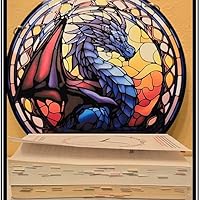
I started this book last year, underlining and highlighting each chapter, took a bunch of notes in a separate notebook so I could look back at what spoke to me the most.

Read
October 26, 2019Reflections:
From formlessness, form arises. A story, essay, poem, novel, begins from a slight agitation, a dream, an image of the sun sprinkling over the water, from a hidden place deep in the unconscious. It is raw, muddled. A piece of soft clay that must. be shaped repeatedly before hardening. There may not even be a final form in mind, only the steady cut of steel to unformed material, as shavings float away to reveal a mysterious figure.
…
Write when you’re ready, when you can. If you wait for inspiration to guide you, if you need to conjure up the perfect image of a masterpiece before you glide your ink pen across a piece of paper, you’ll never start.
Start anywhere. Linger longer in silences, playing with time like a zen monk plucking a daisy from a field, open to what comes.
No expectations, no high standards.
Just write. It could be shit. Who cares? That’s what revision is for.
…
Write. Write often. Revise even more often.
Go through a couple of drafts before you expose your work to other people for a critique.
…
Decide what tools are best for you: being physically intimate with a scrap of paper and a pen, clicking away on the keys of a steampunk typewriter, going stream-of-consciousness on a modern computer.
Whatever you use will mold your writing. While a golden retriever and pit-bull are both considered dogs, each has its own bark.
…
There is no ideal time to write, especially when you have a full-time job, kids, and hobbies. If you truly want to write, you’ll make it work, though.
From waking early, long before the clouds have parted to let sunlight in through the curtains. From those precious moments before the school bus squeals to a stop in front of your house. From an unpaid lunch hour in between a ten hour shift. From a weekend when everyone else is at a bar, watching the football game.
Usually having too much free time can make you lazy with possibilities. But to aspire to work under a constraint can paradoxically be the most productive writing help.
…
Writers should endure an apprenticeship to develop their abilities. They can learn from masters, alive and dead. Everyone and everything can be a teacher. From television shows to trying new formats, from copying the prose of novelists to mimic their structure to reading wide varieties of material, every experience shapes the development of the artist.
Writers must be patient when struggling for progress.
They must endure in themselves, so that they can become who they first believed they were when they began writing.
Most people will not work for years to steadily improve their craft. They will dabble around, then give up. They will see minor success, then give up. They will get distracted, settle down with a family, find a full-time job, play a video game, then give up.
Writers must have the heart to continue.
…
Solitary walks through changing trees. Musing in nothingness with sunlight on pine needles, open to all ideas, but not holding on. Writing comes without any obstruction when you idle without a purpose.
…
Writing is process, not result. Journals kept of meticulous notes, observations, image patterns, daily thoughts. Learn through life and write about life. Some material written ten years ago can be useful in a future novel. Work slowly, deliberately, not rushing to produce.
…
Henry Miller considered the relationship that one has with books to the one that one has with life.
Are you a slow reader, a note taker, one who is methodical in your learning? Do you linger on certain lyrical passages, feeling the syllables seduce your lips?
Are you one of those people who breezes through a work, taking in information for a moment, only to forget everything a week later?
Writers need to deeply read in order to deeply write.
From formlessness, form arises. A story, essay, poem, novel, begins from a slight agitation, a dream, an image of the sun sprinkling over the water, from a hidden place deep in the unconscious. It is raw, muddled. A piece of soft clay that must. be shaped repeatedly before hardening. There may not even be a final form in mind, only the steady cut of steel to unformed material, as shavings float away to reveal a mysterious figure.
…
Write when you’re ready, when you can. If you wait for inspiration to guide you, if you need to conjure up the perfect image of a masterpiece before you glide your ink pen across a piece of paper, you’ll never start.
Start anywhere. Linger longer in silences, playing with time like a zen monk plucking a daisy from a field, open to what comes.
No expectations, no high standards.
Just write. It could be shit. Who cares? That’s what revision is for.
…
Write. Write often. Revise even more often.
Go through a couple of drafts before you expose your work to other people for a critique.
…
Decide what tools are best for you: being physically intimate with a scrap of paper and a pen, clicking away on the keys of a steampunk typewriter, going stream-of-consciousness on a modern computer.
Whatever you use will mold your writing. While a golden retriever and pit-bull are both considered dogs, each has its own bark.
…
There is no ideal time to write, especially when you have a full-time job, kids, and hobbies. If you truly want to write, you’ll make it work, though.
From waking early, long before the clouds have parted to let sunlight in through the curtains. From those precious moments before the school bus squeals to a stop in front of your house. From an unpaid lunch hour in between a ten hour shift. From a weekend when everyone else is at a bar, watching the football game.
Usually having too much free time can make you lazy with possibilities. But to aspire to work under a constraint can paradoxically be the most productive writing help.
…
Writers should endure an apprenticeship to develop their abilities. They can learn from masters, alive and dead. Everyone and everything can be a teacher. From television shows to trying new formats, from copying the prose of novelists to mimic their structure to reading wide varieties of material, every experience shapes the development of the artist.
Writers must be patient when struggling for progress.
They must endure in themselves, so that they can become who they first believed they were when they began writing.
Most people will not work for years to steadily improve their craft. They will dabble around, then give up. They will see minor success, then give up. They will get distracted, settle down with a family, find a full-time job, play a video game, then give up.
Writers must have the heart to continue.
…
Solitary walks through changing trees. Musing in nothingness with sunlight on pine needles, open to all ideas, but not holding on. Writing comes without any obstruction when you idle without a purpose.
…
Writing is process, not result. Journals kept of meticulous notes, observations, image patterns, daily thoughts. Learn through life and write about life. Some material written ten years ago can be useful in a future novel. Work slowly, deliberately, not rushing to produce.
…
Henry Miller considered the relationship that one has with books to the one that one has with life.
Are you a slow reader, a note taker, one who is methodical in your learning? Do you linger on certain lyrical passages, feeling the syllables seduce your lips?
Are you one of those people who breezes through a work, taking in information for a moment, only to forget everything a week later?
Writers need to deeply read in order to deeply write.

Read
June 18, 2024This was exactly the book I needed in my life right now. This affirmed a lot of my writing process, which sometimes feels broken when immersed in a business/genre/writing community that has steadily put more and more focus on speed.

April 19, 2016
The Art of Slow Writing is possibly one of the best books to ground a writer in what it takes to become a productive writer. The book uses Louise's own process, plus many examples from a broad spectrum of writers, and has strong recommendations for ways to set up writing structure and self-care to get you through what it takes to get to the end goal, a finished book.
She highly recommends keeping a process journal for each book and in her classes assigns students to read John Steinbeck's Journal of a Novel: The "East of Eden" Letters (1969) and Working Days: The Journals of "The Grapes of Wrath." She says, "Reading each novel alongside each joural taught me how to function as a serious writer. She sees writing in two modes: labor (writing the material) and management (generate new ideas, organize, rework to completion). This is a clear distinction that productive writers have learned to navagate.
She stresses how even writing short amounts daily it is possible to write the book you want to write. So what you need is a structure for delibrate practice.
1-deliberate practice is designed to improve performance; it moves us beyond our current abilities;
within this step we identify what needs developement and set up activities to work on that.
2-deliberate practice must be repeated
3-deliberate practice then needs feedback from a mentor or writing partner
4-deliberate practice demands focus and concentration, slowly in short sessions
5-she stresses this isn't fun
Later in the book, she lays out the steps for the set of skills it takes to finish a book:
*Assess what is already written; what is working and what's not.
*Revise and refine
*Rethink what we've written to think about shaping the work
*Jettison what doesn't fit
*Write completely new material as required
I had the good fortune to study with Louise in the 1980s during my undergraduate program, she has gone on to start the MFA Memoir program at Hunter. I get a sense from this book that her process in teaching writing has evolved. She is a magnificent teacher and I loved her classes in literature and writing. No matter what gendre you write in I recommend this book.
She highly recommends keeping a process journal for each book and in her classes assigns students to read John Steinbeck's Journal of a Novel: The "East of Eden" Letters (1969) and Working Days: The Journals of "The Grapes of Wrath." She says, "Reading each novel alongside each joural taught me how to function as a serious writer. She sees writing in two modes: labor (writing the material) and management (generate new ideas, organize, rework to completion). This is a clear distinction that productive writers have learned to navagate.
She stresses how even writing short amounts daily it is possible to write the book you want to write. So what you need is a structure for delibrate practice.
1-deliberate practice is designed to improve performance; it moves us beyond our current abilities;
within this step we identify what needs developement and set up activities to work on that.
2-deliberate practice must be repeated
3-deliberate practice then needs feedback from a mentor or writing partner
4-deliberate practice demands focus and concentration, slowly in short sessions
5-she stresses this isn't fun
Later in the book, she lays out the steps for the set of skills it takes to finish a book:
*Assess what is already written; what is working and what's not.
*Revise and refine
*Rethink what we've written to think about shaping the work
*Jettison what doesn't fit
*Write completely new material as required
I had the good fortune to study with Louise in the 1980s during my undergraduate program, she has gone on to start the MFA Memoir program at Hunter. I get a sense from this book that her process in teaching writing has evolved. She is a magnificent teacher and I loved her classes in literature and writing. No matter what gendre you write in I recommend this book.

June 29, 2016
Reread: May-June 2019
Reading this book is like ducking into a small, isolated space, and taking a deep breath while the world rushes on. This world I speak of is publishing, which is developing a culture that often equates speed with quality—number of words written matter almost more than the words themselves. Now, I’m a junkie for author and editor interviews and more and more the last few years I find this unspoken mindset hiding under the advice, be it for the traditional route or self-publishing. It says, If you don’t produce quickly, you won’t make it . And if fast drafting works for you, kudos. Get 2-3 books out a year? Fantastic. This review nor this book are a slight against writers who thrive under those conditions. The Art of Slow Writing is instead a welcome argument from the other side of the fence. Louise DeSalvo uses her experience as a creative writing professor, her process and the processes of numerous authors to showcase a simple yet powerful message: it’s okay if a project takes time. It goes in detail of how many of the classics (both older and modern) took years to craft and revise. It’s a breath of fresh air, a splash of much-needed wisdom for this aspiring writer who feels increasingly alienated because of an inclination toward patience over output. (Also, it’s is a treasure trove for readers. I found so many new books to check out from this, it’s unreal.)
The Art of Slow Writing stuck with me since 2016. It’s one of those books where you finish and immediately want to flip back to the beginning. It’s one of those books I always knew I’d return to, and now that I have, I can easily call it a favorite. 5/5
Reading this book is like ducking into a small, isolated space, and taking a deep breath while the world rushes on. This world I speak of is publishing, which is developing a culture that often equates speed with quality—number of words written matter almost more than the words themselves. Now, I’m a junkie for author and editor interviews and more and more the last few years I find this unspoken mindset hiding under the advice, be it for the traditional route or self-publishing. It says, If you don’t produce quickly, you won’t make it . And if fast drafting works for you, kudos. Get 2-3 books out a year? Fantastic. This review nor this book are a slight against writers who thrive under those conditions. The Art of Slow Writing is instead a welcome argument from the other side of the fence. Louise DeSalvo uses her experience as a creative writing professor, her process and the processes of numerous authors to showcase a simple yet powerful message: it’s okay if a project takes time. It goes in detail of how many of the classics (both older and modern) took years to craft and revise. It’s a breath of fresh air, a splash of much-needed wisdom for this aspiring writer who feels increasingly alienated because of an inclination toward patience over output. (Also, it’s is a treasure trove for readers. I found so many new books to check out from this, it’s unreal.)
The Art of Slow Writing stuck with me since 2016. It’s one of those books where you finish and immediately want to flip back to the beginning. It’s one of those books I always knew I’d return to, and now that I have, I can easily call it a favorite. 5/5

March 16, 2017
In our microwave society we're accustomed to speed. We see famous authors churning out bestsellers (and sometimes we wish they'd do it faster, as we're desperate to read whatever's next!) This book makes a solid argument for the other side, the masters who publish every six to ten years (I heard Anne Bogel say recently, "It's been about six years, so-and-so is due for another book," and I so appreciated that!)
The main points are this:
It takes slow to grow (that's in the preface, so it's basically free).
Take the time to perfect your art. Consider the great Renaissance painters, who took years and added layers rather than rendering the first brush strokes the completion of their work.
Time may turn the project into something entirely than what it is when you begin.
Slow and steady wins the race.
Speedy produces quick lit, chick lit (sorry, I might be a hater unless I'm at the beach), and thin storylines. Slow writing can (doesn't always) produce more layered, complex storylines that make them classics, that make them memorable literature.
I loved this book. I got it from the library, but it's one I'm considering adding to my personal collection.
I loved that reading this book overlapped with my reading of Homegoing, by Yaa Gyasi, and that her book took seven years to write. (Am I willing to take that long if I can create a masterpiece? or am I settling if I over-rush the process?)
The main points are this:
It takes slow to grow (that's in the preface, so it's basically free).
Take the time to perfect your art. Consider the great Renaissance painters, who took years and added layers rather than rendering the first brush strokes the completion of their work.
Time may turn the project into something entirely than what it is when you begin.
Slow and steady wins the race.
Speedy produces quick lit, chick lit (sorry, I might be a hater unless I'm at the beach), and thin storylines. Slow writing can (doesn't always) produce more layered, complex storylines that make them classics, that make them memorable literature.
I loved this book. I got it from the library, but it's one I'm considering adding to my personal collection.
I loved that reading this book overlapped with my reading of Homegoing, by Yaa Gyasi, and that her book took seven years to write. (Am I willing to take that long if I can create a masterpiece? or am I settling if I over-rush the process?)

March 22, 2020
This is a good, thorough exploration of the intricacies of writing process. Most books on writing deal with both process and craft (like Bird By Bird), or with craft only, and it's refreshing to see a book that zooms in such detail just on how creativity works. While generally this is what makes this book so good (as well as the numerous examples of various writers' processes), sometimes this is also what gets in the way of the reading pleasure. The focus is so intense that some chapters ended up focusing on fairly straightforward and not so important parts of writing process. For example, who needs an entire chapter discussing how to make your research readily available while you write? (I mean PHYSICALLY available.) There is quite a bit of an overemphasis also on being super-structured/organised when writing, something that doesn't work for all writers, or at least I'm speaking for myself here... But overall this is a very useful book and to make the best use of it, I'd recommend to read it slowly (well, this is fitting with the title!), a few pages every day while you write. In this way it can be a good source of support and inspiration while tackling our own books.

May 12, 2018
I had high hopes for this book as I admire much of DeSalvo's body of work. Unfortunately, I was disappointed as I read this book. It felt disjointed and incomplete and redundant in many places, as if it were a collection of blog posts—which—surprise! at the end of the book she reveals it is. But I found this to be illuminating as to the significant drawbacks of trying to make a good book out of a bunch of related blog posts. Note to self: I won't be making this mistake. I'll be passing my copy of this book on to some other writer and sticking to reading DeSalvo's blog posts.
December 29, 2022
I love books on writing craft and this is one of my favorite. I wasn’t sure how well a memoirist’s experience could inform fiction, but the advice carried over seamlessly between genres. The author spends a lot of time reading and synthesizing the processes of various other writers across the 20th and 21st centuries and in sharing those observations, demonstrates the universal challenges shared by creators. She makes a strong and comforting case that good novels, good art, takes time and stamina, that quality cannot be rushed, and that the discipline to, work hard enough while knowing when to step away and let a work breathe is unique to creative pursuits. I marked up and stickied every other page in this book, and I know it will serve me for many fruitful, frustrating, creative years.

January 18, 2024
3.5 stars. A good collection of advice to help writers at any stage of their projects. I like how DeSalvo draws upon her own experience as well as those of classic and contemporary writers of (mostly) literary fiction. I like that DeSalvo offers the advice as options, not prescriptions, but the most effective chapters were ones that had vivid narratives and/or good synthesis at the end.
As someone who recently started teaching college 1st-year writing, some strategies I may include in my lesson plans are having students practice writing uninterrupted at a desk, asking students to write a mission statement that articulates their unique contribution and "where their work fits into their beliefs about the function of art," have students consider writing as creating problem solving and decision making, and to teach students to value process over product. As the karate teacher of DeSalvo's son says, "Tournament is not important; devotion to practice is important."
I also liked some points re: narrative structure. For example, Joseph Brodsky learned from Henri de Regnier's novel, Provincial Entertainments that "What makes a narrative good is not the story itself but what follows what." There is also Alice Adams' ABDCE formula for short stories: action, background (of characters, action), development (of character, their desires), climax (which changes things), ending (the meaning, "who these people are now, what they are left with, what happened.")
Finally, this passage describes strategies that can apply to writing and other crafts:
As someone who recently started teaching college 1st-year writing, some strategies I may include in my lesson plans are having students practice writing uninterrupted at a desk, asking students to write a mission statement that articulates their unique contribution and "where their work fits into their beliefs about the function of art," have students consider writing as creating problem solving and decision making, and to teach students to value process over product. As the karate teacher of DeSalvo's son says, "Tournament is not important; devotion to practice is important."
I also liked some points re: narrative structure. For example, Joseph Brodsky learned from Henri de Regnier's novel, Provincial Entertainments that "What makes a narrative good is not the story itself but what follows what." There is also Alice Adams' ABDCE formula for short stories: action, background (of characters, action), development (of character, their desires), climax (which changes things), ending (the meaning, "who these people are now, what they are left with, what happened.")
Finally, this passage describes strategies that can apply to writing and other crafts:
Practice daily. Expect to fail for a long time. Be patient. Read widely in your field and learn about antecedents and contemporaries so you're not working in a vacuum. Seek out the finest examples and learn from them. Find out how other people in other fields create and make a hbit of learning something you can apply to your work or your process from each encounter. Seek out and talk to writers. Learn how books are made - learn aobut publishing and self-publishing. Learn how long it takes to become proficient, how long it takes to writ a book and get it published, so you don't have false expectations. If you choose to, and can afford to,find the best teachers and listen when they critique your work, though this isn't essential - many successful writers never had formal training in their craft. Join a community of practitioners and give back - pass on what you know. And finally, echoing Ira Glass, don't give up too soon.

February 8, 2020
I really enjoyed this book and found much of the advice inside useful. I think, as writers, we’re always looking for ways to improve our craft and new methods to implement. This was chockfull of examples of how other writers write. I also liked the emphasis on taking time to write. It seems like a lot of writing advice is about rushing through the process so it was nice to see reflections on how writing slow can be beneficial too.
April 15, 2018
This is a calming and sane book about writing. Each short chapter is a reflection on both the process of writing and the reality of being a writer. They almost function like a little dictionary of writing. Look up a topic in the table of contents, and get a brief essay that will be helpful, insightful, and most of all help you chill a bit.

May 30, 2022
If you are looking for a good book about writing, I recommend this one. DeSalvo's discussion of the process is spot on, as is her argument for working slower--not faster. She writes about thinking as well as writing, reflecting, allowing time for an idea to germinate, making time and using time well. Apprenticeship, the importance of reading, thinking of writing as a practice. Amen amen.

Read
November 11, 2014Enjoyable, low-key, intelligent commentary from a Virginia Woolf scholar and biography (who has written in many other genres as well). I'm always game to hear that it's good to be slow.

February 12, 2020
A strong book that presents commonsensical ideas, but also demonstrates clarity in managing difficult moments and difficult times.
DeSalvo shows that writing is based on decisions. We need to broadened the spectrum of those decisions, so they include leisure, rest and sleep.
The key argument of the book is that great writing requires reflection. This reflection only emerges when managing - and mitigating - the speed of our writing. Fast prose is powerful, propulsive and inspiring.
But there are times where slowness is required to enable improvement, reflection and success.
DeSalvo shows that writing is based on decisions. We need to broadened the spectrum of those decisions, so they include leisure, rest and sleep.
The key argument of the book is that great writing requires reflection. This reflection only emerges when managing - and mitigating - the speed of our writing. Fast prose is powerful, propulsive and inspiring.
But there are times where slowness is required to enable improvement, reflection and success.

May 15, 2022
The Art of Slow Writing takes you on a journey of reflection and the craft of writing. It mainly offers examples from fiction authors about the processes and habits of writers that can also be applied to people who write nonfiction as well.
Each section focuses on one part of the writing process. Each chapter focuses on one strategy that fits into the sections. It goes from before you even start writing your book to the point where you are finishing your book and what happens after. Definitely a must read for people who love writing.
Each section focuses on one part of the writing process. Each chapter focuses on one strategy that fits into the sections. It goes from before you even start writing your book to the point where you are finishing your book and what happens after. Definitely a must read for people who love writing.

April 15, 2022
My ratings of books on Goodreads are solely a crude ranking of their utility to me, and not an evaluation of literary merit, entertainment value, social importance, humor, insightfulness, scientific accuracy, creative vigor, suspensefulness of plot, depth of characters, vitality of theme, excitement of climax, satisfaction of ending, or any other combination of dimensions of value which we are expected to boil down through some fabulous alchemy into a single digit.
February 20, 2026
This was a kind and generous companion for a mind longing to get back into a creative mood, but I found myself taking even more than that from it. It ended up breaking my brain in the best of ways - it gave the idea of slowness an entirely new dimension and a deeper understanding, whether applied to art-making or just life. And the best part? It depicted the “art life” in a non-romanticised light that was so relatable and inspiring at the same time.

March 20, 2023
One of the best little books on writing I’ve ever read. I’m not sure exactly how to describe it—it’s not really a “craft” book so much as a series of interwoven meditations on managing the emotions involved in different stages of the writing and revision process. It really, really resonated with me and I can tell it’s a book I’ll pick up and page through whenever I’m stuck in a project. I also see from my Goodreads account that I’ve been reading it for three years almost to the day, which made me laugh—it’s a book about slow writing that also rewards slow reading, I think!

Read
March 23, 2018Reread with a notebook and pen in hand. March 2018.

June 7, 2018
So much information jam-packed into this well resourced writing book.
Displaying 1 - 30 of 159 reviews