

What do you think?

낯익은 타인들의 도시
Another Man's City is structured as a virtual-reality narrative manipulated by an entity referred to variously as the Invisible Hand or Big Brother. The scenario is reminiscent of Peter Weir's 1998 film The Truman Show and Kazuo Ishiguro's novel The Unconsoled. The novel begins with a series of seemingly minor juxtapositions of the familiar and the strange, as a result of which the protagonist, K, gradually finds himself inside a Matrix-like reality populated with shape-shifting characters.
- GenresFictionAsian Literature
391 pages, Paperback
First published May 1, 2011
About the author
In-ho Choi
36 books6 followersChoi In-ho was born in 1945 in Seoul and graduated from English literature from Yonsei University. He first came to public notice when three of his stories were selected in competitions sponsored by the Hanguk ilbo and Chosun ilbo newspapers and the journal Sasanggye (World of Thought), in 1963, 1967, and 1968. In 1982 he received the sixth Yi Sang Literature Prize.
Ratings & Reviews
Friends & Following
Create a free account to discover what your friends think of this book!
Community Reviews
Displaying 1 - 25 of 25 reviews

January 25, 2015
Behind a facade of peace and tranquility they were deceiving him, they were preying on his frailties.
3.4 Stars
My first novel of 2015 was appropriate, one both disorienting and quotidian. Dalkey's Korean endeavor is an encouraging one. Another Man's City is a brilliantly weird snapshot of a world in flux, featuring K an out-of-joint protagonist -- one besieged by the numbing details of life, yet plagued by minutiae not entirely his own. Identities become blurred, K is convinced that cheap actors are portraying people in his life, his wife and child are imposters, several roles in his life are "being played" by the same bit stand-ins. I experienced something similar in Miami a few years ago. For a few seconds it was as if everyone in a cafe was an actor, contributing to some epic farce of my life.
K is emblematic of 21st Century Korea, one outpacing its traditions, one augmented by plastic surgery, haunted by regional tensions. There is a noir sensibility to this, sort of like Philip K. Dick (so I imagine) or Memento, even.
3.4 Stars
My first novel of 2015 was appropriate, one both disorienting and quotidian. Dalkey's Korean endeavor is an encouraging one. Another Man's City is a brilliantly weird snapshot of a world in flux, featuring K an out-of-joint protagonist -- one besieged by the numbing details of life, yet plagued by minutiae not entirely his own. Identities become blurred, K is convinced that cheap actors are portraying people in his life, his wife and child are imposters, several roles in his life are "being played" by the same bit stand-ins. I experienced something similar in Miami a few years ago. For a few seconds it was as if everyone in a cafe was an actor, contributing to some epic farce of my life.
K is emblematic of 21st Century Korea, one outpacing its traditions, one augmented by plastic surgery, haunted by regional tensions. There is a noir sensibility to this, sort of like Philip K. Dick (so I imagine) or Memento, even.

December 11, 2014
I'm flying back from Seoul right now (actually sitting in Vancouver, suffering a 10-hour layover) after one of the best editorial trips of my life. I fell in love with Korea, with the people, with Seoul, with the authors, publishers, translators, food, women, soju, etc., etc. As a result, I'm planning on starting a Korean literature series at Open Letter, and publishing at least one South Korean book every year. (With the help of Yoonie and all the amazing people at the LTI Korea!)
Anyway, I read this on the plane, and pretty much enjoyed it. It's a strange book in which a man wakes up after a blackout and feels like everything is part of some grand conspiracy--that his wife's not his wife, his daughter's dog not her dog--in which he's being led along by a series of actors playing multiple roles.
There's a lot to unpack here about identity, about binaries and being your own opposite, but I really want to say that I would've given this four stars if anyone at Dalkey Archive Press had edited and/or proofread this book. It's bad enough that they don't give enough shits to provide their "Library of Korean Literature" books with their own covers (this "series" look is fuck god awful and looks stupid academic), or legitimate jacket copy (I feel like this came from the LTI), but please, can't you respect Korean literature enough to fix obvious typos and other errors?
One example: The main narrator goes to see a movie called "City of the Blind" written by a famous Portuguese author about everyone in a town going blind. Yep, it's actually "Blindness" (http://www.imdb.com/title/tt0861689/), but apparently no one could be bothered to check such a detail. One character's voice is "turned up to forte," phrases are repeated, ellipses are incorrect, the whole thing feels like it arrived and got slapped into InDesign and sent off to the printer sight unseen.
I'm planning on reading many more books from this series to see how they stack up with the other Korean books I've been reading the last few years, and I'm 100% sure I'll find the same degree of sloppiness and disinterest. The whole package makes me feel like Dalkey just said "fuck it, who cares, no one will read this and at least we're getting grant money." In the course of thinking about this--Dalkey's idea to release all the books simultaneously and do absolutely nothing to promote them, to slap these asshole covers on each and every one, to not give two shits about the text--I've gone from feeling that these are the run-of-the-mill fuck ups by a disinterested press run by a man chasing foreign monies to something much more disrespectful.
Open Letter and Deep Vellum will never disrespect the Korean books that we publish. That is all.
Anyway, I read this on the plane, and pretty much enjoyed it. It's a strange book in which a man wakes up after a blackout and feels like everything is part of some grand conspiracy--that his wife's not his wife, his daughter's dog not her dog--in which he's being led along by a series of actors playing multiple roles.
There's a lot to unpack here about identity, about binaries and being your own opposite, but I really want to say that I would've given this four stars if anyone at Dalkey Archive Press had edited and/or proofread this book. It's bad enough that they don't give enough shits to provide their "Library of Korean Literature" books with their own covers (this "series" look is fuck god awful and looks stupid academic), or legitimate jacket copy (I feel like this came from the LTI), but please, can't you respect Korean literature enough to fix obvious typos and other errors?
One example: The main narrator goes to see a movie called "City of the Blind" written by a famous Portuguese author about everyone in a town going blind. Yep, it's actually "Blindness" (http://www.imdb.com/title/tt0861689/), but apparently no one could be bothered to check such a detail. One character's voice is "turned up to forte," phrases are repeated, ellipses are incorrect, the whole thing feels like it arrived and got slapped into InDesign and sent off to the printer sight unseen.
I'm planning on reading many more books from this series to see how they stack up with the other Korean books I've been reading the last few years, and I'm 100% sure I'll find the same degree of sloppiness and disinterest. The whole package makes me feel like Dalkey just said "fuck it, who cares, no one will read this and at least we're getting grant money." In the course of thinking about this--Dalkey's idea to release all the books simultaneously and do absolutely nothing to promote them, to slap these asshole covers on each and every one, to not give two shits about the text--I've gone from feeling that these are the run-of-the-mill fuck ups by a disinterested press run by a man chasing foreign monies to something much more disrespectful.
Open Letter and Deep Vellum will never disrespect the Korean books that we publish. That is all.

November 9, 2014
I do not write many reviews, and I post the few I do write in a different place, but I like this book so much and see it in so different a light than the other GR reviewers that I decided to share my review of it here.
The protagonist-narrator, who we know only as K, is awakened by his alarm clock Saturday morning and notices (starting with the clock itself, which shouldn’t have gone off on a weekend day), that things aren’t quite right. He remembers that he was out after work last night but can’t remember what he did, and he also remembers that after he came home and joined his wife in their weekly “party” things did not go their usual enjoyable and satisfying way. He discovers that he has lost his cellphone, and decides to call it in the hope that someone has it and will pick up and talk to him. He lets it ring a number of times and gets no answer. But a minute later he gets a call from a number he recognizes as his own. The man on the phone seems friendly enough, and he arranges to meet him and get his phone back.
So the adventure begins. K’s goal is to find out what happened on Friday night, where he went, who he was with, what he did, with the hope that once he does his life will get back to normal. In the course of the weekend he has significant encounters with a number of people, some of whom he knows, or knew, and some who are new to him. They include:
- H, K’s therapist friend who spends equal time advising K and complaining bitterly about his own gold-digging secretary mistress and his cheating wife,
- P, K’s sister’s ex-husband, who lives a double life as a university professor and a glamorous crossdresser,
- K’s sister KS, who was once a successful actress and now lives a sad and lonely life devoted mostly to eating,
- Sailor Moon, that is, a barely legal prostitute who cosplays Sailor Moon in a sex parlor catering to men who want to grope schoolgirls, and finally
- Rocket, a petty gangster, pimp, and failed husband and father who has no illusions about his sorry existence.
As K travels around Seoul going from clue to clue and encounter to encounter he becomes more and more aware of the presence of “familiar” people, that is, people who logically have to be completely different and yet are unmistakably the same. These include a youngish man who seems to be facilitating him in various ways (for example driving him home when he’s had too much to drink), an older man who tends to appear as one family in-law or another (for example his sister’s second husband), and a mysterious woman who, in her various guises, seems always to be sexually taunting him.
In time his sense of something being not right gives way to a full-out paranoid belief that these “familiar” people who recur in different roles are agents in service of an unseen power that is controlling his life and everything he does. (Note that the original Korean title of the book is Nannigeun taindeului toshi which translates to City of Familiar Strangers.) His feeling toward this unseen power is complex but basically accepting, and his mission becomes, not to defeat it, escape it or even understand it, but simply to go where it is taking him and see what happens on the way.
The easy writing style and genre-fiction plot make for a very accessible book. But this does not mean that the book is not serious. The author, Ch’oe In-ho (alternatively Romanized Choi In-ho), was extremely popular in Korea and had great “reach”. He was also dying of cancer as he wrote this book. He knew it was going to be his last book and, as he said himself, he wanted it to be the book he was remembered by. So, what did he want to do with it?
Ch’oe was a life-long Catholic and religion was important to him. It is only natural that, as he faced his own death, he would examine his faith and come to terms with it one way or another. This is really what the book is about. One long scene towards the end of the book, the scene in the church, is most of all about this, but at some level the whole book is about it. You don’t have to be a Catholic or even religious to get what he is saying, you just have to have a basic openness to the universal question of the meaning of life (and of death).
It is not coincidental that sex plays a very big part in the book. Really, just about everything that happens from the beginning to the end involves sex in one way or another. It is not gratuitous, it is not graphic, it is not salacious. But it is there. In many flavors, ranging from the most wholesome imaginable (a man who loves to make love to his wife and has zero desire to have sex with anyone else) to the most taboo (incest) with many steps in between.
But sex in this book is not just sex, it is an act which, whatever exact form it takes, is infused with meaning that goes beyond the act itself. The archetype for K, good Catholic that he is, is Adam and Eve. Their story is rich in meaning, but for K the central idea is that of the Tree of Good and Evil. Adam and Eve ate the fruit of this tree, which was forbidden to them (this act is universally taken to be sexual intercourse), and in so doing committed the first sin. They lost eternal life but gained the freedom to do both good and evil, and this freedom has been passed on to every human being. For K this means that there are two parts to every person, the part that does good and the part that does evil. When the two parts become alienated from each other the person effectively splits in half. And yet the parts yearn to be reunited, and performing the act of eating the fruit (i.e. sex) allows them to experience, at least for a moment, their original pre-split state. It is really a kind of sacrament – it has been called the Hieros Gammos or Sacred Marriage – and K clearly feels it as such.
One last thing. Another Man’s City is cast in the form of popular genre fiction (a kind of sci-fi/fantasy), and readers tend to connect the book with other works in the same category or a related one. The blurb on the back of the Dalkey Archive Press edition mentions, among others, Orwell, the Matrix, and the Truman Show. All these works share the idea that people’s lives are controlled by some external force, whether it’s Big Brother (or rather the pols behind Big Brother) in 1984 or the TV network in Truman or the machines in Matrix. But these connections, obvious as they seem, ignore the question of why the control is happening and to what end (if any). Big Brother’s control is for political totalitarianism. The Matrix’s control is for economic exploitation. The Truman Show’s is for entertainment of an audience. What is the purpose or goal of the external control that K feels?
The author answers this question and he answers it within a framework of religion, and particularly Catholicism. But although Catholicism was unquestionably his “primary” religion, it is not the only religion which had meaning for him. The other is Buddhism, and I could not help but feel that it too was present in the book, if only in a latent way. My own reading of the book, for what it is worth, is that K's Matrix is at heart the shimmering illusion of the Floating World, that which controls him is the endless turning of the Wheel of Life, and the final goal is Nirvana.
For me Another Man’s City, Ch’oe In-ho’s last book, was a very enjoyable read and a deeply moving one. I know that not everyone will have the same experience, but still I give it a full 5 stars.
The protagonist-narrator, who we know only as K, is awakened by his alarm clock Saturday morning and notices (starting with the clock itself, which shouldn’t have gone off on a weekend day), that things aren’t quite right. He remembers that he was out after work last night but can’t remember what he did, and he also remembers that after he came home and joined his wife in their weekly “party” things did not go their usual enjoyable and satisfying way. He discovers that he has lost his cellphone, and decides to call it in the hope that someone has it and will pick up and talk to him. He lets it ring a number of times and gets no answer. But a minute later he gets a call from a number he recognizes as his own. The man on the phone seems friendly enough, and he arranges to meet him and get his phone back.
So the adventure begins. K’s goal is to find out what happened on Friday night, where he went, who he was with, what he did, with the hope that once he does his life will get back to normal. In the course of the weekend he has significant encounters with a number of people, some of whom he knows, or knew, and some who are new to him. They include:
- H, K’s therapist friend who spends equal time advising K and complaining bitterly about his own gold-digging secretary mistress and his cheating wife,
- P, K’s sister’s ex-husband, who lives a double life as a university professor and a glamorous crossdresser,
- K’s sister KS, who was once a successful actress and now lives a sad and lonely life devoted mostly to eating,
- Sailor Moon, that is, a barely legal prostitute who cosplays Sailor Moon in a sex parlor catering to men who want to grope schoolgirls, and finally
- Rocket, a petty gangster, pimp, and failed husband and father who has no illusions about his sorry existence.
As K travels around Seoul going from clue to clue and encounter to encounter he becomes more and more aware of the presence of “familiar” people, that is, people who logically have to be completely different and yet are unmistakably the same. These include a youngish man who seems to be facilitating him in various ways (for example driving him home when he’s had too much to drink), an older man who tends to appear as one family in-law or another (for example his sister’s second husband), and a mysterious woman who, in her various guises, seems always to be sexually taunting him.
In time his sense of something being not right gives way to a full-out paranoid belief that these “familiar” people who recur in different roles are agents in service of an unseen power that is controlling his life and everything he does. (Note that the original Korean title of the book is Nannigeun taindeului toshi which translates to City of Familiar Strangers.) His feeling toward this unseen power is complex but basically accepting, and his mission becomes, not to defeat it, escape it or even understand it, but simply to go where it is taking him and see what happens on the way.
The easy writing style and genre-fiction plot make for a very accessible book. But this does not mean that the book is not serious. The author, Ch’oe In-ho (alternatively Romanized Choi In-ho), was extremely popular in Korea and had great “reach”. He was also dying of cancer as he wrote this book. He knew it was going to be his last book and, as he said himself, he wanted it to be the book he was remembered by. So, what did he want to do with it?
Ch’oe was a life-long Catholic and religion was important to him. It is only natural that, as he faced his own death, he would examine his faith and come to terms with it one way or another. This is really what the book is about. One long scene towards the end of the book, the scene in the church, is most of all about this, but at some level the whole book is about it. You don’t have to be a Catholic or even religious to get what he is saying, you just have to have a basic openness to the universal question of the meaning of life (and of death).
It is not coincidental that sex plays a very big part in the book. Really, just about everything that happens from the beginning to the end involves sex in one way or another. It is not gratuitous, it is not graphic, it is not salacious. But it is there. In many flavors, ranging from the most wholesome imaginable (a man who loves to make love to his wife and has zero desire to have sex with anyone else) to the most taboo (incest) with many steps in between.
But sex in this book is not just sex, it is an act which, whatever exact form it takes, is infused with meaning that goes beyond the act itself. The archetype for K, good Catholic that he is, is Adam and Eve. Their story is rich in meaning, but for K the central idea is that of the Tree of Good and Evil. Adam and Eve ate the fruit of this tree, which was forbidden to them (this act is universally taken to be sexual intercourse), and in so doing committed the first sin. They lost eternal life but gained the freedom to do both good and evil, and this freedom has been passed on to every human being. For K this means that there are two parts to every person, the part that does good and the part that does evil. When the two parts become alienated from each other the person effectively splits in half. And yet the parts yearn to be reunited, and performing the act of eating the fruit (i.e. sex) allows them to experience, at least for a moment, their original pre-split state. It is really a kind of sacrament – it has been called the Hieros Gammos or Sacred Marriage – and K clearly feels it as such.
One last thing. Another Man’s City is cast in the form of popular genre fiction (a kind of sci-fi/fantasy), and readers tend to connect the book with other works in the same category or a related one. The blurb on the back of the Dalkey Archive Press edition mentions, among others, Orwell, the Matrix, and the Truman Show. All these works share the idea that people’s lives are controlled by some external force, whether it’s Big Brother (or rather the pols behind Big Brother) in 1984 or the TV network in Truman or the machines in Matrix. But these connections, obvious as they seem, ignore the question of why the control is happening and to what end (if any). Big Brother’s control is for political totalitarianism. The Matrix’s control is for economic exploitation. The Truman Show’s is for entertainment of an audience. What is the purpose or goal of the external control that K feels?
The author answers this question and he answers it within a framework of religion, and particularly Catholicism. But although Catholicism was unquestionably his “primary” religion, it is not the only religion which had meaning for him. The other is Buddhism, and I could not help but feel that it too was present in the book, if only in a latent way. My own reading of the book, for what it is worth, is that K's Matrix is at heart the shimmering illusion of the Floating World, that which controls him is the endless turning of the Wheel of Life, and the final goal is Nirvana.
For me Another Man’s City, Ch’oe In-ho’s last book, was a very enjoyable read and a deeply moving one. I know that not everyone will have the same experience, but still I give it a full 5 stars.

June 6, 2014
The premise of this sounded fantastic - if not entirely original. A man, known only as K, wakes up one day with a vague suspicion that things around him have subtly changed. This starts with minor details, such as the suspicion that his aftershave has been swapped for a different brand; it escalates to the point that he believes his wife and daughter have been replaced by impostors. Over the course of a weekend, as K's paranoia grows, he embarks on an increasingly manic dash around Seoul in the hope of identifying the source of these problems, suspecting that everyone he meets is one of a handful of actors playing different roles, that an omnipotent entity is manipulating the world around him, and ultimately coming to believe that he has a doppelgänger somewhere in the city. But is K the real K, or is it in fact he who is the impostor?
Despite my interest in the idea, I found the execution rather flat. Although there were some really interesting elements, I have read other books that cover this kind of ground - the ordinary world, subtly but strangely altered - in the past (several of Paul Auster's books, for example, and Sam Thompson's Communion Town) and found them more effective treatments of these themes. This was also a much quicker and lighter read than I expected; the Kafka and Orwell references are explicit, but this isn't a particularly challenging book and, while I found it entertaining, I didn't feel it had anything new to say. K is a rather blank character, no doubt deliberately, but on a surface level this makes him difficult to connect with or care about. With no more in-depth examination of the central themes in the rest of the book (when the narrative starts philosophising, it's pretty basic stuff), it all adds up to something reasonably interesting but largely forgettable. I did like the ending, though.
Despite my interest in the idea, I found the execution rather flat. Although there were some really interesting elements, I have read other books that cover this kind of ground - the ordinary world, subtly but strangely altered - in the past (several of Paul Auster's books, for example, and Sam Thompson's Communion Town) and found them more effective treatments of these themes. This was also a much quicker and lighter read than I expected; the Kafka and Orwell references are explicit, but this isn't a particularly challenging book and, while I found it entertaining, I didn't feel it had anything new to say. K is a rather blank character, no doubt deliberately, but on a surface level this makes him difficult to connect with or care about. With no more in-depth examination of the central themes in the rest of the book (when the narrative starts philosophising, it's pretty basic stuff), it all adds up to something reasonably interesting but largely forgettable. I did like the ending, though.

May 19, 2020
Thật ra thì nội dung và cách xây dựng rất hay, về đời sống đô thị, về sự loay hoay đi tìm bản ngã giữa một thế giới xô bồ của máy móc và nhỏ nhen. Nhưng càng ngày càng về sau, do tính chi tiết hóa của tác giả, nó khiến cho tác phẩm trở nên nhỏ bé. Khi đọc đến 2/3 đã ngờ ngợ về một thế song trùng, về một con người tách rời 2 phần xác - hồn; và cũng rất mong tác giả kết thúc ngay tại đây. Nhưng không, khi ông càng làm rõ, càng giải thích những gì đang xảy ra thì nó như đang bóp gọn cổ chiếc túi những suy ngẫm và tưởng tượng của người đọc. Đáng tiếc cho một tác phẩm có thể còn hay hơn nữa.

August 12, 2014
K wakes up and his aftershave is the wrong name, and his wife and daughter seem like actors. He spends the novel trying to unravel what happened to his real life, suspecting Big Brother is manipulating the events.
Not a lot of new concepts but nice to read something translated from a South Korean author.
Not a lot of new concepts but nice to read something translated from a South Korean author.

November 14, 2020
Nội dung không mới nhưng được đặt trong một bối cảnh gần gũi nên bỗng dưng nó lại mới, bởi thường thấy cái hình ảnh "song trùng" này trong phim kinh dị hoặc viễn tưởng hơn, có điều càng về sau càng chán, giọng văn (hoặc do giọng dịch) không có gì đặc sắc.
February 2, 2023
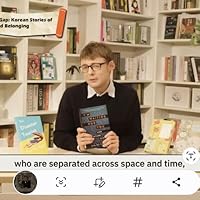
Watch my review on YouTube here - https://www.youtube.com/live/bRk5WF-s...
Watch my review in Korean here - https://www.youtube.com/live/io08Eijz...
Read my review on Substack here - https://open.substack.com/pub/barrywe...
KBS Korea 24 @KBSKorea24
For #KoreaBookClub, @barrypwelsh reviews beloved writer Choi In-ho’s #novel "Another Man's City," or “낯익은 타인들의 도시” translated by Bruce and Ju-Chan Fulton and published in 2014 as part of the @dalkeyarchive Library of Modern #KoreanLiterature. “Another Man’s City” is reminiscent of Peter Weir's 1998 film ‘The Truman Show’ and is Choi’s last full-length novel before he died in 2013 after a long battle with cancer.
@Dalkey_Archive #최인호 #장편소설 #낯익은타인들의도시 #번역문학 #KBS월드라디오 #Korea24 #코리아24 #bookstagram #북스타그램 #책스타그램 #KoreanLiterature
19:10-20:00 KST, Mon-Fri on KBS WORLD Radio.
Download the KBS Kong / KBS WORLD Radio Mobile apps, or subscribe to the Korea 24 podcast for your daily updates!
http://world.kbs.co.kr/service/progra...
Watch my review in Korean here - https://www.youtube.com/live/io08Eijz...
Read my review on Substack here - https://open.substack.com/pub/barrywe...
KBS Korea 24 @KBSKorea24
For #KoreaBookClub, @barrypwelsh reviews beloved writer Choi In-ho’s #novel "Another Man's City," or “낯익은 타인들의 도시” translated by Bruce and Ju-Chan Fulton and published in 2014 as part of the @dalkeyarchive Library of Modern #KoreanLiterature. “Another Man’s City” is reminiscent of Peter Weir's 1998 film ‘The Truman Show’ and is Choi’s last full-length novel before he died in 2013 after a long battle with cancer.
@Dalkey_Archive #최인호 #장편소설 #낯익은타인들의도시 #번역문학 #KBS월드라디오 #Korea24 #코리아24 #bookstagram #북스타그램 #책스타그램 #KoreanLiterature
19:10-20:00 KST, Mon-Fri on KBS WORLD Radio.
Download the KBS Kong / KBS WORLD Radio Mobile apps, or subscribe to the Korea 24 podcast for your daily updates!
http://world.kbs.co.kr/service/progra...
September 7, 2015
Ch’oe Inho’s Another Man’s City (translated by Bruce and Ju-Chan Fulton, review copy courtesy of the publisher and Australian distributor Footprint Books) is an intriguing story set over the course of a weekend. Businessman K is rudely woken by his alarm clock at seven o’clock in the morning, dutifully crawling out of bed. That’s not unusual in itself, except for the fact that it’s Saturday – so why was it set? As the morning progresses, he notices a few other odd details and begins to wonder what’s going on:
“K lifted the toilet seat and sat. Not for the usual reason, but because he needed to make sense of what was going on. Something was messed up. It had started at seven, when the alarm came on. It had come on by itself – nobody had set it. And then, for the first time in his fifteen years of married life, he had risen from his bed naked, his bedclothes having vanished like a magician’s dove. And finally his aftershave had disappeared, replaced with a brand he wouldn’t be caught dead with.”
p.16 (Dalkey Archive Press)
After a strange encounter with a wife who no longer behaves like the one he’s lived with for years, K’s confusion grows…
Over the course of the weekend, K attempts to work out why his life seems subtly different. The key appears to be a missing ninety-minute section of his memory during his Friday-night drinking, a period in which he did a lot of things which are out of character. Pursuing every trail he can find, he slowly realises that his life is not what he thought it was. What if he’s not really in control of his life – what if it’s all just a game?
Quite apart from the name of the main character, Another Man’s City contains obvious references to Kafka (especially The Trial and The Castle), and the early parts reflect this, with K charging around the city trying to get to the bottom of the mystery. Later, the story becomes (even) more surreal, though, and the reader must pay close attention to the clues Ch’oe spreads throughout the text. The whole affair turns into an existential puzzle as K begins to wonder whether the world around him has shifted, or whether it’s actually he who has changed.
It’s certainly a page turner, the writer dragging us around Seoul in K’s wake, taking us places we’ve never been before (and some we’d much rather not have ventured into). The key to the story is working out what actually happened on the Friday night, and after catching up with a friend, the man he was drinking with before the blackout, the hunt is on. As K attempts to retrace his steps, we see there’s more to life in the big city than office buildings and late night drinking sessions. As much as an external trip, it’s really a journey into K’s psyche – and there are some disturbing things in there, let me tell you.
One way of seeing the novel is as an examination of modern life, an amusing picture of modern-day Seoul. The anonymity of the big city means that there are types not people, which might explain why K sees the same faces over and over again. This extends to the names the writer gives his characters – K, H, P… One of the few more individual names, Olenka, belongs to a professor who spends his weekends getting in touch with his feminine side (not a character I’ve found in Kafka…).
Another major theme here is a fear of the all-seeing power of the state. As K becomes aware of the changes around him, he begins to sense the hand of a higher agency, one he’s quick to label ‘Big Brother’. From the Kafkaesque, then, we move to the Orwellian, a sense that every move we make is predictable, preordained and observed:
“Hadn’t K become a human train, an automaton, coming and going as programmed? If he wanted to try a different kind of coffee, wouldn’t that thought too have been programmed by Big Brother? And even if he were to select orange juice instead of coffee in an attempt to circumvent Big Brother’s control, wouldn’t such a niggling deviation also be consistent with Big Brother’s plan?” (p.127)
Still, it’s not quite that simple – this is not a cheap knock-off of modern western classics…
This novel was completed shortly before Choe’s death in 2013, forty years after the appearance of the short story ‘Another Man’s Room’ (included in the Modern Korean Fiction anthology). In this story, a man comes home from a business trip to find his wife absent, and has strange experiences in an apartment which seems to have altered in imperceptible ways. Another Man’s City, quite apart from the title, has a lot in common with the earlier piece, seeming almost to be an expansion of that brief story, one taking it to another level; perhaps it’s a theme Ch’oe was determined to tackle again before his writing days were done.
Another Man’s City is a clever novel, one for those who enjoy books where nothing can be taken for granted, and where everything is slightly off-kilter. While learning about Korean culture and traditions can be interesting, it’s good to read something a little different now and then, and this one makes a nice change from some of the more traditional, culturally laden novels. I can think of worse ways to spend your weekend than a quick trip around Seoul in K’s company ;)
(This review originally posted over at Tony's Reading List)
“K lifted the toilet seat and sat. Not for the usual reason, but because he needed to make sense of what was going on. Something was messed up. It had started at seven, when the alarm came on. It had come on by itself – nobody had set it. And then, for the first time in his fifteen years of married life, he had risen from his bed naked, his bedclothes having vanished like a magician’s dove. And finally his aftershave had disappeared, replaced with a brand he wouldn’t be caught dead with.”
p.16 (Dalkey Archive Press)
After a strange encounter with a wife who no longer behaves like the one he’s lived with for years, K’s confusion grows…
Over the course of the weekend, K attempts to work out why his life seems subtly different. The key appears to be a missing ninety-minute section of his memory during his Friday-night drinking, a period in which he did a lot of things which are out of character. Pursuing every trail he can find, he slowly realises that his life is not what he thought it was. What if he’s not really in control of his life – what if it’s all just a game?
Quite apart from the name of the main character, Another Man’s City contains obvious references to Kafka (especially The Trial and The Castle), and the early parts reflect this, with K charging around the city trying to get to the bottom of the mystery. Later, the story becomes (even) more surreal, though, and the reader must pay close attention to the clues Ch’oe spreads throughout the text. The whole affair turns into an existential puzzle as K begins to wonder whether the world around him has shifted, or whether it’s actually he who has changed.
It’s certainly a page turner, the writer dragging us around Seoul in K’s wake, taking us places we’ve never been before (and some we’d much rather not have ventured into). The key to the story is working out what actually happened on the Friday night, and after catching up with a friend, the man he was drinking with before the blackout, the hunt is on. As K attempts to retrace his steps, we see there’s more to life in the big city than office buildings and late night drinking sessions. As much as an external trip, it’s really a journey into K’s psyche – and there are some disturbing things in there, let me tell you.
One way of seeing the novel is as an examination of modern life, an amusing picture of modern-day Seoul. The anonymity of the big city means that there are types not people, which might explain why K sees the same faces over and over again. This extends to the names the writer gives his characters – K, H, P… One of the few more individual names, Olenka, belongs to a professor who spends his weekends getting in touch with his feminine side (not a character I’ve found in Kafka…).
Another major theme here is a fear of the all-seeing power of the state. As K becomes aware of the changes around him, he begins to sense the hand of a higher agency, one he’s quick to label ‘Big Brother’. From the Kafkaesque, then, we move to the Orwellian, a sense that every move we make is predictable, preordained and observed:
“Hadn’t K become a human train, an automaton, coming and going as programmed? If he wanted to try a different kind of coffee, wouldn’t that thought too have been programmed by Big Brother? And even if he were to select orange juice instead of coffee in an attempt to circumvent Big Brother’s control, wouldn’t such a niggling deviation also be consistent with Big Brother’s plan?” (p.127)
Still, it’s not quite that simple – this is not a cheap knock-off of modern western classics…
This novel was completed shortly before Choe’s death in 2013, forty years after the appearance of the short story ‘Another Man’s Room’ (included in the Modern Korean Fiction anthology). In this story, a man comes home from a business trip to find his wife absent, and has strange experiences in an apartment which seems to have altered in imperceptible ways. Another Man’s City, quite apart from the title, has a lot in common with the earlier piece, seeming almost to be an expansion of that brief story, one taking it to another level; perhaps it’s a theme Ch’oe was determined to tackle again before his writing days were done.
Another Man’s City is a clever novel, one for those who enjoy books where nothing can be taken for granted, and where everything is slightly off-kilter. While learning about Korean culture and traditions can be interesting, it’s good to read something a little different now and then, and this one makes a nice change from some of the more traditional, culturally laden novels. I can think of worse ways to spend your weekend than a quick trip around Seoul in K’s company ;)
(This review originally posted over at Tony's Reading List)

January 25, 2023
#books #bookreview
Part Living in a simulation, part Truman Show, part Glitch in the Matrix. This book is definitely not what I expected. Also I think it's the earliest Korean "sci-fi" that I've read.
4.5 stars. I look forward to reading more by this author.
Part Living in a simulation, part Truman Show, part Glitch in the Matrix. This book is definitely not what I expected. Also I think it's the earliest Korean "sci-fi" that I've read.
4.5 stars. I look forward to reading more by this author.

March 27, 2026
Quite interesting.

October 14, 2014
This Kafkaesque fable, the protagonist of which is even called K, begins when our hero wakes up one morning to find that everything seems slightly off-kilter. His alarm rings, for a start, which it never does on a Saturday. His usual after-shave has changed from brand V to brand Y. His wife just doesn’t seem the same. Everything is familiar but just isn’t quite right. Over a single weekend K’s experiences become more and more dislocating and he begins to feel more and more confused and troubled. It all becomes nightmarish as he begins to question not only the reality around him but his own identity.
This tale from South Korean popular novelist Choi In-ho is a compelling if not particularly original examination of the nature of identity and the roles we play in our daily lives, and questions our sense of ourselves and others. The pacing is effective as detail piles up on detail leaving both reader and protagonist both discombobulated and ill-at-ease. An interesting and compelling short novel which keeps the reader’s attention to the end and poses some basic existential questions – even if it doesn’t attempt to answer them.
This tale from South Korean popular novelist Choi In-ho is a compelling if not particularly original examination of the nature of identity and the roles we play in our daily lives, and questions our sense of ourselves and others. The pacing is effective as detail piles up on detail leaving both reader and protagonist both discombobulated and ill-at-ease. An interesting and compelling short novel which keeps the reader’s attention to the end and poses some basic existential questions – even if it doesn’t attempt to answer them.
September 19, 2011
A man wakes up to find himself in a familiar world, filled with unfamiliarities.
Pro:
Definitely a page-turner
Interesting concept of Doppelgänger
Con:
Far too reminiscent of "1Q84" by Murakami Haruki
Same old Big Brother continues to rule our world.
Pro:
Definitely a page-turner
Interesting concept of Doppelgänger
Con:
Far too reminiscent of "1Q84" by Murakami Haruki
Same old Big Brother continues to rule our world.

November 17, 2015
I think I understood this book though I am hesitant to say what I thought it was about. I really just want to say to Dalkey Archives, "Proofread this one again. It is littered with issues."

January 1, 2016
"Something was messed up. It had started at seven, when the alarm came on by itself - nobody had set it. And then, for the first time in his fifteen years of married life, he had risen from his bed naked, his bedclothes(*) having vanished like a magician's dove. And finally his aftershave had disappeared, replaced with a brand he wouldn't be caught dead with.
Where had this string of events began? Or was he imagining it? No - it was real, and the tricks had started last night. Maybe with the menacing chill he'd felt in reaction to his wife's corpse-like frigidity, killing his accustomed sexual desire. Did that mean his wife, like his aftershave, had been replaced?"
"낯선 타인들의 도시" (literally: the City of Unfamiliar Others) by 최인호has been rendered into English as Another Man's City by the husband and wife team Bruce and Ju-Chan Fulton, prolific translators from Korean.
The story as the opening quote suggests has our protagonist K waking up - unexpectedly as he didn't set his alarm clock - in a world where everything seems familiar and yet slightly off.
It's not a particularly original set up but it doesn't pretend otherwise, and indeed the influences are often explicitly acknowledged. The story has shades of Kafka (no coincidence that the main character is called K), Ground-hog day (each of the three days in the novel starts with K's alarm clock going off at 7am), the Matrix (at one point K notes "all of these are matrixes"), both Orwell and the Truman Show ("one petty detail but it gave away the elaborate production that Big Brother was staging", "obscure actors taking on multiple minor roles to save on production costs" ) or a Hitchcock short ("how in the name of Orson Welles / Alfred Hitchcock / I'm Kwon-t'aek had his cell phone ended up in a seat pocket in a movie theatre.").
K's own original take on his new world:
"Once again his concious word felt like a shadow box - optical illusion, delusion and decoupage all in one; a papertole a layered-paper construction that when viewed from a different angle, assumes a different shape and depth of field, a three-dimensional image; a layered cutout."
The writing style has aspects of a thriller. Each part of the narrative comes with a date and time to the nearest minute "Sunday 9.12pm" and K travels far and wide over Seoul following leads as to what may be going on. But anyone expecting a neat resolution will be disappointed, as Ch'oe's intent is more literary than that: indeed as the book progresses both the reader and K only have more doubts as to what is happening.
K himself is, at least in his own view, a rather emotionless individual. "He wasn't a person who felt sad enough to shed tears or happy enough to laugh. Lying, harbouring suspicion, jealousy, anger, sympathy for others, compassion - such feelings were irrelevant to him. He was a colourless man, one who lacked the palette of human emotions." But in that sense K may be an unreliable narrator, or there may at least be another, very different side to his character, that he doesn't acknowledge. This duality of identity - also good vs. evil, Jekyll and Hyde - seems to be part of K's own explanation for what he is experiencing.
In part Ch'oe's theme seems to be the masquerades we play in our everyday lives. K attends his sister-in law's wedding and is disgusted to see his mother-in-law and her long-divorced husband playing happy families for the day. But his disgust extends to the whole charade of a wedding:
"K was stunned. He silently drank a soda. So Dad returns to his wife and children and Mom returns to have slave gallery, their hours-long joint performance a perfect crime. A masquerade that ends with husband and wife removing their masks and returning to their homes. Like pickpockets returning to their den after lightening the pockets of their victims. Like vampires returns to their coffins after sucking at their victims' necks. The man and woman masquerading as bride and groom, their marriage legalised, setting off on their honeymoon and having legalized sex in a hotel room. The bride performing her role of virgin, the groom performing his role of superstud."
Even Satnavs are cited as part of the disorientation of modern life: "it made him feel like an idiot with no sense of direction, no capacity for judgement, a puppet dancing on strings"
But towards the end of the novel, it takes a more metaphysical slant. K, a rather passive Catholic, comes to see religious significance in his situation. Inspired by Matthew 24: "And is the Jesus I believe in the saviour of humanity, or is an anti-Christ no different from a real doll intricately fashioned out of silicone, or instead of a fake human is he a real spirit, manifest in the flesh."
Ch'oe manages relatively well the task of bringing the novel to an end but without actually resolving K's situation.
I've generally been supportive of the K-lit series but other reviewers have pointed out the rather sloppy production values from Dalkey Archive and that came across here.
(*) And as an example, a key part of K's disorientation has him waking up without "his bedclothes" as per the opening quote. But "bedclothes" means blankets/duvet/sheets in English, whereas K actually is missing his pyjamas, i.e. his "nightwear".
At another point "I don't" is printed as "Idont't", and we get meaningless sentences like "The plastic surgery on her eyelids and nose during her and probably always had been. had broken down." and there are plenty more examples.
As a personal gripe as well, the The Korean alphabet for place names etc has been romanised into English using the McCune-Reischauer system - more phonetically accurate but practically useless since it solves difficult issues by simply using breves (˘) and apostrophes to change the pronunciation of vowels - whereas others in series use the official Korean Government approved Revised Romanization system.
Finally on the perfunctory translation Ch'oe (or Choi as I'd prefer it to be rendered) was well known for using language heavy with Sino-Korean words, which the Fultons compare to an English writer who relies on words of Latin rather than Anglo-Saxon origin. But I see no evidence that the they have tried to replicate this in their translation - contrast that to the effort put it by Emma Ramadan to translate Sphinx by Anna Garréta (https://www.goodreads.com/review/show...).
So I'm afraid this tipped in firmly out of the 4 to the 3 star box for me.
Where had this string of events began? Or was he imagining it? No - it was real, and the tricks had started last night. Maybe with the menacing chill he'd felt in reaction to his wife's corpse-like frigidity, killing his accustomed sexual desire. Did that mean his wife, like his aftershave, had been replaced?"
"낯선 타인들의 도시" (literally: the City of Unfamiliar Others) by 최인호has been rendered into English as Another Man's City by the husband and wife team Bruce and Ju-Chan Fulton, prolific translators from Korean.
The story as the opening quote suggests has our protagonist K waking up - unexpectedly as he didn't set his alarm clock - in a world where everything seems familiar and yet slightly off.
It's not a particularly original set up but it doesn't pretend otherwise, and indeed the influences are often explicitly acknowledged. The story has shades of Kafka (no coincidence that the main character is called K), Ground-hog day (each of the three days in the novel starts with K's alarm clock going off at 7am), the Matrix (at one point K notes "all of these are matrixes"), both Orwell and the Truman Show ("one petty detail but it gave away the elaborate production that Big Brother was staging", "obscure actors taking on multiple minor roles to save on production costs" ) or a Hitchcock short ("how in the name of Orson Welles / Alfred Hitchcock / I'm Kwon-t'aek had his cell phone ended up in a seat pocket in a movie theatre.").
K's own original take on his new world:
"Once again his concious word felt like a shadow box - optical illusion, delusion and decoupage all in one; a papertole a layered-paper construction that when viewed from a different angle, assumes a different shape and depth of field, a three-dimensional image; a layered cutout."
The writing style has aspects of a thriller. Each part of the narrative comes with a date and time to the nearest minute "Sunday 9.12pm" and K travels far and wide over Seoul following leads as to what may be going on. But anyone expecting a neat resolution will be disappointed, as Ch'oe's intent is more literary than that: indeed as the book progresses both the reader and K only have more doubts as to what is happening.
K himself is, at least in his own view, a rather emotionless individual. "He wasn't a person who felt sad enough to shed tears or happy enough to laugh. Lying, harbouring suspicion, jealousy, anger, sympathy for others, compassion - such feelings were irrelevant to him. He was a colourless man, one who lacked the palette of human emotions." But in that sense K may be an unreliable narrator, or there may at least be another, very different side to his character, that he doesn't acknowledge. This duality of identity - also good vs. evil, Jekyll and Hyde - seems to be part of K's own explanation for what he is experiencing.
In part Ch'oe's theme seems to be the masquerades we play in our everyday lives. K attends his sister-in law's wedding and is disgusted to see his mother-in-law and her long-divorced husband playing happy families for the day. But his disgust extends to the whole charade of a wedding:
"K was stunned. He silently drank a soda. So Dad returns to his wife and children and Mom returns to have slave gallery, their hours-long joint performance a perfect crime. A masquerade that ends with husband and wife removing their masks and returning to their homes. Like pickpockets returning to their den after lightening the pockets of their victims. Like vampires returns to their coffins after sucking at their victims' necks. The man and woman masquerading as bride and groom, their marriage legalised, setting off on their honeymoon and having legalized sex in a hotel room. The bride performing her role of virgin, the groom performing his role of superstud."
Even Satnavs are cited as part of the disorientation of modern life: "it made him feel like an idiot with no sense of direction, no capacity for judgement, a puppet dancing on strings"
But towards the end of the novel, it takes a more metaphysical slant. K, a rather passive Catholic, comes to see religious significance in his situation. Inspired by Matthew 24: "And is the Jesus I believe in the saviour of humanity, or is an anti-Christ no different from a real doll intricately fashioned out of silicone, or instead of a fake human is he a real spirit, manifest in the flesh."
Ch'oe manages relatively well the task of bringing the novel to an end but without actually resolving K's situation.
I've generally been supportive of the K-lit series but other reviewers have pointed out the rather sloppy production values from Dalkey Archive and that came across here.
(*) And as an example, a key part of K's disorientation has him waking up without "his bedclothes" as per the opening quote. But "bedclothes" means blankets/duvet/sheets in English, whereas K actually is missing his pyjamas, i.e. his "nightwear".
At another point "I don't" is printed as "Idont't", and we get meaningless sentences like "The plastic surgery on her eyelids and nose during her and probably always had been. had broken down." and there are plenty more examples.
As a personal gripe as well, the The Korean alphabet for place names etc has been romanised into English using the McCune-Reischauer system - more phonetically accurate but practically useless since it solves difficult issues by simply using breves (˘) and apostrophes to change the pronunciation of vowels - whereas others in series use the official Korean Government approved Revised Romanization system.
Finally on the perfunctory translation Ch'oe (or Choi as I'd prefer it to be rendered) was well known for using language heavy with Sino-Korean words, which the Fultons compare to an English writer who relies on words of Latin rather than Anglo-Saxon origin. But I see no evidence that the they have tried to replicate this in their translation - contrast that to the effort put it by Emma Ramadan to translate Sphinx by Anna Garréta (https://www.goodreads.com/review/show...).
So I'm afraid this tipped in firmly out of the 4 to the 3 star box for me.

September 15, 2023
Cuốn sách đầu tiên khiến mình gặp một sự hoang mang nhất định. Nó lôi cuốn mình từ khi bắt đầu đọc nó, nó là cuốn sách vô định kể về K khi thức giấc vào 7h thứ Bảy và mọi thứ xảy ra sau đó khiến anh ấy không thể ngờ tới. Người vợ, con gái, chú chó nhà anh hay mọi thứ xung quanh anh đều trở nên xa lạ mặc dù mọi thứ vẫn diễn ra bình thường mà có khi chính anh mới là người bất bình thường. Truyện có nhiều nhụ ý ẩn hiện ở trong đó nhưng mình sẽ nói thêm sau khi nghiền ngẫm lại một chút.

September 13, 2016
What do you get when you stick your Philip K. Dick in a Shusaku Endo? A Korean Manichean Catholic Matrix Doppelgänger frappé. I wanted to like this novel, and I'll say in its favor that it kept me engaged and moved along like a brisk metaphysical thriller; however, like many volumes in the Dalkey Library of Korean Literature series, it suffers from an indifferent translation and sloppy editing.
June 12, 2020
Delightfully perverse.

October 27, 2020
is there anything more tiresome than male authors attempting to be subversive

August 13, 2015
I think that Another Man's City works best if you take it as a chance to experience some relatively well-trodden Sci-Fi tropes through the lens of a different culture. What we have here is a story that borrows a great deal from Kafka and Orwell (explicitly) and from the general science fiction hive mind that has led to more recent products like The Matrix, but filters it through contemporary South Korean society.
As the novel begins, protagonist K awakes to discover that things are ... a little off. His alarm is set for a work day even though it's Saturday, and his normal aftershave has been replaced by a new brand. From there, things become progressively more strange, as K realizes his wife and daughter no longer feel like they're actually his wife and daughter (despite looking the same), and he begins to notice that various "actors" are playing multiple roles in his day-to-day life -- a television personality has the same face as woman he saw working in a seedy night club, for example. He becomes progressively more certain that "Big Brother" is watching him and manipulating his life to unknown ends, and begins a roughly 48 hour adventure of discovery.
What's was most interesting to me about the book was the lack of panic. An American novel, given the same basic scenario, would likely progress to a full-on freak-out, probably with a lot of action. That never happens, here. K remains even-tempered and, in many ways, remarkably passive throughout his experience. The focus of the book is on K's plodding attempts to make sense of what is happening, and his strange willingness to go with the flow.
At the end, there are revelations, but no answers. This isn't a book about answers, it's a book about the cyclical nature of life and the ways that small changes in detail can break our routines and cause us to question others around us and ourselves. It's a meditation on the nature of self and on perception.
I found it interesting, but not brilliant. Still, it's reasonably short, and a fun read. There are numerous copy-editing errors, including some repeated sentences, which is unfortunate in an otherwise nicely-translated book, but not enough to keep me from recommending it.
As the novel begins, protagonist K awakes to discover that things are ... a little off. His alarm is set for a work day even though it's Saturday, and his normal aftershave has been replaced by a new brand. From there, things become progressively more strange, as K realizes his wife and daughter no longer feel like they're actually his wife and daughter (despite looking the same), and he begins to notice that various "actors" are playing multiple roles in his day-to-day life -- a television personality has the same face as woman he saw working in a seedy night club, for example. He becomes progressively more certain that "Big Brother" is watching him and manipulating his life to unknown ends, and begins a roughly 48 hour adventure of discovery.
What's was most interesting to me about the book was the lack of panic. An American novel, given the same basic scenario, would likely progress to a full-on freak-out, probably with a lot of action. That never happens, here. K remains even-tempered and, in many ways, remarkably passive throughout his experience. The focus of the book is on K's plodding attempts to make sense of what is happening, and his strange willingness to go with the flow.
At the end, there are revelations, but no answers. This isn't a book about answers, it's a book about the cyclical nature of life and the ways that small changes in detail can break our routines and cause us to question others around us and ourselves. It's a meditation on the nature of self and on perception.
I found it interesting, but not brilliant. Still, it's reasonably short, and a fun read. There are numerous copy-editing errors, including some repeated sentences, which is unfortunate in an otherwise nicely-translated book, but not enough to keep me from recommending it.

September 28, 2015
A while ago I read and reviewed The Republic of Užupis, another Library of Korean Literature read, which really interested me in reading more Korean literature. Another Man's City was the next one on my list and it's a fascinating read, one which takes the reader on all kinds of strange journeys, has twists where you least expect them and leaves you flabbergasted, in a good way. Thanks to Netgalley and Dalkey Archive Press for providing me with a copy of this book in exchange for an honest review.
Before going into talking about the plot etc. it's interesting to point out how well books from the Library of Korean Literature translate into both English and into our ideas of genre and literature. One would expect that there might be a cultural hurdle and yet In-Ho's narrative fits perfectly into the strain of writing by the likes of Kafka. It's what's so brilliant about Dalkey Archive Press releasing Korean literature because it shows just how universal stories are. The thing called the 'shared ocean of stories' covers the whole world because every single human being wonders about where we came from, where we're going and what we're supposed to do in between. Just because something is written in a different language doesn't mean its story doesn't apply to readers all over. The Library of Korean Literature is a perfect example of why translation should be more common because language really is the only barrier between bringing book-lovers from all over the world closer together.
Another Man's City is an astounding read. It will keep you captured from the beginning to the end, taking you on a roller-coaster ride. Hence I'd only recommend it to those willing to go where a book takes them and not abandon it along the way, This isa book for fans of the absurd and weird, but you'll get a lot out of it, I promise!
For full review: http://universeinwords.blogspot.co.uk...
Before going into talking about the plot etc. it's interesting to point out how well books from the Library of Korean Literature translate into both English and into our ideas of genre and literature. One would expect that there might be a cultural hurdle and yet In-Ho's narrative fits perfectly into the strain of writing by the likes of Kafka. It's what's so brilliant about Dalkey Archive Press releasing Korean literature because it shows just how universal stories are. The thing called the 'shared ocean of stories' covers the whole world because every single human being wonders about where we came from, where we're going and what we're supposed to do in between. Just because something is written in a different language doesn't mean its story doesn't apply to readers all over. The Library of Korean Literature is a perfect example of why translation should be more common because language really is the only barrier between bringing book-lovers from all over the world closer together.
Another Man's City is an astounding read. It will keep you captured from the beginning to the end, taking you on a roller-coaster ride. Hence I'd only recommend it to those willing to go where a book takes them and not abandon it along the way, This isa book for fans of the absurd and weird, but you'll get a lot out of it, I promise!
For full review: http://universeinwords.blogspot.co.uk...

August 23, 2015
A simple and familiar plot (a man wakes up; his entire life, unchanged except in some minor particulars, feels out of joint) hides some important questions about the life well lived. The underlying perspective is Christian (although I may not have noticed hadn't I read about the author), but not a doctrinal kind of Christianity, and so a complete nonbeliever such as myself had no issue with it.
I cannot help but feel that this book is underrated by the Goodread community because of its apparent familiarity and a somewhat belabored beginning. It seems to me that there is more to Another Man's City than meets the eye: the reader would be wise not to accept the point-of-view narration as trustworthy, instead reading its very tone as part of the character description (and the character's personality is a very big part of the questions the book raises). K. had clearly lost many of his memories and much of his personality long before feeling that something was "off" with his life; or had he given up on them? Where did that lead him? It is as interrogation of the price of an unexamined life, or as probe into the difference between "niceness" and "goodness," not as critique of the modern world or by the book sci-fi, that I believe the book rewards the reader.
Aesthetically, the book's easy oniricism (yes, I made up that word) and humble matter-of-factness worked for me: the style is nothing to write home about, a pleasant blandness for which the translators are perhaps to be thanked as much as the writer; it served what I understood to be the book's concerns perfectly.
The edition itself has a few regrettable printing errors, but nothing too galling.
I cannot help but feel that this book is underrated by the Goodread community because of its apparent familiarity and a somewhat belabored beginning. It seems to me that there is more to Another Man's City than meets the eye: the reader would be wise not to accept the point-of-view narration as trustworthy, instead reading its very tone as part of the character description (and the character's personality is a very big part of the questions the book raises). K. had clearly lost many of his memories and much of his personality long before feeling that something was "off" with his life; or had he given up on them? Where did that lead him? It is as interrogation of the price of an unexamined life, or as probe into the difference between "niceness" and "goodness," not as critique of the modern world or by the book sci-fi, that I believe the book rewards the reader.
Aesthetically, the book's easy oniricism (yes, I made up that word) and humble matter-of-factness worked for me: the style is nothing to write home about, a pleasant blandness for which the translators are perhaps to be thanked as much as the writer; it served what I understood to be the book's concerns perfectly.
The edition itself has a few regrettable printing errors, but nothing too galling.

June 11, 2014
As the description says it is somewhat similar to "The Unconsoled" by Ishiguro, however I will have to disagree with the movie reference. If it is reminiscent of any film it is David Lynch's "Lost Highway". Similarly to the Lynch's film the novel also begins with the sudden event of impotence after which all the hell breaks loose. Given the hiccup in functioning of the Phallus, all signifiers melt down - people who used to be familiar become strangely unfamiliar (members of the nuclear and extended family most importantly), the menace of homosexuality rears its head, gender becomes fluid - in a word, complete ontology of what it means to be (heterosexual) man starts breaking down, and with it the world itself (in the form of earthquakes that threaten Seoul). At the end K somehow manages to retrieve his manhood and, appropriately, becomes one with the Word.

May 15, 2015
I'm torn about this. It's well-written, it's interesting, but I can't help but feel that I've read it all before. A middle-aged middle-class family man suddenly feels like nothing around him is real, and there are women trying to seduce him, and men cross-dressing, and they all appear to be a handful of people taking on different roles. It's not bad-- it's a competent story that raises salient questions about reality. On the other hand, it's been written before and it's been written better.
I can't pan it across the board, but I also can't think of anyone I'd recommend it to.
I can't pan it across the board, but I also can't think of anyone I'd recommend it to.

August 4, 2016
My first Korean novel, very engaging and quite impressive.
Displaying 1 - 25 of 25 reviews