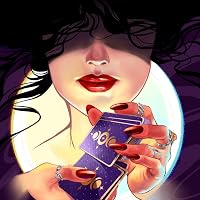
A contemporary, inclusive, nonbinary, and forward-thinking approach to the runes.Queering the Runes is a love letter to the runes, the gods, and the people who follow the Nordic path. The author presents an alternative approach to the runes, one that creates a gentle container for those who want to follow this heathen path. Based on the author’s personal gnosis, as well as deep academic research on runes and Nordic culture, this book is an invitation into the root culture of the runes, both in terms of myth and in terms of lived, real folkloric experience. Siri Vincent Plouff presents the traditional meanings of the runes, then helps the reader to queer the runes in their own way. Included is the lore associated with each rune, exercises to apply them to modern life, activities to engage with the rune (layouts, castings, and galdr), and how to use the runes for divination. Throughout, the author provides journal prompts meant to help the reader channel the energy of specific runes, to get to know their energy, as well as to use the runes to help them move forward in a journey of self-discovery. Queering the Runes seeks to blow open perceptions of the runes. Exploring them as active, living symbols available to all, as well as the inherent connection with ancestral magic that comes with rune work.
Queering the Runes was so interesting. I didn’t agree with quite every interpretation, that that’s perfectly alright—it still gave me a lot to think about.
I received this book in a giveaway and as a queer pagan was very excited. There was a lot that I liked about the book - I felt well educated and informed by the end and also felt prepared to start deepening my relationship with the runes. However, as a book there were a few issues I had: namely that this did not feel like a finished book or well edited. There were a number of places where thoughts felt incomplete - I kept waiting for more development but the idea was not completed and I was left hanging. Conversely, there were also places where things were repeated unnecessarily, including identical sentences at different points.
It’s a shame because I think this is a good and important book but the lack of thorough editing was distracting and detracting throughout. I am still glad to have it as a part of my collection though.
Siri Vincent-Plouff’s Queering the Runes showed up on my virtual doorstep with a certain synchronicity—I haven’t been reading a lot in the last year, but I’d actually pulled out my runes recently for the first time in a while when the publisher reached out to me, and so it seemed like the right timing to dig into this book and get some inspiration for my own practice.
Like Siri, I’m queer, non-binary, and a tarot reader. It was kind of funny for me to encounter their perspective on queer, anti-racist heathenry as a more fringe, recent take—in my limited reading on Norse practice, I must have naturally filtered to this perspective! My understanding of the Norse pantheon and modern practice was already richly queer, non-binary, playful, and naturally compatible with chosen family models.
On the other hand, the one specific book on runes I read a year or two ago was much more mainstream, with a narrower approach to interpretation, so I appreciate having a perspective to work with that’s generally more aligned with my cosmology and open to adaptation. Siri emphasises personal context and interweaves themes such as chosen family, gender fluidity, and community resistance through the interpretations of specific runes, taking inspiration from their own experience as well as Norse mythology and related history and folklore. They ground the reader not only in the tales of the Aesir and Vanir, but also in the histories of the region and how the lives of average people in this part of the world can inform interpretations of the runes beyond a limited understanding of “Viking values.” In this way, they also explicitly confront racist perversions of the runes and Norse heathenry more broadly, inviting the reader to connect their own values, context, and relationship with land and community to the symbols of the Elder Futhark and to resist white supremacist appropriation of this system.
Siri’s interwoven approach can make it a little easier to memorize specific runes through connecting to stories and concepts, and I personally appreciated the way they shared examples in some cases of how one meaning might particularly be drawn out by another rune that shows up in a reading. In some cases I got a little mixed up between what was meant as a specific meaning for a rune and what was provided as thematically similar context, but I think this less structured approach makes the book more accessible to read all at once, rather than using as a reference text. I liked the way this approach allowed them to bring in snippets of different topics a reader might want to explore further, from queer theory to linguistics to Norse practices and history. Interdisciplinary nerd alert, I’m here for it!
In most cases I didn’t find the journal prompts provided to dive deeper, or the little section on queering or radically relating to the rune at the end, to add much extra to the main text, but I think readers who are less immersed in queer theory and community and/or less familiar with generating personal reflection questions on their own from this kind of material will benefit more.
Outside of the rune-by-rune coverage that forms the bulk of the book, Siri provides some introductory material on their own background, Norse heathenry in general, and in particular the queer and anti-racist lens they apply to the work. They also offer material after discussing each rune that gets to how you might use them in divinatory or magical practice. The text as a whole is digestible, and doesn't go too deep into any one topic, but does provide references that an interested reader can dive into to go further, and certainly inspires personal reflection and encourages working with the runes to develop a personal relationship with the tool.
If you already use another system, especially tarot, you might be wondering what the runes can add, particularly if you don't have a specific ancestral connection, as Siri does. I especially found their take on the symbology of runes interesting, as they discuss the advantage of using a system with more abstract, less representative symbols that invite one’s own interpretation and don't depict particular hierarchies or suggest a worldview with artwork. While I think I'll always gravitate to cards as my most familiar tool, I've been playing with this advantage to the runes since reading the book and considering how to blend the interpretive guidance Siri and other authors offer, grounded in the likely original understanding of the symbols, with my own relationship with these broad concepts (ice, lake, torch, and so on.) As Siri points out, queering practice isn't just about interpretations that apply to the obviously queer aspects of our lives, but about destabilizing binaries and singular understandings in favor of multiplicities.
…I can practically feel Loki winking over my shoulder. A recommended read!
I honestly didnt expect to get this into a rune book because tarot is sooo much more my thing, but this was really good. Siri Vincent Plouff goes through the Elder Futhark and gives you the traditional lore and meanings but then asks what happens when we stop treating all of those meanings like they have to stay trapped inside these super rigid ideas about gender, family and what a “traditional” life is supposed to look like. I especially liked that the queering part isnt just randomly assigning every rune a new LGBT meaning lol. They actually start with the rune poems, history and mythology and then open up other ways of understanding them from there.
Theres also way more practical stuff than I expected. Each rune has exercises and journal prompts and then later theres divination, casting, galdr, bindrunes and rune spells, so I actually felt like I could DO something with what I was learning instead of just memorizing another alphabet. I also really appreciated the sections about white supremacy and the way Norse symbols have been stolen by gross people because that is unfortunately something you kind of HAVE to talk about with runes now. The book makes it very clear that these symbols dont belong to nazis and I loved the whole idea of actively reclaiming them instead of letting hateful people scare everyone else away from them.
I think the only reason this wasnt 5 stars for me is honestly just that I dont have the same emotional connection to runes that I do to tarot, so some of the individual rune chapters started blending together a little by the end. But it definately made me want to work with them more, which I wasnt expecting going in. If you've ever been curious about runes but the extremely dude-heavy “ancient warrior wisdom” vibe of some rune books has made you immediately close them 😂 this feels like SUCH a better place to start. really thoughtful, actually useful and way more interesting than I expected.
A great overview of the runes and how to start working with them. Plouff’s writing style is so approachable it feels like sitting down to have a conversation with a friend who has something fascinating to teach you.
I love that there was a methodical way to work through the book and some of the journal prompts brought back memories of things I had completely forgotten about. I feel like I’ve finally earned having a set of runes on the shelf. I have rarely, outside of tarot, seen someone describe such a beautiful way to interpret their reading as a narrative or how to look for patterns in this way before. And the work cited has given me a bunch of new books to read.
Plouff does a commendable job at presenting the runes in a very approachable way. Sometimes books that attempt to “queer” something can seem a stretch at times. Plouff’s approach here is an example of how it can be done right and demonstrates how applying a queer lens can both decenter the discourse while adjusting seemingly innate heteronormative assumptions. Their work is very approachable but also has depth. I appreciated that she included all three rune poems (Anglo Saxon, Norse, and Icelandic). Highly recommend.
I read this as a group to study the runes & overall I learned a few things. I'm not the target demographic for the book so there were a few things that could have been mentioned just once but were talked about multiple times which became a bit repetitive BUT if I was the target demographic I think I would have resonated with it a lot more. I appreciate the fact that she referenced Taking Up the Runes by Diana Paxson (because I'm also reading that and am enjoying it).
This is a great resource book for those who read the runes. It is organized well and presented in an easy to follow way. But, for me personally, I couldn't connect with it. Is it because I don't read the runes? Possibly. I also felt that some of the information was a bit dense. It's not for me at this current moment, but i can see it being a great resource for others.
This book is a good introduction to runes and is very thorough with the lore and stories behind them. Siri takes power away from the present day nazis and makes them their own. My only issue with the book is I felt the queering aspect of the book could have gone deeper.
I deeply enjoyed this book! I've been a runeworker for many years and found Siri's approach to each rune extremely thoughtful and insightful. This is a book I will come back to often and recommend to those who are looking to learn about the Runes and how to work with them.
A relevant, educational, and obviously well crafted introduction to the runes! You'll get loads of historical background, without being bogged down by pages of lore! I highly recommend this for runeworkers both novice and studied!
I don’t work with deities, so this book didn’t really connect with me on many levels. I appreciated the explanation of the runes, but that was the extent for which I enjoyed this, or found it useful.
Fantastic. A wonderful breakdown of the runes. I deeply appreciate that it doesn’t shy away from the uglier parts of runic history, and, true to its title, reclaims and re-inspires their meanings for a modern audience by queering them. This is definitely a guide I’ll come back to again and again.
An excellent primer in rune reading and meaning, it is very good at putting this spiritual tool into a modern and usable context for a diverse reader and practitioner